Every episode
664 episodes of David Senra, Founders, Acquired, App Masters, Lenny's Podcast, Sub Club, Superwall and Subversive, and 48 A/B tests from abtest.design, each as notes: the bottom line, key takeaways and every chapter, linked to the moment it was said.
 25 episodes
David Senra
David Senra interviews founders and investors on how they built their companies.
 30 episodes
Founders
David Senra reads the biographies of history’s great founders and draws out how they built.
 30 episodes
Acquired
Ben Gilbert and David Rosenthal tell the full stories of great companies and the decisions that made them.
 257 episodes
App Masters
Steve P. Young on mobile app marketing: App Store Optimization, launches and paid user acquisition.
 214 episodes
Lenny's Podcast
Product, growth and career lessons from world-class operators.
 26 episodes
Sub Club
RevenueCat's podcast on subscription app growth and monetization.
 34 episodes
Superwall
Paywalls, pricing and onboarding experiments from the Superwall team.
 48 episodes
Subversive
Founders of consumer subscription apps on how they grew.
 48 A/B tests
abtest.design
A/B test results from apps like Duolingo, Headspace and Clarks, collected by Mobbin.
The latest episodes
October 202616
 Subversive · Oct 29
How Rise Turned “Sleep Debt” Into a 10M+ User Sleep App
Rise's CTO explains how the app turned sleep debt into the aha moment of a long, educational onboarding flow, and how a small team runs several A/B tests a week. The episode also covers checking test results months later, finding that some "losers" actually retained better, and how Rise is moving into AI coaching and clinical care.
 Sub Club · Oct 28
How Praktika built a profitable $50M ARR AI business — Adam Turaev, Praktika
Praktika's CEO explains how an AI language tutor app reached $50M ARR with a team of just over 40 by selling career outcomes in Brazil and letting micro-influencers run creative. A single creator video he did not like drove roughly 30M views and took ARR from $1M to about $12M in one month.
 App Masters · Oct 27
The Influencer Marketing Math That Made Cal AI Profitable
Cal AI prices influencer and UGC deals by comparing what each thousand views earns (RPM) with what a thousand views costs (CPM), instead of chasing a benchmark CPM. The episode covers base rate plus capped view bonuses, why viral views lose value, and how to attribute downloads once millions of videos are live.
 David Senra · Oct 25
Competition, Intensity & Building a $115 Billion Global Bank | Nik Storonsky, Revolut
Storonsky built Revolut from a no-fee travel card into a digital bank in 38 countries by running the company as a machine: metrics over politics, algorithmic funding of bets, self-guided hires and no VC power. His story is worth hearing for what he learned from a 5-year UK banking license wait, a negative gross margin that grew to 80%, and the discipline of fixing one bottleneck at a time.
 Lenny's Podcast · Oct 25
An 86-minute guide to finding PMF | Rob Snyder (Author, The Power of Pull)
Rob Snyder lays out the PULL framework (Project, Unavoidable, List of options, Limitations) as a step-by-step method for finding product-market fit, from picking an idea to cold outreach, sales calls, closing and retention. He has used it with 50+ startups going from zero to over $1M in ARR, after spending two years pushing a product the market did not want in his own startup.
 App Masters · Oct 20
Before You Spend $1 on Meta Ads, Watch This
A seven-point checklist an app should pass before spending anything on Meta ads: funnel conversion targets, proof that strangers pay, LTV per install, event tracking, competitor ad research, concept testing and budget math. The payoff is avoiding wasted spend, since a $1,000 test budget at the stated rates yields only about 10 to 11 subscribers at roughly $95 each.
 Subversive · Oct 20
How Tolan 3X'd Subscriber Conversion after Shifting to Freemium
Tolan moved from a hard paywall to freemium and fixed the conversion hit by redrawing the free and paid line, adding tiers, and personalizing paywalls. The result was subscriber conversion up over 200% and ARPU up 218%, with one paywall test series driving a 40%+ ARPU lift.
 Sub Club · Oct 14
How Cal AI turned creators into a growth machine — Jake Castillo, Cal AI
Cal AI's co-founder explains how creator partnerships, a visual magic moment, and flat-rate deals capped by revenue per thousand views took the calorie tracker past 15 million downloads. He also covers why UFC and mukbang creators flopped, how to read comment sections, and why a $30 a year price was chosen to win mind share.
 Founders · Oct 13
The Tycoons: Carnegie, Rockefeller, Gould & Morgan
Charles Morris's book shows how three disruptors, Carnegie, Rockefeller and Gould, won through scale, cost control and speed, while Morgan sold order to a market they kept upending. The lesson is that small efficiencies compounded across an integrated company, plus a willingness to move faster than rivals, beat comfortable cartels.
 Lenny's Podcast · Oct 11
Why every company now needs to think and operate like a lab team | Josh Woodward (VP Google Labs)
Every company needs a lab-style team that tracks what AI has just made possible, tests ideas fast and knows when to kill them. Woodward runs Google's longest-running labs team, behind NotebookLM, Flow and Project Genie, and shares how it finds ideas, spots product-market fit, sets team size and keeps a lab from fizzling.
 Superwall · Oct 11
Meet the ex-wrestler making $41k/mo with AI apps
A non-technical founder shows how he grew three AI fitness apps with niche influencer deals, raw paid ads, a tailored onboarding and a social feed for retention. The apps reached almost $41k MRR and $84k revenue in 28 days, and Wrestle AI passed 100,000 downloads on creators alone.
 David Senra · Oct 7
Building an Empire with Risk, Rage & 200 Phone Calls A Day | Ari Emanuel, WME & TKO
Ari Emanuel built a talent agency into an empire by owning assets, not just representing clients, and by calling people nonstop until partners like Egon Durban appeared. His $4.2 billion UFC purchase looked reckless until a single ESPN rights deal worth almost $4 billion proved the thesis.
 App Masters · Oct 6
This Breathing App Sold to Peloton for Millions
A niche breathing exercises app, Breathwrk, started narrow with one use case, ranked for specific keywords and used animated, interactive onboarding before a paywall. It was reportedly acquired by Peloton for $2.2 million after about $200,000 in seed funding, which shows a niche focus can lead to a real exit.
 Superwall · Oct 5
The 1 Billion Views Content Strategy Every App Should Steal in 2026
Dawson Gibbs explains how to match the creator, the hook and the format to the product, using examples like Jetpack, SMB Market, Dupe.com and Bible BFF. A 40 million view campaign that made $1.2 million but churned 45% shows why the right views beat the most views.
 Lenny's Podcast · Oct 4
OpenAI’s Head of ChatGPT: We’re entering a new era of AI (again) | Tibo Sottiaux
Tibo Sottiaux explains how OpenAI is moving from chat and coding tools toward an always-on personal agent (Dots), and what that means for how products, plugins and teams should be built. He shares concrete practices on plugin discovery, bottoms-up shipping, agent-ready products and safety spending, drawn from a day when his team launched more than 20 products.
 Subversive · Oct 1
DoorDash's Playbook for Scaling DashPass to 35M+ Members
Jimmy Liu explains how he built DashPass from customer emails and a scrappy MVP, fixed its economics with three levers, and won over skeptical executives. DashPass now has over 35 million members and drives about 75% of DoorDash's grocery and retail orders, all at a flat $9.99 per month.
September 202619
 Sub Club · Sep 30
How WeWard hit 20M users without paid ads — Yves Benchimol, WeWard
WeWard grew for four years with no Meta, Google or paid UA spend, relying on a small PR retainer, then used a celebrity ambassador and investor to break into the US. The episode covers affiliate revenue, measuring steps instead of screen time, and why pivoting is mostly a decision problem.
 App Masters · Sep 29
How to Increase Organic Downloads Without Changing Keywords
Screenshots and the app icon are a major ASO lever beyond keywords, and A/B testing them through Product Page Optimization can lift organic downloads. A case study moved installs 61% across two sequential screenshot tests, with other examples at 13.8%, 30% and 45%.
 Lenny's Podcast · Sep 29
Why Claude can’t be your PM (yet) | Anthropic CPO Panel
Anthropic's product leaders explain why the PM role still matters when models change every two months: judgment, relentlessness, convening people and staying close to human problems. They also cover agent-native and malleable software, running parallel bets, and parking projects until a new model makes them work.
 Lenny's Podcast · Sep 29
Stop planning for 2027: how OpenAI builds product 90 days at a time | Tara Sesha and Nan Yu (OpenAI)
OpenAI's product leaders explain how they build AI products when models change every few months: ship imperfect features fast, aim 2 to 3 months ahead, and finish the last mile of a task. The payoff is a practical set of rules for working with research, designing agents people can follow, and staying close to users.
 Superwall · Sep 27
How To Grow Your App 23x Faster Than The Competition
Explains how to structure a UGC creator program by stage, pick and coach creators, and find underpriced markets in narrow niches and international regions. Programs he sees reach seven to ten figure monthly views, and he shows how to pick organic winners to run as paid ads.
 Lenny's Podcast · Sep 25
Marty Cagan: Strong Opinions, loosely held
Marty Cagan lists ten regrets about his product advice, covering business viability, problem versus solution discovery, predictability, politics and product leadership. The lesson is that AI makes building cheaper but makes clear thinking, outcomes and discovery matter more than ever.
 Lenny's Podcast · Sep 24
Everyone’s shipping more. Does any of it matter? | Claire Vo
When AI makes building cheap, the bottleneck shifts from engineering capacity to conviction about what is worth building, and feature roadmaps lead teams into backlog, parity and churn traps. Claire Vo shows how she built a full product graph feature that she felt belonged in the trash, and offers a conviction-and-evidence model to replace the roadmap.
 Founders · Sep 21
How Sam Walton Worked
Sam Walton built the largest retail empire of his era from a handful of simple ideas applied for decades: sell cheap every day, keep costs lowest, copy what works and change course fast. The story is worth hearing for how he turned a lost lease, tiny towns and thin capital into a chain that went from 4 discount stores at age 48 to 105 Sam's Clubs in seven years.
 Lenny's Podcast · Sep 20
90 minutes of unfiltered product advice from Snap and Discord’s product chief | Peter Sellis
Peter Sellis explains how he designs product teams around a shared ideology and clear decision ownership, and why growth almost always comes from the core product. His results include a multi-year growth renaissance at Snap after a 2018 stall and some of Discord's fastest growth since the pandemic.
 Subversive · Sep 17
Edward Tian on Building GPTZero, Scaling to $30M+ ARR, and the Superhuman Acquisition
Edward Tian explains how GPTZero turned a viral tweet into a profitable subscription business, using teachers, SEO and GEO, TikTok microinfluencers and repeatable media moments. It grew from $9M to $30M+ ARR in 18 months with a free tier kept open throughout, and was then acquired by Superhuman.
 Sub Club · Sep 16
Why BoldVoice charged from day 1 and ignored the Duolingo freemium playbook — Anada Lakra
BoldVoice charged from day one, aimed at high-intent professionals instead of hobby learners, and judged every paywall test on net revenue after refunds. That approach took it to $10M ARR with a team of 10 and no reliance on a freemium base or big paid-ad spend.
 David Senra · Sep 13
Inside Bending Spoons: Finding Talent, Leveraging AI & Driving Operational Excellence | Luca Ferrari
Bending Spoons buys software businesses to hold forever and rebuilds them on a shared platform of proprietary tools, run by a small core team picked for talent and drive over experience. The result is businesses like Evernote run by about 20 people, plus acquisition bids that have not lost to a rival in five years.
 Acquired · Sep 13
The Home Depot: How America's aging houses built the best stock of the last 45 years
Fired from Handy Dan, Marcus and Blank built a warehouse home improvement chain on a bundle of knowledgeable staff, supplier credit and employee equity, and it became the best-returning stock since 1981. It also shows how a bad successor nearly broke the culture and how a leader who returned to the founding values brought it back.
 Superwall · Sep 13
The NEW App Content Strategy Dominating in 2026
Organic app distribution works best by cloning formats that already performed, changing one element at a time, and publishing across many accounts, countries and languages. Clover went from zero to 8 million a year in six months and now does a quarter of a billion views a month for customers like OpusClip, Superwall and Typing.com.
 App Masters · Sep 8
Do This Before Running ANY Paid Social Media Marketing
Before spending on paid social ads, research competitor creatives and test your own, because creative matters more than every other lever. The episode walks through hook and hold rate targets, a 3-day creative test setup, and how to study a winning Cal AI ad with SocialPeta.
 Lenny's Podcast · Sep 8
How we built Grok Bot in a month | Roman Ugarte (SpaceXAI)
A small, isolated team built Grok Bot, a cloud-first knowledge-work agent, from the first line of code to an internal product in about a month, then to public launch three weeks later. The episode covers the product decisions behind it (starting fresh, cloud computers per bot, hiding mechanics, unshipping) and a 'colleague-pilled' way of making product calls.
 Lenny's Podcast · Sep 6
Why companies are becoming a series of loops | Anish Acharya (a16z)
Anish Acharya explains how companies will be built as cascading loops of agents with humans choosing the next hill to climb, and where the consumer AI opportunity sits. He also covers why moats are discovered, why pricing and ambition should go higher, and why building something every week is the best way to build intuition.
 Subversive · Sep 3
How Elon's Tweet Made Fasting App Zero $1M in a Day
Zero's CEO explains how a one-screen timer app created the fasting category and reached $5M+ ARR and 10 million registered users, and why product alone stopped being enough once copycats arrived with stronger growth skills. He also covers how Zero is adapting to GLP-1 drugs with protein and hydration tracking and a prescription offering.
 Sub Club · Sep 2
Why 90% of their paid traffic goes to a quiz, not the App Store
Built With Science, the fitness app from YouTuber Jeremy Ethier, shows that even a 7 million subscriber audience needs a strong product, a web quiz funnel and structured experimentation to grow. They waited a year after launch to fix trial-to-paid, then scaled Meta from zero to $100,000 a month in ad spend profitably, and a pricing page change moved annual plan share from 60/40 to 75 to 80%.
August 202620
 Founders · Aug 31
How Henry Singleton Worked
Henry Singleton built Teledyne on the belief that a CEO's main job is allocating capital, while operations run through extreme decentralization. He bought back over 90% of Teledyne's shares and returned 20.4% a year for almost 30 years, turning $1 in 1963 into about $180 by 1990.
 David Senra · Aug 30
How to Dominate for Decades | Doug Leone, Sequoia Capital
Doug Leone shows how an investor lasts for decades by treating fear as fuel, starting over at the bottom, and helping founders turn products into businesses. His three-question filter for chasing only 100x outliers, and his regret over selling winners too early, are the clearest lessons in the story.
 Lenny's Podcast · Aug 30
AI’s third era: the rise of persistent AI coworkers | Tara Seshan (OpenAI’s product lead)
Product building at a frontier lab rewards fast empirical testing, ambition and human steering over long strategy docs, with agents moving from chat to persistent coworkers. Tara explains how OpenAI builds for models two to three months out and how she keeps her own thinking sharp while using AI heavily.
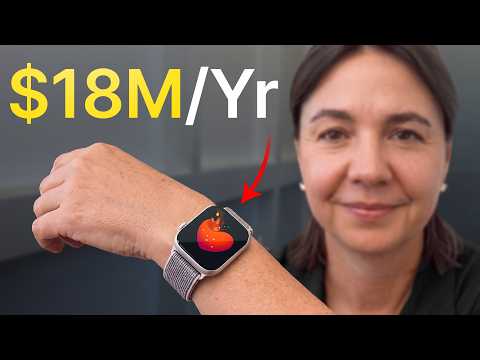 Superwall · Aug 30
How to Build an $18M/Year Apple Watch App (FREE MASTERCLASS)
Welltory's CPO walks through the onboarding of a health app that reads Apple Watch data, covering a six-ingredient pitch framework, personal-data proof and a fear-of-loss close. The app reaches about 18 million ARR and nearly 18 million downloads after 10 years, and over 90% of users sync health data on the first screen.
 App Masters · Aug 25
The UGC Marketing Playbook Behind 300M+ Monthly Views
A founder lays out her UGC marketing system: how she pays creators, finds them, onboards them and warms up fresh accounts. The result is apps pulling 300-400 million monthly social views, with the founder owning the viral format rather than the creators.
 Superwall · Aug 25
Meet The Marketing Genius Behind Cal AI
A former stadium ops worker scaled Cal AI's influencer program from about 20 creators to 200+ posting at once, using brute-force email outreach, minimum view clauses and seamless in-video app demos. The app peaked at $60 million a year, and the episode shows how the machine ran and why creator CPMs improved with saturation.
 David Senra · Aug 23
Sam Altman on Building OpenAI & Betting on the Impossible
Sam Altman explains how OpenAI was built on non-consensus bets, a platform strategy and a willingness to kill good ideas to protect compute for great ones. The decision to ship ChatGPT early and double down on it, against Silicon Valley wisdom, shows how iterative deployment and focus shaped the company.
 Subversive · Aug 20
Building the AI Career Mentor With a Freemium Bet
Apt turned a personality and aptitude quiz into an AI career mentor, using a long conversational onboarding quiz as its main conversion funnel. The episode covers why longer quizzes converted better, how an AI chat quiz lifted conversion more than 60%, and how an app-layer startup can stay defensible against OpenAI and Anthropic.
 Sub Club · Aug 19
$10M ARR without ever testing a paywall — Luke Martin-Fuller, Visible
Visible, a wearable and app for pacing energy with chronic illness, shows how to grow with a product-first approach: it went from $1M to $10M in subscription ARR in exactly two years, with one paid channel, no lifecycle email and no paywall tests. The episode covers paying members for UGC ads, qualifying buyers with a web quiz, pricing hardware at cost, and building trust through published research.
 App Masters · Aug 18
We’ve Tested 100s of Paywalls. Here’s What Actually Converts.
Seven paywall principles drawn from hundreds of tests: show the paywall in onboarding, consider a hard paywall, explain the trial, sell outcomes, add context, make value obvious and test offers and CTAs. Real tests include a 52% sales lift from putting the paywall before sign up and a 3x sales lift from moving the trial to a weekly plan.
 David Senra · Aug 16
Excellence Is the Capacity To Take Pain | Travis Kalanick, Founder of Uber
Kalanick's story shows how to build a company by taking on problems others call impossible, winning on service and efficiency instead of lobbying, and running with as few rules as possible. The decision that makes it worth hearing is how he ran fundraising and market wars as processes (an auction, an efficiency edge) rather than fights over a single price.
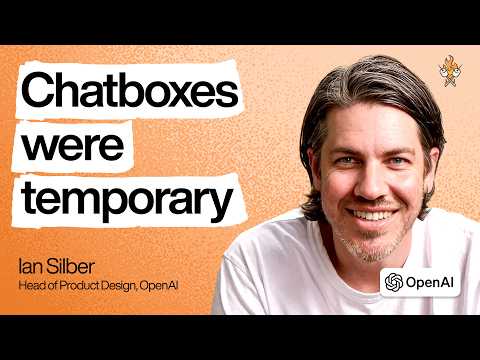 Lenny's Podcast · Aug 16
Chatbots are not the final interface: OpenAI’s Head of Design on what’s next | Ian Silber
Ian Silber explains how OpenAI designs ChatGPT and Codex when the technology changes monthly: pick which features to polish, design for a huge spread of users, and stay curious and adaptable. He argues designers are more empowered than ever, with human judgment about user needs, invention and point of view as the lasting edge.
 App Masters · Aug 11
Are You Ignoring These RevenueCat Features? (Stop Losing Money)
A walkthrough of the RevenueCat charts and features used to judge subscription app health and decide when an app is ready for paid acquisition. It shows a roughly $37,000 MRR app with a 7-day trial converting over 60% of trial starts to paid, and a paywall test where a money back guarantee is winning.
 Acquired · Aug 10
Disney: The Renaissance and the Empire
Disney was rescued twice by managers who extended its character flywheel into new businesses and bought great storytellers and cash engines instead of building them. The ABC and ESPN deal and the Pixar purchase made the empire, while the later Fox deal and the pivot to streaming show how hard it is to change a business model.
 David Senra · Aug 9
Founder of CAA Michael Ovitz: "I Just Knew I Was Going to Outwork Every One of Them"
Ovitz shows how a founder with no standing beat a field of about 200 agencies on work ethic, a shared-credit culture and a business model built to outlast him. The result is a CAA that is still strong 50 years on, and a set of habits Ovitz still applies to technology and deals at the age of a retiree.
 Subversive · Aug 6
The Anti-Addictive Playbook Behind Pok Pok's 9X Subscriber Growth | Melissa Cash
Pok Pok built a subscription kids app with no levels, rewards, streaks or pop-ups, and grew subscribers 9x in one year by earning parent trust. The episode covers micro-creator programs, Montessori positioning, delayed Android launch, price testing, and how to show value to a parent who never uses the product.
 Sub Club · Aug 5
He left Google to build the Google Maps for boats — Jelte Liebrand, Savvy Navvy
Savvy Navvy's founder explains how he funded a consumer app through equity crowdfunding instead of VC, built a B2B boat manufacturer flywheel, and used a two-year plan to speed up CAC payback. He also shares why removing signup friction backfired and why most startups can't A/B test cleanly.
 App Masters · Aug 4
App Ideas That People Are Already Searching For (Steal This Strategy)
The Tentacle Strategy finds app ideas by studying big, high-revenue apps and building a focused app around one low-competition keyword they ignore. Steve says it produced an app earning $550,000 last year, a $2,000 to $3,000 a month app, and a client app at $12,000 to $15,000 a month, all organic.
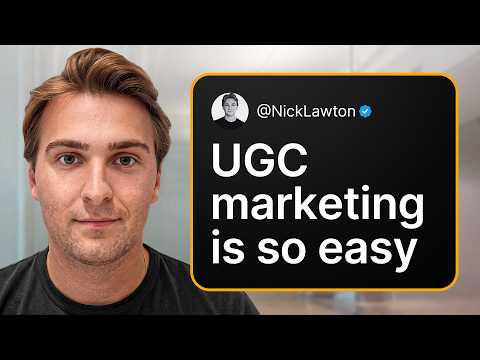 Superwall · Aug 3
#1 UGC EXPERT Reveals How To Market Consumer Apps
Nick Lawton walks through how consumer apps run UGC creator campaigns end to end, from a $2,000 to $4,000 starting budget to putting paid spend behind organic winners. The result that makes it worth hearing: SideShift brands spend from $250,000 to over $700,000 per month profitably, and he says AI UGC gets views but has not converted.
 Lenny's Podcast · Aug 2
This CPO regrets that product management exists | Tom Verrilli (CPO of Whatnot)
Whatnot runs about 20 PMs on a premise that product management should only be deployed where a specific need exists, with senior people staying hands-on in IC work instead of managing layers. The episode lays out how that model works in practice, how Whatnot hires PMs (31,832 applied in two years, one was hired), and how AI changes the work.
July 202614
 Superwall · Jul 28
$16M AI CEOs: How to Make $1.3M/Month With AI Apps
Social is a $16M annualized, profitable app studio that buys apps after their viral peak and scales them with constant A/B testing and about 4,000 fully AI-made video ads a month. The episode shows how removing the onboarding paywall, tagging the reasoning behind every test, and mixing human ad ideas with AI execution lifted revenue per user 2x in 12 months.
 David Senra · Jul 26
DHH: How to Build a Profitable Company Without Losing Control
DHH has spent 25 years building Basecamp and other products around one condition: no investor, board or boss gets to tell him what to do. Taking one absurdly priced investment from Jeff Bezos, treating cost and constraint as strengths, and teaching instead of advertising let 37signals stay small, profitable and independent.
 Lenny's Podcast · Jul 26
Why AI is going vertical (again) | Dianne Penn (Anthropic)
Anthropic's first technical PM explains how her team turns vague user feedback into evals, incubates discontinuous bets in Labs, and builds products that stay useful as models improve. The episode shows how a team of five product engineers grew into a leader in coding and agents by spotting early use cases like long-form code and pairing frontier models with frontier products like Claude Code.
 Subversive · Jul 23
Tyler Denk on Beating Substack, Shipping Weekly, and the 0% Take Rate Bet
Tyler Denk explains how he productized Morning Brew's internal growth stack into beehiiv, winning early with weekly shipping, public building and a 0% take rate against Substack. The result is a platform that went from $3M to $20M+ ARR and is expanding from newsletters into websites, podcasts, communities and an ad network.
 Sub Club · Jul 22
Make Ugly Ads to Grow Your App – Yuliya Lennox (Solid Starts)
Yuliya Lennox draws on a decade of growing apps to argue for ugly, product-first ads, founder-led marketing, and aggressive localization. She explains why stable ad performance is a warning sign and why organic growth plateaus, using examples from BetterMe, Eva, Replika and Solid Starts.
 App Masters · Jul 21
How to Create App Store Screenshots That Get More Downloads
Screenshot design often converts App Store visitors better than keyword work, and this episode shows how a CBT therapy app gained 30% more downloads from a screenshot A/B test. It also walks through building, localizing and uploading screenshots as a product page optimization test using the sponsor tool AppScreens.
 Superwall · Jul 19
Beginners Guide to Buying & Selling Apps 2026
Steve Young explains how he finds apps and keywords that already have organic distribution, buys undermonetized apps (sometimes with a loan), and lifts revenue with ASO and hard paywalls. One acquired app has made over $1 million in its lifetime and about $500,000 last year, and a hard paywall doubled the trial start rate on another.
 App Masters · Jul 14
The Web2App Playbook: Scale Your App Without App Store Limits
Explains why web-to-app funnels are one of the fastest-growing ways to acquire and monetize mobile app users, and walks through the quiz, paywall, checkout, ad optimization, upsell and tripwire tactics that make them work. The case: skipping the app store means avoiding the 15 to 30% fee, getting cash faster, and having far more freedom in how you price and sell.
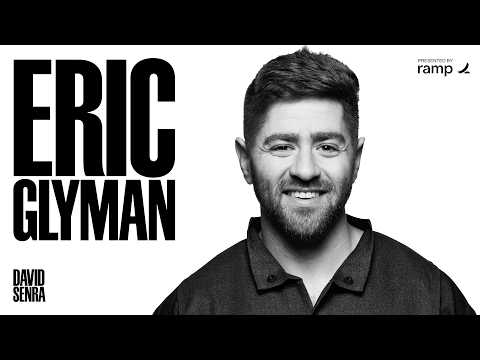 David Senra · Jul 12
The $44 Billion Company Automating Your Company's Finances
Ramp shows how a company can win a crowded market by inverting the industry's core assumption and measuring itself on customers' dollars and hours saved. Glyman's decision to sell time instead of money, and to treat AI labs as the real competitor, shapes how Ramp hires, designs and prices in the AI era.
 Lenny's Podcast · Jul 9
The rise of taste, human authenticity and judgment in an AI world | Adam Mosseri (Head of IG)
Instagram's head explains how Meta is shrinking product teams into lean pods with generalist product staff, why taste, strategy and curation stay human, and how Instagram thinks about ranking, AI content and creators. He also shares hard lessons from two big failures, Facebook Home and the first version of Reels, and from public backlash over a feed test.
 Subversive · Jul 9
How Purpose Hit $1M ARR in 14 Days
Raj Singh explains how Purpose, an AI mentor app built with author Mark Manson, got users to an aha moment in 5 to 10 minutes, gave a sycophantic LLM a backbone, and used a celebrity cofounder's audience to reach $1M ARR in two weeks. Over 40% of users now call it life-changing less than a year in.
 Sub Club · Jul 8
The Bootstrapper's Path to $10M ARR Without Venture Capital – Andrew Maguire, Volo Ventures
Covers why product taste and judgment, not engineering, is now the bottleneck for great apps, what makes consumer subscription investable in 2026, and when to bootstrap versus raise venture. The takeaway is that cheap building, UA financing and tooling make a $10M indie app more reachable than ever, while venture only fits if you can name a billion-dollar outcome.
 Superwall · Jul 8
$172M of App Building Advice in 50 Minutes
Six rules for building a consumer app that can sell for nine figures: own a narrow category, build for sticky users, earn organic traffic, charge premium prices, tailor the story to the buyer, and sell before you need to. The standout result is Waking Up, which gets about 25K downloads a month yet earns over $1M a month by charging $20 a month and $150 a year.
 App Masters · Jul 7
The Paywall Strategy That Increased Conversions by 56%
Paywall and onboarding experiments from a MAU Vegas talk: how to place the X on hard paywalls, what to show before the paywall, reverse trials, trial offers, and paywall copy tweaks. The reported results include a 56% lift in trial activations, free users converting at 4.5% instead of 0.4%, and a 38% lift from showing broken-down prices.
June 202618
 App Masters · Jun 30
Profitable Apps Going Broke? Here's Why
Paid acquisition for subscription apps is often capped by cash flow, because Apple and Google pay out 45+ days after the sale, so a profitable campaign can stall when the budget runs dry. Steve walks through a $10,000 budget example where $9,000 of spend returned about $10,800 and shows how weekly payouts through Adapty Finance (a sponsor of the video) let you reinvest sooner.
 Founders · Jun 28
The Practical Genius of Honda
Soichiro Honda built Honda around engines, research and a partner who ran the business side, and he made the Super Cub the best-selling motor vehicle of all time. The story shows how splitting research from manufacturing, targeting non-enthusiasts and refusing protection built a company that lasted.
 Lenny's Podcast · Jun 28
Why OpenAI is merging Codex and ChatGPT and the future of knowledge work | Andrew Ambrosino
Cheap implementation has flipped product work: anyone can build anything, so curation, taste and picking the right medium matter most. The Codex team's habits (dogfooding, zone-defense PMs, hazy long-range plans, re-releasing features as models improve) helped usage grow 6x since January to over 5 million weekly users, with nearly 100% of OpenAI employees using it weekly.
 Superwall · Jun 28
I speedran an ai app to $100k in 70 days.
Cedric built a peptide and GLP-1 tracking app and used a creator-first retainer plus affiliate system to reach $100,000 in revenue in 70 days. He explains how he sources and pays creators, turns organic winners into Meta ads, and tailors onboarding by age.
 Subversive · Jun 25
How ClassDojo Built Network Effects to Reach 95% of US K-8 Schools
ClassDojo grew teacher by teacher with no paid acquisition, built a three-sided network of teachers, parents and kids, and then monetized with optional extras without breaking trust. The result is use in about 95% of US K-8 schools, about 5% of the base paying, and new businesses (Tutor, Islands, Sparks) launched on top of the network.
 App Masters · Jun 24
Copy Our $85,000/Month Apple Ads Strategy
Explains the two Apple Ads search campaigns to start with, a max conversion discovery campaign and a single keyword ad group (SCAG) campaign, with the exact setup choices for budgets, bids and targeting. The setup is backed by account data showing about $85,000 a month of ROAS-positive spend for one client.
 Sub Club · Jun 24
How Simply Finally Cracked Facebook Ads with Web Funnels – Yoav Sharon, Simply
Simply's growth lead explains how web funnels opened up Facebook and older audiences, how a custom purchasing power pricing index and deep localization lifted ARPU, and why monthly plans can beat annual on LTV. Web flows drive about 20% of revenue, and a Japan paywall lesson shows why best practices need local checks.
 Acquired · Jun 23
The Walt Disney Company: The most successful enterprise for monetizing human nostalgia
Walt Disney's era shows how an artist-led company can turn timeless animated IP into a business that earns from films, merchandise, television and parks, and why that took repeated all-in bets that nearly sank it. The decisions that make it worth hearing are Snow White, the Kay Kamen merchandise deal and the ABC-financed Disneyland.
 Lenny's Podcast · Jun 21
What happens after coding is solved? | Fiona Fung (Claude Code & Cowork)
Fiona Fung explains how the Claude Code and Cowork teams work when coding is no longer the bottleneck: using Claude to review team output, automating verification, giving high agency with high accountability, and planning just in time. Anthropic engineers now ship 8x as much code per quarter as in 2025, and her team is rethinking roles, quality, hiring and planning to keep up.
 Superwall · Jun 21
How to Build a $2M/Month App (Copy Me)
Marcus Burke explains how to build Meta ads for subscription apps: research the audience's own language on Reddit, prime people for the App Store, and structure ad sets so spend reaches distinct audiences. His best-performing ad concept has passed $1M in spend across hundreds of iterations, and he has scaled an app to $2M a month.
 App Masters · Jun 16
The AIGC Ad Creatives Crushing It vs. The Ones Flopping
Two growth operators show real AI-generated ad creatives and explain how they build, test and scale them, from UGC anchors with swapped backgrounds to fully prompted videos. The takeaway is that creative production is cheap, winners cannot be predicted, and the edge comes from concept, volume and distribution.
 David Senra · Jun 14
Building Pixar, Working With Steve Jobs, and Cultivating Creativity | Ed Catmull
Ed Catmull explains how Pixar was built to protect fragile early ideas through honest, ego-free group problem solving, and why that culture mattered more than any single genius. The result was a studio that finished 21 of the 22 films it started, and a rival that never asked how it worked.
 Lenny's Podcast · Jun 14
The hidden pattern behind successful products | Mark Pincus (FarmVille, Words with Friends, & more)
Mark Pincus explains his Proven, Better, New framework for product ideas, why starting small beats starting ambitious, and why founders should kill hope early by testing many cheap ideas. At Zynga, eight of 10 major game launches became massive hits, and he credits retention and an obsessive product process over virality.
 Subversive · Jun 11
How StudyFetch Used Creator-Led Growth to Hit $10M+ ARR in 3 Years
StudyFetch grew to over 7 million students by building an AI tutor that teaches instead of giving answers, and by scaling a student creator program from one person to hundreds of creators. The episode covers how that creator engine works, which creator types to use, and how the company extended into B2B with Honen and NVIDIA.
 David Senra · Jun 7
The Company Apple Couldn't Kill | Spotify Co-CEO Gustav Söderström
Spotify's co-CEO explains how the company chose a single-experience org, a time well spent strategy and three bets against Apple, so it could survive an incumbent that vowed to kill it. The decisions worth hearing are choosing the pain of one super app for distribution, and making anti-engagement choices that a subscription model can afford.
 Lenny's Podcast · Jun 7
Tony Fadell: How to build real taste (and why AI makes it matter more)
Tony Fadell explains how to make taste-driven product decisions for a 1.0, why marketing and the full customer journey define a product, and why AI-generated code and cognitive surrender are risks for builders. He backs it with first-hand stories from the iPod, iPhone and Nest, where each product needed about three generations to work.
 Superwall · Jun 7
The 14-Year-Old Who Built a $14k/Month AI App
A 14-year-old founder explains the influencer outreach and deal system he used to take a gamified productivity app to over $14,000 a month. It covers DM scripts, four deal structures, how to vet creators, and how to pick app ideas.
 Founders · Jun 3
Steve Jobs in Exile
Steve Jobs spent 12 years in exile building NeXT, where too much money, perfectionism and a team afraid to tell him the truth nearly destroyed the company. The long failure forced him to change how he led, and that change is why Apple bought NeXT and why he could rebuild Apple.
May 202617
 Superwall · May 31
I Studied 1,000,000 UGC Ads, This Is What Will Grow Your App
Shows how top consumer apps run UGC programs: how to structure creator teams, pay creators, and put Spark and partnership ad money behind organic winners. The programs mentioned reached 500 million views and #1 on the App Store, with CPMs under 90 cents.
 Subversive · May 28
How Wabi is Building “YouTube for Software” with a Platform for Creating Mini Apps
Eugenia Kuyda explains how she is building Wabi, a platform for creating, sharing and remixing mini apps, and what she learned growing Replika to 40M+ users. The lessons cover story-led growth, activation around a first useful app, remix-first onboarding, choosing the right core metric, and usage-based monetization.
 Sub Club · May 27
How Removing the Free Trial Grew Monthly Subs 2000% – Nancy Anderson, Natal
A founder-led, trust-first approach to growing a niche fitness app: answer every message with real experts, soft sell, and keep one focused app. It produced a 68% trial conversion rate, a 17% download to trial rate, and a 2,000% jump in monthly subscriptions after removing the free trial from the monthly plan.
 App Masters · May 26
7 Ad Monetization Hacks Top Apps Use Right Now
Ad monetization tactics for gaming and non-gaming apps, from app open ads and welcome bonuses to rewarded ads inside subscription apps. The core lesson is that top apps now blend ads, subscriptions and in-app purchases, since 80 to 90% of installs never pay.
 Superwall · May 24
The EXACT System to Go From 0-$10M+ With Your App
StudyFetch grew an AI study app to over 7 million users and 2 billion views by running a large creator program, including paying influencers to start brand new zero follower accounts as UGC gets less effective. The episode covers how they pick creators, pay them, structure the team and design product features to look good on camera.
 Superwall · May 21
The NEW Short Form Strategy Dominating For App Growth
Yannis explains how he finds TikTok formats that both go viral and drive installs, then mass produces them in house through warmed-up reposter accounts instead of hiring creators. His system opens 50 to 100 accounts per week and produced about 300 million views and an estimated 3 to 5 million downloads last year.
 App Masters · May 19
This Fitness App Makes $200K a Month Using Only AI Video Ads
Steve P. Young shows how MadMuscles pairs Meta ads, AI-generated video creatives and a web-to-app checkout to scale a fitness app. The app shows roughly $200,000 a month in app store revenue alone, with web revenue likely on top.
 Subversive · May 14
How Cal AI Hit $50M ARR in 2 Years by Nailing Product/Channel Fit on TikTok
Cal AI designed its calorie tracking app to be understood in a 10-second TikTok video and grew through hundreds of fitness creators, then layered paid ads and affiliates on top. The result was over $50M ARR in under two years and an acquisition by MyFitnessPal in late 2025.
 Sub Club · May 13
Protecting Freemium at 100M Users AND Driving $500M Revenue – Giordano Contestabile, Life360
Life360's VP of Product explains how the company runs growth as a company-wide experimentation system and protects a generous free tier instead of squeezing short-term conversion. Life360 has close to 100 million monthly users, about 3 million subscribers and nearly $500 million in annual revenue, and a machine learning test doubled Platinum signups without losing any Gold subscribers.
 App Masters · May 12
Why Most Apps Are Failing in 2026: 7 Mistakes Killing Your App Success
Seven early-stage mistakes that burn app budgets: building too much, coding by hand, paying for cloud too early, skipping startup credits, ignoring conversion design, cheap UI/UX and no marketing budget. AI-assisted development now ships a first version in about two months instead of six, which makes distribution and design the real bottlenecks.
 Superwall · May 11
she makes $400k/mo from ai apps (while in college)
Nicole shares the playbook behind Glam Up (150K MRR, 1 million users in 6 months) and Sprout (250K MRR, 100 million monthly views): scientifically tested faceless TikTok formats, a referral-gated paywall, and a trained creator army. The result is four apps built before 25, with her last two apps doing over 400K a month combined.
 David Senra · May 10
Dana White: The Man Behind the UFC
Dana White turned a near-bankrupt $2M purchase into a multibillion-dollar company by betting on the product fans actually wanted, owning what he built, and refusing to quit or take direction from outsiders. The decision to fund The Ultimate Fighter himself, in a last $10M bet, gave the UFC the television audience and full ownership that everything since has been built on.
 Founders · May 7
Phil Knight: Founder of Nike
Phil Knight turned a college paper about Japanese running shoes into Nike by betting everything on a market nobody else believed in, and he survived a decade of cash crises through relentless growth and a loyal team. The story is worth hearing for the decisions that nearly killed the company, such as plowing every dollar back into inventory, and the ones that saved it, such as presales, Japanese trade financing and the break with Onitsuka.
 App Masters · May 5
3 Critical Mistakes Killing Your App Engagement
Deep links that return users to the exact in-app spot, plus targeted trial re-engagement messages, fix onboarding and activation problems that look like low engagement. AppsFlyer data cited says deep linking for personalized onboarding lifts day 30 retention by 110% versus manual code entry.
 Superwall · May 5
I speedran a new app from 0 to $2m/year in 6 months (here's how)
Daniel shows how he built an audience and proof of willingness to pay before writing code, then used influencer-made ads, an annual-default paywall and consumable upsells to reach $2M ARR in 6 months with a dating profile analyzer. He also explains what he carried over to Cal AI, including retention features and a framework for picking app ideas.
 David Senra · May 3
Bootstrapping a Business to $5 Billion in Free Cash Flow | AppLovin’s Adam Foroughi
Foroughi bootstrapped an ad network after VCs passed, bought game studios to get training data, and kept a tiny team of A players, then borrowed to buy back stock when it fell 92%. The result is a company with roughly 400 core employees producing over a billion dollars of cash flow a quarter.
 Lenny's Podcast · May 2
AI era skills: Why cultivating agency matters more than job titles | Max Schoening (Notion)
Shows how a product team can get designers and PMs prototyping in code, why agency matters more than skills in the AI era, and why great products rest on one tiny exceptional core. Comes from Notion's head of product, who pushed designers and PMs to ship code and helped launch a widely loved AI agent.
April 202618
 Subversive · Apr 30
How Suno Grew to $300M in ARR by Democratizing Music Creation
Suno's CEO explains how an AI music app reached 2 million paying subscribers and $300M in ARR, mostly through model and product releases and word of mouth rather than paywall tuning. He covers launching on Discord, charging from day one, making shared song pages convert, and why he sees AI music as creative entertainment.
 Sub Club · Apr 29
Why Opal Stopped Chasing Revenue to Build a Billion-User App – Kenneth Schlenker
Opal's CEO explains why the app moved from a hard paywall to freemium, aiming at a billion-user product built on retention, brand and a real team rather than short-term revenue. Paid penetration fell from 20% to 9%, yet daily active users passed a million, organic growth rose sharply, and he says the payback is tenfold.
 App Masters · Apr 28
Live App Store Optimization Tutorial (ASO)
A live ASO and monetization audit of an indie symptom tracker shows how to pick keywords with low difficulty and some traffic, place them in the title, subtitle and a second localization, and then align screenshots and paywall to them. It also gives concrete paywall, pricing, and Apple Health tactics drawn from client apps.
 Lenny's Podcast · Apr 26
How to win when software is not a moat | Evan Spiegel (Snapchat CEO)
Evan Spiegel explains why software features are easy to copy, so durable consumer businesses need distribution, ecosystems and hard-to-clone assets, and how a tiny design team with a high weekly output keeps Snap inventing. Snapchat has nearly 1 billion monthly users and about $6 billion in revenue, and the episode shows the product, hiring and AI practices behind it.
 Superwall · Apr 26
Copy This Facebook Ads Strategy, It'll Blow Up Your App
Alex explains how a hashtag app reached 100k MRR on Meta ads by running UGC creative at huge volume, surviving repeated account bans, and then selling to a private equity style buyer. The result: about $1.5 to 1.8 million in ad spend (roughly $800k wasted) distilled into a repeatable playbook of captions, green screen and strong hooks.
 Lenny's Podcast · Apr 23
How Anthropic’s product team moves faster than anyone else | Cat Wu (Head of Product, Claude Code)
Cat Wu explains how Anthropic's Claude Code team cut feature timelines from months to weeks or days through research previews, tight launch processes, team principles and engineers with product taste. She also covers how to elicit the most from the current model, why to build products that don't fully work yet, and how PMs should use Cowork and Claude Code.
 Superwall · Apr 19
How I built a $500k/mo ai app (so you can just copy me)
Pingo grew to nearly $500k a month in about 14 months by having around 100 creators post videos that always show the product, plus a paywall built around a trial timeline. The episode covers creator recruiting and coaching, geo-aware virality, and detailed paywall and trial experiments.
 Subversive · Apr 16
How Discord Completely Redesigned its Mobile Apps
A former Discord product leader explains how his team redesigned the mobile apps to make a gamer-first chat product approachable for mainstream users, and how it chose to monetize with premium subscriptions instead of ads. It is worth hearing for the fast validation methods, the monetization rules that protect core growth loops, and the honest account of what the redesign underestimated with power users.
 Sub Club · Apr 15
The AI Growth Playbook for Subscription Apps – Phil Carter, Elemental Growth
Phil Carter walks through twelve AI-era tips organized by his subscription value loop (value creation, delivery and capture), covering onboarding, personalization, creative testing, tiering and credits. He backs them with client results such as Runna going from tens to 400+ creative concepts a month and a 75% LTV lift from a multi-step freemium paywall.
 App Masters · Apr 14
How to Create High-Converting AI UGC Ads in Minutes (No Creators Needed)
Shows how to use AI avatars to produce many UGC-style video ads fast, so scripts, hooks and presenters can be tested before paying real creators. The host has not yet reported ad results from these creatives, but he found managing real creators slow and unreliable, and the workflow shows how to raise creative volume cheaply.
 Acquired · Apr 13
Ferrari: What happens when you staple a luxury brand to a sports team?
Ferrari shows how a luxury brand and a racing team can sit under one roof and strengthen each other, built on scarcity, myth and a vertically integrated factory. The decisions that make it worth hearing are Enzo's myth-making and his selective sale to Fiat, and Luca di Montezemolo's 1991 turnaround that cut production almost in half and put the luxury strategy in place.
 David Senra · Apr 12
Evan Spiegel, Snapchat: Building a Multi-Billion Dollar Company
Spiegel built Snapchat by doing the opposite of the social media of its day, and learned early that software can be copied, so Snap invested in network effects, platforms and its own hardware. He kept control of the company so its profitable core could fund a 12-year bet on reinventing the computer with Specs.
 Lenny's Podcast · Apr 12
Hard truths about building in the AI era | Keith Rabois (Khosla Ventures)
Keith Rabois explains how to build a world-class team by hiring barrels (people who can drive an initiative from start to finish), finding undiscovered talent, and pushing harder when things go well. He also argues that PMs as intermediaries are fading, customer feedback misleads consumer products, and the best startups show unusual speed.
 Superwall · Apr 12
COPY this ai app's $6.7m/yr marketing strategy
Two ex-Loom employees explain how they grew Coconote to 6.7 million ARR in about 18 months, bootstrapped, using a small team of part-time creators, targeted short-form video, a longer onboarding and trial-extension anti-churn flow. The result: 100K ARR in 45 days, 5 million in a year, over 50% EBITDA, and an acquisition by Quizlet.
 App Masters · Apr 7
The Productivity App That Actually Stops Procrastination (Wisey App Review)
A teardown of the Wisey productivity app that shows how pairing utilities with bite-size lessons, a paid intro offer, a benefit-led pre-paywall flow and Apple API integrations can lift retention and revenue. The standout result is an App Masters client seeing over five figures a month in revenue from Apple Health referrals alone.
 Lenny's Podcast · Apr 5
Head of Growth (Anthropic): Anthropic is automating its own growth
Anthropic's head of growth explains how a growth team operates at a company going from $1 billion to over $19 billion ARR in 14 months, covering activation in AI products, the right kind of friction, big bets over micro-optimizations, and automating growth experiments with Claude. He also covers how PM, engineering and design roles are shifting, and how he uses Claude for data review, alignment checks and coaching.
 Subversive · Apr 2
How ElevenLabs is Building Consumer Apps on its $11B Voice AI Platform
Jack McDermott explains how ElevenLabs builds consumer apps on top of its voice AI models, from launching ElevenReader through grassroots communities to collapsing pricing into one simple paid plan. The result is a consumer audio app that reached strong traction in niche long-form audio and a pricing model built around how consumers actually think about paying.
 Sub Club · Apr 1
How the World’s #1 VPN App Reached 1 Billion Downloads – Tanuj Chatterjee, Super Unlimited
Super Unlimited reached the number one VPN spot on the App Store and over a billion downloads by treating the top of the funnel as a product decision: a frictionless, genuinely good free tier, obsessive service quality, and restraint in monetization. It now gets over a million downloads a day, mostly organic, and is profitable.
March 202622
 App Masters · Mar 31
This Self-Improvement App Might Kill MasterClass: RiseGuide Review (2026)
A teardown of RiseGuide's onboarding, paywall, lesson design and retention loops, showing how a self-improvement app gets users to commit before it asks for payment. It pairs the walkthrough with results from App Masters client tests, such as a 52% sales lift from showing the paywall before sign-up.
 David Senra · Mar 29
Tony Xu of DoorDash: Surviving 1,000 Days of Startup Hell
DoorDash's story shows how a broke founding team found a wide-open market by doing every job themselves, running experiments instead of debating, and staying close to customers through a long fundraising drought. The choices that made it worth hearing: starting in suburban Palo Alto instead of city centers, refunding every late order with almost no cash, and surviving about 1,000 days of hostile markets to win.
 Superwall · Mar 29
0 to $300k/mo in 45 days with my ai app (just copy me)
A first-time consumer app founder explains how one repeatable TikTok format, 85 paid UGC creators and a milestone bonus structure took an AI photo editor to $300k MRR in 45 days. The result is 600 million views in 60 days and 1.2 billion in 120 days, scaled with a $100k personal loan after one video showed roughly 6x return.
 App Masters · Mar 24
App Monetization Tactics No One Is Talking About
Five lesser-known subscription monetization tactics from top apps: three-screen paywalls, trial-to-discount offers, paid intro offers, reverse trials and pay-what-you-want pricing. Examples include a reverse trial that lifted free-to-paid conversion from 0.4% to 4.5% and a paid intro offer that raised conversion from 19% to 25%.
 Superwall · Mar 23
I speedran an ai app from 0 to $1m/yr in 10 months
Koby Conrad explains how Sunflower, an AI-powered app for quitting addictions, went from zero to $1M annualized revenue in about 10 months by hiring a top influencer as an employee, building an AI sponsor inside a larger product, and iterating on paywalls. The episode is worth hearing for the 48% revenue lift from trial reminders and his view on where app monetization is heading.
 Subversive · Mar 19
Insights from RevenueCat’s 2026 State of Subscription Apps Report
Rik Haandrikman walks through the biggest findings of RevenueCat's 2026 State of Subscription Apps report: a winner-take-most market, AI apps that churn faster, hard paywall versus freemium tradeoffs, and onboarding as the decisive moment. The data shows the top 10% of apps grew over 300% year over year while the median grew 5%, and that 80 to 90% of trial starts happen on day zero.
 Sub Club · Mar 18
$6.7M ARR, No Paid Ads, and an Exit to Quizlet in 2 Years – Brett Bauman & Zack Hargett, Coconote
Two ex-Loom builders launched an AI lecture note-taking app with a free trial from day one, grew it through a small team of content creators, and used a long onboarding and trial-extension cancellation offers to convert and retain students. They reached $100K ARR in 45 days, $1M in 4 months and $6.7M ARR with no paid ads, then sold to Quizlet in about two years.
 Superwall · Mar 15
The Stupid Simple Content Strategy That's Making Apps Go Viral
A creator turns his sponsored-video data into app ideas: he copies viral brand-deal formats, hands development to a co-founder, and runs distribution himself. The result was a class action settlement app that made $217,000 in 5 months and now earns about 100K a month.
 Lenny's Podcast · Mar 12
A behind-the-scenes interview with Lenny Rachitsky on building his newsletter and podcast
Lenny explains how a series of small signals led him from Airbnb PM to a 1.2 million subscriber newsletter and a top 10 tech podcast, and how he keeps it going weekly. He covers when he added the paywall, his quality bar, the treadmill behind weekly shipping, a fraud attack on his Product Pass, and why he keeps the business small.
 App Masters · Mar 10
Web-to-App Strategy: How Brands Lose Millions Without Deep Linking (Fix Your App Conversions)
Moving shoppers from mobile web into the app lifts conversion, and the gains depend on a seamless web-to-app journey with proper deep linking. Teardowns of Nike and Sephora show which smart banner and deep link choices keep shoppers moving and which ones lose them.
 Superwall · Mar 9
I speedran an ai app from 0 to $100k exit in 26 days
A solo founder validated a ranked running app by copying a proven competitor's Instagram format, selling a $5 early adopter spot on a Stripe page, and seeding launch day with App Store pre-orders. He then sold the app for roughly 5x ARR on an estimated 3K MRR while keeping 30% equity.
 Founders · Mar 8
How SpaceX Works
SpaceX shows that a cost-driven strategy, vertical integration, standardization, fast build-and-test iteration and a distinct culture only work together as a self-reinforcing system, which is why rivals cannot copy any single piece. The result is that in 2025 SpaceX launched more mass to orbit than every other provider on Earth combined.
 Sub Club · Mar 7
The Art of Driving Retention Through Product – Ben Gammon, Ladder
Retention comes from the product reliably delivering the result users came for, with lifecycle messaging layered on top. Ladder worked backwards from five-star reviews to a three-workouts-a-week target, then built a journal, check marks and a widget around it, and a nutrition add-on found through surveys now lifts conversion and retention among hybrid users.
 Sub Club · Mar 6
The Top 10% of Apps Grew 306%. Everyone Else? Barely Beat Inflation | SOSA 2026
A walkthrough of RevenueCat's 2026 State of Subscription Apps report: a flood of new AI-built apps, a power-law split in growth, and what the data says about paywalls, trials, churn and AI app retention. Key results: the top 10% of apps grew 306% while the median grew 5.3%, and hard paywalls converted 10.7% download to paid versus 2.1% for freemium.
 Sub Club · Mar 5
Why Web Onboarding Should Sell The Problem, Not The Solution – Leon Sasson, Rise Science
Rise Science spent years failing at web funnels by copying its app onboarding, then found success by treating web as a separate channel with a different audience, a problem-first flow, and discounted paid trials. The episode shows how to design, market and bill for a web funnel that works alongside app install campaigns.
 Subversive · Mar 5
How SuperMe is Building the Professional Network for the AI Era
Casey Winters explains how SuperMe builds an AI-native professional network of expert avatars, how it tries to stay defensible against ChatGPT and Claude, and how he runs a tiny AI-native team. He shares what failed early (voice clips, community-first), what worked (instant profiles from public content, multi-expert search), and why long-term defensibility matters more than fast AI growth.
 Sub Club · Mar 4
Dynamic Paywalls That Drove Millions in New Revenue – Shawn Gong, Tinder
Tinder used machine learning to show each user the single product they are most likely to buy instead of every tier and plan, and learned how to sell features a la carte without cannibalizing subscriptions. The ML paywall drove a multi-million dollar annual revenue increase, and the failed Tinder Select tier shows that stated willingness to pay is not enough.
 App Masters · Mar 3
How to Sell Your App or SaaS Business: Exits, Acquisitions & App Marketing Secrets
Steve P. Young explains how to decide when to sell an app or business, how to prepare for a seven or eight figure exit, and which deal structures help close. He also shows how a podcast audience grew into a 30+ person global team and why he now focuses on acquiring businesses.
 Sub Club · Mar 2
The Counterintuitive Way To Nudge Users Into Free Trials – Anmol Tiwari, Duolingo
Duolingo's approach to free trials favors clarity and trust over persuasion: spell out the trial timeline, offer multiple trials and no-strings free tastes, and personalize upsells. Shortening the trial from 14 to 7 days doubled experimentation velocity, and letting users pick their reminder day lifted conversions despite the added friction.
 David Senra · Mar 1
Brian Armstrong: When Washington Tried to Kill Coinbase
Armstrong shows how a founder with a decades-long mission builds a company in a brand-new industry: surviving near-death moments early, then fighting a hostile regulator and an internal culture split instead of backing down. The decision that makes it worth hearing is suing the SEC against nearly everyone's advice, which cost billions in market value in the short run and ended in a win with no fines and no changes to the business.
 Sub Club · Mar 1
How Mojo Increased ARPU 60% In Just Five Months – Michal Parizek, Mojo
Mojo raised average revenue per user 60% in five months through paywall and pricing experiments, tested by region and measured on 7-day revenue per user. The episode shows how a weekly paywall for free users, regional retesting and fast experiment cycles each added revenue.
 Superwall · Mar 1
Meet The 18y/o Who Solved UGC Marketing (100M Views in 2 Weeks)
Dris explains how he ran a UGC program that hit 100 million views in 2 weeks at Cluely, then built Methods, a UGC marketplace that pays creators $40 for a first video and hit $1.2M ARR in 7 days of sales calls. The episode teaches creator psychology, format-based content scaling, and framing, with a $500K payout and 50K creator marketplace as proof.
February 202615
 App Masters · Feb 24
App Marketing 101: How to Grow in a Crowded App Market
Distribution, not features, decides whether an app grows, so founders should find their channel market fit first using ASO, Apple Ads, Meta ads, viral content validation and a timed lifetime-free campaign. Case studies include an app taken to $90,000 in its first year with a two-day lifetime free burst, and a Meta-only funnel reaching $1M ARR.
 Superwall · Feb 22
Copy This UGC Strategy, It'll Make Your App Go Viral
A solo founder explains how he built an organic UGC machine of 60 to 70 creators posting daily on TikTok and Instagram, driving 30 to 44 million views a month without a team or funding. He shows how to test formats yourself, use 3-second watch rate to predict virality, and pay creators on performance.
 Lenny's Podcast · Feb 19
Head of Claude Code: What happens after coding is solved | Boris Cherny
Boris Cherny explains the product and team principles behind Claude Code: latent demand, building for the model six months out, under-resourcing teams, and giving engineers unlimited tokens. The result is a tool that went from a terminal hack to 4% of public GitHub commits, with 100% of his own code now written by Claude.
 Subversive · Feb 19
How GameChanger Became the World’s #1 Youth Sports App
GameChanger grew from a scorekeeping tool for baseball and softball coaches into the leading youth sports app by layering live video and highlights on top of a coach-and-family network. A one-day bet on livestreaming during COVID became the growth engine behind nearly 10 million active users and over $100 million in annual revenue.
 Sub Club · Feb 18
How Skylight Doubled Subscription Prices to $79 – Michael Segal & Mark Ungerer
Skylight, a bootstrapped family calendar and photo frame maker, explains how it prices and gates a subscription on top of a $300 to $700 device. It doubled the plus plan from $39 to $79 a year with minimal loss of retention or attach, and chose $79 over a revenue-maximizing $99 after talking to customers.
 App Masters · Feb 17
App Store Optimization: The Proven ASO Framework for 2026
A practical ASO framework for 2026: rank metadata and download volume first, then win with many low-competition keywords across the US and Spanish Mexico localizations. Case studies show $1,600 in the first 22 days from two keywords and 92 number one rankings producing $2 to $3,000 a month.
 Superwall · Feb 16
Full App Growth Guide 2026 - How to Make Viral Content to Get Users & Make Your App Retentive
A founder explains how a couples app went from 0.8% to 50% day-30 retention using a daily-question habit loop with carrot and stick notifications and widgets, then fixed distribution with TikTok account farming and an AI playbook system. The result is 50 million views and 150,000 users, all organic.
 David Senra · Feb 15
Jason Fried: Your Only Competition Is Your Costs
Jason Fried built a profitable, bootstrapped software company by keeping costs low, the team small and the products simple, and by deciding that enough customers who like what he likes is the whole business model. The result is 27 years of profit, no outside money, and cash profit sharing, with full independence over what to build.
 App Masters · Feb 10
This AI Photo Editing App Makes $500K a Month
A teardown of Photo Revive AI, an AI photo app that niched into photo restoration instead of competing as another generic AI image generator. It reportedly earns about $500K a month, and the flow shows how credit pricing, exit discounts, rewarded actions and watermarks work together.
 Lenny's Podcast · Feb 8
The rise of the professional vibe coder (a new AI-era job)
A non-technical, full-time vibe coder at Lovable explains the workflow he uses to ship production-quality internal and customer-facing products with AI: parallel prototypes, a PRD and markdown file system, and a four-step debugging routine. He was hired after building in public, and he argues that clarity, taste and judgment now matter more than coding skill.
 Superwall · Feb 8
I made 4,000 app paywalls and learned this
Paywall design and packaging are the biggest levers in paywall A/B testing, and simpler paywalls with a generic Continue button, a no-commitment line and clean plan groups usually win. After 4,000+ paywalls, the main lesson is that no paywall is universal, so start from a bullet-list baseline and test components.
 Subversive · Feb 5
How Speak Built a $1B AI Language Learning App
Speak's CEO explains how an AI-first language app built around speaking out loud grew by starting in one hard market, South Korea, and then copying a local, brand-led playbook into new countries. Speak recently raised a Series C at a $1 billion valuation, and about 10% of all South Koreans have tried the product.
 Sub Club · Feb 4
How ElevenLabs Ships So Fast With Small Teams
ElevenLabs runs small autonomous pods, prices consumer apps in terms users understand, and treats earned-media launches as a compounding asset that also makes paid cheaper. The mobile leads share what worked, such as dropping a pricing tier for hours of listening, and what failed, such as over-optimizing onboarding instead of testing a stripped-back base case.
 David Senra · Feb 1
Jimmy Iovine: Building Interscope Records & Beats by Dre
Jimmy Iovine went from engineering for John Lennon and Bruce Springsteen to building Interscope, then moved sideways into headphones and streaming because he saw the record business was being invaded. The decision to leave a lucrative post rather than sell the last CD led to Beats, which Apple bought for $3 billion.
 Superwall · Feb 1
this 14 yr old makes $100k/mo PROFIT building apps with ai (here's how)
A distribution-first founder explains how he turned viral memes into ad-monetized mobile games, then moved into consumer apps using faceless UGC, TikTok ads and influencer partnerships. His meme game hit about 2 million downloads and over $100k in a month when he was 14.
January 202616
 App Masters · Jan 27
This Simple Note-Taking App Makes $20K / Month (and How You Can Build Your Own)
A 2013 Notepad app with dated design makes about $20,000 a month with no paid ads, because organic App Store rankings for generic keywords bring about 40,000 downloads a month. The episode shows how to copy its keyword mix, fix its weak monetization, and prototype a similar app with an AI builder.
 Lenny's Podcast · Jan 25
The surprising advice from a founder who built 2 unicorns | Jason Cohen (WP Engine)
A five-step diagnostic for stalled growth, in order: logo churn, pricing and positioning, net revenue retention, saturated marketing channels, and whether you need to grow at all. It matters because small fixes at the first broken step beat tuning later steps, and one repositioning example raised price 8x for the same product.
 Superwall · Jan 25
Meet The Guy Who Solved App Growth on TikTok
Nic Weber explains how Noise uses mass distribution, copied viral formats and a two-pronged UGC plus slideshow strategy to get app growth from TikTok. The founders on the platform generated over 2.5 billion views in a year, and Noise itself averages about 30 cent installs.
 Subversive · Jan 22
How Margins Built a Viral Reading App
Paul Warren explains how Margins spent a year building its own book catalog and tracker, then launched on BookTok and went viral twice with almost no marketing plan. The app reached hundreds of thousands of readers, with a 4.9 rating across about 21,000 ratings, while monetization stayed light by design.
 Sub Club · Jan 21
Why Your Free Users Are Your Real Growth Engine – Cem Kansu (Duolingo CPO)
Duolingo's CPO explains how the app moved from fully free to ads, subscriptions and a multi-subject product without hurting its free-user growth engine. He covers button copy tests like 'Try for $0.00', measuring monetization backlash, and why protecting free value is both a mission and a business moat.
 App Masters · Jan 20
Watch This Before Building Your App (Build a Profitable MVP)
Steve P. Young argues that first-time app founders should build one premium feature, put a paywall in onboarding, and spend their effort on distribution instead of more features. He backs it with niche utility apps making $3K to $200K a month, such as Migraine Buddy and TV remote apps.
 David Senra · Jan 18
Tobi Lütke: 21 Years of Building Shopify
Tobi Lütke explains how he nearly broke Shopify by imitating a conventional public company CEO, then rebuilt it around his own intuitions with founder executives and a company designed like software. The story is worth hearing because the 2021 reset, built on COVID-era project cuts and a new operating system for the company, is what he credits for making Shopify work.
 Lenny's Podcast · Jan 18
How a Meta PM ships products without ever writing code | Zevi Arnovitz
A non-technical PM shows his full workflow for shipping real products in Cursor with Claude Code, built on reusable slash commands, a written plan, and cross-model code review. The payoff is a working, revenue-making side app built without writing code, plus a method engineers at Meta ask him to teach.
 Superwall · Jan 17
Meet The Guy Dominating The App Store
Ryan explains how his team built a TikTok creator army, a three-tier ad scaling system and a January-heavy ad calendar to drive 50 million+ downloads across a portfolio of about 30 apps. The system pushed one habit app to number one in the US App Store on January 2 and 3, two years in a row.
 Lenny's Podcast · Jan 11
Why most AI products fail: Lessons from 50+ AI deployments at OpenAI, Google & Amazon
AI products differ from regular software because they are non-deterministic and force a trade-off between agency and control, so they should be built in stages that start with high human control. Drawn from over 50 enterprise AI deployments, the episode gives a continuous calibration, continuous development loop, advice on evals versus production monitoring, and patterns that separate teams that ship working AI from those that hot-fix failing agents.
 Superwall · Jan 11
The App Marketing Strategy No One Talks About
Two founders explain how they grow client apps by posting hundreds of thousands of context-aware Instagram comments from fleets of real phones, borrowing warm-up logic from cold email. One health app campaign turned about 300,000 comments into roughly 7,000 link clicks and a projected 4x return.
 Subversive · Jan 8
How FLORA is Reinventing Creative Design with AI
FLORA's founder explains how building an AI creative tool for professionals, on an infinite node canvas and from his own needs as an artist, led to adoption by teams like Pentagram, Nike and Lionsgate. He covers the abstraction that simplified the product, forward deployed creatives as a growth channel, the metric that tracks real depth of use, and onboarding and sharing changes that helped.
 Sub Club · Jan 7
From Tinder to VC: Jeff Morris on Product-Market Fit, Monetization, and AI-Driven Growth
Jeff Morris explains how Tinder built its pricing, packaging and paywall system, and why founders who monetize on day one can get a false read on product-market fit. A single throwaway paywall entry point test at Tinder generated $50 million in revenue.
 David Senra · Jan 4
John Mackey: The Dropout Who Changed How America Eats
Mackey built a single Austin natural food store into the largest natural and organic grocer by competing on quality and service while rivals chased Walmart on price, then consolidating the natural foods industry through acquisitions. The decisions that make it worth hearing are going public in 1992 to keep VCs from taking control, and firing his own father from the board to keep growing.
 Superwall · Jan 4
he had nothing.. until he built a stupid simple $30k/mo app with AI
A self-taught founder explains how a joke GPT-3 dating text tool grew over about 2.5 years, while he kept his day job, into a roughly $30k/month business at about 80% margin. The episode covers turning press into domain authority for SEO, picking painkiller problems, hiring Upwork contractors early, and the revenue line he set for quitting.
 Lenny's Podcast · Jan 1
We replaced our sales team with 20 AI agents—here’s what happened next | Jason Lemkin (SaaStr)
Jason Lemkin explains how SaaStr replaced a go-to-market team of about 10 people with 1.2 humans and 20 AI agents, and what it took to train, manage and choose vendors for them. The result is similar sales output to the old human team, plus a clear picture of which sales roles survive and how to become hyper-employable.
December 20258
 Subversive · Dec 26
How Fitbod Uses AI to Hyperpersonalize Strength Workouts
Allen Chen explains how Fitbod grew a strength training app from a build-for-yourself prototype to $38M in ARR with small funding rounds, built on habit loops, word of mouth, ROI-positive paid ads and now in-house LLM personalization. The result is over 100 million workouts and about 40% yearly growth while staying cash flow positive and in founder control.
 App Masters · Dec 23
Copy Headway’s $100M+ Web2App Funnel Strategy (That Converts Like Crazy)
A step by step teardown of Headway's web to app funnel, covering the quiz psychology, paywall, downsell, upsells, deferred deep link and eight email winback sequence. Headway is said to earn hundreds of millions of dollars a year from this simple funnel, so it is a model to copy.
 Lenny's Podcast · Dec 18
The new AI growth playbook for 2026 | How Lovable hit $200M ARR in one year
Lovable's head of growth explains how the growth playbook changes for fast-moving AI companies: spend most effort on innovation, ship constantly, give the product away, and rebuild product-market fit every three months. Lovable passed $200M ARR in under a year with about 100 people, mostly through word of mouth, founder socials, influencers and free credits rather than paid ads or sales.
 App Masters · Dec 16
If You’re Running Paid App Ads, You NEED to Watch This
Paid ads such as Meta lift branded organic search and downloads, but last-touch attribution gives them no credit, so incrementality and cross-platform journey measurement are needed to judge channels fairly. An indie app spending $3,000 a month on Meta almost doubled its organic sales, which shows how much paid impact standard reports miss.
 Lenny's Podcast · Dec 14
Inside OpenAI: 2026 is the year of agents, AI’s biggest bottleneck, and why compute isn’t the issue
The episode explains how OpenAI built Codex into a coding agent that is becoming a software engineering teammate, and what product choices drove its growth. Codex grew 20x since August, serves trillions of tokens a week, and helped a few engineers ship the Sora Android app in 28 days.
 Subversive · Dec 11
How Opal Reached $10M ARR with 11 Employees
Opal's founder explains how a hard paywall, paid acquisition measured on day 8 ROAS, and early access to Apple's Screen Time API took a screen time app from a failed start to the world's number one in its category. The result is $10M in ARR with 11 people, then a deliberate shift to free tiers, daily active users and organic channels.
 David Senra · Dec 7
James Dyson: 5,127 Prototypes
Dyson spent 14 years and 5,127 prototypes, with rejections from every major manufacturer, before building the first dual cyclone vacuum on his 45th birthday, and he then kept full control of his company. The story teaches that a fragile idea survives through doggedness, hands-on learning, focus and owning the whole chain from invention to sale.
 Lenny's Podcast · Dec 4
Why AI is disrupting traditional product management | Tomer Cohen (LinkedIn CPO)
LinkedIn is replacing the traditional PM, design and engineering split with a Full Stack Builder model built on three pillars: a re-architected platform, custom internal agents, and culture. The episode shows how to build customized agents, curate their data, and drive adoption through incentives, pilots and performance reviews.
November 202515
 Lenny's Podcast · Nov 30
What world-class GTM looks like in 2026 | Jeanne DeWitt Grosser (Vercel, Stripe, Google)
Jeanne DeWitt Grosser explains how to run go-to-market like a product, from AI agents built by GTM engineers to segmentation, discovery and pricing. At Vercel, a lead agent costing about $1,000 a year let one SDR do the inbound work of ten while holding lead-to-opportunity conversion flat.
 Subversive · Nov 27
How Preply Built the World’s Largest Language Learning Marketplace
Preply's growth lead explains how a human tutor marketplace measures success by long-term subscriptions, matches learners to tutors, and designs onboarding with deliberate friction. The takeaway is that deliberate friction in onboarding produced the biggest conversion win he had seen, and that optimizing for subscriptions rather than funnel proxies keeps a team honest.
 App Masters · Nov 24
The Most Important Element of App Store Optimization (ASO Keyword Research)
Keyword research is the most overlooked part of ASO, and a competitor's indexed keyword list in a tool like ASOMobile is the best place to find low-difficulty, relevant terms a new app can rank for. The walkthrough uses the calorie tracker category and Cal AI to show how to filter, compare and monitor competitors, and how to spot untapped keywords and countries.
 Acquired · Nov 23
Coca-Cola: The Complete History & Strategy
Coca-Cola turned cheap syrup into a global brand by letting independent bottlers carry the capital and work while the company controlled the formula, trademark and marketing. The accidental $1 bottling contract, Woodruff's standardization and lifestyle advertising, and the New Coke blunder show how a brand and a system can outlast a product.
 Lenny's Podcast · Nov 20
Mental models for building products people love ft. Stewart Butterfield
Butterfield shares the mental models behind Slack's product and leadership: utility curves, comprehension over friction, tilting your umbrella, hyper-realistic work-like activities and the owner's delusion. The conversation shows how small acts of craft and empathy compounded into a product people evangelized and sold for one of tech's biggest acquisitions.
 App Masters · Nov 18
This Simple App Makes $300K a Month (And You Can Do It Too)
A teardown of a universal TV remote app with one onboarding screen and a basic paywall that still earns over $300,000 a month. It shows that distribution through keyword rankings matters more than features, onboarding polish or paywall design.
 Founders · Nov 17
How Rockefeller Worked
Rockefeller built Standard Oil by fixating on his biggest cost, transportation, borrowing to grow faster than rivals, and stacking one advantage on another until competitors could not survive alone. The Cleveland Massacre, where he bought 23 rivals in four weeks, shows how a deep war chest, better information and secrecy turned a crowded, chaotic industry into one he controlled.
 Lenny's Podcast · Nov 13
“Dumbest idea I’ve heard” to $100M ARR: Inside the rise of Gamma | Grant Lee (co-founder)
Gamma's CEO explains how a small, profitable team found product-market fit by rebuilding the first 30 seconds of onboarding, then grew through word of mouth, micro-influencers and fast prototype testing. The result is over $100M ARR in just over two years with about 30 people and a valuation above $2 billion.
 Subversive · Nov 13
How Calm Added 1.2M Subscribers with Creative Marketing Tactics
Nick Candler explains how Calm scaled paid social through heavy creative iteration, social listening and long-form video ads, while leaning on a strong organic and PR engine. His paid social work added 1.2 million subscribers, and ad creative alone swung trial-to-purchase conversion from 5% to 60 or 70%.
 App Masters · Nov 11
This App Makes $2M Using AI Ads (Learna App Review)
A teardown of the language learning app Learna, which makes about $2.4 million in 30 days using AI-generated multilingual video ads, plus its onboarding and paywall flow. It shows how one winning ad script can be cloned across languages and markets, and which onboarding choices lifted sales in the host's client data.
 David Senra · Nov 9
How Todd Graves Built Raising Cane's
Todd Graves built Raising Cane's on one craveable chicken finger menu that experts and bankers said would fail, funding it with refinery and Alaska fishing wages, and kept control of the company for three decades. The story teaches focus, founder control, company ownership of every restaurant and a hard rule on debt after Hurricane Katrina nearly sank the business.
 Lenny's Podcast · Nov 9
$1M to $10M: The enterprise sales playbook with Jen Abel
Enterprise sales is a different game from small business sales, and getting from $1M to $10M ARR means pricing near $100K, targeting tier-one logos, selling vision instead of problems, and hiring founder-like sellers. Abel explains why a $10K-$20K price traps startups and how to craft deals and run outbound by hand.
 Founders · Nov 4
How Larry Ellison Thinks
Larry Ellison built Oracle by betting on what almost no one else believed, picking the biggest rival as an enemy, and then rebuilding his own weak management after nearly losing the company in 1991. The story is worth hearing because it shows a founder who owns his mistakes in public and engineers every process, not just the product.
 App Masters · Nov 4
Black Hat App Growth Strategies You Don’t Know (But Your Competitors Might Be Using)
A talk on grey-hat and black-hat App Store growth tactics (keyword installs, fake reviews, brandjacking, free lifetime offers, hard paywalls) and where Apple is now cracking down. It shows an app going from a few hundred dollars a month to $90,000 in its first year, plus paywall tests that tripled weekly sales.
 Lenny's Podcast · Nov 2
She turned 100+ rejections into a $42B company | Melanie Perkins
Canva's CEO explains how she plans from a dream future backwards ("column B"), turns big goals into steps and celebrations, and used 100+ investor rejections to sharpen her pitch. The result is a company valued at over $42 billion, with over $3.3 billion in annual revenue and 8 years of profitability.
October 202515
 Subversive · Oct 30
How OpenArt is Using AI to Reinvent Content Creation
OpenArt's CEO explains how an embarrassing one-week MVP, SEO and a pivot from image generation to video storytelling took the company from 1 million to 10 million in ARR in 2024, to over $30M in ARR. The episode covers programmatic SEO, credit-based pricing changes, which growth metrics matter, and how an app company competes with foundation model labs.
 App Masters · Oct 28
The Shortcut to Scale: The Distribution First Mindset
Distribution should come before product: use keyword research, lifetime-deal promos, paid tests and content to find demand before building features. Case studies show an app going from a few hundred dollars to $90,000 in its first year at almost no cost, and a no-code paid test reaching a multi-million dollar business with no native app.
 David Senra · Oct 26
How Brad Jacobs Built 8 Billion-Dollar Companies
Brad Jacobs explains how he repeats one playbook across industries: pick a large fragmented market on the right side of a major trend, assemble people smarter than himself, pay them as partners, buy at disciplined prices and double the profit. The result is eight billion-dollar companies, and the episode shows the people systems, meeting habits and time rules behind that repetition.
 Acquired · Oct 26
Trader Joe’s: Hawaiian shirts and counter positioning
Joe Coulombe was a young executive trying to clone 7-Eleven. He built a counter-positioned grocery store around liquor, wine, health food and private label that has no direct competitor. The sharp choices to skip the supermarket and brand playbook, and to sell to Theo Albrecht on a one-page deal, are why it now earns over $2,000 per square foot, about double Whole Foods.
 Lenny's Podcast · Oct 23
Al Engineering 101 with Chip Huyen (Nvidia, Stanford, Netflix)
Chip Huyen explains pre-training, post-training, RL, evals and RAG in plain terms, then shares what she sees inside enterprises building AI products. The worth-hearing result: better data preparation, user feedback and system thinking improve AI apps far more than chasing new models, frameworks or vector databases.
 Founders · Oct 19
How Jensen Works
Jensen Huang built Nvidia around a handful of repeatable habits: constant teaching, a flat organization, blunt feedback, fear of complacency and long-term bets on markets he creates. The decision that makes it worth hearing is his 2007 and 2008 all-in bet on CUDA, which cost margins and stock value but built the base of Nvidia's AI dominance.
 Lenny's Podcast · Oct 16
Figma’s CEO: Why AI makes design, craft, and quality the new moat for startups | Dylan Field
Figma's CEO explains how the company kept pace after the failed $20 billion Adobe deal, how it picks new product lines by following the workflow, and why design, craft and taste now decide who wins in software. The result: Figma moved from one product to many and reached an IPO in 2025 by treating time to value, blockers and quality as core priorities.
 Subversive · Oct 16
How Best-In-Class Retention Propelled Flo to a $1B Valuation
Flo's CEO explains how a free, highly retentive period tracker became the entry point to a multi-mode women's health platform, and why retention drives organic growth, monetization and valuation. The result is 80 million monthly active users, close to $300M in annualized revenue and a $1B+ valuation, with mostly organic acquisition.
 App Masters · Oct 14
Bookmark This Tool To See How Are Ads & Apps Compare
Shows how to use the AppsFlyer Benchmarks tool to compare your app's CPI, retention, IPM and ad spend against your category, media type and country. The walkthrough on generative AI and graphic design apps shows how the data can point to cheaper categories, overlooked countries and what kind of app to build.
 David Senra · Oct 12
Michael Dell, Dell Technologies | David Senra
Michael Dell built a company that beat better-funded rivals by taking things apart, understanding true costs, and designing a supply chain that turned a lack of capital into a structural advantage. The story is worth hearing for the negative cash conversion cycle (5 days of inventory against rivals' 90) and for his habit of reinventing the company each time technology shifts.
 Lenny's Podcast · Oct 10
Inside Google's AI turnaround: AI Mode, AI Overviews, and vision for AI-powered search | Robby Stein
Google Search's VP of Product explains how AI Mode went from a 5 to 10 person prototype to a launched product in about a year, and why AI is expanding search rather than replacing it. He also shares the product principles behind Instagram Stories and Close Friends, including how Close Friends went from flop to hit over two to three years.
 App Masters · Oct 7
Copy This Meta Ads Strategy to Scale Your Web2App Campaigns (Part 2/2)
Explains how to run and scale Meta Ads for web2app funnels: start on a proxy event, move to purchase optimization, test creatives in bulk, then scale by duplicating campaigns. Gives concrete budgets, thresholds and pacing rules, such as $100 per creative and 20 to 25% budget raises every few days.
 Acquired · Oct 5
Google Part III: The AI Company. Google is amazingly well-positioned... will they win in AI?
Google invented or funded almost every key piece of modern AI (neural nets, TPUs, the transformer, DeepMind) and still got caught flat-footed by ChatGPT because its search profits made AI a threat to itself. The story is worth hearing for how Sundar Pichai's code red, the Brain and DeepMind merger and the single Gemini model turned a rocky start into a credible comeback.
 Lenny's Podcast · Oct 5
Finding hidden growth opportunities in your product | Albert Cheng (Duolingo, Grammarly, Chess.com)
Teaches how to find and scale growth wins by alternating between exploring new insights and exploiting proven ones, with examples from Duolingo, Grammarly and Chess.com. Worth hearing for concrete results: Grammarly's upgrade rate nearly doubled from sampling paid features for free users, and Chess.com's game review change lifted subscriptions 20%.
 Subversive · Oct 2
How Noom Avoided PMF Collapse in the Wake of GLP-1s
Noom's growth leader explains why a very long, personalized onboarding flow works for a hard-to-solve problem, which experiments tapped user motivation, and how the company adapted when GLP-1 drugs flooded its paid channels. The result is a playbook for moving from pure optimization to product-market fit expansion with a higher-LTV clinical offer and a free low-CAC tier.
September 202512
 App Masters · Sep 30
The Beginner's Guide to Meta Ads for Web2App Campaigns (Part 1/2)
A beginner's guide to the technical setup of Meta ads for web-to-app funnels: which events to optimize on, how to send them from pixel and server, and what funnel conversion rates to expect. The payoff is a clear benchmark chain (about 2% visitor to purchase) and a tracking setup that avoids double-counted events and weak optimization.
 David Senra · Sep 28
Daniel Ek, Spotify | David Senra
Ek explains how he stopped copying famous founders, learned who he is, and rebuilt his role at Spotify around what he does best while handing the rest to people better than him. The moment that makes it worth hearing is when his product chief told him he was not helping in product reviews and Ek stepped back, which freed both him and the team.
 Lenny's Podcast · Sep 28
A 4-step framework for building delightful products | Nesrine Changuel (Spotify, Google, Skype)
Delight means serving emotional and functional needs in the same feature, and Nesrine Changuel lays out a 4-step model, a delight grid and a 50-40-10 roadmap rule to do it without wasting time on confetti. Real examples from Chrome inactive tabs, Google Meet's self-view minimizing and Spotify's Discover Weekly bug show how emotional insight turned into features that moved users.
 Lenny's Podcast · Sep 25
Why AI evals are the hottest new skill for product builders | Hamel Husain & Shreya Shankar
A step-by-step method for building AI evals: read real traces, write open codes, group them into failure modes, count them, then build narrow binary LLM judges validated against human labels. The method has been taught to over 2,000 PMs and engineers, takes about a week up front and then roughly 30 minutes per week.
 Founders · Sep 23
How Bill Gates Works
Bill Gates built Microsoft around his own strengths: fanatical focus, a bet on pure software, tight cash control and a hunger for conflict. The contracts he fought for early, like best efforts, owning DOS and non-exclusive licensing, made Microsoft the first software company to sell over a billion dollars in a year.
 Lenny's Podcast · Sep 18
Why experts writing AI evals is creating the fastest-growing companies in history | Brendan Foody
Brendan Foody explains why evals are the main bottleneck for AI progress and how Mercor built a marketplace of expert professionals who write them for AI labs. Mercor went from $1M to $400M in run rate in 16 months with no sales or marketing staff, which makes the founding and culture lessons worth hearing.
 Subversive · Sep 17
How Learneo Leveraged M&A to Build a $3.6B EdTech Empire
Course Hero grew through a contribute-or-subscribe content loop built school by school, then Learneo aggregated focused edtech brands like QuillBot, Symbolab and CliffsNotes instead of forcing one product to go generic. QuillBot grew from about $4 million ARR in 2021 to over $60 million ARR and over 30 million monthly active users.
 App Masters · Sep 16
100K Downloads TWICE & $4K Revenue in 2 Months (Indie App Growth Case Study)
A case study of how an indie app used a free-promo distribution channel plus ASO work to jump from about 20 downloads a day to 163, hit 100,000 downloads twice, and reach about $4,000 in monthly sales within two months. It shows how to turn promo spikes into organic ranking, feedback and revenue.
 Lenny's Podcast · Sep 14
The ultimate guide to AEO: How to get ChatGPT to recommend your product | Ethan Smith (Graphite)
Answer engine optimization (AEO) is how a product gets mentioned in ChatGPT, Claude, Gemini and Perplexity answers, and it works like SEO plus citation building and long-tail question coverage. Webflow saw LLM traffic convert 6x better than Google search and now gets 8% of signups from LLMs, and early-stage startups can win in days rather than years.
 App Masters · Sep 9
How to 3X Your App Store Ratings
Steve Young explains how to ask for app store ratings at the right moment, for new, established and in-between apps. One client moved from about 50 ratings a month at 4.3 to nearly 400 a month at 4.5 by prompting right after trial activation.
 Subversive · Sep 4
How Honeydew is Reinventing Telehealth for Skincare
David Futoran explains how Honeydew built a telehealth service for moderate to severe acne by taking on the hard-to-prescribe treatment (Accutane) that commoditized competitors avoid. He covers going nationwide, supply-constrained provider scheduling, micro-influencer and paid acquisition, and a no-credit-card first visit, with adding Florida doubling the business overnight.
 App Masters · Sep 2
How to Create AI UGC Ads That Convert in 15 Minutes
Steve P. Young walks through a research-first workflow for making AI UGC ads: find a competitor ad with a high click-through rate, remix its script, then generate the actor, B-roll and emotional scenes in one tool (Arcads.ai). It matters because it shows how to turn proven scripts into new creatives in under 15 minutes, a process App Masters says has produced strong numbers for clients.
August 202513
 Lenny's Podcast · Aug 31
How we restructured Airtable's entire org for AI | Howie Liu (co-founder and CEO)
Howie Liu explains how Airtable reorganized around AI: a fast thinking team that ships weekly and a slow thinking team for deep infrastructure, with the CEO working as an individual contributor. Airtable reached over $100 million in free cash flow while rebuilding its product around an agent-first experience.
 Lenny's Podcast · Aug 28
How 80,000 companies build with AI: Products as organisms and the death of org charts | Asha Sharma
Asha Sharma explains how AI products are shifting from static artifacts to learning loops, and how teams, planning and org structure need to change with them. She draws on Microsoft's view of 15,000 customers building agents, including a physician-note product that went from a 30 to 60 percent acceptance rate to 83 percent after expert-annotated fine-tuning.
 Founders · Aug 26
How Elon Works
Over three decades and several companies, Elon Musk applied the same few principles: start from a mission, delete before you optimize, stay at the problem, and control cost and speed. The result is the five step algorithm he drilled into every team after Tesla's production hell, which shows how a founder can build companies by repeating simple rules until they become culture.
 Acquired · Aug 26
Google Part II: Alphabet
From 2004 to 2015 Google turned a pure search company into a maker of seven more billion-user products, each one chosen to grow the web, protect search ads from Microsoft, Apple and Facebook, or both. The decision that stands out is giving away or buying platforms like Chrome, Android and YouTube, so that Google never again had to depend on someone else's platform.
 App Masters · Aug 26
How to 2X Your App Retention With This Overlooked Ingredient
Integrating licensed music directly into an app can lift retention, session time and conversion, and a single music partner can remove the licensing and streaming burden. Feed.fm reports a 1.7x lift in D90 retention for users who listen to integrated music, 2.5x for the fitness app Swirkit, and 2x purchase conversion at American Eagle.
 Lenny's Podcast · Aug 21
How Intercom rose from the ashes by betting everything on AI | Eoghan McCabe (founder and CEO)
Intercom's CEO explains how a late-stage SaaS company with stalled growth rebuilt itself around an AI agent, Fin, through a narrower strategy, outcome-based pricing and a hard culture reset. Fin grew from 1 to 12 million ARR in its first year and is growing north of 300%, heading past 100 million ARR in under three quarters.
 Subversive · Aug 21
How onX Built a Portfolio of Apps to Grow ARR by 10x
onX's growth lead explains how a four-person horizontal growth team supports vertical apps for hunting, off-roading, backcountry and fishing, by building an experimentation system, doing user research and fixing the paywall and onboarding. Since its 2018 Series A the company has grown ARR 10x and its team more than 300%, mostly through word of mouth.
 App Masters · Aug 19
App Marketing On A Budget: My Proven $0 To $10k Strategy (2025)
Six low-budget app growth tactics: ASO keyword research, lifetime free offers, localization, Apple Ads, small Meta budgets, and simple profit math. Apps went from a few hundred dollars a month to $90,000 in a year, and one reached over $150,000 a month from organic search.
 Lenny's Podcast · Aug 17
Why ChatGPT will be the next big growth channel (and how to capitalize on it) | Brian Balfour
Platform shifts follow a four-step cycle (competition, moat, open platform, closed platform), and ChatGPT looks set to enter the open third-party platform step within about six months. The episode explains how to pick a platform bet, how to plan your exit before the platform closes, and how companies that set hard constraints are getting real AI adoption.
 App Masters · Aug 12
5 Free ASO Keyword Research Tools That Help Apps Print Cash
A walkthrough of five free keyword research tools (Google Trends, AppFollow, Google Keyword Planner, Fox Data, VidIQ) and how to stack them to find niche, high-intent, low-competition App Store keywords. A niche AI app found this way went from about $100 to $80,000 in its first nine months, driven mostly by App Store search.
 Lenny's Podcast · Aug 9
Inside ChatGPT: The fastest growing product in history | Nick Turley (OpenAI)
Nick Turley explains how ChatGPT went from a 10-day hackathon-born ship to a product with 700 million weekly users, and the habits behind it: ship early, treat the model as the product, price pragmatically, and keep a very fast pace. The result worth hearing is retention that improves over time and billions in revenue, built from decisions made quickly and often by accident.
 Subversive · Aug 7
How Wispr Flow Uses AI to Save Professionals Hours Every Day
Wispr Flow turned voice dictation into a zero-edit writing tool by outputting what users meant to write rather than a word-for-word transcript, then grew mostly through free influencer seeding. The result is an 81% zero edit rate, a 0.5 second send time after output, and use in over 25,000 apps, with a small growth team and a $30 million Series A.
 App Masters · Aug 5
This AI Learning App Made $1.8M in Its First Year (Coursiv App)
A teardown of how the Coursiv AI learning app runs a web-to-app funnel: ads to a landing page, a long quiz onboarding, and a personalized, time-limited paywall. The app reached about $1.8M in lifetime revenue in its first year, with roughly $250,000 a month at its peak.
July 202512
 Lenny's Podcast · Jul 31
He saved OpenAI, invented the “Like” button, and built Google Maps: Bret Taylor (Sierra)
Bret Taylor shares lessons from a failed Google product that led to Google Maps, a daily question for choosing the highest-impact work, and how AI agents, outcome-based pricing and direct sales will reshape software. Sierra's agents automate 50 to 90% of customer service interactions for its customers, which makes his go-to-market and pricing views worth hearing.
 App Masters · Jul 29
Easy Trick to Keep Users Coming Back to Your App
Retention work can be split into onboarding, activation and habit forming, and adding games through a plug-and-play tool like Gamezop is offered as a quick way to build the habit and add ad revenue. The video is a sponsored walkthrough, so the claims about the tool come from the host and its partner, not from tested results.
 Lenny's Podcast · Jul 27
Pricing your AI product: Lessons from 400+ companies and 50 unicorns | Madhavan Ramanujam
Pricing and monetization expert Madhavan Ramanujam explains how to balance market share and wallet share, negotiate for full value, run POCs as business-case creation, and pick an AI pricing model with an attribution and autonomy 2x2. His work covers 250+ companies and 30 unicorns, and he argues AI winners can capture 25% to 50% of the value they create versus 10% to 20% for classic SaaS.
 Subversive · Jul 24
How Chess.com Became the World’s Top Chess App
Chess.com grew to 200 million registered users with almost no paid advertising, riding creators, events and a pandemic plus Queen's Gambit surge. Its growth chief explains how it now shifts from lumpy viral waves to steady product-led growth through high-velocity experimentation, with a target of 1,000 experiments a year.
 App Masters · Jul 22
This Morning Routine App Makes Almost $1 Million a Year!
A teardown of Routinery, a morning routine app that ranks number one for "morning routine" and, per Sensor Tower, earns roughly $60,000 to $80,000 a month with no paid ads. It shows how onboarding, an ad-unlock paywall, a timed discount and well-placed share and rating prompts drive conversion and engagement.
 Lenny's Podcast · Jul 17
The AI-native startup: 5 products, 7-figure revenue, 100% AI-written code. | Dan Shipper (Every)
Every runs a daily newsletter, several AI apps and a consulting arm with 15 people by making AI the default way of working, including engineers who write no code by hand. The episode covers the specific habits behind that: an AI operations lead, compounding engineering, a multi-agent stack, and a playbook for making any company AI-first.
 App Masters · Jul 15
The Anatomy of a High-Converting Paywall
Web-to-app paywalls work best as long, personalized, objection-handling pages with about 14 blocks, unlike short mobile paywalls. Average paywall-to-subscription conversion is 6% on web, roughly three times the ~2% install-to-paid rate on mobile.
 Lenny's Podcast · Jul 13
Rapidly test and validate any startup idea with the 2-day Foundation Sprint
The episode walks through the Foundation Sprint, a roughly 10 hour, two-day process that settles customer, problem, competition, differentiation and approach before any building starts, then tests the resulting hypothesis in weekly design sprints. Founders who run it say it compresses three to four months of work into three to four weeks, and the example startup Latchet went from a scorecard full of red to all green in three weekly sprints.
 Subversive · Jul 10
How Superpower is Reinventing Healthcare
Superpower's founder explains how a $499/year health membership grew a waitlist of almost 200,000 people mostly by word of mouth, a distinct brand and viral product drops, with no paid ads yet. He also covers why launching at a $10,000 price point was a mistake and why targeting tastemakers comes before the bigger short-term markets.
 Lenny's Podcast · Jul 6
Solo founder, $80M exit, 6 months: The Base44 bootstrapped startup success story | Maor Shlomo
A solo founder explains how he grew an AI app builder to 400,000 users with no paid marketing, using hands-on early users, building in public on LinkedIn and credit incentives. The result is $1M ARR three weeks after launch and an $80M+ acquisition by Wix within six months, with no outside funding.
 Lenny's Podcast · Jul 3
I’ve run 75+ businesses. Here’s why you’re probably chasing the wrong idea. | Andrew Wilkinson
Andrew Wilkinson explains how to pick business ideas by fishing where the fish are, favoring boring niches, buying businesses with moats, and hiring fully formed people. He bootstrapped Tiny to almost $300 million in revenue across 40+ businesses without venture capital, and he now runs much of his inbox, calendar and research with AI agents.
 App Masters · Jul 1
7 Counterintuitive App Growth Strategies That Actually Work | Steve P. Young at MAU 2025
A conference talk of paywall and pricing A/B tests from App Masters client apps, covering where to place the paywall, how many plans to show, which plan to promote, and how hard to gate content. Several tests moved sales sharply, such as 3x more sales from defaulting to a weekly plan and trial starts falling from 13% to 6% when a close button was added.
June 20258
 Acquired · Jun 29
Google Part I: Origins of Search. How the Best Business in Human History Happened
Google won search because it paired a better ranking algorithm with cheap infrastructure and a pay-per-click ad auction that rewarded relevance, then spent aggressively on distribution. The decisions that made it worth hearing are betting the company on the AOL deal and seeing that scale raised revenue per search, not just cut cost.
 Lenny's Podcast · Jun 29
Naming expert shares process for creating billion-dollar brands: Vercel, Azure, Windsurf, Sonos
Lexicon's naming process (identify, invent, implement) and a diamond exercise any founder can run to find a bold, distinctive brand name. It comes from a team that has named nearly 4,000 brands, including Sonos, Azure, Windsurf, Vercel, BlackBerry and Pentium.
 Subversive · Jun 26
How One AI Feature Supercharged Photoroom’s Growth
Photoroom's VP of Growth explains how adding AI background replacement to a background-removal app created a new wow moment that improved organic reach, cut paid CPI sharply and opened Android markets like Brazil, Thailand and Mexico. It also covers watermark, free tier and weekly plan tradeoffs, and how a two-person team ships 400 ads a month.
 App Masters · Jun 24
The Greatest App Growth Hack in the World 🚀
Steve Young shows how to kickstart a zero-to-one app by stacking a first-session rating prompt, ASO and a free two-day lifetime offer promoted on a deals site, then backing into app ideas from niche keywords and testing paywalls hard. One AI note-taking app went from about $200 a month to $7,000 a month after launch and about $90,000 over the year, and a weekly-trial paywall test brought 3x the sales.
 Lenny's Podcast · Jun 22
From ChatGPT to Instagram to Uber: The quiet architect behind the world’s most popular products
Peter Deng shares lessons from scaling Facebook News Feed, Messenger, Instagram, Uber and ChatGPT: how to build teams of different PM types, hire for autonomy and growth mindset, and scale products from 1 to 100. The result worth hearing: Uber Reserve grew into a business approaching $5 billion a year by focusing on one human need, peace of mind.
 Lenny's Podcast · Jun 19
AI prompt engineering in 2025: What works and what doesn’t | Sander Schulhoff
Prompt engineering still matters, and a handful of techniques (few-shot examples, decomposition, self-criticism, added context, ensembling) deliver most of the gain, especially in product prompts that run at scale. Prompt injection cannot be fully solved, and common defenses like prompt instructions and guardrails fail against motivated attackers.
 Subversive · Jun 12
How Runna’s Laser Focus Led to Its Successful Acquisition by Strava
Runna's growth lead explains how a narrow focus on race-training runners, an in-house ambassador team, a high-volume creative flywheel, web-to-app checkout and premium pricing drove rapid growth. The result was growth from a 3-person growth team to over 20 and an acquisition by Strava.
 Lenny's Podcast · Jun 5
Anthropic's CPO on what comes next | Mike Krieger (co-founder of Instagram)
Anthropic's CPO explains how product work shifts when AI writes 90 to 95% of code, where new bottlenecks appear, and how to position an AI company against a bigger rival. He also covers why he shut down Artifact and why MCP could make all software scriptable by models.
May 202512
 Subversive · May 29
How Gamma Grew to $50M in ARR in 2 Years
Gamma's cofounder explains how a bet-the-company AI launch in early 2023 led to product/market fit, viral sharing loops, and a pricing model that covers AI costs. The company hit cash flow positive three months after launching monetization and grew to 50 million registered users and $50 million in ARR.
 App Masters · May 27
Grow Your App With These Simple Referral Tricks
Word of mouth for apps comes from three channels, user sharing, influencers and niche partners, and each can be tracked with deep links and custom product pages. Examples from Calm, Crossy Road, Zero and Cal AI (over $20M a year via influencers) show how to copy the tactics.
 Lenny's Podcast · May 25
Growth tactics from OpenAI and Stripe’s first marketer | Krithika Shankarraman
Marketing playbooks copied from other companies usually fail, so this episode teaches a four-step diagnostic (DATE) for finding the right marketing move, with examples from OpenAI, Stripe and Retool. The proof: ChatGPT Enterprise lead volume rose 40x overnight, and Retool and Stripe won by zigging where competitors zagged.
 Lenny's Podcast · May 22
Unconventional product lessons from Binance, N26, Google, more | Mayur Kamat (CPO at N26)
Mayur Kamat explains how to run product through fast experimentation, daily ownership and a focus on the highest-leverage problems, drawing on Binance, Agoda, Google and N26. He also gives career advice on compounding learning, playing to strengths, and not optimizing for early compensation.
 Founders · May 21
Lessons from Jeff Bezos's Shareholder Letters
Bezos's shareholder letters show a founder who picked a few principles in 1997 (long term, customer obsession, invention, high standards) and repeated them for 23 years while building an enduring company. The decision that makes it worth hearing is how he let judgment beat the math, cutting prices after a meeting with Costco's Jim Sinegal and betting on unrequested products like AWS and Echo.
 Lenny's Podcast · May 18
Microsoft CPO: If you aren’t prototyping with AI you’re doing it wrong | Aparna Chennapragada
Aparna Chennapragada explains how to build products in the AI era: prototype instead of writing specs, design natural language interfaces on purpose, and judge zero-to-one ideas by whether at least two of three inflection points are present. She draws on Google Lens, Google Now, Robinhood, GitHub Copilot and Microsoft's Frontier program.
 Subversive · May 14
How Tolan Built a Viral AI Companion
Tolan's cofounder explains how a voice-first alien AI companion found product-market fit with Gen Z women, went viral on TikTok after its February 2025 launch, and works through the cost of serving an expensive AI product. It teaches how to build emotional resonance, onboard to an aha moment before a paywall, and let creator content drive organic growth.
 Subversive · May 8
How Headspace Expanded from Meditation App to Wellness Platform
Headspace grew from a single meditation app into a mental health platform with coaching, therapy, psychiatry, a B2B business and an AI companion called Ebb. The episode shows how to expand a consumer product into new services while keeping brand trust, proving outcomes and moving carefully in a regulated space.
 App Masters · May 6
This Simple App Makes $50K/Month — Here's How
Painkiller apps that solve a need-to-have problem convert far better than nice-to-have vitamin apps, so a niche tracker can earn big money from modest ASO-driven traffic. Migraine Buddy makes over $50,000 a month from about 500 downloads a day, around 15,000 downloads a month, with no trial on its paywall.
 Founders · May 5
The Life Story of Akio Morita: Founder of Sony
Akio Morita and Masaru Ibuka built Sony from a burned-out Tokyo department store by aiming at quality, premium prices, direct customer contact and long-term investment. The worth-hearing moments are the Walkman, which his own company opposed and which sold over 400 million units, and his refusal of a 100,000-unit order that would have put another company's name on his radios.
 Lenny's Podcast · May 4
Inside Devin: The AI engineer that's set to write 50% of its company’s code this year | Scott Wu
Scott Wu explains how Cognition built Devin, an autonomous AI software engineer you work with through Slack, Linear and GitHub, and how to get value from agents in a real engineering team. A 15-engineer team now has Devin author about a quarter of its pull requests, with more than half expected by year end.
 Lenny's Podcast · May 1
The rise of Cursor: The $300M ARR AI tool that engineers can’t stop using | Michael Truell
Michael Truell explains how Cursor was built by dogfooding, why it ended up training its own models, and how it hired and stayed focused while growing very fast. Cursor reached $100 million ARR 20 months after launch and $300 million two years in, with about 60 people and almost no sales or marketing early on.
April 20258
 Lenny's Podcast · Apr 27
Inside monday.com’s transformation: Radical transparency, impact over output, & the path to $1B ARR
monday.com's product chief explains how seeing a competitor ship 30 new column types forced the team to set impossible goals, orient around impact, share every metric company-wide, and timebox releases. The result is a company that grew from about $4M ARR and 30 to 40 people to over $1B ARR, 250,000 customers and 2,500 employees.
 Lenny's Podcast · Apr 20
Building a magical AI code editor used by over 1m developers in 4 months: Inside Windsurf
Varun Mohan explains how Codeium pivoted twice, from GPU virtualization to an IDE plugin to its own AI IDE, and how it hires, sells to enterprises and builds product. Windsurf passed 1 million developers in four months, and its own sales and partnerships staff built custom apps that saved over $500k in SaaS spend.
 Subversive · Apr 16
How Duolingo Built Duolingo Max
Duolingo's product leader explains how it built AI features (Explain My Answer, Roleplay, Video Call) from known learning gaps and packaged them as Duolingo Max. Max only took off after video calls launched and the pitch moved from 'AI tier' to 'conversation tier'.
 Lenny's Podcast · Apr 13
Everyone’s an engineer now: Inside v0’s mission to create 100 million builders | Guillermo Rauch
Guillermo Rauch explains how v0 turns prompts into real, shippable web products, and how to prompt it, get unstuck, build taste and run a team where everyone can ship. He built a working flight radar app in under two hours on a $20 plan, work he estimates would take engineers weeks.
 Lenny's Podcast · Apr 10
OpenAI’s CPO on how AI changes must-have skills, moats, coding, startup playbooks, more | Kevin Weil
Kevin Weil explains how OpenAI builds products on models that improve every few months: evals, model ensembles, fine-tuning, bottoms-up teams and a model maximalist mindset. The episode is worth hearing because it shows how ChatGPT, deep research and ImageGen were shipped fast, with a small PM team, at 400 million weekly users.
 App Masters · Apr 8
How to A/B Test App Icons on iOS
A step-by-step walkthrough of setting up app icon A/B tests with Xcode and App Store Connect product page optimization, including what to test and how to run it. The useful result is that icons can be tested even while an app is in pre-order, so you can pick the launch icon with real data.
 Subversive · Apr 3
Insights from RevenueCat’s 2025 State of Subscription Apps Report
Jacob Eiting walks through findings from RevenueCat's 2025 State of Subscription Apps report (75,000 apps, over $10 billion in revenue) and what they mean for retention, onboarding, monetization and AI-era competition. The useful takeaway is that retention is capped by product quality, so the biggest leverage sits in big product swings, an optimized first-session onboarding, and monetization beyond a single subscription tier.
 App Masters · Apr 1
App Store Optimization Guide That Will DOMINATE 2025!
A step-by-step beginner process for app store optimization: pick a small set of keywords with a search score near 30 and low competition, then build the title, subtitle and keyword field tightly around them. Steve says a keyword with a search score around 30 is enough traffic for a six-figure indie business.
March 20258
 Lenny's Podcast · Mar 30
A better way to plan, build, and ship products | Ryan Singer (creator of “Shape Up")
Ryan Singer explains Shape Up, a way of building product that fixes a time budget (the appetite) and shapes the solution to fit it, with engineering, product and design working out the idea together before any build starts. It is worth hearing for the concrete shaping techniques and the real-world reasons teams adopt it and fail at it.
 Lenny's Podcast · Mar 27
How to win in the AI era: Ship weekly, embrace technical debt, ruthlessly cut scope, and more
Gaurav Misra explains how Captions runs an AI consumer startup: every engineer ships a marketable feature each week, scope is cut instead of quality, technical debt is taken on on purpose, and a secret roadmap drives the big wins. It also covers how Snap built products with designers acting as PMs, and how Captions ignored its own hit app for 1.5 years while it kept growing to $500,000 in revenue.
 Lenny's Podcast · Mar 23
Superhuman's secret to success | Rahul Vohra (CEO and founder)
Rahul Vohra explains how Superhuman finds product-market fit with a survey-driven engine, onboards users by hand to build superfans, prices at the 'starting to get expensive' point, and restructures the CEO role to speed up shipping. He moved from 6 to 7% to 60 to 70% of his week on product, design, technology and marketing, and Superhuman users now run its AI write feature 37 times per week.
 Subversive · Mar 20
How Grammarly’s Evolution from B2C to B2B Propelled It to a $13B Valuation
Grammarly's first marketing hire explains how the company moved from a paid web app for students to a free-first browser extension for knowledge workers, then to Grammarly Business for teams. The lessons cover SEO, YouTube, premium conversion tests, B2B proof points and word of mouth, from a company now valued at $13B.
 Lenny's Podcast · Mar 13
Inside Bolt: From near-death to one of the fastest-growing products in history | Eric Simons
Eric Simons explains how StackBlitz, days from shutting down, launched Bolt on top of seven years of WebContainer technology and a new Claude Sonnet model. It went from zero to about $40M ARR and 1M monthly users in roughly five months with a team of 15 to 20.
 Lenny's Podcast · Mar 9
Building Lovable: $10M ARR in 60 days with 15 people | Anton Osika (CEO and co-founder)
Anton Osika explains how Lovable, an AI software engineer for non-coders, grew on word of mouth and a tiny team, and how he hires, prioritizes and prompts. Lovable reached $4M ARR in four weeks and $10M ARR in two months with 15 people, then passed $1M of new ARR per week.
 Lenny's Podcast · Mar 6
Notion's lost years, near collapse during COVID, staying small to move fast, building horizontal
Ivan Zhao explains how Notion went through about four lost years and several resets before finding a product people wanted, and how it stayed small, profitable and horizontal afterward. The result is a company that is profitable, hired no salesperson until over $10 million ARR, and reached a $10 billion plus valuation.
 Subversive · Mar 5
How Notion’s Community Helped it Win in AI
Notion's former CMO explains how a community of power users, templates and influencers helped launch Notion AI, spread the product globally and move upmarket into businesses. Notion grew 10x to more than 100 million users while about 80% of users are consumers and more than 80% of revenue comes from businesses.
February 20254
 Lenny's Podcast · Feb 27
An inside look at X’s Community Notes | Keith Coleman & Jay Baxter
Community Notes shows how a tiny, opt-in team with one decision-maker, a bridging-based algorithm and strict principles of openness and trust can build an internet-scale information system. Notes were seen about 30 billion times in 2024, cut reposts by 50 to 60%, and Meta has since adopted the approach.
 App Masters · Feb 25
This Calorie Tracker App Makes $800,000 a Month (Cal AI)
A teardown of the Cal AI calorie tracker's onboarding flow and paywall, with specific changes to test and free tools for estimating how a competitor gets traffic. It matters because the app reportedly makes over $800K a month (per Sensor Tower) from about 300,000 downloads less than a year after launching in April 2024, driven by viral social videos.
 Subversive · Feb 20
How International Expansion and Canva for Teams Propelled Canva’s Growth
Canva's first subscriptions PM explains how patching retention first, then localizing prices and payment methods, cutting involuntary churn and launching Canva for Teams drove growth. Each lever matched a stage of scale: international expansion to the first billion in ARR, Teams from one to two billion, and large organizations beyond that.
 App Masters · Feb 18
The Best Alternative to Firebase Dynamic Links
Deep links send users from an ad, email, blog or influencer post straight to the right screen in an app, and Firebase Dynamic Links shut down on August 25th 2025, so teams need a replacement. The episode walks through setting up Airbridge deep links and migrating Firebase links with no code, with demos showing Airbridge opening the app in under 3 seconds versus 6 seconds for Firebase.
January 202510
 Subversive · Jan 31
How Ladder Nailed Product/Channel Fit on TikTok and Meta to Grow 2,000%
Ladder moved from a failed Meta and agency push to a reliable TikTok and Instagram engine by fixing price, onboarding and creative one funnel step at a time. That work, with a retention-first product, grew subscribers 2,000% in two years.
 Subversive · Jan 31
How AllTrails Crossed the Chasm to 1M+ Subscribers
AllTrails moved from a niche of hardcore backcountry users to casual mainstream hikers by changing its imagery, copy, product simplicity, pricing and content quality. The episode covers how that shift, an SEO-led free funnel and a careful international rollout took the app from about 20,000 subscribers in 2015 to 1 million active subscribers by 2021.
 Subversive · Jan 31
How Tinder's Monetization Strategy Propelled it to $1B+ in Revenue
Tinder grew virally on campuses first, then built a layered monetization system of three subscription tiers plus in-app purchases that each lift a specific limit on matching. That system added north of $100 million in year-over-year revenue in its fastest growth years and took Tinder to significantly over $1B a year.
 Lenny's Podcast · Jan 30
Linear’s secret to building beloved B2B products | Nan Yu (Head of Product)
Linear's head of product explains how the team ships fast without losing quality, says no to bloat, and digs for the emotions behind customer requests. The result is a B2B tool that Lenny's survey found was the top tool people wish they could switch to from Jira.
 App Masters · Jan 28
7 Favorite App Growth Case Studies of 2024 (And What You Can Learn From Them)
Seven app growth case studies from 2024 show how ASO, a free lifetime offer, Apple Search Ads structure and better Meta measurement drive revenue. Results include an app going from a few hundred dollars a month to over $90,000 in a year and a client going from $70,000 to $200,000 a month.
 Acquired · Jan 26
TSMC founder Morris Chang
Morris Chang built TSMC by taking decisions other executives avoid: fixing R&D as a share of revenue, betting the balance sheet on one node, and settling a customer fight with a firm, fair offer. The 2009 to 2011 stretch, covering the Nvidia settlement, the 28nm bet and the Apple 20nm deal, shows how a pure play foundry earned the trust that made it the leader.
 Lenny's Podcast · Jan 26
An operator’s guide to product strategy | Chandra Janakiraman (CPO at VRChat, ex-Meta, Headspace)
A repeatable five-phase, 8 to 12 week operator's playbook for building a product strategy: a small working group, leadership interviews, a problem-clustering sprint that picks three pillars, a design sprint, a short doc and a staged rollout. He used it five or six times, including at Meta, and it came out of a Headspace strategy that helped relaunch the product and earned him the first CPO role.
 Acquired · Jan 20
TSMC
After being passed over for CEO at Texas Instruments, Morris Chang founded TSMC in 1987 at age 56 as the first pure play chip foundry, betting that a market of fabless chip designers would appear. Reinvesting profits into ever larger fabs turned a commodity manufacturing business into one with 40% operating margins and roughly 90% of the leading edge.
 Lenny's Podcast · Jan 19
10 growth tactics that never work | Elena Verna (Amplitude, Miro, Dropbox, SurveyMonkey)
Ten growth tactics that repeatedly fail, from hiring a growth team too early to rebrands, copying competitors, and testing everything, plus three frameworks to use instead. Backed by Elena Verna's 15+ years leading growth at Dropbox, Miro, Amplitude and SurveyMonkey and advising dozens of companies.
 Lenny's Podcast · Jan 9
Behind the founder: Drew Houston (Dropbox)
Drew Houston walks through Dropbox's three eras: viral hypergrowth, a period of being squeezed by Apple, Google and Microsoft, and a reboot around a new mission and product. He explains the strategic and personal lessons, including how he went all-in on one market, fixed his own blind spots, and kept his learning curve ahead of the company's.
December 20248
 Lenny's Podcast · Dec 29
Why great AI products are all about the data | Shaun Clowes (CPO at Confluent)
Shaun Clowes explains how product managers can become far more effective by living outside the building, using data as a compass rather than a GPS, and treating data management as the core of any AI product. He draws on building Atlassian's first B2B growth team and running product at MuleSoft, Metromile and Confluent.
 Lenny's Podcast · Dec 22
Behind the founder: Marc Benioff
Marc Benioff explains how he launches products by testing many tactics, keeping a beginner's mind, and leading every function of the company like an orchestra conductor. He also covers the Agentforce launch, the 10% layoff he architected, and what Steve Jobs taught him, at a company now worth around $350 billion and still growing after 25 years.
 Founders · Dec 17
Amancio Ortega: The Genius Behind The Inditex Group
Ortega built Zara by controlling design, manufacturing, logistics and stores so he could give customers what they want within days at a fair price. David Senra compares him to Henry Ford: low prices, high volume, and relentless cost and speed discipline in an industry that said it could not be done.
 Lenny's Podcast · Dec 15
Behind the product: Duolingo streaks | Jackson Shuttleworth (Group PM, Retention Team)
Duolingo's retention lead walks through four years and over 600 experiments on the streak feature, covering unit of use, goal setting, streak freezes, copy, notifications and how the team runs experiments. The streak is described as Duolingo's biggest growth lever for daily active users, with over 9 million users holding a year plus streak.
 Lenny's Podcast · Dec 11
Making and Leading Products People Love (Scott Belsky) | Lenny & Friends Summit 2024
A curated set of product leadership insights from building Behance and overseeing Creative Cloud at Adobe, centered on the idea that users are lazy, vain and selfish and that simple, well-defaulted products win. It matters because the lessons come from killing Behance features to lift core engagement, early Pinterest, Slack and Square examples, and years of product advising.
 Lenny's Podcast · Dec 8
Seth Godin's best tactics for building remarkable products, strategies, brands and more
Seth Godin explains how to build products people talk about, why brands are promises rather than logos, and why choosing your customers, competition, validation source and distribution shapes your future. He draws on his start as a product manager at Spinnaker, where five games in a row went gold and saved the company, and on nearly 10,000 daily blog posts in a row.
 App Masters · Dec 6
Boost Your App's Conversion Rate with These 9 Proven Strategies
Nine conversion tactics for mobile apps and web funnels, covering onboarding paywalls, call to action copy, landing pages, three-plan pricing, localization and mobile checkout. Tests cited include a 234% sales lift from a benefit-led onboarding before the paywall and a 233% conversion lift from adding a decoy plan.
 Lenny's Podcast · Dec 1
Identify your bullseye customer in one day | Michael Margolis (UX Research Partner at GV)
A step-by-step method for finding your bullseye customer, the narrow group most likely to adopt your product first, in a single day using five interviews, three simple prototypes and a team watch party. It comes from over 300 hands-on research sprints with startups, and it can save a team from building something nobody wants.
November 202411
 Founders · Nov 25
The Founder of IKEA: Ingvar Kamprad
Ingvar Kamprad built the world's largest furniture retailer from a tiny Swedish village by fixating on low prices for the many, self-financing every expansion and turning each crisis into a new advantage. His decision to open a showroom in 1952 and his flat-packed furniture, both forced by competitors and necessity, became the foundation of IKEA's model.
 Lenny's Podcast · Nov 24
The ultimate guide to founder-led sales | Jen Abel (co-founder of JJELLYFISH)
Founder-led sales is about learning from the market first and earning the right to sell, and the episode walks through each step of the sales cycle with exact phrasing and pitfalls. Jen Abel draws on work with 300+ early-stage founders heading toward their first $1M ARR, including benchmarks for win rate, conversion rate, deal size and cycle length.
 Lenny's Podcast · Nov 21
Behind the product: Replit | Amjad Masad (co-founder and CEO)
Replit's CEO demos an AI agent that builds and deploys a full-stack app from one prompt, and explains how the product is designed, what it can and cannot do, and how it changes work for PMs, designers and engineers. The demo app took 5 to 10 minutes and about 15 cents of compute for work that would take an engineer a few days to a week.
 App Masters · Nov 20
How to Get Your First Subscribers: Advice for Indie Developers
Indie developers learn how to get first subscribers by seeding reviews with a free lifetime offer, starting with ASO and Apple Search Ads, then optimizing the paywall and onboarding. One case study took a transcription app from about $100 a month to $7,000 in its first month using ASO only.
 Acquired · Nov 17
IKEA
Ingvar Kamprad built the world's largest furniture retailer by reinvesting only its own cash flow, designing everything backward from a breathtakingly low price for the many, and putting the company beyond the reach of shareholders and heirs. The result is a roughly $50B revenue business with no direct global competitor and only about 5% market share in a fragmented market.
 Lenny's Podcast · Nov 17
Building Wiz: the fastest-growing startup in history | Raaz Herzberg (CMO and VP Product Strategy)
Raaz Herzberg explains how Wiz found product-market fit by changing how it listened to customers, then used bold, low-cost marketing experiments to fix awareness. Wiz reached $100 million ARR in 18 months and now has over $500 million ARR.
 Lenny's Podcast · Nov 14
Becoming an AI PM | Aman Khan (Arize AI, ex-Spotify, Apple, Cruise)
Explains the three flavors of AI product manager, how to break into the role with a portfolio of built prototypes, and how to avoid copying chatbot-style AI products. Also covers how to last as an individual contributor PM through energy, comfort with wandering, and using AI to find signal in customer data.
 Lenny's Podcast · Nov 11
Simplify To Win | Lenny & Friends Summit 2024
Simplicity helps teams decide what to build, how to design it and how to tell its story, using WhatsApp and Faire as examples. At Faire, simplifying 50 priorities into 8 and organizing around customer jobs doubled the marketplace's growth rate while other global marketplaces slowed.
 Lenny's Podcast · Nov 7
Breaking the rules of growth: Why Shopify bans KPIs, optimizes for churn, and prioritizes intuition
Shopify's growth head explains how the company measures growth by long-term cohort GMV instead of local conversion rates, keeps multi-year holdouts on experiments, and runs core product on taste instead of KPIs. The standout result is that 30 to 40% of experiments that show early lift have no lasting impact a year later.
 Lenny's Podcast · Nov 6
A conversation with OpenAI's CPO Kevin Weil, Anthropic's CPO Mike Krieger, and Sarah Guo
Two AI lab product chiefs explain how to build products on models whose capabilities are uncertain, why writing evals is becoming a core PM skill, and how to design for imperfect, non-deterministic output. They also share early uses of computer use and o1, and where they think products go next: proactive, asynchronous and multimodal.
 Lenny's Podcast · Nov 3
Just evil enough: Subversive marketing strategies for startups | Alistair Croll
Startups win by finding a subversive, unprecedented go-to-market move (a zero-day marketing exploit) that makes the system behave in a way its creators did not intend. Croll lays out a scanning framework and 11 recurring tactics, backed by case studies like Netflix, Busbud, Burger King and Tesla.
October 20245
 Lenny's Podcast · Oct 31
The ultimate guide to PR | Emilie Gerber (founder of Six Eastern)
Startups get press by sending short, direct pitches that frame the story around a known incumbent and match each reporter's beat. The advice covers which publications fit which stories, how to pitch and follow up, and why press pays off mostly through second-order credibility.
 Acquired · Oct 27
Meta
Zuckerberg built Facebook by seeding a dense, trusted network, keeping control of the company, and copying or buying every new social mechanic that threatened it. He kept making large bets, such as turning down Yahoo, rebuilding for mobile, and cannibalizing revenue to answer TikTok, while owning enough of the company that no one could stop him.
 Lenny's Podcast · Oct 27
Meta’s head of product on working with Mark Zuckerberg, early growth tactics, and more | Naomi Gleit
Naomi Gleit explains how Facebook's early growth team used growth accounting, a single activation goal and onboarding to drive retention, and how she gets complex cross-functional projects done through extreme clarity, canonical docs and tightly run meetings. Her methods helped launch Teen Accounts and grow a data-driven, product-led growth function that Facebook later applied to areas like social impact and translation.
 App Masters · Oct 16
Get MASSIVE Results with These 9 Simple Tiny A/B Testing Hacks!
A set of small paywall, onboarding and discount A/B tests that take minutes to run, drawn from hundreds of tests on client apps. The results include a 31% conversion lift from showing two plans instead of one, a 38% lift from showing yearly prices, and 2x sales from a hard paywall.
 Lenny's Podcast · Oct 10
Behind the product: NotebookLM | Raiza Martin (Senior Product Manager, AI @ Google Labs)
NotebookLM grew from a 20% project run by one engineer, a PM and author Steven Johnson into a product with a 60,000 member Discord and fast enterprise interest. The episode shows how a tiny team ships fast inside Google, wraps new model tech in a delightful format (Audio Overviews), and learns by watching users work.
September 20248
 Lenny's Podcast · Sep 29
How marketplaces win: Liquidity, growth levers, quality, more | Benjamin Lauzier (Lyft, Thumbtack)
Marketplace growth is mostly ordinary product-market fit work plus a specific playbook for liquidity, supply growth and quality. Lauzier shows how Lyft matched Uber's footprint with a tenth to a twentieth of the resources by turning its best drivers into mentors and recruiters.
 Lenny's Podcast · Sep 26
Lessons in product leadership and AI strategy from Glean, Google, Amazon, and Slack | Tamar Yehoshua
Tamar Yehoshua shares career and product leadership lessons from Amazon, Google and Slack, plus practical ways to use AI at work and build AI products. Her advice is to follow great people, pair tightly with engineering, and use AI tools hands-on, backed by Slack's 10x revenue growth and Glean's success as an AI company that makes money.
 App Masters · Sep 25
My Secret App Monetization Strategies
Five lesser-known app monetization tactics: let users pick their own discount, win back canceled trials, send discount emails, run cart abandonment reminders, and trigger timed discounts after high-intent moments. Examples include a 5% email conversion rate, a 13x conversion lift from a third cart reminder, and a 70% second-paywall offer that ranks among Headway's top five in-app purchases.
 Lenny's Podcast · Sep 19
Rethinking SEO in the age of AI | Eli Schwartz (SEO advisor, author)
SEO should be run as a product tied to the buyer journey, aimed at mid-funnel intent that AI Overviews and chatbots do not swallow. Eli draws on work at Zapier, Tinder, Quora, SurveyMonkey and others, including a Quora fix that quadrupled traffic in three months.
 App Masters · Sep 18
5 Features You MUST HAVE In Your Minimum Viable Product (MVP) 💡
Five features an app MVP needs to reach product market fit without overspending: analytics, re-engagement channels, onboarding, a paywall and live chat or contact us. Flipping the order of paywall and sign-up in one onboarding flow raised paywall views from 40% to 94% and trial activations by 190%.
 App Masters · Sep 16
The 5 Biggest Mistakes First-Time App Founders Make
Two app veterans, one from marketing and one from development, walk through five mistakes first-time app founders make: perfecting the MVP, piling on features, chasing downloads, going too big too soon, and treating marketing and product as separate. A paywall and pricing change took one app from $1,000-$2,000 to $8,000-$10,000 a month with no new features or downloads.
 Lenny's Podcast · Sep 8
How LinkedIn became interesting: The inside story | Tomer Cohen (CPO at LinkedIn)
Tomer Cohen explains how LinkedIn rebuilt its feed from a promotional activity stream into a place people check daily, and how he pushed the company to an AI first mindset years before AI was hot. The episode is worth hearing for the concrete moves: a 2 million member carve-out to prove a turnaround, a roadmap reset for LLMs, and clarity rules that keep teams aligned.
 Lenny's Podcast · Sep 5
The original growth hacker reveals his secrets | Sean Ellis (author of “Hacking Growth”)
Sean Ellis explains how to use the product-market fit survey to find your must-have users and then grow in the right order: activation, engagement, referral, revenue, and only then acquisition. His case studies include Lookout going from 7% to 40% in two weeks and LogMeIn lifting signup-to-usage from 5% to 50%, which took paid channels from $10,000 to $1 million a month.
August 20243
 App Masters · Aug 27
Breaking the Money Taboo: Real Talk on App Store Revenue
Before buying more downloads or building more features, check each step of the app funnel: downloads, trial activation, and trial to paid. Fixing onboarding, paywall and pricing took one client app from about $1,000 to $8,000-$10,000 a month with no extra downloads.
 Lenny's Podcast · Aug 25
How to consistently go viral: Nikita Bier’s playbook for winning at consumer apps
Nikita Bier explains how he found, tested and grew teen social apps TBH and Gas to number one in the App Store, and what he tells founders about virality, activation and testing. He sold TBH to Facebook for over $30 million nine weeks after launch, and Gas to Discord after about 10 million downloads and $11 million in sales.
 Lenny's Podcast · Aug 4
Lessons from scaling Uber and Opendoor | Brian Tolkin (Head of Product at Opendoor, ex-Uber)
Brian Tolkin explains how product and operations teams can work together in ops-heavy businesses, how to run product reviews, and how to make decisions when A/B tests are underpowered. He draws on scaling UberPOOL globally and running Opendoor through Covid, including a vertically integrated model that Zillow could not copy and later partnered with.
July 202410
 App Masters · Jul 30
2 Secret Retention & Monetization Strategies (Stolen From 7-Figure Apps) #retentionstrategies
Apps keep users and earn more by building a network effect for retention and by running gaming-style LiveOps offers for monetization. The episode shows how to measure both, and why picking one strong move per growth stage can make an app attractive for a seven-figure exit.
 Lenny's Podcast · Jul 28
The ultimate guide to paid growth | Timothy Davis (Shopify)
Covers how to start, run and staff performance marketing: signs of life tests, which platforms to try first, which metrics to trust, and how to build a lean team. Comes from someone who has scaled paid channels at Shopify, IBM, Pinterest and others and who reportedly beats agency performance within a month of taking over.
 Lenny's Podcast · Jul 25
5 essential questions to craft a winning strategy | Roger Martin (author, advisor, speaker)
Roger Martin lays out the five-question strategy choice cascade (winning aspiration, where to play, how to win, capabilities, management systems) and shows how it applies to teams far below the CEO. He backs it with cases from Southwest, Lego, Four Seasons, Westlaw and P&G Olay, plus a simple 'betterment' method for starting.
 Acquired · Jul 21
Microsoft Volume II: The Complete History and Strategy of the Ballmer Years
Microsoft's supposed lost years were really the years it built an Enterprise and cloud engine that later made it the most valuable company in the world again, even as it failed in consumer markets. The decision to back Azure outside the existing server business, despite heavy internal pressure, is what makes the story worth hearing.
 Lenny's Podcast · Jul 21
What most people miss about marketing | Rory Sutherland (Vice Chairman of Ogilvy UK, author)
Marketing and behavioral science show why good products fail, why odd and limited products can win, and why metrics-driven logic misleads product and brand decisions. The episode gives practical rules on distinctiveness, fame, simplicity, team size and timing, backed by cases from Sony, Zappos, Shopify, Jaguar and MCI.
 Founders · Jul 18
How The Sun Rose On Silicon Valley: Bob Noyce (Founder of Intel)
Bob Noyce built two defining semiconductor companies by hiring young talent, giving it real responsibility, and choosing uncrowded ground to compete on. His 1959 silicon integrated circuit and Intel's memory chip and microprocessor show how a founder's confidence, culture and incentives can set the course of a whole industry.
 Lenny's Podcast · Jul 11
Building product at Stripe: craft, metrics, and customer obsession | Jeff Weinstein (Product lead)
Jeff Weinstein explains how Stripe builds products by staying close to paying customers, choosing a few customer-facing metrics, and using fun, unnatural practices like Study Groups to keep quality high. The result: Atlas went from 15% to 85% of founders finishing with zero support tickets in 18 months, with NPS above 80 and about one in six new Delaware corporations started on it.
 App Masters · Jul 10
How to Transform ANY Business into a Profitable APP Business #appbusiness #appdevelopers
A creator-led app launched as a $5 pre-order to an existing book and podcast audience, then converted that paid base into a subscription business. The talk covers validation through a beta filter, paywall placement, plan and Android pricing choices, and the analytics, marketing and ratings mistakes made along the way.
 Founders · Jul 8
The Founder of Rolex: Hans Wilsdorf
Hans Wilsdorf bet on a product that did not exist, the men's wristwatch, and spent decades building a single brand around precision, waterproofing and self-winding. His advertising, patent buying and trust structure turned that early belief into a company that still runs on his vision.
 Lenny's Podcast · Jul 7
Pattern Breakers: How to find a breakthrough startup idea | Mike Maples, Jr. (Partner at Floodgate)
Breakthrough startups combine an inflection, a non-consensus insight and a founder who fits that future, then act differently through movements, storytelling and healthy disagreeableness. The lessons come from Maples' database of seed-stage pitch decks and founder histories behind Twitter, Lyft, Twitch, Okta and Applied Intuition, where 80% of his exit profits came from pivots.
June 20244
 Lenny's Podcast · Jun 30
Dylan Field live at Figma's Config: Intuition, simplicity, and the future of design
Figma's CEO explains how he treats intuition as a hypothesis generator, fights product complexity, and ships early while holding a quality bar. He also tells how Figma found its first users by asking design heroes for feedback, after a slow three and a half years to launch.
 Lenny's Podcast · Jun 16
Hard-won lessons building 0 to 1 inside Atlassian | Tanguy Crusson (Head of Jira Product Discovery)
Lessons from taking HipChat, Statuspage and Jira Product Discovery from zero to one inside a large company, covering how to validate assumptions, protect early bets and break internal rules without losing trust. Jira Product Discovery went from a three-person team to 8,000 customers and became one of the fastest growing products in Atlassian history.
 Lenny's Podcast · Jun 9
Lessons from a 2-time unicorn builder, 50-time startup advisor and 20-time board member | Uri Levine
Uri Levine explains how to pick a problem worth solving, find product-market fit through repeated iteration, focus on one startup phase at a time, hire and fire decisively, and pitch investors. He built Waze on about $50 million raised and sold it to Google for over $1 billion, and he has built two unicorns.
 Acquired · Jun 4
Starbucks (with Howard Schultz)
Howard Schultz turned a six-store Seattle bean roaster into a 39,000-store global brand by treating coffee as an experience, his people as partners, and growth as something that could erode the soul of the company. The story is worth hearing because it shows both the choices that built Starbucks and the 2008 near-insolvency and later mobile app drift that followed when the experience was allowed to slip.
May 20246
 Lenny's Podcast · May 30
The surprising truth about what closes deals: Insights from 2.5m sales conversations | Matt Dixon
Analysis of 2.5 million sales calls shows most lost deals end in no decision because buyers fear messing up, not because they fear missing out. The JOLT method (judge, offer a recommendation, limit the exploration, take risk off the table) gives a way to move hesitant buyers forward.
 Lenny's Podcast · May 26
Unorthodox frameworks for growing your product, career, and impact | Bangaly Kaba (YT, IG, FB)
Bangaly Kaba explains how to pair planned 'understand work' with execution, how to find growth through adjacent users, and how to choose where to work. Applying these at Instagram let 15 teams run 12 to 20 experiments a quarter each with roughly 60 to 70% shippable wins.
 Lenny's Podcast · May 16
Be fundamentally different, not incrementally better | Jag Duggal (Nubank, Facebook, Google)
Nubank's product chief explains how the company builds products customers love fanatically, gating scale on a Sean Ellis score of 50% and calling customers directly. The payoff is 80% to 90% of growth through word of mouth and over 90 million customers across three countries.
 App Masters · May 14
(Part 3/3 - 6 Figure App Exit) Strategies to sell your cash-generating app
Explains how to prepare, value and negotiate the sale of a profitable app, from clean data and broker use to deal terms and timing. The worked example values an app at 2.5x trailing twelve month profit, and the guest says to start listing around 80k TTM revenue.
 Lenny's Podcast · May 5
Business strategy with Hamilton Helmer (author of 7 Powers)
Hamilton Helmer explains how to find and test the sources of durable competitive advantage (his seven powers) at each stage of a company, from pre product-market fit to stability. The episode is worth hearing because it shows which claimed moats usually fail (brand, data scale, flywheels, speed, operational excellence) and which powers a startup can actually build early.
 Founders · May 3
The Biography of Walt Disney
Walt Disney built himself first, using a will to escape a harsh childhood, then built a company on the single bet that quality was the only moat. The decision to mortgage everything on Snow White, and later to treat television as an ally to fund Disneyland, shows how an obsessive founder turned control and excellence into the first modern multimedia company.
April 202412
 App Masters · Apr 30
(Part 2/3 - 6 Figure App Exit) Little Known App Growth Strategies for Indie Developers
Practical, low budget growth for indie apps: start paid acquisition with Google search ads one channel at a time, get free users through partnerships, and win back lapsed users with automated push, email and SMS. The guest says localization and Google ads with many creatives plus TikTok ads helped drive his last exit.
 Lenny's Podcast · Apr 28
Twitter’s ex-Head of Product on Elon, consumer products, culture, more | Kayvon Beykpour
Kayvon Beykpour explains how he moved Twitter's product org from a stagnant, risk-averse culture to one that shipped Spaces, Communities, Community Notes and Fleets, mostly by acquiring founders and giving them silos. He also covers why Periscope failed and where frameworks like Jobs-to-be-Done and OKRs go wrong.
 App Masters · Apr 23
(Part 1/3 - 6 Figure App Exit) How to Validate 6-Figure App Ideas
Shows how to validate an app idea by mining app marketplace listings, keyword volume and competitor revenue, then shipping a minimal version within about a week. Backs it with a toolset (live chat, session recordings) for learning from the first real users.
 Acquired · Apr 21
Microsoft Volume I: The Complete History and Strategy of founding through Windows 95
Microsoft's first 20 years show how a tiny, capital-light software company became the point of integration for the whole PC industry by licensing instead of selling, hedging its bets and betting on the next platform. The decision that makes it worth hearing is Bill Gates taking a fixed fee from IBM while keeping the right to license DOS to every other maker.
 Lenny's Podcast · Apr 21
Vision, conviction, and hype: How to build 0 to 1 inside a company | Mihika Kapoor (Product, Figma)
Shows how to take a new product idea from 0 to 1 inside a large company: build a vision with users and teammates, show it in prototypes, build conviction and hype, and spread it company-wide. It matters because the approach took her pitch from three tries, to a Maker Week hackathon, to a product launching at Figma's Config.
 Lenny's Podcast · Apr 18
Lessons from 1,000+ YC startups: Resilience, tar pit ideas, pivoting, more | Dalton Caldwell (YC)
Lessons from advising more than 1,000 startups: keep going, pivot toward what you know, talk to customers in person, and avoid tarpit ideas and over-delegation. The result worth hearing is that the worst-looking companies in one YC group, Brex and Retool, became the biggest wins.
 Lenny's Podcast · Apr 11
A framework for finding product-market fit | Todd Jackson (First Round Capital)
A four-level framework for finding product-market fit in sales-led B2B, built from First Round's data on hundreds of startups. It gives concrete benchmarks for each level, the signs you are stuck, and the four Ps (persona, problem, promise, product) to change when you are.
 Founders · Apr 9
Herb Kelleher: Founder of Southwest Airlines
Herb Kelleher built Southwest into the most successful airline in history by keeping costs lowest, staying in a narrow niche, and moving faster than bigger rivals instead of following a strategic plan. The decision that makes it worth hearing is his choice to chase profit rather than market share, which kept Southwest profitable for 47 straight years while the next best airline managed five.
 Founders · Apr 8
Working with Jeff Bezos
Seen through two executives who worked beside Bezos for 27 years combined, Amazon was built on a few repeated principles: work backwards from the customer, invent instead of copy, and remove the coordination that slows builders down. The decision that makes it worth hearing is how Bezos answered Steve Jobs's 2003 warning by building the Kindle and Prime rather than a copycat music service.
 Founders · Apr 4
Ed Catmull (Founder of Pixar)
Ed Catmull spent over 20 years chasing the first computer animated feature, then had to build a creative culture that could last once the dream came true. His lessons on talent over ideas, candor, quality and protecting people, plus Steve Jobs's bold deal making, show how to keep a company from doing something stupid.
 Lenny's Podcast · Apr 4
Zigging vs. zagging: How HubSpot built a $30B company | Dharmesh Shah (co-founder/CTO)
Dharmesh Shah explains how HubSpot made high-conviction, low-consensus bets (SMB focus, an all-in-one product, no direct reports for the CTO) and fought complexity with simple rules and systems. He also shares a data-driven method for learning public speaking, which shows that most skills can be broken down and practiced.
 App Masters · Apr 2
The Anatomy of a High-Performing UGC Ad
Breaks a high-performing UGC app ad into four parts (hook, elements, psychological resonance, call to action) and walks through hook formats, an example ad, campaign structure, budgets and metrics. Gives concrete numbers to compare against, such as a 1 to 4% CTR, under $1 cost per tap and $500 to test.
March 20245
 App Masters · Mar 26
Conversion Rate Optimization (CRO): 7 Ways To Get Started
Seven places to start conversion rate optimization for apps and websites, shown through A/B test results on onboarding, icons, button copy, paywall plans and landing pages. The tests show large lifts, such as +234% sales from adding onboarding screens before a paywall and +233% conversions from adding a decoy yearly plan.
 Lenny's Podcast · Mar 24
Kunal Shah on winning in India, second-order thinking, the philosophy of startups, and more
Kunal Shah explains the Delta 4 framework for judging whether a product is truly better, and how India's low trust, low ARPU and time-insensitive market changes the way products must be built. He also covers second-order thinking, founder evolution and curiosity, drawing on a Freecharge exit near $450 million and CRED's $6 billion valuation.
 Founders · Mar 22
Sol Price: The Founder Who Taught Jim Sinegal, Sam Walton, Jeff Bezos, and Bernie Marcus
Sol Price built the membership warehouse model by borrowing ideas from small niches, selling with thin markups and teaching his people to think like owners. His story shows how generous idea-sharing and weak execution let Jim Sinegal and Sam Walton outrun him, and why he sold Price Club to Costco.
 Lenny's Podcast · Mar 10
Product management theater | Marty Cagan (Silicon Valley Product Group)
Marty Cagan explains the difference between feature teams that ship a roadmap of output and empowered product teams that own outcomes, and why project-manager-style PM roles are now exposed to layoffs and AI. He lays out the skills a real product manager needs and the product operating model that companies outside Silicon Valley have used to transform.
 Founders · Mar 5
Bernard Arnault (The Richest Man in the World)
Bernard Arnault took control of LVMH by age 40 through patience with cash, financial structuring, and by being underestimated by every rival. The decision that makes it worth hearing is how he waited out Boussac to win Dior, then bought LVMH shares in the 1987 crash and kept buying at record prices.
February 20246
 Founders · Feb 25
The Making of McDonald's: The Biography of Ray Kroc
Ray Kroc spent 30 years selling paper cups and milkshake mixers before turning a small California hamburger stand into McDonald's, and the story shows that how you structure a business matters more than which business you are in. The decision that made him wealthy was Harry Sonneborn's idea to own the real estate under each franchise instead of living on a 1.4% cut of a 15 cent hamburger.
 Founders · Feb 19
David Packard (Founder of HP)
David Packard's HP grew from a Palo Alto garage into a company larger than the one that told him electronics had no future. He did it by funding growth from profit, staying focused on complementary instruments, refusing to build me-too products, and measuring the company by what it contributed to customers.
 Acquired · Feb 19
Hermès
Hermès shows how a family firm can stay independent for six generations by reinventing its products while never giving up craftsmanship, scarcity and control of its brand. The decision that makes it worth hearing is the family's 2011 lock-up of 50.2% of the company in H51 to beat Bernard Arnault's stealth takeover, followed by a push to scale handcrafted production to 7,000 artisans.
 App Masters · Feb 13
This Habit Tracker App Makes $200K a Month
A teardown of the onboarding, paywall and discount flow in Productive, a habit tracker that Steve P. Young says makes over $200K a month, covering personalization, plan count, timed discounts, email capture and locked content. It gives concrete patterns to copy and a few things to test, plus a client app that gets the post-paywall flow wrong.
 Lenny's Podcast · Feb 8
Inside OpenAI | Logan Kilpatrick (head of developer relations)
Practical advice on prompting, building on GPTs and the API, and how OpenAI hires and plans to ship fast. The most useful ideas are to give the model context, build vertical products rather than general assistants, and hire for high agency and urgency.
 Lenny's Podcast · Feb 4
Lessons from Atlassian | Megan Cook (Head of Product, Jira)
Megan Cook explains how Jira's product leadership builds psychological safety, wins buy-in for ideas, makes remote work productive, and launches new product lines through small, stage-gated bets. The result worth hearing is that Atlassian grew to 15 products by backing small teams and customer signals, and used that same small-start approach to fund a CSAT usability push.
January 20246
 Lenny's Podcast · Jan 25
Geoffrey Moore on finding your beachhead, crossing the chasm, and dominating a market
Moore explains how B2B startups move from early adopters to the mainstream by picking a narrow beachhead segment, selling to the customer's problem, and switching go-to-market playbook at each of four market stages. The payoff is a concrete test for a segment, a sales approach for each stage, and a clear sense of when you have crossed the chasm and no longer depend on the next funding round.
 Founders · Jan 23
The Autobiography of Andrew Carnegie
Carnegie went from a poor bobbin boy to the owner of the world's most profitable steel business by knowing his costs to the penny, adopting new technology before rivals, and concentrating everything in one industry. He sold to J.P. Morgan for $480 million and gave most of the money away.
 App Masters · Jan 23
The TikTok Ads Strategy for Beginners
A practical beginner playbook for TikTok app ads: test one variable at a time, scale by duplicating campaigns, and lean on creative over targeting. Jake Carp used it to reach 300k downloads in 12 months, with installs costing under a dollar.
 Lenny's Podcast · Jan 21
Good Strategy, Bad Strategy | Richard Rumelt
Strategy is a design for overcoming one high-stakes challenge, built from a diagnosis, a guiding policy and coherent action, and it is best treated as an action agenda rather than a document of goals. Rumelt shows how to find your source of power, pick a challenge that is both important and addressable, and avoid the bad strategy of goal lists, fluff and 17 priorities.
 App Masters · Jan 16
Advanced App Store Optimization Strategies for 2024
Advanced ASO tactics for 2024: target niche keywords big brands ignore, use keyword-rich in-app events, fill every US localization with English keywords, and capture Google web search traffic. Steve's motivational app went from no sales to over $1,000 a month from organic downloads alone just by changing keywords and title.
 App Masters · Jan 2
All Your ASO Questions Answered
Answers viewer questions on ASO: how to get genuine ratings, find niche keywords cheaply, use all nine US localizations, and when to use hard paywalls and ads. Backs it with a free-lifetime-offer launch that earned 150 ratings and 12,000 downloads, and a client whose review prompt went from about 50 to nearly 400 ratings a month.
December 20235
 Lenny's Podcast · Dec 27
The hierarchy of engagement | Sarah Tavel (Benchmark, Greylock, Pinterest)
Two frameworks for building a consumer product and a marketplace: the Hierarchy of Engagement (core action, retention, self-perpetuation) and the Hierarchy of Marketplaces (focus, tip, dominate). The lesson is to measure real engagement and happiness instead of MAUs or GMV, and to win a small constrained market before expanding.
 Lenny's Podcast · Dec 17
Jason Fried challenges your thinking on fundraising, goals, growth, and more
Jason Fried explains how 37signals runs as a bootstrapped, profit-first company with about 75 people, using six-week appetites, small teams and gut-driven decisions instead of goals and long-term plans. The result is 24 straight profitable years, 100,000+ paying customers and double-digit million dollar annual profits with no investors or board.
 Lenny's Podcast · Dec 7
The full-stack PM | Anuj Rathi (Swiggy, Jupiter Money, Flipkart)
Anuj Rathi shares practical frameworks for product work: designing for lazy, vain and selfish new users, writing three divergent press releases, the 4BB strategy buckets, and why OKRs fail in marketplaces. His lessons come from seven years at Swiggy and a career building products for India since 2010.
 Lenny's Podcast · Dec 3
Crafting a compelling product vision | Ebi Atawodi (YouTube, Netflix, Uber)
Teaches a concrete process for building a product vision: empathize with the problem, create the vision, then evangelize it in widening circles. Ebi shows how a living list of top problems, a story template, a future headline and a rough mock took her visions from an L4 PM at Uber to Vision 2026 at YouTube.
 Lenny's Podcast · Dec 1
The future of AI in software development | Inbal Shani (CPO of GitHub)
Inbal Shani explains how GitHub built and measures Copilot, why AI augments rather than replaces developers, and how to adopt AI by starting from customer problems. Copilot reached over 37,000 organizations and 1.5 million developers, with users writing code 55% faster in GitHub's surveys.
November 20235
 Acquired · Nov 26
Visa
Dee Hock turned Bank of America's failing franchise program into a global payments network owned by the banks that use it, and then built the technology to make it run everywhere at near zero marginal cost. The story shows how aligning rival banks around a shared network can produce one of the most profitable businesses in the world, with 50%+ net income margins on about $30B of revenue.
 Lenny's Podcast · Nov 26
Billion dollar failures, and billion dollar success | Tom Conrad (Quibi, Pandora, Pets.com, Zero)
Tom Conrad draws on Pets.com and Quibi failures and on Pandora, Snap and Zero successes to show why a company is an equation of investment and returns, and why product craft alone cannot fix a broken one. He took Pandora from zero to 80 million users with no paid acquisition and now runs Zero, a subscription app with over 100,000 paying users that also grows without paid acquisition.
 Lenny's Podcast · Nov 12
Brian Chesky’s new playbook
Brian Chesky explains how he moved Airbnb from a divisional, delegated structure to a functional, founder-led one with a single rolling two-year roadmap, two launches a year and weekly CEO reviews. The result is a company of fewer than 7,000 people that ships cohesive product releases and has far fewer bad surprises after the pandemic wiped out 80% of the business in eight weeks.
 Lenny's Podcast · Nov 9
Marketplace lessons from Uber, Airbnb, Bumble, and more | Ramesh Johari (Stanford professor)
Marketplaces sell the removal of friction between two sides, so early on founders should solve a concrete problem and scale one side before calling themselves a marketplace. Data science helps most when it focuses on decisions and causation rather than prediction, with experiments built for learning and rating systems designed with priors.
 Lenny's Podcast · Nov 5
Mastering product strategy and growing as a PM | Maggie Crowley (Toast, Drift, TripAdvisor)
The best PMs simplify, follow up on results and do the unglamorous work, and strategy is only a small slice of the job. The episode gives a step-by-step strategy doc and a one-pager template, plus career advice from someone who took five years to feel competent as a PM.
October 202313
 App Masters · Oct 31
The Simplest Facebook Ads Strategy for App Installs
Teaches how to run Facebook app install campaigns by walking down the funnel, going broad on targeting, and steering the algorithm with creative and feedback signals. The result worth hearing is an 80% audience match rate on a niche app and a trial-event trick that lifted user quality by almost a third.
 Lenny's Podcast · Oct 29
Reflections on a movement | Eric Ries (creator of the Lean Startup methodology)
Eric Ries explains that an MVP is the most efficient test of a hypothesis rather than a low-quality product, and how to decide when to pivot, handle uncertainty such as AI, and build governance that protects a company's values. The episode is worth hearing for concrete stories, such as a $18 million research plan killed by one brochure and an LTSE partnership that collapsed after two years, that show why fast learning beats polish.
 Lenny's Podcast · Oct 26
What AI means for your product strategy | Paul Adams (CPO of Intercom)
Intercom's CPO explains how the company tore up its strategy after ChatGPT launched and rebuilt around AI, with a practical method for mapping any product against what AI can do. He also shares hard-won lessons on pricing, table stakes versus differentiation, and over-correcting when hiring or changing course.
 App Masters · Oct 24
Try These A/B Tests to Increase Your Subscriptions (APS SF 2023)
Seven A/B tests on onboarding, paywalls, pricing plans and calls to action show where subscription apps gain the most revenue. Examples include 2x sales from a paywall placed inside onboarding, a 52% sales lift from flipping paywall and sign up, and a 133% lift from rewriting a button.
 Lenny's Podcast · Oct 22
A step-by-step guide to crafting a sales pitch that wins | April Dunford (author of Sales Pitch)
A B2B sales pitch should be built on positioning: set up the market with an insight, then prove differentiated value, instead of walking through features. April Dunford has seen companies double first-call-to-opportunity conversion, and once doubled revenue in two quarters, by tightening the pitch.
 Lenny's Podcast · Oct 19
Scaling Duolingo, embracing failure, and insight into Latin America’s tech scene | Gina Gotthilf
Gina Gotthilf explains how Duolingo grew from 3 million to over 200 million users mostly through organic channels: lean spending, a retention focus, rigorous A/B testing and a distinctive brand voice. She also shares landing page lessons from the Bloomberg campaign, her failed experiments and why treating markets as one saves startups time.
 Acquired · Oct 15
NVIDIA CEO Jensen Huang
Jensen Huang explains how Nvidia survived near-death in 1997, then repeatedly positioned itself years ahead of new markets, from CUDA to the data center to AI. The Riva 128 bet, made with one tape-out and an emulator, and the Mellanox deal show how he bets the company only after pulling the risk forward.
 Lenny's Podcast · Oct 12
How to get press for your product | Jason Feifer (editor in chief of Entrepreneur magazine)
Press works when you pitch what a publication's audience needs, not what you want said, and the episode lays out a three-step process of prep, picking the right writer, and a short customized pitch. It matters because a single story has driven more downloads and sales in a month than a founder's paid marketing, though results swing widely.
 Founders · Oct 10
The Biography of Thomas Edison
Edison's life shows how deep study, relentless experimentation and a lab built around his own bent produced world-changing inventions, while weak focus and poor partners cost him most of the wealth. The story is worth hearing because it sets his strengths against the focus of Ford, Jobs and Land, and shows what he gave up.
 Lenny's Podcast · Oct 8
Inside Linear: Building with taste, craft, and focus | Karri Saarinen (co-founder, designer, CEO)
Linear builds an issue tracker with a high bar for craft, no A/B tests, no metric goals and only one PM, relying on customer closeness, taste and a small high-caliber team. It has been profitable for two years and has a net negative lifetime burn, with a hand-picked waitlist, a year-long private beta and a paid work trial hiring process behind it.
 Founders · Oct 6
Henry Ford's Autobiography
Henry Ford's autobiography lays out a single idea he held for decades: make one simple, high quality car at a price almost everyone can pay, and let waste elimination and volume do the rest. It matters because he carried that idea through 12 years of development, down to a Model T that reshaped mass production.
 Lenny's Podcast · Oct 5
Brian Balfour: 10 lessons on career, growth, and life
Brian Balfour walks through lessons from a personal Notion doc of over a hundred, covering hiring on work samples, light planning, flat org design, and growth as a system. He also covers doing the opposite of the crowd, use cases over personas, and defining who you are not solving for, with examples from HubSpot and Reforge.
 Founders · Oct 3
The Biography of Steve Jobs (The Evolution of a Reckless Upstart into a Visionary Leader)
Jobs went from a reckless 20-something founder, exiled from Apple at 30, to the leader who rebuilt it, because he treated his failures as training in a skill he lacked. The 1985 to 1997 wilderness years at NeXT and Pixar taught him how to manage people, negotiate and run a company, and made his second act at Apple possible.
September 20239
 Lenny's Podcast · Sep 28
Building Anchor, selling to Spotify, and lessons learned | Maya Prohovnik (Head of Podcast Product)
Maya Prohovnik explains how Anchor reached its early growth through hands-on dogfooding, unscalable tricks and willingness to drop products that were working. She also covers how the team kept a startup pace inside Spotify, where more than 75% of new shows are now hosted on what used to be Anchor.
 Lenny's Podcast · Sep 24
How to drive word of mouth | Nilan Peiris (CPO of Wise)
Wise gets about 70% of new customers through word of mouth by using NPS comments to find what customers want (price, speed, ease of use) and then making those things 10x better than anyone else. The episode explains how that plays out in pricing, experimentation, team structure and referrals, at a company moving about $12 billion a month and profitable for more than four years.
 Lenny's Podcast · Sep 21
Becoming evidence-guided | Itamar Gilad (Gmail, YouTube, Microsoft)
Itamar Gilad explains how to move a team from opinion-based to evidence-guided decisions using the GIST model, metric trees, ICE and his confidence meter. He contrasts the roughly 1000-person Google+ effort that failed with the Gmail tabbed inbox, built on cheap tests, which most of Gmail's 1.8 billion users now use.
 App Masters · Sep 19
Reddit Marketing: How to Get Your First 1,000 Downloads
An indie developer explains how he got his first 1,000 downloads on Reddit by running free lifetime giveaways, earning karma, and running his own subreddit. The payoff: over 1,000 downloads in two days and about 50 percent retention of the roughly 500 users who stayed.
 Lenny's Podcast · Sep 17
How to become a category pirate | Christopher Lochhead (Author of Play Bigger, Niche Down, more)
Category design means defining a new problem and a new language for it, so you earn most of the value instead of fighting over the leftovers of an existing market. The episode backs this with the finding that one company takes most of a tech category's value, plus examples such as Purell, Otis, Starbucks and Lomi, and failures such as Threads, Red Bull Cola and Gong.
 Lenny's Podcast · Sep 14
Picking sharp problems, increasing virality, and unique product frameworks | Oji Udezue (Typeform)
Oji Udezue shares product and growth frameworks for choosing sharp problems, finding ICPs, onboarding users, and building virality through product quality rather than tricks. He draws on his work at Atlassian, Calendly, Twitter and Typeform, and explains how to judge a problem's sharpness with measurable workflow compression.
 Lenny's Podcast · Sep 7
An inside look at Figma’s unique GTM motion | Claire Butler (first GTM hire)
Figma's first go-to-market hire explains the two-part bottom-up motion: get individual contributors to love the product, then help them spread it through their organizations. The payoff is a company that had no sales team for three years and still sources most sales leads from its free and pro users.
 Acquired · Sep 6
Nvidia Part III: The Dawn of the AI Era (2022-2023)
Nvidia spent five years rebuilding the data center around GPUs, networking, its own CPU and the CUDA software platform, so it was ready when generative AI arrived in late 2022. The result was a roughly $800 billion company that crossed a trillion dollars, and a quarter with $10.3 billion of data center revenue that more than doubled in three months.
 Lenny's Podcast · Sep 3
Inside Etsy’s product, growth, and marketplace evolution | Tim Holley (VP of Product)
Etsy's product leader explains how the company shifted from a consensus culture to a single north star metric, and how it improves conversion, acquisition and retention in a marketplace with over 100 million unique items. Over a decade he saw Etsy grow from around 500 million to over 13 billion in GMV.
August 20239
 Lenny's Podcast · Aug 27
An inside look at Deel’s unprecedented growth | Meltem Kuran Berkowitz (Head of Growth)
Deel's head of growth explains how a B2B company grows by answering buyers' questions in communities, SEO and partnerships before paid ads and awareness campaigns. Deel went from under $1 million ARR in July 2020 to $295 million at the start of 2023 while staying EBITDA positive.
 Lenny's Podcast · Aug 24
The ultimate guide to JTBD | Bob Moesta (co-creator of the framework)
Jobs To Be Done treats demand as caused by a struggling moment in a specific context, and the episode shows how to interview buyers, map the forces that move them, and design around friction instead of features. Examples include a 4x sales conversion lift at Autobooks and a 30% sales increase from bundling moving and storage into a condo deal.
 Acquired · Aug 21
Costco
Costco shows how trade-offs that look costly, like thin margins, high pay and few products, lock together into a durable business that members and suppliers trust. The decision that makes it worth hearing is capping markup at 14% and sharing scale savings with customers, which produced 230 billion dollars of revenue and a loyal, wealthy customer base.
 Lenny's Podcast · Aug 19
Monetizing passions, scaling marketplaces, and stories from a creator economy vet | Camille Hearst
Lessons on monetizing creators and fans, building marketplaces from the supply side, and selling a startup, drawn from time at iTunes, YouTube, Hailo, Patreon and Spotify. The most useful parts are concrete creator-success habits, advice on running an acquisition as a process, and why supply comes first in a marketplace.
 App Masters · Aug 15
Cracking the Code: App Store Optimization for Apps Struggling with Downloads
Shows how an app with no downloads or ratings can still rank by targeting smaller, high-intent keywords and using the app name well. Walks through a repeatable one-hour keyword gap process in AppFigures, plus how ratings and Apple Search Ads fit in.
 Lenny's Podcast · Aug 13
The ultimate guide to Martech | Austin Hay (Reforge, Ramp, Runway)
Explains what marketing technology is, when a company needs a dedicated Martech person, and how to set up tracking, tooling and attribution so growth keeps scaling. The practical value is a concrete attribution data setup, a build-and-buy approach to tools, and hiring and decision frameworks drawn from Airbnb, Notion, Postmates, Walmart and Ramp.
 Lenny's Podcast · Aug 10
Relentless curiosity, radical accountability, and HubSpot’s winning growth formula | Chris Miller
Chris Miller explains how a small growth team at HubSpot took ownership of neglected self-service surfaces, helped shift the company toward a hybrid product-led motion, and what traits and habits make strong growth PMs. The episode is worth hearing for a practical way to scope product-led growth, a list of common PLG mistakes, and the story of a pricing page rebuild that created a step change in the funnel.
 Lenny's Podcast · Aug 6
Velocity over everything: How Ramp became the fastest-growing SaaS startup ever | Geoff Charles
Ramp's VP of Product explains how a small team built competing products in months by using single-threaded teams, context over control, and almost no planning or status overhead. The result is a company that passed $100 million in annual revenue within two years with about 50 people in R&D.
 App Masters · Aug 1
Mastering App Monetization: CRM & Discounting Strategies Revealed
Covers how to re-engage lapsed users with CRM, push and email, how to use discounts without training users to wait for them, and how to set up paywalls and freemium experiences that convert. The standout result is a study where monetization projects had 4x the growth impact of acquisition projects.
July 20237
 Lenny's Podcast · Jul 27
The ultimate guide to A/B testing | Ronny Kohavi (Airbnb, Microsoft, Amazon)
Ronny Kohavi explains how to run trustworthy A/B tests, set the right success metric, and build an experiment culture, drawing on Bing, Amazon, Microsoft and Airbnb. A two-line ad title change at Bing raised revenue by about 12 percent (worth over $100 million), yet 66 to 92 percent of experiments fail across his career.
 Acquired · Jul 24
Nike
Nike grew from a shoe importer starved for capital into the world's biggest apparel brand by turning athletes into its marketing, borrowing heavily to grow, and breaking the rules of its industry. The Michael Jordan royalty deal, which Adidas and Converse could not match, shows how a cash-poor challenger can build a structural edge.
 Lenny's Podcast · Jul 23
The 10 traits of great PMs, AI, and Slack’s approach to product | Noah Weiss (Slack, Google)
Noah Weiss shares how Slack builds product: shared principles, complaint storms, customer love sprints, pilot programs, and an activation metric that predicts upgrades. He also explains how Slack restarted a plateaued self-serve business and doubled its new paid customer growth.
 Lenny's Podcast · Jul 16
LinkedIn’s product evolution and the art of building complex systems | Hari Srinivasan (LinkedIn)
Hari Srinivasan explains how LinkedIn runs a tangled set of marketplaces around one North Star, and how that shapes skills-first hiring, decision rules, and PM career advice. The result worth hearing: about 47% of recruiters now explicitly search by skills, a shift that began as a COVID-era fix for mismatched labor markets.
 App Masters · Jul 13
Push Notifications: Best Practices and Revenue Boosting Strategies
Five push notification practices for subscription apps: ask for permission during onboarding, keep frequency low, write short messages, and use timed reminders and discounts to win back users who abandoned. The strongest result is a 13x conversion lift from moving a cart abandonment sequence from two pushes to three.
 Lenny's Podcast · Jul 13
M&A, competition, pricing, and investing | Julia Schottenstein (dbt Labs)
Julia Schottenstein explains how to prepare for M&A, handle competition, set pricing and open source boundaries, and ship fast, using dbt Labs as the example. dbt is used by 20,000 companies every week, and she led the acquisition of Transform.
 Lenny's Podcast · Jul 2
Building minimum lovable products, stories from WeWork & Airbnb, and thriving as a PM | Jiaona Zhang
Product leadership lessons from Dropbox, Airbnb, WeWork and Webflow: build minimum lovable products, roadmap with stories instead of spreadsheets, set ambitious OKRs, and double down on why people love you. It also covers why Airbnb Plus failed on solution-first thinking and unit economics, and how to run a first 90 days.
June 20235
 Lenny's Podcast · Jun 25
Lessons from scaling Ramp | Sri Batchu (Ramp, Instacart, Opendoor)
Ramp's head of growth explains how a data- and technology-driven growth system, a velocity culture and a few simple metric rules powered Ramp to $100M run rate in two years and 4X growth in the following year. He covers North Star metrics, payback period, conclusive experiments, channel sequencing for B2B and hiring.
 App Masters · Jun 21
Boost Your App Subscription Revenue: Proven Strategies and Optimization Tips
Subscription app revenue can be lifted a lot by changing the paywall rather than buying more downloads: show it in onboarding, make it long, test a hard paywall, and tune trials and plans. Case studies show gains of 52%, 65%, 234% and 420%, including one app going from $250 to $1,000 with only 15 downloads a day.
 App Masters · Jun 20
How the Gaming Ecosystem is Approaching Growth in 2023
Three mobile gaming growth leaders explain how they handle SKAN, measurement across MMP, SKAN and MMM, Apple Search Ads, Google UA and organic channels after ATT. Their practical takeaways include treating SKAN as the source of truth, investing steadily in non-direct-response channels, and building ads around the classic hook, gameplay, call to action structure.
 Lenny's Podcast · Jun 15
Leveraging growth advisors, mastering SEO, and honing your craft | Luc Levesque (Shopify, Meta)
Luc Levesque explains how to hire world-class talent, structure and compensate growth advisors, and approach SEO as a growth channel, including what AI search will change. A single advisor conversation can produce lifts of hundreds of percent, sometimes over a thousand percent.
 App Masters · Jun 13
Copy This $6M App Monetization Strategy
A teardown of how the period tracker Flo (about $6 million a month) stacks paywalls, a discounted offer and a 99 cent second-open offer around a long onboarding. It argues that most subscription buyers convert in the first session, so you should show several well-timed offers before interest fades.
May 20235
 Lenny's Podcast · May 28
The power of strategic narrative | Andy Raskin
A five-step story structure replaces the problem-and-solution pitch with a pitch about a shift in the world, and the CEO uses that one story across sales, marketing, product, fundraising and recruiting. Examples from Salesforce, Zuora, Gong, Drift and 360Learning show it lifting teams out of feature comparisons.
 Lenny's Podcast · May 21
The science of product, big bets, and how AI is impacting the future of music | Gustav Söderström
Spotify's product chief explains how to design UIs around the real hit rate of machine learning, where to place autonomy in an org, and how to treat a big redesign as a scientific hypothesis. He walks through Spotify's home feed redesign, where a 90% recall, 10% discovery page flipped to 10% recall, 90% discovery and drew backlash, which led to a revised test that kept recall intact.
 Lenny's Podcast · May 18
Lessons on product sense, AI, the first mile experience, and the messy middle | Scott Belsky (Adobe)
Scott Belsky explains how to build product sense through customer empathy, why the first 30 seconds of a product decide so much, and why teams should ship only half of what they plan. He also covers how AI will widen the options product teams can explore and how to decide whether to push through the messy middle or quit.
 Lenny's Podcast · May 14
Frameworks for product differentiation, team building, and first principles thinking | Ayo Omojola
Ayo Omojola explains how Cash App broke through against Venmo by being different, better and important to users, and shares his rules for small teams, hiring founders, and going deep on details. Cash App grew from under 50K actives to over 50 million monthly actives, and the Cash Card became a nine-figure revenue line.
 Lenny's Podcast · May 7
Mastering paid growth | Jonathan Becker (Thrive Digital)
Paid growth works best as one part of a diversified channel mix, run with rigorous creative testing, lead scoring tied to revenue, and attribution that never relies on a single source of truth. Thrive has deployed over $3.5 billion in paid budgets for Uber, Asana, Square and MasterClass, so the playbook comes from real scale.
April 20237
 Lenny's Podcast · Apr 30
How to achieve hypergrowth in your business and career | Carilu Dietrich (Atlassian)
Carilu Dietrich explains what hypergrowth companies share (a product people love, built-in virality, leaders who can scale ahead of the company) and how Atlassian grew with minimal sales spend and heavy product investment. She also covers when to hire sales, why bundling hurts product-led growth, and how to pick a company that will accelerate your career.
 Lenny's Podcast · Apr 23
The ultimate guide to product-led sales | Elena Verna
Product-led sales (PLS) turns self-serve usage into enterprise pipeline by flagging product qualified accounts, finding the buyer outside the user base, and making product accountable for monetization. Elena shares the signals, team setup, and benchmarks she used at Miro, Amplitude, Netlify and MongoDB, including seven or more users per account as a common sales trigger.
 Lenny's Podcast · Apr 20
An inside look at how Miro builds product | Varun Parmar (CPO of Miro)
Miro's CPO explains how a roughly 50-PM product org stays fast and high quality in a crowded collaboration market, through cross-functional AMPED teams, cycle-time tracking, a rolling roadmap and open-floor demo rituals. It also covers how Miro grows through product-led loops, templates and a sales motion layered on top.
 Lenny's Podcast · Apr 9
Product lessons from Waymo | Shweta Shrivastava (Waymo, Amazon, Cisco)
Waymo's product lead explains how a fully driverless service builds rider trust through predictable, human-like behavior, and how it balances safety metrics against commercial ones. She also shares general product lessons on working backwards, saying no, disrupting yourself, listening, and getting promoted.
 App Masters · Apr 5
4 Features You Need Before Your App Launch
Four features to build into an app before launch: onboarding and paywall tracking, a paywall shown during onboarding, an App Store review prompt after the paywall, and a remotely configurable hard paywall. One client app went from $1,000 to $10,000 a month with the same downloads by optimizing the paywall, raising the price and using a hard paywall.
 App Masters · Apr 4
Apple Search Ads 2023 Workshop
A workshop on running Apple Search Ads: how to structure campaigns, set bids with simple math, go after competitor keywords with custom product pages, and set up a live campaign. It also shows a review prompt placed after a paywall that lifted ratings from 32 reviews in November to 313 ratings in January while the average rose from 4.3 to 4.5.
 Lenny's Podcast · Apr 2
The ultimate guide to adding a PLG motion | Hila Qu (Reforge, GitLab)
A step-by-step guide to adding a product-led growth motion on top of a sales-led business: audit the funnel, start with activation, build a data foundation, and staff a growth squad. Hila Qu draws on scaling PLG at GitLab and taking Acorns from 1 million to 5 million users.
March 20237
 Lenny's Podcast · Mar 30
Thinking beyond frameworks | Casey Winters (Pinterest, Eventbrite, Airbnb, Tinder, Reddit, Grubhub)
Casey Winters explains how to avoid being a framework-following product manager, when to trust founder intuition versus team expertise, how the three types of network effects work, and why consumer subscription startups are so hard. The Grubhub story shows how a network effect that looked unbeatable was undone by a disruptor that expanded selection with a business model the incumbent could not afford to copy.
 Lenny's Podcast · Mar 26
Taxi mafias, cash vaults & 100% MoM growth: The story of SEA’s biggest startup | Kevin Aluwi (Gojek)
Kevin Aluwi explains how Gojek beat far better funded rivals in Indonesia through brand, operational scrappiness and a willingness to do hard things, and why super apps are overrated. Gojek grew over 100% month on month for 16 to 18 months and became Indonesia's largest IPO at a valuation of about $27 to 28 billion.
 App Masters · Mar 23
Proven App Monetization Strategies Backed by Data
Seven data-backed ways to raise subscription revenue without buying more downloads, mostly by changing when, how often and how the paywall is shown. The payoff is a set of client and own-app results, including a 12x revenue lift from a long paywall and a 2x lift from a hard paywall.
 App Masters · Mar 21
Early Stage Strategies to Drive App Subscriptions
Three early stage founders share the scrappy tactics they used to get revenue before they had big budgets: a two-step paywall, email offers outside the app, quizzes, partnerships, and influencer and community work. The standout results are a 16.4% download to trial or purchase rate, 942 activations from one partnership, and almost a million downloads with zero paid ads.
 Lenny's Podcast · Mar 19
Competing with giants: An inside look at how The Browser Company builds product | Josh Miller (CEO)
Josh Miller explains how The Browser Company builds Arc by optimizing for feelings over metrics, hiring for heartfelt intensity, and running odd, prototype-driven teams. The result is a browser with 10%+ weekly growth for about eight months and D5/D7 retention in the low 30s to low 40s that keeps improving cohort by cohort.
 Lenny's Podcast · Mar 9
Career frameworks, A/B testing, onboarding tips, selling to engineers | Laura Schaffer (Amplitude)
Laura Schaffer explains how to run growth experiments that account for user psychology, why to validate cheaply and iteratively, and how to sell to developers and add self-serve to a sales-led company. Her Twilio experiments included signup questions that lifted conversion by 5 percent and a quick-deploy feature that generated tens of millions of dollars in pipeline.
 Lenny's Podcast · Mar 2
Lessons from working with 600+ YC startups | Gustaf Alströmer (Y Combinator, Airbnb)
Drawing on work with 600+ YC startups, Gustaf explains why startups fail (mostly because they don't talk to customers or lack technical founders) and what the strongest founders do differently. He also lays out why climate tech is now a real business, with YC funding 130+ climate companies.
February 20238
 Lenny's Podcast · Feb 26
Behind the scenes of Calendly’s rapid growth | Annie Pearl (CPO)
Annie Pearl explains how Calendly narrowed its target personas, structured product teams, planned against a clear strategy, and layered a sales motion on top of product-led growth. Calendly's viral loop drives 70% of signups, and sales-led growth went from nothing to about 20% of ARR in two years while becoming its fastest growing segment.
 App Masters · Feb 21
$250 to $1,000 a Month with Just 15 Downloads
An indie app went from a low of $270 a month to about $1,000 a month with only about 15 downloads a day by fixing what happens after install: event tracking, a longer paywall and simpler plans. The lesson is that fixing post-install conversion can beat chasing more downloads.
 Lenny's Podcast · Feb 19
10 lessons on bootstrapping a $200m business | Patrick Campbell (ProfitWell)
Patrick Campbell covers ten topics from bootstrapping ProfitWell to a $200 million sale: pricing cadence, tactical retention, shipping tempo, customer research, local sales and middle-of-funnel strategy. The result is a set of concrete benchmarks and routines, such as pricing metrics that double expansion revenue and cancellation flows that recover churn.
 App Masters · Feb 16
How One iOS Developer 2X Sales by Optimizing His Paywall
A decade-old one-function iOS utility app doubled in-app purchase sales and grew ad revenue by about 4x after adding an onboarding sequence, a front-and-center paywall, tighter feature gating and longer ads. The pricing and paywall options did not change, so the gain came from showing the paywall to everyone and making the free path less comfortable.
 Lenny's Podcast · Feb 12
Mastering onboarding | Lauryn Isford (Head of Growth at Airtable)
Lauryn Isford explains how Airtable rebuilt onboarding around a guided wizard, a stricter activation metric and a clear PLG funnel. The work produced a 20% lift in activation rate over about six to eight months.
 App Masters · Feb 7
COPY THIS $5M APP FLOW TO SKYROCKET YOUR REVENUE
A teardown of Calm's onboarding, paywall and sign-up flow shows which patterns a meditation app earning over $5 million a month relies on. The key lesson is to show the paywall before asking for an account, then force sign-up after payment.
 Lenny's Podcast · Feb 5
AI and product management | Marily Nika (Meta, Google)
Explains how product managers can start using and building AI: start from a real problem, fake the AI in an MVP, work closely with research scientists, and learn enough coding or no-code tooling to understand the tools. Her three-week course turned PMs with no coding background into builders, including a team that trained an X-ray classifier and another pair that raised funding.
 App Masters · Feb 2
What is Marketing Mix Modeling (MMM)
Marketing mix modeling (MMM) measures how each channel drives installs and revenue using only aggregated data, which makes it a workable replacement for user-level attribution lost to iOS 14.5 and ATT. It explains what inputs the model needs and what it adds over last touch attribution, including offline channels, carryover, saturation and forecasting.
January 202314
 App Masters · Jan 31
Uncovering the Secrets of Your Competitor's App Store Optimization Strategy!
Shows how to spy on competitors' App Store keywords with ASO Mobile's three competitor tools, then pick the keywords worth chasing. The takeaway is to start in low-competition niches the big apps ignore, backed by an app that ranked number one for a breathing keyword pair and drove 100+ downloads a day.
 Lenny's Podcast · Jan 29
Lessons from Airtable’s unconventional growth strategy | Zoelle Egner
Zoelle Egner explains how Airtable, with about 15 to 50 people, punched above its weight through polish, trust signals, hands-on customer success and champion building. Airtable grew inside companies from 10 to 1,000 people in a year and sold six-figure deals, and she also covers what to skip, such as sponsorships, category creation and PR for its own sake.
 App Masters · Jan 26
Do This to Increase Your AdMob Show Rate
Explains the difference between AdMob match rate and show rate, what show rate to aim for, and a step-by-step process to diagnose and fix a low one. The benchmark bands (under 30, 30 to 50, above 50) tell you when it is worth the effort.
 Lenny's Podcast · Jan 26
An inside look at Mixpanel’s product journey | Vijay Iyengar
Mixpanel's head of product explains why the company cut its messaging and data infrastructure products to refocus engineering on core product analytics, and how it plans, prioritizes and stays close to customers. The refocus took retention from about 60 to 90 and NPS from 16 to 50.
 App Masters · Jan 24
This ChatGPT App Makes $200K a Month
A teardown of Genie, a ChatGPT-based iOS app estimated at over $200K a month, covering how to size the opportunity, its keyword traffic, weekly pricing with a three-day trial, and in-app growth tricks. The useful result is a concrete template: weekly subscriptions around $12.99 with a free trial, an early review prompt, a paywall on the second open, and cross-promotion.
 Lenny's Podcast · Jan 22
How to nail your product positioning | April Dunford (Obviously Awesome)
A step-by-step method for B2B product positioning: start with competitive alternatives, find differentiated value, then pick best-fit customers and a market category, and turn it into a sales story. It comes from April Dunford's work on positioning with about 200 companies, and shows why most weak positioning is a team alignment problem rather than a wording problem.
 Lenny's Podcast · Jan 19
How to build your product strategy stack | Ravi Mehta (Tinder, Facebook, Tripadvisor, Outpace)
Ravi Mehta explains his product strategy stack (mission, company strategy, product strategy, roadmap, goals), the frontier of understanding for setting goals, and how to lead product teams. His Tinder and Tripadvisor examples show how strategy resolves prioritization fights and how talking to users overturned a wrong assumption about big spenders.
 App Masters · Jan 17
Early Stage Growth Strategies
A bootstrapped, non-technical founder explains how she grew Rootd through niche ASO, repeated PR, genuine social engagement and a one-feature MVP. The result is a mostly organic app (95% organic) that ranks number one for panic attacks in the App Store and earned multiple Apple features.
 App Masters · Jan 12
3X Your App Valuation With These Tiny Optimizations
App buyers value an app on new money, funnel health and testing habits, not on headline revenue. Tiny 10 to 20% gains at each funnel step can lift an app's valuation from half a million dollars to almost $1 million, and a single button text test produced a 20.9% lift.
 Lenny's Podcast · Jan 12
How to price your product | Naomi Ionita (Menlo Ventures)
Naomi Ionita explains how to find, test and revisit pricing: when to start charging, how to segment plans by value, and how to run pricing research and experiments. She backs it with results such as doubling the upgrade rate while raising price about 30 percent at invoice2go and Envoy's 10x price test.
 App Masters · Jan 10
The TikTok Organic Strategy That Led to 320K App Downloads
Steven Cravotta explains how he grew the Puff Count quit-vaping app with organic TikTok alone, using market research on top videos, repeatable content formats and hashtags. The result is just under 300,000 downloads at $0 ad spend, with one video lifting the app to number one in Lifestyle and number 30 overall.
 Lenny's Podcast · Jan 8
An inside look at how Figma builds product | Yuhki Yamashita (CPO of Figma)
Figma's CPO explains how the company keeps product quality high through storytelling, owning the why, staying close to the community, and using its own product everywhere. He also walks through Figma's messy OKR experiments and how community-led growth works in practice.
 App Masters · Jan 5
Mobile User Acquisition: How to Get Started and What You Need
Explains the measurement setup needed before paid mobile user acquisition: what an MMP does, how iOS privacy changes (ATT and SKAdNetwork) limit data, and how to pick partners and test creatives. The useful result is a concrete starting playbook: soft launch, 3 to 5 partners, ROI over CPI, and plain creatives.
 App Masters · Jan 3
How to Maximize App Store Optimization Seasonality
Explains how to use holidays, special events and viral moments to lift App Store conversion and retention through seasonal keywords, creatives, in-app events and custom product pages. Includes a live audit of a kids learning app with concrete fixes for keywords, screenshots and paywall copy.
December 20225
 Lenny's Podcast · Dec 18
Launching and growing a podcast | Chris Hutchins (All the Hacks, Wealthfront, Google)
Chris Hutchins explains how to launch and grow a podcast, from picking a topic and launching with momentum to clips, guest pitching, paid tests and tooling, plus lessons from running big product bets at Wealthfront. He built All the Hacks into a top-ranked business podcast in about 18 months and went full time on it.
 Lenny's Podcast · Dec 15
Founder-led sales | Pete Kazanjy (Founding Sales, Atrium)
B2B founders should sell themselves until they have a repeatable sales motion, then package it for a few junior sellers before scaling. The episode gives concrete thresholds (15 to 25 percent win rate, 50 to 100 at bats) and leading indicators for knowing when to hire and whether a hire is working.
 Lenny's Podcast · Dec 11
How Notion leveraged community to build a $10B business | Camille Ricketts
Camille Ricketts explains how Notion turned passionate users into a growth engine through ambassadors, creators, templates and champions, and how to build content that finds its audience. Notion grew from employee number 11 to about 400 people and a roughly $10 billion valuation, with community a major part of its discovery and enterprise growth.
 Lenny's Podcast · Dec 8
The art and science of pricing | Madhavan Ramanujam (Monetizing Innovation, Simon-Kucher)
Pricing should be tested before the product is built: willingness to pay conversations, segmentation, pricing model choice, benefit-led messaging and behavioral pricing all shape what gets built and what it earns. Examples include Porsche's Cayenne, which became more than half of the company's profit, and a SaaS packaging reframe that lifted MRR and ARPU by 30 plus percent with no product changes.
 Lenny's Podcast · Dec 1
The ultimate guide to SEO | Ethan Smith (Graphite)
A full guide to SEO: when it is worth investing in, the three buckets (programmatic, editorial, technical), how to plan by topics instead of keywords, and how to hire and test. Ethan Smith's work with MasterClass, Thumbtack and others shows how topical authority and internal links drive large traffic gains, including a 300% lift from adding internal links in 2007.
November 20224
 Lenny's Podcast · Nov 17
Leaving big tech to build the #1 technology newsletter | Gergely Orosz (The Pragmatic Engineer)
Orosz explains how six years of consistent blogging let him launch a paid engineering newsletter that hit 1,000 paid subscribers in six weeks, and how he structures a solo creator business. He now earns more than his roughly $320-330K peak compensation at Uber, with about 189,000 subscribers.
 Acquired · Nov 15
Qualcomm
Qualcomm shows how a team of top information theorists bootstrapped with contract work, patented a technology everyone thought impossible, and then built the whole ecosystem around it until it owned the most valuable layers. The decision that makes it worth hearing is betting on CDMA and Moore's Law against the industry standard, then shedding everything except chips and licensing.
 Lenny's Podcast · Nov 13
An inside look at how the New York Times builds product | Alex Hardiman (CPO, the New York Times)
Explains how the New York Times builds product around a subscription bundle, with editors embedded in product teams and journalism and software built together. Shows how the Times targets 15 million subscribers by 2027 (just over 9 million today) and how it integrated Wordle without breaking what players loved.
 Lenny's Podcast · Nov 6
How Snyk built a product-led growth juggernaut | Ben Williams (VP of Product at Snyk)
Ben Williams explains how Snyk grew from a narrow node.js community play into a product-led growth and product-led sales business, and how its growth, product and data teams are set up. He also covers the early self-serve monetization attempt that failed, and Snyk reached an $8.5 billion valuation with over 2,000 paying customers.
October 20226
 Lenny's Podcast · Oct 30
Building Substack | Sachin Monga (Substack, Facebook)
Substack's head of product explains how the team is organized around timeless customer problems, how a guiding principle of control for writers and readers shaped the recommendations feature, and how to work with a hands-on founder as the company grows. Recommendations now drive millions of new subscriptions, and more than one in three new Substack subscriptions come from the network.
 Lenny's Podcast · Oct 27
Category creation and brand building | Barbra Gago (Pando, Miro, Greenhouse, Culture Amp)
Barbra Gago explains when to create a new product category versus compete in an existing one, how to run a rebrand, and why to build opinionated software. She draws on creating the visual collaboration category at Miro, a failed category attempt at Greenhouse, and the Real-time Board to Miro rebrand done in about five months.
 App Masters · Oct 18
7 Proven Ways to Increase App Revenue
Seven paywall and monetization tactics for apps, drawn from App Masters case studies since 2019: show pricing in onboarding, put upgrade buttons on the home page, use longer paywalls, and add urgency and win-back offers. The results include a 234% sales lift from warming up users before the paywall, 12x revenue for one client, and a developer going from $250 to $1,000 a month on 15 downloads a day.
 Lenny's Podcast · Oct 13
How to build a high-performing growth team | Adam Fishman (Patreon, Lyft, Imperfect Foods)
Teaches how to hire and evaluate growth people with a four-part competency model, how to get the most out of onboarding, and how to judge a company before joining. Backed by Adam's results at Lyft and Patreon, including a 25 percent lift in creator revenue from onboarding work and 10 to 20 point shifts in retention curves.
 Lenny's Podcast · Oct 9
Developing a growth model + marketplace growth strategy | Dan Hockenmaier
Dan Hockenmaier explains how to build a growth model that shows which levers matter, then covers how to measure, grow and expand a marketplace. He has built 20 to 30 growth models and worked on more marketplaces than almost anyone, and his Thumbtack model shifted resources from top of funnel to retention.
 Lenny's Podcast · Oct 2
Using behavioral science to improve your product | Kristen Berman (Irrational Labs)
Kristen Berman explains the 3B framework (behavior, barriers, benefits) and shows how behavioral diagnosis, immediate benefits and added friction change user behavior. Her team cut misinformation shares on TikTok by 24%, raised One Medical onboarding bookings by 20%, and showed a heavily requested budgeting feature moved spending by zero.
September 20228
 Lenny's Podcast · Sep 29
Customer-led growth | Georgiana Laudi (Forget The Funnel)
Gia explains a customer-led growth process: learn from your best recent customers, pick one customer job, map value milestones with a KPI each, then fix the experience where it breaks. Applying it to a social media tool lifted website conversion 89% and trial-to-paid 40%, and SparkToro doubled trial-to-paid.
 Lenny's Podcast · Sep 22
Why product-led growth is the future | Elena Verna (Amplitude, Miro, Surveymonkey)
Elena Verna explains how B2B companies should layer product-led growth and sales rather than pick one, why freemium beats time-boxed trials, and how to hire a first growth lead. Her pattern matching comes from running growth at SurveyMonkey, Miro, Netlify and Amplitude and advising companies like MongoDB.
 Lenny's Podcast · Sep 15
When to invest in new acquisition channels | Adam Grenier (Uber, MasterClass)
Adam Grenier gives a three-part framework for deciding whether to invest in an emerging acquisition channel, explains what a growth CMO does differently from a traditional CMO, and shares how to tell exhaustion from depression. It is worth hearing for concrete rules on team size and time limits for channel tests, and for his advice to restart from zero on product market fit when the market shifts.
 Lenny's Podcast · Sep 11
How to build a powerful marketing machine | Emily Kramer (Asana, Carta, MKT1)
Teaches how to decide what marketing hire a startup needs using a fuel and engine framework, and how product and marketing teams can work together with clear ownership and impact goals. Comes from someone who was the first marketer at four startups, including Asana and Carta, and now helps founders build marketing functions.
 App Masters · Sep 7
AdMob Mediation
Ad mediation turns a single demand source into a competition between many ad networks, raising what each impression sells for. The episode walks through baselines, waterfall setup, open bidding and a hybrid approach, and why running it through AdMob also solves payment delays.
 Acquired · Sep 5
Amazon Web Services
AWS was not built from spare servers. It grew out of an internal fix for a gridlocked codebase, which Amazon then turned into a pay-as-you-go infrastructure business that now earns as much operating income as the whole retail operation. The decision that makes it worth hearing is to launch with basic building blocks, win startups first, and sell at margins the incumbents would never accept.
 Lenny's Podcast · Sep 4
The role of AI in new product development | Ryan J. Salva (VP of Product at GitHub)
Ryan Salva explains how GitHub Copilot went from a research prototype built on a snapshot of public code to a general-availability product in about a year and a half. He covers how to run a moonshot team inside a large company, hand it to a product team, and handle the ethics and scaling problems of an AI product.
 Lenny's Podcast · Sep 1
How to grow a subscription business | Yuriy Timen (Grammarly, Canva, Airtable)
Yuriy Timen explains how to pick a growth engine for a subscription product (virality, SEO or paid), how to judge when a channel has had a fair test, and how funding conditions change which channels make sense. He gives concrete benchmarks such as 5 to 7 percent free to paid conversion, 2 to 4x activation gains from onboarding, and sub-six-month paid payback.
August 20226
 App Masters · Aug 24
Chatbot Marketing to Decrease Complaints & Improve Product
In-app support can be automated end to end with a help center, intent-based quick search, custom bots, human handoff and a feedback bot, so users self-serve and agents handle only the hard cases. Helpshift customers report up to 90 to 99 percent self-service, a 17 hour cut in average wait time and a 20 percent resolution improvement.
 Lenny's Podcast · Aug 21
The nature of product | Marty Cagan, Silicon Valley Product Group
Explains how real product teams differ from feature teams, why companies lose their product mojo as they grow, and what a team or PM can do this quarter to start working like the best. The result worth hearing is a practical playbook, including the three access rights every PM must protect, drawn from practices seen at the best product companies.
 Lenny's Podcast · Aug 18
The art of building legendary brands | Arielle Jackson (Google, Square, First Round Capital)
Arielle Jackson explains how to name a startup, build a brand from purpose, positioning and personality, and earn early press. She has named over 30 companies and worked with 100+ early-stage startups, and says a full brand strategy can be done in about three weeks.
 App Masters · Aug 17
Product Market Fit: The Simple Way to Find It
Finding product market fit comes down to knowing which people you serve, which problem you solve, and asking users a few direct questions, both before and after launch. In-app feedback, early indicators like the DAU to MAU ratio, and retention tell you whether you have it.
 Acquired · Aug 16
Amazon.com
Amazon.com shows how a founder can turn a book website into the dominant retailer by building logistics no rival could copy, reinvesting float instead of showing profit, and learning fast from dozens of failed bets. The decision to open its own product pages to third-party sellers, made while the company was near death in 2000, is the turn that makes the story worth hearing.
 Lenny's Podcast · Aug 7
How to launch and grow your product | Ryan Hoover of Product Hunt and Weekend Fund
Ryan Hoover explains how to launch a product, why to pick a narrow audience, how to find startup ideas, and what he would change about building Product Hunt. He shares hard lessons such as waiting too long to make revenue and never delegating, and how he invests across 110+ companies.
July 20225
 Lenny's Podcast · Jul 31
How to scrappily hire for, measure, and unlock growth | Crystal Widjaja, Gojek and Kumu
Crystal Widjaja explains how she grew Gojek and Kumu with scrappy tests, targeted levers, and analytics built to produce insights instead of dashboards. She shares retention benchmarks, an instrumentation approach, and a hiring process for the first growth person, and notes that Gojek's driver-led GoPay cross-sell drove about 60% of acquisition.
 App Masters · Jul 28
How to Use Custom Product Pages to Lower Apple Search Ads Costs
Custom product pages let you match the App Store page to the intent of the keywords you bid on, which lifts tap-through and conversion rates and lowers cost per install. The episode also covers how to structure Apple Search Ads campaigns and ad groups so the pages work, including the pause-and-restart mistake that hid the gains in one test.
 Lenny's Podcast · Jul 28
How to create a winning product strategy | Melissa Perri
Melissa Perri explains how to spot a missing product strategy, write one down in two-page memos, and connect team work to business goals. She draws on training over 4,000 PMs and working with 30+ companies in deep consulting.
 App Masters · Jul 20
How Apple Search Ads Impacts App Store Optimization
Apple Search Ads and App Store Optimization feed each other: better tap-through and conversion rates lift organic rankings, and organic rankings make search ads cheaper and more visible. Case studies show a crypto finance app cutting CPAs with custom product pages and a client growing from 200 to 2,200 ranked keywords.
 Acquired · Jul 18
Walmart
Sam Walton built the world's largest retailer by copying the best ideas from rivals, cutting prices on everything, and building his own logistics when no one else would partner with him. The decision to go it alone after Butler Brothers refused to help, and to run lean on reinvested cash flow, let a small Arkansas chain beat Kmart, Woolco and Target.
June 20223
 App Masters · Jun 29
Mobile Game Ad Monetization
Mobile game monetization works best when you test everything in your ad stack, diversify formats and buyers, and match ad units to your game genre. Brand advertisers are moving into rewarded video, interstitials and banners, and banners are making a comeback.
 App Masters · Jun 15
How to Increase AdMob eCPM for Mature Apps (Part 3/3)
Mature apps with hundreds of thousands of monthly users can raise AdMob eCPM by segmenting performance by format, device and geography, then running bidding and waterfall together. It also covers testing ad network seasonality with control groups and tuning ad experience per country, which Sid says have produced massive eCPM spikes for developers.
 App Masters · Jun 8
How to Increase AdMob eCPM for Growth Apps (Part 2/3)
For apps in the growth phase, three steps lift AdMob eCPM: reopen competitor ads, raise show rate above 60 percent, and move mediation to bidding instead of waterfall. Each one targets how advertisers value and win your inventory.
May 20223
 App Masters · May 25
How to Increase AdMob eCPM for New Apps (Part 1/3)
Teaches how to approach AdMob in an app's launch phase: focus on testing ad formats and placements, and skip mediation and multiple ad calls until the app has a real user base. The practical payoff is a simple launch checklist that protects retention and avoids invalid traffic flags while still finding what earns.
 App Masters · May 13
How User-Generated Content Ads Increase Installs by 30%
Shows how to make low-cost user-generated style video ads for TikTok, set up attribution first, and prepare before spending on a new channel. The case behind it is a Volkswagen car sharing app (WeShare) where user-generated ads lifted CTR 25%, impression-to-install conversion 282% and installs 30%.
 App Masters · May 11
How to Fix AdMob Invalid Traffic / Activity
Explains how AdMob detects invalid traffic and policy violations, and what to change in an app during the 30 day window after a suspension. Covers click patterns, content and age rules, and ad placement mistakes that get accounts banned.
April 20222
 App Masters · Apr 27
App Store Connect: iOS Conversion Analysis
Shows how to pull downloads, trial activations, trial conversions and sales from App Store Connect into a spreadsheet to find the weak step in a subscription app funnel. On his own app, the sheet shows a 1.8% install to subscriber rate against a 5% target and a healthy 35% trial to paid rate, which points to the paywall.
 Acquired · Apr 20
Nvidia: The Machine Learning Company (2006-2022)
Jensen Huang spent more than a decade pouring gaming profits into CUDA, a free but closed parallel computing platform with no clear market, and it became the foundation of modern machine learning. The story teaches how owning a full stack, enduring years of doubt, and being ready when a breakthrough lands can turn a graphics chip maker into a generational company.
March 20222
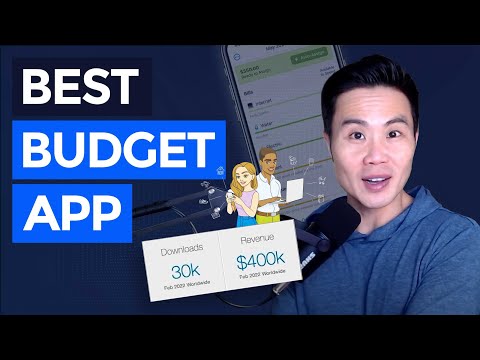 App Masters · Mar 30
This Budgeting App Makes $400K a Month
A teardown of YNAB, a budgeting app that grosses over $400,000 a month from about 30,000 monthly downloads because it was built on an existing brand and community. It shows how creators and community owners can use an app to turn a loyal audience into high revenue per download.
 Acquired · Mar 28
Nvidia: The GPU Company (1993-2006)
Nvidia began as one of about 90 graphics chip startups and survived by repeatedly admitting its strategy had failed and betting the company on a fix. The decision to drop its own standards, ship a chip in six months and then build programmable GPUs turned a commodity business into an industry leader.
February 20223
 App Masters · Feb 23
How to Find Low Competition Keywords That Convert
A walkthrough of how to use competitor Apple Search Ads bidding data and an ASO tool to find low competition, high converting keywords for a crowded category like meditation. It also shows how to place those keywords in the keyword field and keep Google Play descriptions under 3% keyword density.
 App Masters · Feb 16
Should You Make a Wordle Clone? (And How One Wordle App is Making $50K a Month)
Wordle clones flooded the app stores, and a market scan of the top apps ranking for the term shows which monetization choices worked. The standout is a paid $1.99 word game with different gameplay that makes about $50,000 in revenue from only 10,000 downloads.
 App Masters · Feb 9
The Simplest Apple Search Ads Advanced Campaign to Manage and Scale
A simple Apple Search Ads advanced campaign mimics Basic but exposes the search term data Basic hides, so you can discover keywords you never considered. It suits beginners and apps whose main keyword has little search volume, and one example ran at about $1.70 per download.
January 20222
 App Masters · Jan 12
App Store Optimization in 2022: Key Google Play Changes
Google Play is cutting app titles from 50 to 30 characters and banning emojis and promotional words, and the episode explains how to handle that and how to use YouTube video optimization for Google Play search. One client case saw a 100 percent jump in Google Play search downloads after optimizing and tagging a YouTube video.
 App Masters · Jan 5
App Store Optimization in 2022: Key iOS Changes
Covers the main iOS App Store changes for 2022: in-app events, native A/B testing and custom product pages, plus how to run clean A/B tests. Worth hearing for concrete testing rules, such as one hypothesis at a time and testing each store and locale separately.
October 20211

September 20215
 App Masters · Sep 22
App Store Optimization for Million Dollar Apps (Part 4/4)
Even apps with strong paid user acquisition still gain from ASO: small conversion lifts at large scale add up to big install and cost savings. The episode covers how to pitch ASO to leadership, how to prepare for getting featured, and why promoted in-app purchases are an overlooked ranking and conversion lever.
 Acquired · Sep 21
Standard Oil Part I
Rockefeller built the first great American corporation by combining obsessive cost discipline, heavy borrowing to build scale, and control of the chokepoints between oil and its customers. The decision that makes the story worth hearing is how he turned a rescue of struggling rivals into control of 90% of US oil by 1877, and why it still carried the seeds of its own breakup.
 App Masters · Sep 15
App Store Optimization for Apps Ready to Scale (Part 3/4)
Explains how to run ASO once an app is ready to scale: expand into new localizations, work on ratings, reviews and graphic assets, and connect ASO with paid user acquisition. Gives concrete tactics such as well-timed review prompts, fighting fake reviews, and feeding Apple Search Ads and Facebook learnings back into metadata.
 App Masters · Sep 8
Keyword Prioritization for App Store Optimization (Part 2/4)
Explains how to prioritize researched keywords for a new app's App Store and Google Play metadata, and whether to target competitors' branded keywords. The key lesson is to start with relevant, low and medium popularity keywords, and to treat branded keywords as a risky, low-install play.
 App Masters · Sep 1
How to Jumpstart Your App with App Store Optimization (Part 1/4)
Explains how a new app should start App Store Optimization: build a keyword pool, mine competitors, pick low competition keywords first, and add paid traffic early. The result worth hearing is that store search drives 65% of installs (70% during COVID), so keyword work comes first.
August 20212
 App Masters · Aug 10
This Photo Scanner App Makes $300K a Month
A teardown of a scanner app launched in February 2020 that Sensor Tower estimates earns over $300,000, showing how to research a category, infer a competitor's acquisition channels, and read its paywall. The takeaway is a paid-ad-driven app that converts by locking core features behind a weekly trial paywall shown straight after onboarding.
 App Masters · Aug 3
Simple Formula to Decrease Cost-Per-Acquisition on Apple Search Ads (Part 3/3)
Teaches a simple formula for setting Apple Search Ads bids (max cost per tap equals target cost per acquisition times conversion rate) and five ways to scale the channel once you hit your goals. In one example, a keyword converting at 67% held a $1 cost per acquisition against a $2 goal, which left room to raise the bid.
July 20212
 App Masters · Jul 20
The Best Way to Structure Your Apple Search Ads Campaign (Part 1/3)
A walkthrough of how to structure Apple Search Ads with four campaigns per country (exact, broad, search match and brand) and how to derive a starting cost per tap from your target cost per install. It gives concrete conversion rate averages and a live setup of the exact match campaign for a sleep sounds app.
 App Masters · Jul 6
Best App Store Optimization Tool to Do Competitor Analysis
Shows how to use a keyword tool to run competitor analysis for App Store optimization: mine competitor keywords, find gaps in your own metadata, and see which in-app purchases rank in search. The standout finding is a competitor's in-app purchase that ranks for 81 keywords, 23 of them in the top five.
June 20211

April 20213
 App Masters · Apr 12
App Ideas to Make Money - The Proven Method 2022
A free, two-tool process for finding app ideas that already make money and validating your own idea by studying top-grossing competitors and their reviews. Clients who copied proven ideas this way reached $10K to $200K a month in revenue.
 App Masters · Apr 7
How to Get Started with Facebook Automated App Ads
Explains how to launch a new app on Facebook Automated App Ads (AAA): how much to spend, how many creatives to use, which optimization events to pick, and what tracking must be in place first. The payoff is a cheap, fast way to find the geos and creatives that work before committing a larger budget.
 App Masters · Apr 5
This Meme Maker App Makes $60K a Month [How to Make Memes]
A teardown of Mematic, a meme maker app that earns over $60K a month, showing how a simple app can win through one high-traffic keyword and a generous free tier with a pro upgrade. It also lists specific screenshot, onboarding and paywall changes the app could test to earn even more.
March 20213
 App Masters · Mar 10
Avoid These App Launch Mistakes (Part 4) - App Startup Series
A practical checklist of app launch mistakes to avoid: skipping closed betas, watching real users instead of explaining the app, hiding monetization, and spending big on launch before the numbers work. It argues for soft launching in a smaller market and optimizing retention and revenue per download over raw downloads.
 App Masters · Mar 3
How to Build a Minimum Viable Product (Part 2) - App Startup Series
Explains how to define an app MVP and document it for a developer: keep features minimal, write a detailed spec with use cases, and mock up screens with wireframe and prototype tools. Following this lowers development cost, gives more accurate quotes and avoids feature bloat.
 App Masters · Mar 1
Do This Before Building Your App (Part 1) - App Startup Series
Four steps to take before building an app: research competitors, validate with qualified people, condense the idea into a document with mockups, and plan funding. The core lesson is to treat an app as a company with a funnel, marketing and support, not a one-off product you launch and forget.
February 20213
 App Masters · Feb 15
The Facebook Retargeting Ads That Drives App Revenues
Mike Durst explains how OOMPH runs Facebook ads for a subscription fitness app: heavy creative and audience testing, optimizing for trials, then retargeting lapsed trial users to drive purchases. His retargeting campaign produced sales and profit right away instead of waiting out the seven day trial.
 App Masters · Feb 3
Influencer Marketing for Mobile App Downloads as an Indie Dev
A niche marriage app launched through influencer and affiliate partnerships, with a custom deep link attribution setup that ties every install and upgrade back to its source. The founder also shows how an email list, a hiring pool and a podcast came out of that approach.
 App Masters · Feb 1
App Store Optimization in 2021 - Optimize These 7 Things (Part 6/6)
Covers the ASO levers that raise app downloads without touching keywords: icon, screenshots, reviews, Google Play short description, backlinks, search ads, and retention and monetization. Client examples show a 50% download lift from an icon change and a 98% lift from new screenshots.
January 20214
 App Masters · Jan 27
App Store Optimization in 2021 - Keyword Optimization (Part 5/6)
A walkthrough of a keyword spreadsheet process for App Store listings: load researched keywords into two ASO tools, mark targets by traffic and difficulty, then place them across title, subtitle and keyword fields in both the US and Spanish Mexico localizations. The worked example is a sleep sounds app named Moonlight after a high-traffic, low-competition keyword, which now ranks number five for that term.
 App Masters · Jan 20
App Store Optimization in 2021 - Keyword Research (Part 3/6)
A five-step keyword research process for App Store Optimization: seed keywords, Apple autofill, standout competitors, Apple Search Ads suggestions, and competitor keyword rankings. It builds a list of 100 to 200 candidate keywords, including hidden ones with real traffic that competitors already rank for.
 App Masters · Jan 18
App Store Optimization in 2021 - ASO Factors (Part 2/6)
A walkthrough of the seven factors that drive app store keyword rankings and organic downloads: title, subtitle, keyword field or long description, screenshots, reviews, category and Google Play file size. It includes concrete formatting rules and one client who doubled downloads by changing only screenshots.
 App Masters · Jan 11
Meet the Indie Developer with 7M Downloads & Apple Design Award
An indie developer explains what he changed after launch to grow a paid puzzle game to 7 million downloads without paid marketing: locking more content earlier, making the purchase clear, and putting his own voice and name on the app. The key result is that moving the purchase prompt earlier lifted revenue, and the game went far past his own hopes of 10,000 to 100,000 players.
December 20202
 App Masters · Dec 21
Do This If Your App Retention Sucks
Retention improves through disciplined experimentation: size experiments properly, test messaging high in the funnel, and keep acquisition promises aligned with the in-app experience. Listory used this approach, plus a public manifesto, to lift retention from under 10% to over 40%.
 App Masters · Dec 14
How Among Us Became #1 Mobile Game
Among Us and Fall Guys took off in 2020 because they fit a market moment, and Fortnite followed a similar late breakout. The episode explains how to treat slow games, radical pivots and cancellation decisions so a game gets a real chance to find its market.
November 20201

October 20202
 App Masters · Oct 26
How to Launch a Successful App as An Indie Developer
Indie launches work best when you find a true story and a niche audience that cares, and plan the marketing before building the app. Press and Apple features give a bump but did not make Weather Up succeed, while a differentiated distribution edge backed by a strong product built Carrot Weather's business.
 App Masters · Oct 12
YouTube Influencer Marketing for App Promotion
YouTube influencer integrations can drive installs and retained users because creators have time to demo an app, and evergreen how-to videos keep delivering downloads for years. One unpaid pitch to a tech YouTuber with over 1 million followers produced about 80,000 downloads.
September 20204
 App Masters · Sep 28
Avoid These App Development Mistakes
Common first-time app creator mistakes: too many features, no market research or goals, skipping soft launch, charging too late, expecting a hit on app one, and hiring the cheapest developer. Includes a case where a pricing and paywall change took an app from $1 a day to $17 a day with no extra downloads.
 App Masters · Sep 21
Auditing The Most Downloaded Game - Subway Surfers
An audit of Subway Surfers and its clones shows how missions, characters, rewarded ads, gift boxes and starter packs keep a simple endless runner earning over $1M a month on iOS years after launch. It also shows that cloning the gameplay is easy, but distribution is what decides whether a clone works.
 App Masters · Sep 14
5 Ways to Increase Mobile Game Revenue
Five monetization fundamentals for mobile games: psychological triggers, offer cadence, double-up rewards, monetizing impatience and a strong first-time user experience, illustrated with Slotomania, Subway Surfers, Clash of Clans, Merge Dragons and King of Thieves. The standout case is King of Thieves, which more than doubled its numbers by moving the multiplayer mode its best players had stumbled on into the first-time user flow.
 App Masters · Sep 7
Side Hustle App Marketing Strategies
Indie app makers share low-budget ways to validate an idea, get first downloads and earn early reviews, using Reddit, beta testing sites, Apple pre-orders, Search Ads and a Facebook giveaway. The common thread is that side hustlers usually land a winner only after several apps and a lot of iteration.
August 20202
 App Masters · Aug 31
5 Deadly App Marketing Mistakes
Five app marketing mistakes drawn from helping over 3,326 apps: chasing downloads over conversion, delaying monetization, offering a single purchase option, over-relying on ASO, and over-investing in Apple features and PR. Fixing the product and funnel took a geometry app from $1 to over $17 a day with no extra downloads, and a call blocker app saw a 70% conversion lift.
 App Masters · Aug 10
Try This If Your Users Are NOT Coming Back to Your App
Teaches how to ask users to enable push notifications with a pre-permission screen, then run a seven-step push drip campaign adapted from email nurture sequences. The sequence moves users from a quick win through objection handling to a time-limited sale that closes the purchase.
July 20202
 App Masters · Jul 20
5 Beginner App Store Optimization Mistakes
Five beginner App Store Optimization mistakes and how to fix them: the Spanish Mexico localization, keyword difficulty, title and subtitle use, screenshot design, and review timing. A client's screenshot redesign alone lifted downloads 91%, and in a later pass doubled them without touching keywords.
 App Masters · Jul 15
Crossy Road Creator Matthew Hall (Audio Masterclass)
Matthew Hall explains how Crossy Road was built in 12 weeks by combining the core feel of Flappy Bird with Frogger, and grew organically through Apple featuring and built-in sharing. The game passed 20 million iOS downloads with no paid advertising, and it earned more from opt-in video ads than from in-app purchases.
June 20202
 App Masters · Jun 17
Do This Before You Advertise Your Mobile App
Competitor ad research with the free Facebook Ad Library and the paid SocialPeta tool lets app marketers copy proven creatives, copy and audiences before spending on their own tests. The payoff is lower cost per install without paying ad networks to run blind A/B tests.
 App Masters · Jun 3
This Intermittent Fasting App is Making $300K a Month (Fastic App Review)
A teardown of Fastic, an intermittent fasting app making over $300,000 a month on iOS, covering its store listing, onboarding, pricing page and gamification. It shows concrete elements of a high-converting subscription flow that other apps can copy.
May 20202
 App Masters · May 20
How to Increase Mobile Game Revenue Using Rewarded Surveys
Rewarded surveys give apps a way to earn from non-paying users without cutting into ads or in-app purchases. The founder explains where they fit, which currencies and game types suit them, and how an indie game with about 200 daily users added roughly $1,000 a month.
 App Masters · May 4
Attribution for Mobile App Tracking for iOS and Google Play
Shows how to use the free reporting in App Store Connect and Google Play Console to see where app downloads come from, and when to move to paid attribution tools. A free promotional campaign drove close to 6,000 downloads with no ad spend, and the built-in reports showed the traffic sources.
April 20202
 App Masters · Apr 27
Video Ads Example for Facebook & Mobile Advertising
A five-point checklist for making TikTok-style video ads that also work on Facebook, Instagram and ad networks: character-driven, music and movement, portrayed emotion, exaggeration, and raw unpolished footage. It matters because one cheap, native-looking creative can be reused across platforms without heavy production or ad copy.
 App Masters · Apr 20
Keyword Research Tools for App Store Optimization
A walkthrough of a free-tool workflow for app store keyword research: build a list of 100+ keywords from competitors and Apple suggestions, then filter by popularity and difficulty scores. It gives concrete thresholds (popularity 20+, difficulty 30 or under) and reports tripling client downloads by finding low-difficulty misspellings.
March 20205
 App Masters · Mar 31
The Most Important App Store Optimization (ASO) Factors in 2020
Panel of ASO tool makers explains what drives ranking on the App Store and Google Play, and why keywords alone no longer move downloads. They also give a concrete Google Play keyword density target of 2 to 3% and an example of a client moving from the top 15 to the top 10.
 App Masters · Mar 31
Hottest Monetization Trends for Mobile Games
Mobile game monetization trends from a game data provider: seasonal battle passes, social and co-op mechanics, and live events work across genres. It also covers which genres have room for new titles in the US, China and Japan.
 App Masters · Mar 30
Chad Mureta's App Marketing Strategy (App Empire)
Chad Mureta explains how he now focuses on engagement, retention and lifetime value after the download, front-loads ratings before monetizing, and treats apps as real businesses. He says he is doing better in apps in 2020 than ever, and has sold eight companies for seven figures or more.
 App Masters · Mar 18
Apple's New App Store Categories
Apple is adding Developer Tools and Graphics & Design categories to iOS and pushing the Mac App Store with universal apps, and these categories are already live though unannounced. The episode shows how to check the thin top charts and move early before competition arrives.
 App Masters · Mar 11
ASO What's Working Today in 2020 - MGS Presentation
A 2020 talk on which ASO factors still move downloads (high traffic keywords, ratings, creative tests, backlinks) and how onboarding, pricing and urgency tactics lift retention and monetization. A client optimization took one app from about 80 to 300 downloads a day, and screenshot changes alone drove a 91% download increase.
February 20202
 App Masters · Feb 26
Is App Store Optimization (ASO) Dead?
ASO has moved from keyword tweaks that gave instant growth to a mix of high traffic title keywords, creative testing, ratings, backlinks and paid search. Case studies show a 5x download jump from one title keyword, a 91% lift from screenshots alone and a 50% lift from an icon change.
 App Masters · Feb 13
Games with Entrepreneurs #1 - David Reichelt, Creator of Color Switch
A game creator explains how he got to a hit game by shipping dozens of quick, failed games, then deriving the core mechanic from two proven products. He also covers managing a team without technical skills and how he relaunched a quarter-billion-download game after losing it from the App Store.
January 20202
 App Masters · Jan 24
Creative App Engagement Strategies with Zinio's Mirela Cialai
Zinio's mobile marketing lead explains how to earn iOS push permission with behavior-based pre-prompts, which email campaigns drive revenue, and how to ask the right users for ratings. Targeted prompts doubled or tripled push opt-in, and a segmented rating test lifted the app from 2.1 to 4.5 stars.
 App Masters · Jan 17
Exploding Kittens, Head of Analytics on Mobile Game Retention & Monetization
A mobile game analytics lead explains why retention comes before monetization, how to set up analytics early, and which retention and pricing tactics studios overlook. It is worth hearing for the concrete practices on push permission prompts, live operations, value framing, anchoring and starter packs.
December 20192
 App Masters · Dec 17
5 Juicy App Marketing Strategies With No Budget
Five low-cost ways to grow app downloads without a marketing budget: influencer partnerships, provocative content, reporter exclusives, market research and persistence across many simple apps. The examples include a paid app that made over $10,000 in sales at launch via influencers and press hits on TechCrunch, Huffington Post and The Next Web.
 App Masters · Dec 9
3 App Store Optimization (ASO) Strategies You Should Be Testing for 2020
Three ASO experiments to test: optimize for conversion with social proof, build a keyword-related brand name, and use emojis and symbols to stand out in search results. Social proof tests gave a 15% lift on Google Play and a 91% download increase on iOS without changing any keywords.
November 20194
 App Masters · Nov 28
How to Build a UA strategy for High-LTV Subscribers
Shows how to build user acquisition around high-LTV subscribers by testing ad messaging against the full funnel, aligning performance and product teams, and moving subscription apps to yearly plans. The payoff: at a previous company a yearly plan kept user to customer conversion flat at about 8% while bringing in much more upfront cash.
 App Masters · Nov 25
Analyzing a Keyboard App Making $300K a Month - Grammarly App Review
A teardown of the Grammarly keyboard app, a free subscription app making over $300K a month on iOS, covering its ads, keywords, onboarding paywall and email funnel. The takeaway is that a keyboard app people rarely reopen can still convert free users through an onboarding paywall and an email activation sequence.
 App Masters · Nov 20
Driving Demand for a New Service in a Mature Market
BYHOURS built a new category, booking hotel rooms by the hour (3, 6 or 12 hours), and had to teach both hotels and travelers the idea at once. The episode covers how an industry insider won the first hotels, balanced supply with demand, and scaled to more than 3000 hotels across Europe, Latin America and the Middle East.
 App Masters · Nov 13
Native App Preloads with Digital Turbine
Digital Turbine's Ignite platform sits in the Android system partition and powers carrier and OEM app preloads, and its Single Tap product starts an app install straight from an ad click without a trip through the app store. Advertisers report click-to-install rates of 10 to 15 percent against 1.5 to 2 percent at best with standard redirects.
October 20193
 App Masters · Oct 10
How to Slide Into an Influencer's Direct Message (DM)
Covers how a polished, well-tested app earned an Apple feature, what to do in the first days after it lands, and how to write short, personal DMs to influencers. After the feature Reelshot's App Store impressions reached about a million, and the follow-up marketing, sale and localization were built to use that wave.
 App Masters · Oct 9
How to Validate App Idea With Simple One-Page Website
Leo J Barnett shares a simple validation process: build a mobile-friendly one-page site for an app idea, send it to the target audience on social media, and ask three feedback questions. He learned it after his first startup, a platform for independent musicians, failed because he barely spoke to real artists.
 App Masters · Oct 4
To Increase App Subscriptions You Need to Look At This Data with Lior Barak
Teaches which data to watch to grow app subscriptions: find when users convert, retarget inside that window, and limit daily KPIs to three that drive action. The payoff is a simple system of daily, weekly and monthly views that replaces blind spending and spreadsheet work.
September 20192
 App Masters · Sep 10
Licensing, ASO & Ad Monetization with David Cremades
Practical lessons from a sports manager game studio with over 60M downloads on licensing deals, ASO experiments, mid-size influencer campaigns and tuning rewarded video ads. A single icon change showing real players lifted downloads 30% in one day, and one roughly $2,000 YouTube video pushed the game to number one in Argentina.
 App Masters · Sep 5
How to Optimize Growth Funnel (Case Study 2X Revenue Growth)
Shows how to find and fix the weakest step in an app's growth funnel by adding traffic, locating the leak, interviewing users and fixing it cheaply. For the TimeClock app, a one-week onboarding email series lifted fully onboarded users by 81% and put a $100K company on track to double.
August 20192
 App Masters · Aug 23
How to Increase In-App Purchase Conversion Rates
A story app built its paywall and review prompt into the narrative itself, so neither feels like an interruption. That approach reached about 7.5 percent conversion in the US, a 4.7 rating and more than 4,000 reviews.
 App Masters · Aug 15
How to Calculate Mobile Lifetime Value (LTV) Without a Lifetime of Data
Shows how to estimate a day 365 lifetime value from only 7 to 30 days of cohorted revenue, using a spreadsheet and a power-curve trendline. The worked example turns an organic day 30 ARPU of 1.22 into a day 365 estimate of about 3.32, which gives concrete payback targets for paid acquisition.
July 20193
 App Masters · Jul 25
How App Store Screenshots & Preview Videos Increase Downloads
Rev's mobile PM explains how redesigned App Store screenshots, social proof, a preview video and a simplified first screen lifted conversion at each step from impression to paying customer. She also shares a checkout priming screen that failed and tanked conversion.
 App Masters · Jul 18
Mobile Ad Fraud Bots & Inefficient Marketing Campaigns
Attribution data only pays off if you act on it quickly, judge campaigns by user value instead of installs, and watch for bot traffic that hides inside apps. Adjust's acquisition of Unbotify showed that bot abuse in apps is far larger than most teams assume.
 App Masters · Jul 11
Storytelling with Facebook Ads
A founder story post on Facebook and Instagram, told by a real person instead of a brand, drove viral reach and a loyal audience for a paid parenting app. It led to over 30,000 paying customers, not just downloads.
June 20192
 App Masters · Jun 21
Influencer Marketing: How to Decide Who is a Good or Bad Influencer
Teaches how to find and vet influencers for an app by hunting niche hashtag leaders, watching them for two weeks, then interviewing them before any deal. It stresses that engagement quality and reusable content matter more than follower counts or fixed metrics.
 App Masters · Jun 12
Best Free ASO Tool: App Radar Overview
A walkthrough of App Radar's free plan and how to use it for ASO: keyword research, rank tracking, competitor analysis, store metrics and metadata changes. The free plan covers 200 keywords, 5 competitors and 30 days of history for 2 apps, which most ASO tools charge for.
May 20191

January 20191

October 20181

September 20181

August 20183
 App Masters · Aug 28
App Store Optimization (ASO) in Search Engine Optimization (SEO) Terms
Maps each SEO concept (title, h1 tags, content, backlinks, cross links) to its app store optimization equivalent so SEO people can place keywords correctly on iOS and Google Play. The practical payoff is a clear keyword placement plan plus a push on ratings and cross promotion that wins when all other optimization is equal.
 App Masters · Aug 17
How to A/B Test Screenshots on iOS
Shows how to A/B test the first three App Store screenshots on iOS by using Apple Search Ads creative sets on a single exact-match keyword. The payoff is a client who doubled downloads with flat impressions just by changing screenshots, and a repeatable way to find which three screenshots convert best.
 App Masters · Aug 7
How to Increase Organic Downloads Without Changing Keywords
Three listing changes can lift organic downloads without touching keywords: the app icon, the first screenshots, and ratings from the iOS review prompt. Case studies show doubled downloads from an icon change alone and a 98% download increase from new screenshots.
July 20181

June 20181

May 20182
 App Masters · May 25
5 Reasons You Should Soft-Launch Your App
Explains five reasons to soft launch an app: get early users without building anything, test features, check usability, gauge reactions and find out if anyone wants it. The proof is Steve's own pre-launch blog post that brought 100+ emails and press coverage on The Next Web for a paid camera app.
 App Masters · May 2
ASO Audit of Scribd an App for Unlimited Audiobooks, Books & Magazines
A live App Store optimization audit of Scribd's iOS listing, covering the app name, subtitle and screenshots. It shows how to choose keywords from competitor data and user reviews, and how to make screenshots answer a subscription buyer's questions.
April 20183
 App Masters · Apr 23
Mobile App Engagement and Retention
Acquisition gets most of the attention, but retention decides how much of your addressable market you actually keep, so build analytics, segmentation and automated engagement around real user behavior. The talk sizes the effect with retention models and gives a checklist for personalization and churn prevention.
 App Masters · Apr 18
App Monetization: Video Ads Optimization for Mobile Games
Rewarded video ads work best when they are offered at several natural points in a game and tied to the in-game economy. Using Fun Run 3 as the example, the episode shows one player being prompted to watch 4 to 5 video ads per session without feeling forced.
 App Masters · Apr 13
How to Hack Public Relations (PR) for Millions of Downloads
A practical talk on getting press for an app with no budget: how to reach reporters, write pitches they open, and pace coverage so it pays off. Jake drove about 1.5 million downloads for Drunk Mode, with almost 700,000 coming from press, while earning around $500 a month at a bootstrapped startup.
March 20183
 App Masters · Mar 30
Do Keyword Misspellings Help Grow Downloads for ASO?
Targeting misspellings of popular keywords can raise app downloads when the misspelling has real search traffic and little competition. A client's downloads rose 128 percent after reaching number one for one such keyword.
 App Masters · Mar 28
App Monetization: A Clever Way to Incorporate Mobile App Ads
Shows how to add ads to an app without making it ugly, using examples from Duolingo and Merge. The core idea is to offer ads at moments when users are happy to opt in, so users, you and advertisers all win.
 App Masters · Mar 5
App Growth Hacking Strategies - Interview on The App Man Show
Steve P. Young explains how to grow an app without paid downloads using app store optimization, Apple feature pitches, and idea validation before building. He cites a client who doubled organic downloads from about 50 to 100+ a day and a meditation app where an Apple feature brought about 50,000+ in revenue.
February 20184
 App Masters · Feb 26
Sensor Tower ASO Tool Review: Keyword Spy, Research & Apple Features
A walkthrough of how an ASO agency uses Sensor Tower's keyword rankings, keyword spy, translation and Apple featuring tools to pick keywords for the app name, subtitle and keyword field. It shows a repeatable workflow of bulk-loading 100 to 400 keywords, scoring them on traffic and difficulty, and mining competitors for gaps.
 App Masters · Feb 20
App Annie ASO Tool Review: Keyword Research, App Store Features & Killer Screenshot Sales Copy
Shows how to use App Annie's free features to mine competitor keywords, track App Store features, and pull screenshot sales copy from user reviews. The workflow is the same one the agency runs for its clients' ASO and conversion work.
 App Masters · Feb 19
ASO Tool Review: How to Use Mobile Action to Increase Downloads
A walkthrough of how to use the Mobile Action ASO tool to pick keywords by traffic and chance of ranking, then place them in the app name and short description. Steve P. Young reports 55% and 10% download gains on Google Play for two clients, and 20% to 100% download gains with his data-driven keyword process.
 App Masters · Feb 9
App Store Screenshots: How to Write Killer Sales Copy to Increase Downloads
Shows a quick method for writing App Store screenshot copy by mining real user reviews in App Annie, using Sleep Cycle as the worked example. The payoff is higher download conversion and a lower CPI on paid traffic, without starting from a blank page.
January 20182
 App Masters · Jan 15
How Much Impact Will ASO Have?
Shows how to turn small ASO conversion lifts into dollar savings by pricing the extra organic downloads at what you would pay for them through paid installs. A 10% lift for a big brand or a 25% lift for a small app can repay an agency's fees within one to three months.
 App Masters · Jan 8
How to Name Your App for Growth (ASO)
App names should be chosen with keyword search volume and competition data rather than picked at random. Two examples show the method: renaming Sentence Master to Sentence Builder Master lifted iOS downloads 50%, and Midnight Owl was named from traffic data.
December 20172
 App Masters · Dec 13
ASO Strategies for Small Apps vs Large Apps
Small apps and large apps need different ASO keyword strategies, based on how much traffic they get from other channels. The episode gives concrete traffic and chance score thresholds for choosing keywords with Sensor Tower and Mobile Action.
 App Masters · Dec 4
The App Store Optimization Process That Consistently Drives Downloads & Product Views
A step-by-step, data-driven ASO process: build a long keyword list, score it on traffic and competition, then place keywords in the app name, subtitle and description. It also covers what changed after iOS 11, including a 50% download lift from an icon test and a paid-to-free push after metadata updates.
November 20173
 App Masters · Nov 28
Growth Channels for a Niche App
A coaching call for a niche Apple Watch app for water sports stuck at 50 downloads a day. It covers raising subscription prices, focusing ASO on higher-volume terms, running a longer-trial press campaign, testing search ads and community channels, and why many app makers need less marketing help than they think.
 App Masters · Nov 15
How to Write A Killer App Description
App descriptions convert better when they borrow the exact words customers use in reviews of competing apps. The episode shows a free, repeatable review-mining process, using Calm in the health and fitness category as the example.
 App Masters · Nov 1
How to Use Apple Search Ads for Keyword Research (ASO)
Shows how to use the keyword suggestion tool inside Apple Search Ads as a free ASO research source, including how to filter for traffic and competition and how to reuse the keywords in paid campaigns. Worth hearing for the claim that it surfaced low-competition keywords with decent traffic, such as misspellings, when standard research had stalled.
October 20172
 App Masters · Oct 27
Talk on Revenue at Founder Institute Sacramento
A talk on validating an idea and earning revenue, covering perceived-value pricing, charging early, and building connections that compound. A three-plan pricing test lifted conversion by 233%, and podcast relationships let Steve leave his job within seven months and grow the agency.
 App Masters · Oct 5
How to Market a Paid Niche App & 10X Revenues
A coaching call on marketing a paid niche iOS app with keyword-optimized naming, a review-building push, a paid-to-free campaign and Apple Search Ads, plus low-budget web marketing. The same plan took a friend's paid app from about $1,000 to $2,000 a month to five figures a month.
September 20173
 App Masters · Sep 21
How Does iOS 11 Affect Apple Features and ASO
A first look at the iOS 11 App Store redesign and what it means for ASO and getting featured by Apple. It argues the new editorial layout creates more feature slots for indie developers and that the Spanish Mexico localization trick still ranks.
 App Masters · Sep 13
ASO for Diner Dash Type Game
A live ASO audit of a cafe management game shows how to pick app name keywords by combining traffic and competition scores with the app's current rankings. The suggested changes target keywords where the app already ranks number two, and drop terms it has never ranked well for.
 App Masters · Sep 4
How App Downloads Impact Keyword Rankings for ASO
Downloads feed the keyword ranking algorithm, so the keywords you target should match your current download volume, and a burst of downloads lifts rankings. A pay-to-free campaign that drove over 70,000 downloads moved several tracked keywords from positions like 17, 12 and 19 to 2, 7 and 5.
August 20174
 App Masters · Aug 30
ASO Beginner's Guide
A beginner Q&A on app store optimization covering where keywords carry the most weight on iOS and Google Play, which tools to use for keyword research, and a few growth tactics for small budgets. The results quoted include 50 to 400% download lifts from app name changes, a 50% lift from an icon A/B test, and 33,000 downloads from a one day paid to free promotion.
 App Masters · Aug 28
The Easiest Way to Drive Downloads & Revenue for a Paid App
A paid-to-free campaign makes a paid app (or one in-app purchase) free for a short window and gets press coverage to drive downloads at no ad cost. A client's $12 iOS app got over 30,000 free downloads in one day, about 37,000 in total, and roughly $1,000 in revenue.
 App Masters · Aug 17
App Audit on a New Game
A coaching call that audits a new casual game, Fly Bye Birdie, covering game feel, icon design, naming a game after movie titles and sports teams for search, and low-budget launch marketing. The standout result is a 19% download lift from changing only a game icon to a flat design.
 App Masters · Aug 15
Coaching Call About Outside the Box ASO Tips
A coaching call on improving a paid tips app for men through a benefit-led rename, out-of-the-box ASO keyword research, ad-based monetization and free-promotion tactics. The most useful takeaways are naming for who users want to become and targeting adjacent keywords like men's magazines to reach people who are not searching for relationship help.
July 20172
 App Masters · Jul 12
Google Play App Store Optimization (ASO): The Best Tool (Part 1)
Compares Sensor Tower and Mobile Action keyword data for Google Play ASO using real client keyword rankings from before optimization. Mobile Action's chance score matched actual rankings better, so it is the tool recommended for Google Play.
 App Masters · Jul 4
The Biggest App Store Optimization Changes in iOS 11
Covers the iOS 11 App Store changes that affect app store optimization: a 30 character app name, a new indexed subtitle, indexed in-app purchases, cumulative ratings and the in-app review API. Shows which of these can be used now, before iOS 11 ships, to gain keyword coverage and conversion.
June 20176
 App Masters · Jun 27
App Marketing Strategies: The Most Effective Campaigns
App marketing channels are ranked into three tiers by control, cost and download potential, based on campaigns run for clients. Apple features, paid to free promotions and ASO are the cheapest wins, paid user acquisition scales to millions of downloads, and PR and Product Hunt rank lowest for pure downloads.
 App Masters · Jun 20
How to Check an App's Apple App Store Feature History
Shows how to confirm whether an app landed an Apple feature, and where, using the App Store itself and a free feature-history tracker. Backed by an agency record of twelve Apple features for clients in 16 months, including three in May 2017 alone.
 App Masters · Jun 13
Apple Feature Request Form
Walks through Apple's new feature request form from WWDC 2017 and how to fill each field to improve the odds of getting featured. Based on getting 12 clients featured by Apple in 16 months, including three in May 2017.
 App Masters · Jun 7
How to Finance Your App’s Growth with Martin Macmillan
Martin Macmillan explains how app developers can fund paid user acquisition by borrowing against their App Store and ad network receipts instead of raising equity or giving up revenue share. He shows how to model lifetime value, find payback time and recycle revenue quickly, with a case study (War Robots, Pixonic) that grew into a roughly $30 million acquisition with no extra dilution.
 App Masters · Jun 6
Color Switch Creator on Game Design with David Reichelt
A game designer explains the creative process and mindset behind Color Switch, which he built for about $3,000 after 40 failed games. The game reached about 160 million downloads and spent a month at number one on the App Store, beating Facebook.
 App Masters · Jun 6
The #1 Apple Feature Mistake
The episode argues that weak design, especially the app icon, is the top mistake when chasing an Apple feature, and shows how to fix it cheaply with free A/B polls and bought icon designs. Two client case studies, a word game and a kids Chinese learning app, both landed Apple features after icon changes picked by polling Facebook groups.
May 20176
 App Masters · May 30
Best App Store Optimization Tools 2017: Case Study Part 1
Compares the keyword difficulty data in Sensor Tower, AppTweak and Mobile Action against real iOS ASO results for three client apps (a game, a lifestyle app and a kids app). Mobile Action's low difficulty calls were right most often, and name and keyword changes alone lifted downloads 50%, 371% and 420%.
 App Masters · May 23
Insights on the Future of App Marketing with John Koetsier
App marketing is getting harder: search is dominated by big brands, ratings no longer differentiate, and ad fraud is widespread. TUNE's data covers 25 billion clicks across 455 ad networks, finding 15% fraud on average, which makes it worth hearing before you spend on paid acquisition.
 App Masters · May 23
Apple Feature Case Study That Led to 2 More Features
Steve P. Young shares how his agency approaches Apple App Store features, using client cases like Bumper Jump, Mindbliss and a Chinese learning app for kids. The standout result is 11 Apple features in 16 months, including an indie developer who earned two more features on his own after the first.
 App Masters · May 16
4 Dirty Little Secrets of App Store Optimization (ASO)
Covers four little-discussed realities of App Store optimization: bought reviews, unreliable keyword tool data, keyword boost download campaigns and unproven ASO experts. It shows real client keyword data where three ASO tools disagree with Apple Search Ads, and gives a localization trick that doubles keyword coverage.
 App Masters · May 9
7 Tools to Help You Get Featured by Apple
Seven tools and habits for pitching Apple to get an app featured in the App Store, from email tracking to LinkedIn research to game publishers. The agency has had 10 clients featured, with roughly 15 to 20 percent of the apps it pitches getting a feature.
 App Masters · May 3
Apple Feature Timeline (and The Exact Email Pitch That Led to an Apple Feature)
A timeline for pitching Apple for a feature: get the app approved first, pitch three weeks before launch, and track and follow up on the email. Steve says the process helped 9 clients get featured and led to a featuring in China for one of his own apps worth $30,000.
March 20171

February 20171

November 20162
 App Masters · Nov 14
The Greatest Content Marketing Hack
Help a Reporter Out (HARO) lets you post queries so your target market contributes content, which you wrap into articles and podcast interviews. Steve used it from 2013 to fill his podcast with guests, land bylines on big publications and win agency clients without hunting for them.
 App Masters · Nov 4
Why Content Marketing Trumps Ugly Websites
A podcast built on interviewing admired people in the app space became the lead source for a marketing agency, with no paid marketing and no outbound client search. The lesson is that consistent content, backed by learning, executing and teaching, earns trust that brings customers to you even with a very ugly website.
October 20162
 App Masters · Oct 30
Advanced App Store Optimization (ASO) Strategies to Double Your Downloads
Advanced ASO tactics: cross-check keyword difficulty in two ASO tools, use a second localization to double keyword slots, build review volume, and crowdsource keyword research in other languages. Steve says these moves have lifted client downloads from 20% up to 5x using ASO alone.
 App Masters · Oct 19
September 2016 Report Card: Crushing ASO
A monthly report card from an app marketing agency covering ASO client results, PR wins, launch lessons and growing from a solo operator into a team of four. The headline result is a 5x download lift for ASO clients, with a typical increase of at least 20% and some clients doubling downloads.
September 20161

August 20164
 App Masters · Aug 25
3 Growth Hacking Strategies to Revive a Dying App
Three ways to revive a stalled app: refresh the icon and screenshots, sell the app to a buyer, or run a paid to free campaign. A kids app went from zero downloads to the author's best performer after a color redesign, and an icon swap doubled another app's downloads.
 App Masters · Aug 19
Case Study: 14.5K Downloads with a Paid-to-Free Campaign
A paid-to-free campaign, where a paid app or an in-app purchase goes free for a couple of days and gets press coverage, can drive thousands of downloads at almost no cost. Paintball Rush got about 14.5K downloads in a week, lifted downloads for the publisher's other apps, and climbed to number two for the keyword 'paintball'.
 App Masters · Aug 15
Success Report: July 2016 (Another Apple Feature)
A monthly wins and losses report from an app marketing agency that helped launch five apps in July 2016, with practical lessons on pitching Apple for a feature and landing press. One launch was featured by Apple in 12 countries, and two of the five got major press coverage.
 App Masters · Aug 7
App Store Optimization: How to Use Mobile Action (ASO)
A walkthrough of using Mobile Action for App Store keyword research, tracking and spotting which keywords drive downloads. It shows how pairing it with Sensor Tower and testing its estimates gives a workable keyword plan even when the data is imperfect.


