Introduction to Mark Pincus
0:000:00If you're truly ambitious, burn your resume. >> You have all these amazing contrarian perspectives on how to build amazing products. >> Your instincts are right 95% of the time. Your ideas are wrong 75% of the time. We've seen so many founders who just stoically, heroically stick with a losing idea. >> How do you know if this is just the wrong path you're following? >> If you're asking whether or not your product is an A, it's not [music] an A.
0:21When you have lightning in a bottle, when you have true signal, everything works. >> Most products are better versions of things that existed before. Talk about how you get over that hump of copying. >> It's almost a moral arbitrage. You became a founder, an entrepreneur because you wanted to go be an innovator, but you're trying to win the hearts and minds of nurses in Indiana like for Farmville. You're not trying to win awards and respect from your peers.
0:46Define your ambition in the eyes of your consumer. >> Building a consumer social app, very few people have successfully done it and built something durable. >> We have beyond a latent demand for social. It's lost the adrenaline. People are proud to tell you they're not on Instagram. [music] They're not missing the party. If you want to reinvent social, look for where the cocktail is. We know it when we see a great cocktail party. You feel you're like, "Oh, I'm so glad I'm here." Today, we're all hanging out on our Claude on our GPT, but there's no cocktail [music] party. My challenge to your listeners is figure out how to make it rowdy.
1:23Today my guest is Mark Pinkinis, founder of Zingga, [music] who has arguably created more successful consumer products than anyone else in history, over a dozen both within Zinga and before Zinga. And over the past 5 years, [music] he has been working on a book that synthesizes all of the things that he's learned about building successful consumer products. It's called Life at the Speed of Play. It's coming out in a few weeks, and it is so good, and it's also a really quick read. In a quote for the book, Sam Alman, the co-founder of OpenAI, said that today the only bottleneck to building great products is knowing what to create. Mark [music] is an expert at this. And after reading this book and having this conversation, I could not agree more. In his book and in this conversation, Mark shares a really clever [music] and counterintuitive framework that he's developed for coming up with successful
2:11product ideas. Why being less ambitious is often the path to coming up with the most ambitious ideas. why you need to kill your hope before your hope kills you. [music] Why your instincts are usually right, but your ideas are usually wrong. Also, what he's learned about raising kids. He's got five. [music] And so, so, so much more. This episode is for anybody who is building a product or thinking about starting a company.
2:34Before we get into it, don't forget to check out lennisprod.com for a free year of the hottest and most well-crafted AI products in the world, available exclusively to Lenny's newsletter subscribers. With that, I
The Proven Better New framework overview
2:462:46bring you Mark Pinkis. >> Mark, thank you so much for being here and welcome to the podcast. >> I've been a [music] big listener. >> Oh, wow. >> And I'm excited to I'm excited to finally be on. So, >> I'm excited to finally have you on. You just put out a book. It's coming out around the same time that this podcast is coming out. It's called Life at the Speed of Play. There's uh so much here I want to talk about. I want to start with this framework that you developed uh called proven better new and the framework is basically designed to help you come up with and refine your product ideas and your startup ideas to basically increase the odds that your idea is a good idea and that it will work. Uh it is such a clever idea, such a simple idea with so much depth. Um I want to spend a bunch of time on this.
3:37Um, so first of all, just give us kind of the the overview on this framework, what it is, how people might use it in coming up with ideas. >> Sure. Well, this is a framework that we got to early on at Zingga and it became like a religion and the fundamental the the core principles and engine behind how we did product management at Zinga. And it's was so fundamental to the book that for three of the four years writing the book we called it proven better new but then I was like oh that's too dry a name and I I love this concept of life at the speed of play which we can talk about but is the bigger gestalt to the book. So, but proven better new is this core um philosophy that I've had around products since I started Zingga, which is that we have these the we have these instincts like in our gut, these human level instincts that are pretty much always right. And then we put these ideas on top of the instincts that are
4:42usually wrong. And my rule of thumb is your instincts are right 95% of the time. Your ideas are wrong 75% or at best right 25% of the time. The framework of proven better new takes that philosophy and says okay what do we do with that? Okay let's let's isolate your innovation zone. Let's isolate that thing you have in your gut and let's just test many many ideas around that and let's fail for the right reason not the wrong reason. It might be I mean at Zingga we'd see new game launches. Sid Meyers like the you know godfather of game design who's the most revered game designer. He came out, I think, a a social civilization on Facebook and we thought, "Oh god, here comes like the ultimate game designer." And 10 minutes after the game came out, the Zinga PM's emailed around their analysis and they said, "It's dead on arrival because his Fatoule, his first time user experience, was so many clicks and so bad that no one was ever
5:54going to see his great game design." Even Sid Myers tripped over what were understood by the most junior product managers at Zingga was the best of breed approach to onboarding a new user to the first-time user experience on the Facebook platform. But because he didn't perfectly copy that, he didn't do the proven right, his innovation never got seen by anybody. This episode is brought to you by our season's presenting sponsor, Work OS. What do OpenAI, Anthropic, Cursor, Versell, Replet, Sierra, Clay, and hundreds of other winning companies all have in common?
6:33They are [music] all powered by work OS. If you're building a product for the enterprise, you've felt the pain of integrating single signon, skim, arbback, audit, logs, and other features required by large companies. work OS turns those deal blockers [music] into drop-in APIs with a modern developer platform built specifically for B2B SAS. Literally every startup that I'm an investor in that starts to expand up market ends up working with Work OS. And that's because they are the best.
7:00Whether you are a seedstage startup trying to land your first enterprise customer or a unicorn expanding globally, work OS is the fastest path to becoming enterprise ready and unblocking growth. It's essentially Stripe for enterprise features. Visit works.com to get started or just hit up their Slack [music] where they have actual engineers waiting to answer your questions. Workos allows you to build faster with delightful APIs, comprehensive docs, and a smooth developer experience. Go to work os.com to make your app enterprise
Earning the right to innovate
7:297:29ready today. And so the con the point of proven better new is to say let's take all the proven off the table. If you want to build the AI Snapchat or the AI camera, there's so many of those I see now, AI cameras. Fine. Let's start with what you're not innovating on. You're the icon. Um the maybe just the way a camera works. look for where that's the best of breed proven, whether it's Apple or Snapchat or Instagram, and copy those legally and with hopefully some taste.
8:07We can get into like great copies and bad copies, but but be a master of the proven first. Get your PhD in proven first. And I like to say we we don't we haven't earned the right to innovate on the camera until we are the world's leading PhD on the best mobile cameras
What “better” really means
8:308:29that already exist. And then better is usually we can't find better. Better is usually very small increments and innovations. And better is something that 10 out of 10 of your existing the existing users of that product would say [ __ ] yeah. 10 out of 10 not you. What you think is better is called new, right? What we think is better is new. We usually are too ambitious on the new and and so better could be it's now free. There's no download. there's something that you can both statistically show works, you know, is better and every user would say yes to.
9:13And and usually it's it's very small and it's polish and it's it's things that intense users, power users will notice the most. And in our game, Words with Friends, you know, it was Scrabble, but if it was just Scrabble, why was it a massive hit with 14 million DAUs and Scrabble itself wasn't right? There must have been something, you know, better and novel about it. But it had such a polish for mobile was the better and the new. What's the novel new idea, the back of the box idea that's going to get people to download and try it? And in the case of words with friends, it was social. It was your friends are just is attached to the Facebook graph and your friends are just already there to play with you, which was a new idea. You know, even that which you'd think of course I want, you might not get 10 out of 10 people saying yes. And we have to accept that that new idea is probably going to fail. It's a reason to try it
10:18for people, but it's probably going to fail. And if we do proven better new right, the product has much better odds of succeeding in the market, not failing for the wrong reasons. And if we start with the premise that the new is probably not right, and we've got four other new ideas ready to test, then we we just prosecute it in a different way. And and we really it's I like to think if you do proven better, new, right?
10:49It's it's like a time machine because what if I could go back to Mark, you know, 2003 and four and say, "Dude, you don't even realize how right you are." Like, one of your instincts is going to be a $1.6 trillion company once, and you are a year ahead of them, right? You're a year ahead of a $ 1.6 trillion company. That's, you know, I'm not going to tell you which. I'm not going to totally cheat, but I'm just going to tell you there's something there's another answer in this that you could pursue that would be worth 1.6 trillion. Oh, by the way, your Tribes idea that's Reddit that becomes a whole company industry, you know, listings.
11:35So, there was a point in Tribe where I knew my metrics weren't working. Our D30 retention was terrible. We were sinking speedboat. And if I had had this attitude of I'm going to try a lot more ideas. I'm going to look around me like if you're doing proven better, you're also looking around you for what's what are you finding heat that's proven in the market that you can also go test and you know I would have massively changed
Quick summary of the framework
12:0312:02my odds of success. Okay, there's so much here. So just to summarize how I think about this framework which is so good like if you start to really think through all the products that have succeeded and how many of them actually follow this whether they are conscious or not it's wild so kind of the steps that I hear is so proven better new proven is make a list of the things that are proven to be working already in the market things people love about this sort of space better is make something that is not just better but that 10 out of 10 people will say f yeah I would switch at this is better and then add something new that nobody's tried before that adds a little wrinkle
Examples of the framework in action
12:4012:41and I think a little bit like you have a bunch of examples in the book Slack and threads there's also like if you think about the iPhone and the iPod like you don't think you don't think about them that way but basically the iPod there was a music player they made it better and they added some new stuff and it >> yeah in the world >> I was there at the TED conference when this team from MIT was demoing their touchscreen and they did it on a gigant gigantic whiteboard and Steve Jobs was obsessed with it. They had a whiteboard and they had a table with it and I watched him and he spent the whole time there with this team obsessing over their their touch. I don't know if that's the first time he saw it, but I know he was obsessed with it. Like, okay, there's his new idea is is a touch screen. It's [snorts] only new idea. Um,
How to use proven correctly on your platform
13:3013:30and I want to say proven gets so misused and that what I've found over the years with founders is that they start to use proven better new to justify a wrong idea and they're like, "Look, Mark, I'm doing Proven. Proven is this game that was popular in the 90s. Proven is and they they pick something that and it's to their own detriment. They're they're not using proven. You we have to be precise. We have to think at the pixel level of this experience.
14:06Proven is on this platform for this audience for this experience. And you can look to what's been proven before as great sources of new ideas, but but it's not if it's not on this platform, it's you know, it doesn't count as proven. And and yet the the masters at this product craft do proven better new whether they call it that or not and they do it at such a a a beautiful level that nobody even thinks no one realizes what it's derivative of and and Slack was a great example because I think Slack might have just been proven and better and no new and that's even better if you can get a if you can have a successful product and I don't want to sound anti-inovation but you know people don't like change.
15:01So if you take a behavior they like but you make it much more accessible or something much more fun about it like in the case of Slack um people love that even more. There's this thread of uh of
The moral arbitrage of copying
15:1315:15copying that comes through this framework that will turn a lot of people off. uh talk about what you think people are missing and how you get over that hump of like this is actually the right approach in most cases >> in the Peter Teal sense it's almost a moral arbitrage because there's something in our gut as a product you you became a founder an entrepreneur because you wanted to go be an innovator and so it can feel like a beatdown that your path to innovation starts with copying other people's work and we were taught in school copying is cheating. So there's there's a lot of good uh reasons why we've built this kind of moral resistance to copying.
16:05But but that also makes that opportunity in some ways, you know, more available for people who have less ego involved. And I like to say, and I said this to my product makers at Zingga, if you're truly ambitious, burn your resume. If you and if you define your ambition in the eyes of your consumer, not your peers, you're not trying to win awards and respect from your peers. You're trying to win the hearts and minds of nurses in Indiana like for Farmville.
16:39You're going to define innovation differently and you're you're not going to worry about whether you're going to take the best ideas wherever you can find them if they are in service of giving her an experience that she loves more. And so if you know so and if you if all you did was copy, there's no reason for her to choose your product, right? But if you took something that she loves and you make it one inch better, she might love that more than if you showed her something she's never seen before and didn't wake up knowing that she wanted.
17:22And so and and I think that the the art of this is you do it in a way that she doesn't even realize it because I think consumer taste also resists just a copy. I think that consu if movies, TV shows, you know, books, if if they feel too derivative and they're not adding something important and new, um, then it it could go against, you know, our consumer taste. But the best product makers, and I love referencing someone like Craig Newark on Craigslist, who took two years to add photos to Craigslist listings. And I was like, and he lived in my neighborhood, and he was friends with my dog, Zingga, more than he was friends with me. He was a little awkward socially, and he connected more with the dog. And I tried to be friends with him through the dog. And so he would sit and talk to me and he was working on I was like, "What are you working?" And I said, "I've been working for two years on adding photos to
18:22listings." I'm like, "What do you mean two years?" He's like, "Well, I really want to make sure that people like it and that the photos come up in the right ways. I don't know. I honestly don't even understand what he did for two years, but if you're driving across San Francisco to buy someone's couch, why wouldn't you want to? Why isn't that better? In his mind, it was new." And I'm like, that's a world-class product maker because he what he gets is that his there there's we feel this sense of ownership of products that we rely on every day. And we're angry when they change. Even if they change for the better, we're like angry because we go through life faster because of pattern recognition. And we don't want to think about these things. And what if by adding photos to his listings, he moved where the text was? And what if you rifle through listings and now the text is below the fold, you know, and a
19:18junior product maker might make the whole thing a picture and not realize that what people liked most was being able to see the text real quick and they were trying to compare prices on the couch they already knew that I don't know. >> Yeah. I'm thinking like as you're talking I'm just thinking what are all the best products and are they all just kind of uh one word are they copies and evolutions of existing products or how many are just completely brand new and I'm looking around like the iPhone that was you know there's phones before and they kind of took the elements of what was great made them awesome uh my Aala I don't know water bottle like there was water bottles that worked and then they added things to make it better uh chrome I don't know I'm just like looking around like it's so interesting how once you start to think about it through this lens Most products are better versions of
20:03things that existed before. And then I'm thinking about as a product team, what you what do you often do? You go look at the competitors, look at all their flows, here's what they're doing, here's what's working, look at all these great ideas, and then you build on that. So I think there's like it's easy to get turned off to this idea of like the word copy. But like as you think about it, this is mostly how products end up getting built anyway. Well, there's so much on this that we could we could literally spend the whole podcast on it, which I'd be fine with, too, or do a whole episode just on this because so much comes up for me. On the one hand, I think about Nikita, who I think you've had on, and I I love his story on TBH.
20:43It's a perfect example of he found something proven in someone else's product. I That was my first company, Freeloader. What I found was in the Netscape browser and in the Internet Explorer browser, they had buried in there a feature of offline browsing. And my entire product was offline browsing, but they had it as this buried power user feature. And I saw the genius in that for that moment because bandwidth was so slow that I was like, "Oh, we can make an entire product just around that one feature." Nikita saw his perfect product buried inside an Arabic only version, right, of his product and he said, "Oh my god, they they nailed it."
21:33So I think the when we can see something that is proven already in someone else's product but they have you know the wrong idea around it that's that's gold you know that's that's one and then to your question of is every product derivative is every product from proven better my answer is no and I and I talked about this a little bit in in the book and in my course. But the question is at the outset for all of us, which path do you want to be on? And I argue that if you go down this path of just innovate, start with a blank whiteboard. Don't look at any other products that is kind of roio getting to Angry Birds. They made 45 games. Every single game was totally different. not as far as I could tell learning from the previous failures or the market and their 45th shot on goal was Angry Birds and it was a hit and it was innovative but the odds that's wildcat drilling and do you want to have those odds or do you want to be
22:48do what OMG Pop did which is very similar story but opposite path which is OMG Pop created uh the hit game draw something and Zingga bought them. They were the number one game and app in the app store for 60 days in, you know, 2012. But OMG Pop was on their last dollar. They had tried something totally innovative. No one ever seen her tried it before. It failed completely. And now they were ruthlessly, desperately in need of a hit. And now they did Proven Better Newly.
23:27They said, "We're going to take this proven game and do everything about it that in as perfect students of what is already working and viral on mobile and they perfectly copied our turn-based system from Words with Friends and they made a massive hit. >> I uh I love this idea of moral arbitrage. That's such a [laughter] way thinking about this >> Peter Tian, you know, um Very. Yeah. So,
23:58there's there's so many fun threads that kind of connect to all this. One is and you have all these amazing contrarian perspectives on how to build amazing products. One is be less ambitious. Talk about why that's a really good lens to actually build more ambitious products. >> I'm in the middle of relearning that lesson myself right now. And I would say there there's there's so many paradoxes in this. And and one that I've had to learn over and over again is is if if we're if we're too ambitious and we're at the outset and too ambitious and visionary about the product we want to build, then we will probably miss product market fit because we won't start at a small enough humble enough place because it it's it might usually that the starting point for these products is embarrassingly mall. So many of these massive hit products or you know franchises started with such humble um you know non-ambitious places and you
25:06know the Facebook was just an app to check out girls and guys you know at Harvard right and the irony for me that I I've I've found that my career has gone in these waves and And maybe some of your other founders have had this experience too that I've started in a very humble place of I just want to get to anything any product market fit. Had bigger success than I imagined I would have in my first two companies freeloader and support.com. They both started with very very small humble premise and then afterwards felt like now I can do anything and I know Elon has is the exception to the rule. Part of it is I think he can raise magical unlimited amounts of capital which helps but and he does not start in humble places at all. But for the rest of us mortals, I'd say that we tend to after success be feel the need to do something bigger the next time. That's human instinct and we want to be more ambitious. And so
26:21when I got to Tribe and I saw social networking and LinkedIn was just starting and I saw how big the opportunity was, I tried to do everything with tribe. It was really ambitious and I didn't pick one use case and there was multiple inside tribe that worked. The tribes the the idea of these urban tribes worked. People loved it. But I was too ambitious and so we failed. And then I was so humbled and I was in this abyss we can talk about for so long and I was so just desperate to get out of that abyss that by the time I got to Zingga I did something that was embarrassingly small. I mean to be 41 multi-time successful founder that could go do something important in the world.
27:11And what did I do? I made a Facebook app. Like a poker game. Not even a Facebook app. I mean a poker game. It was people thought I had no dignity. I mean, people were like, "Mark, there's so much you could do in the world." But I was I'd say my my ambition came down to like a a th00and foot altitude, you know, not 100,000 foot. And and that was the key to that being successful. And and I see this with it's just so hard. I see it with so many product founders and and it almost gives a new founder an advantage over a multi-time successful founder because we have too much rope to hang ourselves. It's too easy to raise money and recruit teams against a big vision before we've gotten to product market fit. But the world doesn't care about your resume. You know, that's the good news for everyone watching. Like everyone has the same chance. And in a lot of ways, if you're in a more humble place, you have you have a better
28:14opportunity. So I the paradox is the more ambitious you are that the the more humble you should be and the the smaller place you should be willing to start.
The Bolt.new story and staying humble
28:2528:25>> One of your uh insights along these lines is that this is your advantage as a startup is to be less ambitious because a Zuck needs to go really big because the revenue is already so high. anything they take on needs to be many billion dollar business opportunity and as a startup you don't need to do that and and this is how you end up discovering some of the biggest ideas in the end. >> Yeah. Yeah. Being willing to pursue these little threads when they're flaky when they're they're not a business when they're so much earlier and and so many of the successful companies today you know started there.
28:59>> Yeah. Is there an example that comes to mind when because Yeah. What's like an what's a what's a company or two that started very unambitious? >> I love the story of Bolt.new that really blew up last year. I loved it so much I coldma mailed the founder because I was just so impressed with >> Yeah. And you know they they toiled in obscurity on something that they were into and then they open sourced it. I think they were barely able to keep going with commercial development and then they had this realization one day of wait a second if we take these uh web stacks this virtual machine that we've been making work on the web but we actually add that to an AI coding co-pilot we now have something that's better than what anybody else has and and I I think that was just a great story that he they were passionate about one thing and you know and they stuck with it.
29:59>> Yeah, Eric was on the podcast. We talked about that. >> Oh, he was so impressed. Um in a lot of ways Slack also, you know, was humbled. Stuart keeps trying to start game companies and those turn into unexpected bigger hit companies. Um we'll see what he does next. now has probably so much capital he could just keep doing a game company this time. >> But I think to your point like he might try again to unhumbled go big.
30:31>> Yeah. But each time, right? So he started a a big uh you know idea for like the mass market MMO which I've also loved but really difficult. And they were humbled in that enough to say, "Okay, wait. There's this little teeny thing that our engineers use. Let's build a product around that." And it takes it it it really takes a a really attuned, curious, humble founder to to call the ball on that. I mean, it's I can't imagine I mean, I I can imagine I guess I've been there. how hard it is when you've got investors and team and everybody going in one direction and you have to we have to express confidence as founders whether or not we have actual confidence inside we that's part of I think the dissonance of this how do you express confidence how do you stay in a place of intellectual honesty how do we stay authentic and transparent and not rattle our team, you know, how do you and I've I'm still learning. I had I had
31:44people I heir on the side of transparency and honesty and you know being authentic to a fault and I burn out people in that process and I I did at Zingga and I have since because it you know people will say the the negative critique I'm working with me is oh working for Mark is like third grade soccer and every Monday he comes in excited about a different idea and And they're not wrong, but where I can get better at this maybe is, you know, if if we can if we can build a a culture with our team that says, "Okay, we are ambitious. We're so ambitious that we're not going to hold on to a B+. Even if we could get funding, even if it has some traction, we we have a north star that we are going not going to stop until we find product market fit against our north star. And this isn't it. And and it's going to take courage on our part.
32:48And hey, let's look around the room. Is everyone ambitious enough to do this? or do you want to peel off and go join someone else who's already a rocket ship, which I that's a fair career choice for you to make. But but I think that that's to me the real founder mode is can you have the courage to to to tell your team and your investors
Kill hope before hope kills you
33:1533:15that this isn't it? >> That's uh that's exactly where I wanted to go. uh which is this other piece of advice you give which is kill hope before hope kills you. Talk about just what that is cuz uh so much of your advice is kill your bad ideas quickly. So just kind of talk about that and then uh I'm really curious to know when you kind of what it takes to realize an idea is bad. When do you decide okay this is B+ let's move on.
33:37>> I don't know if I get credit for you know making up that quote but I love it. Kill hope before hope kills you. It's there's a difference between belief and hope. Hope is confidence without basis. Hope is just, you know, it's it's a prayer, but it's but it's it's not it's not founded in anything that your your lived experience. It's not founded in your experience with your product, your experience with people experiencing your product and the data and and and I think that too many founders and teams keep going with the hope that this next release is going to do something magical. And I think that the best product makers, I like to say they're collecting winnings. They're not making bets. They already know. You know, if you talk to Brian Chesy about his launches, he already knows that he has a hit. He's not launching it to find out if people like it. And I talk about the difference between launching an MVP,
34:56a minimum viable product, and a maximum launchable product. Because if if we're going off hope, we're getting to this MVP. Minimum viable. that the viable is the the word we got to kill along with hope because viable is where hope comes from, right? If it's viable, it might make it, right? And there's a difference between get in the market early, learn, you're you're putting a product out that you're going to learn from and you're putting a product out that you're going to launch, that you think, you believe, not hope, is going to be a hit. And it's really important to be crisp and to make that distinction. And and AI is is a dangerous tool today. It's so powerful that it's dangerous. It's so powerful that it means we can get to a viable product in much less time and money than it took maybe 3 months instead of three years. And that's a dangerous drug because it means that I what I thought
36:00would happen where we be today is that people would be using AI to build these like incredible testing machines, failure machines that are testing, I like say more ideas in a week than your industry tests in a year. How are you testing a 100red ideas a day instead of one in three months? I think AI is being used more to build one idea in three months than a hundred ideas, you know, in a day. And what would it look like? I like to say we should build it completely wrong before we know it's the right product. So build it wrong before you know it's right. And if you could build it right, great. But don't be slowed down by that. Because if we start off if we say, okay, what what can I believe today? I believe this is the wrong product. What are you going to do differently because you believe it's the wrong product? You are not going to waste three months building the wrong product. Oh, I'd rather waste a day or a
36:56week building the wrong product. But the point of what I'm building is to learn.
Using AI as a failure machine
37:0037:00So, is it good enough to get signal and to test my idea? And I think we can usually pull that apart and test those pieces in the wrong way. It's so often it could be an ad. I cannot believe how many times a team hasn't even tested the ads for their product before they go and put in the market. It's an afterthought and it was so often at Zinga it blew my mind. I mean give one story from Zinga when we were launching our first expansion pack for Farmville which became a mass these became massive business drivers for us.
37:36Um it was I think it was Farmville um English countryside or something. The team came to me and they said, "Okay, we have a $10 million ad budget and we're going to start running ads before the launch." I'm like, "Wait, you have 2530 million people a day using your product, but you're going to put ads somewhere else for coming soon. You have these people engaged What if you just put something on the game board? And and what if you don't just start your product marketing, you're still doing product testing to see what gets the most heat. What if you start putting different art forms of your English countryside locked on the game board and you just see how many clicks you get and you just start testing the look, the feel, the marketing message. And at the same time, when people click on it, it says coming soon. Click here to be a a preuser. You know, click here to get access two weeks before anybody else. And it turned out
38:48everybody clicked on it, right? Because it's a change on your game board. And it both gave us direction on what was the right marketing and the right variant of the product. But the unintended consequences was we started selling keys to people for you and a friend and we ended up selling $19 million worth of keys to get early access to, you know, the new expansion pack. And so we took something that was going to be afterthought advertising, try to drum up interest in this product and turn it into something that gave us signal and direction on the product and revenues.
39:27And and so often, you know, you you can have, you know, this is an existing product, but you can turn something you could turn something that was going to be marketing into a kind of scarcity and, you know, heat driving feature, something that could drive revenues or or something else that matters. So the way we should be using AI is as a testing machine, a failure machine, and a way to vibe code, cloud code, but but build build the, you know, the the lowest possible cycled version of your product that you can get signal back on.
Why Zynga’s games succeeded (it wasn’t virality)
40:0840:07>> Awesome. I want to ask about something that I think might be on people's minds as they hear you talk. For a lot of product builders, when they think Zingga, they're not like this is the product I want to build, you know, and there's a spectrum of of products you guys have built. There's like uh farmville and city and all these things that I think pe turn some people off. Then there's like poker, words with friends, mafia wars that I think people are like, "Oh, that's amazing. I love that." Can you just speak to that?
40:33>> Sure. I I think if I'm unpacking that when you say that that the products turn people off, it's it's funny you say that because Farmville and Cityville were our biggest hits in terms of installs, engagement, retention, revenues. Um, now Words with Friends and Poker were more enduring because they made the transition to mobile and the other games didn't. is a whole other story. But but I think the part you're getting to is that Zingga was in a lot of ways a victim of its own success that it was our games were so viral and took over the feeds on Facebook so much that the your friend who was playing it started to bug you as a person not playing it.
41:27And and that's that's fair. But what I would say, I think what's misunderstood about Zingga from the beginning and why we succeeded and we created uh eight massive hits out of 10 mass large game launches. We had a very high hit rate. It wasn't that we were good at virality. It was that we we were focused on two things that I think we did better than anybody else. And we had lots of competitors, lots and copying and we still managed to keep winning. And so it couldn't be that we were just spammier or better at virality. First, we had this core mission and focus around connecting the world through games. and being Gordon and I kept coming back to this idea that I love and I and I want your founders, product makers watching this to to join me in thinking about which is how can we add more dimensionality.
42:29I love this idea of it's it's what I call a bold beat. It's it's how do I take this thing that's kind of gotten boring and wrote poker or whatever. How do I add a whole new dimension to it? And by adding social, by adding real identities, by giving you this, you're doing social networking, you're in this cocktail party, and now we're giving you a way to actually meet new people or improve your relationships in a game.
42:56Well, the reason why people, so many, especially middle-aged women, love Farmville and these games was because they they had this kind of hobby, but they weren't doing it alone. and they were doing it with their good friends, making new friends. And in the game, our our most successful features were co-op play. There there were things that let you do gifting and do things of, you know, value to your for your friends. And so we called the games invest, express, and connect. You could do something that was you were being seen as creative. I like to say people don't want to be creative, they want to feel creative. So we were letting you feel creative, look creative to people. It's what midjourney does for me today. And then we were letting you so so you were expressing yourself and then you were connecting with people around it. So that was the first thing and then at if you think at a mechanical
43:58metric level our core metric was retention not virality. We grew. We outlasted everybody because we had the best retention. I think we were the only consumer company in the world that tracked day 365 retention. I don't think anyone tracks it today. I talk about in the book. I think it's a gift to your founders. I believe that the most valuable companies in the world, well, statistically this is true. They have the highest day 365 retention. You know, can you build against day 365 retention?
44:32Yes. you we can't wait till day 365. We can find early indicators of a positive day 365 and a negative day 365 retention. If you have low D1, low D30, you will probably not have, you know, high day 365. So those track, you know, those are correlated. But you can have the opposite. You can have very high day 30 and a zero day 365, which is most products. And if you don't think about why someone would use this in a year, if you don't have that mentality, it turns out when someone tries our product, they think that way too. They kind of think, is this worth investing in? Whether it's a game or a camera, it's am I going to use this in a year?
45:20Should I tell my friends about this or, you know, is this should I bother investing? Should I bother giving it information about me or whatever? And I think there's a mentality to that. And I like to say viral-based companies, and there's been many, you know, be real, there's, right, we've seen these, they're sinking speedboats. They're trying to drive faster than they're sinking, right? They're trying to get more people in. You can either go faster, bail water out faster, you know, which is try to get people back, or plug the hole in the boat. and you know or build a better boat that doesn't have a hole. But but yeah, so we we were tracking both in our games in our network what what was the retention and we were we were really constantly thinking about you know about that and and I think the two things to take away from Zinga success in my opinion that I hold is is to have a strong innovation vision
46:23that translates to what your teams are doing every week that and and we even built a metric that's still not used by anyone. This is an Easter egg if anyone if this doesn't get cut and anyone's still listening. We built a metric called ASN and it stood for what what we measured what was your active social network. So we looked at how many round trips you had with a friend or another player. Meaning you took a turn and they took a turn back. You gifted them and they gifted you back. And we found that if you went from zero ASN to one, there was an 80% chance we saw you again in the next month. And if we got you to a four, there was an 80% chance we'd see you 22 out of the next 30 days. And so we could actually, you know, build and innovate against that metric. And and it made sense, right? Because if you saw positive feedback loops, it's like someone likes your photos, comments, you know that that's probably the biggest
47:26dopamine hit we get. I am so excited to tell you about this season's supporting sponsor, Vanta. Vanta helps over 15,000 companies like Cursor, Ramp, Dualingo, Snowflake, and Atlassian earn and prove trust with their customers. Teams are building and shipping products faster than ever thanks to AI. But as a result, the amount of risk being introduced into your product and your business is higher than it's ever been. Every security leader that I talk to is feeling the increasing weight of protecting their organization, their business, and not to mention their customer data. Because things are moving so fast, they are constantly reacting, [music] having to guess at priorities, and having to make do with outdated solutions. Vanta automates compliance and risk management with over 35 security and privacy frameworks including SOCK 2, ISO 27,0001 and HIPPA. This helps companies get compliant fast and stay compliant. More
48:23than ever before, Trust has the power to make or break your business. Learn more at vanta.com/lenny. And as a listener of this podcast, you get $1,000 off Vanta. That's vanta.com/lenny.
The future of consumer social apps
48:3648:36Let's talk about building a consumer social app. Very hard. Very few people have successfully done it and built something durable. Uh we talk about this on the podcast a bunch. It's like nothing works in consumer. Like it works for a little bit and then dies. And you've you maybe built more social consumer products than anyone. Like there's like a dozen that have worked. Uh AI obviously changes the game in in theory. What do you think needs to be true for someone for something to work again in today's world?
49:08>> It's probably equally surprising to you how little we're seeing in social and and and consumer in general. It seems like people have kind of given up on the idea that that a social app could take off or be viral. And I see them every so often. and they've given up for good reason because nothing's proven and nothing's working. So I I like to think first is there latent demand? So if if just because a category doesn't exist today, it doesn't mean that we don't want it as consumers. In fact, the best opportunities are usually the opposite.
49:49And in 2007 when I started Zingga, video gaming was a $23 billion business. But I had stopped playing games. I didn't know anyone who played games. It was like not even a top 10 activity on the web. And I thought there's a latent demand. I love games. I love playing my family, but I can't get people to play games with me. And it's too much investment. It's too hard. It It was crawling across broken glass to get someone to play a game with you. Literally, I I got my nephews who are intense gamers to play Rise of Nations with me and we set up two machines for them and two for me and we had FaceTime going on a machine and then the game and we were on a game server and we did that one time and I was like that is a lot of effort and it was fun but we did it once and I said my premise was okay.
50:51I believe this could be and should be a mass market activity. I believe adults want to give themselves permission to play, but I got to make it so accessible, so cheap in terms of what it asks for them. Free. Not just free even, which it wasn't. It was $60 to go buy a game. So, I made it free and I said, I'm going to make it a game you already know. Three clicks and you're in. And I'm going to ask five to 15 minutes of you, you know, to to do this and and you're going to trip over it. It's a breadcrumb somewhere.
51:24You're not going to, like I say, we don't go to the comic book store, but if the comics were in the newspaper, we'd read them. So, I believed there was a latent demand. And in fact, today, you know, gaming is a $280 billion industry. And I actually think there's latent demand. Again, I don't play games. No one I know plays games other than my nieces and nephews. And yet it's this big a business. So I actually think there's another massive growth waiting in games because they're this big and it's this boring and adults aren't doing it or they must be some it's very big but none I know. So so okay so social um and consumer I believe that we have beyond a latent demand for social we are being social right online. We are on Snapchat and Instagram and and Tik Tok, but I believe it's it's lost the adrenaline. I think a lot about adrenaline. Like, is there a heat in it?
52:25Like, are you excited to go get on Instagram or or do you feel a little bit like you're eating potato chips? Like, are these positive calories or negative calories um or empty calories in the middle? And I think one interesting thing I we looked at NPS, net promoter scores, and we saw that when people quit Facebook and quit Instagram, they went from a plus 35 to a negative 35. There's people have a feeling like they just quit smoking. People are proud to tell you they're not on Instagram, right?
53:01They're not missing the party. They're like, "Whoa, I got off that." So, I think so. So I think all that to say I think it's the biggest unexplored opportunity there is on the internet. I mean I think I feel very confident that someone is going to reinvent this social experience for the agentic AI age. They're but how are they going to do it? You know, I would guess that they're going to give us productivity again. That they're going part of what we got.
53:36People forget Facebook gave us massive social productivity. We were able to stay in the loop with 300 or a thousand friends. LinkedIn gave us massive productivity. They still do, but they started to move away from that productivity into a realm of wasting time because they wanted to engage more and have more ads and less LinkedIn, but they might have ads now, but but definitely, you know, Instagram had Tik Tok envy. So, you know, they started doing that. And so I think there is a new step function of productivity that we could be getting in that experience that our agents are letting us stay even more in the loop with the people we care about or you know but not wasting our time as much. So and I'll also say this there's a side of this I call this social thing the cocktail party. Okay, that's that's the big uh instinct vein for me. And I think about that cocktail party and I think where is that
54:43happening or where does it want to happen and how how do we add things to the [ __ ] We'd love to host the cocktail party and if we're not, we'd love to be at it. We know it when we see a great cocktail party. You know it. You feel it. You're like, "Oh, I'm so glad I'm here." And it's moves from like obligatory. I'm at this party, it's the birthday party to almost like greed, like I love this party, I'm love the people I'm meeting. And what do you get at a great cocktail party? You often get great leads. And so that cocktail party that for me it started with Napster when all of a sudden all of us were connected to each other and the great lead was a music file. But then Fster, Facebook, LinkedIn, what we were getting was better lead generation. That was better productivity for our time. Before that, we would go to Google for a lead or Craigslist. And it was a lot of noise to signal. And now we're like, "Oh my god,
55:41I could get on Fster and find a date." And it's actually a good lead. I had a good date on Fster. Um so what I would say to people is like look if you want to reinvent social look for where the cocktail is or you could host and then think about how is lead generation happening. It might sound weird when I say lead genen, but what is LinkedIn? LinkedIn start with lead genen. All the productivity, the value started in the a utility in being in this cocktail party today. And and by the way, with Zingga, I said, I'm going to go to the cocktail party. Everyone's hanging out on social networks. I'm going to drop games in the middle and give them a new dimension to network in the games because they want to be on Facebook. I want to give them more to do. Today, we're all hanging out on our Claude, on our GPT, but there's no cocktail party. So, my my Easter egg to people is it is it's a it's a quiet,
56:47lonely cocktail party like the web was before social networking. And my challenge to your listeners is figure out how to make it rowdy. figure out how to make that cocktail party social and socially productive and you will probably, you know, find gold there. I
How to know if your product is a B+
57:0557:05want to come back to your thread on your your question was how do you how do you know when an idea is a B+, right? >> Yeah. >> Okay. I love the question on well, how do you know if it's a B+? And what I would say to you is how do you know if you're with the right person? Like you're dating. What was your experience dating? And my experience has been that when I'm with the right person, I know it. I'm not asking, is this the right person? I'm like [ __ ] yeah. I I love this person. This is my person. And that's the best feeling ever. And I hope everyone can experience that. When you're with the A minus person, you're with the B+.
57:58You're asking, could this be the one? You're like, you're and you know, Osho said if you're torn between two paths, they're both wrong. You know, you have feet in two canoes. If you're asking whether or not your product is an A, it's not an A. And you're you're full of hope. You hope it's an A. It doesn't mean you might not have the chance to turn that into an A, but the first point of intellectual honesty is to say, okay, it's not. And then, well, how do you know how are you getting validation that it's not? You don't have the validation that it is. When you have lightning in a bottle, when you have true signal, everything works. It's anecdotally, you love your product. You're addicted to it. You show it to friends and they love it. your metrics show that it works. I mean, did we have to ask if GPT was it?
58:53Did we say, "Oh, is GPT it? I'm not sure." You know, we're like, "No, I'm [ __ ] living on that and it's making me dream of new things to do." Right? So, I'd say the the the hard part about this is, you know, what do you what do you do with a B+? First, can we be intellectually honest that it is a B+? And then what do we do with a B+? Do we just kill it and start all over again? Do we use it to learn? The power is knowing it's a B+. That that's the first point is okay, this is not it. Now, what do I do with that? Is it a way to learn?
59:36Did do I can I do I see examples that are near this that are it? Can I find anything proven or near proven when when we realize it's not it? We we look for more things to do and and it's such a hard lesson. Two weeks ago, I pulled the plug on my Earth project for like the fourth time. Okay, I've been building my version of the metaverse for 20 years. It's what led me to Zingga. I call the metaverse that I want life at the speed of play. We're getting closer and closer to that anyway with AI. And by the way, I define the metaverse, I give Reed Hoffman credit for this definition, as blurring the lines between the virtual and the real. And that is where our lives are going anyway. So we're getting more and more metaversian. It's not being in this other escape to immersive world. It's it's that the virtual and the real completely blur together. And but I kept coming at it from the game side and I went native, not in the good
1:00:40way. You know, I got so into wanting to prove I could build this experience that I was building this game engine, web browserbased game engine. And I was not getting a product market fit. I was being too ambitious. I was not going for a small small idea. I was going for a really big idea. And it was really hard and I pulled the plug on it after four years in and $25 million in just this one version of it. And in the last two weeks since then, I've been more inspired around ideas than I have been in four years. So there is power in pulling the plug on a B+ and even more,
Distribution in the age of AI
1:01:251:01:24you know, on a D. There's a whole uh discussion I want to have about the abyss, which you talk a lot about in the book of how that's such a source of good ideas. But I want to touch on distribution just as we're on this thread. Something that's come up a lot on this podcast is just how with AI making it so easy to build stuff, one of the biggest challenges becomes distribution. Always been a challenge, always been hard, harder than ever because there's so much happening in the market constantly. There's so much trying to get your attention. All the channels are full paid and SEO. What's your just like advice to founders? What do you think needs to be true for a com for a startup to break out because it's so hard now?
1:02:00>> Let's start with talking about consumer distribution which >> I understand better. >> Yes. >> Um >> there there's a one question we got to back up and really explore which is is AI a new platform and I would argue that it is not yet a new platform. It is an important technology. We have a new kind of portal to that in GPT or whatever chat we use AI chat. But it's not in my mind a platform. A platform in the traditional sense of it was a hardware platform. Well, it's definitely not a hardware platform at the consumer side yet. People are trying to explore that, but it is not yet. And then it became at least a an interface platform whether it was a Windows interface or a browser interface or a social network that opened up. And and in the case of mobile, it was both hardware and an interface.
1:03:06We we're not at that point yet. I believe we will get there. I don't know how. I have ideas, but we're not there yet. And it's important to acknowledge that and say we're still in the mobile and web era. We still use a browser. Uh and even though we're in this chat app, it is not a platform for other apps and experiences and developers. It could be. I hope it becomes one, but it's not yet. And that we're kind of like halfway to a platform. I we are in a point of discovery. New technologies that break through at the consumer level unlock discovery. That's really important.
1:03:53Discovery means we're when we first got our phones, we were installing new apps all the time. Now we don't ever install new apps. You know, the average app installs per user per month is zero. So, it's really important to think about that that not only are we not in discovery, but even when we are, we don't it doesn't stick. You know, there were something like 40,000 new games launched last year in the app store and zero, you know, became top 10 hits and zero even sustained top 25 or 50. So, your odds are bad. Okay. So it's not it's it's not an ideal, you know, moment to be, you know, you can't launch consumer right now with with high confidence. And that's just something that we have to acknowledge. And it makes consumer and consumer categories like social and games almost not investable. They're still getting investment, but it's very hard. uh it's much easier, you know, to be proumer or enterprise now. Um but for
1:05:03good reason because we're seeing those companies scale revenue ARRs um very quickly. So I do think it's a great time to be working on consumer ideas and you asked about distribution. Distribution is just so crucial and core to any consumer any business idea, but any consumer idea. And it it can't be an afterthought. It's not I'm going to build the best mousetrap and they're going to come. Distribution has to be part of your product and part of baked into the strategy deeply and and proven from the beginning. And if you're just building this product and hoping they will come, hoping it'll spread virally or word of mouth, you know, that's hope strategy, you know, not a belief strategy. And it doesn't mean you shouldn't keep experimenting. And now is a great time to experiment. And in fact, it'll be a hundred times more expensive to try to get the same things in the market in a year because it'll there'll
1:06:14be 100 times more noise. And once there is distribution, there'll be a flood of competition. But but when distribution is this broken, it is even more core to your product and your strategy. And I I think we're seeing many more successful companies that find a proumer approach that find that go after their power users, their whales, the people who care enough to find it, care enough to spend money on it upfront to sustain a business, you know, long before we can get out to consumer. And there there is a great idea that um I got to that Gary Tan had that I'll repeat here because I loved it so much this week that if we get in the mindset of basically uh intelligence on tap free tokens and if we think that the the amount of tokens that we're buying today you know that will basically be free in a year or two that that that the token, you know, supply is going to go up so much. Our demand will too, but if today we start
1:07:28building re-imagining consumer services based on free tokens, I think that's such an interesting innovation zone and it could sound like a dot business plan. And I remember ordering pig ears for my dog Zingga and and wanting to send thank you notes to the VCs because they were cheaper than at Petco, right? That's not a good business plan. So, you know, giving away tokens at a loss isn't a good business plan, but it might be in a phenomenal business because what the dot thing had wrong was the price of pig ears wasn't going to come down or delivery wasn't going to come down, but the price of tokens will. And so I think that's another kind of Easter egg of an insight that I'm intrigued by and I think I think founders are going to do something really interesting with it that because games don't work premium games and premium apps that have to go and hit the AI that even if you wanted to spend on
1:08:28it you're hitting token limits right so getting around that today might unlock really interesting innovation. And I also just another Easter egg thought on the social cocktail party. I love the idea of the agent being in the middle and brokering our social relationships. And getting back to that lead genen, dating, jobs, you know, general listings, but I love the idea that the agent has our context and knows my context and your context. And we have this membrane. I call it the social membrane. This intelligent membrane of trust. And it it gets smarter and smarter at knowing when to change dynamically change that trust or change that attention level that it's going to take from us like a great chief of staff. And and it could share less information with both of us than it knows. It could be you're in Marin and I'm like, "Lenny, let's hang out. You're like, "Mark, I'd love that." So, okay,
1:09:35let's have our social secretaries work on that. There's going to be an asymmetry in your interest and my interest in any given weekend and hanging out. And how do we broker that without hurting, you know, one of our feelings or, you know, going into there's some really interesting spaces that the that the AI and the agent can broker between us in in ways that start to give us both productivity. They they find ways for us to get together without going without getting in a bad place of, you know, you see me on your calendar for Saturday and you want to be with your kids.
1:10:15>> I love all these ideas you're sharing. Like what I'm hearing there, there's this always this idea of why can't we just here's my calendar, here's your calendar, let's just find time. And like the issue there is you don't want to ever feel like you don't want to look like you're you got nothing going on and you're like the most boring person. Like you don't want the other person to know. >> It's totally open available to you.
1:10:31>> Yeah. [laughter] Exactly. Um, >> and and even worse, you don't want it to to you don't want it to >> schedule you for a meeting, you know, that was not >> Yeah, that's right. Just to close the loop on the distribution part, what I'm hearing is like we might be on the verge of a new distribution platform, a way to get out and for people to discover you. Uh, it's not there yet. >> I I'm somewhere between belief and hope in this because I don't have enough evidence to believe it and I'm it's a little more likely to me than just hope.
1:11:01I think right now there's a obvious race and competition around coding between the major LLMs. I think they're going to get back to consumer and proumer and developers hearts and minds. And I think they are interested in developers hopes and minds, but first they're competing on this coding front. But I think where we will get to in one way or another is that there there will be some kind of there will be some kind of consumerf facing platform for for AI apps and agents.
1:11:43I I can see so many I can see so many consumerf facing agentic services that make so much sense to me that I think consumers will want but they're not going to get it because it's if it's just buried in I doubt they're going to get it buried in the mobile app store and I think it's going to be in OpenAI's interest claude gro um to to see these these apps, consumerf facing agentic service apps happen and see them be successful with their LLM baked in. And the more it's uniquely instantiated to OpenAI, the more it drives their consumer value proposition. One example that is my my number one is my Easter egg on this is I think there should be an agentic travel agent. So, perfect example to me of a place where I think there is latent demand and the only reason we don't have it is because it doesn't make economic sense to offer it to us because we won't pay enough for it is a travel agent. I believe if I
1:12:55offered you a free 247 travel agent that was always there for you, knows your travel context, knows you, and will actually book, not just book travel, but I think the most valuable part is when you're in the middle of a travel a trip, be ready to rebook your flight and be on top of, you know, your travel logistics as they're happening. and often failing. And I think that's valuable to all of us, but not available to all of us because travel agents couldn't make a living. They they weren't getting enough commissions and we weren't ready to pay enough. So, they we're we're the internet has grown through us getting a better deal. But I think the the next area of growth probably will include deals, but I think it's going to be about getting amazing services and and that's my prime example. But if someone built the best travel agent today, you know, maybe we'd find out about it, but it's it's a it's a tough road. But if if
1:14:04it was specifically baked into open AI or claude and was a gave me a a a real clear reason that I'm getting value from my GPT beyond, you know, there's there's a lot of generic value I get through AI chat today that I'm having more and more trouble differentiating and it's just I don't even know anymore if I'm asking a question to Claude or or to GPT and so so they at some point and that's why they they're differentiating themselves right now on coding and there's real value and they're that's an amazing business but but they're not differentiating themselves very much at the consumer level.
1:14:52>> Yeah. To me like the question is are they just going to do it or why do they need anyone to do it if they are building this AGI they could just do all the things. So I think it's going to be interesting to see if they just want to eat the entire market of everything or they play nice with other startups. >> Yeah, that that is going to be interesting. And and look, we there's we can see past examples with Microsoft, you know, Microsoft was a brutal monopoly. They were a brutal platform.
1:15:17You know, they they ate everything around them. And and then, you know, with us, you know, we saw it on Facebook, you know, they the two areas that they just didn't care about going into was music cuz it was really painful with IP rights and games because they didn't want to like hire artists. Uh, but everything else they did absorb. I want to go in a different direction and
1:15:39touch on you have all these really amazing nuggets of advice for scaling company, managing people, hiring people, working with people. I want to just kind of touch on a bunch of these. Um, one is this idea of making everybody a CEO at your company. Talk about that lesson. >> All my management principles I got to through desperation. I don't like managing people. I say every day you're managing people is a day of work. And it's a necessary evil for us as product makers because we can't abdicate and just have someone else be CEO because all a sudden the priorities get messed up and you know teams don't have to listen to us and we're now feedback not direction. So that's a failing path. So we we have to be a CEO. But then the question is how do we get to spend the most time doing what we love and the least time doing what we don't? that the bigger principle to me that I started to get to was that oh I'm like all of
1:16:38management is just how do we get people to do the right thing we're not when we're not in the room. So I was like, okay, if I give them a hill to take, and if I make them a CEO, make them a real CEO. I mean, they they have operating control, degrees of freedom to take that hill however they want, and they can give me a plan, a budget, and then do whatever they want within that. What I found was I didn't have to manage them.
1:17:05So they're not coming back to me with questions. And certain kinds of people really want to be a CEO. What I also found was it was incredibly motivating for people. It's motivating to me. You know, I always say, uh, I'm a team player as long as I'm running the team. Um, so can I hire other people like that? And and I I like to say I was a frustrated expert witness when I worked for other people. And those are the best people to turn into a CEO. They're kind of a little bit of a know-it-all. they think they have the right answers and they're we're gonna find out if they do and so we let them actually be a CEO and they have all this pent up demand to actually go and prove that they were right and and that's a beautiful thing.
1:17:51So, so yeah, this I love this principle of make everyone a CEO and we're kind of going there in Silicon Valley with this idea of get rid of middle management. You know, Brian Armstrong was saying everyone should be an individual contributor. Everyone should be managing a lot of other people. That's really kind of to me the best CEO is like the best player at the position and is doing the thing they're great at and they're not wasting their time on management.
1:18:18>> You mentioned this idea of an expert witness and you also have this uh nugget of of advice of staying close to the metal. I love this general advice. Talk about what you mean there, why that's important for someone in their career. >> They go together. We start our careers, you know, in our 20s very close to the metal, meaning we are individual contributors and we are working on getting the primary data and building the actual product. Usually we're in the trenches and the people in the trenches are usually closest to the data, closest to probably the right answer, but they're also usually furthest from making the decision. And that's what I call the expert witness syndrome because you're called to the stand by the adults and you plead for what you passionately believe is the right answer and then you're excused and then they make a decision and then you have to deal with the consequences and you know disagree
1:19:19and commit. What if what if I'm disagreeing because I'm [ __ ] right and now I'm committing to clean up your mess because you're wrong. And that's why many of us become founders cuz we just are sick of being in that position. You're also closer to the metal. And when you go become a CEO, when you become a founder, part of the the paradox of it that that I believe we have to be careful about is that we stay close to the metal. And I believe the best product CEOs are in the minutia of the details. you know, all the stories about Steve Jobs. I was so impressed when I heard that he insisted on picking out the carpeting in the conference rooms, you know, and and I tried to have that same mentality of micromanaging the really small pixel level details that matter. And I had a great conversation with the founders of Discord and they they came to this conclusion too that they needed to actually be an inverted
1:20:24pyramid. And they said, "We realized that we outsource, we delegate the most important product decisions, the UX to our least experienced people, and they're doing this every day." And we we decided to turn that upside down and say, "We as founders need to be kind of the first and last mile for the product." And we have to be the ones who bless our our best use of our time is making these minute decisions that change the product user experience. And so to me that's being close to the metal. Brian Chesy believes in, you know, in doing things in non-scalable ways and doing it himself with the team by hand. You know that there's so many stories about Jeff Bezos and Zuck of the thing that mattered most. they would go and work, you know, two days a week deeply with the team on it. And and it makes sense. If you were the best product maker in the company, we want you on the field, you know, we we want
1:21:27to put you on the ice. We don't want you to spend your time talking to investors and managing and scaling.
Why Mark says micromanagement is beautiful
1:21:351:21:34>> Yeah. Uh Elon famous for this too. You have this uh line in the book along these lines. Micromanagement is beautiful. You should micromanage as long as you can. I believe that and and I I did that building zinga to a fault. I mean, we we got to a point that I had all the way to 50 employees, we had a standup call that would go on for two hours and I I had everyone's name in a spreadsheet and I had what they were supposed to do yesterday and what they're going to do today and I go through name by name and say, "Okay, did you get that done? Can everyone else verify they got that done? Okay, what are you going to do today?" and I completely micromanaged, but we were much more effective. And then I I you know I kept micromanaging things as as I'm like if you can be in the room, be in the room assuming that you are the best player. So yeah, I I I think it's less contrarian saying it now than it
1:22:27was 20 years ago. But but when I was building Zingo, we had to apologize for things like micromanaging or you know expecting uh you know massive results from our teams and and I think I'm happy to see that that's becoming kind of accepted as more it's closer to best practices today I think. But >> um but my point about like that management is get people to do the right thing when you're not in the room. The first principle is be in the room if you can be as much as you can be and then only delegate when you get to the point that you you can't possibly be in all these rooms at the same time. And then all these management principles are just different strategies to try to get people to do the right thing when you're not there. And I love these non-scalable ideas that actually scale your scale what you're trying to do as a product maker in the right way. And one of the ones I love is this idea of tech
1:23:34assistance and and this idea of a teaching hospital. How do you pass the vampire blood of you to other people? Like you have this burning mission and passion around your product. How do you spread that to other people and have them spread in the organization? The first thing is put them in the room with you. Like so the idea of this teaching hospital was okay I'm just going to put as many people as I can in the room while I'm doing these product management meetings and have my passion and ideas and approach you know spread to all of them too and and that worked. And then grab someone from the ranks and make them your tech assistant.
1:24:18have them just follow you around for six months or 12 months and make make it the mini me, the person who is you in your 20s who was the expert witness, a little bit of a know-it-all. um and and start having them follow you around to pick up learn absorb everything you do and give them projects to test them and and then hopefully you've created a mini me that you can now put in at in a much bigger role somewhere else and in fact Andy Jasse at Amazon everyone on the sea staff used to be someone who had been the tech assistant to Bezos so it act that idea actually scales and you kind of get it for free.
1:25:01>> I love this phrase of transferring your vampire blood. Oh man. Um maybe one last
The number one job of a CEO is to be right
1:25:051:25:07uh nugget from the book along these lines is you have this line of just the number one job of a CEO is to be right. Talk about that. >> Well, that's another one that I stole from Bezos. Um but if if I got to pick one if I get to pick one thing that you do as CEO, I'm going to pick that you're right. So even if you don't, you know, even if you don't operate the ship or the factory that well, I'd rather that you picked the right product, the right strategy than you were phenomenal at execution or inspiring people or managing because, you know, being in the right body of water matters more than the right boat.
1:25:48And a a great boat in, you know, a dead lake bed, you know, isn't going anywhere. And so I I look for that in people like are they right? Like that's the best resume. I could see that you were right about something and and I look for that in the team and it's less do I like your style or approach or you your you know personality fit. I'm like I'll take I'll take misfits who are right. I'm like, I want I want those really smart expert witnesses who are intellectually honest and and you know, the more people you have around you who are right, you know, that's they're they're putting balls in the net.
1:26:34>> I want to maybe end with a question
What Mark is teaching his five kids
1:26:351:26:35about your kids and parenting. I talked to a bunch of people that know you well in preparation for this conversation and every single person commented on just how wonderful a dad you are >> and how much time you put into that part of your life. And a question I've been trying to ask folks that are parents and great parents in this AI era. Uh and there's a lot of stuff I want to ask about, but let me start here is just what's something that you are teaching them or helping them to develop that you think is going to be important to them in this crazy world we're we're entering of of AI? Thank you for asking about this. I It's I think my greatest role and job and and service to the world is trying to grow good humans. So I really really put a lot into it and take it seriously and I get so much out of it. I I like to say I'm growing my best friends. Um >> and so far it's true. So, so there's a
1:27:28couple principles that have come in philosophies that have uh been important to me as a parent that I've just seen. I do them naturally and I see that they work over time. The the first one for me is I have five kids there. Every one of them is just such a different version of a human. and I have a special needs son uh who's fairly extreme special needs. Um our new one-year-old baby uh has a gene mutation and she actually may also end up being very neurode divergent. Um so you have this wide range and my my 15-year-old girls are they're twins and they're completely divergent from each other. This first principle that I've found is meeting them where they are and and and it's with kids I find we can kind of talk down to them. We could talk to them as kids um and or we can kind of treat them like adults and neither of those are right. It's like we got to like find engage with them at the altitude that they're at but as human to
1:28:40human and find the way to do that. And then once we do that and meet them where they are, I think we can bring them to surprisingly sophisticated places that may be way beyond what where they're supposed to be, you know, in that moment. like my twins, I started playing with math with them when they were really, really little. And then during the pandemic, I taught daddy math because I saw that their school was not equipped to do online homeschooling. So, I taught them and their friends daddy math. And I just tried to teach them a math brain. Like I and I didn't know where they were supposed to be. They were in fifth grade, but I just started for them and their friends just trying to teach them how to approach math in a way that's fun and curious. And then I found out I we found out later I taught them all the way through eighth grade math. Um, and I didn't know it and they didn't know it and that was cool. And in
1:29:37I'd say in the how does this apply in the age of AI and where we are I feel like we're at the end of this hundredyear cycle of mass produced education which was get the most knowledge in get everyone's averages up to the best place we can educate 20 million graduates a year or whatever number but it was factory produced it was and it was for a certain kind of work first factories then knowledge workers you know, knowledge working is going away. It's changing, but we're still teaching knowledge education. And I feel badly about it with my kids. And what I've tried to do with my older kids is teach them to have critical thinking more than and and I say, "I don't care if you go to college," which is a little hard for them because they're kind of achievers and like I don't care if you go to college. What I care about is that you develop critical thinking and you find a way to be useful to people in the
1:30:41world. And my one daughter Carmen uh she's also neurode divergent. She has ADHD and dyslexia and she created she's created a brand of sweatshirts called Comfy Fancy. Um and she also has created a a gathering a grouping a group for um neurode diversion middle school kids called neurosparkley and and it's taking this thing which should be a problem and a deficit and it's making it a way that she can connect and help a lot of other kids. So I'm proud to see that. I I've also I what I'm the the dissonance that I feel in this moment as a parent is that my kids are in this educational system that is trying to prep them to get into a good college and to be a knowledge worker and I know that game is over and I know so so what do I want my kids doing? I I try to teach them to when when an look at the deeper the meta of what's going on. When an adult is trying to convince you of something, when a teacher has a point of view that
1:31:57you don't agree with, try to understand why. What's their agenda? Where are they coming? What's their lived experience? And how has that impacted it? So, I'm trying to teach them to ask better questions, not know more answers. And and I think that's, you know, and and and I'd say in terms of how that spills into their online use and what I try to promote and discourage, it's I try to promote how can you be generative in what you're doing and not consumptive.
1:32:28So what can you do online or offline that is generative? that is actually putting something new out in the world because that's how you're going to get something back and not consuming, not being a passive consumer of content and experiences and and sometimes it works. I see them doing that and then sometimes it doesn't. But, you know, that's that's how I'm trying to navigate this. I also tried to make it till they were 16 with no phones, no smartphones, and I got to 14. And I got them flip phones and they had internships at Niantic working on Pokemon Go. They built a first-time user experience. It's really good with that.
1:33:11They were they I think used, but they had to get smartphones for that and they still have them. And so so even you know I tried to make it and I didn't. >> Oh man, that's hilarious. >> Oh, and and I also I'll tell you one more thing. For my older girls, I keep a running uh Google doc of life philosophies and anything I say to them as like a quote I say over and over, I'm like, "Okay, I'm going to actually like write that up with stories and I keep it in this document for them and who knows if they'll use it, but they they do start to repeat some of them, so I know they read it." Um, you know, one is nothing's personal. Don't don't ever take anything personal. And if you assume nothing's personal, you're probably right 19 out of 20 times. And the 20th time, you probably handled it right because of that. So that's one, you know, and don't be a victim. You know, the world doesn't happen to you, it's happening around
1:34:12you. And you know, you're we're defined how we react to the world, not by the events that happen to us. So, I'm trying to, you know, give them these and, you know, and and it's and I'm and they're teenagers with the older two and, you know, and I'm in it and learning and and I've got two littles that, you know, a one-year-old and a four-year-old who sleep with me every night and >> Oh, man, you're busy. Uh, I feel like it's clearly what your next book is going to be is these life philosophies. I I feel like these are useful for people for human for adults I mean.
1:34:49>> Yeah. I wanted to write a book on parenting saying everything everything I know about parenting I learned from my dog Zingga because I had her before I had kids and she was like a person and you know I gave her clear boundaries and freedom and love in between and you know she uh she believed that she was a person. So,
1:35:14>> is there anything else you wanted to share before we wrap up? >> The thing that I've gotten that's resonated most in writing in my book of life for the last 30 years, it took me a long, long time. It took me until I started Zing at 41 to finally identify and articulate my why. And I think for all of us, it's so important to get there. and we might do for a long time before we actually can say the why. But I figured out that mine was I talk about in the book is I want to create an internet treasure. Like you know when people say Mark how do I know that you're going to work hard on this next thing or you know you're post economic or you're a board rich guy or whatever.
1:36:03I'm like well I haven't done my thing yet. I like to like what is what does our soul need to do before we die or at least to be in integrity with it? What do I need to be working on and know that I gave everything I had against it? And it's to build an internet treasure which is a service we can't remember life before or imagine life without. And I believe as product makers that that's the greatest ambition and the greatest thing that we can offer the world. And my friend Bing Gordon says, you know, one day those treasures will be in the Smithsonian. [snorts] And and I think he's right. And you know, I think it is the greatest opportunity that we have as product makers in this era is to build this digital skyscrapers that the next generation can't believe anyone ever lived without. And so that's that's my ambition and why why I'm still like rubbing sticks together and >> and writing books.
1:37:04>> Uh speaking of that, to help people build their own internet treasure. Your
Mark’s new book: Life at The Speed of Play
1:37:081:37:08book is coming out very soon. I think around the time this episode comes out. Uh tell people where to find it. Uh anything else you want to share about the book? >> It's right here. >> Well, you have a copy. I just got a copy. >> Two copies somehow. >> Two because you're important. Uh, we hope you read it twice. Um, give it out to a friend. So, uh, I would just say that Life of the Speed of Play is my it's I'm trying to share my my playbook and philosophies and I I'm hopeful that somebody uh will steal from my ideas and and take it further and and we're all kind of in a conversation and I love this podcast and and you hosting this cocktail party and we're We're all trying to move the the philosophies and the craft of product making ahead and and we're we're all learning as we go and and I hope that my book uh can be something referenceable and I hope it's easy and fun to read because I have pain reading a lot of
1:38:18books. >> It is actually very easy to read. It's like very not that long and it's very uh bite-sized. So, great job with that. >> Oh, good. Um, Mark, thank you so much for being here. Thanks for sharing all this wisdom with us. >> Thanks. This is this is fun. This is actually I've I've done some podcast about the book and I didn't want to talk about the content of the book on most of the podcasts and on this one I did and I'm trying to I'm trying to only go into places, you know, that that I want to talk about, you know, which I try to do in the book, too. So, >> there we go.
1:38:53>> Thank you for inspiring me to want to talk about product. My pleasure. Thanks, Mark. Bye, everyone. Thank you so much for listening. If you found this valuable, you can subscribe to the show on Apple Podcasts, Spotify, or your favorite podcast app. Also, please consider giving us a rating or leaving a review as that really helps other listeners find the podcast. You can find all past episodes or learn more about the show at lennispodcast.com.
1:39:19See you in the next episode.
 Caddie
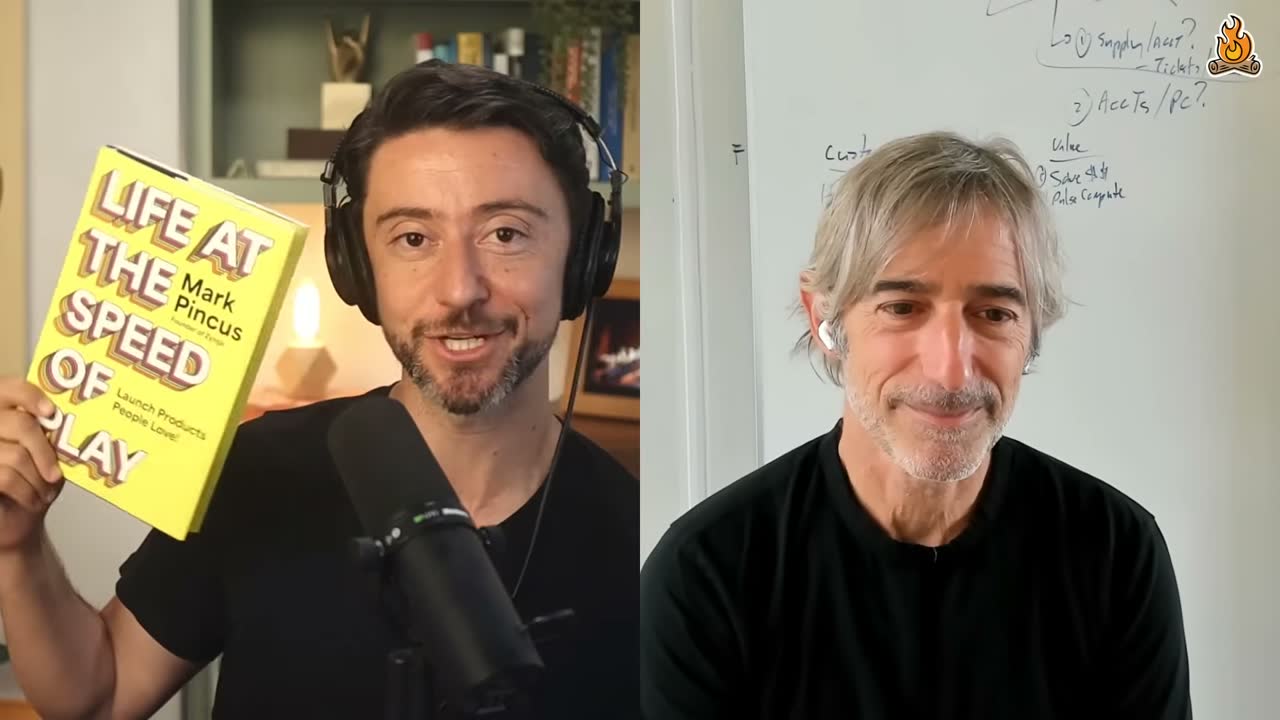
 Lenny's Podcast · The whole library, and ask it anything