Superwall
Paywalls, pricing and onboarding experiments from the Superwall team. 34 Superwall episodes on product and growth, each as notes you can zoom: the bottom line, key takeaways and every chapter, linked to the moment in the video.
Ask all of them a question · The course
October 20262
 Superwall · Oct 11
Meet the ex-wrestler making $41k/mo with AI apps
A non-technical founder shows how he grew three AI fitness apps with niche influencer deals, raw paid ads, a tailored onboarding and a social feed for retention. The apps reached almost $41k MRR and $84k revenue in 28 days, and Wrestle AI passed 100,000 downloads on creators alone.
- Make raw, clear screen-recording ads instead of polished, high-production creatives
- Make clarity the main goal of every ad, UI screen and feature
- Turn influencer reaction and stitch videos into paid ads
 Superwall · Oct 5
The 1 Billion Views Content Strategy Every App Should Steal in 2026
Dawson Gibbs explains how to match the creator, the hook and the format to the product, using examples like Jetpack, SMB Market, Dupe.com and Bible BFF. A 40 million view campaign that made $1.2 million but churned 45% shows why the right views beat the most views.
- Use credible expert creators for high-trust products, relatable ones for impulse products
- Judge creators by churn and paying customers, not just views and signups
- Repost any video with 10,000 to 20,000 views and 3% engagement
September 20262
 Superwall · Sep 27
How To Grow Your App 23x Faster Than The Competition
Explains how to structure a UGC creator program by stage, pick and coach creators, and find underpriced markets in narrow niches and international regions. Programs he sees reach seven to ten figure monthly views, and he shows how to pick organic winners to run as paid ads.
- Start in a niche so narrow it feels too small
- Expand from a narrow niche into adjacent audiences to raise the ceiling
- Hire a generalist manager first, with a retainer plus bonus share
 Superwall · Sep 13
The NEW App Content Strategy Dominating in 2026
Organic app distribution works best by cloning formats that already performed, changing one element at a time, and publishing across many accounts, countries and languages. Clover went from zero to 8 million a year in six months and now does a quarter of a billion views a month for customers like OpusClip, Superwall and Typing.com.
- Clone proven posts and change one element instead of inventing new content
- Plan for clones to earn about 20% of the original's views
- Add Spanish, German and Australian audiences by dubbing and relaunching winning videos
August 20263
 Superwall · Aug 30
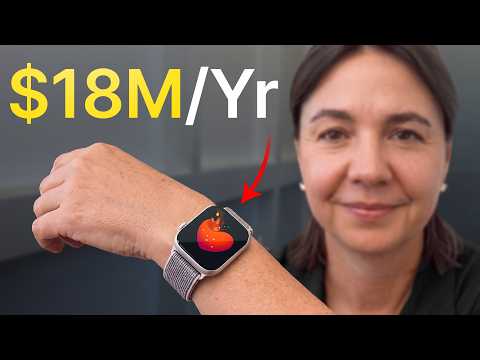
How to Build an $18M/Year Apple Watch App (FREE MASTERCLASS)
Welltory's CPO walks through the onboarding of a health app that reads Apple Watch data, covering a six-ingredient pitch framework, personal-data proof and a fear-of-loss close. The app reaches about 18 million ARR and nearly 18 million downloads after 10 years, and over 90% of users sync health data on the first screen.
- Make the first onboarding button ask for health data sync
- Show users their own data as the strongest proof
- Build onboarding around six ingredients: problem, promise, key, mechanism, proof, FOMO
 Superwall · Aug 25
Meet The Marketing Genius Behind Cal AI
A former stadium ops worker scaled Cal AI's influencer program from about 20 creators to 200+ posting at once, using brute-force email outreach, minimum view clauses and seamless in-video app demos. The app peaked at $60 million a year, and the episode shows how the machine ran and why creator CPMs improved with saturation.
- Add a minimum view clause set below the creator's own claim
- Brief creators to sneak the app in, not read scripts
- Show the app within the first 15 seconds of every video
 Superwall · Aug 3
#1 UGC EXPERT Reveals How To Market Consumer Apps
Nick Lawton walks through how consumer apps run UGC creator campaigns end to end, from a $2,000 to $4,000 starting budget to putting paid spend behind organic winners. The result that makes it worth hearing: SideShift brands spend from $250,000 to over $700,000 per month profitably, and he says AI UGC gets views but has not converted.
- Skip AI UGC and use real creators for conversions
- Start with a $2,000 to $4,000 budget to find content market fit
- Pay creators a $600 base retainer plus a $1 to $2 CPM
July 20263
 Superwall · Jul 28
$16M AI CEOs: How to Make $1.3M/Month With AI Apps
Social is a $16M annualized, profitable app studio that buys apps after their viral peak and scales them with constant A/B testing and about 4,000 fully AI-made video ads a month. The episode shows how removing the onboarding paywall, tagging the reasoning behind every test, and mixing human ad ideas with AI execution lifted revenue per user 2x in 12 months.
- Remove the onboarding paywall if later placements convert better
- Retest old A/B tests whenever the product or flow changes
- Write down the hypothesis and learning for every A/B test
 Superwall · Jul 19
Beginners Guide to Buying & Selling Apps 2026
Steve Young explains how he finds apps and keywords that already have organic distribution, buys undermonetized apps (sometimes with a loan), and lifts revenue with ASO and hard paywalls. One acquired app has made over $1 million in its lifetime and about $500,000 last year, and a hard paywall doubled the trial start rate on another.
- Test a hard paywall and watch trial start rate and trial to pay separately
- Buy undermonetized apps that already rank and add a hard paywall plus higher price
- Finance an app acquisition with a loan so the cash flow covers it
 Superwall · Jul 8
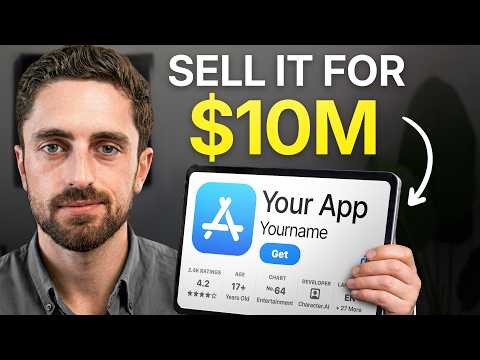
$172M of App Building Advice in 50 Minutes
Six rules for building a consumer app that can sell for nine figures: own a narrow category, build for sticky users, earn organic traffic, charge premium prices, tailor the story to the buyer, and sell before you need to. The standout result is Waking Up, which gets about 25K downloads a month yet earns over $1M a month by charging $20 a month and $150 a year.
- Test higher prices on a slice of users until demand breaks
- Price toward the $20 a month anchor ChatGPT created
- Measure retention of your top 20% most engaged users
June 20263
 Superwall · Jun 28
I speedran an ai app to $100k in 70 days.
Cedric built a peptide and GLP-1 tracking app and used a creator-first retainer plus affiliate system to reach $100,000 in revenue in 70 days. He explains how he sources and pays creators, turns organic winners into Meta ads, and tailors onboarding by age.
- Copy the channel competitors ignore: sign every creator in your niche
- Start creators on a one-month trial retainer, then scale by results
- Promote winning organic creator videos as Meta ads, not scripted copies
 Superwall · Jun 21
How to Build a $2M/Month App (Copy Me)
Marcus Burke explains how to build Meta ads for subscription apps: research the audience's own language on Reddit, prime people for the App Store, and structure ad sets so spend reaches distinct audiences. His best-performing ad concept has passed $1M in spend across hundreds of iterations, and he has scaled an app to $2M a month.
- Prime viewers in the ad that they will land on the App Store
- Write ad copy in your audience's exact pain-point language
- Mine Reddit threads with Claude to extract vivid emotional language
 Superwall · Jun 7
The 14-Year-Old Who Built a $14k/Month AI App
A 14-year-old founder explains the influencer outreach and deal system he used to take a gamified productivity app to over $14,000 a month. It covers DM scripts, four deal structures, how to vet creators, and how to pick app ideas.
- Use minimum view clause deals with creators as your default structure
- Keep your CPM below your app's revenue per thousand views
- Pick creators by engagement and views per video, not follower count
May 20265
 Superwall · May 31
I Studied 1,000,000 UGC Ads, This Is What Will Grow Your App
Shows how top consumer apps run UGC programs: how to structure creator teams, pay creators, and put Spark and partnership ad money behind organic winners. The programs mentioned reached 500 million views and #1 on the App Store, with CPMs under 90 cents.
- Put $20 of Spark spend behind any video above 7.5% engagement
- Use engagement rate above 7.5% as your viral signal
- Run Spark for a week and kill it below 5% engagement
 Superwall · May 24
The EXACT System to Go From 0-$10M+ With Your App
StudyFetch grew an AI study app to over 7 million users and 2 billion views by running a large creator program, including paying influencers to start brand new zero follower accounts as UGC gets less effective. The episode covers how they pick creators, pay them, structure the team and design product features to look good on camera.
- Pay established influencers to start fresh branded accounts instead of posting on their main
- Vet influencers by comment engagement, not by view counts
- Make the product itself the reason the video works
 Superwall · May 21
The NEW Short Form Strategy Dominating For App Growth
Yannis explains how he finds TikTok formats that both go viral and drive installs, then mass produces them in house through warmed-up reposter accounts instead of hiring creators. His system opens 50 to 100 accounts per week and produced about 300 million views and an estimated 3 to 5 million downloads last year.
- Validate a high converting TikTok format before you build your app
- Judge formats by App Store rank movement, not by views alone
- Test the exact relatable trigger words in your text overlay to drive downloads
 Superwall · May 11
she makes $400k/mo from ai apps (while in college)
Nicole shares the playbook behind Glam Up (150K MRR, 1 million users in 6 months) and Sprout (250K MRR, 100 million monthly views): scientifically tested faceless TikTok formats, a referral-gated paywall, and a trained creator army. The result is four apps built before 25, with her last two apps doing over 400K a month combined.
- Hard paywall straight after onboarding instead of letting users explore first
- Test raising your price, because higher prices can increase conversion
- Gate results behind a paywall or an invite-three-friends unlock
 Superwall · May 5
I speedran a new app from 0 to $2m/year in 6 months (here's how)
Daniel shows how he built an audience and proof of willingness to pay before writing code, then used influencer-made ads, an annual-default paywall and consumable upsells to reach $2M ARR in 6 months with a dating profile analyzer. He also explains what he carried over to Cal AI, including retention features and a framework for picking app ideas.
- Charge for manual service before building the app
- Build an audience and a pre-order link before shipping
- Warm up a new TikTok account with unbranded content first
April 20263
 Superwall · Apr 26
Copy This Facebook Ads Strategy, It'll Blow Up Your App
Alex explains how a hashtag app reached 100k MRR on Meta ads by running UGC creative at huge volume, surviving repeated account bans, and then selling to a private equity style buyer. The result: about $1.5 to 1.8 million in ad spend (roughly $800k wasted) distilled into a repeatable playbook of captions, green screen and strong hooks.
- Test creatives at high volume because roughly 1 in 85 wins
- Always add captions to video ads for sound-off viewers
- Use a green screen creator over a live app demo
 Superwall · Apr 19
How I built a $500k/mo ai app (so you can just copy me)
Pingo grew to nearly $500k a month in about 14 months by having around 100 creators post videos that always show the product, plus a paywall built around a trial timeline. The episode covers creator recruiting and coaching, geo-aware virality, and detailed paywall and trial experiments.
- Require every creator video to show the actual product
- Show the trial timeline on the paywall to cut perceived risk
- Offer a longer trial to users who abandon the transaction
 Superwall · Apr 12
COPY this ai app's $6.7m/yr marketing strategy
Two ex-Loom employees explain how they grew Coconote to 6.7 million ARR in about 18 months, bootstrapped, using a small team of part-time creators, targeted short-form video, a longer onboarding and trial-extension anti-churn flow. The result: 100K ARR in 45 days, 5 million in a year, over 50% EBITDA, and an acquisition by Quizlet.
- Optimize videos for conversion and audience fit, not raw view counts
- Move login to the last screen, after the paywall
- Offer a seven day trial extension in the cancel flow
March 20265
 Superwall · Mar 29
0 to $300k/mo in 45 days with my ai app (just copy me)
A first-time consumer app founder explains how one repeatable TikTok format, 85 paid UGC creators and a milestone bonus structure took an AI photo editor to $300k MRR in 45 days. The result is 600 million views in 60 days and 1.2 billion in 120 days, scaled with a $100k personal loan after one video showed roughly 6x return.
- Model revenue as views times conversion and optimize only those two
- Run one strict video format with no deviation across all creators
- Pick a format that is viral, repeatable and converts
 Superwall · Mar 23
I speedran an ai app from 0 to $1m/yr in 10 months
Koby Conrad explains how Sunflower, an AI-powered app for quitting addictions, went from zero to $1M annualized revenue in about 10 months by hiring a top influencer as an employee, building an AI sponsor inside a larger product, and iterating on paywalls. The episode is worth hearing for the 48% revenue lift from trial reminders and his view on where app monetization is heading.
- Add trial reminders to your paywall flow to lift revenue
- Hire the biggest creator in your niche as an employee
- Make annual the default option and charge upfront
 Superwall · Mar 15
The Stupid Simple Content Strategy That's Making Apps Go Viral
A creator turns his sponsored-video data into app ideas: he copies viral brand-deal formats, hands development to a co-founder, and runs distribution himself. The result was a class action settlement app that made $217,000 in 5 months and now earns about 100K a month.
- Remake your best sponsored video hook for your own app
- Never say your app's name aloud in promo videos
- Pitch creators a finished app built from their own viral ad
 Superwall · Mar 9
I speedran an ai app from 0 to $100k exit in 26 days
A solo founder validated a ranked running app by copying a proven competitor's Instagram format, selling a $5 early adopter spot on a Stripe page, and seeding launch day with App Store pre-orders. He then sold the app for roughly 5x ARR on an estimated 3K MRR while keeping 30% equity.
- Put your app up for pre-order to seed launch day users
- Validate by copying a proven competitor's content format before building
- Sell a $5 early adopter spot on a Stripe page to test demand
 Superwall · Mar 1
Meet The 18y/o Who Solved UGC Marketing (100M Views in 2 Weeks)
Dris explains how he ran a UGC program that hit 100 million views in 2 weeks at Cluely, then built Methods, a UGC marketplace that pays creators $40 for a first video and hit $1.2M ARR in 7 days of sales calls. The episode teaches creator psychology, format-based content scaling, and framing, with a $500K payout and 50K creator marketplace as proof.
- Pay new creators $40 for their first video
- Reframe your product around the outcome users want, not the category
- Keep experimenting with formats instead of sticking to one
February 20264
 Superwall · Feb 22
Copy This UGC Strategy, It'll Make Your App Go Viral
A solo founder explains how he built an organic UGC machine of 60 to 70 creators posting daily on TikTok and Instagram, driving 30 to 44 million views a month without a team or funding. He shows how to test formats yourself, use 3-second watch rate to predict virality, and pay creators on performance.
- Track the percent who watch past 3 seconds to judge formats
- Prove a format goes viral on your own account before hiring creators
- Do all the flopping yourself and give creators only proven formats
 Superwall · Feb 16
Full App Growth Guide 2026 - How to Make Viral Content to Get Users & Make Your App Retentive
A founder explains how a couples app went from 0.8% to 50% day-30 retention using a daily-question habit loop with carrot and stick notifications and widgets, then fixed distribution with TikTok account farming and an AI playbook system. The result is 50 million views and 150,000 users, all organic.
- Pick content using the VSC framework: viral, scalable, convertible
- Diagnose TikTok accounts by view count: under 300, 300 to 1,000, 1 to 5,000
- Anchor the product on the one feature users return for
 Superwall · Feb 8
I made 4,000 app paywalls and learned this
Paywall design and packaging are the biggest levers in paywall A/B testing, and simpler paywalls with a generic Continue button, a no-commitment line and clean plan groups usually win. After 4,000+ paywalls, the main lesson is that no paywall is universal, so start from a bullet-list baseline and test components.
- Test price and packaging design before testing price points
- Add "No commitment, cancel anytime" under the CTA on almost every paywall
- Replace descriptive CTA copy with a plain Continue button
 Superwall · Feb 1
this 14 yr old makes $100k/mo PROFIT building apps with ai (here's how)
A distribution-first founder explains how he turned viral memes into ad-monetized mobile games, then moved into consumer apps using faceless UGC, TikTok ads and influencer partnerships. His meme game hit about 2 million downloads and over $100k in a month when he was 14.
- Build a simple interactive game around a meme the day it trends
- Post dev-log videos on a trending topic and add viewer-suggested features
- Use app store chart rankings as a built-in viral loop
January 20264
 Superwall · Jan 25
Meet The Guy Who Solved App Growth on TikTok
Nic Weber explains how Noise uses mass distribution, copied viral formats and a two-pronged UGC plus slideshow strategy to get app growth from TikTok. The founders on the platform generated over 2.5 billion views in a year, and Noise itself averages about 30 cent installs.
- Spread one format across thousands of posters instead of a few creators
- Copy formats that already went viral and slot your app in
- Run high-effort UGC and mass slideshows at the same time
 Superwall · Jan 17
Meet The Guy Dominating The App Store
Ryan explains how his team built a TikTok creator army, a three-tier ad scaling system and a January-heavy ad calendar to drive 50 million+ downloads across a portfolio of about 30 apps. The system pushed one habit app to number one in the US App Store on January 2 and 3, two years in a row.
- Scale ads through three tiers: $20 tests, bigger level two, evergreen level three
- Spend about 75% of your annual ad budget in early January
- Time ad spend to the weekday and the calendar around New Year
 Superwall · Jan 11
The App Marketing Strategy No One Talks About
Two founders explain how they grow client apps by posting hundreds of thousands of context-aware Instagram comments from fleets of real phones, borrowing warm-up logic from cold email. One health app campaign turned about 300,000 comments into roughly 7,000 link clicks and a projected 4x return.
- Write comments that fit the video and the existing comment thread
- Comment early on videos with viral potential, and skip old videos
- Be upfront that the app is yours and you are the founder
 Superwall · Jan 4
he had nothing.. until he built a stupid simple $30k/mo app with AI
A self-taught founder explains how a joke GPT-3 dating text tool grew over about 2.5 years, while he kept his day job, into a roughly $30k/month business at about 80% margin. The episode covers turning press into domain authority for SEO, picking painkiller problems, hiring Upwork contractors early, and the revenue line he set for quitting.
- Use press coverage to build domain authority, then target SEO keywords
- Start your first business with a painkiller problem, not a vitamin
- Keep your day job and fund growth with your salary