0:00a lot of consumer apps have to wrestle with is this idea of a hard pay wall versus fremium. You guys have experimented with a premium model. It hurt conversion, but you still seem to be a big believer in premium long-term. When you think about kind of like the breakout apps, the first time you hear about them, they sound a little weird. I remember the first time someone told me about Instagram, you're like, "Yeah, it's like kind of this thing. You put a filter on your photo and then other people see it." I was like, "What? What are you talking about?" Uh, and I think some people would see apt and be like, yeah, it's kind of like this quiz like conversation, but then it kind of tells you like what you should do with your career and then actually like helps you go do them. So, in terms of like why premium because you can create something that hasn't existed kind of like a new category and really just kind of blow it
0:40out and get maximum reach, there is a tsunami coming with AI where AI is just going to create enormous turmoil and flux in labor markets and there just really aren't great tools out there. Apt is the AI career mentor that helps you find a fulfilling career and then actually helps you advance in your career. >> Why can't people just use Chachi Peter or Claude for their career mentor? Bill Gurley did a podcast recently with Tim Ferris [music] where he was talking about like what actually will differentiate you at the application layer and it's proprietary data unique workflow and network effects [music] are how I think about this. This is sort of like a a cliche, right? Originally, it was, "Hey, well, what if Google does this?" And now this is just kind of the modern version of it. And I think the same physics of building products that people love still apply here.
1:30>> Welcome to Subversive, [music] a podcast dedicated to sharing stories from the best consumer subscription apps in the world. We'll bring you lessons for how to grow your consumer subscription business, including insights and inflection points that led to exponential growth from leaders at category defining companies and innovative startups. Let's get into the show. This episode is brought to you by RevenueCat. The world's best apps use RevenueCat to power their subscription infrastructure, manage customer data, and grow revenue across iOS, Android, and the web. From any developers launching their first apps to category leaders like OpenAI, Notion, and Ladder scaling to millions of users, RevenueCat handles the complexity of monetization so you don't have to. Learn more at revenuecat.com/subversive.
2:16My guest today is Tomas Hoyos, co-founder and CEO of APT, an AI powered career mentoring platform that has already helped over 2 million people advance in their careers. In this episode, we discuss how AI's disruption of millions of jobs makes this a uniquely important moment to help people with their careers. About how APT turned a 15-minute conversational AI quiz into a highly effective subscriber conversion funnel. And about app's long-term vision to evolve from a career mentoring platform into a two-sided marketplace for talent.
Why Apt is building an AI career mentoring platform
2:472:47All right, welcome Tomas to the Subversive podcast. uh really excited to have you on today to talk about APTP, the company that you've been building uh with your co-founder for the last couple years. And uh before we get too into your background, tell us a little bit more about what AP is and why now is such an important time to be building this product in particular. >> Yeah, awesome. Well, thanks for having me, Phil. You know, obviously we're we're working together a little bit uh and just super excited to to do the podcast. Um so, yeah, what is apt? ACT is the AI career mentor that helps you find a fulfilling career and then actually helps you go do it. It helps you advance uh in your career. And so why are we building apt? Uh a billion people change jobs every single year.
3:29And yet something's fundamentally broken about how people approach their career because seven out of 10 people say that they're struggling or suffering in their career. And so our view is that it's crazy that people are going through their career single player mode alone and then just really really struggling and suffering to figure out what is the specific lane. How do I make the 80,000 hours that I'll spend working count? How do I make the most of it over the course of my life? And there just really aren't great tools out there that help you figure out what's a career path that fits you uniquely individually and gives you help and support going to fulfill it. And so we think that this is going to be one of the great challenges of our time in the coming years because there is a tsunami coming uh with AI. AI is just going to create enormous um turmoil and flux in labor markets. And so there's this really big debate as to
4:30whether AI is destroying jobs or whether it's creating jobs. But I think what no one disputes is that it's really going to change the game. And so we think that there's going to be hundreds of millions of people, if not billions of people around the world who are asking themselves the question in the age of the AI economy, what do I really want to do? What am I good at? Because they're going to have to reinvent themselves as things change really quickly. They might have to learn new skills. They might have to reskill. They're going to be wondering what is the right opportunity set for me individually in a world that's changing faster than ever. And so we think that that is going to be kind of like a key key issue for people over the next 5 10 years. And I think the thing that people really miss is that AI which is creating some of these problems can also be the largest part of the solution. and we have yet to apply the
5:24best that AI has to offer in terms of helping people figure out what is the right progression for their career and what comes next. And it's a little crazy that there is a huge public conversation around what AI is going to do to labor markets. You have leaders of some of the largest and most innovative organizations in the space, the AI labs, talking about how it's going to eliminate jobs or automate jobs. But I just really don't see people building solutions to help real people who are going to be confronting those problems.
5:54And that's why we're building app, helping people discover what they're meant to do with their career and then help them go do it. >> Yeah, it's such an important problem. And even before AI, finding the optimal career path was something that people have struggled with since the beginning of time, right? It's a very difficult question to solve. My wife Ashley is somebody who spent most of her career in workforce development, particularly for young people, and it's just a really difficult challenge for a lot of people to find what they're meant to do. AI is obviously going to make that even harder in the short term, but it also can provide a lot of solutions. And so, I'm so glad you and your team are working on
Why Tomas left private equity to build startups
6:266:25this. Real quick, before we get more into app, let's talk about your own career journey because you started your career in in American Securities, you were in private equity, and then you pivoted into entrepreneurship and have now been a serial entrepreneur. You founded multiple companies. So what drove you to make that pivot from investor to builder in the first place and then tell me a little bit more about some of the other companies you founded before you ultimately were inspired to go pursue this opportunity with app.
6:49>> Yeah, so uh I started my career uh in finance investing at a later stage private equity fund and it was honestly a great place to to learn. You're surrounded by really smart people. you're meeting all sorts of companies and management teams um and really understanding kind of like the fundamentals of business like how do you value a business how do you think about uh buying a business and running a business and exiting a business um and I learned a ton but kind of what I felt in the back of my mind was just this like latent attraction towards the world of technology and building stuff and so I found myself you know nights weekends kind of like every spare moment um thinking about technology and kind of where the world was going and just finding that extremely exciting and the types of businesses that we were investing in um at that private equity fund buying those those companies. Um they were kind [clears throat] of much
7:46slower growing. a lot of businesses that are kind of lend themselves well to that kind of investing large physical assets that have been around for kind of 30 to 40 years that you can put a lot of uh leverage on to financially engineer return and um it just didn't really excite me as much as building the future and building stuff and and I think that's also another element of it and not to um you know denigrate at all that the kind of work that people do in financial services and investing but um I think particularly in that category there is a lot of uh the frame frame of mind. How do we make the most money possible? Um rather than what can we build to kind of make people's lives better? And so I was always just sort of attracted to building stuff. And um it was frankly kind of a difficult decision cuz when you're in that path and things are working um you really have to take a step back and and get off the track
8:35almost um and kind of pivot into um pivot into building stuff that's really uncertain where you have a group of people in the proverbial garage trying to get an idea off the ground. uh and you're just kind of really diving into the to the deep end of uncertainty. And so the first uh company that I built um was called Voro. It's a health healthcare social network. Um and it helps you find doctors that you trust using recommendations from people that you know and trust. Um so what it was really doing is digitizing this pattern of behavior that exists in the real world, which is you get word of mouth uh recommendations from friends. That's how most people find uh healthcare providers. Um and really what we were layering on to it was also an aspect of objective data so that people could make not just more trusted decisions but better decisions. So you know when evaluating um surgeons or uh or more
9:28technical healthcare providers you could layer in objective quality metrics like uh for surgeons it would be uh riskadjusted readmission rates or mortality rates um complication rates so people had the best of both worlds. um connecting with people they know and trust and then also being able to leverage objective data and then actually booked the appointment with the physician and we were growing uh quite quickly grew that business to you know several million users um all organically as a as a growth nerd I know you'll uh you'll you'll love that um and then COVID hit which was a little bit of a sideswipe so uh our monthly active users dropped by like 90% in two weeks because people stopped going to the doctor >> um and so that necessitated a pivot Funny, I called um our lead investor at the time um this guy Mike Maples who's kind of this like legendary VC >> Floodgate >> and yeah at Floodgate and um we had just
10:20kind of raised this VC money and uh I asked Mike like hey look like the business as we know it um has changed and I think there's absolutely a market for this product but I don't know what co is going to look like. This is all happening in March 2020. Um and so I said what do you want us to do Mike? Do you want me to like send the money back? do what do you you know we might have we might have to pivot because I I don't think this this business is going to work in the current environment and he said in kind of like his you know affable uh Texan accent like you let me tell you a few stories and um he uh he's like let me tell you about a couple pivots. So he's like, "There's this one team they were working on. They're working on this app and it was a podcasting app, but it was really early and it wasn't quite working and it name was Odeo and next thing you know they want to do micro blogs and they Twitch
11:08and then you know that business becomes Twitter and he's like and then there was another team where they were working on this um you know they had this camera stuck on someone's head and it was kind of a live stream TV show and uh they were kind of following this guy the whole time. it wasn't quite working. And so they pivot and then become Twitch. And so he's like, "I think you guys should like take a few swings and see what happens." Um, and so, uh, I was like, "No, no pressure, right?" Like the [laughter] the best pivots of all time.
11:36And, uh, so what we did is we took the team, we broke it into a couple pieces, and we said, "Hey, we're just going to launch one thing every single week, uh, until something happens here." And so, it was a small team, too. It was just like less than a handful of people. And um the the team that I was on, we uh built this product, launched it in 48 hours, and it did $100,000 of GMV um in uh in the first week. And so I was like, "All right, there's some there's something here." Uh and that that product eventually, you know, we called it air subs. Um but it was basically a tool for hosting live virtual events on Zoom, [clears throat] helping creators in the creator economy. Um ho host live events, charge for it and earn money, you know, uh doing ticketing, registration, payments, turning it into a subscription library, uh of virtual content that they could sell over and over again. And we ultimately, you know,
12:31grew that to a few million in volume. But as the world starts to go back to normal, uh, you know, it seemed like that business was not going to be like the, you know, the billion-dollar outcome. And so, you know, we monetized a bunch of the assets, we return capital, uh, to investors. But I think one of the things I'm most grateful for, you you learn a lot in uh, in startups and we made like every mistake in the book, but I think one of the things I'm most grateful for with that business is that's where I met James, my co-founder um, app. he um is an was an angel investor in that company and the first time I met him we totally hit it off um and obviously you know we we're building app together and he's just an amazing uh partner he's a freak of nature with [clears throat] all the cool stuff that he's done and does now and I just love building app with him so you know even for for all the founders who are
13:20listening even through like the roller coaster and ups and downs like there there are silver linings and great things um that happen even in kind of the the low moments so Um that's where I met James, took a little time off and then we we started uh we started app together. >> Yeah. I mean there is a great lesson in there which is some of the greatest companies in history have come out of pivots and so you're as long as you still have capital and you still have a motivated team you're not down and out until you return capital and then uh no matter what I mean even if ultimately the idea doesn't work out you learn a lot and that provides the raw material to be successful with your next
How Tomas and James came together to cofound Apt
13:5413:53business. So let's get into a you co-ounded apt with James in 2023. um you hinted at this, but how did the two of you originally come together and and what was your founding insight behind app that made you both so excited to pursue it? >> Yeah, and I think I'll maybe I'll start with the uh with a couple of the insights. I think one we hit on which is basically uh so few people love what they do and really feel like you're in the right lane in their career. And so there's this amazing stat which is only 4% of people in the world love what they do. Um, and we also reflected on the fact that every single person on earth asks themselves, "What should I do with my life?" It's a universal human experience. You're talking about your your wife working in workforce development. You're talking about how career questions are just something that's a shared experience between everyone. We just knew that there was a
14:48really big problem, one of the biggest problems, highest leverage problems we could help people solve, which is how they approach their career. And there just weren't a lot of solutions. um kind of working on uh working towards that positive vision of the future on an individual basis but then also society. James actually came to to me with the idea of uh he grew up with his dad as a recruiter uh is like one of the biggest recruiting firms in the country. He's been around for, you know, a handful of decades, been doing this forever. And James used to cold call uh clients on behalf of his dad as a recruiter and was and he he would always talk with his dad about kind of how you know someone's going to be a great fit uh for a role.
15:29And his dad was very early to giving different kinds of assessments um to candidates to better understand uh personality, aptitude, different psychometrics that might predispose someone to being a successful employee in in a in a given role. And so he had been thinking a lot about that. He kind of came to me and we had always known that we wanted to do something together and he said something like, "Hey, like I think there's kind of a modern version of a personality aptitude assessment um that that we could build together that would help a lot of people just cuz the stuff that's out there really really isn't that great." Um and in that conversation, you know, we talked about well actually I mentioned you could do this with AI. You can make it conversational. you can make it much more engaging and you can have kind of a new kind of experience. And this was like extremely early kind of before this
16:20explosion in intelligence um and price per unit performance and all all this stuff in in kind of the the developments we've seen with LLMs and kind of where they're going. Um and so that was kind of the founding insight is there's this massive uh customer problem. Maybe there's some narrow edge of a wedge within assessments related to aptitude and personality and then there's probably a much more engaging product to be built um in the age of LLM and and AI and those were kind of the the things that sort of came together um to want to build uh something in the category. It's like the best mission you can imagine, helping people become the best version of themselves, make the most of their career, and have a really huge impact on how they show up. Because everyone knows when you are energized by your work, when you are waking up excited and passionate about what you're doing, you're just a totally different kind of
17:10person. The way you show up uh for the people that you work with, um your family, everyone around you, you're just sort of the almost like the best version of yourself. And we talk a lot about that, being very philosophically inclined, helping people find the work that they're wired for that energizes them and lights up lights them up. It's one of the best gifts um that you could give them individually. And then imagine as a society um if we're not trying to jam square pegs into round holes and you can just imagine, you know, a large board with everyone slotted um into a career path that uses their gifts that helps them grow and accomplish everything that they want to accomplish.
17:46like we'd just be much better off as a as a society. >> So what I'm hearing is 2023 that was sort of the year when at least people in tech started to wake up and see what ChachiPD was doing. ChachiP launched publicly late 2022. So it sort of hits the mainstream in 2023 feels like exactly the right time to be building a platform to help people find more fulfilling and rewarding careers and help them reskill themselves to position their careers around all the change that AI is bringing. But then importantly, James in particular had this insight from growing up with a father who was in the recruiting industry around personality tests and how powerful they could be as a wedge into getting that career coaching platform off the ground. So, let's talk
How personality tests created Apt's initial momentum
18:2818:28a little bit more about that, like getting to early product market fit. Why were these personality test such a powerful wedge? And what specific personal personality test did you use in order to get the product off the ground? Yeah. So, I'd say uh big picture, so few people think about what is a career that makes the most of my unique traits, personality, and gifts. And so, it could be aspects of of personality and preferences. It can be things that we call aptitudes, which are sort of natural abilities, things that kind of come easily to you. Everyone knows the range of tasks where you know uh it feels like you're swimming downstream, everything's coming easily to you. Um time sort of evaporates and dilates and you're just kind of in the zone and you're really able to get in flow state.
19:15And then if you were to take someone else that you know and they try and do the same thing, it's like pulling teeth uh for them kind of. So aptitudes are sort of natural abilities and then there's a range of of several hundred psychometric attributes and traits that that we measure. But um you know we just thought that so few people are measuring themselves in these different ways truly understanding themselves and then trying to line that up to the outside world. So we knew that there was some kind of um opportunity there and we started with we took hundreds of hours of personality assessments and started with kind of what are the most rigorous scientificbacked valid test reliable personality assessments and aptitude modules that we could give to users. And we started with kind of like the who's who of personality assessment. So things like um the big five uh personality indicator um Holland code uh MBTI the young
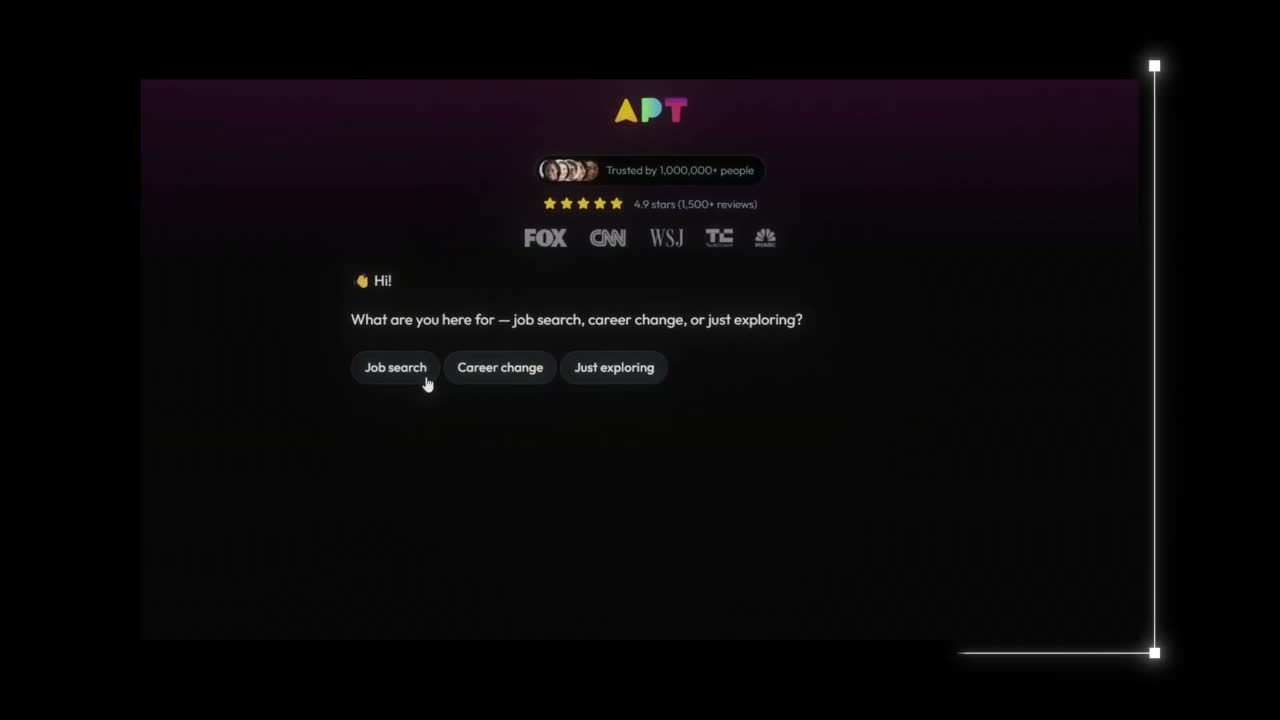
20:09archetypes uh DISC and anyagram. And so what we do actually with apt is you know your product experience starts with a conversation with the mentor where the mentor is asking you the career mentor is asking you um questions that last about 15 or 20 minutes and in the background I'm calculating uh your scores on all of these traits so that we can compute and produce personality assessment results, aptitude resistance results, psychometric assessment results on all these different variables and show them to so you can better understand yourself. And then we take the next step which is showing you what are the career paths that are aligned with your unique nature, personality, aptitude, psychometrics that will make the best use of your unique profile and where you're frankly going to be really good at it and you'll love uh what you do. Uh and so that's kind of how we thought about it in terms of the first,
21:05you know, the first iteration of the product. Um was kind of looked like a quiz and we've all taken quizzes online. Um and it was just multiple choice questions that people could kind of punch through. And for us, the trick was um how do we ask the right set of questions to deliver results on all these different tests? because no one had really done kind of like the one test to rule them all, which is sort of what we talked about, which is can you have one assessment and then produce results on all these range of tests and you know, we were able to kind of develop a system, an algorithm and scoring to actually be able to produce valid results um on that and amplify it with uh with AI. But that was really kind of the unique insight. People should know more about themselves.
21:45they're not looking at this kind of stuff and it can be predictive and there's actually a whole body of literature in terms of how do you take you know traits and then line them up to career paths that are uh that will match people's um unique profile. So, what I love about this was one, it's a great wedge and it's rooted in James unique insight growing up in the recruiting industry, but then two, there's sort of a natural viral loop attached to it because people love taking quizzes.
22:10BuzzFeed proved that, but they in particular love taking personality quizzes about themselves and then sharing the outputs with other people. That's why Inagram is so popular and people talk about their Inagram types all the time. Let's now turn to how did
How Apt evolved aptitude tests into an AI career mentor
22:2122:22you parlay some of that early momentum from these aptitude tests into an actual platform that helped people find better careers? Like what does apt actually do today and how do you see the product evolving over the next 3 to 5 years? >> Yeah, I think our our big picture mission um is to help you find to discover what you're meant to do with your career and then actually help you go do it and make progress. And those are sort of like two separate things I think in terms of discovering what you're meant to do. The way we do it is we give you these rigorous assessments that will calculate these various aspects of your personality and aptitudes and psychometrics and produce scores and reports and then teach you uh kind of about yourself and then present to you what are the career paths that'll actually be optimal for you. Teach you everything that you'd ever want to know about those career paths from who tends
23:12to thrive in them. What does the average day look like? Is the industry shrinking or is it growing? Is it going to thrive in the age of um AI? what's the compensation that you can expect, what are the exit opportunities, um what will you actually be doing in that role. Uh so there's a lot of education around what are the career paths you should go into. And then we have um a uh a job matching feature where we take uh over 10 million jobs on the internet, basically every job that exists on the internet, and find the actual unique matches that of careers and jobs, dream jobs that you would absolutely love and then show you those open roles. and then actually help you take the next step and apply into them and get the role and negotiate the offer and the thrive in your career. And then there's kind of this last aspect which is the 247 AI career mentor. And so this is basically what we like to think about is something
24:03that's better than the best mentor that you could imagine but lives in your pocket is accessible 247. Uh, and uh, when you're up in the middle of the night wondering about what you should do with your career, you have something that you can kind of turn to and can give you world-class advice for less than the price of a cup of coffee a day to help you advance in your career. And this is something else that that might be interesting um you know for for for listeners about kind of what we're what we're doing which is if you think about kind of that market for career coaching because this is sort of the first thing that we're building right now is sort of a career coach career mentor and we're very intentional about using the word career mentor and not coach. Um you know that's like a 7 billion dollar market with career coaching. And if you were to take a straw poll of the people around you you
24:47might not know that many people who've actually done career coaching. the ones who have would probably say that it was it was effective, but there's a bunch of reasons why people don't do um career coaching. So, it's really hard to find someone that you trust. Um it's heavily stigmatized because you're almost you're admitting to yourself that something's kind of broken about how you're um approaching your career. It's extremely expensive. You're talking about thousands upon thousands uh of dollars and then it's really inconvenient. you have to schedule a specific time window for an hour with someone next week to to think about your career and then it's kind of the next one is going to be a week or two later. And so it's just kind of this process, this tool that's kind of helpful for a lot of people, but it's is sort of broken in a bunch of different ways. And so what we're doing is just making that career coaching,
25:32that career mentorship much a much better experience for people where you have uh a mentor who's knowledgeable about every single industry in existence and can instantly call tools to figure out what is the latest compensation data not just in this category but in your specific city with what are the the job openings and the companies that you're targeting that are actually open and hiring for those roles today. like what does that compensation show you and who do you know that's at that company and how should you position your specific resume to get past the ATS um and how you should tell your story uh in the interview when you're prepping for the interview and helping you apply negotiate the offer and kind of thrive in the role. So I think that the first version of what we're building is really kind of this like AI powered um career coach kind of in terms of where that goes um there's a lot that we can do to
26:20make the career mentor uh much more proactive and agentic. You know, we could come to Phil. Let's say you're a product manager at Airbnb. We could say, "Hey, Phil, you know, we did a quick and this is without you asking for any of this stuff, but Phil, we did a quick scan and it looks like you're for the same job function. Someone on blind has reported that they're making x,000 more dollars per year than you. So, you might actually be like a little bit below market inside the company. Let's think about how we create a plan for the next 6 to 8 weeks to help you have a conversation with your boss and position yourself for a promotion or a raise. And oh, by the way, you might not know, but there's this really cool company that got started down the street um that taps into a lot of of your interests and hobbies outside of work. And the company's growing like crazy, and they just raised a bunch of money, and
27:04they're looking to hire people exactly like you. And by the way, you'd be making 8% more. So, why don't we try and think about making the leap there? Here are the people that you already know who work at that company. Here's how I tell your story with them. Here's a cold email that you could send to the founder, and let's kind of get you on on on that path. So making that career mentor increasingly proactive um and agentic. And this all sort of rolls up to kind of phase one of apt. So phase one of apt is building um something that's better than the best mentor. It's a consumer subscription centered around um this AI powered career mentor. And then phase two, which is once we really understand people are helping them make progress in their careers, it's connecting them with companies who have open roles and who want truly excellent talent and great fits for those job openings. And that's really connecting
27:53the job seeker with the employer and building kind of the marketplace 2.0 for the AI era. So, the successor to kind of the old tools that people are using today, you know, whether it's Indeed or LinkedIn, kind of the um the things that feel like they were built in the early 2000s cuz they actually were um but that won't succeed in kind of this next era of uh of how people approach finding their jobs. Um, and that's really where you would kickstart uh a network effect, you know, get get a a flywheel humming where we have a closed loop by understanding the unique profile of the user, creating a match for them for an employer who hires them for a fantastic opening, seeing how they perform given this ongoing relationship with the career mentor. and really building kind of this closed loop flywheel where we're matching seekers, job seekers into jobs, getting feedback from the employer on how it's going and just kind of creating
28:46this flywheel that gets smarter with every crank. Really really honing in and building a differentiated kind of algorithm to understand and predict who is going to be the best person for a given job um in the world. [clears throat] >> Yeah, that makes so much sense. So what what I heard you say was phase zero, I'll call it, was the aptitude tests and and just getting that wedge into initial product market fit and getting people excited about learning more about what makes them uniquely suited to particular career paths. And then and then phase one, which is the phase you're in right now, was building the AI powered career mentor to help people match their aptitudes to an ideal career path or if they're already happy in their existing career path, helping them maximize it.
29:25And then phase two is layering on a jobs marketplace on top of that AI powered uh career mentoring platform. Let's talk a
Who is getting the most value out of Apt today
29:3329:34little bit about who's using apt today and and how you see that changing over time. So are there different segments of people using apt for different reasons and and what do those segments look like and and h who is getting the most value out of apt right now in its current form? >> Yeah, I'd say um the two biggest segments roll up to one people who are looking for career clarity. So something's kind of broken with with their career. They're not in the right path and they want to figure out what they should do. And so they sort of have a big question mark about kind of where they're going. Then I'd say the other group uh group two is really people um who are in the job market and really trying to find a job immediately and and suffering because they haven't really caught up with kind of the latest and greatest of trying to find a job in this new era where everyone has access to chat GPT and quad and is just sort of
30:23spamming and spraying and praying resumes everywhere. And so I'd say it's really the person looking for career clarity and then kind of the modern job seeker who's really suffering because that world has changed a great deal. And both audiences um get a lot of value from apt. I think the the long-term value is really running the thread between those two. So, someone coming to you with a question about what they really should do, um, a very painful problem, um, which is, I feel like I'm in kind of the wrong path, but I don't really know where to get started. I'm not sure what's out there. I'm not sure what what matches me. And helping them develop clarity around that with a career mentor and assessment tools and career path recommendations, that kind of thing. And then also giving them tools to actually go land that job and make it a reality. Um, and then I'd say the the last piece of the puzzle, um,
31:15which we're building right now, um, is basically tools to help you learn and grow in your career. So, let's say we've helped you find career clarity. We've helped you land, you know, a a dream job. Now, let's help you learn and grow in that career and be a place that you come back to act and and really elevate your game to become the best version of yourself in that career path and be aware of what are the opportunities that are out there, who are the people that I should meet, what are the skills that I should build, what should I really be doing with my time, and how should I learn and grow to kind of make the most of my 80,000 hours.
31:46>> This episode is brought to you by Paddle. Today's fastest growing apps are multi-channel. More teams are using web checkout to improve margins, control pricing, and build stronger customer relationships. But external payments bring new complexity from tax and compliance to fraud, disputes, billing support, and entitlement logic. That's why Paddle launched the 2026 web monetization playbook. As the merchant of record for apps including Runna, Goodnotes, Codeway, and HubX, Paddle handles the complexity so you can focus on growth. Download the playbook at paddle.com/subversive.
32:18Yeah. Yeah. So, what I heard there was there actually sort of three different segments of users if I'm understanding correctly. There's the people who are all the way up at the 30,000 foot level around like I'm in the wrong career path. I need to make a change, but I don't know what that looks like and I need help just getting oriented. Then there's the second bucket, which is the people who are happy enough with their existing career path, but they're they're trying to find their next job.
32:39So, they're they're on the job market. They're trying to hone hone their resume, hone their skill set, figure out what the right next opportunity is for them. And then the third is maybe I just took another job recently or I'm happy in my job but I just want to continue to upskill or reskill and get a little bit better every day. And so you're starting to build these products and features around just the daily use case of how do I get 1% better every day so that I can be successful in the career path that I've already found and and I'm happy
Why a longer onboarding quiz boosted Apt's conversion
33:0433:03with. Now that we've established what the product is, why you decided to build it, uh what it looks like today, and how it's evolving, and who you're building it for, I want to get into some of the more specific strategies and tactics that have helped apt grow. And let's go back to the quiz because that was your original innovation was this 15 to 20 minute quiz. That's the onboarding flow and the front door into the app experience. And interestingly, your testing has actually shown that a longer quiz outperforms a shorter one. So why do you think that is? Uh, and then what other tweaks or refinements have you made to the quiz over the over time that has increased conversion? Yeah, I I think um it's hard to say exactly why a quiz that's a little more effortful um maybe converts better, but I think one way that we've thought about it is this notion of skin in the game or sunk cost or whatever you want to call it, which
33:54is, you know, when people are investing in something and taking the time to complete something, they're extremely curious about the results and they're honestly more excited about um finding ing out kind of what what's the payoff sort of at the end and so they're more likely to kind of convert into a paying customer. And I think the other side of it is that it's more believable um that if you are going into extreme depth and answering all these questions, if you have a smart counterparty, which is, you know, we're talking about the AI career mentor that's infinitely knowledgeable about all these different paths, the more information that you give it, the more accurate a profile it's going to develop um of you. And so you have increased believability that um you know this is going to be a great great tool um for you. And so I think that's kind of the big unlock on quizzes. And then something else you know cuz I know a lot
34:45of people talk about quizzes because it has all these characteristics that make it amazing for consumer products. It's deeply engaging. It's highly quantifiable. And we obviously have done this and anyone building quizzes does this where you know you instrument the whole funnel and so you can see how many people uh land on a landing page. You're AB testing the copy to get them to start the quiz. What's the percentage of people who start the quiz? What is the drop off at at each question? How many people see the pay wall? How many people convert into paying customers? And you can deeply deeply optimize that um that quiz funnel. Um but at the end of day it's just something that people like to do. Like quizzes are fun. like people like kind of cycling through and uh and I think the the reason that the longer one converts better is probably because they put a little more effort uh into it.
35:29>> Yeah, that makes sense. There's there's the sort of I spent all this time and energy filling the quiz out. So, I don't want that to be a sunk cost. I I want to follow through on it. And so, that can lead on the margins to at least starting a trial or or converting into your first month of a subscription. One of the
How an AI-powered onboarding quiz lifted conversion 60%+
35:4435:44other findings you all have had is you started with this multiple choice quiz. you alluded to that earlier, but you've evolved into more of a conversational AI powered quiz with a chatbot. And so, and that ultimately lifted conversion by more than 60%. So, what made that work? And and what trade-offs have come with it? Because obviously a multiple choice quiz is deterministic. You can pass all that data back to ad networks. As you said, you've instrumented the funnel, so you know exactly what people are saying and what that translates into in terms of conversion or predicted LTV. But with a conversational AI quiz, it's probabilistic. And so how have you had to adjust some of your other uh approaches to reflect that new that new AI powered quiz?
36:21>> Yeah, I I mean so in terms of why it converts better, um I think it's just a more enjoyable experience for people to have a conversation back and forth rather than answering multiple choice questions that might remind you of like quizzes that you took growing up in uh in in a classroom. >> Um and then I think the other piece of it is that it's just much more engaging. So, when it's a conversation and someone's asking you a question and you answer that question and then the mentor reacts to your response but then asks a follow-up question, it's just much more engaging. And again, I think it comes back to like believability of um your assessment of like is this thing actually understanding me? And if you're taking an old school personality quiz that you know is similar to what you took in 2005 on Facebook, um it's like less it's the probability that that knows you really well versus something
37:16that's asking you really deeply probing questions, responding to what you're saying, and then taking the conversation in other directions that are adjacent to what you're talking about is like it it just makes a lot more sense that it's going to understand kind of who you are um and what your goals are and what you're trying to achieve. So I think it really comes to this believability thing in terms of the trade-offs. I think you mentioned it which is basically like deterministic versus probabilistic but at the same time those are all solvable.
37:45So, you know, the way the LLM works, right, it's going to go in a certain direction and respond in a certain way, and you don't necessarily control uh you can kind of control with prompting where what direction it's going to go in. But the prob the fact that it's probabilistic is like a feature, not a bug, um because it can actually respond to what was said before it. Um and so I think what you have to get really good at is then analyzing the conversation after the fact. And this is where LLMs, you know, they create this complexity, but then they also give you the tool to benefit from that complexity, which is, you know, we're constantly doing analysis on what those conversations, what is the the content of those conversations, how do we categorize users across any number of variables in those conversations? Um, how do we how do we read between the lines to understand their core motivation? What
38:39are the things um that are sort of like latent there that they actually haven't said? what have they actually told us? But it's all sort of um kind of like free form text and then you're kind of going through this this exercise of bucketing and analyzing after the fact to group users, applying tags and labels and all all that all that sorts of stuff versus a multiple choice quiz where you can say, "Hey, these are like the four motivations that you can select from."
39:03And they're choosing one of them. And then you're kind of splitting the the product experience based on on their answer. So, you know, it just gives you many more directions to go and you have to get really good at analyzing kind of what they're what they're telling you. So, it's like a whole extra step, but it's so engaging and just drives up conversions so much that it's definitely worth it. >> Yeah, I loved how you framed that. Like AI is undoubtedly making certain parts of product development much more complex. Onboarding quizzes being one example, because you've gone from a deterministic multiple choice flow to something that is, you know, infinite permutations. But it also gives you the tools to be able to process all that complexity. And it leads to something I often talk about in the context of consumer subscription apps, which is hyperpersonalization. Right? Like if you look back 15 years ago, consumer apps
39:48had little to no personalization at all. Over the last decade, we've seen incremental progress in terms of branching certain questions in an onboarding flow based off of the responses to previous questions provides some measure of personalization. But now with LLMs, you can hyperpersonalize an experience because there are all these different directions that that initial conversation, that quiz with the AI mentor can go in, and it can lead to much more satisfying results for new users. I guess another thing that a lot
Why Apt believes in a freemium model long-term
40:1440:16of consumer apps have to wrestle with is this idea of a hard pay versus premium. And I guess the connection back to an AI powered quiz is premium is a lot more risky, but there's also a lot more upside if you can get it to work. So you guys have experimented with a fremium model and it it hurt conversion the experiments you've run to date but you still seem to be a big believer in fremium long-term. So can you talk me through why why you think fremium is ultimately the right answer for apt uh and how you're sort of stairstepping your way to a point where you could launch a premium model that's really successful? Yeah, I mean I I think the philosophical view that's driving this is that everyone deserves help making the most of their career and we want app to be hyper accessible to everyone because this is going to be one of the great challenges of our time with hundreds of millions of people who are
41:10experiencing like severe pain in terms of trying to figure out what to do with their career when the world has changed right in front of their eyes and they really have to reinvent themselves. So, it's more of a we think that people should have access to a tool because right now they're going it alone and it's clearly broken right now and it's about to get way more broken. So, I think philosophically that's a part of it. Another part of it is uh we don't see other people building tools to help those users. And so, if no one else is building it, we have to. But there's also this opportunity which is you can create the category. you can build something that's never existed.
41:50And you know, it's interesting when you think about kind of like the breakout apps uh of the last three decades. Um the first time you hear about them, they sound a little weird, right? So like with in Instagram, you know, it's like I remember um the first time someone told me about Instagram, they're like, "Yeah, it's like kind of this thing. You put a filter on your photo and then other people see it." And I was like, "What what are you talking about? Photo filters and other people see it." like I don't really like it doesn't like compute. I don't really understand it.
42:20And um I think there's there's clearly an opportunity to be built around career and I think some people would see apt and be like yeah it's kind of like this quiz like conversation but then it kind of tells you like what you should do with your career but it's like emotionally supportive and then it goes and finds opportunities for you and then actually like helps helps you go do them. It's sort of like this mentor but um then I'm actually like finding jobs with it. I'm making more money. you doing all these sorts of things with it.
42:46It's kind of like this you're sort of trying to put it into all these boxes and you don't truly it doesn't necessarily fit into um into a box cleanly. So, in terms of like why premium, I think it's to make it much more um accessible to people and because you can kind of like create something that hasn't existed kind of like a new category and really just kind of blow it out and get maximum reach um and then frankly like suck all the oxygen out of the room in terms of people who are trying to build competing products and then build build kind of like what is the best version of this thing that could possibly exist. And then I think the last piece too is with this marketplace um that [clears throat] we are and are going to build connecting job seekers with employers having maximum liquidity on uh on the jobseker side of the marketplace where you don't necessarily need to be a paying customer
43:37of apt paying 20 bucks a month 30 bucks a month whatever it is for access to the tool to to be getting value from apt and then also be in this pool of folks where we can make a brokered match to an employer who would hire you and get paid a a placement fee. Yeah, I mean you really articulated the trade-offs of premium, right, which is in the short term, it almost always hurts conversion because a hard pay wall, all else being equal, is probably going to convert a higher percentage of users. But hopefully you get a much larger top of funnel both because non-subscribers have some reason to stick around and continue to use the product, but also because they're delighted by the fact that they get value without having to pay for it, which means that can lead to word of mouth and ultimately stronger network effects. So before we get our lightning
How Apt will ultimately build a two-sided talent marketplace
44:1644:17round, let's talk a little bit more about where you see the product evolving and how these network effects play into this act 2 around this two-sided talent marketplace. So you said your long-term vision build this two-sided marketplace on top of millions of rich career profiles. How do you see that evolution playing out and why are these premium driven networks effect so important for that vision? Yeah. So I mean I if you if you take both uh constituencies, you take like the jobseker and then you take the employer, it's clearly not working for both of them. So on the jobseker side, uh kind of the way the world works right now is a job is going to pop up on LinkedIn or Indeed or maybe an ATS and you're going to try and catch it right when it gets posted and you're going to apply and instantly you're going to be competing against a sea of you know 5 to 7,000 people and it's just this like
45:06really horrible uh experience that is frankly very very demoralizing. And then on the employer side uh of the equation, um AI has made this a lot more challenging for them too, which is now they're getting, you know, 7,000 applications within an hour for one uh job opening and it's extremely hard to kind of sift through that. And even before AI made it much easier to apply and the fact that a lot of the, you know, gating screening mechanisms no longer work, like it used to be like if you got a really thoughtful cover letter, it would be very obvious that this was like a a good candidate or if it was like an extremely well done resume, it would be kind of a no-brainer to kind of pass them through to the interview stage. Um, but it's just kind of breaking the way this this world uh kindly uh currently works. And even before that, employers your hit rate on finding a truly spectacular hire for
45:58your company, you know, is at most 50/50. The people who are like amazing, you know, would be would bat better than, you know, 500 on this. But it's still really this coin flip and and hit or miss. And it's truly hard to understand like who are the people that will be uniquely great hires. And so what I what I see is two people for whom matchmaking is broken and we can build a better path which is we can truly understand the individual and who they are and how they're wired every aspect of personality, aptitude, natural gifts, abilities, all their psychometrics, what are their goals, what do they want to accomplish, what are their hobbies and interests and really understand them absolutely deeply in a way that no one ever has before because no one has a unique data profile on users like we have. We've had, you know, two million people take the assessment. So, we have a really unique proprietary data set of
46:50who people are and how they're wired. We understand the opportunity set that's out there. And then we can make this match to actually predict who's going to be a better uh hire, who's going to thrive in a career in a way that energizes them and they're happy, but then they also are extremely performant for companies. And so, we think we have kind of a unique angle on predicting who's going to be a spectacular fit for a role. And then we can make that introduction. And because we have an ongoing relationship with the users where this is a career mentor that's going to grow with them for decades, we can see how good of a match that is. We have closed loop feedback to see these are really great matches and we're making the algorithm that much smarter and better over time. And so I the reason that we're building the marketplace is we're uniquely positioned to do it. you know, no one else that I'm
47:34aware of has has taken this approach of really un deeply understanding people, creating and finding opportunities for them, making the matches, and that having closed loop feedback to understand it. And that system, that algorithm will get better and better and smarter over time. So, that's kind of why why we're building the marketplace, why we think it's kind of the right long-term vision of the product because again, like our mission is to help people discover what they're meant to do, but then also like take concrete steps and actually make it happen. And there is no better way to do that than to say, "This is the perfect opportunity for you and I teed it up and we're going to set you up to be successful and the company's going to win that you're going to go work with." So,
Apt's playbook for competing vs. ChatGPT and Claude
48:1248:12>> and I think that's a great segue into another one of the questions that comes up with apt and and frankly a lot of other AI powered consumer apps today, which is why can't people just use JPD or claude for their career mentor, right? Like what is ultimately defensible about apt? I think you started to answer that there, but can you say a little bit more about, you know, how an AI consumer app competes against these massive AI labs today and and where you think there is an advantage to um building defensible value in the application layer?
48:39>> Yeah, absolutely. And so I'd say, you know, someone who's actually been extremely thoughtful about this is, you know, Bill Gurley did a podcast recently with Wooden Ferris where he was talking about like what actually will differentiate you at the application layer and it's um proprietary data uh unique workflow and network effects are kind of how I [clears throat] think about this. So in terms of proprietary data, we have this incredibly unique signature on people where we are computing scores across these hundreds of variables on individuals, giving them tailored assessments to really sus out um quantifiable objective measures on a bunch of different areas. And this isn't really something that chat GPT or quad would do, especially not out of the box.
49:20Like if you think about giving someone an aptitude assessment where you know they're rotating images um you know they have kind of one of those like three hole punch processes where you're you're making a hole in the paper and then you're unfolding it and you're seeing like someone's spatial awareness where you're um assessing uh uh inductive deductive reasoning. You're assessing all these different things about kind of like what comes really easily to um to this person. that is just not something that that cla or chatpt does um you know in in developing this unique proprietary uh data asset and then from unique workflows um you know the the process of choosing a career and then finding a job has like a million steps in there it's an extremely unique workflow everything from how do I understand the opportunity set how do I narrow it down how do I look for specific companies in this city in this market with these compensation
50:14expectations. They have these um benefits where I know someone and I can angle and position myself to find this job uniquely and I got to apply and cut through the noise and make sure that they find me and I got to interview well and negotiate the offer. It's just this extremely broad workflow and you in order to build a truly spectacular experience for users, you have to go extremely deep in that workflow. And in a lot of ways, this is kind of a meta point. you in order to have an amazing experience, you need to be able to tailor the interface to solve this specific problem. Um, but that's how we think a little bit about about workflows. And then network effects is really, you know, one of the tried and true, one of the only true ways to create um enduring defensibility. Um, and we know that a marketplace is extremely network effected where as you have more job seekers, um, you've created more value for employers, which
51:06draws more employers, which draws more job seekers. And then we also have that compounding flywheel of data of really making the algorithm smarter and smarter as we as we make these millions of matches understanding which are the great ones and what's driving it to be great and that algorithm is getting smarter and smarter over time. And then I think just taking a step back like big picture on the application layer and how do you drive defensibility um from chatbt beyond proprietary data niche workflow and network effects. Um, I think uh people have said this in different ways, but just having just caring more, you know, is honestly like a huge part of this and it sounds so squishy. Um, but I would think about that as you can hyperfocus on a problem and deliver a spectacular experience to users that they're just not going to get in a chat app from one of the major um, AI labs. And that's because you can
51:59tailor the interface, you can tailor the messaging, you can build kind of that niche feature that's really going to unlock a spectacular experience for this one user and you can be totally focused on it in a way that you know someone who's building Cloud is not uh is is not going to be. Um and you think about even just kind of what we're doing with like job openings, right? So we have a database with uh well over 10 million open positions on the internet um right now. And if you were to try and ask Claude or Chat GPT to find you a job opening, what it's going to do is execute an extremely slow web search, it's going to go to Google or CHP's case, Bing and try and search for jobs and then click into something and then kind of build a a model of what are the what's the opportunity set that way rather than having a dedicated database where um you've gone um extremely deep in terms of uh taking the user profile
52:53and segmenting it into like 500 vector vectors and then lining them up uh you know with cosign similarity to what are the job openings and then adding all these filters on top and making the algorithm smarter and smarter over time. It's just not something that they care enough to to to work on right yeah right now I I don't see them carrying on like caring about enough to work on it um anytime soon. And then brand matters. I think you know standing for something really matters. I think people are going to want a product uh in in the most important areas of their life. they're going to want a dedicated product that's serving them on that use case. Not everything has to go into one uh mega super app. Um, and I think something like career where trust matters more.
53:35Um, where you need an opinionated interface that's going to solve this unique problem for you and just deliver maximum information density efficiently in an engaging um, entertaining way. That is always going to win versus just like going to a blank page in in a a chat app like chat GPT or Quad. And that's my personal philosophy. And I think you're seeing a lot of application layer companies win as a result. And I think a lot of the this is sort of like a a cliche, right? That has it originally it was hey well what if Google does this and then it's what if Meta does this and now this is just kind of the modern version of it. And I think the same physics of building products that people love still apply here, right? you need to deeply solve a super painful consumer problem. Um, in order to do that, you need an extremely opinionated interface. Uh, and you want a brand that people trust and have a
54:31relationship with and care about and tell all their friends about. And then you can build in these other aspects of defensibility like network effect to kind of build a truly sustainable business. >> Yeah, I think that's so well said. I mean, focus has been an unfair advantage for startups for a very long time, but I like how you broke it down into more specifically in the AI era. It's proprietary data. It's highly customized user interface and workflows designed around the specific problem you're trying to solve, and then its network effects to provide a distribution advantage and long-term defensibility. I think that's a really good distillation of the playbook these application layer products can use to go up against these massive AI labs. There's so much more we could talk about on this front and I wish we had more time, but I'm going to
55:14get us to our lightning round. So, I'm going to ask a series of rapid fire questions. You can give me some quick uh one minute responses. First one is, what is the best part about working at AP? And what's one thing you would change or that you and James are trying to change as co-founders? >> The best part is the people. Our team is amazing. Like I wake up excited to build with them. It's absolutely awesome. That's one. And I think a a close second, a close follow is uh the stories from users that you've helped. Um just because this is such a painful problem for people and if you've ever been there and basically everyone has at one point or another in their life where you have this kind of existential crisis of what should I do with my life? It's a question that every person alive has has asked themselves. Um it's just like really painful and it's extremely lonely. Uh, and so when you can help
56:05people in that that part of their life that's kind of like a rough patch, um, they are thrilled and they love you. And so I think the stories from our users is like probably the most gratifying um, aspect of this. And then just feeling like um, you know, we talk about helping people discover what they're meant to do. Like I think this is our life's work. And um there's like nothing better than waking up and just knowing that you have something that you're chasing after that you believe in with every fiber of your being. And it's kind of a meta comment, but I feel like I'm trying to we are trying to give people what we have, which is like one of the best gifts that we could ever give them. And I think a lot of people are going to need it.
56:47>> I completely agree. You were describing earlier how it feels to be in a career where you wake up excited every day and how it doesn't just make you more successful at work, but it makes you more successful in every aspect of your life. It makes you the best version of yourself. And I've certainly been in those points in my career where I do feel like I'm I'm not going down the right path. And so it's it's really important work you're doing. And I'm sure it's very fulfilling from a mission standpoint. And I I know I'm I'm violating the rules of the lightning round, but there's um there's something that that uh James and I talk about which is like one of the best questions you can ask yourself is what energizes you and people have said this in so many different ways. I was actually listening the other day. Um uh Graham Weaver had an amazing uh quote about this. He's a investor I think lecturer at um at GSB
57:34now. But he said that uh something like energy is the language of the soul. Um, and the point is when you're wondering what you should be doing, you should gravitate towards things that energize you. Um, where are the places again that sort of are a total time warp, things that feel easy, things that excite you. Um, is like a really good hint. A lot of people talked about following your interest. I know PG um, has written about this like extremely extensively.
58:02He has an amazing blog post. I think it's like what to work on. Um, and there's [clears throat] just this like this human truth that you can say in a bunch of different ways, but really it's like following what what energizes you. That would be if I could if I had a billboard, you know, for all of humanity to see, um, it would be like maybe a question like what energizes you so people were thinking about it. I think it's a great cheat code. And as humans, we have a tendency to over complicate things. Often times following your heart and following what energizes you is is it's a simple answer, but it can often be the right answer. Um, so sort of related to this, what did you want to be when you grew up? And what's one alternative career path you've considered since becoming an entrepreneur?
58:43I loved sports and I think there was like a moment where I wanted to be a professional athlete. But but I think like the thing that I really when I really reflected on it about like what I loved about it um it was some aspect of coaching like coaching [clears throat] and leading um and just like being a part of a group with shared purpose. Um, and so I think it was really like it quickly flipped from, hey, I don't think I'm going to be in the NFL to uh, uh, coaching is like just so fun. It's like one of the best things you could possibly imagine. Um, helping people kind of like be the best version of themselves. And, um, I had such amazing coaches growing up. And they weren't just all sports coaches. It was like in, you know, I would think about teachers as as coaches. Um, I went to this school where uh it was like your teachers were your adviserss were also your coaches were also like the people that you'd see
59:43around town and like they really were thinking about you as like a human and helping you be the best version of yourself. Um, and so I think if I wasn't doing I I wanted to be a coach growing up and if I wasn't doing that I'd be you know some aspect of coaching. And then more recently I've been doing a little more writing in public. Uh my wife is uh uh she's a professor but she also you know writes a lot. She has this like prolific newsletter and is writing a book and um I think uh I think I've like fallen back in love with uh with with writing too.
1:00:14>> It's funny you say that cuz I always loved writing growing up and I've said a couple times that if I wasn't in tech or if I wasn't doing what I'm doing now I I might try to be a novelist and and write sci-fi or fantasy. So maybe one day but uh but not in this chapter. If you could go back and do one thing differently at a previous startup, what would it be? >> Uh, I think it's charge from day one. Um, and but like we made every mistake in the book. We launched too late. But I think the biggest thing that I learned and have brought to apt is like you want to have uh clarity on your business model upfront. And that doesn't mean that you can't iterate and evolve it um over time. But I think even though we had kind of this deeply engaging consumer product that was growing like crazy, um there was uh we just it was sort of kicking the can on the business model because it was a social network.
1:01:04And so I think what we did with apt was charge from day one. And we had this like spectacular uh adviser who's just an amazing guy. He's bootstrapped a business to nine figures of revenue. it's mobile games and just this like amazing um guy and really when we were starting apt and he's he's just been instrumental in our success giving great advice. He was just saying like think about let's have our business model from day one and also let's use paid acquisition as a product development mechanism. So, like if you're going to do this quiz, like you can spend $100 on Google, run a run users through that funnel, and you're just viewing that as tuition to understand um kind of who they are, what matters to them, what's the right product, and then you make all these iterations, you keep these super tight feedback loops, and you can build something really special that way um where you're iterating, you know, really
1:01:55quickly on on product feedback. But I'd say, yeah, charging from day one is like the number one thing. Well, it's remarkable how often you hear that from repeat entrepreneurs because I do think it's scary to pin yourself down a particular business model and it's scary to ask users of a new product that feels rough around the edges to pay, but until they pay you, you don't know if you're actually generating any value. And so, I do think it's very good advice. Uh, a couple more here. What's the most surprising thing you've learned from millions of personality test results? I guess I should have known this. Um, but your personality insights are wildly engaging to you and less engaging to other people, but still useful for other people. So, I think like I can you can look at a user's personality insights uh and it doesn't mean close to the same thing to you that it does to them. like they'll read this and they'll be able to
1:02:49pattern match in their life to say this has showed up 19 times in the last two months and I know exactly what this means for me and it's so helpful and useful to them and uh it's just so engaging and empowering in a lot of ways to to be honest like to actually see yourself reflected and to kind of come to it with an open mind um is just like so powerful and it means so much to them. But then, you know, with another user who's looking at the same thing, it's sort of less relevant. So, I'd say the thing that's really fascinating is just like how much these kinds of results, whether it's personality or aptitude or something else or a pattern that you kind of that you put words to that they've never noticed, it just has these it has enormous leverage. It unlocks so much growth for people individually um that uh I guess I should have known that already, but it's uh it's pretty awesome to see.
1:03:45>> Yeah, I agree with you. And they're certainly not perfect. I mean, distilling all of the complexities of a human personality down into a personality test output, it's never going to be a perfect science. But it's remarkable how accurate and predictive they can be. And I particularly enjoy the the dynamics between different personality types, both at work, but then also like my wife and I both know each other's enagram profiles, and it's interesting to think about like, well, how does one interact with a three? And so I think the dynamics between people with different personalities is a whole another area that that is really fascinating. Um, last question and it's sort of an obvious one. What's one way you hope that AI changes work for the better for the next generation? [sighs] >> Yeah, I mean I I really think uh as a society if people are doing the work that energizes them, that is the world
1:04:34that I want to live in amid all of the change and all the flux and all of the problems uh that we're going to experience. If people can gravitate to work that they find purposeful and meaningful, enjoyable, where they're serving the people around them, um, and energized and waking up excited, like that's the world that I want to live in. And so I think there's a conversation around it where people say, well, maybe AI automates everything and we don't have to work. Um, and my personal view is that I think people want to work and want to contribute and it might the shape of it might look very very different. Um, and I know people have said this in different ways. If you were to kind of pull a a coal miner in the early 1900s and say, you know, there's like this career 125 years from now, that's uh where you kind of walk into restaurants and take a video of yourself like eating a certain kind of
1:05:32food and then posting it to people who want to hear what you have to say and you got to get paid to do it and they're like, "That's not work. What are you talking about?" Um but uh I so the shape of the work might look very different but I think we're always going to want to strive towards something to contribute to work to use our gifts and share our gifts and like that's the version of the future that um that that I want to live in. And I think by the way it's not all negative. It's not all just job destruction. You're going to see this Cambrian explosion of opportunity where there's there's an infinite number of of things out there for people to pursue.
1:06:06And I I also think that a lot more people will be entrepreneurs. And that's because you're giving them the leverage of agents, um, AI employees, what, however you want to talk about, teammates, AI teammates, people that you can work with. You're giving them access to tools and leverage in a way that they never have before. for. And so I think you're going to see so many more people build things that matter and really have um kind of that like passion project that they thought of, but that's actually now like a viable path for them to um p pursue uh as a career. And I can't think of anything better um than people kind of building the world that they want to see um and then you know being able to make a living out of it.
1:06:49You're kind of seeing it reflected in an early way in some of the business formation stats. I don't know if you've seen Stripe, they kind of track like how many businesses are getting created and you've just seen you've seen this explosion in creativity. People building vibe coded apps has sort of exploded the number of apps in the app store. It creates challenges for people who are building products where you have to be really really good at distribution which is a muscle that we've been like extremely intentional about building.
1:07:12That's the other reason charge from day one because you have to have a user acquisition mechanism that's sort of aligned with that with that charging from day one. Um, but yeah, you've just kind of seen this explosion of creativity where people are building stuff that matters. I think a world with more founders is like a beautiful world to live in, but you don't necessarily have to have to be a founder, you know, for your career to matter. You should find the thing that's sort of aligned with your nature, but that's what we want to build.
1:07:35>> Yeah, I love that and I think it's a great note to end on because I think work is a very essential part of what it means to be human. So, I certainly hope work is not going away. I think humans will be worse for it if that happens and certainly much less fulfilled. But then also I think there a a lot of ink has been spilled over all the negatives of AI displacing jobs in the short term. But ultimately as the costs of producing software or other products goes down exponentially uh with advances in AI and other technology it just means that careers that previously weren't viable and that couldn't make money because they were too niche suddenly become viable. And so you can pursue whatever your strange eccentric passion is you can you can now build a career out of it. And I think that's only going to become more and more true. This has been such a great discussion and I really appreciate you coming on Tomas. Any
1:08:22parting words you want to leave the audience with before we wrap up? >> Well, thanks for having me, Phil. It's been awesome. Yeah, if I could leave you with one thought, um, it's that you're not alone. So, every single person in the world has asked themselves, what should I do with my life? And it can be kind of a lonely, scary place. Um, but just it's a universal human experience, and you're not alone. and you have a magnificent version of your future that's waiting for you um to go find it when you find out what energizes you and what lights you up um what is the work that you're meant to do. And so I'd say just go do it.
1:08:55>> Absolutely. Thanks again, Thomas. >> All right. Thanks, Phil. >> Thanks again to Revenue Cat for sponsoring this episode. If you're building a subscription app, you can use RevenueCat to deploy native payw walls, run continuous AB tests, automate win back campaigns, and unlock more revenue. I work with dozens of subscription apps and most of them are already using RevenueCat as their single source of truth to power their businesses. Learn more at revenuecat.com/subversive.
 Caddie
 Subversive · The whole library, and ask it anything