0:00You all launched early 2023. You then grew from 9 million to 30 million in AR in just 18 months. What were some of the most important strategies and tactics that you used to drive the growth [music] of the business early on? >> We started by launching really the first commercial AI detector to see if content on the internet was AI or not right after the launch of Chat GPT. When we first launched a lot of media outlets, interviews, newspapers as well and that really capitalized and had network [music] effects. Media raises all boats SEO GEO growth. We also did a UGC or Tik Tok [music] program and scaled that to over 500 million views in the last year.
0:36And actually the past year, we've started to try to make media and also into a repeatable motion. What made you decide and your team decide that getting acquired by superhuman was the right next step for you >> for us as a writing platform? The vision of GP0 is to bring it everywhere on the internet. What the Grammarly engineering team has done is built that scaffolding to work in [music] Slack, to work in Google Docs, work in Microsoft Word and more places really well. There is a lot of massive trampoline [music] foot.
1:01>> What's one thing that you think you got wrong that you wish you had done differently? >> I would say buy the com domain. If you want to be venture scale, you have to buy the com even if you don't use it. Like notion took years to migrate [music] over for example forso. >> How do you think AI will change the way people write in the coming years? >> I'll say two things that might be really important. One is >> welcome to Subversive, [music] a podcast dedicated to sharing stories from the best consumer subscription apps in the world. We'll bring you lessons for how to grow your consumer subscription business, including insights and inflection points that led to exponential growth from [music] leaders at category defining companies and innovative startups.
1:43Let's get into the show. This episode is brought to you by RevenueCat. The world's best apps use RevenueCat to power their subscription infrastructure, manage customer data, and grow revenue across iOS, Android, and the web. From any developers launching their first apps to category leaders like OpenAI, Notion, and Ladder, scaling to millions of users, RevenueCat handles the complexity of monetization so you don't have to. Learn more at revenuecat.com/subversive.
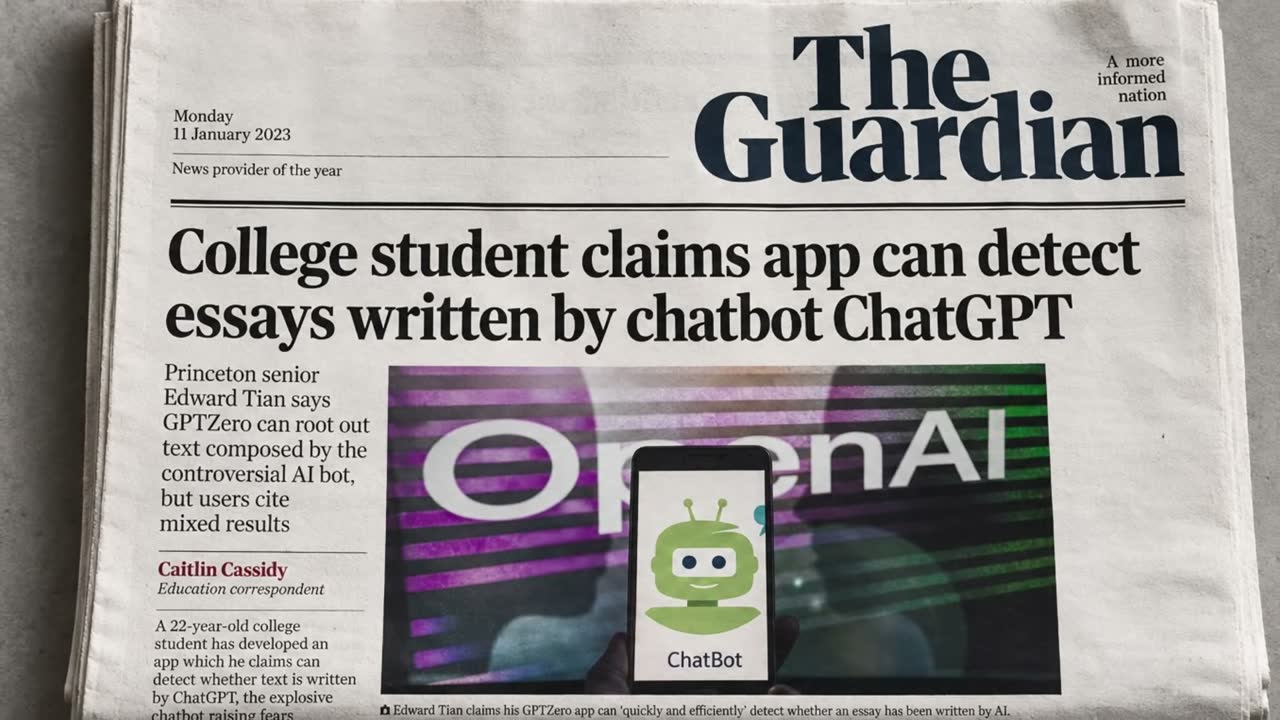
2:09My guest today is Edward Tien, the co-founder and CEO of GPT0, an AI detection and authenticity company that was acquired by Superhum earlier this year. Edward built the first version of GPT0 in just 3 days over the course of winter break during his senior year at Princeton. And it went viral overnight, ultimately crashing under the weight of 30,000 users in its very first week. Over the course of the next three years, Edward and his co-founder grew GPD0 to 19 million users and 30 million in ARR and reached profitability within their first 18 months. In this episode, I talked to Edward about how GPT0 turned a viral moment into a durable subscription business, about the growth engine behind its run from 9 million to 30 million in error, and about why Edward ultimately decided to sell GPD0 to Superhum at the peak of his company's growth.
2:57All right, welcome Edward to the Subversive podcast. really excited to have you on today to talk about your startup GPD0ero which was recently acquired by Superhum. But before we get
What GPTZero does and why it's important
3:053:05into that story, let's just hear a little bit more about GPD0, what the product is, why it's important, and what inspired you to start it in the first place. >> Awesome. Thanks, Phil. Thanks for having me on the pod and really excited to be there talk more about product growth zero everything. So uh we started around 3 years ago um trying to with a mission of preserving what's human on the internet and we started by launching really the first commercial AI detector to see if content on the internet was AI or not right after the launch of chat GPT and I was working on it as research and my project there since then GBD0 has evolved a lot we've grown from just AI detection to a suite of tools to check authenticity on the internet whether it's hallucination detection some viral investigations we've and a tracker of is the internet ai.com that monitors kind of the proliferation of AI around the
3:56internet. And on the education side, we've also built more of a suite of education authenticity products that help teachers like monitor and redesign their assignments that kind of preserve critical thinking while using AI. >> Yeah. And obviously, I mean, all of these ideas would have felt foreign to most people as recently as 3 or 4 years ago, but now it's obvious why you need tools to be able to detect AI generated content and in some cases to be able to make AI generated content sound more
Edward’s path from journalism to founding GPTZero
4:244:23human. Let's talk about the origin story behind this idea. So, you have some experience in journalism. You studied journalism at Princeton. You also had some experience as an investigative journalist at the BBC and a couple of other publications. How did that experience with writing and journalism influence and inspire your decision to start this company? >> It really was the core of it in two in two different ways. One is I remember working uh in open source investigations at kind of the BBCI investigation team and this was during kind of previous election cycles years where we were literally writing code to track AI generated images on Twitter then PX and Facebook all across in like this information campaigns and you could detect style GAN 2 kind of the popular image model then and like generations as well and it it really inspired uh us too because I think that was just like the core of wanting to find the truth on the
5:18internet and that always was a big part of like the DNA of what we wanted to do. And secondly, being both like a journalism student and CS student right during like the advent I was in my uh senior year took a took leave absence was still doing some research right when chat GPT came out. It was it was inspiring because I was taking, you know, like many many journalism classes, some like critical writing and creative like non-fiction classes that also just cared about like the quality of craft and word. And I think that's something that nowadays we would love more of in terms of folks kind of education and writing and grow streams.
5:57>> Yeah. Yeah. Well, I also feel like it's something that more and more people are getting frustrated by the fact that there's all this AI slop out there and so more and more being able to write like a human and edit like a human is really important and it sounds like a lot of the tools that you built with GPD0 help to enable that. Let's talk
The viral tweet that launched GPTZero
6:136:13about the launch story. So, you come up with this idea and so many of the best ideas come at the intersection of two different worlds. In this case, AI and writing or journalism. And so I believe you were at a cafe in Toronto around New Year's in 2023, shortly after Chat GBT went into the mainstream in fall of 2022. Uh, and you end up spending a few days building the initial version of GPD0 and then you tweeted it and it sort of exploded overnight. And so what did that look like? And then we can get into more details around how you grew this business.
6:46>> Yeah, totally. Um it it was a really just like a crazy moment as well too. But the context is I had been working on uh some thesis project and research on AI detection for um the semester before and just had a bunch of like model research on my laptop and in November you know touchd came out it's like great why don't you take that put it in a web app put it out there for folks to kind of like try. So that was that was uh a big part of just launching it and it definitely had that viral moment and afterwards uh it was just like how do you capitalize on that momentum? Uh yeah get friends who are engineers build start building in public and uh you know keep keep the rhythm going. So it sounds like it started as a school project but it very quickly became a commercial enterprise given the overwhelming demand that you saw for it. So let's start to
Why teachers drove GPTZero’s initial growth engine
7:397:39transition into some of the early days of the company and how you turn this initial viral moment into a startup and into and to sustainable growth and and maybe let's start with who were GPD0's early adopters? What kind of people were using this product in the first place and why did teachers ultimately become a key part of the initial wedge for the business? >> So yeah, that's a great question. In terms of uh initial launch, we quickly realized that educators, well, everyone wanted kind of AI detection, being able to see what like the truth is on the internet. And it was it was a problem with uh large implications, but the people that felt the most painoint is always the best place to start. And we found teachers had their entire kind of jobs livelihoods disrupted uh by this change, one that they weren't ready for.
8:24So uh a lot of it was talking to teachers and realizing that we wanted to build a suite of solutions for them and also you know be be a big champion of the need and being in school that was that was always easy to do. And in terms of being kind of the wedge for adoption, something we did realize is we could focus on students and writers and continuing to build the product. And you know, we do support that. we could focus on teachers, but it's also important to have that northstar of that core users because I remember reading pretty early something of like eBay deciding whether to focus kind of product development on like the sellers and the buyers of products and realize that there's you know there's more people buying than selling but you still need to build like experience for for like the core amount of sellers because that creates a whole network and dynamic and same for us we realized that having teachers use a
9:13product also has this like network dynamic where they would share it your students uh and how teachers used our product evolved too from just like checking or a plagiarism checker to now a lot of teachers added to their syllabi tell students to use it etc and kind of grows that network so that's that was the yeah it's such a great point I mean you talked about eBay and the emphasis early on on pleasing sellers even they though they were a much smaller percentage of the total users on the marketplace but they were also the most important users right because if you don't have the sellers then you don't have the supply and they're arguably the hard side of the marketplace that you need to optimize for first. U I I worked at Quizlet for almost four years leading their product growth team and we saw the same phenomenon with teachers where they weren't necessarily the majority of subscribers but they were really really
9:58important for driving viral user acquisition with students and ultimately that was one of the two core flywheels along with SEO that drove growth for the entire business. And so it sounds like similarly in GPT0's case, students were ultimately a much larger percentage of your users, but teachers were really critical for driving early adoption. Um,
Why GPTZero has maintained a generous free tier
10:1710:17related to that, you've kept a very generous free tier since day one of the business. And I'm curious how you thought about the pros and cons of Fremium in a world where it's important for driving engagement and viral user acquisition, but it can also be a deterrent to driving subscriber conversion and monetization. We definitely see um kind of a balance of both and we had a lot of lot of growth experiments on both side. I' I'd say two things. One is early on I felt very strongly of having a entry window to the app that's like front and center and the first version in actually not even like 2023 and 2022 when we put out kind of a GP0 landing page add a box and a text box and like scan button and that would take you to the web app and that's continued to be like wow just we want to have that magical moment as early as possible and that that's important to us and that has to be free. Um and the
11:07second kind of the balance part is uh I would say there's a lot of calculations in terms of and we're still working on it. What are the upsell moments and products? It also comes down to the other growth vehicles you're doing including SEO for us kind of like free equals like potential longer time on page equals SEO gio etc. So that was
Inside GPTZero’s growth from $9M to $30M ARR
11:2611:25another factor. >> Yeah, that makes a lot of sense. So, so now let's talk about how you parlayed some of this early momentum across teachers and students as well as I imagine at some point working professionals into more sustainable and repeatable growth loops that have ultimately driven compounding growth for the business. So, you all launched early 2023. You pretty quickly started to generate revenue profitably. Uh you then grew from 9 million to 30 million in AR in just 18 months. And so, let's focus on some of the growth engine components that helped drive that growth. What were some of the most important strategies and tactics that you use to drive the growth of the business early on?
12:00>> I'll start by talking about kind of the consumer side. We can talk about kind of the DU ambassador programs, teacher side in a second, but for just consumer growth kind of big drivers, um yeah, SEOG um we also did a UGC or Tik Tok program and scaled that to over 500 million views in the last year. And uh lastly um and and kind of good point of capitalizing on that initial momentum in media and being able to change that and we've been thinking about how to make that more repeatable. To start there when we first launched a lot of media like um just like constant uh kind of like tier one uh outlets, interviews, newspapers as well and that really capitalized and had network effects for kind of media raises all boats SEO GEO growth. being a former journalist, you know, like there's only so many slots. I remember early on like reaching out to like Anderson Cooper's desk and folks being, okay, we don't we don't have
12:58time, we're full for interview u maybe like later. And then just emailing back next day, oh, Fox 2 booked us in the same slot. And then like right away the producer got back and was like, okay, you're on Anderson Cooper. And that's [laughter] how we were like, great, you're on Anderson Cooper early on. And there's like tactical moments, you know, obviously there's like different waves of momentum that you want to capitalize on and we're still trying to um kind of jump on those moments. Uh but in actually the past year, we've started to try to make media and also into a repeatable motion by having like a dedicated investigative engineer that's like full-time engineer generating stories and we started to have like more of a team supporting it. uh it goes with like kind of an investigation journalism side that in the past year we've had some like investigation place on Ernest Young or Deote or different like large
13:48consulting networks have AI generated outputs and that's been on different like repeated financial times Bloomberg side so that's also something where we're actually strategizing is there a way to make momentum repeatable and be able to kind of like imprint that as as we've grown as a company and now are part of larger companies. know um scaling that on. I'll just say a couple things on kind of like SEO GEO. Uh this this has been the the biggest like journey and learning is just going from like an engineer and kind of like scaling up into like growth and different uh lessons learned that that's repeatable experiments as well as we we definitely had that hunger around like a year and a half ago I posted this like SEO geo challenge to just find the top experts and come like help advise us and how we can get top and it was almost like a you could find it on LinkedIn.
14:43there was like hundreds of like SEO experts commenting. It was the like viral moment for like a challenge of how to get GP0 SEO higher. And then on Tik Tok, Instagram, we were pretty early in scaling what people call like user generated uh like content on the internet which I learned from a lot of friends who were in like the edte space through doing this content with students. And we started that program around a year and a half to two year ago where literally reach out to a girl who went to my high school is like hey could you be influencer start creating content from scratch and scaling that up to like 10 20 30 creators have someone full-time on our team manage that. And what's also been interesting is we built there's a lot of UGC programs on the student side.
15:25We built the first one for the teacher side and around the last six months and now we have kind of like teachers that we train who will help create organic new content from the classroom and scaling that. So yeah and so to repeat that back and make sure I heard it correctly what I heard was one SEO GEO like those were two very important channels for you given the importance of keywords like AI detector humanizer uh grammar corrector etc. Um, number two was Tik Tok and specifically leaning into UGC and micro influencer content on Tik Tok across both teachers and students. And then number three was I guess this ambassador program where you you sort of cultivated more interest specifically among uh educators and students in order to um generate more subscribers and more usage of the product. I'd love to dive deeper into all three of those in in in a little bit more more detail because I know there
16:21are people out there in the audience who are trying to figure out how to build these programs for their own companies.
GPTZero’s playbooks for SEO and GEO
16:2616:25So, let's start with SEO and GEO and and maybe we just begin with what were some of the most important keywords or keyword phrases that GPT0 went after and how did you adapt your SEO playbook to specifically start to drive more traffic through GE? I would say like still a combination of like traditional SEO blogs working with I think we work with six or seven different agencies in the past like years as well too and now have more of an in-house team and full-time folks that are building SEOs uh like backlinks etc. also working with kind of like the media and growth side because you realize like everything's quite related and then in terms of like transitioning to go side because if you search best AI detector on kind of the chat GPT uh side I would say you know GP0 is pretty consistently uh up there one is you know being lucky and having a good product and building hopefully the best product and the best reputation uh
17:24but also on kind of the tactical geo side we realized that uh things like um one thing realized in the past year is a lot of these geo engines like listical articles like kind of like these are like the top 10 x so building some of the most more of those getting on more of those actually seem to feed into a lot of the geo engines. >> Got it. Yeah, this is a question that our clients ask us all the time and I know more and more companies are are seeking answers to which is like okay SEO has been really important for organic growth with so much traffic shifting from Google and other search engines to LLMs like Chachi and Claude.
17:56How do we probabilistically show up in those AI query results? And it sounds like for a while it was getting more content on Reddit. You're saying that these listicles can be really powerful. And so finding some of these nuggets for how to to rank in LLM results uh could be really valuable. Let's go next to Tik
How GPTZero scaled TikTok with microinfluencers
18:1418:15Tok. And this is a channel that comes up over and over again on this podcast. It seems like a very high percentage of the breakout consumer and proumer subscription apps over the last couple years have found success on Tik Tok. You already alluded to this, but what did your Tik Tok content creation program look like? How did you identify talent? What types of talent were you looking for? Did you go after larger influencers versus smaller mic micro influencers?
18:37And then how did you figure out what content was resonating and double down on the right content? >> Uh we're still trying to get better at this uh again and again, but uh I I would say, you know, program is slept upon. It's definitely our program structured in the way that it's micro influencers uh around like you know 30 or folks kind of like on staff that are like posting content we're working with uh we work with like larger influencers in the past uh in some of these like larger content and we'll still continue to do it. Lastly, I would say um yeah, there's there's so many learnings from it it's funny because there there's products everywhere doing UGC content, but I would say a lot of like the best UGC programs at the start came from like edtech startups that were just like, okay, we're going to post repeatedly on like the education product side because they need to get so much like virality
19:27out there, especially for like young audience where these programs are primarily or these platforms primarily uh have. So the other thing I would say is like things change. So continuous experiments really uh really important in terms of like how do you motivate and hit like milestones for paying out creators but also just like even we've had failed experiments and successful ones too. We recently did one with like the World Cup and just like had like a ranking list where we went in scraped the AI content of all the World Cup teams and it was like a kind of like a competition to who's like the most AI team or the least AI team and uh and told creators to like post it and that didn't actually get the same number of virality as we wanted to in terms of like the creator consistent posting where we were like okay how could we restructure maybe we actually need programs that have like a long a little
20:19longer term rather kind of like a short window of like the World Cup's happening, got to post now and finish to like have people ramp up kind of share the network of content. So, it's like we're still experimenting on how to make kind of this content uh like stick and what's like the right amount of you have like a new viral format. Maybe it's not like 3 months or a World Cup summer. Maybe it's not a year because you need to refresh what's working. It's like something in between.
20:45>> Yeah. Well, it's such a great lesson about how different campaigns and different content formats work for different companies. I think the World Cup was a huge moment for a lot of consumer products out there, but it sounds like in your case, even though it was one of these watershed events that everybody was paying attention to, it just wasn't necessarily the right fit for your target customer and so it didn't resonate as much. But what I hear over and over again with Tik Tok is it's just about trial and error, right?
21:07Because it's a portfolio-driven approach. a lot of your content is going to fail, but when you have a video that really goes viral, it can make all the difference and offset a lot of your losers. And so, it's just a matter of getting a large enough number of micro influencers, incentivizing the right way with the right compensation structure, and then just iterating rapid rapidly until you find what works. And so, sort
GPTZero's teacher-driven ambassador program
21:2721:27of related to this, let's talk about your ambassador programs. So your team built what you call the YC for AI education and you had this teacher ambassador community of 10,000 educators and offered teachers a free year if they added GPT0 to their syllabus. Why was that so important for your growth and how did it contribute not just to teachers becoming loyal users of your product but also bringing in all of their students as well?
21:50>> One is uh I think one knows about this some of the best kind of word of mouth for the product is not us talking it's our users. So being able to kind of create that magical moment and the testimonials, sharing it to users is so important. Uh a little bit of background about this um this program. We started it last summer, not not this summer, kind of a year ago summer where we decided to do a sixport part course series for being kind of a responsible AI educator. And it it was really interesting because we've done webinars in the past and we actually found that having more webinars equal higher attendance. If you do one webinar, a lot of people are like, "Oh, this is just another webinar. They're trying to sell a product. Do I really want to attend?"
22:33[snorts] We did like a six-part series and the attendance was phenomenal. People are like, "Wow, this is like a certification, a course. We spoke about our products of course, but we also brought in like >> experts, educational journalists, pedagogical actors, folks to kind of share their experiences. Um and so lesson learning there is people enjoyed kind of that course and community and out of that there was like an organic moment at the end where we had some teachers reach out to us and say like wow we want to create like an ambassador program out of it and it was pretty phenomenal. I had like a teacher reach out to us who shared that >> like she was feeling really like discouraged thinking about hiring uh you know students in her class as well too.
23:16But then now she shared this program and she was so motivated. She had a student just submit their own writing to like a New York Times essay contest and was a finalist and was so excited. And she was also saying to us she actually came into the whole like like series very skeptical skeptical if AI detection works skeptical of the industry skeptical of kind of the future of education everything. And it was like for her a transformational moment didn't happen with like one webinar. happened with like a whole series like she kind of shifted her framework where you know for us a lot of like the media in the initial reception of AI detection is that oh is this like a legacy plagiarism tool but we're actually realizing like AI detection it's not a binary of like do you use it or do you not use it in your own writing as a teacher as a writer as like hiring manager as a professional it's not a binary there's a
24:08lot of folks that it's like this one signal it's part of your toolkit it's part of what you understand it's just it it's not like a black and white as well in terms like the output and the outcome and we're building this whole toolkit and once that framework shifts and it's it's like it's not a binary also AI writing is not a binary people aren't just writing entirely with AI or entirely themselves there's something that clicks and we get a lot of folks that like okay there is bland loyalty GB zero and this this company is trying to do something larger that's beyond just like the AI detection that's just a start it's not the final result and and kind building that we we actually had a large community and kind of WhatsApp channels two WhatsApp channels one for higher ed and one for kind of like K12 uh like bifocated but we've had now over 900 sessions where the teachers will take the results of their PowerPoint and
24:59post it to the teachers in their own community and do the same trainings that they went through in the webinar which is which is really powerful and the outcome of that what we ask them is to like oh rewrite your syllabi maybe you use AI dissection a different way or like have some updating on how you're going to change the course and learn from others. And what we realize is we have a consumer product that's like, you know, just has to be as premium and quick to value as possible. Then we actually have kind of like a longer tail product that requires that education.
25:27What we're trying to shift behavior for how people learn and that requires a lifetime of education and for that we we do need to kind of grow that like ambassador and program and supporting and sharing the ways of using this. Yeah, it reminds me a bit of Grammarly story, which is funny since Grammarly and Superhum recently merged under the Superhum brand uh last year. Uh but Grammarly famously evolved from a student product to a proumer product and then ultimately to an enterprise product with Grammarly for business. And as part of that journey, not only did they have to launch a lot of new products and features, but they had to change their goto market strategy and their acquisition channels for these different products. Like with student, it was a free 7-day trial. It was very quick and then once the user really understood how to use the product, it was pretty simple to market through paid acquisition
26:16channels and and through organic channels like word of mouth and SEO. Once they moved to proumer, then channels like YouTube were really effective because they need to explain the product to knowledge workers in a little bit more detail. And they also changed their trial strategy to to offer more of a premium offering to get those users onboarded uh and acquainted with their products. And then ultimately with enterprise, YouTube turned out to be a successful channel for enterprise as well, but they had to totally change how they were positioning the product when they were selling into administrators or uh leaders of larger teams. And so it sounds like you've gone through a similar evolution. And I guess related to that, let's talk about some of the
How GPTZero has prioritized its product roadmap
26:5026:52additional products and features that you've launched over time. Like you expanded from AI detection to writing replay, hallucination detection, a Chrome extension, and set of integrations for schools. And all of that got bundled into your subscription tiers. So how did you figure out what the right product roadmap was for which new features to launch and then looking ahead to the extent you can share what what other products and features are you planning to launch in the future?
27:13>> First it really centered upon this like can we bring the value of a detection and a check everywhere and that was kind of the impetus of hallucination detection like kind of the factuality. This was really used in education but also beyond and also in academia. We had a investigation we did where there were hundred papers in Europe's the most kind of prestigious AI conference in the world that were hallucinated in terms of their citations and it got viral. It was kind of top rank on hacker news the week before all the mobbot stuff. It was all across kind of like crunch but also academic circles. There were like professors came apologized and all of that. We got some like top academic conferences like I clear a couple others as clients from it and it was like okay this is kind of a expansion of AI detection. This is kind of like concentric circle of education textbox check. Can we bring that into like a
28:07chrome extension everywhere you go? Can we bring back to industries in academia paper writing also now like broader kind of like the internet. So almost like you have this like concentric circle, you kind of expand out and in terms of uh kind of what's coming next. Well, we have this um like excitement of for the first time kind of like knowledge is it it like evaluating knowledge is no longer a final like output. Um it it's like imagine before you had an essay, you had your piece of writing, but now you have your whole chat histories, how you use AI, how kind of like that whole process throughout. And that's both like a challenge. There's so much more information, but an opportunity. And uh we're we're launching a project for in the education space for teachers to like set up assignments and also uh like actually grade and evaluate kind of that chat history and for writers to be able to like write on let's say your Google
29:02Docs or another surface area or superhuman docs and like replay that writing but also ask like how could I improve as a writer and you know like where did I use AI and where shouldn't I and um it's really insightful. So I think that that process uh DNA and that writing so much more than that first draft is is part of the web app. >> This episode is brought to you by Paddle. Today's fastest growing apps are multi-channel. More teams are using web checkout to improve margins, control pricing, and build stronger customer relationships. But external payments bring new complexity from tax and compliance to fraud disputes, billing support, and entitlement logic. That's why Paddle launched the 2026 web monetization playbook. As the merchant of record for apps including Runna, Goodnotes, Codeway, and HubX, Paddle handles the complexity so you can focus on growth. Download the playbook at paddle.com/subversive.
29:55Yeah, I love that last point you made. We worked with chess.com for a period of time and I had Albert Sheng who's there's chief growth officer on the podcast last year and he talked about how you know over time chess.com has evolved from more of a monolithic platform into one that could be highly personalized based off of your ELO rating and based off of your skill level and what you're trying to do to improve your game. And so it sounds like in the same way that chess.com can sort of analyze your style and tendencies and recommend it ways to improve your score, GPD0 can figure out based off of your writing patterns and your writing style, hey, maybe these are ways to improve your grammar or to write more concisely or more professionally. Uh, and and I definitely feel like that's where this industry is going. like up until this point it's been a set of point solutions and tools people can use but over time I
30:42I imagine that the whole is greater than the sum of its parts and it it can lead to a more personalized uh set of improvement opportunities for users. So
How GPTZero manages the seasonality of its business
30:4930:49let's talk about one more thing before we move on to the superhuman acquisition and that's seasonality because any educational product is going to have huge seasonal swings obviously during back to school but also during exam periods and during uh the return to school for uh spring term. And so in your case, you've talked about how daily activives swing from 150,000 all the way up to a million or more during exam season. So how do you figure out how to price the product and forecast growth and retain subscribers during those big swings? And are there any particular growth strategies or tactics that your team has leaned into to to capture the the most upside possible during those windows of opportunity?
31:30>> I'd say two things. It's realize there's two windows opportunity. there's back to school and then there's like kind of the peak exam season moments and that's kind of the education uh sphere of things most for most for teacher users, student users of the product. Um what we've also realized there's there's obviously kind of low hanging fruits. We do like summer churn uh reduction. We do kind of like pause plans. We do uh like uh surveys and kind of like reactivation moments uh as well as shift more from manual plans.
32:02I've actually found it's it's quite incredible and kind of alludes to what you're talking about. We've learned a lot from the superhuman team especially kind of the Grammarly side because they've been doing this for like 14 plus years in terms of the cycles and we've been doing it over three and a half. Uh so uh it it is kind of like capturing on that. I would say you know at the start it was like is it hard to build in a seasonal business? Do we wish we were one of these AI apps that's very evergreen? And I've realized it's actually fulfilling sometimes to be a founder in seasonal business because you have a cadence of things. It's almost like the folks that in Colorado East Coast, you have a cadence of like, okay, this is a time for the team to really kind of drive and this is a time to kind of pause a little bit and there's actually different milestones as the seasons goes. Yeah, I'm with you. I
32:49mean, I've worked at companies that are highly seasonal and others that aren't. And there are certainly pros and cons like with anything else, but I think it can be a real opportunity to have those spikes where you're acquiring a massive number of your users and converting a significant portion of your annual revenue. Uh but then also that means that there are these fow periods where you have a little bit more time to take your breath and to build some infrastructure and clean up some bugs and plan for for the next big wave. Uh, and so different founders like different things, but I think there can be some real advantages. So, let's transition to
Why Edward decided to sell GPTZero to Superhuman
33:2233:23talking about the recent superhuman acquisition. And I guess I'll just start with the obvious question, which is prior to Superhuman acquiring you guys, you were growing very quickly. I mentioned earlier you grew from 9 million to 30 million ARR in just 18 months. Uh, I believe you were doing so profitably. You had raised a series A from Footwork. Uh, but you know, you still had a lot of capital in the bank. And so what made you decide and your team decide that um getting acquired by superhuman was the right next step for you?
33:52>> We've known and admired some of the kind of the founders of different that company and companies and what they're building for a while. We actually have known the first person we met were the founders uh of Grammarly who happened to be Ukrainian Canadian and um uh me and my co-founder grew up together went to high school together in Toronto. uh co-founder was doing his PhD out of the University of Toronto where we have a really strong like team and just amazing researchers in the community. Uh the founder of Grammarly uh Alex Shenenko who's actually has the same name as my co-founder also Alex he also graduated from University of Toronto and lives in Canada right now. So kind of like like that like early there's only so many like okay grew up in Canada uh like Canadian startup founder doing the PLG growth side. So we really mired kind of like and and also to kind of build in that community network around like the
34:49Toronto AI talent pool and that was always kind of like early on a shared kind of like conversation and alignment in terms of like culture. uh superhuman CEO came in a little over a year ago and was had this vision where he wanted to and realized like with this Chrome extension that has 40 million plus users and actually more daily active users on the desktop can we use this at as a platform to put in other apps as they go and actually even today they this morning they announced acquisition of Fathom the notetaker and it's like an inspiring like trampoline vision where in that case it's like okay We have a a new Grammarly Go platform with a notetaker. Can you take notes and then just like click off and do the action items and a Chrome extension that has a scaffolding and a desktop app that has a scaffolding that works really well everywhere. For us as a writing platform, the vision of GP0 is to bring
35:44it everywhere on the internet. And it it's exciting because I I would say what the Grammarly engineering team has done is built that scaffolding to work in Slack to work in Google Docs, work in Microsoft Word and more places really well. So for us part of that what uh team calls trampoline effect is to go from for example we have is an internet AI tracker that's just users on GPD0 seeing like how AI is monitoring for users our Chrome extension to kind of trampoline that and build like the largest database in the world or like the wikipdia of how AI is being used on the internet with like Grammarly extension or for us it's like replaying writing on like the GPD0 users but now it's like for Grammarly users to be able to click like their authorship history and see how they write something and maybe got some coaching about like, wow, this is like your style today.
36:32>> Yeah, I there are two things you said there that really resonate with me. One is there needs to be a good cultural fit. I think there are all sorts of examples of acquisitions or mergers that fail, whether it's in tech or other industries. And sometimes it's not a good fit because the business synergies aren't there. But I would say equally, if not more often, it's not a fit just because the people don't mesh. And so you have this culture clash that never leads to a successful outcome. The second thing is this idea of a trampoline effect which I had never heard before but I really like that idea which is that the larger acquiring company takes the innovation and the entrepreneurial spirit of the smaller company and amplifies it through this trampoline effect in order for you to be able to scale more rapidly and achieve your your full potential more quickly.
37:11So related to that, um, one interesting
How GPTZero is integrating its culture into Superhuman
37:1437:14point is that the CEO of Superhum has called this a reverse acquisition where you're actually running a larger team working on education products now that you've been embedded into the Superhum business. So what is it like integrating those two teams together? And specifically, since we just talked about culture, how are you taking steps to make sure that the GPD0ero culture successfully merges with the superhuman culture? This might be kind of more unique because uh on on terms of podcast guests because definitely have a lot of people that have started successful startups here gone through acquisitions but also kind of like reversing managing teams. It's a unique challenge and I'm sure more more teams as they're considering kind of where where's the best fit or synergies would would start thinking about this. I would say the first day of our job I think she CEO sat us down and said he wanted to make this
38:05feel like one team. He had this concept like a backpack test or like a kind of like a sweatshirt and what kind of backpack it's like teammed like sweater people wear to work. He was like, "Wow, we want this one team to wear the same sweater." Like not like a GP zero sweater, not like their superhuman sweater or or so can they wear the same one. And then like the first week we're like, "Okay, we'll come up with a team name and we'll design get everyone like their their sweatshirt and meet together for like a retreat with everyone." We end up calling the team. There was like votes between the names. So we end up just calling it SAGE which stood for student authenticity GPD0 and education kind of this like umbrella of the things we're targeting with like GPD0 but also like edu side and also like AI detection on the internet and growth. We're like great we want people to feel like this is going to be one team and one culture
38:53and like no one's no one's feeling like oh I'm everyone's nervous basically because they're they're joining or they have new colleagues and they kind of come in together. Um, and the second side is, uh, it it is kind of like a constant beat of being present. I feel like we're still working on it. And how do do it better? And how do you really highlight kind of like the cultural moments that have like shine through? And how do you you just have to like put your foot in the ground and say like, "Hey, we're we're we're consistently doing the rhythm." And the more you do it, more other people do it. And the more you kind of give shoutouts and highlight when other people do kind of like the rhythm of things, the more culture is preserved. Uh so I for me it's it's more than uh like a document or Google Docs or a spreadsheet of here are the list of things is just like constantly like breathing that rhythm
39:38and and still being in the room. >> Yeah. Well, it sounds like it's going really well. And a couple things that stood out to me. I mean one is I've always loved acronyms for names because if you have a really short name then it can't be very descriptive. If you have a long descriptive name then nobody remembers it and it becomes a bunch of jargon. But an acronym is a nice way of like taking a longer more descriptive name and condensing it into something that everybody can easily remember and remind themselves of. And then two, just the power of repetition, right? Like as a leader and in this case as the founder of GPT0 that has been acquired into a larger business, repeating the same words, the same processes, the same cultural norms is really powerful because it takes time for humans to really develop new habits. And so I think something that smart people in particular often forget to do is just
40:21repeat themselves over and over and over again because that's what ultimately helps to drive change. So let's talk
Why AI-powered writing and reviewing are complementary
40:2640:27about a couple more topics before we get to our lightning round. The next one I'd love to touch on is just you know Grammarly already helps millions of people write with AI and now it also owns one of the leading AI detectors with the acquisition of your company GPD0. So how do you reconcile those two sides in one company and how does this trampoline effect of superhuman go that you described across 1 million apps how does what what does that unlock for GPT zero >> first side is kind of writing and reviewing are two sides of the same coin uh so much of writing is you know like with AI generation you get the first draft so much reviewing is not saying it's just bad or good but it's kind of like the editing process and so much of writing is getting kind of that great editing process throughout so what we we found is um is there's there's no world where you just have you know GPD0 is not a checker uh the same way as is
41:18Grammarly is just not just just a writing and grammar app and so much of it is um that kind of like the spectrum of people starting to use GPD0 constantly as writers people being uh interested in like Grammarly has like authorship and replay products we're adding in in terms of like understanding your writing process and history the other view of Grammarly is like this is a trampoline of like a Chrome extension where they're able to build and add in other products and kind of like the sidebar which we're starting to put in our like hallucination detector on on and like trampoline it. So in both ways I would say there's there's a lot of uh vision ahead. Yeah. And that kind of goes to the second question of kind of future growth. So we really want to leverage what like a team of like 14 years some of like the experts in terms of like growth PLG uh paid as well too and like that Grammarly sphere and like
42:12working really closely with them but also like bring in some of like the experiments we have ourselves with like UGC content. I think that's synergizing a lot because you know one example is you have you have UGC content you can rerun it as paid ads as well you kind of like create that virtuous cycle and then other example is just uh like finding places where now like there's there's opportunity to build bigger together um like we have machine learning engineers that are like amazing Toronto they have pretty amazing make machine learning PhD engineers like let's let's kind of settle down we can focus on building like the model AI detector research in the space, put it out there and just have people that like really want to dig into that problem al together in a room.
42:56So that's also really exciting. Yeah, I love how you explained it as two sides of the same coin, right? There's AI detection and then there's also finding ways to help people use AI but it but in ways that feel more human or feel more uh high quality than than some of the AI slop that we increasingly see across a variety of different domains. And so it does feel very complimentary. The last
The channels that will drive GPTZero’s next wave of growth
43:1843:18question I want to ask before we get to our lightning round is around what growth channels and loops you expect to drive the next wave of GPD0's growth, especially now that you have superhuman as this sort of catalyst to drive rapid expansion. We talked earlier about the additional products and features you're expecting to launch over the coming years, but what about the growth channels that you expect to expand into as more of the internet becomes AI generated? two things is one we want to uh really build on top of like grammar release platform and use the company itself as a potential growth channel I think that is that trampoline vision and it's a it's really exciting it's like an exciting refreshing experiment on what is like on acquisitions on startup building on kind of like building together just got to meet some of the other like startup founders the superhuman itself the the note-taking
44:08app has them really that are like building together within the broader company um and and having that kind of like two shot with startups and using that as a trampoline excited. Uh and two is uh I would say we are in a tipping point in terms of people realizing that kind of like slop on the internet is is everywhere and we wanted to build this Chrome extension filter. If you look at like seed coverage of GPD0 round for it was this vision of building like a AI filter for browsing the internet. We never did that until, you know, like fast forward two or three years later because of kind of demand for the filter and the first time like people want that kind of like filter for the content they're consuming. So now our Chrome extension has a if you download GBZ's Chrome extension as this AI vision component or if you browse LinkedIn or Twitter or something, it'll tag automatic and now Gmail too your AI
44:57content on the feed. And just realizing that we are at a tipping point where people want to talk more about this and also like not not to point fingers at certain investigations but kind of track patterns and behaviors of the internet and just putting more of that and resources there too both for like the average exus user but also like schools, universities, students, researchers out there uh is kind of like resourcing that that's something exciting for me at the intersection of product and growth.
45:26>> Yeah, I love that idea. I mean, I as a user, I would love to have a Chrome extension that tells me what's AI generated and what's not. I just think for my own understanding of what information I can rely on and really trust and know came from a human being, uh, as well as just understanding which companies are heavily relying on AI versus not. It does seem like something that's going to be increasingly important. So, let's get to our
45:48lightning round. And I always ask the same question first, which is, what's the best part about working at GPTZ? And what's one thing you would change or are actively trying to change or get better at? >> Best part at working at GB0 are the rituals. And I think that that's something that, you know, we just have a rhythm of like we'll have retreats where we'll we'll have every new member do a team trust fall at the start. And then, you know, recently we're like, are we going to keep our virtuals? and we had a retreat in SF and we made the CEO of Superhuman do a trust follow and everyone else there, you know, legal team, we damn there in some of those conversations. And I I think that that constant like culture rhythms, the things you build as a startup. We have a chat called like tacos channels for people to like just constantly put shout outs. We have a chat called like a penny chart on Slack for people to put
46:38mistakes because it's important for us to have like a culture of mistakes. That that that's great. Um and then the one thing I wouldn't say change but we're trying to preserve is just um like more more um public DMs less like different private DMs less meetings just like communication that's especially as we are like combining teams communication that's you know available to everybody and we set up this channel called private DMs that's actually not private it's like public DMs but for people to like put out things that you know they might be like DMing but everyone needs that information So, we're trying to reduce meetings, increase kind of like communication and cadences in the Mudsai.
47:18>> Yeah, I love both those responses. I mean, one, it's funny how decades after Trust Falls first became a thing, there's still like such a triedand-true way of building trust across team members. Uh because fundamentally it all comes down to faith in the people around you. And then two, uh I think public versus private DMs is so important for building the right culture, right? When people feel like they need to just whether it's because of fear and insecurity or it's because they're embarrassed or they're afraid they're going to say the wrong thing, like the more you have one-on-one DMs going on, it just causes communication to to flow more slowly and and in a worst case scenario to break down. And then now with AI tools, it's like it's so much more efficient for AI to be able to tap into your corporate knowledge base if you have more public communication versus private communication. So
48:05obviously there's there are limits to that, but I think that's really smart. Um, next question I wanted to ask. What's one thing that you think you got right in GPD0's first year that you would do again? And what's one thing you got wrong that you wish you had done differently? >> I was going to say early hires. That's I think everyone says that, but we're really lucky with some of our early hires. And like the founders, young starter founders, young team kind of like hacking away six days a week. We've hired I think the average age a lot of like parents GPD0 a lot of like uh yeah folks like kind of average age is of their 30s like with experience have done it and we've been really lucky in some of our early foundational hires. Um one thing I'd do differently uh I would say uh buy the dot domain. Think when I first set up gbd0ero.
48:55The dot domain was available uh back in January 2023. Now, a lot of com domains aren't, but I remember VCs telling me to tell future founders buy the com. So, that's that's another one. Okay. So, I want to quickly double click on that one because I have a side project in the travel space I've been working on and we own the.ai domain and the.com domain is available, but it's obviously much more expensive. How important do you think.com is versus other prominent websitees like.ai for example? I think if you want to be venture scale you have to buy the.com even if you don't use it like notion took years to migrate over for example forso to to and and a lot of these compilities don't bubble bubble is also I think not a.com but bought the com it's just this even in like future rounds or scaling up if you're going to be mentor scale then there's like a cap where people expect some moment for you
49:48to have it so does that limit your mentor scalability and if so does that kind of like put a stifold on your like growth a lot of growth This comes from like throwing something out there and going for it. >> Yeah, it's really good advice and and something I think too many founders probably don't do because when you're bootstrapping in the early days, it's really daunting to spend six or even se seven figures on a.com domain. Um, a few more here. What's the most surprising use case someone has found for using GPT0?
50:15>> I I'll say two. Um, I was very surprised when we had first teacher come to me say he put GPD0 on the syllabi. This was like a writing professor in Oregon to tell his all his students to use it during their writing process. He had like kind of like 8020 rules and like using AI in human writing. I was like, "Wow, that's whole shift in paradigm from teachers using it to like telling your students in the class." Second is we we've had fun ones. I think like we're quite international in terms of like usages early on. We had like a a speech writer for the president of like the Philippines like use us and reach out and have like some like checking for like scripts and speeches. So all over.
50:52Got it. That's great. I It's to me it's such a good sign when a horizontal product like GPD0 has such a diverse set of different ways people are using it because it just shows how flexible uh the tool can be. Um you said you're a writer first and a founder second. So what does that mean? And if you weren't building GPT0, what would you be writing right now? >> It just simply means I never expected to be a founder. I think a a really lucky and privileged position have this amazing journey with some incredible people and team and we're that we still get to work with and everyone on our team continued on to superhuman and are building together really privileged but I was saying a lot of the founders nowadays are like wow like which startup can I start uh early on is planning to uh work as an investigative journalist as New York Times you know offer there start there and at some point I'd want
51:44to do it do do something of that sort Um, but it was just like, hey, we're in the right moment. We got to build this and scale this. >> Yeah. I mean, sometimes the opportunities choose you versus the other way around. And it certainly seems like going full circle to where we started this podcast, you know, that January 2023 moment where your tweet went viral and it was clear that you were sitting on a giant opportunity.
52:04Like, you've got to chase that. But I love that you still have this passion for writing and maybe someday you'll get to return to that either professionally or or just as as a hobby. Uh so last question is just as somebody who is so passionate about writing, how do you think AI will change the way people write in the coming years? >> I hope we continue to teach people how to write like even in communication not just on the internet slot but within a company we're putting out like a AI use and writing guide for superhum the company too and I've seen similar like Clay had one a couple others had one.
52:36Crisp communication is so important. Just like this inverse pyramid style, like putting the most important information at the start kind of like spend more time on writing than your your your end user that's going to read. So I hope we still continue to teach how people how to write and because writing is related to communicating and thinking and also is I would imagine five years time it is a partner and a lot of people are going to be editors because so much of writing is not just that first draft it's the second third fourth draft and that editing process and it's not writing that's critical thinking in my view it's actually that editing process and be crafted and the first draft doesn't matter if that's yourself or chat GBT or superhuman or Grammarly or whatever. That's a really refreshing take and and one that's full of hope to end on which is even as AI is rendering certain skills obsolete or at least less
53:31valuable and I unfortunately it seems like writing is one of those right people are relying on their own writing less and they're relying on AI more but at the same time it's increasing the value and importance of great editing skills because the amount of volume that AI produces is so massive and often times it leads to a lot of burden on the reader to be able to parse all of this information. And so I think the people who are doing it right are figuring out how to take an AI powered first draft and then really distill it down to the most important points and put it into a more human voice and ideally one that's authentic to your own voice. So I love ending on that note. Um before we wrap up today, any parting thoughts for our audience or any words you want to leave folks with?
54:11>> Yeah. Um um if if you're a founder just kind of starting out this journey, I I'm happy to chat. started uh like chatting with a lot of like startup founders, international founders in the sense. Um we're really excited for uh folks to kind of like follow on this journey of build building within like a larger company, a startup in the trampoline and how that model goes out in the years to come. And then lastly, um you said you would like fill like a filter for your LinkedIn social media post. Uh, just go to the Chrome store, put in GBD0, try it out, and then see if that changes how you browse LinkedIn X, Gmail or so, and tell me how that feels.
54:53>> Yeah, I love it. I mean, it's there's never been a better time for these tools, and it sounds like a great product. So, thanks for coming on today, Edward. It was a great conversation, and really appreciate you sharing all your insights. >> Pleasure. >> Thanks again to RevenueCat for sponsoring this episode. If you're building a subscription app, you can use RevenueCat to deploy native pay walls, run continuous AB tests, automate win back campaigns, and unlock more revenue.
55:15I work with dozens of subscription apps, and most of them are already using RevenueCat as their single source of truth to power their businesses. Learn more at revenuecat.com/subversive.
 Caddie
 Subversive · The whole library, and ask it anything