
Founders
David Senra reads the biographies of history’s great founders and draws out how they built. 30 Founders episodes on product and growth, each as notes you can zoom: the bottom line, key takeaways and every chapter, linked to the moment in the video.
Ask all of them a question · The course
October 20261

September 20261
August 20261
June 20262
 Founders · Jun 28
The Practical Genius of Honda
Soichiro Honda built Honda around engines, research and a partner who ran the business side, and he made the Super Cub the best-selling motor vehicle of all time. The story shows how splitting research from manufacturing, targeting non-enthusiasts and refusing protection built a company that lasted.
- Honda spun research into a separate company funded by a share of sales
- Honda paired his engineering genius with Takeo Fujisawa, who ran finance and sales
- Honda aimed the Super Cub at ordinary people, not the small cult of motorcycle enthusiasts
 Founders · Jun 3
Steve Jobs in Exile
Steve Jobs spent 12 years in exile building NeXT, where too much money, perfectionism and a team afraid to tell him the truth nearly destroyed the company. The long failure forced him to change how he led, and that change is why Apple bought NeXT and why he could rebuild Apple.
- Ross Perot said giving Steve Jobs too much money was his mistake at NeXT
- Steve Jobs spent lavishly at NeXT while preaching cost discipline, the opposite of early Apple
- Steve Jobs let perfectionism and indecision delay NeXT's computer while blaming others
May 20261

March 20261

November 20252
 Founders · Nov 17
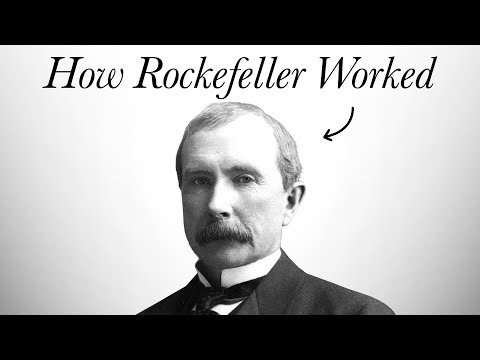
How Rockefeller Worked
Rockefeller built Standard Oil by fixating on his biggest cost, transportation, borrowing to grow faster than rivals, and stacking one advantage on another until competitors could not survive alone. The Cleveland Massacre, where he bought 23 rivals in four weeks, shows how a deep war chest, better information and secrecy turned a crowded, chaotic industry into one he controlled.
- Rockefeller put his refinery where rail and river met to cut transportation costs
- Rockefeller stacked advantages: borrowed money, then scale, then rail rebates, then cheaper rivals
- Rockefeller kept a deep cash fortress so he won bidding contests and survived downturns
 Founders · Nov 4
How Larry Ellison Thinks
Larry Ellison built Oracle by betting on what almost no one else believed, picking the biggest rival as an enemy, and then rebuilding his own weak management after nearly losing the company in 1991. The story is worth hearing because it shows a founder who owns his mistakes in public and engineers every process, not just the product.
- Larry Ellison built the first commercial relational database because no one else was even trying
- Larry Ellison saw that the internet would expand the database market, not end it
- Larry Ellison burned the boats and moved all of Oracle's engineering to internet applications
October 20251

September 20251

August 20251

May 20252
 Founders · May 21
Lessons from Jeff Bezos's Shareholder Letters
Bezos's shareholder letters show a founder who picked a few principles in 1997 (long term, customer obsession, invention, high standards) and repeated them for 23 years while building an enduring company. The decision that makes it worth hearing is how he let judgment beat the math, cutting prices after a meeting with Costco's Jim Sinegal and betting on unrequested products like AWS and Echo.
- Jeff Bezos chose a few principles in 1997 and repeated them in every letter for 23 years
- Jeff Bezos cut prices after Jim Sinegal showed him that value trumps everything
- Jeff Bezos made the price decision on judgment because the math said to raise prices
 Founders · May 5
The Life Story of Akio Morita: Founder of Sony
Akio Morita and Masaru Ibuka built Sony from a burned-out Tokyo department store by aiming at quality, premium prices, direct customer contact and long-term investment. The worth-hearing moments are the Walkman, which his own company opposed and which sold over 400 million units, and his refusal of a 100,000-unit order that would have put another company's name on his radios.
- Akio Morita pushed through the Walkman against his own company's objections and took personal responsibility
- Morita turned down a 100,000-unit order because it required Bulova's name on the radios
- Morita rejected market research and led the public with new products instead
December 20241

November 20241

July 20242
 Founders · Jul 18
How The Sun Rose On Silicon Valley: Bob Noyce (Founder of Intel)
Bob Noyce built two defining semiconductor companies by hiring young talent, giving it real responsibility, and choosing uncrowded ground to compete on. His 1959 silicon integrated circuit and Intel's memory chip and microprocessor show how a founder's confidence, culture and incentives can set the course of a whole industry.
- Bob Noyce put a whole circuit on one piece of silicon, and it became the industry standard
- Bob Noyce handed 24-year-old engineers real projects and refused to make their decisions for them
- Intel's Noyce and Moore avoided Fairchild's market and went after the most backward area of computing
 Founders · Jul 8
The Founder of Rolex: Hans Wilsdorf
Hans Wilsdorf bet on a product that did not exist, the men's wristwatch, and spent decades building a single brand around precision, waterproofing and self-winding. His advertising, patent buying and trust structure turned that early belief into a company that still runs on his vision.
- Hans Wilsdorf bet on the men's wristwatch when men refused to wear one
- Wilsdorf saw that a watch on the wrist would sell far more watches
- Wilsdorf insisted on selling watches under his own brand name, not retailers' names
May 20241

April 20243
 Founders · Apr 9
Herb Kelleher: Founder of Southwest Airlines
Herb Kelleher built Southwest into the most successful airline in history by keeping costs lowest, staying in a narrow niche, and moving faster than bigger rivals instead of following a strategic plan. The decision that makes it worth hearing is his choice to chase profit rather than market share, which kept Southwest profitable for 47 straight years while the next best airline managed five.
- Herb Kelleher skipped formal strategic planning so Southwest could seize opportunities the day they appeared
- Herb Kelleher chose profit over market share and refused to chase size for its own sake
- Kelleher built Southwest to survive downturns by paying for most planes out of earnings
 Founders · Apr 8
Working with Jeff Bezos
Seen through two executives who worked beside Bezos for 27 years combined, Amazon was built on a few repeated principles: work backwards from the customer, invent instead of copy, and remove the coordination that slows builders down. The decision that makes it worth hearing is how Bezos answered Steve Jobs's 2003 warning by building the Kindle and Prime rather than a copycat music service.
- Jeff Bezos replaced PowerPoint with six-page written narratives to force clearer thinking
- Bezos had Amazon write the press release first and work backwards from the customer
- Bezos gave each project one leader who worked on it full time and nothing else
 Founders · Apr 4
Ed Catmull (Founder of Pixar)
Ed Catmull spent over 20 years chasing the first computer animated feature, then had to build a creative culture that could last once the dream came true. His lessons on talent over ideas, candor, quality and protecting people, plus Steve Jobs's bold deal making, show how to keep a company from doing something stupid.
- Ed Catmull put the team ahead of the idea, because brilliant teams fix mediocre ideas
- Steve Jobs forced Disney's hand by taking Pixar public one week after Toy Story
- Steve Jobs refused to let Disney own Pixar's technology in the 1991 deal
March 20242
 Founders · Mar 22
Sol Price: The Founder Who Taught Jim Sinegal, Sam Walton, Jeff Bezos, and Bernie Marcus
Sol Price built the membership warehouse model by borrowing ideas from small niches, selling with thin markups and teaching his people to think like owners. His story shows how generous idea-sharing and weak execution let Jim Sinegal and Sam Walton outrun him, and why he sold Price Club to Costco.
- Sol Price marked up goods about 12% so members trusted every price
- Sol Price bet that customers care more about price than selection
- Sol Price taught staff to be his alter egos instead of writing manuals
 Founders · Mar 5
Bernard Arnault (The Richest Man in the World)
Bernard Arnault took control of LVMH by age 40 through patience with cash, financial structuring, and by being underestimated by every rival. The decision that makes it worth hearing is how he waited out Boussac to win Dior, then bought LVMH shares in the 1987 crash and kept buying at record prices.
- Bernard Arnault kept buying LVMH shares at record prices while his rivals sold
- Arnault bought LVMH shares in the 1987 crash, on his mentor's advice to wait
- Arnault waited out the Willot brothers because time favors the one holding cash
February 20242
 Founders · Feb 25
The Making of McDonald's: The Biography of Ray Kroc
Ray Kroc spent 30 years selling paper cups and milkshake mixers before turning a small California hamburger stand into McDonald's, and the story shows that how you structure a business matters more than which business you are in. The decision that made him wealthy was Harry Sonneborn's idea to own the real estate under each franchise instead of living on a 1.4% cut of a 15 cent hamburger.
- Harry Sonneborn told Ray Kroc McDonald's was a real estate business, not a burger business
- Ray Kroc saw his milkshake mixer market shrinking and went looking for a new product
- Ray Kroc followed an odd customer signal to the McDonald brothers' stand
 Founders · Feb 19
David Packard (Founder of HP)
David Packard's HP grew from a Palo Alto garage into a company larger than the one that told him electronics had no future. He did it by funding growth from profit, staying focused on complementary instruments, refusing to build me-too products, and measuring the company by what it contributed to customers.
- Packard defined HP's purpose as contribution to customers, with profit as the result
- Packard and Hewlett refused long-term debt after watching Depression-era firms lose everything
- Packard took a Wells Fargo banker's warning that more businesses die from indigestion than starvation
January 20241

October 20233
 Founders · Oct 10
The Biography of Thomas Edison
Edison's life shows how deep study, relentless experimentation and a lab built around his own bent produced world-changing inventions, while weak focus and poor partners cost him most of the wealth. The story is worth hearing because it sets his strengths against the focus of Ford, Jobs and Land, and shows what he gave up.
- Edison read the whole subject before experimenting, starting at age 12 in the Detroit library
- Edison's mother taught him by following his curiosity, and he credited her for it
- Edison built Menlo Park so he could invent all day, free of business and manufacturing
 Founders · Oct 6
Henry Ford's Autobiography
Henry Ford's autobiography lays out a single idea he held for decades: make one simple, high quality car at a price almost everyone can pay, and let waste elimination and volume do the rest. It matters because he carried that idea through 12 years of development, down to a Model T that reshaped mass production.
- Henry Ford held one idea for his whole career: a quality car almost anyone could afford
- Henry Ford treated service as the purpose of business and profit as its result
- Henry Ford set the price first and then forced the company to figure out how to hit it
 Founders · Oct 3
The Biography of Steve Jobs (The Evolution of a Reckless Upstart into a Visionary Leader)
Jobs went from a reckless 20-something founder, exiled from Apple at 30, to the leader who rebuilt it, because he treated his failures as training in a skill he lacked. The 1985 to 1997 wilderness years at NeXT and Pixar taught him how to manage people, negotiate and run a company, and made his second act at Apple possible.
- Steve Jobs' failed years at NeXT and Pixar forged the leader who saved Apple
- Ed Catmull saw that Jobs' early recklessness was a skill deficit, not meanness
- Jobs said a company exists only to make products, so he built talent and culture