
Mark Brown
Creator of Game Maker's Toolkit
Where to hear and read about Mark Brown179 episodes and tests
 GYouTuber behind Game Maker's Toolkit and creator of Mind Over Magnet and Word Play testMy game was cloned with AI... what do I do?
 GCreator of Game Maker's Toolkit, game designer and video essayist testThe History of Every Video Game Genre
 Gcreator of Game Maker's Toolkit and developer of Word Play testHow I Coded the Perks in my Roguelike
 Gcreator of Game Maker's Toolkit testHas Zelda Changed Forever?
 Gcreator of Game Maker's Toolkit and the Boss Keys series testThe World Design of Hollow Knight: Silksong
 GMark Brown is the creator of Game Maker's Toolkit; Luke Muscat is the designer of Fruit Ninja, Jetpack Joyride and Feed the Deep testWhat's the Point of Prototyping?
 Gcreator of Game Maker's Toolkit testHow Games Do Destruction
 Gcreator of Game Maker's Toolkit testWhat's The Point Of Hard Games, Anyway?
 Gcreator of Game Maker's Toolkit and developer of Word Play testHow I Made Word Play
 Gcreator of Game Maker's Toolkit testBlue Prince: Can a random puzzle game actually work?
 Gcreator of Game Maker's Toolkit, with the designer of Islanders and Thronefall testHow to find amazing game ideas
 Gcreator of Game Maker's Toolkit testCan I fix Zelda's UI using Unity?
 Gcreator of Game Maker's Toolkit testHow a Super Smash Bros. Fighter is Designed
 Gcreator of Game Maker's Toolkit and solo developer of Mind Over Magnet testI made a game about magnets (Developing 16)
 Gcreator of Game Maker's Toolkit test10 Game Design Lessons from 10 Years of GMTK
 Gcreator of Game Maker's Toolkit testWhat Makes a Game Feel Mysterious?
 Gcreator of Game Maker's Toolkit, making his first game testThe hardest thing about finishing a game (Developing 15)
 Gcreator of Game Maker's Toolkit testThe 100 Games That Taught Me Game Design
 Gcreator of Game Maker's Toolkit testBalatro's 'Cursed' Design Problem
 Gcreator of Game Maker's Toolkit and solo developer of Mind Over Magnet testI just changed my entire game (Developing 13)
 Gcreator of Game Maker's Toolkit testWhy Spec Ops: The Line Mattered
 Gcreator of Game Maker's Toolkit testSuper Mario's Invisible Difficulty Settings
 Gcreator of Game Maker's Toolkit testHow Jusant Makes Rock-Climbing More Immersive
 Gcreator of Game Maker's Toolkit, making his first game testHow I polished my indie magnet puzzle game (Developing 12)
 Gcreator of Game Maker's Toolkit testThe one thing you need to finish your game (Developing 11)
 Gcreator of Game Maker's Toolkit testHow Nintendo Designed Ultrahand
 Gcreator of Game Maker's Toolkit testThe World Design of Banjo-Kazooie
 Gcreator of Game Maker's Toolkit testHow to Make a Good 2D Camera
 Gcreator of Game Maker's Toolkit testThe 3 Types of Detective Game
 Gcreator of Game Maker's Toolkit testThe Genius AI Behind The Sims
 Gcreator of Game Maker's Toolkit testValve's "Secret Weapon"
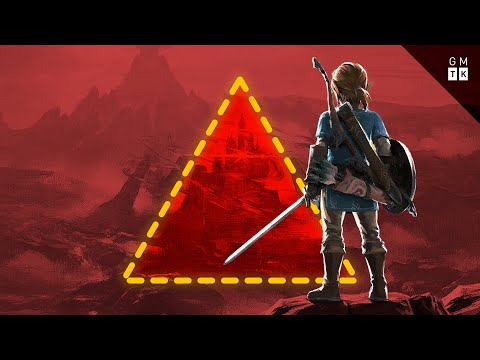 Gcreator of Game Maker's Toolkit testHow Nintendo Solved Zelda's Open World Problem
 Gcreator of Game Maker's Toolkit testWhy Capcom is the King of Remakes
 Gcreator of Game Maker's Toolkit, making his first game, Mind Over Magnet testDon't make this assumption about your players (Developing 10)
 Gcreator of Game Maker's Toolkit testHow To Think Like A Game Designer
 Gcreator of Game Maker's Toolkit, making his first game testHow I make puzzles for my indie magnet game (Developing 9)
 Gcreator of Game Maker's Toolkit testHow Neon White Lets You Speedrun Speedrunning
 Gcreator of Game Maker's Toolkit testHow Fortnite Exploits Your FOMO
 Gcreator of Game Maker's Toolkit testWhy do God of War's Characters Keep Spoiling Puzzles?
 Gcreator of Game Maker's Toolkit testThe World Design of Elden Ring
 Gcreator of Game Maker's Toolkit, speaking with Rollerdrome's creator and a Roll7 developer testYou Should Play Rollerdrome
 Gcreator of Game Maker's Toolkit testHow Game Designers Solved These 11 Problems
 Gcreator of Game Maker's Toolkit testHow To Combine Video Game Genres
 Gcreator of Game Maker's Toolkit, making his first game testThe stuff no one tells you about game development (Developing 7)
 Gcreator of Game Maker's Toolkit, interviewing two level designers at IO Interactive testMaking Hitman 3's Best Level
 Gcreator of Game Maker's Toolkit testHow Video Game Economies are Designed
 Gcreator of Game Maker's Toolkit, developing his first game testHow to make a good platforming character (Developing 6)
 Gcreator of Game Maker's Toolkit, making his first game testWhat did people think of my game demo? (Developing 5)
 Gcreator of Game Maker's Toolkit testWait, Didn't Arkane Already Make Deathloop?
 Gcreator of Game Maker's Toolkit testThe Power of Invisible Choices
 Gcreator of Game Maker's Toolkit, speaking with The Forgotten City's designer and writer Nick Pearce testHow The Forgotten City Creates The Perfect Mystery
 Gcreator of Game Maker's Toolkit testHow Accessible Were 2021's Games?
 Gcreator of Game Maker's Toolkit testWhy is it so hard to make game design decisions? (Developing 3)
 Gcreator of Game Maker's Toolkit testWhy You (Probably) Didn't Get Lost in Metroid Dread
 Gcreator of Game Maker's Toolkit, making his first game testThe mistake every new game developer makes (Developing 2)
 GMark Brown is creator of Game Maker's Toolkit; Oliver Granlund is a designer at Hazelight testMaking It Takes Two's Best Level
 GArkane level designer and level artist on Dishonored 2, talking with the creator of Game Maker's Toolkit testDishonored 2 Devs Explain the Clockwork Mansion
 Gcreator of Game Maker's Toolkit testCan we Improve Tutorials for Complex Games?
 Glead designer on Ori and the Will of the Wisps, formerly a level designer on the Rayman games, talking with the creator of Game Maker's Toolkit testMaking Ori and The Will of the Wisps' Best Level
 Gcreator of Game Maker's Toolkit testThe Power of Video Game HUDs
 Gcreator of Game Maker's Toolkit testHow to Turn Movement into a Game Mechanic
 Gcreator of Game Maker's Toolkit testHow the Nemesis System Creates Stories
 Gcreator of Game Maker's Toolkit testHow Watch Dogs: Legion Generates Infinite Londoners
 Gcreator of Game Maker's Toolkit testHow Accessible Were 2020's Biggest Games?
 Gcreator of Game Maker's Toolkit testHow Zelda's Puzzle Box Dungeons Work
 Gcreator of Game Maker's Toolkit testWho Gets to be Awesome in Games?
 Gcreator of Game Maker's Toolkit testAre Lives Outdated Game Design?
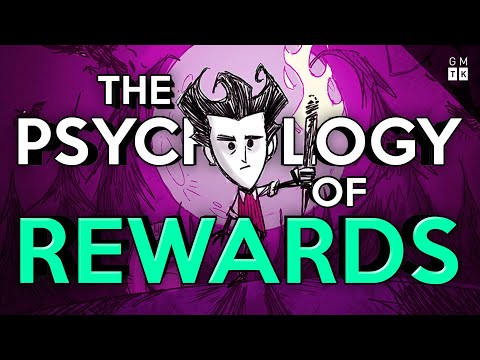 Gcreator of Game Maker's Toolkit testThis Psychological Trick Makes Rewards Backfire
 Gcreator of Game Maker's Toolkit testThe Games That Designed Themselves
 GMark Brown is the creator of Game Maker's Toolkit; Evan Hill is a former level designer at Naughty Dog testMaking The Last of Us Part II's Best Level
 Gcreator of Game Maker's Toolkit testCommanding Shepard
 Gcreator of Game Maker's Toolkit testHow do Stealth Games Deal with Detection? - School of Stealth Part 3
 Gcreator of Game Maker's Toolkit testShould Designers Listen to Negative Feedback?
 Gcreator of Game Maker's Toolkit testThe Five Types of Stealth Game Gadget - School of Stealth Part 2
 Gcreator of Game Maker's Toolkit testThe 4 "P"s of DOOM's Amazing Combat
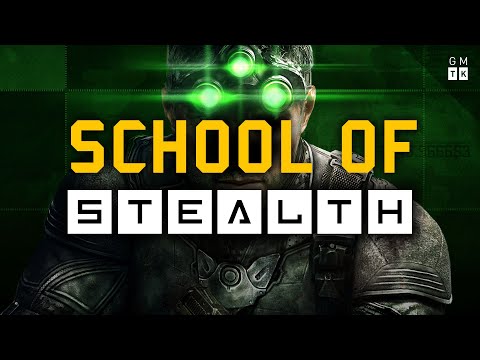 Gcreator of Game Maker's Toolkit testHow Stealth Game Guards See and Hear - School of Stealth Part 1
 Gcreator of Game Maker's Toolkit testThe Genius of Prey's Gloo Cannon
 Gcreator of Game Maker's Toolkit testHow Level Design Can Tell a Story
 Gcreator of Game Maker's Toolkit, interviewing Yacht Club Games' game director and lead programmer testShovel Knight's Signature Moves
 Gcreator of Game Maker's Toolkit testThe Two Types of Random in Game Design
 Gcreator of Game Maker's Toolkit, discussing Hempuli's puzzle design process testHow Baba Is You Makes Brain Busting Puzzles
 Gcreator of Game Maker's Toolkit testHow Accessible Were 2019’s Biggest Games?
 Gcreator of Game Maker's Toolkit testThe World Design of Hollow Knight | Boss Keys
 Gcreator of Game Maker's Toolkit testWhat Pac-Man Brought to Game Design | Design Icons
 Gcreator of Game Maker's Toolkit testClockwork Games and Time Loops
 Gcreator of Game Maker's Toolkit testThe World Design of Metroid Prime 3: Corruption | Boss Keys
 Gcreator of Game Maker's Toolkit testHow Space Invaders Birthed Japanese Games
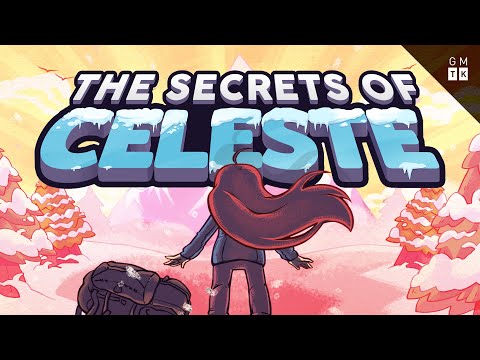 Gcreator of Game Maker's Toolkit, interviewing the co-creators of Celeste testWhy Does Celeste Feel So Good to Play?
 Gcreator of Game Maker's Toolkit testCan We Make Talking as Much Fun as Shooting?
 Gcreator of Game Maker's Toolkit testHow to Make Your First Super Mario Maker 2 Level
 Gcreator of Game Maker's Toolkit testWhy Metro Exodus is so Immersive
 Gcreator of Game Maker's Toolkit testThe World Design of Metroid Prime 2: Echoes | Boss Keys
 Gcreator of Game Maker's Toolkit testThe Challenge of Cameras
 Gcreator of Game Maker's Toolkit testThe Tragedy of Halo 3: ODST
 Gcreator of Game Maker's Toolkit testHow Games Get Balanced
 Gcreator of Game Maker's Toolkit testThe World Design of Metroid Prime | Boss Keys
 Gcreator of Game Maker's Toolkit testHow Synergies Make Slay the Spire Fun
 GMark Brown is the creator of Game Maker's Toolkit; Jakob Mikkelsen is game director and Eskil Mohl is associate game director on Hitman 2 testMaking Hitman 2's Best Level
 Gcreator of Game Maker's Toolkit testImproving Games for Those with Cognitive Disabilities | Designing for Disability
 Gcreator of Game Maker's Toolkit testRoguelikes, Persistency, and Progression
 Gcreator of Game Maker's Toolkit testThe Year Stealth Games Got Serious
 Gcreator of Game Maker's Toolkit testHow Return of the Obra Dinn Turns You Into a Detective
 Gcreator of Game Maker's Toolkit testBuilding Better Skill Trees
 Gcreator of Game Maker's Toolkit testThe World Design of Castlevania: Symphony of the Night | Boss Keys
 Gcreator of Game Maker's Toolkit testHow Mega Man 11's Levels Do More With Less
 Gcreator of Game Maker's Toolkit testMaking Games Better for Players with Motor Disabilities | Designing for Disability
 Gcreator of Game Maker's Toolkit testDoes Spidey's Web-Swinging 'Make You Feel Like Spider-Man'?
 Gcreator of Game Maker's Toolkit testHow Overcooked’s Kitchens Force You to Communicate
 Gcreator of Game Maker's Toolkit testPlaying Past Your Mistakes
 Gcreator of Game Maker's Toolkit testThe World Design of Super Metroid | Boss Keys
 Gcreator of Game Maker's Toolkit testMaking Games Better for Gamers with Colourblindness & Low Vision | Designing for Disability
 Gcreator of Game Maker's Toolkit testThe World Design of Metroid 1 and Zero Mission | Boss Keys
 Gcreator of Game Maker's Toolkit testMaking Games Better for the Deaf and Hard of Hearing | Designing for Disability
 Gcreator of Game Maker's Toolkit testForging God of War's Leviathan Axe
 Gcreator of Game Maker's Toolkit testAre Score Systems Still Relevant?
 Gcreator of Game Maker's Toolkit testWhat Makes a Good Combat System?
 Gcreator of Game Maker's Toolkit testThe World Design of Dark Souls | Boss Keys
 Gcreator of Game Maker's Toolkit testHow to Keep Players Engaged (Without Being Evil)
 Gcreator of Game Maker's Toolkit testWhat Makes a Good Puzzle?
 Gcreator of Game Maker's Toolkit testWhat Makes Celeste's Assist Mode Special
 Gcreator of Game Maker's Toolkit testThe Rise of the Systemic Game
 Gcreator of Game Maker's Toolkit testThe Legend of Zelda: Breath of the Wild's dungeon design | Boss Keys
 Gcreator of Game Maker's Toolkit testHow Games Use Feedback Loops
 Gcreator of Game Maker's Toolkit testHow Snake Pass Became a Platformer Without Jumping
 Gcreator of Game Maker's Toolkit test5 Amazing Levels from 2017
 Gcreator of Game Maker's Toolkit testThe Legend of Zelda / Zelda II's dungeon design | Boss Keys
 Gcreator of Game Maker's Toolkit testThe Design Behind Super Mario Odyssey
 Gcreator of Game Maker's Toolkit testHow Cuphead's Bosses (Try to) Kill You
 Gcreator of Game Maker's Toolkit testHow Game Designers Protect Players From Themselves
 Gcreator of Game Maker's Toolkit testHow AM2R and Samus Returns remade Metroid 2
 Gcreator of Game Maker's Toolkit testWhat Makes a Good Detective Game?
 Gcreator of Game Maker's Toolkit testThe Legend of Zelda: A Link Between Worlds' dungeon design | Boss Keys
 Gcreator of Game Maker's Toolkit testDeconstructing Ori and the Blind Forest's Best Bit
 Gcreator of Game Maker's Toolkit testDo We Need a Soulslike Genre?
 Gcreator of Game Maker's Toolkit testDonkey Kong Country: Tropical Freeze - Mario's Level Design, Evolved
 Gcreator of Game Maker's Toolkit testWhat Makes Good AI?
 Gcreator of Game Maker's Toolkit testThe Legend of Zelda: Skyward Sword's dungeon design | Boss Keys
 Gcreator of Game Maker's Toolkit testThe Design of Dead Space - Part 3
 Gcreator of Game Maker's Toolkit testThe Design of Dead Space - Part 2
 Gcreator of Game Maker's Toolkit testThe Design of Dead Space - Part 1
 Gcreator of Game Maker's Toolkit testWhat Made Psychonauts Special
 Gcreator of Game Maker's Toolkit testThe Legend of Zelda: Phantom Hourglass and Spirit Tracks' dungeon design | Boss Keys
 Gcreator of Game Maker's Toolkit testThe Music of Breath of the Wild | GMTK Extra
 Gcreator of Game Maker's Toolkit testLegend of Zelda: Breath of the Wild - An Open World Adventure
 Gcreator of Game Maker's Toolkit testThe Secret of Mario's Jump (and other Versatile Verbs)
 Gcreator of Game Maker's Toolkit testThe Magic of the First Legend of Zelda
 Gcreator of Game Maker's Toolkit testFinding the Fun in FPS Campaigns
 Gcreator of Game Maker's Toolkit testThe Legend of Zelda: Twilight Princess' dungeon design | Boss Keys
 Gcreator of Game Maker's Toolkit testThe Last Guardian and the Language of Games
 Gcreator of Game Maker's Toolkit testHow Event[0]'s AI Puzzle Assistant Works
 Gcreator of Game Maker's Toolkit test5 Game Design Innovations from 2016
 Gcreator of Game Maker's Toolkit testThe Legend of Zelda: The Minish Cap's dungeon design | Boss Keys
 Gcreator of Game Maker's Toolkit testNintendo - Putting Play First
 Gcreator of Game Maker's Toolkit testThe Legend of Zelda: The Wind Waker's dungeon design | Boss Keys
 Gcreator of Game Maker's Toolkit testWhy We Remember Bioshock's Fort Frolic
 Gcreator of Game Maker's Toolkit testThe Legend of Zelda: Oracle of Ages and Seasons' dungeon design | Boss Keys
 Gcreator of Game Maker's Toolkit testDeus Ex: Mankind Divided's Amazing Open World
 Gcreator of Game Maker's Toolkit testShovel Knight and Nailing Nostalgia
 Gcreator of Game Maker's Toolkit testThe Legend of Zelda: Majora's Mask's dungeon design | Boss Keys
 Gcreator of Game Maker's Toolkit testThe Comeback of the Immersive Sim
 Gcreator of Game Maker's Toolkit testThe Legend of Zelda: Ocarina of Time's dungeon design | Boss Keys
 Gcreator of Game Maker's Toolkit testThe Legend of Zelda: Link's Awakening's dungeon design | Boss Keys
 Gcreator of Game Maker's Toolkit testWhat Mirror's Edge Catalyst Should Have Learned From Burnout Paradise
 Gcreator of Game Maker's Toolkit testThe Legend of Zelda: A Link to the Past's dungeon design | Boss Keys
 Gcreator of Game Maker's Toolkit testA Deep Dive into Star Fox Zero's Controls
 Gcreator of Game Maker's Toolkit testControllers Control Everything
 Gcreator of Game Maker's Toolkit testShould Dark Souls Have an Easy Mode? (See Pinned Comment)
 Gcreator of Game Maker's Toolkit testDepth, Mastery, and Vanquish
 Gcreator of Game Maker's Toolkit, on the design philosophy of Braid and The Witness designer Jonathan Blow testHow Jonathan Blow Designs a Puzzle
 Gcreator of Game Maker's Toolkit testMorality in the Mechanics
 Gcreator of Game Maker's Toolkit testAnatomy of a Side Quest: Beyond the Beef
 Gcreator of Game Maker's Toolkit testHow Her Story Turns Video Clips into Clues
 Gcreator of Game Maker's Toolkit testClimbing in Games
 Gcreator of Game Maker's Toolkit testFollowing the Little Dotted Line
 Gcreator of Game Maker's Toolkit testWhy Nathan Drake Doesn't Need a Compass
 Gcreator of Game Maker's Toolkit testIs Until Dawn a Good Horror Movie?
 Gcreator of Game Maker's Toolkit testAnalysing Mario to Master Super Mario Maker
 Gcreator of Game Maker's Toolkit testPoint and Click Puzzle Design
 Gcreator of Game Maker's Toolkit testAdaptive Soundtracks in Games
Mark Brown is the creator of Game Maker's Toolkit, a YouTube channel he started in November 2014 to teach himself game design, and later the solo developer of the puzzle game Mind Over Magnet and the word roguelike Word Play. The most useful thing to learn from him is his habit of studying why a design choice works, then testing it on real players, cutting scope ruthlessly and calling a game done.
I was focused so much on making the levels hard, I had forgotten to make them fun.
Don't make this assumption about your players (Developing 10)
Mark Brown: the story and the lessons
1How Mark Brown went from studying games to making them
Brown started Game Maker's Toolkit as a way to learn design. The first episode went up on November 6th, 2014. Ten years later the channel spanned about 200 videos and 8 game jams.
He built each episode from research, interviews and analysis. His interest traces to Valve's developer commentary in Portal and Left 4 Dead, which he says opened his eyes to game design as a craft and carried him through games journalism into the channel.
He thinks by making a video about a problem. Brown says researching, writing and presenting a video organises his thoughts better than any other method, and he then asks viewers for comments or a poll.
He used this when hobbyists cloned Word Play, turning a confusing email into a video and a community vote on what to do.
His first game, Mind Over Magnet, took three years instead of one. He announced the plan at the end of 2021 and shipped on Steam on November 6th, 2024, exactly ten years after the first GMTK episode, on PC, Mac and Steam Deck.
Along the way he changed the game's genre and its entire art style. A composer, an artist, a lawyer, playtesters and Patreon backers who funded the work all helped him finish.
His second game, Word Play, shipped in seven months. It grew from a two-day Patreon-only game jam prototype in December, mixed Balatro with Scrabble and Bookworm Adventures, and went on to sell more than twice the copies of Mind Over Magnet.
He says the planning he learned on his three-year first game is what let him ship without burning out.
2Mistakes Mark Brown made on Mind Over Magnet and what he changed
Working without a plan left only nine of 24 months as real progress. After GDC feedback he stopped for six months, and an earlier break lasted five; even when working he felt like he was aimlessly noodling around.
Juggling the YouTube schedule that funds the game broke his momentum, so he put the channel on the back burner. With a concrete plan he made about 40 final levels in one month.
He assumed players knew what he knew, and padded puzzles into tedium. Fearing a clean puzzle would be solved instantly, he added traps and red herrings; his dad found the levels tedious and handed back the controller.
Patrick Traynor of Patrick's Parabox had told him to simplify, and he ignored it. After cutting a level from two magnets and four linked steps to one magnet, GDC players got stuck for a minute or two and then hit an aha moment.
He built art before the camera system and had to redraw everything. Big pixel sprites in a 1280 by 720 room could not scale cleanly to 1080p, the most common PC resolution, since there is no half a pixel.
He spent months bouncing between rounding, anti-aliasing and borders, then remade every sprite as 4K-ready vector art and kept pixel backgrounds behind a blur. He thinks the compromise hunting took longer than the remake.
He threw away his first rough demo instead of patching it. Feedback on the 30-day minimum viable product said the robot felt floaty, rules changed between levels, puzzles lacked aha moments and the magnet did not feel central.
He made the magnet a design pillar, decided to focus on puzzles instead of mixing in platforming, and rebuilt the character controller, which alone took almost two months.
He failed by starting with art and story on earlier games. His Picross game Carter's Curse had sprites, cutscenes and menus, but its puzzles ignored the enemies on screen, so it was shallow and dull.
A noir game stalled on research and a Snake remake stalled on movement code. He now prototypes the core idea first with borrowed art and buggy code.
3Mark Brown's process for finishing a game
He plans scope only once a prototype has shown what is fun. Mind Over Magnet became 50 levels across five worlds, each a single-screen puzzle of 2 or 3 minutes, and each mechanic got three levels: teach, test, twist.
He warns that planning too early stifles creativity and planning too late wastes months. A Trello board of high-level tasks gets a detailed sub-plan as each task starts.
He generates puzzles by crossing every mechanic with every other. A matrix of mechanic pairs turned the vague goal of making an interesting puzzle into concrete experiments, and he made about 26 levels in January 2023.
From the electromagnet and drill pair he found that a magnet stuck near the drill tip escapes fast and far from it escapes slowly, then built the level backwards from that trick. A puzzle bible of mechanics per level showed where progression jumped too fast.
He cut the plan to hit his deadline rather than slip a year. Mind Over Magnet went from 50 puzzles to about 40, five worlds to four, and three magnets to two, and became playable from intro to credits within a couple of months.
The complete build then showed what to restore: the scissor gate, a fifth short world and transition stages. He notes Nintendo cut two Wind Waker dungeons and Shadow of the Colossus shipped 16 of 48 colossi.
He locks content, then polishes and playtests almost daily. New content made the game longer but not better, while small daily fixes, like a pop-up for players stuck on the hint system, improved it with every update.
His weekly rhythm was new content Tuesday to Thursday, bug fixing Friday, a build to at most three testers so they play over the weekend, and footage review on Monday.
He ranks every bug from 1 to 5 and fixes the worst first. GMTK Discord testers found almost 100 issues, including a platform that stuck when the polarity button was mashed and a scroll-wheel binding that made Uni speed like a jet engine.
Fixes created new bugs, so he ran repeated QA rounds until testers stopped finding anything. He says nobody tells you a game is done, so you have to call it yourself.
He faked his trailer from unfinished content and it worked. Using unplaytested levels and half-finished backgrounds, cut to a stock track's drum stem, the trailer helped push Mind Over Magnet past 30,000 wishlists before Steam Next Fest.
Viewers congratulated him on finishing the game. He recorded in 4K for a 1080p trailer so he could crop, and built from simple mechanics to a montage to a call to wishlist.
4How Mark Brown built Word Play in seven months
He made spelling feel good before adding any roguelike systems. December went only into a juicy spelling game that worked on mouse, controller, keyboard and touch; shop, perks and special tiles came in January.
He worked in layers: core verb, then game loop, then content, then balancing. Perks grew from 11 test perks to 52, 74, 90 and finally 160.
He judged every choice by which option took the least time. He used simple icons for all 160 perks instead of unique art like Balatro's jokers, which saved weeks.
He accepted that this could make the game arguably worse, because finishing while he still had energy mattered more.
He kept going when two similar games appeared mid-development. Wordatro and Birdigo both mixed Balatro with words, and he briefly considered cancelling and regretted not showing the game earlier.
He decided that several word roguelikes made a genre, not a copy to beat, and that he could only control how good his own game was.
Outside feedback shaped many of Word Play's rules. Playtests at GDC and on iPads led to tile rearranging and bonus points for long words, and the Next Fest demo drew 20,000 players in a week.
A Discord user suggested renaming lives to plays, which fixed losing a life for a correct action and gave the game its title. A final QA group of patrons caught overpowered and pointless perks.
5What Mark Brown learned when Word Play was cloned with AI
Hobbyists cloned Word Play with Claude Code in days. Claude went from a finished spec to a playable core in 12 minutes, against seven months for Brown, and a list of 21 modifiers was added at once.
The pair built Words Upon Words in 11 days, added a timer mode, daily challenge, multiplayer and meta progression, and asked his permission before releasing. He asked them to hold off.
He accepts borrowing but sees this clone as different. Word Play itself blends Balatro, Bookworm Adventures, Scrabble, Slay the Spire and Vampire Survivors, but a mod needs the original bought and this clone does not.
He says video games are built from the bones of other video games. Fast cloning removes the pause where a copier might reconsider, and he jokes that 12 minutes leaves little time for introspection.
He admits the clone is better in places, and that it hurts. Brown had half-finished daily and speed-run modes in his Unity code but was too burnt out and in technical debt to finish them.
He thinks buyers do not care about a developer's hard life. He still expects many players to choose the original for its UI, sound and music, and he disagrees with the clone's extra complexity.
He doubts guardrails or simplicity advice will solve cloning. Anthropic added two sentences to Claude Code's prompt to avoid recreating specific games, but it came too late and prompts can be circumvented.
He pushes back on Valve's advice to avoid single easy-to-copy mechanics, pointing to Tetris and Wordle, and notes someone used AI to clone Photoshop and Premiere.
6Mark Brown's working principles for analysing design
He judges a game's feel by its mechanics, not its plot. Far Cry 2 and Far Cry 4 share a setting and villain type, yet jamming guns and malaria make one harrowing and plentiful ammo makes the other a blockbuster.
He uses the MDA framework: mechanics live in the code, dynamics in the player's actions, aesthetics in their feelings. A designer can only change the code.
He says no mechanic is right or wrong, only right for the experience. Leaderboards, lives, roguelike saves and fixed cameras all get the same answer from him: it depends.
Alien: Isolation is his favourite case: auto-checkpoints let players die near one to escape the alien, while slow manual save points made saving itself frightening.
He checks who a game is for before criticising it. He first faulted Insomniac's simple Spider-Man swinging, then realised a PS4 tie-in targets casual players who want to feel like Spider-Man at once.
He uses this revision as proof that no design lesson, including his own, should be taken as gospel.
He treats prototypes and playtests as the only proof an idea works. His recurring line is that brains are bad video game simulators, so ideas only show their flaws once built.
He draws on Valve, which treats designs as hypotheses and playtests as experiments, and on designers who follow the fun by keeping the best part of a prototype and cutting the rest.
7How Mark Brown thinks about difficulty and accessibility
He sees difficulty as a toolkit, not one dial. Hard games make wins memorable, fit the story and push players to use every mechanic, but only when the challenge feels fair.
Silksong's Last Judge kept him going because he could see a path to victory, while long runbacks and random patterns pushed players to rage.
He wants players able to adjust or sidestep challenge. He uses a 100m dash example: 12 seconds is tough for him, impossible for a child and laughable for Usain Bolt.
Tunic's options let his wife enjoy its secrets despite tough bosses. He argues a Souls game's hopelessness-to-triumph arc is not reason enough to leave a game inaccessible.
He praises easy modes that explain their purpose first. Celeste explains who Assist Mode is for and recommends a first run without it, while Cuphead's Simple Mode sits beside normal mode and cuts content.
He argues language, placement and timing tell players how much weight an option carries, so developers can offer help without asking players to design the game.
He built accessibility into his own game at the right moment. Mind Over Magnet has remapping, toggle aim, options to turn off particles and shake, and tintable magnets with plus and minus symbols.
He says accessibility is best added once code is near final: too early and it gets thrown out, too late and it is a nightmare to retrofit.
8Mark Brown's ideas on levels, puzzles and world design
He thinks a good puzzle has a catch, an assumption and a revelation. A catch is two needs that seem to conflict, a planted wrong assumption walks the player into it, and the solution reveals a new truth about the rules.
He contrasts Portal 2 and The Turing Test, which share almost the same puzzle, to show how much presentation decides difficulty.
He splits Zelda dungeons into find-the-path and follow-the-path types. Four questions sort them: branching paths, choice of order, backtracking, and whether the player does that backtracking.
He prefers find-the-path dungeons because they test spatial awareness, and argues Zelda designers treat the level itself as the challenge.
He thinks open worlds need guidance the player barely notices. He praises Breath of the Wild's landmarks and triangle-shaped terrain and Metroid Dread's points of no return and locks placed near keys.
He warns that waypoints and dotted lines pull players out of the world, and played Fallout 4 with markers off to see what that cost.
He values hiding information to create mystery and planning. Mystery comes from a curiosity gap the player closes through their own discovery, ideally with knowledge instead of items.
He applies the same idea to detective games, praising Her Story and Return of the Obra Dinn because they test answers without prompting or allowing guesses.
He favours systemic games that let players invent solutions. In a systemic game entities sense each other through shared rules, so a Far Cry tiger can maul a guard without a script.
He credits the immersive sim lineage from Ultima Underworld and Looking Glass through Deus Ex for treating players as collaborators, and warns that a reliable safe option kills creative play.
My game was cloned with AI... what do I do?
An indie developer finds that hobbyists used Claude Code to build a near copy of his roguelike Word Play with extra features in days, and works through what it means for his income, his design and the wider market. It shows how fast AI cloning now is (a playable core in twelve minutes versus seven months by hand) and which defenses and habits actually matter for small studios.
He thinks by making a video about a problem. Brown says researching, writing and presenting a video organises his thoughts better than any other method, and he then asks viewers for comments or a poll.
He used this when hobbyists cloned Word Play, turning a confusing email into a video and a community vote on what to do.
Hobbyists cloned Word Play with Claude Code in days. Claude went from a finished spec to a playable core in 12 minutes, against seven months for Brown, and a list of 21 modifiers was added at once.
The pair built Words Upon Words in 11 days, added a timer mode, daily challenge, multiplayer and meta progression, and asked his permission before releasing. He asked them to hold off.
He accepts borrowing but sees this clone as different. Word Play itself blends Balatro, Bookworm Adventures, Scrabble, Slay the Spire and Vampire Survivors, but a mod needs the original bought and this clone does not.
He says video games are built from the bones of other video games. Fast cloning removes the pause where a copier might reconsider, and he jokes that 12 minutes leaves little time for introspection.
He admits the clone is better in places, and that it hurts. Brown had half-finished daily and speed-run modes in his Unity code but was too burnt out and in technical debt to finish them.
He thinks buyers do not care about a developer's hard life. He still expects many players to choose the original for its UI, sound and music, and he disagrees with the clone's extra complexity.
He doubts guardrails or simplicity advice will solve cloning. Anthropic added two sentences to Claude Code's prompt to avoid recreating specific games, but it came too late and prompts can be circumvented.
He pushes back on Valve's advice to avoid single easy-to-copy mechanics, pointing to Tetris and Wordle, and notes someone used AI to clone Photoshop and Premiere.
The History of Every Video Game Genre
Mark Brown tracks 9,902 popular games from 1975 to 2025 across about 130 genres to show how each genre was born, boomed and faded. The result is a set of repeatable patterns for inventing, reviving and timing new product categories, such as cloning a hit, mixing two genres, shrinking the cost of a bet and riding new distribution.
How I Coded the Perks in my Roguelike
Shows how to build a roguelike perk system so that each of over 100 passive modifiers is its own small script built on a shared base class, instead of one giant block of if statements. The worked example is Word Play's 'first letter is a vowel, multiply score by 1.5' modifier, which grows into a system of triggers across the whole game.
Has Zelda Changed Forever?
Breath of the Wild shifted Zelda from a passive, designer-led structure to an active, player-led one, and the video weighs what that gained and what it cost. The example that makes it worth watching is Donkey Kong Bananza, which blends player freedom with designer-set progression and hints at where Zelda could go.
The World Design of Hollow Knight: Silksong
Shows how Silksong's world design pairs a simple golden path with huge amounts of optional content, alternate routes and a changing three act structure. The example worth watching is the second route into the Citadel through the hidden Mist and Phantom, which lets a player who is stuck on The Last Judge skip that fight entirely.
What's the Point of Prototyping?
A prototype is a quick, disposable way to answer one question about a game, such as whether it is fun, whether it is viable, or whether people will like it, before real production starts. Luke Muscat's Luck of the Draw prototype, which he loved and then released to complete silence, shows how a failed prototype can save two years of work.
His second game, Word Play, shipped in seven months. It grew from a two-day Patreon-only game jam prototype in December, mixed Balatro with Scrabble and Bookworm Adventures, and went on to sell more than twice the copies of Mind Over Magnet.
He says the planning he learned on his three-year first game is what let him ship without burning out.
He treats prototypes and playtests as the only proof an idea works. His recurring line is that brains are bad video game simulators, so ideas only show their flaws once built.
He draws on Valve, which treats designs as hypotheses and playtests as experiments, and on designers who follow the fun by keeping the best part of a prototype and cutting the rest.
How Games Do Destruction
Real-time destruction in games comes from clever cost-cutting tricks: swapping intact and broken props, slicing meshes, soft body physics, grid-based fire, voxels, and stress calculations on buildings. The Red Faction: Guerilla stress system, and how The Finals reuses it with modern hardware, makes it worth watching, along with the warning that destruction must serve the design.
What's The Point Of Hard Games, Anyway?
Difficulty is a toolkit rather than a single dial: it can raise satisfaction, mirror the story and force deeper play, but it needs to feel fair and give players ways to adjust or step away. The example worth watching is Hollow Knight: Silksong, where the Last Judge shows fair difficulty and the repetitive runbacks and random boss patterns show the BS that drives players off.
He sees difficulty as a toolkit, not one dial. Hard games make wins memorable, fit the story and push players to use every mechanic, but only when the challenge feels fair.
Silksong's Last Judge kept him going because he could see a path to victory, while long runbacks and random patterns pushed players to rage.
He wants players able to adjust or sidestep challenge. He uses a 100m dash example: 12 seconds is tough for him, impossible for a child and laughable for Usain Bolt.
Tunic's options let his wife enjoy its secrets despite tough bosses. He argues a Souls game's hopelessness-to-triumph arc is not reason enough to leave a game inaccessible.
How I Made Word Play
Shows how a solo designer took a Balatro-meets-Scrabble idea from game jam to Steam release in seven months by building in layers, cutting scope, and playtesting early. The example that makes it worth watching is Word Play itself, where a spelling game was made juicy first and the roguelike perks (160 of them) were stacked on top.
His second game, Word Play, shipped in seven months. It grew from a two-day Patreon-only game jam prototype in December, mixed Balatro with Scrabble and Bookworm Adventures, and went on to sell more than twice the copies of Mind Over Magnet.
He says the planning he learned on his three-year first game is what let him ship without burning out.
He made spelling feel good before adding any roguelike systems. December went only into a juicy spelling game that worked on mouse, controller, keyboard and touch; shop, perks and special tiles came in January.
He worked in layers: core verb, then game loop, then content, then balancing. Perks grew from 11 test perks to 52, 74, 90 and finally 160.
He judged every choice by which option took the least time. He used simple icons for all 160 perks instead of unique art like Balatro's jokers, which saved weeks.
He accepted that this could make the game arguably worse, because finishing while he still had energy mattered more.
He kept going when two similar games appeared mid-development. Wordatro and Birdigo both mixed Balatro with words, and he briefly considered cancelling and regretted not showing the game earlier.
He decided that several word roguelikes made a genre, not a copy to beat, and that he could only control how good his own game was.
Outside feedback shaped many of Word Play's rules. Playtests at GDC and on iPads led to tile rearranging and bonus points for long words, and the Next Fest demo drew 20,000 players in a week.
A Discord user suggested renaming lives to plays, which fixed losing a life for a correct action and gave the game its title. A final QA group of patrons caught overpowered and pointless perks.
Blue Prince: Can a random puzzle game actually work?
Explains why random room drafting clashes with the join-the-dots structure of adventure puzzles, then lays out why the developers kept the randomness and how it could be made friendlier. The example worth watching is Blue Prince, where you can hold a safe code for several runs without the safe ever appearing.
How to find amazing game ideas
Game ideas come from four starting points (existing games, genres, new mechanics, or the intended experience), and an idea then needs testing for feasibility, a hook, marketability and fun before it earns years of work. The Darkest Dungeon headline test and the Arco flop, which shows the cost of a hook with no familiar anchor, make it worth watching.
Can I fix Zelda's UI using Unity?
Mark Brown rebuilds Echoes of Wisdom's single-row echo list in Unity and tries five alternative menus (acceleration, cross media bar, tabbed grid, radial, spiral), showing how menu shape changes speed, comfort and what players notice. The worth-watching twist is Nintendo's stated reason for the slow list: it is meant to make you less efficient but more creative.
How a Super Smash Bros. Fighter is Designed
Walks through the eight-step process Masahiro Sakurai uses to design a Smash Bros. fighter, from picking the roster to theme, stats, moveset, balance, animation, visual style and reveal trailer. The worth-watching example is how Sakurai cut Chrom for being 'Dude With Sword' and invited Robin instead, with breakable tomes and a sword as a new theme.
I made a game about magnets (Developing 16)
A look at the last stretch of shipping a first game: freezing content, adding a developer commentary mode, and triaging nearly 100 tester-found bugs by severity. The worth-watching part is the bug list, where mashing the polarity button or binding movement to the scroll wheel breaks the game in ways the designer never planned.
Brown started Game Maker's Toolkit as a way to learn design. The first episode went up on November 6th, 2014. Ten years later the channel spanned about 200 videos and 8 game jams.
He built each episode from research, interviews and analysis. His interest traces to Valve's developer commentary in Portal and Left 4 Dead, which he says opened his eyes to game design as a craft and carried him through games journalism into the channel.
His first game, Mind Over Magnet, took three years instead of one. He announced the plan at the end of 2021 and shipped on Steam on November 6th, 2024, exactly ten years after the first GMTK episode, on PC, Mac and Steam Deck.
Along the way he changed the game's genre and its entire art style. A composer, an artist, a lawyer, playtesters and Patreon backers who funded the work all helped him finish.
He ranks every bug from 1 to 5 and fixes the worst first. GMTK Discord testers found almost 100 issues, including a platform that stuck when the polarity button was mashed and a scroll-wheel binding that made Uni speed like a jet engine.
Fixes created new bugs, so he ran repeated QA rounds until testers stopped finding anything. He says nobody tells you a game is done, so you have to call it yourself.
10 Game Design Lessons from 10 Years of GMTK
Ten years of Game Maker's Toolkit boiled down to ten lessons: mechanics drive experience, no mechanic is right or wrong in isolation, design for a target audience, and test everything with real players. The Far Cry 2 versus Far Cry 4 comparison and Celeste's Assist Mode make the ideas concrete.
Brown started Game Maker's Toolkit as a way to learn design. The first episode went up on November 6th, 2014. Ten years later the channel spanned about 200 videos and 8 game jams.
He built each episode from research, interviews and analysis. His interest traces to Valve's developer commentary in Portal and Left 4 Dead, which he says opened his eyes to game design as a craft and carried him through games journalism into the channel.
He judges a game's feel by its mechanics, not its plot. Far Cry 2 and Far Cry 4 share a setting and villain type, yet jamming guns and malaria make one harrowing and plentiful ammo makes the other a blockbuster.
He uses the MDA framework: mechanics live in the code, dynamics in the player's actions, aesthetics in their feelings. A designer can only change the code.
He says no mechanic is right or wrong, only right for the experience. Leaderboards, lives, roguelike saves and fixed cameras all get the same answer from him: it depends.
Alien: Isolation is his favourite case: auto-checkpoints let players die near one to escape the alien, while slow manual save points made saving itself frightening.
He checks who a game is for before criticising it. He first faulted Insomniac's simple Spider-Man swinging, then realised a PS4 tie-in targets casual players who want to feel like Spider-Man at once.
He uses this revision as proof that no design lesson, including his own, should be taken as gospel.
He treats prototypes and playtests as the only proof an idea works. His recurring line is that brains are bad video game simulators, so ideas only show their flaws once built.
He draws on Valve, which treats designs as hypotheses and playtests as experiments, and on designers who follow the fun by keeping the best part of a prototype and cutting the rest.
What Makes a Game Feel Mysterious?
Mystery comes from withholding information so the player holds open questions, then letting the player answer them through their own discovery, ideally with knowledge instead of items. The Witness's hidden environmental puzzles and Tunic's knowledge-locked mountain door show how far this can go.
He values hiding information to create mystery and planning. Mystery comes from a curiosity gap the player closes through their own discovery, ideally with knowledge instead of items.
He applies the same idea to detective games, praising Her Story and Return of the Obra Dinn because they test answers without prompting or allowing guesses.
The hardest thing about finishing a game (Developing 15)
Finishing a game means cutting the plan to fit the deadline, getting to a playable start-to-end build early, and then locking content so the last months go to polish and playtesting. Worth watching for how Mark cuts Mind Over Magnet from 50 puzzles to 40, then uses the complete build to see what to restore and what to fix.
His first game, Mind Over Magnet, took three years instead of one. He announced the plan at the end of 2021 and shipped on Steam on November 6th, 2024, exactly ten years after the first GMTK episode, on PC, Mac and Steam Deck.
Along the way he changed the game's genre and its entire art style. A composer, an artist, a lawyer, playtesters and Patreon backers who funded the work all helped him finish.
He cut the plan to hit his deadline rather than slip a year. Mind Over Magnet went from 50 puzzles to about 40, five worlds to four, and three magnets to two, and became playable from intro to credits within a couple of months.
The complete build then showed what to restore: the scissor gate, a fifth short world and transition stages. He notes Nintendo cut two Wind Waker dungeons and Shadow of the Colossus shipped 16 of 48 colossi.
He locks content, then polishes and playtests almost daily. New content made the game longer but not better, while small daily fixes, like a pop-up for players stuck on the hint system, improved it with every update.
His weekly rhythm was new content Tuesday to Thursday, bug fixing Friday, a build to at most three testers so they play over the weekend, and footage review on Monday.
He ranks every bug from 1 to 5 and fixes the worst first. GMTK Discord testers found almost 100 issues, including a platform that stuck when the polarity button was mashed and a scroll-wheel binding that made Uni speed like a jet engine.
Fixes created new bugs, so he ran repeated QA rounds until testers stopped finding anything. He says nobody tells you a game is done, so you have to call it yourself.
The 100 Games That Taught Me Game Design
A tour of 100 games, each picked to teach one game design idea, from difficulty curves and feedback loops to randomness, information, systems and narrative. The standout examples are Left 4 Dead's Director pacing system, Mario Kart's item rubber banding, and Mark of the Ninja turning Thief into a planning game by showing information.
Balatro's 'Cursed' Design Problem
Hiding information can create a feeling like suspense or mystery, but only if players truly cannot get around it. Balatro's missing score preview and The Binding of Isaac's missing item descriptions show how a hidden-but-attainable loophole turns a deliberate design choice into a lasting flaw.
I just changed my entire game (Developing 13)
Shows how a solo developer fixed a pixel art scaling problem by remaking every sprite, then built a trailer from unfinished content and a weekly build and playtest rhythm ahead of Steam Next Fest. The worth-watching example is Mind Over Magnet's full art remake after months of failed compromises.
He built art before the camera system and had to redraw everything. Big pixel sprites in a 1280 by 720 room could not scale cleanly to 1080p, the most common PC resolution, since there is no half a pixel.
He spent months bouncing between rounding, anti-aliasing and borders, then remade every sprite as 4K-ready vector art and kept pixel backgrounds behind a blur. He thinks the compromise hunting took longer than the remake.
He locks content, then polishes and playtests almost daily. New content made the game longer but not better, while small daily fixes, like a pop-up for players stuck on the hint system, improved it with every update.
His weekly rhythm was new content Tuesday to Thursday, bug fixing Friday, a build to at most three testers so they play over the weekend, and footage review on Monday.
He faked his trailer from unfinished content and it worked. Using unplaytested levels and half-finished backgrounds, cut to a stock track's drum stem, the trailer helped push Mind Over Magnet past 30,000 wishlists before Steam Next Fest.
Viewers congratulated him on finishing the game. He recorded in 4K for a 1080p trailer so he could crop, and built from simple mechanics to a montage to a call to wishlist.
Why Spec Ops: The Line Mattered
Spec Ops: The Line shows how a game can use the shape of a familiar genre, and its own mechanics, to make players question what they are doing and enjoying. The example worth watching is the chapter eight white phosphorus scene, which turns a routine mortar sequence into the game's central moral shock.
Super Mario's Invisible Difficulty Settings
Mario games build difficulty settings into the game itself, as three connected pipes (easy, normal, hard) that players move between mid-play instead of picking a mode at the start. The worth-watching example is Super Mario Bros. Wonder, which stacks character choice, badges, skippable levels, hidden hard worlds and rewards for dying into one seamless system.
How Jusant Makes Rock-Climbing More Immersive
Jusant turns climbing into an immersive, decision-making activity through mirrored controls, a rope that limits and expands routes, and a forgiving stamina and checkpoint system. The video then argues that games should be judged against the developer's intent, using Jusant's deliberately calm design versus Tomb Raider's downtime climbing.
How I polished my indie magnet puzzle game (Developing 12)
Shows how a rough-draft puzzle game becomes a finished world: fixing level order after playtests, layering visuals and sound, and choosing which polish to spend time on. The worth-watching example is a first-magnet level that stumped every playtester, including two professional puzzle designers, until a new level before it taught the missing trick.
He built accessibility into his own game at the right moment. Mind Over Magnet has remapping, toggle aim, options to turn off particles and shake, and tintable magnets with plus and minus symbols.
He says accessibility is best added once code is near final: too early and it gets thrown out, too late and it is a nightmare to retrofit.
The one thing you need to finish your game (Developing 11)
Once a prototype has shown what is fun, a concrete plan of scope, level counts and tasks turns aimless tinkering into steady progress on a finished game. The example that makes it worth watching is how Mark's level plan for Mind Over Magnet let him make around 40 final levels in a month and exposed teaching-order problems early.
Working without a plan left only nine of 24 months as real progress. After GDC feedback he stopped for six months, and an earlier break lasted five; even when working he felt like he was aimlessly noodling around.
Juggling the YouTube schedule that funds the game broke his momentum, so he put the channel on the back burner. With a concrete plan he made about 40 final levels in one month.
He plans scope only once a prototype has shown what is fun. Mind Over Magnet became 50 levels across five worlds, each a single-screen puzzle of 2 or 3 minutes, and each mechanic got three levels: teach, test, twist.
He warns that planning too early stifles creativity and planning too late wastes months. A Trello board of high-level tasks gets a detailed sub-plan as each task starts.
How Nintendo Designed Ultrahand
Shows how Nintendo shaped Ultrahand by stripping out complexity, borrowing from real-world objects, and aiming for creativity, humour and player agency. The worked examples of snapping, 45 degree rotation, Zonai devices and the visible glue make it worth watching.
The World Design of Banjo-Kazooie
Compares the self-contained levels of Banjo-Kazooie with the interconnected, backtracking-heavy levels of Banjo-Tooie to show what interconnected world design gains and what it costs. The worth-watching example is Grunty Industries and its washing machine transformation, where a clever idea turns into tedium because of how it is implemented.
How to Make a Good 2D Camera
A 2D camera should do far more than stick to the player: it should show what is coming, ignore jumps, smooth its motion, frame important things, and add juice. The tour of Cave Story, Donkey Kong Country: Tropical Freeze, Fez, Insanely Twisted Shadow Planet, Celeste and Hollow Knight shows how each camera rule fits its game.
The 3 Types of Detective Game
Detective games fall into three styles (deduction, contradiction and investigation), and the best ones make players think like a detective by testing answers in a way that blocks leading, guessing and brute force. Return of the Obra Dinn's open-ended log book is the example that shows how much the answer-input design matters.
He values hiding information to create mystery and planning. Mystery comes from a curiosity gap the player closes through their own discovery, ideally with knowledge instead of items.
He applies the same idea to detective games, praising Her Story and Return of the Obra Dinn because they test answers without prompting or allowing guesses.
The Genius AI Behind The Sims
Explains how The Sims builds believable autonomous characters with needs-based utility AI, from single Sims to whole neighborhoods, and why it deliberately holds back to leave room for player stories. The example worth watching is the cut urinal rule, which shows that a less realistic simulation can make a better game.
Valve's "Secret Weapon"
Valve treats every design as a hypothesis and every playtest as an experiment, testing early, weekly, and in silence, then filtering the feedback against a clear goal. The story of Portal's playtesters calling the whole game a tutorial, which led to GLaDOS, shows how watching players can reshape a game.
He treats prototypes and playtests as the only proof an idea works. His recurring line is that brains are bad video game simulators, so ideas only show their flaws once built.
He draws on Valve, which treats designs as hypotheses and playtests as experiments, and on designers who follow the fun by keeping the best part of a prototype and cutting the rest.
How Nintendo Solved Zelda's Open World Problem
Explains how Nintendo balanced freedom and guidance in Breath of the Wild's open world, drawing on a 2017 CEDEC talk. The example worth watching is the failed Sheikah tower 'points and lines' system, whose 80/20 heat map split led to the landmark and triangle rule design.
He thinks open worlds need guidance the player barely notices. He praises Breath of the Wild's landmarks and triangle-shaped terrain and Metroid Dread's points of no return and locks placed near keys.
He warns that waypoints and dotted lines pull players out of the world, and played Fallout 4 with markers off to see what that cost.
Why Capcom is the King of Remakes
Capcom's Resident Evil remakes change gameplay and content freely, but use the feeling of the original as a guide so the game stays true to what made it loved. The Resident Evil 4 remake, where strafing is added but enemies get meaner so the game still feels pulse-pounding, shows how to modernise without losing the feel.
Don't make this assumption about your players (Developing 10)
Teaches that designers wrongly assume players share their skill and knowledge, which leads to puzzles that are too convoluted and mechanics that are never taught. The example that makes it worth watching is Mark's dad failing his demo a week before GDC, which exposed the error and led to simpler levels that GDC players enjoyed.
He assumed players knew what he knew, and padded puzzles into tedium. Fearing a clean puzzle would be solved instantly, he added traps and red herrings; his dad found the levels tedious and handed back the controller.
Patrick Traynor of Patrick's Parabox had told him to simplify, and he ignored it. After cutting a level from two magnets and four linked steps to one magnet, GDC players got stuck for a minute or two and then hit an aha moment.
How To Think Like A Game Designer
Teaches how to use the MDA framework (mechanics, dynamics, aesthetics) to judge whether a mechanic borrowed from another game fits your own game's vision. The worth-watching example is Alien: Isolation, where swapping automatic checkpoints for slow, manual save points turned saving itself into a source of terror.
He judges a game's feel by its mechanics, not its plot. Far Cry 2 and Far Cry 4 share a setting and villain type, yet jamming guns and malaria make one harrowing and plentiful ammo makes the other a blockbuster.
He uses the MDA framework: mechanics live in the code, dynamics in the player's actions, aesthetics in their feelings. A designer can only change the code.
He says no mechanic is right or wrong, only right for the experience. Leaderboards, lives, roguelike saves and fixed cameras all get the same answer from him: it depends.
Alien: Isolation is his favourite case: auto-checkpoints let players die near one to escape the alien, while slow manual save points made saving itself frightening.
How I make puzzles for my indie magnet game (Developing 9)
Teaches a repeatable way to generate puzzle ideas by pairing every mechanic against every other, then ordering and filling gaps in the level list. The worked example is the electromagnet plus drill bit puzzle, where the magnet's escape time depends on where it is trapped.
He generates puzzles by crossing every mechanic with every other. A matrix of mechanic pairs turned the vague goal of making an interesting puzzle into concrete experiments, and he made about 26 levels in January 2023.
From the electromagnet and drill pair he found that a magnet stuck near the drill tip escapes fast and far from it escapes slowly, then built the level backwards from that trick. A puzzle bible of mechanics per level showed where progression jumped too fast.
How Neon White Lets You Speedrun Speedrunning
Neon White's Insight system walks players from a first clear to a speedrunner's mindset in minutes, using staged medals, short levels and hidden shortcuts to turn replaying into the main fun. The example that makes it worth watching is how each medal tier unlocks the next tool: leaderboard, timer, ghost, level hint and global ranks.
How Fortnite Exploits Your FOMO
Fortnite's habit of removing content as often as it adds it can keep a live game fresh and approachable, but the same time limits double as a retention tool built on fear of missing out. The Chapter 4 finale, where the whole map is destroyed and replaced, shows the upside, while the expiring battle pass and rotating item shop show the manipulative side.
Why do God of War's Characters Keep Spoiling Puzzles?
Explains why companion characters in AAA games like God of War Ragnarok keep giving away puzzle solutions: playtest-driven fixes, accessibility, pacing, and the pressure of huge budgets and audiences. The example that makes it worth watching is the contrast between Dishonored's subtle, in-world hints and Ragnarok's nagging ones, plus the argument that endless hand-holding wears away what makes games engaging.
The World Design of Elden Ring
Elden Ring's open world gives players real freedom and organic discovery, but static enemy levels, repeated content and a constrained second half show what open world design costs a Souls game. The example that makes it worth watching is how a dot-to-dot map, optional Great Runes and hidden bypass routes let players skip most bosses while the same structure strains the difficulty balance.
You Should Play Rollerdrome
Rollerdrome shows how to turn a two-genre pitch (Tony Hawk plus DOOM) into a playable game by cutting features, aiming at one feeling, and letting the player's role shift from survivor to dominator. The worth-watching example is the perfect dodge into super reflex, which turns a defensive move into the strongest attack with no new buttons.
How Game Designers Solved These 11 Problems
Shows a set of repeatable approaches for fixing design problems, from finding the root cause to iterating fast, making big changes, flipping a rule, or solving it in another system. The Gears of War active reload story, resolved with secret 'magic bullets' for players who never finish a clip, ties the whole video together.
How To Combine Video Game Genres
Genres can be combined in three ways: handing off between them, letting players pick a play style, or blending them into something new. Each has its own pitfalls, and the video shows how Uncharted, Deus Ex, Wolfenstein, Spelunky and Shovel Knight: Pocket Dungeon solved or hit them.
The stuff no one tells you about game development (Developing 7)
Shows the unglamorous groundwork behind a puzzle game: persistent manager objects, a non-linear hub, level order driven by file names, and custom tools that speed up level building. The memorable payoff is that good tools made building puzzles so fast he accidentally ended up with most of a new demo.
Making Hitman 3's Best Level
Shows how Hitman 3's Berlin level, Apex Predator, breaks the series formula with eleven hidden, armed targets, and how the designers tuned it through prototypes that failed. The worth-watching part is the list of rejected versions (instant-kill targets, paired targets, targets that call each other) and why each one was cut.
How Video Game Economies are Designed
Maps a typical game economy as five entities (tap, inventory, converter, drain, trader) and shows how tuning each one changes pace, decisions and risk. The Witcher 3 cow-farming exploit and CD Projekt Red's two failed patches make the lesson stick.
How to make a good platforming character (Developing 6)
Shows how to turn a slow, floaty platformer character into one that feels snappy and charming, using two gravities, input forgiveness, juice, and early accessibility work. The worked example is Mind Over Magnet's robot, rebuilt over two months after the MVP's character felt bad.
He threw away his first rough demo instead of patching it. Feedback on the 30-day minimum viable product said the robot felt floaty, rules changed between levels, puzzles lacked aha moments and the magnet did not feel central.
He made the magnet a design pillar, decided to focus on puzzles instead of mixing in platforming, and rebuilt the character controller, which alone took almost two months.
He built accessibility into his own game at the right moment. Mind Over Magnet has remapping, toggle aim, options to turn off particles and shake, and tintable magnets with plus and minus symbols.
He says accessibility is best added once code is near final: too early and it gets thrown out, too late and it is a nightmare to retrofit.
What did people think of my game demo? (Developing 5)
Playtest feedback on a 30 minute puzzle platformer demo shows what goes wrong with character feel, clarity, genre blending, cluttered puzzles, exploits, and a weak core mechanic. The worth-watching example is Mark turning each critique into an action point, including making the magnet the pillar of the game.
He threw away his first rough demo instead of patching it. Feedback on the 30-day minimum viable product said the robot felt floaty, rules changed between levels, puzzles lacked aha moments and the magnet did not feel central.
He made the magnet a design pillar, decided to focus on puzzles instead of mixing in platforming, and rebuilt the character controller, which alone took almost two months.
Wait, Didn't Arkane Already Make Deathloop?
Compares Arkane's Prey: Mooncrash with Deathloop to show how a time-loop structure needs variation, counterbalanced progression, pressure and enforced play-style changes to stay fresh. The worth-watching example is Mooncrash's difficulty ramp tied to mission completion and its five-character split, which Deathloop leaves out and so ends up easy, repetitive and over-guided.
The Power of Invisible Choices
Action games can let players make story choices through the verbs they already use, such as shooting or waiting, instead of menus and button prompts. The Spec Ops: The Line scene where you shoot one of two hanging men, or the ropes, or the snipers, shows how an invisible choice hides options, and the video also covers the costs.
How The Forgotten City Creates The Perfect Mystery
It teaches how an open, non-linear mystery can keep players engaged and never stuck: a tight intro, optional guidance, entangled quests, gated revelations and an ending that matches the player's effort. The worked example is The Forgotten City, where one lead in a bathhouse feeds four other leads.
How Accessible Were 2021's Games?
A survey of accessibility in 25 blockbuster games and many indies from 2021, covering controls, audio, visuals, difficulty and the studios driving change. It is worth watching for the side-by-side examples of what Ratchet & Clank: Rift Apart and Far Cry 6 do well, and where Metroid Dread and Outriders fall short.
Why is it so hard to make game design decisions? (Developing 3)
Shows how a changed core mechanic can push a game toward a different genre, and how that left the designer stuck choosing between a platformer and a puzzle game. The worked example is Mark's own magnet game, plus Oliver Granlund's advice to beat analysis paralysis with a deadline and a minimum viable product.
He threw away his first rough demo instead of patching it. Feedback on the 30-day minimum viable product said the robot felt floaty, rules changed between levels, puzzles lacked aha moments and the magnet did not feel central.
He made the magnet a design pillar, decided to focus on puzzles instead of mixing in platforming, and rebuilt the character controller, which alone took almost two months.
Why You (Probably) Didn't Get Lost in Metroid Dread
Metroid Dread quietly steers players through a sprawling Metroidvania map using points of no return, nearby locks and keys, teleporters and breadcrumb pickups, so the player rarely gets lost. The example that makes it worth watching is Mark Brown mapping 13 of the game's 22 abilities to show each lock sits just around the corner from its key.
He thinks open worlds need guidance the player barely notices. He praises Breath of the Wild's landmarks and triangle-shaped terrain and Metroid Dread's points of no return and locks placed near keys.
He warns that waypoints and dotted lines pull players out of the world, and played Fallout 4 with markers off to see what that cost.
The mistake every new game developer makes (Developing 2)
Game design is the foundation every other part of a game sits on, so a new developer should build a scrappy prototype to test whether the idea is fun before making art, story or music. Mark's failed Picross game Carter's Curse set against the magnet prototype that turned into a better idea shows why.
He failed by starting with art and story on earlier games. His Picross game Carter's Curse had sprites, cutscenes and menus, but its puzzles ignored the enemies on screen, so it was shallow and dull.
A noir game stalled on research and a Snake remake stalled on movement code. He now prototypes the core idea first with borrowed art and buggy code.
Making It Takes Two's Best Level
Hazelight designer Oliver Granlund explains how the Tree level of It Takes Two turned loose prototypes into co-op puzzles, combat and bosses through constant iteration, a variety-first philosophy and careful rules for two players. The worth-watching examples are the sap and match gun's growth from combat toy to puzzle tool, the boat that went through three control schemes, and the health system that failed twice before landing on a timer.
Dishonored 2 Devs Explain the Clockwork Mansion
Shows how Arkane planned and built the shape-shifting Clockwork Mansion: prototype first, give players several ways to read and use the space, and cut scope without losing the core idea. The worth-watching example is the mansion itself, from its rotating rooms to the ideas that were dropped, like the ethics obstacle course and the maze with destination panels.
Can we Improve Tutorials for Complex Games?
Tutorials for complex games (strategy, city builders, simulation) work better when they are split up across a campaign or across playthroughs, taught by doing rather than by arrows, and built on things players already know. The example worth watching is Total War: Troy, where an hourglass end turn button left one playtester stuck for 40 minutes on turn one.
Making Ori and The Will of the Wisps' Best Level
Teaches how to build a level around a new ability: workshop a mechanic on paper, prototype it, then tune difficulty, secrets, openness and pacing around it. The worth-watching example is the Windswept Wastes, where the burrow ability and collapsing sand platforms came together in a light bulb moment.
The Power of Video Game HUDs
The HUD is a design tool that changes how a game plays, feels and gets built: gauges and previews give players information, and holding it back, making it diegetic, or making it vague changes behaviour. The Into the Breach and Hearthstone examples, where cool ideas were cut because the UI could not show them clearly, are the reason to watch.
How to Turn Movement into a Game Mechanic
Movement becomes a fun mechanic when it is built from a few reusable elements (chaining, environment, timing, momentum, trajectory, physics) and shaped to give freedom, analogue control, flow, a skill test and physical satisfaction. The worth-watching part is the side by side of very different systems, such as Titanfall 2's free-aim grapple against Zelda's fixed hookshot.
How the Nemesis System Creates Stories
Explains how the Nemesis System turns ordinary player actions into personal stories, using improv, non-death endings, hierarchies, rarity and player imagination. The worth-watching example is Mark's own run with Ar-Karo the Stitch, a sword-breaking orc who dies, returns, joins his army and ends up Overlord.
How Watch Dogs: Legion Generates Infinite Londoners
Explains how Watch Dogs: Legion's "Play as Anyone" system generates a whole city of recruitable characters, then shows why that clever system barely affects how the game is played. The lesson is that an innovative system only matters when the structure, missions and story are built to make the player use it.
How Accessible Were 2020's Biggest Games?
A survey of how 2020's biggest games handled accessibility across controls, subtitles, visuals, and difficulty, with the reasons each option matters to real players. The Last of Us Part II, playable end to end without sight, is the example that makes it worth watching.
He wants players able to adjust or sidestep challenge. He uses a 100m dash example: 12 seconds is tough for him, impossible for a child and laughable for Usain Bolt.
Tunic's options let his wife enjoy its secrets despite tough bosses. He argues a Souls game's hopelessness-to-triumph arc is not reason enough to leave a game inaccessible.
How Zelda's Puzzle Box Dungeons Work
Explains how Zelda's puzzle box dungeons turn the whole dungeon into one puzzle through remote switches, a limited view and reversible states, and how to keep them fair for players who struggle. The Water Temple's cracked wall, where you must change the water level in another room and return, makes the idea concrete.
Who Gets to be Awesome in Games?
Power fantasies can be handed to the player or earned through mastery, and each choice shuts out a different kind of player. Five fixes let both kinds of player feel awesome, with Bayonetta's low skill floor and high skill ceiling as the clearest case.
Are Lives Outdated Game Design?
Lives are neither outdated nor essential: they are a set of trade-offs around stakes, rewards and frustration, and the useful question is why a game includes them. Crash Bandicoot 4's Modern mode, which keeps counting lives to unlock a gem for low-retry clears, is the smartest example of reworking the idea.
He says no mechanic is right or wrong, only right for the experience. Leaderboards, lives, roguelike saves and fixed cameras all get the same answer from him: it depends.
Alien: Isolation is his favourite case: auto-checkpoints let players die near one to escape the alien, while slow manual save points made saving itself frightening.
This Psychological Trick Makes Rewards Backfire
Explicit goals and expected rewards can undermine the intrinsic motivation that exploration, creative and self-improvement games depend on, which is the overjustification effect. Klei's scrapped Don't Starve quests and Zach Barth's decision to drop achievements show how to use goals and rewards without wrecking the fun.
The Games That Designed Themselves
Great games rarely start from a perfect idea: designers build a rough prototype, notice what is most fun in it, and rebuild the game around that. The Ape Out and Into the Breach stories show how one surprising piece of a prototype became the whole game.
He treats prototypes and playtests as the only proof an idea works. His recurring line is that brains are bad video game simulators, so ideas only show their flaws once built.
He draws on Valve, which treats designs as hypotheses and playtests as experiments, and on designers who follow the fun by keeping the best part of a prototype and cutting the rest.
Making The Last of Us Part II's Best Level
A level designer walks through how the museum flashback level in The Last of Us Part II was built, from blockmesh and walkthrough improv to pacing, guidance and emotional structure. The worked example is the Birthday Gift level, which grew from two spreadsheet cells into a three act arc that took two years and many rebuilds.
Commanding Shepard
Looks at how Mass Effect shares ownership of its hero between player and character, and where that sharing works or breaks in morality, forced story beats, squad-mates and identity. The worked examples, from the Genophage and Tali versus Legion to Jack's loyalty mission and Garrus's hidden morality, show exactly what makes a shared protagonist feel fair or hollow.
How do Stealth Games Deal with Detection? - School of Stealth Part 3
Explains how stealth games handle being spotted, from the guard state machine in Metal Gear Solid to the fuzzy detection meter in Dishonored 2, and why quick loading undermines the genre. The Arkham games' lasting health loss, compared with the limited rewinds in racing games, is the example that shows how to stop save scumming.
Should Designers Listen to Negative Feedback?
Explains how developers can sort useful player criticism from noise, using four tips: weigh the vocal minority against data, find problems rather than adopt suggested solutions, avoid sanding the game into something dull, and build a conversation with players. The Nioh durability-to-familiarity redesign and the Resident Evil 3 Nemesis case make the difference between listening and obeying clear.
The Five Types of Stealth Game Gadget - School of Stealth Part 2
Stealth gadgets fall into five categories (information, AI manipulation, redefining space, movement, dispatching enemies), and each one must be limited or countered or it creates dominant strategies. The worth-watching part is the long run of concrete balancing levers, from Ghost Recon's battery-limited drone to Metal Gear Solid V's guards who put on helmets when you spam headshots.
The 4 "P"s of DOOM's Amazing Combat
A single five minute fight from DOOM Eternal shows how combat stays intense when the player must keep answering four questions at once: priority, preference, preservation and position. The Nekravol Part II arena, with its phased enemy spawns, makes the case, and the video then shows where Eternal weakens the balance DOOM 2016 had.
How Stealth Game Guards See and Hear - School of Stealth Part 1
Stealth guards perceive the player through simulated eyes and ears (view cones, raycasts, awareness meters, pathfinding-based sound), and how much of that system the game shows the player decides whether it feels tense or empowering. Comparing Mark of the Ninja's fully visible vision cones and sound pulses with Alien: Isolation's hidden senses makes the tradeoff clear.
The Genius of Prey's Gloo Cannon
Shows how one multipurpose tool, Prey's Gloo cannon, can serve combat, hazard handling, traversal and sequence breaking, and how technical limits shaped it. The example that makes it worth watching is the Gloo staircase, which also lets a player skip most of the game and finish in under 7 minutes.
How Level Design Can Tell a Story
Level design can tell a story at three layers (small set dressing vignettes, places and rooms, and the overall world), and it can also steer how the player feels and who they believe they are. The Mass Effect 3 Tuchanka emotion and intensity charts and God of War's panicked search for Atreus make it worth watching.
Shovel Knight's Signature Moves
Four platforming heroes in Shovel Knight show how a signature move can unify combat and traversal, and how control, commitment, state clarity and level layout shape its learning curve. The worth-watching example is Plague Knight's uncontrollable bomb burst versus Specter Knight's guided dash slash, which move the player a similar distance yet feel opposite.
The Two Types of Random in Game Design
Randomness splits into input randomness (luck happens before you decide) and output randomness (luck happens after you decide), and the split explains why some luck feels fair and some feels cruel. Slay the Spire's switch from hidden enemy moves to enemy moves rolled at the start of your turn shows how moving randomness earlier turns a frustrating game into a strategic one.
How Baba Is You Makes Brain Busting Puzzles
Open-ended puzzle games need restrictions that lock off easy answers, and the designer builds each level by starting from the trick and working backwards. Baba Is You's Tiny Pond and Baba Doesn't Respond levels show how a stack of small blockers leads the player to one clever 'aha' moment.
How Accessible Were 2019’s Biggest Games?
A survey of 50 of 2019's biggest games shows which accessibility options work and which still shut players out, across hearing, vision, motor ability and difficulty. The sharpest contrasts are Resident Evil 2's silent Mr. X footsteps against Gears 5's one-handed play, and Sekiro's lack of assists against Devil May Cry 5 and Astral Chain.
The World Design of Hollow Knight | Boss Keys
Explains how Hollow Knight's world design starts as a guided linear path and then fans out into many routes, simultaneous upgrades and optional content, so players rarely get stuck. The Resting Grounds, reachable four different ways, is the example that shows how multiple entrances replace signposts.
What Pac-Man Brought to Game Design | Design Icons
Pac-Man shows how a few simple rules can produce ghosts that feel smart, a rhythm of tension and relief, and a game anyone understands at a glance. The ghost targeting rules, where four simple chasers look like a coordinated pack, make it worth watching.
Clockwork Games and Time Loops
Games that simulate events on a real clock, called clockwork games, make 'when' matter as much as 'where', turn time into a resource, and often use time loops to handle a fixed end point. Outer Wilds, with its shifting hourglass twins, is the example that shows how a clock makes a world feel alive and indifferent to the player.
The World Design of Metroid Prime 3: Corruption | Boss Keys
Metroid Prime 3 shows how a Metroidvania loses its sense of discovery when locks and keys stop connecting and a voice tells the player where to go. The most useful comparison is its energy cell key hunt, which fixes the pacing problems of the Chozo artifacts in Prime 1 and the Sky Temple Keys in Prime 2.
How Space Invaders Birthed Japanese Games
Space Invaders gave game design the difficulty curve, a rising challenge that resets at each new stage, along with high scores, mood-setting audio and enemies that shoot back. The example worth watching is how a hardware limit made the aliens speed up as the player killed them, and Tomohiro Nishikado kept it as a feature.
Why Does Celeste Feel So Good to Play?
Shows how a platformer hero gets tight, responsive controls through short run and jump curves, subtle feedback, hidden forgiveness and constant tuning. The worth-watching part is the frame-level breakdown of Madeline's movement against Mario, Super Meat Boy and Sonic, plus the developers explaining their forgiveness hacks.
Can We Make Talking as Much Fun as Shooting?
Talking your way past a fight is usually just a skipped fight, a single button press behind a skill check. Dialogue becomes real gameplay when you have to read the person, remember what you learned, and use evidence, as in Life is Strange's rooftop scene with Kate Marsh.
How to Make Your First Super Mario Maker 2 Level
A ten step method for building a focused, well paced Mario-style level: pick one mechanic, introduce it safely, ramp it up, combine it with others, then playtest and fix. The worked example is a level built around the swinging claw, including a bob-omb idea that was cut because it would not work.
Why Metro Exodus is so Immersive
Immersion is not a buzzword but the result of four concrete choices: keep interactions in the world, make the player aware of their surroundings and status, hide information about the systems, and react to the player. Metro Exodus works as the example because it turns maps, crafting and upgrades into physical objects and refuses to label its open world, unlike Rage 2 or Far Cry New Dawn.
The World Design of Metroid Prime 2: Echoes | Boss Keys
Metroid Prime 2 splits its world into self-contained, Zelda-style temples to ease the memory load of Metroidvania exploration, but it undermines that promise with item detours, a thin Dark World puzzle concept, and a late-game key hunt. The Echoes case shows how a good structural idea only pays off if the game keeps to its own rules.
The Challenge of Cameras
A game camera has to serve gameplay needs like visibility and aiming while also setting mood and intimacy, and the two goals often clash. The God of War (2018) case study shows how a tight, intimate camera damaged combat, and Batman: Arkham Asylum shows the fix: a camera that changes with the situation.
The Tragedy of Halo 3: ODST
Looks at how Halo 3: ODST pairs an open, non-linear hub city with playable flashback missions, and where that structure succeeds and fails. Comparing it with Gone Home, Her Story, Breath of the Wild and Uncharted: The Lost Legacy shows both what it got right early and what a better version would do.
How Games Get Balanced
Covers how multiplayer games are balanced and rebalanced: trade-offs, counters, reading player data, nerfs and buffs, and handling unequal skill. The Akali win rate story from League of Legends shows why a single number can mislead.
The World Design of Metroid Prime | Boss Keys
Metroidvania world design depends on helping players remember dead ends, keeping travel between areas short, and making the final goal clear. Metroid Prime shows each of these through both clever solutions and clear misses, such as the Magmoor Caverns subway station and the late-game artifact hunt.
How Synergies Make Slay the Spire Fun
Synergies, where elements combine into something stronger than their sum, make players feel powerful and smart while adding depth with fewer parts. Mark's 81 damage Silent shiv deck in Slay the Spire shows how planted combos, planning and roguelike structure make them work.
Making Hitman 2's Best Level
Shows how a Hitman level is built, from a location idea and clockwork targets to a layered level layout and disguise tiers, and why this makes open-ended stealth levels replayable. The worked example is the Miami race level in Hitman 2, where Sierra Knox not winning the race by default adds a puzzle on top of the kills.
Improving Games for Those with Cognitive Disabilities | Designing for Disability
Games can serve players with cognitive disabilities by offering options that reduce motion sickness, sensory overload, reading strain and information load. The strongest examples are concrete: Celeste's game speed slider, Dishonored's per-mechanic difficulty tuning, and SOMA and Furi letting players remove the threat entirely.
Roguelikes, Persistency, and Progression
Permanent upgrades in a roguelike give every failed run meaning but bend the difficulty curve and blur whether the player improved or the game got easier. The video shows how Enter the Gungeon, Spelunky, Rogue Legacy and Dead Cells soften the downsides of each approach.
The Year Stealth Games Got Serious
Stealth design rests on a handful of conventions that Tenchu, Metal Gear Solid and Thief all established in 1998: a neutral start, clear detection feedback, a suspicious middle state, and guard manipulation. The example that makes it worth watching is Metal Gear 2, which had nearly every one of these ideas years earlier but was never seen outside Japan.
How Return of the Obra Dinn Turns You Into a Detective
Return of the Obra Dinn works as a detective game because its story, setting and interface are built only to support deduction, and its answer system is built to stop guessing and prompting. The example worth watching is the three midshipmen, whose names are worked out from dialogue, uniforms, the timeline and elimination.
Building Better Skill Trees
Skill trees work best when they force hard choices, offer exciting new powers, reward varied play, and stay out of the way of pacing. The Assassin's Creed Origins and Prey examples show how scarce, meaningful choices make a character feel personal.
The World Design of Castlevania: Symphony of the Night | Boss Keys
Explains how Symphony of the Night builds an open, interconnected castle from a linear opening, and where that mix of openness and linearity helps or hurts the player. The worth-watching example is the fake bad ending that sends players back to hunt two rings and a second, upside down castle.
How Mega Man 11's Levels Do More With Less
Mega Man 11 builds eight varied stages from only a handful of unique elements each, by changing room shapes, scattering mechanics between other challenges, and repeating them in harder forms. The Torch Man room-by-room breakdown shows how a few ideas can be woven into something that feels like a symphony.
Making Games Better for Players with Motor Disabilities | Designing for Disability
Motor disabilities make precision, speed and endurance inputs a barrier, and this episode lays out control options, simplified inputs, difficulty splits and small settings that let more people play the same game. The Spider-Man rubble scene, which asks for fast button mashing and can be turned into a simple hold, shows how one option changes who gets to feel like a superhero.
Does Spidey's Web-Swinging 'Make You Feel Like Spider-Man'?
Games promise a fantasy through their marketing, and the design question is how easily that fantasy should come true: handed over free, or earned through skill. Spider-Man's demanding combat versus its effortless web-swinging, and the grapple hooks of Bionic Commando, Overwatch and The Free Ones, show the options.
He checks who a game is for before criticising it. He first faulted Insomniac's simple Spider-Man swinging, then realised a PS4 tie-in targets casual players who want to feel like Spider-Man at once.
He uses this revision as proof that no design lesson, including his own, should be taken as gospel.
How Overcooked’s Kitchens Force You to Communicate
Co-op games only force real communication when players need each other, and Overcooked achieves this through level design instead of asymmetric characters. Its kitchens split players into roles through layout and a time-based score, then break those roles apart with waiting timers, dirty plates and shifting levels.
Playing Past Your Mistakes
Players save scum when a mistake feels too costly, so designers have to build the desire to play on past failure into the game itself, not into the manual. The Far Cry 2 setbacks, Metal Gear Solid V's wide failure spectrum and Darkest Dungeon's always-on autosave show different ways to do it.
The World Design of Super Metroid | Boss Keys
Super Metroid balances free exploration against getting lost by teaching in a tightly guided first act with one-way paths, then opening the whole world in a second act. A step-by-step walk through Zebes with dependency charts shows how landmarks, power-up rooms and closed-off paths steer the player without hand-holding.
Making Games Better for Gamers with Colourblindness & Low Vision | Designing for Disability
Teaches how to make games readable for colourblind and low vision players: never rely on colour alone, prioritise size and contrast, and back up visuals with strong audio. The standout examples are Chromagun's symbol system, Battlefield 1's customisable palette, and the fighting game audio cues added after blind players gave feedback.
The World Design of Metroid 1 and Zero Mission | Boss Keys
Compares how the original Metroid and its remake Zero Mission balance freedom against guidance in a Metroidvania world, showing that too little help leaves players lost and too much removes the feeling of exploring. The worth-watching example is Metroid's first three rooms, which teach the whole obstacle and power-up structure, set against Zero Mission's Chozo statues that mark the next goal.
Making Games Better for the Deaf and Hard of Hearing | Designing for Disability
Teaches how to make games accessible to deaf and hard of hearing players through readable subtitles, visual alternatives to audio cues, non-audio puzzle solutions and flexible audio options. The comparison of Borderlands 2, Metal Gear Solid V and Overwatch against Half-Life 2, Fortnite Mobile and Rise of the Tomb Raider shows concretely what good and bad looks like.
Forging God of War's Leviathan Axe
Breaks down why the Leviathan Axe in God of War (2018) works as a weapon: one tool used for melee, ranged attacks and puzzles, with a lot of work on how it feels. The worked example is how a thrown axe plus a manual recall became tactical, and how hit stop, pinning and sound make it feel heavy.
Are Score Systems Still Relevant?
Scores can still earn a place in modern games when layered on top of a completable design, because they add depth, difficulty and a push toward the intended way to play. Assault Android Cactus is the example worth watching, since it hides its score-driven Pro Mode until players prove themselves and keeps its core panic the same for novices and veterans.
What Makes a Good Combat System?
Breaks melee combat into attacks, defence, enemy design and impact, showing how each choice shapes whether a fight feels deep or button-mashy. The worth-watching part is the side-by-side of Dark Souls' committed animations against Bayonetta's free cancelling, and the anatomy of a crunchy punch from Resident Evil 6.
The World Design of Dark Souls | Boss Keys
Breaks down how Dark Souls builds a branching, interconnected world with an accordion structure of linear and open acts, and what that costs in direction, difficulty and fast travel. The worth-watching moment is the elevator from the Undead Parish that drops you back at Firelink Shrine, and the comparison to Zelda: A Link to the Past.
How to Keep Players Engaged (Without Being Evil)
Explains how designers can keep players engaged without manipulative tricks, using pacing, novelty, anticipation, long-term goals and well-tuned challenge. The worth-watching example is Uncharted 2's calm-to-intense pacing, set against Doom's long, exhausting stretches of high intensity combat.
What Makes a Good Puzzle?
Good puzzles are built on a catch (a logical contradiction), steered by a player's wrong assumption, and resolved by a revelation about the game's rules, then presented minimally and ordered on a difficulty curve. The side-by-side of Portal 2 and The Turing Test, which share nearly the same puzzle but differ hugely in presentation, makes it worth watching.
He thinks a good puzzle has a catch, an assumption and a revelation. A catch is two needs that seem to conflict, a planted wrong assumption walks the player into it, and the solution reveals a new truth about the rules.
He contrasts Portal 2 and The Turing Test, which share almost the same puzzle, to show how much presentation decides difficulty.
What Makes Celeste's Assist Mode Special
Games can keep a strict designer vision and still serve players who need other ways to play, if the optional modes are communicated well through wording, placement and timing. Celeste's Assist Mode, set against Cuphead's Simple Mode, Darkest Dungeon's config, Heat Signature's permadeath toggle and SOMA's Safe Mode, shows how.
He praises easy modes that explain their purpose first. Celeste explains who Assist Mode is for and recommends a first run without it, while Cuphead's Simple Mode sits beside normal mode and cuts content.
He argues language, placement and timing tell players how much weight an option carries, so developers can offer help without asking players to design the game.
The Rise of the Systemic Game
Systemic games link many game systems so that entities are aware of each other and follow consistent rules, which lets players make clever plans and produces surprising stories nobody scripted. The Breath of the Wild rain example, the Far Cry tiger mauling a guard, and the Dwarf Fortress cats dying of alcohol poisoning make the idea concrete.
He favours systemic games that let players invent solutions. In a systemic game entities sense each other through shared rules, so a Far Cry tiger can maul a guard without a script.
He credits the immersive sim lineage from Ultima Underworld and Looking Glass through Deus Ex for treating players as collaborators, and warns that a reliable safe option kills creative play.
The Legend of Zelda: Breath of the Wild's dungeon design | Boss Keys
Breath of the Wild's divine beasts drop keys and locks for moving puzzle box dungeons, and the video shows what that open structure gains and loses in puzzle depth, pacing, and atmosphere. The worth-watching example is Vah Naboris, where three rotating chambers make fiddling useless and force real planning, set against the Sandship's physical time stone.
How Games Use Feedback Loops
Feedback loops are systems where a player's success or failure changes the odds of later success or failure, and positive loops (snowballing) and negative loops (balancing) each need careful tuning. Pyre is the example worth watching, because it pairs XCOM style progression with negative loops that stop both runaway wins and death spirals.
How Snake Pass Became a Platformer Without Jumping
Snake Pass shows how removing a core mechanic (jumping) and giving the player a body they only half control can turn a 3D platformer into something new. The example worth watching is Noodle the snake, whose long body is both your best tool for gripping and your worst enemy when gravity pulls it down.
5 Amazing Levels from 2017
Five standout levels from 2017 show how multiple routes, dynamic ordering, transformable spaces, interactive storytelling and varied pacing make a level memorable. The worth-watching example is the Lewis Finch cannery in What Remains of Edith Finch, where two simultaneous games express a mind splitting between work and daydream.
The Legend of Zelda / Zelda II's dungeon design | Boss Keys
The first two Zelda games set up the dungeon basics (small keys, a boss, a key item, interconnected rooms), but their rough edges show which dungeon rules a designer should fix. The Level 6 key shortage, the hidden bombable walls in Zelda 1 and the brutal backtracking in Zelda 2 make the case.
The Design Behind Super Mario Odyssey
Shows how Nintendo built Super Mario Odyssey around one core mechanic, the hat throw, and let it shape the moves, the puzzles, the controls, the look and the level themes. The hat throw that works as attack, capture, platforming tool and world interaction at once is the example worth watching.
How Cuphead's Bosses (Try to) Kill You
Boss attacks should force the player to move, and Cuphead builds its fights from learnable patterns, reactable surprises, layered threats and distinct phases. The Baroness Von Bon Bon fight shows all of these working together, and Super Meat Boy's Little Horn shows what happens when the balance tips too far toward memory.
How Game Designers Protect Players From Themselves
Players tend to pick the safest, most repetitive strategy even when it is the least fun, so designers steer them toward the intended experience by discouraging or encouraging behaviours. Encouraging with rewards usually works better than punishing, as shown by XCOM 2's controversial turn timers against DOOM's glory kills and World of Warcraft's rest bonus.
How AM2R and Samus Returns remade Metroid 2
A remake should keep the feeling a game gives the player, not only its mechanics and level layouts, and Metroid II's dread comes from design choices that look like flaws. The example that makes it worth watching is how AM2R and Samus Returns each fixed Metroid II's limits and in doing so lost, in different amounts, its horror.
What Makes a Good Detective Game?
Detective games struggle because testing whether the player has worked something out often hands them the answer. The video walks through fixes, from bigger answer pools to Papers, Please style flagging to The Shivah and Her Story, where the player types their own deduction into a search bar.
He values hiding information to create mystery and planning. Mystery comes from a curiosity gap the player closes through their own discovery, ideally with knowledge instead of items.
He applies the same idea to detective games, praising Her Story and Return of the Obra Dinn because they test answers without prompting or allowing guesses.
The Legend of Zelda: A Link Between Worlds' dungeon design | Boss Keys
Open-order dungeons give the player freedom on the overworld but force the dungeons to give up item-based puzzles and difficulty ramps. Renting items from Ravio, and a three-type model of Zelda dungeons (lock and key, puzzle box, gauntlet), show what that freedom costs and what it gains.
Deconstructing Ori and the Blind Forest's Best Bit
Breaks down the Ginso Tree level in Ori and the Blind Forest beat by beat to show how a level can introduce a new ability, retest everything with it, and end on a set piece that stays real gameplay. The worth-watching part is the escape sequence, where instant restarts, continuous music and no checkpoints keep a cinematic moment from falling apart.
Do We Need a Soulslike Genre?
Naming a genre after one landmark game turns that game into a formula, so later developers copy its ingredient list and innovation slows. Roguelikes, Metroidvanias and immersive sims show how narrow genres stall, and Spelunky and Toki Tori 2 show how designing from the underlying feeling avoids it.
Donkey Kong Country: Tropical Freeze - Mario's Level Design, Evolved
Classic Nintendo 2D platformer levels showcase one mechanic and escalate it, while Tropical Freeze weaves two to six mechanics together under a shared theme. The example worth watching is Scorch 'n' Torch and Baobab Bonanza, where separate ideas collide in surprising ways late in the level.
What Makes Good AI?
Good game AI is not just aggressive enemies that kill the player: it must fit the intended experience, stay readable and consistent, bend the rules in the player's favor, and serve interesting gameplay. The Halo playtest where identical AI was rated 'very intelligent' by 8 percent of players versus 43 percent once enemies were tougher shows how perception shapes how smart AI feels.
The Legend of Zelda: Skyward Sword's dungeon design | Boss Keys
Zelda dungeons are special when they make the player think about the whole dungeon as one space (the macro challenge) and not just the room in front of them (the micro challenge). Skyward Sword's Sandship, with its single timeshift stone that changes an entire ship, is the example that shows this idea coming back to the series.
The Design of Dead Space - Part 3
Shows how Dead Space 3 lost its horror by giving the player too much power, ammo and speed, and why chasing mass appeal in a sequel can wreck what made the original special. The worth-watching example is the icy planet section that hints at the survival horror game the team could have made.
The Design of Dead Space - Part 2
Shows how Dead Space 2 turned a slow survival horror game into an action game through pacing, enemy design, resources and level layout, and what a franchise gains and loses by doing so. The worked example is Isaac's church sequence, where a gunship cutscene sits right next to a quiet creepy corridor and spoils the dread.
The Design of Dead Space - Part 1
Dead Space borrows Resident Evil 4's recipe of undercutting the player, then adds strategic dismemberment, layered enemy mixes, and carefully staged scares to balance dread with power. The hunter chapters, where a regenerating enemy flips the game's trip-wire rhythm, are the example that shows how one change in enemy behavior can transform pacing.
What Made Psychonauts Special
Shows how Psychonauts uses level design to express each character's personality, so that what a level looks like and what you do in it tells the story. The Milkman Conspiracy, where a paranoid mind becomes a twisted suburb of spies and perception-based play, is the example that makes it worth watching.
The Legend of Zelda: Phantom Hourglass and Spirit Tracks' dungeon design | Boss Keys
Shows how much information a game hands the player decides whether a dungeon is a spatial puzzle or an automated walk between waypoints. The Temple of the Ocean King, where you write notes on the map to speed up repeat visits, is the example that makes it worth watching.
The Music of Breath of the Wild | GMTK Extra
Shows how Breath of the Wild's sparse, regional, and layered music supports its melancholy tone, guides exploration, and rewards players with hidden callbacks. The Tarrey Town theme, which gains instruments as each race joins the village, is the example that makes it worth watching.
Legend of Zelda: Breath of the Wild - An Open World Adventure
An open world should be built around one specific experience, and Breath of the Wild picks adventure and cuts or keeps open world conventions to serve it. The worth-watching example is how it drops map icons, lets you challenge Ganon at once, and hides side content behind riddles, so curiosity does the guiding.
The Secret of Mario's Jump (and other Versatile Verbs)
Shows how a single action that changes meaning with how it is performed (a versatile verb) can create tactical choices, player expression and simpler controls from one button. The worked example of Mario's jump, from Donkey Kong's 'press A to do B' to the many outcomes in Super Mario 3D World, makes it worth watching.
The Magic of the First Legend of Zelda
The first Zelda gives players total freedom and a sense of mystery, yet quietly steers them with soft locks, cryptic clues and a small maze-like map so they never get truly lost. The example that makes it worth watching is how a hidden, indifferent-feeling world is actually guiding you the whole time, and how later Zelda games gave that up.
Finding the Fun in FPS Campaigns
Shows how Doom (2016) and Titanfall 2 revived the FPS campaign: Doom by stripping out the genre's slow-down conventions, Titanfall 2 by expert pacing and constantly changing ideas. The Effect and Cause time-travel level, thrown away before you tire of it, is the standout example.
The Legend of Zelda: Twilight Princess' dungeon design | Boss Keys
Twilight Princess reuses one looping dungeon layout (a central hub you return to three times) in six of its dungeons, and this shows what that structure buys a designer and what it costs in variety and complexity. The Forest Temple key trick and Lakebed's rotating staircase show how a layout can teach and trust the player, while the Temple of Time reversal shows how to make a linear dungeon interesting.
The Last Guardian and the Language of Games
It teaches that games say the most through their mechanics and rules, not cutscenes, using Fumito Ueda's Ico and The Last Guardian to show how combat roles, rules and bent rules can express a relationship. The moment worth watching is Trico breaking the stained glass eye rule to save the boy, which hits harder than a cutscene.
How Event[0]'s AI Puzzle Assistant Works
Explains how Event[0]'s chatbot AI Kaizen turns typed text into believable replies using tags, context and an emotion matrix, and why it works and where the puzzles fall short. The worth-watching part is that a convincing conversation with a game character needs a big database and smart framing, not a neural network.
5 Game Design Innovations from 2016
Five 2016 games that tried new ideas show how to reward players, make a team feel human, loosen dialogue, build a game around one constraint, and use a temporary mode to offer play the base game can't. The Hitman Elusive Targets and Superhot examples are the most worth watching, because each shows how a limit creates a new kind of tension.
The Legend of Zelda: The Minish Cap's dungeon design | Boss Keys
Splits Zelda dungeons into 'find the path' and 'follow the path' types using four questions about branching, choice and backtracking, and argues that making the player build a mental map is what makes the better dungeons. The Minish Cap's loops, such as the one-way door in Cave of Flames and the repeated switch room in Temple of Droplets, show how to steer players or hide how linear a dungeon is.
He splits Zelda dungeons into find-the-path and follow-the-path types. Four questions sort them: branching paths, choice of order, backtracking, and whether the player does that backtracking.
He prefers find-the-path dungeons because they test spatial awareness, and argues Zelda designers treat the level itself as the challenge.
Nintendo - Putting Play First
Nintendo starts every game from a new way to play, then lets that core action decide the character, enemies, art, music and even the story. The example that makes it worth watching is Splatoon, which began as a controllable white block and only later got squid kids, punk music and a graffiti look.
The Legend of Zelda: The Wind Waker's dungeon design | Boss Keys
Wind Waker's dungeons show how a dungeon can feel like a Zelda dungeon in name but play as a straight line, and how motif-based room puzzles teach the player better than random ones. The Forbidden Woods boomerang door, which leads straight back to the place that needs the item, is the moment that makes it worth watching.
Why We Remember Bioshock's Fort Frolic
Explains why BioShock's Fort Frolic level is so memorable: one antagonist shapes the whole level, the enemies unsettle the player, and a relationship is told through ordinary shooter mechanics. The example worth watching is Sander Cohen, who turns a murder quest and a wave fight into a collaboration and a dance, then lets you live.
The Legend of Zelda: Oracle of Ages and Seasons' dungeon design | Boss Keys
Introduces a graph notation for comparing dungeon structure (key item, small keys, locks, backtracking, boss key) and uses it to compare the 16 Oracle dungeons with other Zelda games. The worked comparisons, from Gnarled Root to the Water Temple and Jabu Jabu's Belly to Mermaid's Cave, show how small changes to one simple formula create very different dungeons.
Deus Ex: Mankind Divided's Amazing Open World
Small, dense open worlds can beat huge ones because every space can be designed with care, filled with story, and navigated by the player's own attention. Deus Ex: Mankind Divided's Prague, with its street addresses, buzzers and trashed apartments that tell stories, is the example that makes it worth watching.
Shovel Knight and Nailing Nostalgia
Nostalgic design works by recreating how old games feel in memory, not how they actually played. Shovel Knight borrows widely from the NES catalogue, drops the punitive parts, and quietly cheats the hardware limits, while Mighty No. 9 copies Mega Man's flaws along with its strengths.
The Legend of Zelda: Majora's Mask's dungeon design | Boss Keys
Majora's Mask dungeons get their complexity from asking the player to understand and then manipulate a 3D space, not from key order or branching paths. The Stone Tower Temple, which flips upside down, is the example that shows how far that idea can go, along with where the game's stray fairies and timer undermine it.
The Comeback of the Immersive Sim
Explains the immersive sim as a design philosophy built on agency, systemic rules, emergence, consistency and reactivity, traced from Ultima Underworld and Looking Glass through Deus Ex to today's revival. The example that makes it worth watching is the contrast between Thief's rope arrows working on any wooden surface and Thief 2014's grapple points marked with white rope.
He favours systemic games that let players invent solutions. In a systemic game entities sense each other through shared rules, so a Far Cry tiger can maul a guard without a script.
He credits the immersive sim lineage from Ultima Underworld and Looking Glass through Deus Ex for treating players as collaborators, and warns that a reliable safe option kills creative play.
The Legend of Zelda: Ocarina of Time's dungeon design | Boss Keys
Shows how Ocarina of Time's dungeons keep Zelda's building blocks (keys, items, maps) but become mostly linear because every locked door sits behind another. The Water Temple, a three-way water level switch that turns the whole dungeon into one puzzle, is the example that shows what the others lack.
The Legend of Zelda: Link's Awakening's dungeon design | Boss Keys
Link's Awakening moves the big key to the boss door and makes the dungeon item the thing that reopens the whole dungeon, turning each one into a small Metroidvania built from keys and locks. The example that makes it worth watching is Eagle's Tower, where a heavy metal ball becomes a key that you have to carry through the level.
What Mirror's Edge Catalyst Should Have Learned From Burnout Paradise
Shows why an open world only helps a fast game when every mission type uses the whole city, and why Mirror's Edge Catalyst wastes its map while Burnout Paradise makes the sandbox the core of every event. The contrast between Burnout Paradise's any-route races and Catalyst's short point-to-point runs along a red line makes it worth watching.
The Legend of Zelda: A Link to the Past's dungeon design | Boss Keys
Breaks down how A Link to the Past varies dungeon linearity, from one hidden critical path to free key routing to pure gauntlets, and how that shapes pacing and the feeling of difficulty. The Eastern Palace and Palace of Darkness switch-block puzzle show how small layout choices make a dungeon feel bigger and smarter than it is.
A Deep Dive into Star Fox Zero's Controls
A critique of Star Fox Zero's gyro aiming and dual-screen controls, showing why a control scheme built to justify hardware fails when it does not give the player meaningful choices. The worth-watching example is the contrast between Star Fox Zero's duplicate screens and Affordable Space Adventures and ZombiU, where each screen holds different information.
Controllers Control Everything
Shows how the input device decides which games can exist, from arcade dials to twin sticks, touchscreens, motion remotes and VR hands. The Skate, Brothers and Katamari Damacy examples are worth watching because they show how a strange use of a standard pad can create new gameplay.
Should Dark Souls Have an Easy Mode? (See Pinned Comment)
Difficulty is a tool that delivers a specific intended experience, so a simple easy mode at the start can undermine a game, and difficulty options are better woven into the game itself. Dark Souls, Bloodborne and Spelunky show how hidden, in-world options let players tune challenge while still earning the designer's intended feeling of accomplishment.
Depth, Mastery, and Vanquish
Depth comes from letting players get more out of a small set of mechanics through combination, timing and positioning, so a game can be fun for button mashers and still reward masters. Vanquish, a cover shooter built with PlatinumGames brawler thinking, shows this through rocket slides, AR mode, overheating and tricks like boost-dodging.
How Jonathan Blow Designs a Puzzle
Jonathan Blow designs puzzles by exploring a mechanic until its rules and surprising consequences appear, then turning each discovery into a puzzle that says something true about the game's universe. The Witness grid puzzle where the exit moves and Braid's time-immune platform show how one coded rule becomes a fair, memorable epiphany.
Morality in the Mechanics
Argues that morality works best when it lives inside a game's core mechanics instead of a separate karma bar or binary choice scene. Darkest Dungeon, Undertale, This War of Mine and Papers, Please show how resources, combat and a rubber stamp can make the player feel complicit.
Anatomy of a Side Quest: Beyond the Beef
Shows how one RPG quest can support many character builds by gating options behind stats, perks, reputation and morality while still letting players improvise. The worked example is Obsidian's Beyond the Beef quest in Fallout: New Vegas, played five times with five different characters.
How Her Story Turns Video Clips into Clues
Her Story shows how a game can give players real freedom over a story while the designer quietly steers them with search rules, clip writing and result limits. The example worth watching is the five-result, chronological search cap that keeps the biggest reveals buried until the player has the context to understand them.
Climbing in Games
Automated, one-button traversal in modern Tomb Raider and Uncharted removes the skill and tension that climbing and jumping can have, and a set of smaller games show movement can be as deep as combat. The comparison of Tomb Raider's old grid jumps with Grow Home, GIRP and I Am Alive makes it worth watching.
Following the Little Dotted Line
Quest markers and mini-map trails can turn an open world into a layer of waypoint-chasing that keeps players from actually looking at the world. Mark Brown shows older and newer games that make navigation an act of observation, and the Fallout 3 museum scavenger hunt that rewards reading the environment.
He thinks open worlds need guidance the player barely notices. He praises Breath of the Wild's landmarks and triangle-shaped terrain and Metroid Dread's points of no return and locks placed near keys.
He warns that waypoints and dotted lines pull players out of the world, and played Fallout 4 with markers off to see what that cost.
Why Nathan Drake Doesn't Need a Compass
Linear games can guide players without compasses or waypoints by building the guidance into the level itself, using light, composition, motion, colour, sound and landmarks. The Uncharted 3 rooftop chase makes it worth watching, because it shows how many of these quiet tricks stack up in one short scene.
Is Until Dawn a Good Horror Movie?
Choice-driven stories can lose the dramatic logic of the genre they borrow from, because players are trained to win while a horror film needs people to die for a reason. Until Dawn's eight playable characters and the idea of playing as the film's director show one way to bring that logic back.
Analysing Mario to Master Super Mario Maker
Analysing one favourite level from each of four Mario games shows that a level is built from one or two ideas that are introduced safely and then iterated on to raise the challenge. The worked examples (Seesaw Bridge, Chocolate Island 3, Super Mario Bros. 8-2) and the Mario Maker level he builds from them make the pattern concrete.
Point and Click Puzzle Design
Point and click adventure puzzles feel fair when they follow three rules: clear goals, good signposting and specific feedback. Day of the Tentacle is the model for all three, set against Broken Age's scarf puzzle and Gabriel Knight 3's cat hair moustache as the unfair counterexamples.
Adaptive Soundtracks in Games
Adaptive soundtracks can do far more than crossfade from calm to combat: they can give feedback, shape a world's character, and make a place feel alive. Mario Kart 8's Mount Wario, which uses four tracks stitched together by invisible trip wires, is the clearest example of how simple the trick can be.