Mind Over Magnet
A puzzle platformer where you escape a factory using a magnet and a magnetic field.
Where Mind Over Magnet comes up9 episodes and tests
 Gcreator of Game Maker's Toolkit, making his first game testHow I polished my indie magnet puzzle game (Developing 12)
 Gcreator of Game Maker's Toolkit testThe one thing you need to finish your game (Developing 11)
 Gcreator of Game Maker's Toolkit, making his first game, Mind Over Magnet testDon't make this assumption about your players (Developing 10)
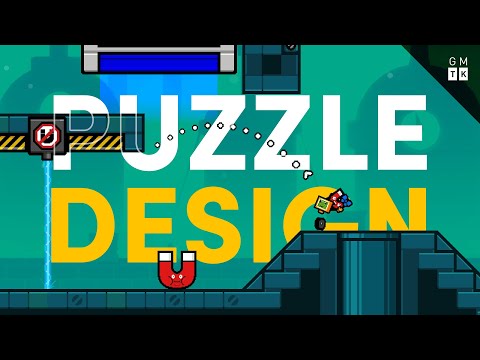 Gcreator of Game Maker's Toolkit, making his first game testHow I make puzzles for my indie magnet game (Developing 9)
 Gcreator of Game Maker's Toolkit, making his first game testThe stuff no one tells you about game development (Developing 7)
 Gcreator of Game Maker's Toolkit, developing his first game testHow to make a good platforming character (Developing 6)
 Gcreator of Game Maker's Toolkit, making his first game testWhat did people think of my game demo? (Developing 5)
 Gcreator of Game Maker's Toolkit testWhy is it so hard to make game design decisions? (Developing 3)
 Gcreator of Game Maker's Toolkit, making his first game testThe mistake every new game developer makes (Developing 2)
Mind Over Magnet spent 24 months with only about nine of real work, then a concrete plan (50 levels, three levels per mechanic) yielded about 40 final levels in one month. Playtests exposed untaught mechanics, padded puzzles and a floaty controller, and every tester failed a level its designer thought trivial. Lesson: plan once you know what is fun, then playtest early and teach every mechanic.
- 24 months, about nine of real work
- Breaks of six and five months
- Sessions felt like aimless noodling
- 50 levels across five worlds of 10
- Teach, test, twist every mechanic
- Four or five levels a day
- About 40 final levels in a month
Most productive month of development
From Mark Brown, GMTK devlog
What was said about Mind Over Magnet
1The plan that finally got Mind Over Magnet built
Working without a task list left two years with nine months of progress. After 24 months of development, Mind Over Magnet had only about nine months of real work behind it. There were breaks of six months after GDC and five months earlier, and even working sessions felt like aimless noodling.
Mark Brown funds the game through YouTube and Patreon, so every bit of progress meant stopping to make videos, and the longer he was away the harder it was to return. His fix was to put the channel on the back burner for a few months. Quote: "hoping that the game will eventually just coalesce by itself into a finished game."
Plan once the prototype shows what is fun, not before. Mark skips detailed planning while prototyping so there is room to invent, then writes a concrete plan once the fun is known. He did this for Platformer Toolkit and finished it in reasonable time, but waited two years on Mind Over Magnet.
Too early risks stifling creativity; too late, as here, makes development take far longer than it should. The plan can be a whiteboard, notepad, design document or Trello board, but it must say what is in the game and what is not.
Fix the scope in numbers: 50 levels, five worlds, one magnet each. Mark replaced "make a bunch of levels" with 50 single-screen puzzle chambers across five worlds of 10, each solvable in 2 or 3 minutes. Each world revolves around a different magnet: magnetic blocks, then Max the throwable magnet, then Maggie and Meg, one magnet that swaps between two sisters when polarity changes.
He chose a deliberately conservative scope given his slow past output. Each magnet gets about four intro levels.
Give every mechanic three levels: teach it, test it, twist it. Each mechanic (drill bit, block on wheels, one-way platform, laser, self-resetting switch, scissor gate) gets a tutorial level, a real puzzle, then a harder version that subverts it or pairs it with another mechanic. Counting this out filled in nearly the whole game on paper.
The twist levels draw on the puzzle matrix built earlier in development.
Levels with an assigned purpose took days instead of months. Once every level slot had a job, Mark made four or five levels a day and about 40 final levels in roughly a month, plus around 100 discarded drafts. He calls it the most productive month of development.
Quote: "It made level design so much easier because each level now has a clear goal and purpose to strive for."
The plan exposed that the magnet arrived too late and too complex. World one had many levels with no magnet, which Mark compares to playing 10 Portal levels before getting the portal gun, so the magnet moved partway into world one. Going straight to a throwable magnet with aiming was too big a jump, so the first magnet became Magnus, big and heavy, unthrowable and slow up fields, and Max moved to world three.
Quote: "He's big and heavy, so it makes sense that you can't throw him."
Bend the plan for good feedback, but catch scope creep early. Levels went to friends, family, Twitter users and puzzle designers during the sprint, and Adam, a developer behind Snipperclips, suggested a puzzle that went in. When worlds grew past 10 levels, Mark added levels elsewhere to rebalance and reined it in before it spiralled.
Quote: "I think there's a big difference between slightly altering a plan and just randomly aimlessly noodling around in the dark."
High-level objectives with sub-plans let him switch tasks when burnt out. A Trello board listed broad objectives (name, levels, story, Steam page), and each got a detailed sub-plan only when started. When level design wore him out, the plan pointed to other work, such as painting the world one sewer background.
Knowing there would be exactly five worlds unlocked background art, which in turn gave screenshots and GIFs for marketing. The plan also says what to do on return from a break.
2The puzzle matrix that unstuck level design
- 1Grid every mechanicScreenshots across top and side
- 2Pair two mechanicsEach cell in an empty Unity room
- 3Find the trickMagnet escapes slowly on drill's far side
- 4Build level backwardsTrick becomes the only way through
- 5Block easier routesLasers, held buttons, switch-flipping doors
From Mark Brown, GMTK devlog
"Make an interesting puzzle" is too vague a goal to work from. Building mechanics felt effortless because each started with a concrete goal, like a block the robot can push left and right, while level design dragged. In January 2023 Mark could manage only a couple of hours a day of puzzle work before burning out.
His few good puzzles felt like flukes, and after more than a year plus a four-month break he wondered if he was done with the game.
Pair every two mechanics, find the trick, build the level backwards. Inspired by a post from Patrick Traynor, creator of Patrick's Parabox, Mark put screenshots of every mechanic across the top and side of a grid; each cell is a pair to drop into an empty Unity room. Electromagnet plus drill showed a magnet stuck under the drill escapes fast near the tip and slowly on the far side, so he built a level where trapping it away from the tip is the only way to reach the doors in time.
Other pairs tried include electromagnet plus laser, block plus drill bit, and laser plus wheelie block. Not every combination makes a good puzzle.
Blocker mechanics force the intended solution and become reusable tools. To cut off easier routes, Mark built a laser that stops the player but not the magnet (and the reverse), a button that must be held down, and a door that flips a switch each time you pass. Each blocker stayed in his toolbox for later levels.
He also swapped a flippy lever for a spinning fan blade because it combined with more mechanics, and rewrote button wiring from many clicks to one so experimenting had no friction.
Balance how many actions are available, and lure wrong assumptions. Too many actions at once overwhelm the player; too few let them repeat the obvious move until the puzzle solves itself "without actually solving it". Several levels set up a plausible wrong approach so players get stuck and have to think laterally.
Mark says making many puzzles in a row builds this sense "like building a muscle".
A puzzle bible listing mechanics per level reveals progression jumps. Each level gets a Keynote slide listing its mechanics. Levels one to three added a few things each, but level four added orange buttons, green buttons, lasers and moving platforms at once, so that gap became a brief for new teaching levels.
Ordering by difficulty waits until after playtesting. Quote: "woah, that's way too much stuff! Slow down!"
The matrix produced 26 levels in a month, still needing playtesters. Mark finished about 26 of a planned 30 puzzle chambers in January 2023, each easier to make than the last. Because a creator cannot judge his own puzzles' quality or difficulty, the levels went into a demo for family, friends and patrons.
Quote: "Puzzles, more than anything else in game development, I feel, are something where the creator just cannot gauge their quality or difficulty."
3The GDC demo and the assumption about players
Fearing easy puzzles, Mark padded them until they were tedious. Assuming players would solve a clean puzzle instantly, he added extra steps, dead-end traps and red herrings to a 26-level, three-world demo. A week before GDC his dad found the levels tedious and handed back the controller asking "can you just do this one?"
He had never tested whether players actually saw the simple solutions at once. Quote: "I was focused so much on making the levels hard, I had forgotten to make them fun."
Cutting levels to their core idea gave the right challenge. A level needing two magnets, two switches, two drill bits, a laser and an orb was rebuilt in a small space with one magnet and three or four mechanics. At GDC players got stuck for a minute or two, then had an aha moment without frustration, said it felt like a real video game, and some would not hand back the Steam Deck.
Patrick Traynor had advised simplifying even if the game got easier, and Mark ignored it until his dad's playtest. Quote: "Turns out it was completely the right move to make the game easier, and in fact, I hadn't gone far enough."
Make what the player cannot do unmistakable. Patrick Traynor's feedback was that a gap the player can't jump should be very big, and a door too fast to pass should snap shut. Clear limits let players rule out impossible approaches quickly.
He sent a two-hour playthrough with a one-word email: "played".
Cut reflex and exploit levels, and make links between objects readable. Before GDC Mark removed a reflex-heavy level, one with an unfixable exploit, and a pure platforming level with mixed feedback. He added icons showing what each button is linked to, replaced a magnet sensor with a pulley panel, swapped green buttons for a Frankenstein-style switch and added a lock and key.
Patrons on Discord found bugs, exploits and inconsistencies in the demo first.
Watch how playtesters play rather than listening to what they say. Mark's nephews, aged seven and ten, gave some of his best playtests, but both said "I love it" when asked directly, so their behaviour is the better data. Sitting beside a confused player shows where the design went wrong.
Testers of every skill level reveal different problems, though friends and family may be polite.
Pick a target audience and test with people who match it. Mark worried experts of Stephen's Sausage Roll and Baba Is You would find the game simple, but his audience is fans of gentler puzzle adventures like Toki Tori, Boxboy, Inside, Limbo and Portal. His fear came from testing against the wrong crowd.
An assist mode can widen a hard game, and optional harder or post-game levels can widen an easy one. The next demo covers even more basic concepts, tested on that audience.
Deliberately lose your own skill to think like a player. Mark cites Miyamoto telling new designers to play with hands swapped on the controller to feel inexperience. Patrick Traynor says thinking like a player is a skill you can hone over time.
Mark also restarts a level from scratch after its rushed first draft, since discovery leaves fluff that a rebuild removes.
4Teaching the mechanics designers don't notice they require
Every playtester failed one level until a new level taught its trick first. A level required turning the field off, leaving the magnet on the far side, turning it on and riding up. Every playtester failed it, including two professional puzzle designers, Adam and Gonen, who skipped it; a suspicious lump hinting where to put the magnet did not help, but adding a ride-up-twice level and a too-small-gap level before it got players through.
In the gap level the magnet is too big to fit through and the field pulls it up if left behind. Mark had seen the stumper as a tutorial: "it was only through playtesting that I realised that leaving the magnet behind is a mechanic and that this level is a puzzle."
Basics that felt obvious to Mark were never taught. Riding the magnet up to a platform and changing polarity from afar had no tutorial or puzzle because they seemed obvious, and GDC players stumbled on them. About half the mechanics went untaught.
Quote: "But to someone who has never played my game before, they have no idea."
5Polishing world one into a finished demo
Blueprint placeholder levels let the puzzles settle before any art. Every level in the rough draft used one plain blue tile set and grid. Levels could be moved, restarted or sent to another world with no art to redo, and only after layouts were locked were they painted.
Quote: "it meant I could focus exclusively on puzzle design rather than visuals."
Equal-sized worlds let world one be finished alone in a month. Because the game is split into equal worlds, Mark took only world one from rough draft to finished in November, producing a complete demo for patrons, publishers or console makers.
Quote: "I can break the job up into chunks."
Cheap layered tricks turned a blank level into a sewer. The sewer tile set mirrors the blueprint layout, so one paint-bucket click swaps every tile. Background plates, floating dust circles, a sine-wave water shader, Unity rule tiles with random variants, and masked shadows cast by the characters add depth.
Unique touches go only where they pay off, such as a scrolling-texture waterfall and nuts and bolts that kick up when you run and get yanked by magnetic fields. Grayscale props are tinted per world.
Backgrounds must never compete with the puzzle pieces. A gradient overlay washes out the background so important elements stand out, and a simple-background toggle replaces the art with the rough draft's grid for players who find it distracting.
Mark contrasts this with the puzzle platformer Ugly, whose detailed backgrounds make it hard to tell what matters.
Prefer polish that improves every level over one-off art. Unique art for one level is additive; Magnus's eyes following the player, built for a cutscene, improve every stage. The cutscene speech bubbles also became a bark system where Magnus quips during play, inspired by Super Mario Wonder's talking flowers.
Barks must be restrained: "It could easily become too annoying." Quote: "focus your time and effort on the polish that's going to get the most bang for your buck."
Cutscenes and visual hints replaced an abrupt, text-dependent start. The rough draft dropped players straight into the first puzzle and introduced the magnet "in a very unceremonious fashion", so Mark added an opening cutscene and a magnet introduction. Hints show the solution with dotted lines instead of text.
Dotted lines are easier to understand and "you don't need to speak English to get it."
Score sound effects against recorded footage, like a Foley artist. Mark records a short clip, such as a door opening, and layers sounds in Premiere with EQ, effects and fades, so the export is sure to fit the animation. It replaced the loop of make, import, test, hate, repeat inside Unity.
Most sounds were wired up as each mechanic was built, which kept the final pass small.
Saving and menus have to be finished before a world is a demo. World one still lacked save and load, and the options menu was ugly placeholder; the options menu alone took a week. Patrons can now play the demo on PC and Mac.
A paid composer was still being sought to replace a placeholder track, and Mark asks for wishlists because they tell Valve to promote the game.
6Managers and custom tools behind the levels
Persistent managers replaced code duplicated in every level. In the MVP every level had its own copy of saving, transitions and the pause menu, which slowed testing and made options hard to track. Mark built "Don't Destroy On Load" managers for options, transitions, music, HUD and UI that levels query for settings like magnet colour or aim sensitivity.
Options include hold or toggle aim, full remapping, magnet colour and accessibility symbols, and HUD button icons change with the controller. The menus work but are ugly, left as a "Future Mark problem".
A hub, a key count and file names make the game easy to rebalance. Each level holds a key, a progression manager saves them, and the hub's final door opens at a set key count, so balance is one number. Names like "01 Lift 02" give the hub and key, so reordering a level is just renaming its file.
Mark chose a non-linear structure like Braid and Baba Is You because he dislikes walling off a player stuck on one puzzle.
Build tools for your game, not just rely on the engine. Making one electromagnet shorter and red took about nine manual changes; now an inspector slider sets height and buttons switch colour or on/off. Gizmos show a moving box's path, a prefab window allows drag-and-drop mechanics, and a pipette picks scene objects for Unity Events.
Rule: if a change is frequent and always the same steps, script it into one button press. Quote: "Unity is a tool for making games, but it's not a tool for making my game."
Testing the tools on real levels produced most of a demo. Mark built a puzzle with the tools, fixed each annoyance, and repeated until he had a hub and four or five new puzzles, about 90 percent of a demo. He argues the early pain saves much more time later.
Quote: "Did I just accidentally make a video game?"
Turn MVP complaints into a checklist and ship a demo to check them. MVP players found the robot crummy to control, the visual language inconsistent, platforming mixed with puzzles confusing, few aha moments, messy levels with waits for cycles to reset, and a game not built around the magnet. Demo 2.0 targeted each, released free on itch.io for PC and Mac.
7Rebuilding the robot's controls
A small controller with two gravities gave snappy, responsive jumps. Mark chose Shinjingi's controller over tarodev's and Mix and Jam's because it is very little code. Low gravity rising and very high gravity falling, plus high acceleration and variable jump height, fixed the MVP's slow, floaty feel and oversized jump.
Tuning took a long time in a blocky test room. Quote: "very high gravity and snaps you back to the ground. That makes it feel amazing."
Forgiving input windows stop punishing near misses. A jump buffer keeps a jump request alive for a few frames so a press just before landing still works, and coyote time allows a jump a few frames after leaving a ledge. A capsule collider rounds off head bumps and edge bonks.
These came from research into Celeste's movement.
Juice adds charm, but animations must never delay input. Dust particles, a running tilt, screen shake, magnet facial expressions and a swing before the throw add personality, while anticipation frames were cut so the robot pops up the instant jump is pressed. Chevron arrows, suggested by Dan Root, make magnetism readable.
Mark says cutting anticipation is "not a hard and fast rule", only what this game needs.
One button picks up, aims and throws the magnet. Press to pick up, hold to aim, release to throw, and a single tap throws quickly, replacing the MVP's overly complex throw. Supporting both mouse and analogue stick was the hard part.
Add accessibility once the code is close to final. Too early the code keeps being thrown out, too late it is a nightmare to retrofit. Options include remapping, toggle and snap aim, turning off particles and shake, and tintable magnets with plus and minus symbols suggested on Twitter.
One option was dropped because it added too much junk to an already oversized script.
The character took twice as long as the whole MVP. The 10-level MVP took 30 days, while the robot in a test room took almost two months. Noel Berry, a creator of Celeste, played it and said it feels pretty good, and Mark then took a break to avoid burnout.
Moving platforms were fixed with help from GMTK Discord member GuitarKid, who added the platform's velocity to the player's.
8The name, logo and Steam page
A name that says what the game is replaced Untitled Magnet Game. After over two years as Untitled Magnet Game, a friend, The Gaming Brit, suggested Mind Over Magnet; ChatGPT's ideas like MagniMech: Factory Fugitive were worse. The logo swaps the 'a' for a rounded magnet that pulls in the hard-edged letters, an animation idea from the GMTK Discord.
Quote: "It's clever, it's catchy, and it instantly tells you that this is a puzzle game about magnets."
The Steam page went live late, as a commitment to finish. The page launched with a 2024 release date and no trailer, after a long questionnaire, a $100 fee and a UK government certificate. It needed a description, tags, system requirements, five screenshots and capsule art.
Mark notes conventional wisdom is to publish as early as possible to build wishlists, so start the paperwork well before you need it.
How I polished my indie magnet puzzle game (Developing 12)
The rough draft used blue blueprint levels. Playtesting showed every tester failed a level needing the magnet left behind, fixed by reordering levels. World one was polished in a month with a sewer look, cutscenes, dotted-line hints, a simple-background toggle and a demo for patrons.
Every playtester failed one level until a new level taught its trick first. A level required turning the field off, leaving the magnet on the far side, turning it on and riding up. Every playtester failed it, including two professional puzzle designers, Adam and Gonen, who skipped it; a suspicious lump hinting where to put the magnet did not help, but adding a ride-up-twice level and a too-small-gap level before it got players through.
In the gap level the magnet is too big to fit through and the field pulls it up if left behind. Mark had seen the stumper as a tutorial: "it was only through playtesting that I realised that leaving the magnet behind is a mechanic and that this level is a puzzle."
Blueprint placeholder levels let the puzzles settle before any art. Every level in the rough draft used one plain blue tile set and grid. Levels could be moved, restarted or sent to another world with no art to redo, and only after layouts were locked were they painted.
Quote: "it meant I could focus exclusively on puzzle design rather than visuals."
Equal-sized worlds let world one be finished alone in a month. Because the game is split into equal worlds, Mark took only world one from rough draft to finished in November, producing a complete demo for patrons, publishers or console makers.
Quote: "I can break the job up into chunks."
Cheap layered tricks turned a blank level into a sewer. The sewer tile set mirrors the blueprint layout, so one paint-bucket click swaps every tile. Background plates, floating dust circles, a sine-wave water shader, Unity rule tiles with random variants, and masked shadows cast by the characters add depth.
Unique touches go only where they pay off, such as a scrolling-texture waterfall and nuts and bolts that kick up when you run and get yanked by magnetic fields. Grayscale props are tinted per world.
Backgrounds must never compete with the puzzle pieces. A gradient overlay washes out the background so important elements stand out, and a simple-background toggle replaces the art with the rough draft's grid for players who find it distracting.
Mark contrasts this with the puzzle platformer Ugly, whose detailed backgrounds make it hard to tell what matters.
Prefer polish that improves every level over one-off art. Unique art for one level is additive; Magnus's eyes following the player, built for a cutscene, improve every stage. The cutscene speech bubbles also became a bark system where Magnus quips during play, inspired by Super Mario Wonder's talking flowers.
Barks must be restrained: "It could easily become too annoying." Quote: "focus your time and effort on the polish that's going to get the most bang for your buck."
Cutscenes and visual hints replaced an abrupt, text-dependent start. The rough draft dropped players straight into the first puzzle and introduced the magnet "in a very unceremonious fashion", so Mark added an opening cutscene and a magnet introduction. Hints show the solution with dotted lines instead of text.
Dotted lines are easier to understand and "you don't need to speak English to get it."
Score sound effects against recorded footage, like a Foley artist. Mark records a short clip, such as a door opening, and layers sounds in Premiere with EQ, effects and fades, so the export is sure to fit the animation. It replaced the loop of make, import, test, hate, repeat inside Unity.
Most sounds were wired up as each mechanic was built, which kept the final pass small.
Saving and menus have to be finished before a world is a demo. World one still lacked save and load, and the options menu was ugly placeholder; the options menu alone took a week. Patrons can now play the demo on PC and Mac.
A paid composer was still being sought to replace a placeholder track, and Mark asks for wishlists because they tell Valve to promote the game.
The one thing you need to finish your game (Developing 11)
After 24 months with only about nine of real work, a concrete plan produced about 40 final levels in one month. It was named after two years as Untitled Magnet Game, got a magnetic 'a' logo, and went live on Steam with a 2024 release date and no trailer.
Working without a task list left two years with nine months of progress. After 24 months of development, Mind Over Magnet had only about nine months of real work behind it. There were breaks of six months after GDC and five months earlier, and even working sessions felt like aimless noodling.
Mark Brown funds the game through YouTube and Patreon, so every bit of progress meant stopping to make videos, and the longer he was away the harder it was to return. His fix was to put the channel on the back burner for a few months. Quote: "hoping that the game will eventually just coalesce by itself into a finished game."
Plan once the prototype shows what is fun, not before. Mark skips detailed planning while prototyping so there is room to invent, then writes a concrete plan once the fun is known. He did this for Platformer Toolkit and finished it in reasonable time, but waited two years on Mind Over Magnet.
Too early risks stifling creativity; too late, as here, makes development take far longer than it should. The plan can be a whiteboard, notepad, design document or Trello board, but it must say what is in the game and what is not.
Fix the scope in numbers: 50 levels, five worlds, one magnet each. Mark replaced "make a bunch of levels" with 50 single-screen puzzle chambers across five worlds of 10, each solvable in 2 or 3 minutes. Each world revolves around a different magnet: magnetic blocks, then Max the throwable magnet, then Maggie and Meg, one magnet that swaps between two sisters when polarity changes.
He chose a deliberately conservative scope given his slow past output. Each magnet gets about four intro levels.
Give every mechanic three levels: teach it, test it, twist it. Each mechanic (drill bit, block on wheels, one-way platform, laser, self-resetting switch, scissor gate) gets a tutorial level, a real puzzle, then a harder version that subverts it or pairs it with another mechanic. Counting this out filled in nearly the whole game on paper.
The twist levels draw on the puzzle matrix built earlier in development.
Levels with an assigned purpose took days instead of months. Once every level slot had a job, Mark made four or five levels a day and about 40 final levels in roughly a month, plus around 100 discarded drafts. He calls it the most productive month of development.
Quote: "It made level design so much easier because each level now has a clear goal and purpose to strive for."
The plan exposed that the magnet arrived too late and too complex. World one had many levels with no magnet, which Mark compares to playing 10 Portal levels before getting the portal gun, so the magnet moved partway into world one. Going straight to a throwable magnet with aiming was too big a jump, so the first magnet became Magnus, big and heavy, unthrowable and slow up fields, and Max moved to world three.
Quote: "He's big and heavy, so it makes sense that you can't throw him."
Bend the plan for good feedback, but catch scope creep early. Levels went to friends, family, Twitter users and puzzle designers during the sprint, and Adam, a developer behind Snipperclips, suggested a puzzle that went in. When worlds grew past 10 levels, Mark added levels elsewhere to rebalance and reined it in before it spiralled.
Quote: "I think there's a big difference between slightly altering a plan and just randomly aimlessly noodling around in the dark."
High-level objectives with sub-plans let him switch tasks when burnt out. A Trello board listed broad objectives (name, levels, story, Steam page), and each got a detailed sub-plan only when started. When level design wore him out, the plan pointed to other work, such as painting the world one sewer background.
Knowing there would be exactly five worlds unlocked background art, which in turn gave screenshots and GIFs for marketing. The plan also says what to do on return from a break.
A name that says what the game is replaced Untitled Magnet Game. After over two years as Untitled Magnet Game, a friend, The Gaming Brit, suggested Mind Over Magnet; ChatGPT's ideas like MagniMech: Factory Fugitive were worse. The logo swaps the 'a' for a rounded magnet that pulls in the hard-edged letters, an animation idea from the GMTK Discord.
Quote: "It's clever, it's catchy, and it instantly tells you that this is a puzzle game about magnets."
The Steam page went live late, as a commitment to finish. The page launched with a 2024 release date and no trailer, after a long questionnaire, a $100 fee and a UK government certificate. It needed a description, tags, system requirements, five screenshots and capsule art.
Mark notes conventional wisdom is to publish as early as possible to build wishlists, so start the paperwork well before you need it.
Don't make this assumption about your players (Developing 10)
Mark's GDC demo had 26 levels, three worlds and two magnets. His dad found padded levels tedious, so he rebuilt a two-magnet, four-step level with one magnet and three or four mechanics. GDC players got stuck a minute or two, then had an aha moment, and said it felt like a real video game. Magnet riding and remote polarity change were never taught.
Fearing easy puzzles, Mark padded them until they were tedious. Assuming players would solve a clean puzzle instantly, he added extra steps, dead-end traps and red herrings to a 26-level, three-world demo. A week before GDC his dad found the levels tedious and handed back the controller asking "can you just do this one?"
He had never tested whether players actually saw the simple solutions at once. Quote: "I was focused so much on making the levels hard, I had forgotten to make them fun."
Cutting levels to their core idea gave the right challenge. A level needing two magnets, two switches, two drill bits, a laser and an orb was rebuilt in a small space with one magnet and three or four mechanics. At GDC players got stuck for a minute or two, then had an aha moment without frustration, said it felt like a real video game, and some would not hand back the Steam Deck.
Patrick Traynor had advised simplifying even if the game got easier, and Mark ignored it until his dad's playtest. Quote: "Turns out it was completely the right move to make the game easier, and in fact, I hadn't gone far enough."
Make what the player cannot do unmistakable. Patrick Traynor's feedback was that a gap the player can't jump should be very big, and a door too fast to pass should snap shut. Clear limits let players rule out impossible approaches quickly.
He sent a two-hour playthrough with a one-word email: "played".
Cut reflex and exploit levels, and make links between objects readable. Before GDC Mark removed a reflex-heavy level, one with an unfixable exploit, and a pure platforming level with mixed feedback. He added icons showing what each button is linked to, replaced a magnet sensor with a pulley panel, swapped green buttons for a Frankenstein-style switch and added a lock and key.
Patrons on Discord found bugs, exploits and inconsistencies in the demo first.
Watch how playtesters play rather than listening to what they say. Mark's nephews, aged seven and ten, gave some of his best playtests, but both said "I love it" when asked directly, so their behaviour is the better data. Sitting beside a confused player shows where the design went wrong.
Testers of every skill level reveal different problems, though friends and family may be polite.
Pick a target audience and test with people who match it. Mark worried experts of Stephen's Sausage Roll and Baba Is You would find the game simple, but his audience is fans of gentler puzzle adventures like Toki Tori, Boxboy, Inside, Limbo and Portal. His fear came from testing against the wrong crowd.
An assist mode can widen a hard game, and optional harder or post-game levels can widen an easy one. The next demo covers even more basic concepts, tested on that audience.
Deliberately lose your own skill to think like a player. Mark cites Miyamoto telling new designers to play with hands swapped on the controller to feel inexperience. Patrick Traynor says thinking like a player is a skill you can hone over time.
Mark also restarts a level from scratch after its rushed first draft, since discovery leaves fluff that a rebuild removes.
Basics that felt obvious to Mark were never taught. Riding the magnet up to a platform and changing polarity from afar had no tutorial or puzzle because they seemed obvious, and GDC players stumbled on them. About half the mechanics went untaught.
Quote: "But to someone who has never played my game before, they have no idea."
How I make puzzles for my indie magnet game (Developing 9)
Mark Brown made about 26 of a planned 30 puzzle chambers in a month by pairing every two mechanics in a puzzle matrix. A Keynote puzzle bible exposed a jump at level four, which added orange buttons, green buttons, lasers and moving platforms at once, so new teaching levels were planned and a demo goes to playtesters next.
"Make an interesting puzzle" is too vague a goal to work from. Building mechanics felt effortless because each started with a concrete goal, like a block the robot can push left and right, while level design dragged. In January 2023 Mark could manage only a couple of hours a day of puzzle work before burning out.
His few good puzzles felt like flukes, and after more than a year plus a four-month break he wondered if he was done with the game.
Pair every two mechanics, find the trick, build the level backwards. Inspired by a post from Patrick Traynor, creator of Patrick's Parabox, Mark put screenshots of every mechanic across the top and side of a grid; each cell is a pair to drop into an empty Unity room. Electromagnet plus drill showed a magnet stuck under the drill escapes fast near the tip and slowly on the far side, so he built a level where trapping it away from the tip is the only way to reach the doors in time.
Other pairs tried include electromagnet plus laser, block plus drill bit, and laser plus wheelie block. Not every combination makes a good puzzle.
Blocker mechanics force the intended solution and become reusable tools. To cut off easier routes, Mark built a laser that stops the player but not the magnet (and the reverse), a button that must be held down, and a door that flips a switch each time you pass. Each blocker stayed in his toolbox for later levels.
He also swapped a flippy lever for a spinning fan blade because it combined with more mechanics, and rewrote button wiring from many clicks to one so experimenting had no friction.
Balance how many actions are available, and lure wrong assumptions. Too many actions at once overwhelm the player; too few let them repeat the obvious move until the puzzle solves itself "without actually solving it". Several levels set up a plausible wrong approach so players get stuck and have to think laterally.
Mark says making many puzzles in a row builds this sense "like building a muscle".
A puzzle bible listing mechanics per level reveals progression jumps. Each level gets a Keynote slide listing its mechanics. Levels one to three added a few things each, but level four added orange buttons, green buttons, lasers and moving platforms at once, so that gap became a brief for new teaching levels.
Ordering by difficulty waits until after playtesting. Quote: "woah, that's way too much stuff! Slow down!"
The matrix produced 26 levels in a month, still needing playtesters. Mark finished about 26 of a planned 30 puzzle chambers in January 2023, each easier to make than the last. Because a creator cannot judge his own puzzles' quality or difficulty, the levels went into a demo for family, friends and patrons.
Quote: "Puzzles, more than anything else in game development, I feel, are something where the creator just cannot gauge their quality or difficulty."
The stuff no one tells you about game development (Developing 7)
Mark built persistent managers for options, transitions, music, HUD and UI, plus a key-gated hub driven by level file names. Custom tools then made levels so quick that he nearly finished a new demo by accident, aimed at MVP complaints like poor controls and missing 'aha' moments.
Persistent managers replaced code duplicated in every level. In the MVP every level had its own copy of saving, transitions and the pause menu, which slowed testing and made options hard to track. Mark built "Don't Destroy On Load" managers for options, transitions, music, HUD and UI that levels query for settings like magnet colour or aim sensitivity.
Options include hold or toggle aim, full remapping, magnet colour and accessibility symbols, and HUD button icons change with the controller. The menus work but are ugly, left as a "Future Mark problem".
A hub, a key count and file names make the game easy to rebalance. Each level holds a key, a progression manager saves them, and the hub's final door opens at a set key count, so balance is one number. Names like "01 Lift 02" give the hub and key, so reordering a level is just renaming its file.
Mark chose a non-linear structure like Braid and Baba Is You because he dislikes walling off a player stuck on one puzzle.
Build tools for your game, not just rely on the engine. Making one electromagnet shorter and red took about nine manual changes; now an inspector slider sets height and buttons switch colour or on/off. Gizmos show a moving box's path, a prefab window allows drag-and-drop mechanics, and a pipette picks scene objects for Unity Events.
Rule: if a change is frequent and always the same steps, script it into one button press. Quote: "Unity is a tool for making games, but it's not a tool for making my game."
Testing the tools on real levels produced most of a demo. Mark built a puzzle with the tools, fixed each annoyance, and repeated until he had a hub and four or five new puzzles, about 90 percent of a demo. He argues the early pain saves much more time later.
Quote: "Did I just accidentally make a video game?"
Turn MVP complaints into a checklist and ship a demo to check them. MVP players found the robot crummy to control, the visual language inconsistent, platforming mixed with puzzles confusing, few aha moments, messy levels with waits for cycles to reset, and a game not built around the magnet. Demo 2.0 targeted each, released free on itch.io for PC and Mac.
How to make a good platforming character (Developing 6)
The MVP took 30 days, but rebuilding the robot's controller alone took almost two months. The rebuild added snappy physics, forgiving jumps, a one-button magnet throw, juice, slopes, moving platforms and colourblind options.
A small controller with two gravities gave snappy, responsive jumps. Mark chose Shinjingi's controller over tarodev's and Mix and Jam's because it is very little code. Low gravity rising and very high gravity falling, plus high acceleration and variable jump height, fixed the MVP's slow, floaty feel and oversized jump.
Tuning took a long time in a blocky test room. Quote: "very high gravity and snaps you back to the ground. That makes it feel amazing."
Forgiving input windows stop punishing near misses. A jump buffer keeps a jump request alive for a few frames so a press just before landing still works, and coyote time allows a jump a few frames after leaving a ledge. A capsule collider rounds off head bumps and edge bonks.
These came from research into Celeste's movement.
Juice adds charm, but animations must never delay input. Dust particles, a running tilt, screen shake, magnet facial expressions and a swing before the throw add personality, while anticipation frames were cut so the robot pops up the instant jump is pressed. Chevron arrows, suggested by Dan Root, make magnetism readable.
Mark says cutting anticipation is "not a hard and fast rule", only what this game needs.
One button picks up, aims and throws the magnet. Press to pick up, hold to aim, release to throw, and a single tap throws quickly, replacing the MVP's overly complex throw. Supporting both mouse and analogue stick was the hard part.
Add accessibility once the code is close to final. Too early the code keeps being thrown out, too late it is a nightmare to retrofit. Options include remapping, toggle and snap aim, turning off particles and shake, and tintable magnets with plus and minus symbols suggested on Twitter.
One option was dropped because it added too much junk to an already oversized script.
The character took twice as long as the whole MVP. The 10-level MVP took 30 days, while the robot in a test room took almost two months. Noel Berry, a creator of Celeste, played it and said it feels pretty good, and Mark then took a break to avoid burnout.
Moving platforms were fixed with help from GMTK Discord member GuitarKid, who added the platform's velocity to the player's.
What did people think of my game demo? (Developing 5)
A 30 minute demo drew feedback on its floaty controller, inconsistent rules, mixed puzzle and platforming levels, and a magnet that did not feel like the core. Mark will scrap the demo, restart from scratch, and focus on clean magnet puzzles.
Why is it so hard to make game design decisions? (Developing 3)
It began as a speedrunning platformer, but splitting the magnet from the character kept pulling it toward puzzles. Mark commits to a puzzle game with platforming secondary, rebuilt around a tile grid and single-screen levels, and plans five levels in 30 days.
The mistake every new game developer makes (Developing 2)
Mark Brown's own game, started as a quick ugly prototype with Google Images art and no music, story or name. It evolved from a magnetic character into a character carrying a separate magnet, and passed the test of being original, flexible and fun.
More in Games
 Games
Nintendo
A Zelda adventure where Princess Zelda copies objects and monsters as echoes to solve puzzles and fight.
 Games
The Legend of Zelda: Breath of the Wild
Nintendo's long-running action-adventure series about Link exploring Hyrule, solving puzzles and fighting Ganon.
 Games
Dead Space
A major video game publisher and the guest's employer.
 G
 29 sources · 94 tips
 Games
Far Cry 2
An open world action game where you recruit and play any of London's citizens.
 Games
God of War
A combat-focused action adventure game from Santa Monica Studio with Norse mythology and light puzzles.
Mind Over Magnet
Mark Brown's first game, a puzzle game he made while learning Unity.
 Games
Dishonored
A first-person stealth action game from Arkane with supernatural powers and the Clockwork Mansion level.
 Games
Hitman
An open stealth assassination game where players hunt targets in large, sandbox-style levels.