Zachtronics
A studio making puzzle games about engineering and optimisation, led by Zach Barth.
Where Zachtronics comes up2 episodes and tests
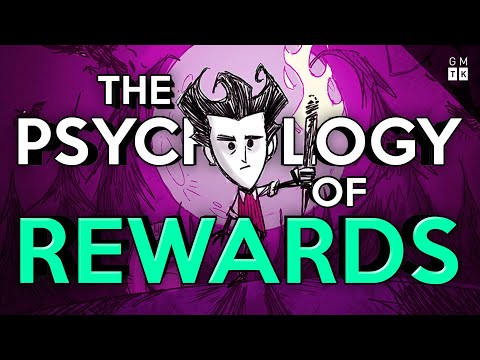 Gcreator of Game Maker's Toolkit testThis Psychological Trick Makes Rewards Backfire
 Gcreator of Game Maker's Toolkit testAre Score Systems Still Relevant?
Zachtronics dropped fixed achievements after Spacechem and Infinifactory because thresholds like beating a level in under 2200 cycles felt random. Later games use scores, friend leaderboards and histograms of all solutions. Opus Magnum scores cost, area and cycles, so players pick their own goal. The lesson: let players measure themselves against others and set their own targets rather than hitting arbitrary thresholds.
- Steam achievements
- Fixed threshold: under 2200 cycles
- Felt random
- Scores
- Friend leaderboards
- Histograms of every player's solutions
A goal you set yourself is more powerful
From Zach Barth on Zachtronics design
What was said about Zachtronics
Zachtronics swapped fixed achievements for scores, leaderboards and histograms. Zach Barth dropped Steam achievements after Spacechem and Infinifactory because a fixed threshold, such as beating an assignment in under 2200 cycles, felt random. Exapunks and Shenzhen I/O instead use scores, friend leaderboards and histograms of every player's solutions.
The reasoning is that his games already have a more meaningful reward system. A goal you set yourself is stronger than an arbitrary threshold someone else sets: "a goal that you set yourself is way more powerful than a goal someone else sets for you".
Showing your result against all players pushes you to optimise a working solution. In Opus Magnum any working machine passes, but a histogram plots its cost, area and cycles against the world's players. Seeing a machine far below average on one metric is enough to send a player back to rethink the design.
The player decides whether good enough is good enough, with no hard target imposed. The reviewer's reaction: "seeing my crappy performance ranked against the world's averages was more than enough motivation to get back in there".
Scoring several independent measures lets players choose how to optimise. Opus Magnum scores cost, surface area and cycles. Players can chase small machines, cheap parts, fast cycles, or a balance of all three, depending on what they find fun.
This keeps the goal player-driven and avoids a single strict target that only some players care about.
This Psychological Trick Makes Rewards Backfire
Zach Barth dropped achievements after Spacechem and Infinifactory, since a fixed threshold like beating an assignment in under 2200 cycles felt random. Exapunks and Shenzhen I/O use scores, friend leaderboards and histograms of all solutions instead.
Zachtronics swapped fixed achievements for scores, leaderboards and histograms. Zach Barth dropped Steam achievements after Spacechem and Infinifactory because a fixed threshold, such as beating an assignment in under 2200 cycles, felt random. Exapunks and Shenzhen I/O instead use scores, friend leaderboards and histograms of every player's solutions.
The reasoning is that his games already have a more meaningful reward system. A goal you set yourself is stronger than an arbitrary threshold someone else sets: "a goal that you set yourself is way more powerful than a goal someone else sets for you".
Are Score Systems Still Relevant?
Any working machine passes, but a histogram of cost, area and cycles against other players pushes you to optimise. Players choose whether to favour small, cheap, fast or balanced machines.
Showing your result against all players pushes you to optimise a working solution. In Opus Magnum any working machine passes, but a histogram plots its cost, area and cycles against the world's players. Seeing a machine far below average on one metric is enough to send a player back to rethink the design.
The player decides whether good enough is good enough, with no hard target imposed. The reviewer's reaction: "seeing my crappy performance ranked against the world's averages was more than enough motivation to get back in there".
Scoring several independent measures lets players choose how to optimise. Opus Magnum scores cost, surface area and cycles. Players can chase small machines, cheap parts, fast cycles, or a balance of all three, depending on what they find fun.
This keeps the goal player-driven and avoids a single strict target that only some players care about.
More in Games
 Games
Nintendo
A Zelda adventure where Princess Zelda copies objects and monsters as echoes to solve puzzles and fight.
 Games
The Legend of Zelda: Breath of the Wild
Nintendo's long-running action-adventure series about Link exploring Hyrule, solving puzzles and fighting Ganon.
 Games
Dead Space
A major video game publisher and the guest's employer.
 G
 29 sources · 94 tips
Mind Over Magnet
A puzzle platformer where you escape a factory using a magnet and a magnetic field.
 Games
Far Cry 2
An open world action game where you recruit and play any of London's citizens.
 Games
God of War
A combat-focused action adventure game from Santa Monica Studio with Norse mythology and light puzzles.
Mind Over Magnet
Mark Brown's first game, a puzzle game he made while learning Unity.
 Games
Dishonored
A first-person stealth action game from Arkane with supernatural powers and the Clockwork Mansion level.