
Nintendo
A Zelda adventure where Princess Zelda copies objects and monsters as echoes to solve puzzles and fight.
Where Nintendo comes up64 episodes and tests
 Gcreator of Game Maker's Toolkit testCan I fix Zelda's UI using Unity?
 Gcreator of Game Maker's Toolkit testSuper Mario's Invisible Difficulty Settings
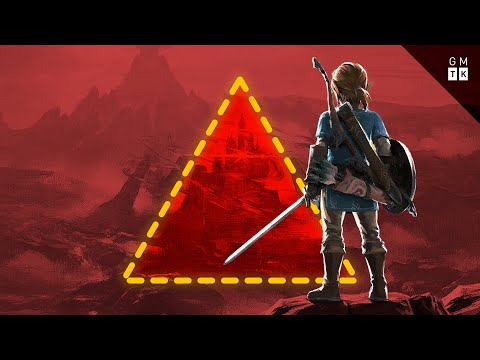 Gcreator of Game Maker's Toolkit testHow Nintendo Solved Zelda's Open World Problem
 Gcreator of Game Maker's Toolkit testWhy You (Probably) Didn't Get Lost in Metroid Dread
 Gcreator of Game Maker's Toolkit testThe World Design of Metroid Prime 3: Corruption | Boss Keys
 Gcreator of Game Maker's Toolkit testHow to Make Your First Super Mario Maker 2 Level
 Gcreator of Game Maker's Toolkit testThe World Design of Metroid Prime 2: Echoes | Boss Keys
 Gcreator of Game Maker's Toolkit testThe World Design of Metroid Prime | Boss Keys
 Gcreator of Game Maker's Toolkit testThe World Design of Super Metroid | Boss Keys
 Gcreator of Game Maker's Toolkit testThe World Design of Metroid 1 and Zero Mission | Boss Keys
 Gcreator of Game Maker's Toolkit test5 Amazing Levels from 2017
 Gcreator of Game Maker's Toolkit testThe Legend of Zelda / Zelda II's dungeon design | Boss Keys
 Gcreator of Game Maker's Toolkit testThe Design Behind Super Mario Odyssey
 Gcreator of Game Maker's Toolkit testHow AM2R and Samus Returns remade Metroid 2
 Gcreator of Game Maker's Toolkit testDonkey Kong Country: Tropical Freeze - Mario's Level Design, Evolved
 Gcreator of Game Maker's Toolkit testThe Legend of Zelda: Phantom Hourglass and Spirit Tracks' dungeon design | Boss Keys
 Gcreator of Game Maker's Toolkit testLegend of Zelda: Breath of the Wild - An Open World Adventure
 Gcreator of Game Maker's Toolkit testThe Secret of Mario's Jump (and other Versatile Verbs)
 Gcreator of Game Maker's Toolkit testThe Magic of the First Legend of Zelda
 Gcreator of Game Maker's Toolkit testNintendo - Putting Play First
 Gcreator of Game Maker's Toolkit testThe Legend of Zelda: The Wind Waker's dungeon design | Boss Keys
 Gcreator of Game Maker's Toolkit testThe Legend of Zelda: Link's Awakening's dungeon design | Boss Keys
 Gcreator of Game Maker's Toolkit testThe Legend of Zelda: A Link to the Past's dungeon design | Boss Keys
 Gcreator of Game Maker's Toolkit testAnalysing Mario to Master Super Mario Maker
 Gcreator of Game Maker's Toolkit testAdaptive Soundtracks in Games
 Gcreator of Game Maker's Toolkit testHas Zelda Changed Forever?
 GMark Brown is the creator of Game Maker's Toolkit; Luke Muscat is the designer of Fruit Ninja, Jetpack Joyride and Feed the Deep testWhat's the Point of Prototyping?
 Gcreator of Game Maker's Toolkit testHow Games Do Destruction
 Gcreator of Game Maker's Toolkit testWhat Makes a Game Feel Mysterious?
 Gcreator of Game Maker's Toolkit, making his first game testThe hardest thing about finishing a game (Developing 15)
 Gcreator of Game Maker's Toolkit testThe 100 Games That Taught Me Game Design
 Gcreator of Game Maker's Toolkit, making his first game testHow I polished my indie magnet puzzle game (Developing 12)
 Gcreator of Game Maker's Toolkit testHow Nintendo Designed Ultrahand
 Gcreator of Game Maker's Toolkit testThe World Design of Banjo-Kazooie
 Gcreator of Game Maker's Toolkit testHow to Make a Good 2D Camera
 Gcreator of Game Maker's Toolkit testWhy do God of War's Characters Keep Spoiling Puzzles?
 Gcreator of Game Maker's Toolkit testHow Game Designers Solved These 11 Problems
 Gcreator of Game Maker's Toolkit, making his first game testWhat did people think of my game demo? (Developing 5)
 Gcreator of Game Maker's Toolkit testWhy is it so hard to make game design decisions? (Developing 3)
 Glead designer on Ori and the Will of the Wisps, formerly a level designer on the Rayman games, talking with the creator of Game Maker's Toolkit testMaking Ori and The Will of the Wisps' Best Level
 Gcreator of Game Maker's Toolkit testThe Power of Video Game HUDs
 Gcreator of Game Maker's Toolkit testHow Zelda's Puzzle Box Dungeons Work
 Gcreator of Game Maker's Toolkit testAre Lives Outdated Game Design?
 Gcreator of Game Maker's Toolkit testThis Psychological Trick Makes Rewards Backfire
 Gcreator of Game Maker's Toolkit, interviewing Yacht Club Games' game director and lead programmer testShovel Knight's Signature Moves
 Gcreator of Game Maker's Toolkit testHow Accessible Were 2019’s Biggest Games?
 Gcreator of Game Maker's Toolkit testThe World Design of Hollow Knight | Boss Keys
 Gcreator of Game Maker's Toolkit testHow Space Invaders Birthed Japanese Games
 Gcreator of Game Maker's Toolkit, interviewing the co-creators of Celeste testWhy Does Celeste Feel So Good to Play?
 Gcreator of Game Maker's Toolkit testThe Challenge of Cameras
 Gcreator of Game Maker's Toolkit testImproving Games for Those with Cognitive Disabilities | Designing for Disability
 Gcreator of Game Maker's Toolkit testBuilding Better Skill Trees
 Gcreator of Game Maker's Toolkit testThe World Design of Castlevania: Symphony of the Night | Boss Keys
 Gcreator of Game Maker's Toolkit testHow Mega Man 11's Levels Do More With Less
 Gcreator of Game Maker's Toolkit testHow Overcooked’s Kitchens Force You to Communicate
 Gcreator of Game Maker's Toolkit testForging God of War's Leviathan Axe
 Gcreator of Game Maker's Toolkit testWhat Makes a Good Combat System?
 Gcreator of Game Maker's Toolkit testHow Games Use Feedback Loops
 Gcreator of Game Maker's Toolkit testHow Snake Pass Became a Platformer Without Jumping
 Gcreator of Game Maker's Toolkit testDo We Need a Soulslike Genre?
 Gcreator of Game Maker's Toolkit testThe Legend of Zelda: Oracle of Ages and Seasons' dungeon design | Boss Keys
 Gcreator of Game Maker's Toolkit testDeus Ex: Mankind Divided's Amazing Open World
 Gcreator of Game Maker's Toolkit testA Deep Dive into Star Fox Zero's Controls
 Gcreator of Game Maker's Toolkit testControllers Control Everything
Nintendo builds playable prototypes before pitching, then designs in flexibility: Super Mario 64 needs only 70 of 120 stars, Galaxy 2's Cosmic Spirit guide pays a bronze star, and Echoes of Wisdom's 120-plus echo list keeps friction on purpose. It still cut two Wind Waker dungeons to ship. Lesson: prototype early, let players tune difficulty in play, and learn why a flaw exists before fixing it.
- 1Player fails repeatedlyHelp waits until near tears
- 2Game offers an assistLevel skip after 10 deaths
- 3Assist covers one levelThen it disappears
- 4Reward is lesserBronze star, not power star
- 5Player climbs back upReturns to the average path
From Mark Brown, Game Maker's Toolkit
What was said about Nintendo
1Super Mario's invisible difficulty settings
Mario builds an average main path with easier and harder routes connected to it. Nintendo treats difficulty as three stacked pipes: an average critical path, a lower pipe of help and an upper pipe of challenge. Players move between them at any moment, even mid-level, instead of picking a setting up front.
Miyamoto says no single difficulty can satisfy everyone and prefers players adjusting it while playing, so only one of more than 30 mainline Mario games has anything like an explicit easy mode. Numeric tweaks to health or damage would not work in a hand-crafted platformer. The structure runs from Super Mario World to Wonder, Galaxy and Odyssey.
Experts get optional risks and post-credits content, not a harder main path. Star coins, runaway 1-UPs, flagpole tops and medals reward risk inside levels, and every course can be cleared without them. The story ends before the difficulty curve peaks; Odyssey's hardest content only appears after the 124-moon ending.
Because experts would otherwise play a whole easy game first, Super Mario World hides secret exits to Star Road and the Special Zone early, and Wonder scatters extra-hard courses through its campaign. The Japanese Super Mario Bros. 2 was built entirely for experts and labelled "For Super Players".
Reward skill with harder content, not items that make the game easier. Super Mario World's dragon coins gave a 1-UP and New Super Mario Bros. star coins unlocked toad houses with power-ups, which handed experts tools that lowered difficulty. Newer games use expert challenges to unlock even harder stages.
Mark Brown calls the old approach "a nasty negative feedback loop that inadvertently pushes you out of the top pipe."
Requiring only some collectibles lets players skip levels they can't beat. Super Mario 64 has 120 power stars but needs only 70 to finish, and several levels are open at once so a hard one can wait. 2D games do the same with warp zones, Super Mario Bros. 3's map and Super Mario Maker 2's job list sorted by difficulty rating.
Easier characters also lower the bar: Peach's floaty jump, Toadette, and Nabbit, who takes no damage from enemies.
Offer a guide, power-up or skip only when players are near giving up. New Super Mario Bros. Wii's Super Guide has Luigi finish the level without collecting secrets; Super Mario 3D Land gives an invincible tanooki suit after repeated failures and a level skip after 10 deaths. Odyssey's assist mode shows the way with blue arrows.
Nintendo spent a long time deciding how many deaths bring up the Super Guide. Satoru Iwata: "it's fine if it appears when you're on the verge of tears, but [not] if it pops up when you're still brimming with determination."
Make assists temporary and costly so players keep climbing back up. An assist helps with one level and then disappears, and using it yields a lesser reward: Galaxy 2's Cosmic Spirit gives a bronze star instead of a power star, warping through Super Mario Bros. 2 means no World 9, and Super Mario Run's easy mode doesn't save purple coins.
In some games the file select stars stop shining once an assist is used. Miyamoto: "Simply lowering the hurdle doesn't necessarily mean that the challenge will be fun."
Assists should be reversible so they don't trap players in easy mode. Super Mario World's switch palaces fill gaps with blocks, but pressing one is permanent, leaving the player in the lower pipe for the rest of the game. Wonder fixed this with a badge that adds blocks only while worn.
Co-op lets a stronger friend carry a struggling player without taking over. In Galaxy a second Wii Remote collects and shoots star bits, and in Galaxy 2 it can kill enemies; in New Super Mario Bros. U a second player taps the gamepad to place temporary blocks. In New Super Mario Bros. Wii dead players return in a bubble teammates pop, and novices can bubble themselves on purpose.
The bubble replaced respawning in question blocks and solved several problems at once, making death more fun and letting players set their own difficulty. Miyamoto: "A good idea is something that does not solve just one single problem, but rather can solve multiple problems at once."
Wonder stacks many difficulty levers and helps players when they fail. Wonder has easy characters that can't use power-ups like Elephant, badges that either ease or harden play (only one worn at a time), and Pipe-Rock Plateau's boss needs only 14 of more than 30 wonder seeds. Dying unlocks a Coins Galore bonus level with 1-UPs and shop money, while flower coins give experts no advantage.
It also hides a hard special world and adds multiplayer and standee checkpoints.
Players invent their own harder challenges if the game is fun. Speedruns, coinless New Super Mario Bros. U runs and the Super Mario Odyssey Nipple% run are all self-imposed difficulty that designers never asked for.
"players will often surprise you in how they find ways to wring out more difficulty from a game."
2How Breath of the Wild guides players with landmarks
From Nintendo at CEDEC 2017, via Mark Brown
Guiding players tower to tower worked too well and felt like a rail. Nintendo's first plan used about 15 Sheikah Towers as points and roads as lines, with characters and camps along them. Playtesters complained of "an invisible, but obvious guide rope", and those who left the line got lost or found little.
Nintendo explained this at the 2017 CEDEC conference in Japan; the lecture was never uploaded.
Heat maps showed the tower route split players into two groups. Plotting where playtesters walked showed about 80 percent followed the tower route and 20 percent wandered randomly, and neither matched the intended experience. After the redesign the same map showed players roaming freely yet almost all reaching key locations.
Nintendo replaced the line with many landmarks that each offer a clear benefit. Shrines raise health or stamina, enemy camps hold weapons, and stables, first just horse registration points, gained beds, a shop and quest-giving NPCs. Players follow "a breadcrumb trail of interesting landmarks" to the key places.
Each landmark is visible from far away: shrines glow, campfires send up tall smoke, enemy bases sit around skull-shaped rocks and stables have a giant wooden horse. Appeal shifts with need and time of day.
Scarce resources turn the whole map into a reason to travel. Heart drops were removed so players visit forests for mushrooms or hunt animals, and rupees were made rare so they mine ore in mountains and quarries to sell.
Triangle-shaped terrain reveals a few new places at a time. Hills and mountains are mostly pyramids and cones, so they hide most landmarks and show only two or three new ones when you climb or circle a peak. The eye drifts to a triangle's tip, so points of interest sit on peaks.
Each new sight pulls players off their plan, they later return to it and get distracted again, creating what Mark Brown calls "an infinite loop of discoveries".
Hide small surprise rewards wherever players are tempted to poke around. Every suspicious nook in Breath of the Wild could hold a Korok seed, and Super Mario Odyssey leaves coin caches in spots only advanced moves reach. Nothing tells you to go there.
Nintendo's Bill Trinen: "There are things you can do in the game that will result in some sort of reward or unexpected surprise."
Nintendo tested open-world scale by running Link around Kyoto. Early on it used Google Maps data so Link could run around Kyoto and climb Himeji Castle, to get a feel for distance and density. It also built new tools so a large team could work on one map.
3How Metroid Dread keeps players from getting lost
One-way barriers stop the explorable area from ballooning. In Super Metroid there are 13 rooms to check after the missiles but well over 100 after the power bomb. Dread counters this with ledges, slide gaps and doors that lock behind you, confining players to a small map segment.
After the Phantom Cloak, the wrong direction in Artaria hits three tight passages and a fiery plant needing ice missiles. Most players never notice the barriers appear.
Put each lock near its key and give each key few locks. For 13 of Dread's 22 abilities the lock is in the same biome as the key, so it stays in working memory. After the Plasma Beam only one door in the world needs it, and it is the next place to go.
Metroid Prime does the opposite: the Boost Ball is found in Phendrana Drifts but used back in Chozo Ruins. Many-lock abilities like the grapple beam are kept for optional pickups.
Teleporters make distant locks feel next door and add a second route. The morph ball in Cataris leads through a nearby teleporter to the Varia suit in Artaria, which is needed back in Cataris. Walking the long way right reaches the same room, doubling the chance of finding it.
The space jump and screw attack likewise open teleporters to where they're needed.
Breadcrumb pickups and lighting pull players to the critical path. After the screw attack, a chain of missile and energy pickups behind screw attack blocks leads to the teleporter where it's needed. Fireflies hang around the right doors, and lights signal where to use the spin boost and space jump.
Heavy guidance suits action fans but patronises players who love navigating. Mark Brown felt guided to the end, stopped working things out and finished with 39% completion because points of no return discouraged hunting secrets. Action fans get a well-paced tour with little backtracking.
Older Metroids guided too, such as Super Metroid's one-way door in Brinstar; Dread differs in frequency and intensity. Guidance still fails in open areas, and replayers fight it with sequence breaks like killing Kraid early with bombs.
4The Echoes of Wisdom echo menu
The slow echo list is deliberate friction to push experimentation. The echo list is one horizontal row that grows past 120 echoes, and almost every review criticised it. Co-director Satoshi Terada says it is meant to make players fall upon echoes they may not have noticed.
Mark Brown found it so off-putting he stuck to the same few creatures. "The UI is designed to make you less efficient, but more creative."
Accelerating scroll with a position indicator is a cheap fix. In a Unity recreation, dividing each 0.1 second slide by a growing value makes the row speed up while the stick is held. An indicator at the top shows where you are, since fast wrap-around loses players.
Grouping variants into columns or tabs cuts scrolling. A PS3 Cross Media Bar layout nests variants like fire, ice and electric keese in columns, shrinking the row from over 100 echoes to 55, about half the scroll. Five Minecraft-style tabs of up to 36 echoes remove scrolling entirely.
Since the left bumper is held to keep the list open, one right bumper cycles tabs; the longest trip is four presses.
A radial menu fits the stick but a favourites ring breaks the design goal. Pointing the stick at a ring suits analogue input better than a grid, but it works with 16 echoes and not 116. A favourites ring like Animal Crossing's was rejected because it lets players lean on a few creatures.
"it totally goes against the intended experience of the game."
A spiral menu keeps every echo and gives acceleration for free. Modelled on Beyond Good & Evil's spiral keyboard, the ring coils over itself and only the selected echo and a few neighbours are enabled. Spinning the stick faster scrolls faster.
All five options are in a free browser demo.
The echo mechanic made Zelda the hero instead of Link. Link was assumed to be the hero for most of development, but summoning monsters to fight makes little sense for someone with a sword. Nintendo made Zelda the protagonist rather than explain Link losing his sword.
"Why not just kill the monsters yourself?"
5Make before we talk: prototyping and Ultrahand
Nintendo designers build a playable prototype before pitching an idea. Under the mantra "make before we talk", Nintendo prototyped Splatoon's ink, Tears of the Kingdom's vehicles and Mario's wonder transformations. Breath of the Wild began as a top-down 2D prototype using Zelda 1 sprites.
Prototypes stay ugly and disposable so polish isn't wasted.
Ultrahand started as a cog car built in the Breath of the Wild engine. Fujibayashi attached spinning dungeon cogs to a slab for a car and a tube with a bomb for a cannon, which won approval from Aonuma and Miyamoto. Players already building vehicles in Breath of the Wild added confidence.
Ultrahand was kept simple so freedom could grow later. Nintendo cut complexity upfront so anyone could use it, aiming for Lego or Minecraft rather than Blender, and capped exploits like testers' perpetual motion machines that crossed the map.
"The more we weed out complexity upfront, the more versatility and freedom there is to provide options."
6Donkey Kong Bananza's destruction and freedom
Bananza mixes free destruction with designer-paced unlocks. It has smashable surfaces, a huge moveset and skippable story so you can finish without a single Banandium Gem, yet hands out animal transformations like classic Zelda items and keeps a real plot.
Co-director Kazuya Takahashi loosened sequence-break restrictions.
Destructible terrain forces levels with many valid routes. Players can tunnel to a Banandium gem from behind, so levels need flexibility built in. Director Kazuya Takahashi called this a huge challenge.
Its layers are hundreds of voxel cubes packed like dirt.
7Smaller lessons from Nintendo games
Super Metroid teaches through locked rooms, untaught moves and broken patterns. It locks the door behind you in the room that needs the run, so you can't look elsewhere. It never teaches optional wall jumps, plants a golden statue room mystery, and sets item rooms as safe before the bomb room surprises you.
Metroid Prime fixed missed tunnels with design, not hints. Playtesters missed morphball tunnels, so Retro added spotlights over the entrances. Its visor jiggles and steams up to build presence.
Nintendo turns key mechanics into characters. Cappy, Navi, Ezlo, Fi and the Baby Luma make mechanics feel crucial; Wonder's talking flowers comment during play.
Nintendo cuts content to ship on time. It scrapped two dungeons from The Wind Waker to make the release window.
Zelda also backed away from complex puzzle box dungeons after they frustrated players.
Nintendo's 2D cameras avoid jarring movement. Tropical Freeze ignores DK's jumps and moves up only after he lands higher; New Super Mario Bros. U biases right but swings left once Mario backtracks for a while.
Has Zelda Changed Forever?
It is very active, with smashable surfaces, optional content and skippable story parts, so you can finish without a single Banandium Gem. It still hands out animal transformations across the adventure like classic Zelda items and keeps a real plot.
Bananza mixes free destruction with designer-paced unlocks. It has smashable surfaces, a huge moveset and skippable story so you can finish without a single Banandium Gem, yet hands out animal transformations like classic Zelda items and keeps a real plot.
Co-director Kazuya Takahashi loosened sequence-break restrictions.
What's the Point of Prototyping?
Its designers follow the mantra make before we talk and build something playable before pitching. It prototyped Splatoon's ink, Tears of the Kingdom's vehicles and Mario's wonder transformations, and built a top-down 2D Breath of the Wild from Zelda 1 sprites.
Nintendo designers build a playable prototype before pitching an idea. Under the mantra "make before we talk", Nintendo prototyped Splatoon's ink, Tears of the Kingdom's vehicles and Mario's wonder transformations. Breath of the Wild began as a top-down 2D prototype using Zelda 1 sprites.
Prototypes stay ugly and disposable so polish isn't wasted.
How Games Do Destruction
Its layers are hundreds of cubes packed like dirt. Its director called level design for destructible paths a huge challenge, since players can tunnel to a goal from behind.
Destructible terrain forces levels with many valid routes. Players can tunnel to a Banandium gem from behind, so levels need flexibility built in. Director Kazuya Takahashi called this a huge challenge.
Its layers are hundreds of voxel cubes packed like dirt.
Can I fix Zelda's UI using Unity?
Its single horizontal echo list grows past 120 echoes and is slow late in the game, but co-director Satoshi Terada says the friction is deliberate so players stumble on echoes they would not have tried. Zelda is the hero because summoning monsters does not suit a sword-wielding Link.
The slow echo list is deliberate friction to push experimentation. The echo list is one horizontal row that grows past 120 echoes, and almost every review criticised it. Co-director Satoshi Terada says it is meant to make players fall upon echoes they may not have noticed.
Mark Brown found it so off-putting he stuck to the same few creatures. "The UI is designed to make you less efficient, but more creative."
Accelerating scroll with a position indicator is a cheap fix. In a Unity recreation, dividing each 0.1 second slide by a growing value makes the row speed up while the stick is held. An indicator at the top shows where you are, since fast wrap-around loses players.
Grouping variants into columns or tabs cuts scrolling. A PS3 Cross Media Bar layout nests variants like fire, ice and electric keese in columns, shrinking the row from over 100 echoes to 55, about half the scroll. Five Minecraft-style tabs of up to 36 echoes remove scrolling entirely.
Since the left bumper is held to keep the list open, one right bumper cycles tabs; the longest trip is four presses.
A radial menu fits the stick but a favourites ring breaks the design goal. Pointing the stick at a ring suits analogue input better than a grid, but it works with 16 echoes and not 116. A favourites ring like Animal Crossing's was rejected because it lets players lean on a few creatures.
"it totally goes against the intended experience of the game."
A spiral menu keeps every echo and gives acceleration for free. Modelled on Beyond Good & Evil's spiral keyboard, the ring coils over itself and only the selected echo and a few neighbours are enabled. Spinning the stick faster scrolls faster.
All five options are in a free browser demo.
The echo mechanic made Zelda the hero instead of Link. Link was assumed to be the hero for most of development, but summoning monsters to fight makes little sense for someone with a sword. Nintendo made Zelda the protagonist rather than explain Link losing his sword.
"Why not just kill the monsters yourself?"
What Makes a Game Feel Mysterious?
Its golden statue room is a locked-door mystery, and it never teaches optional moves like wall jumps. It treats item rooms as safe, then the bomb room surprises you.
Super Metroid teaches through locked rooms, untaught moves and broken patterns. It locks the door behind you in the room that needs the run, so you can't look elsewhere. It never teaches optional wall jumps, plants a golden statue room mystery, and sets item rooms as safe before the bomb room surprises you.
The hardest thing about finishing a game (Developing 15)
Nintendo cut two dungeons from it to make the release window, an example of how shipping less than planned is normal.
Nintendo cuts content to ship on time. It scrapped two dungeons from The Wind Waker to make the release window.
Zelda also backed away from complex puzzle box dungeons after they frustrated players.
The 100 Games That Taught Me Game Design
Planet Zebes is one connected map where obstacles send you elsewhere for the power-up that opens them. The pattern sustains the Metroidvania genre.
Super Mario's Invisible Difficulty Settings
Nintendo has chased the difficulty problem for 30-odd years. It builds adjustable difficulty into Mario's design instead of using select screens, and makes assists cost something so players keep climbing back up. It combines many difficulty levers: easy characters like Nabbit and Yoshi, badges that ease or harden play, and a boss needing 14 of 30-plus wonder seeds. Dying unlocks a Coins Galore bonus level. The hardest content only appears after the 124-moon ending. Its assist mode shows where to go with blue arrows, and players invented the Nipple% run themselves. It has 120 power stars but needs only 70 to finish, so players can skip tricky levels. Its switch palaces add helpful blocks but pressing one is permanent, trapping players in the lower pipe. Secret exits, Star Road and the Special Zone give experts harder levels early, and dragon coins award 1-UPs. It introduced the Super Guide, where Luigi shows how to finish a level without collecting secrets. Nintendo spent a long time deciding how many deaths bring it up, and Iwata wanted it to appear when players are near tears. Its Cosmic Spirit shows how to finish a level but awards a bronze star instead of a power star. A second player with a Wii Remote can kill enemies, and comet medals reward experts. After repeated failures it gives an invincible tanooki suit, and ten deaths unlock a level skip. Its job list sorts levels by difficulty rating so players can choose their level. Story mode gives a toolbox of blocks to paint into the level when stuck. Its easy mode does not save purple coins, so using the assist costs the player a real reward.
Mario builds an average main path with easier and harder routes connected to it. Nintendo treats difficulty as three stacked pipes: an average critical path, a lower pipe of help and an upper pipe of challenge. Players move between them at any moment, even mid-level, instead of picking a setting up front.
Miyamoto says no single difficulty can satisfy everyone and prefers players adjusting it while playing, so only one of more than 30 mainline Mario games has anything like an explicit easy mode. Numeric tweaks to health or damage would not work in a hand-crafted platformer. The structure runs from Super Mario World to Wonder, Galaxy and Odyssey.
Experts get optional risks and post-credits content, not a harder main path. Star coins, runaway 1-UPs, flagpole tops and medals reward risk inside levels, and every course can be cleared without them. The story ends before the difficulty curve peaks; Odyssey's hardest content only appears after the 124-moon ending.
Because experts would otherwise play a whole easy game first, Super Mario World hides secret exits to Star Road and the Special Zone early, and Wonder scatters extra-hard courses through its campaign. The Japanese Super Mario Bros. 2 was built entirely for experts and labelled "For Super Players".
Reward skill with harder content, not items that make the game easier. Super Mario World's dragon coins gave a 1-UP and New Super Mario Bros. star coins unlocked toad houses with power-ups, which handed experts tools that lowered difficulty. Newer games use expert challenges to unlock even harder stages.
Mark Brown calls the old approach "a nasty negative feedback loop that inadvertently pushes you out of the top pipe."
Requiring only some collectibles lets players skip levels they can't beat. Super Mario 64 has 120 power stars but needs only 70 to finish, and several levels are open at once so a hard one can wait. 2D games do the same with warp zones, Super Mario Bros. 3's map and Super Mario Maker 2's job list sorted by difficulty rating.
Easier characters also lower the bar: Peach's floaty jump, Toadette, and Nabbit, who takes no damage from enemies.
Offer a guide, power-up or skip only when players are near giving up. New Super Mario Bros. Wii's Super Guide has Luigi finish the level without collecting secrets; Super Mario 3D Land gives an invincible tanooki suit after repeated failures and a level skip after 10 deaths. Odyssey's assist mode shows the way with blue arrows.
Nintendo spent a long time deciding how many deaths bring up the Super Guide. Satoru Iwata: "it's fine if it appears when you're on the verge of tears, but [not] if it pops up when you're still brimming with determination."
Make assists temporary and costly so players keep climbing back up. An assist helps with one level and then disappears, and using it yields a lesser reward: Galaxy 2's Cosmic Spirit gives a bronze star instead of a power star, warping through Super Mario Bros. 2 means no World 9, and Super Mario Run's easy mode doesn't save purple coins.
In some games the file select stars stop shining once an assist is used. Miyamoto: "Simply lowering the hurdle doesn't necessarily mean that the challenge will be fun."
Assists should be reversible so they don't trap players in easy mode. Super Mario World's switch palaces fill gaps with blocks, but pressing one is permanent, leaving the player in the lower pipe for the rest of the game. Wonder fixed this with a badge that adds blocks only while worn.
Co-op lets a stronger friend carry a struggling player without taking over. In Galaxy a second Wii Remote collects and shoots star bits, and in Galaxy 2 it can kill enemies; in New Super Mario Bros. U a second player taps the gamepad to place temporary blocks. In New Super Mario Bros. Wii dead players return in a bubble teammates pop, and novices can bubble themselves on purpose.
The bubble replaced respawning in question blocks and solved several problems at once, making death more fun and letting players set their own difficulty. Miyamoto: "A good idea is something that does not solve just one single problem, but rather can solve multiple problems at once."
Wonder stacks many difficulty levers and helps players when they fail. Wonder has easy characters that can't use power-ups like Elephant, badges that either ease or harden play (only one worn at a time), and Pipe-Rock Plateau's boss needs only 14 of more than 30 wonder seeds. Dying unlocks a Coins Galore bonus level with 1-UPs and shop money, while flower coins give experts no advantage.
It also hides a hard special world and adds multiplayer and standee checkpoints.
Players invent their own harder challenges if the game is fun. Speedruns, coinless New Super Mario Bros. U runs and the Super Mario Odyssey Nipple% run are all self-imposed difficulty that designers never asked for.
"players will often surprise you in how they find ways to wring out more difficulty from a game."
How I polished my indie magnet puzzle game (Developing 12)
Its talking flowers inspired the bark system where Magnus quips during play, which must stay restrained so it isn't annoying.
Nintendo turns key mechanics into characters. Cappy, Navi, Ezlo, Fi and the Baby Luma make mechanics feel crucial; Wonder's talking flowers comment during play.
How Nintendo Designed Ultrahand
Nintendo encourages designers to build prototypes before pitching. It spent years refining Ultrahand's tech, limiting exploits and trimming options so it stayed simple and stable.
Ultrahand started as a cog car built in the Breath of the Wild engine. Fujibayashi attached spinning dungeon cogs to a slab for a car and a tube with a bomb for a cannon, which won approval from Aonuma and Miyamoto. Players already building vehicles in Breath of the Wild added confidence.
Ultrahand was kept simple so freedom could grow later. Nintendo cut complexity upfront so anyone could use it, aiming for Lego or Minecraft rather than Blender, and capped exploits like testers' perpetual motion machines that crossed the map.
"The more we weed out complexity upfront, the more versatility and freedom there is to provide options."
The World Design of Banjo-Kazooie
Banjo-Kazooie borrowed its hub and themed-level structure but differs in control, tone and level flow. Mario would not stop booting you out of a level after one star until Odyssey. It locks the door behind you in the room that needs Samus's default run. That removes any doubt about whether you already have the needed ability.
Super Metroid teaches through locked rooms, untaught moves and broken patterns. It locks the door behind you in the room that needs the run, so you can't look elsewhere. It never teaches optional wall jumps, plants a golden statue room mystery, and sets item rooms as safe before the bomb room surprises you.
How to Make a Good 2D Camera
Ignores DK's jumps and moves the camera up only after he lands on a higher platform. It moves freely when climbing ropes or swimming. Leans the camera right, but swings it left of Mario once he backtracks for a while.
Nintendo's 2D cameras avoid jarring movement. Tropical Freeze ignores DK's jumps and moves up only after he lands higher; New Super Mario Bros. U biases right but swings left once Mario backtracks for a while.
How Nintendo Solved Zelda's Open World Problem
Nintendo tried towers as points and roads as lines, found the guidance too strong, and redesigned around landmarks. It also tested scale early with Google Maps data of Kyoto and built new tools so a large team could work on one map.
Guiding players tower to tower worked too well and felt like a rail. Nintendo's first plan used about 15 Sheikah Towers as points and roads as lines, with characters and camps along them. Playtesters complained of "an invisible, but obvious guide rope", and those who left the line got lost or found little.
Nintendo explained this at the 2017 CEDEC conference in Japan; the lecture was never uploaded.
Heat maps showed the tower route split players into two groups. Plotting where playtesters walked showed about 80 percent followed the tower route and 20 percent wandered randomly, and neither matched the intended experience. After the redesign the same map showed players roaming freely yet almost all reaching key locations.
Nintendo replaced the line with many landmarks that each offer a clear benefit. Shrines raise health or stamina, enemy camps hold weapons, and stables, first just horse registration points, gained beds, a shop and quest-giving NPCs. Players follow "a breadcrumb trail of interesting landmarks" to the key places.
Each landmark is visible from far away: shrines glow, campfires send up tall smoke, enemy bases sit around skull-shaped rocks and stables have a giant wooden horse. Appeal shifts with need and time of day.
Scarce resources turn the whole map into a reason to travel. Heart drops were removed so players visit forests for mushrooms or hunt animals, and rupees were made rare so they mine ore in mountains and quarries to sell.
Triangle-shaped terrain reveals a few new places at a time. Hills and mountains are mostly pyramids and cones, so they hide most landmarks and show only two or three new ones when you climb or circle a peak. The eye drifts to a triangle's tip, so points of interest sit on peaks.
Each new sight pulls players off their plan, they later return to it and get distracted again, creating what Mark Brown calls "an infinite loop of discoveries".
Nintendo tested open-world scale by running Link around Kyoto. Early on it used Google Maps data so Link could run around Kyoto and climb Himeji Castle, to get a feel for distance and density. It also built new tools so a large team could work on one map.
Why do God of War's Characters Keep Spoiling Puzzles?
Playtesters missed the morphball tunnels, so Retro added spotlights over the entrances to fix the problem through design. Its main game is fairly straightforward, while side content and the endgame give seasoned players more depth.
Experts get optional risks and post-credits content, not a harder main path. Star coins, runaway 1-UPs, flagpole tops and medals reward risk inside levels, and every course can be cleared without them. The story ends before the difficulty curve peaks; Odyssey's hardest content only appears after the 124-moon ending.
Because experts would otherwise play a whole easy game first, Super Mario World hides secret exits to Star Road and the Special Zone early, and Wonder scatters extra-hard courses through its campaign. The Japanese Super Mario Bros. 2 was built entirely for experts and labelled "For Super Players".
Metroid Prime fixed missed tunnels with design, not hints. Playtesters missed morphball tunnels, so Retro added spotlights over the entrances. Its visor jiggles and steams up to build presence.
How Game Designers Solved These 11 Problems
Dead players return in a bubble that teammates pop, instead of respawning in question blocks. Novices can also bubble themselves on purpose, so players set their own difficulty.
Co-op lets a stronger friend carry a struggling player without taking over. In Galaxy a second Wii Remote collects and shoots star bits, and in Galaxy 2 it can kill enemies; in New Super Mario Bros. U a second player taps the gamepad to place temporary blocks. In New Super Mario Bros. Wii dead players return in a bubble teammates pop, and novices can bubble themselves on purpose.
The bubble replaced respawning in question blocks and solved several problems at once, making death more fun and letting players set their own difficulty. Miyamoto: "A good idea is something that does not solve just one single problem, but rather can solve multiple problems at once."
What did people think of my game demo? (Developing 5)
It turns mechanics into characters, such as Cappy, Navi, Ezlo, Fi and the Baby Luma. Mark is considering giving his magnet a face, personality and dialogue in the same way.
Nintendo turns key mechanics into characters. Cappy, Navi, Ezlo, Fi and the Baby Luma make mechanics feel crucial; Wonder's talking flowers comment during play.
Why is it so hard to make game design decisions? (Developing 3)
Its cap recalls instantly, a model for magnet recall, though that would feel odd in a 2D game and ignore magnetic surfaces.
Why You (Probably) Didn't Get Lost in Metroid Dread
Uses four hidden techniques (points of no return, nearby locks, teleporters, breadcrumb pickups) to guide players. For 13 of its 22 abilities the lock is in the same biome as the key, and Brown finished with only 39% completion. Has only 13 rooms to check after the missiles but well over 100 after the power bomb, showing how fast the explorable area grows. It also has a one-way door in Brinstar and a huge drop into Norfair. Scatters locks and keys far apart: the Boost Ball is found in Phendrana Drifts but used back in Chozo Ruins.
One-way barriers stop the explorable area from ballooning. In Super Metroid there are 13 rooms to check after the missiles but well over 100 after the power bomb. Dread counters this with ledges, slide gaps and doors that lock behind you, confining players to a small map segment.
After the Phantom Cloak, the wrong direction in Artaria hits three tight passages and a fiery plant needing ice missiles. Most players never notice the barriers appear.
Put each lock near its key and give each key few locks. For 13 of Dread's 22 abilities the lock is in the same biome as the key, so it stays in working memory. After the Plasma Beam only one door in the world needs it, and it is the next place to go.
Metroid Prime does the opposite: the Boost Ball is found in Phendrana Drifts but used back in Chozo Ruins. Many-lock abilities like the grapple beam are kept for optional pickups.
Teleporters make distant locks feel next door and add a second route. The morph ball in Cataris leads through a nearby teleporter to the Varia suit in Artaria, which is needed back in Cataris. Walking the long way right reaches the same room, doubling the chance of finding it.
The space jump and screw attack likewise open teleporters to where they're needed.
Breadcrumb pickups and lighting pull players to the critical path. After the screw attack, a chain of missile and energy pickups behind screw attack blocks leads to the teleporter where it's needed. Fireflies hang around the right doors, and lights signal where to use the spin boost and space jump.
Heavy guidance suits action fans but patronises players who love navigating. Mark Brown felt guided to the end, stopped working things out and finished with 39% completion because points of no return discouraged hunting secrets. Action fans get a well-paced tour with little backtracking.
Older Metroids guided too, such as Super Metroid's one-way door in Brinstar; Dread differs in frequency and intensity. Guidance still fails in open areas, and replayers fight it with sequence breaks like killing Kraid early with bombs.
Making Ori and The Will of the Wisps' Best Level
Chris dislikes its off-screen hidden barrels, where you keep jumping off the bottom of the screen and hope. Ori aims for secrets that most players can find.
The Power of Video Game HUDs
The visor jiggles and steams up, which builds a sense of presence in the world.
Metroid Prime fixed missed tunnels with design, not hints. Playtesters missed morphball tunnels, so Retro added spotlights over the entrances. Its visor jiggles and steams up to build presence.
How Zelda's Puzzle Box Dungeons Work
Nintendo backed away from complex puzzle box dungeons after they frustrated players, going simpler in The Wind Waker and Twilight Princess. It should bring them back, with taught rules, clear layouts and optional hints.
Nintendo cuts content to ship on time. It scrapped two dungeons from The Wind Waker to make the release window.
Zelda also backed away from complex puzzle box dungeons after they frustrated players.
Are Lives Outdated Game Design?
The series shows how the gap between permanent saves shrank, from the start of the game, to save points, to the start of each level.
This Psychological Trick Makes Rewards Backfire
Super Mario Odyssey hides coin caches where only advanced moves reach, and Breath of the Wild hides Korok seeds in suspicious nooks. Bill Trinen says designers shouldn't tell you how to play to earn some mythical reward.
Hide small surprise rewards wherever players are tempted to poke around. Every suspicious nook in Breath of the Wild could hold a Korok seed, and Super Mario Odyssey leaves coin caches in spots only advanced moves reach. Nothing tells you to go there.
Nintendo's Bill Trinen: "There are things you can do in the game that will result in some sort of reward or unexpected surprise."
Shovel Knight's Signature Moves
Its downward thrust was one of Sean Velasco's favourite NES moves but under-used, and it became the base for the shovel drop. Gold Armor's blocking is modelled on its Iron Knuckle enemy.
How Accessible Were 2019’s Biggest Games?
Offers a palette of helper blocks and items players can place in levels for assistance. Has great accessibility options in some games and none in others, making it inconsistent across its lineup.
The World Design of Hollow Knight | Boss Keys
It has only one critical Grapple Hook point leading onward, so missing it leaves players stuck. Its wall jump is the same kind of sequence-breaking idea Hollow Knight borrows.
The World Design of Metroid Prime 3: Corruption | Boss Keys
Opens with a roughly 90 minute linear, voiced Norion prologue, then splits across Bryyo, Elysia, the Pirate Homeworld and the GFS Valhalla. Broken lock-and-key links force constant hand-holding from Aurora, and it has no secret weapons or optional upgrades, so it lands just below Prime 1 and 2. Its energy cell hunt needs only 5 of 9 cells and includes a macro bridge puzzle. Set in one interconnected world linked by a maze of elevators, with a quick Frigate opening. Its Chozo artifact key hunt let you collect out of order, then forced a trek across the whole map. Split into self-contained temples off a hub, almost like Zelda dungeons. Its Sky Temple Key hunt forced a late sweep of the whole map, and it never told you to go back to earlier areas. Used as the model of the isolated type of Metroid, with a quick opening at Ceres Station and no voices barking orders.
How Space Invaders Birthed Japanese Games
Miyamoto said Nintendo decided to enter video games after Space Invaders became a huge hit. Radar Scope was its own space shooter attempt.
Why Does Celeste Feel So Good to Play?
Mario's long deceleration curve makes him feel like he is running on ice, an example of curves that are too long. Madeline stops about nine times faster than Mario does in this game, showing how much shorter Celeste's deceleration curve is. Matt Thorson recalls running around Delfino Plaza for hours because moving the character was fun on its own, which inspired Celeste's goal of good movement in an empty room.
How to Make Your First Super Mario Maker 2 Level
The example level is built around the swinging claw, with a safe first claw, a raised wall that forces its use, tracks that fork with on/off switches, and a flagpole that rewards skilled players. The video lists three checks: Mario cannot jump obstacles, the level works without the run button, and a failed attempt cannot make it unwinnable. It explores several mechanics within a single stage, which is suggested as a way to vary your next level after the first.
The World Design of Metroid Prime 2: Echoes | Boss Keys
Splits Aether into Agon Wastes, Torvus Bog and Sanctuary Fortress, each played through once with its own items, keys and boss. Flaws include two mandatory backtracking items, unused two-world puzzles, and a nine-key Sky Temple hunt that kills pacing. By its end the explorable space is so large that finding the way forward is daunting. Leave it for a couple of days and you come back completely lost. Its end-game Chozo Artefact hunt had most Artefacts reachable only at the very end, so they could not be picked up while exploring. Prime 2 repeats and worsens this with its Sky Temple Keys.
The Challenge of Cameras
It works without a side view by using long range attacks and the distance of incoming fists to judge spacing.
The World Design of Metroid Prime | Boss Keys
Its five distinct areas are easy to learn, but dead ends are unevenly memorable, Magmoor Caverns forces at least five trips as a subway station, and the 12 Chozo Artifact hunt has a vague goal and late placement that kills pacing. Good dead ends include the flooded frigate shaft and Magmoor's hot rooms, while the X-Ray Visor Phazon room is forgettable. It limits backtracking by trapping you in Norfair for a while, cutting off return trips to Brinstar. Its opening also takes place off the main map, and Tourian's entrance is tied to bosses.
Improving Games for Those with Cognitive Disabilities | Designing for Disability
Its castle hub is a challenge-free area where players can learn the controls without pressure.
Building Better Skill Trees
The ice beam is both a weapon and a way to travel, showing how one ability can serve several purposes. Spirit Orbs from shrines are cashed in for health and stamina upgrades, turning Hyrule into one giant skill tree.
The World Design of Castlevania: Symphony of the Night | Boss Keys
Shows a spooky face you cannot yet jump to, so the link between the Leap Stone and the ledge is obvious, unlike Symphony's clock room. The presenter wanted its last bosses to be tackled in any order.
How Mega Man 11's Levels Do More With Less
Cited as a platformer that keeps a small set of ideas fresh by returning to them repeatedly with other content in between.
How Overcooked’s Kitchens Force You to Communicate
The second player controls a cursor that picks up star bits and stuns enemies, while the first plays Mario as usual. This lets players of different skill levels share a game.
The World Design of Super Metroid | Boss Keys
It splits the game into a tightly guided first act and an open second act, with strong landmarks and subtle hints. It is hugely influential, though its sales were modest at launch and its map screen and hidden routes are flawed. Its world looks the same everywhere and many secrets sit behind plain brick walls, so players bomb every wall. Open access to everywhere at once was overwhelming, and Tourian was reused in Super Metroid with four bosses instead of two. It was more linear than Metroid 1, yet its monochrome screen made navigation harder. It still had a surprisingly strong ending. Its guidance is far less subtle than Super Metroid's. Its fixed end-game item hunt feels awkward compared with Super Metroid's mid-game open stretch.
The World Design of Metroid 1 and Zero Mission | Boss Keys
Metroid 1 gives players too much freedom and too little guidance. Its first three rooms teach the power-up loop, but critical progress hides behind random bomb walls, and most of Brinstar and part of Norfair open after the morph ball. Optional items, two ice beam locations and either-order Kraid and Ridley fights add choice, giving a short, wide dependency graph. Zero Mission overcorrects by giving too much guidance and too little freedom. Seven Chozo statues act as beacons, boss order is fixed, most items are mandatory and each power-up opens only one or two places, making a tall, thin dependency graph. Its secrets and shortcuts are well made, but the sense of venturing into the unknown is lost. Nintendo made both Metroid on the NES and the 2004 remake Zero Mission. Metroid 1's hidden missile tanks could require random bombing or a Nintendo Power subscription to find.
Forging God of War's Leviathan Axe
Cappy is a weapon, a trampoline, a way to capture enemies and a way to interact with the world. It shows how one reused mechanic becomes familiar and avoids needing more buttons.
What Makes a Good Combat System?
A mistimed dodge traps you in a recovery animation, which adds risk to the dodge mechanic.
How Games Use Feedback Loops
Collecting KONG letters unlocks harder bonus levels instead of coins or lives, so skilled players are rewarded without extra power.
How Snake Pass Became a Platformer Without Jumping
Miyamoto turned hobbies like music, pets and gardening into games, cited as an example of looking outside games for ideas.
5 Amazing Levels from 2017
New Donk City starts dark and rainy with tanks, then after the Mechawiggler boss becomes a daytime playground with power lines to the rooftops. It has no street enemies, so movement and exploration carry the level, and it ends with a festival celebrating Mario's win over Donkey Kong.
The Legend of Zelda / Zelda II's dungeon design | Boss Keys
It set the Zelda dungeon template of boss, item, map, compass and small keys, but built it roughly. Global keys, skippable items like the Level 1 bow, and forced bombing of unmarked walls (four in dungeon 7) made later dungeons unfair, though the overworld holds up because only two secrets are required and both are hinted. It keeps the boss, keys and key item but drops the map and compass, and fixes only half of Zelda 1's problems. Keys sit at the ends of long hallways, dungeons can be entered unprepared, and dying too often sends you back to the first screen, though ruined dungeons and a magic key for the last two dungeons help. Together with Link's Awakening it gave dungeons their lasting shape, adding real puzzles, more distinct rooms, a big key and obstacles only the dungeon's new item can beat. It still let you finish the Tower of Hera without the Moon Pearl. It made it a rule that you must pick up a dungeon's key item before the boss, something Zelda 1's Level 4 stepladder had already hinted at. It also added distinct dungeons and a big key. It went non-linear with its dungeons, serving as a rehearsal for Breath of the Wild. Along with Majora's Mask it turned dungeons into 3D puzzle boxes.
The Design Behind Super Mario Odyssey
Built around one core mechanic, the hat throw, which handles attacking, capturing, platforming and interacting with just three buttons and a stick. Hats echo in the visuals, characters and kingdoms, and Nintendo briefly removes the hat to surprise players. Often starts a game from one new way to play and builds everything around it, as with Splatoon's ink, Luigi's Mansion's vacuum and Odyssey's hat. It makes main games easy and puts hard challenges after the credits. The game began from its vacuum mechanic, an example of Nintendo building a game around one new way to play. Its tropical mood came from the super soaker gameplay, and FLUDD turned the mechanic into a talking robot character. FLUDD also served as Sunshine's attack, and its hub-return structure contrasts with Odyssey. Gave Mario a kick instead of tricky stomps and turned its camera into a Lakitu cameraman. Collecting a star sent players back to a hub, unlike Odyssey. Its spin move replaced the stomp as the 3D attack. A Luma popping up under Mario's hat shows the spin has recharged, replacing a UI element.
How AM2R and Samus Returns remade Metroid 2
Built deliberately as a dark, lonely, claustrophobic horror game, with a tiny screen, no backtracking, sparse music, husks that warn of Metroids and empty lower caves. It ends quietly with Samus sparing a baby Metroid, which gives the mission moral weight. Rebuilds the layouts, adds Aeion powers, a detailed map, teleporters and checkpoints after every boss, which remove the tense walk to a save point. Its enemy gauntlet, extra boss and fast remix of the ending bury the original's quiet themes under combat. Metroid 1 uses a looping maze that Metroid II replaced with big linear chunks. Metroid II's plot carries into Super Metroid, Fusion and Other M, where Fusion reveals that wiping out the Metroids wrecked the ecosystem.
Do We Need a Soulslike Genre?
Metroidvania made it a template, so most games copy its locks, abilities, progression, secrets and world design. Games are judged by how closely they emulate it.
Donkey Kong Country: Tropical Freeze - Mario's Level Design, Evolved
Evolves the one-idea-per-level pattern by weaving two or more mechanics together under a shared theme, as in Scorch 'n' Torch (forest fire) and Fruity Factory. Stages run about 10 minutes with two or three checkpoints, and the game sets the standard for 2D platformer design. Lemmy's Swingback Castle goes from one swinging platform through enemies, fire, offset patterns and red coins to a final gauntlet. Its levels are shorter, often have one checkpoint, and reuse hazards seen across all four New Super Mario Bros. games.
The Legend of Zelda: Phantom Hourglass and Spirit Tracks' dungeon design | Boss Keys
Gives a full, detailed dungeon map on entry, so most dungeons are easy follow-the-path walks. Its Temple of the Ocean King is visited six times with notes and shortcuts, but stacked irritants like invincible enemies, stealth and a time limit make it a chore. The Sand Temple's return trip with the sand wand is a highlight. Also hands over a full dungeon map, making its dungeons easy. Its Tower of Spirits fixes the Ocean King's flaws by letting Zelda possess phantoms and removing the time limit, but it ends up as six separate chunks. Partner puzzles with Zelda suit the detailed map.
Legend of Zelda: Breath of the Wild - An Open World Adventure
Chose which open world conventions to keep and which to drop, borrowing from The Witcher and Minecraft only where it served adventure. It is one of the few studios that can fill a massive world with meaningful content.
The Secret of Mario's Jump (and other Versatile Verbs)
Mario's jump varies by length, height, angle and landing zone, and links into backflips, long jumps, ground-pounds, wall springs and shell bounces. Direction and speed before pressing A matter, so big gaps need a run-up, and the advanced moves are optional for pro players. Its jump had one standing and one running version, no mid-air control and the same animation every time. Left and right jumps could be dedicated arcade buttons, unlike later Marios that need analogue input.
The Magic of the First Legend of Zelda
Built to recreate exploring the countryside with no map, it hides soft locks, cryptic hints and a 16 by 8 screen maze-like overworld behind a feeling of freedom. Tough enemies, knowledge gates like the Lost Woods and a manual full of hints guide players without them noticing. Miyamoto feared players would be bored or stressed by a game that made them think, so it kept freedom but added soft locks. Recent Zelda entries restrict the overworld, force dungeon order and add chatty companions, so Breath of the Wild is the test of a return.
Nintendo - Putting Play First
Nintendo starts every game with a new way to play and lets that action shape character, enemies, music, setting and story. Its games come across as effortless and toylike without being less complex. Luigi can't jump, so the vacuum does almost everything: solving puzzles, sucking up ghosts, collecting loot and checking doors for booby traps. Still a game about jumping, but reworked by placing it in micro gravity. It is the example of Nintendo giving an old action a new twist. Story exists to bring out the fun of the gameplay, per Iwata. Ocarina of Time's time travel plot lets Miyamoto have child and teen Link, Navi personifies z-targeting, Majora's Mask uses a three day timer, and A Link Between Worlds has a mad artist villain because Link becomes a painting. Uses an interconnected map as its governing system. Samus shooting doors is cited as the precedent for Doom's melee opening doors. It is on a tropical island only because the water pistol play made designers think of summer. Brought 2D gameplay into 3D, and Lakitu carries the camera as a character that embodies the mechanic.
The Legend of Zelda: The Wind Waker's dungeon design | Boss Keys
Its dungeons are among the weakest in Zelda: linear, easy, with the next step always in front of the player and the map given early. The Wii U remake leaves the layouts unchanged. Its best idea is building each dungeon's puzzles around a motif, and the game is still loved for its sense of adventure and visual style. Its fire arrow that melts an ice block is never explained and works like a point and click riddle, the kind of disconnected puzzle Wind Waker improves on. Its pushable block gives a quick way back to where you died. It has a droppable ladder that makes returning to a dungeon after a death quicker, a shortcut Wind Waker echoes with its extra warp.
The Legend of Zelda: Oracle of Ages and Seasons' dungeon design | Boss Keys
It co-developed the Oracle games with Capcom, the first Zelda games not built in-house. Its other Zelda dungeons, like Link to the Past and Majora's Mask, show where the formula bends.
Deus Ex: Mankind Divided's Amazing Open World
Clock Town's characters move in real time, so a small space makes their routines easy to notice.
The Legend of Zelda: Link's Awakening's dungeon design | Boss Keys
Each dungeon follows item, then nightmare key, then boss, so the dungeon item opens a second phase instead of a second half. Almost every boss falls to the key item, and Key Cavern holds nine keys for eight locks. The handheld format let the team experiment, adding fishing, mini-bosses, chicken flying and a trading sequence. Its big key opened the item chest and the dungeon's second half, which made backtracking to a seen chest exciting. Only a few bosses were weak to the dungeon item, and Arrghus was the only one that required it. The hookshot is needed exactly twice in Swamp Palace.
The Legend of Zelda: A Link to the Past's dungeon design | Boss Keys
The third Zelda game set the series formula and added the Master Sword, heart pieces and the hookshot. Its twelve dungeons range from fully linear to truly non-linear, using hidden paths, spare rooms, interchangeable keys and tonal pacing to feel bigger and tougher than they are.
A Deep Dive into Star Fox Zero's Controls
Commissioned Star Fox Zero after Iwata admitted in 2014 it lacked a decisive singleplayer Gamepad title. It usually makes accessible games, so asking players to train and adapt to these controls went against its habits.
Controllers Control Everything
The N64 analog stick made it effortless to move Mario around in 3D space. Its NES pad set the standard and suited 2D games like Mario and Zelda. The N64 stick enabled 3D movement, and the Wii and DS added motion and touch.
Analysing Mario to Master Super Mario Maker
A blank screen is best answered by studying the four Mario games packed inside it. Brown builds a first level from one mechanic, steady iteration, choices and rewards, and judges it a little easy because the 1UP chase is hard to fail and the bullet bills are slow. Seesaw Bridge teaches its bridges gently in a safe start, then adds interceptor enemies, out-of-sync spinners and a bridge too long to cross mid-spin. The red danger stretches grow longer, a shell throw takes out three Wigglers, and it ends on a harmless Wiggler like the opening. Chocolate Island 3 revisits the rotating platform from Donut Plains 3 and makes it harder. It starts with no enemies, then adds a Koopa on the pivot, out-of-sync platforms, and Fuzzies that force ducking. It offers a 1UP block and a coin mini-game pipe that costs you the mid-level checkpoint. Stage 8-2 pairs danger with payback: Lakitu can be safely defeated, and a spring-dislodged 1UP mushroom forces a quick run. Its huge jump only saps lives, and it ends by echoing the first staircase with more pitfalls. Stage 4-6 is a gimmick level where magic doors swap between giant and normal enemies, which changes little but gives players a choice. Its joke has invisible blocks appearing over your head after a star, punishing greed.
Adaptive Soundtracks in Games
Nintendo keeps one melody and reshapes its instruments, tempo and pitch to match place and speed. Most of these tweaks don't affect gameplay, but they make Zelda feel epic and Mario feel playful. A rolling-ball level shifts tempo as you speed up and slow down. Collectable notes play a song as you grab them, and bongos join when Mario mounts Yoshi. Its endless staircase uses an auditory illusion where the pitch always rises as you run. Luigi hums or whistles over the score depending on how much danger he is in. Each world on the map keeps the same melody while the instruments switch between screens. Enemies also dance to the music.
More in Games
 Games
The Legend of Zelda: Breath of the Wild
Nintendo's long-running action-adventure series about Link exploring Hyrule, solving puzzles and fighting Ganon.
 Games
Dead Space
A major video game publisher and the guest's employer.
 G
 29 sources · 94 tips
Mind Over Magnet
A puzzle platformer where you escape a factory using a magnet and a magnetic field.
 Games
Far Cry 2
An open world action game where you recruit and play any of London's citizens.
 Games
God of War
A combat-focused action adventure game from Santa Monica Studio with Norse mythology and light puzzles.
Mind Over Magnet
Mark Brown's first game, a puzzle game he made while learning Unity.
 Games
Dishonored
A first-person stealth action game from Arkane with supernatural powers and the Clockwork Mansion level.
 Games
Hitman
An open stealth assassination game where players hunt targets in large, sandbox-style levels.