
The Legend of Zelda: Breath of the Wild
Nintendo's long-running action-adventure series about Link exploring Hyrule, solving puzzles and fighting Ganon.
Where The Legend of Zelda: Breath of the Wild comes up30 episodes and tests
 Gcreator of Game Maker's Toolkit testHas Zelda Changed Forever?
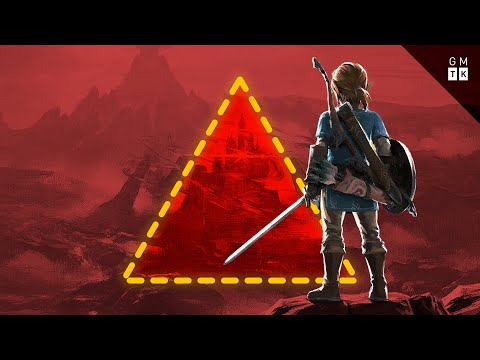 Gcreator of Game Maker's Toolkit testHow Nintendo Solved Zelda's Open World Problem
 Gcreator of Game Maker's Toolkit testHow Zelda's Puzzle Box Dungeons Work
 Gcreator of Game Maker's Toolkit testThe Rise of the Systemic Game
 Gcreator of Game Maker's Toolkit testThe Legend of Zelda: Breath of the Wild's dungeon design | Boss Keys
 Gcreator of Game Maker's Toolkit testThe Legend of Zelda: A Link Between Worlds' dungeon design | Boss Keys
 Gcreator of Game Maker's Toolkit testThe Legend of Zelda: Skyward Sword's dungeon design | Boss Keys
 Gcreator of Game Maker's Toolkit testThe Music of Breath of the Wild | GMTK Extra
 Gcreator of Game Maker's Toolkit testLegend of Zelda: Breath of the Wild - An Open World Adventure
 Gcreator of Game Maker's Toolkit testThe Legend of Zelda: Twilight Princess' dungeon design | Boss Keys
 Gcreator of Game Maker's Toolkit testThe Legend of Zelda: Oracle of Ages and Seasons' dungeon design | Boss Keys
 Gcreator of Game Maker's Toolkit testThe Legend of Zelda: Majora's Mask's dungeon design | Boss Keys
 Gcreator of Game Maker's Toolkit testThe Legend of Zelda: Ocarina of Time's dungeon design | Boss Keys
 Gcreator of Game Maker's Toolkit testWhat Makes a Game Feel Mysterious?
 Gcreator of Game Maker's Toolkit testWhy Capcom is the King of Remakes
 Gcreator of Game Maker's Toolkit testHow To Think Like A Game Designer
 Gcreator of Game Maker's Toolkit testThe World Design of Elden Ring
 Gcreator of Game Maker's Toolkit testHow Video Game Economies are Designed
 Gcreator of Game Maker's Toolkit testWait, Didn't Arkane Already Make Deathloop?
 Gcreator of Game Maker's Toolkit, making his first game testThe mistake every new game developer makes (Developing 2)
 Gcreator of Game Maker's Toolkit testHow to Turn Movement into a Game Mechanic
 Gcreator of Game Maker's Toolkit testThe Birth of the Japanese RPG | Design Icons
 Gcreator of Game Maker's Toolkit testClockwork Games and Time Loops
 Gcreator of Game Maker's Toolkit testThe World Design of Metroid Prime 2: Echoes | Boss Keys
 Gcreator of Game Maker's Toolkit testThe Tragedy of Halo 3: ODST
 Gcreator of Game Maker's Toolkit testThe World Design of Dark Souls | Boss Keys
 Gcreator of Game Maker's Toolkit testThe Design Behind Super Mario Odyssey
 Gcreator of Game Maker's Toolkit testWhat Makes Good AI?
 Gcreator of Game Maker's Toolkit testThe Legend of Zelda: The Minish Cap's dungeon design | Boss Keys
 Gcreator of Game Maker's Toolkit testFollowing the Little Dotted Line
Breath of the Wild audited Zelda's formula and rebuilt it around player-led play: systemic physics and chemistry, landmark-based guidance, and flashback story. Playtest heat maps showed 80 percent following towers and 20 wandering, so a web of visible landmarks replaced the route. Lesson: guide with curiosity, not hints, but vary repeated content (120 shrines) and keep some structure.
- Dungeon, item, boss, next area
- Fixed dungeon order
- Player follows designer's lead
- Only tutorial and Ganon mandatory
- Beasts and 120 shrines, any order
- Designer hands over toys, sets goal
Aonuma converted; later games pushed freedom further
From Mark Brown and Nintendo developer interviews
What was said about The Legend of Zelda: Breath of the Wild
1How Breath of the Wild broke the Zelda formula
Zelda had hardened into one repeated loop that Nintendo chose to tear up. After Ocarina of Time every Zelda followed the same structure: enter a dungeon, find an item, beat the boss, unlock the next part of the map. Skyward Sword followed it so closely that it felt like a paint-by-numbers parody, and Eiji Aonuma feared fans would stop playing.
In 2013 Aonuma promised a "newborn Zelda" that would re-think the series' conventions, naming fixed dungeon order and playing alone. Each game had its own world, tone and gimmick but the same skeleton. His order to the team: "Let's stop thinking about what Zelda has been up until now."
List every stress point in the formula and replace each one. Director Hidemaro Fujibayashi's team wrote down everything that made Zelda games less enjoyable and swapped each for a new idea. The first pitches were wild (UFO aliens, missile attacks, Lovecraftian monsters, a motorbike), but the real fix turned out to be structural.
"We wrote down all of the stress points, the things that make Zelda games less enjoyable, and we replaced them with new ideas."
Five structural changes moved Zelda from passive to active design. Breath of the Wild added a non-linear structure, a fully open world, laid-back hints, systems-driven problem-solving and a bigger moveset. Only the tutorial and the Ganon fight are mandatory; the four divine beasts and 120-odd shrines can be done in any order.
Fujibayashi calls older Zelda passive because the player follows the designer's lead. In an active game the designer builds a sandbox, hands over toys, sets a goal and lets the player get on with it. Call of Duty and The Last of Us sit at the passive end of that spectrum, Minecraft and Factorio at the active end.
Fresh eyes, fan requests and rival games fed the reinvention. The team leaned on younger staff who weren't set in their ways, on fans who wanted to explore the gaps between Skyward Sword's disconnected areas, and on playing Minecraft, Terraria and Skyrim, which Nintendo rarely admits.
Art director Satoru Takizawa: "You need to be creatively reckless."
The result converted Aonuma, so later games pushed freedom further. Aonuma once thought letting players get lost was a "sin", then learned "getting lost wasn't so bad after all". He now calls single-solution puzzles old design and asks why anyone would go back to a more restricted game.
Tears of the Kingdom added Ultrahand for gluing objects into vehicles after Nintendo watched players' stunts, and Ascend began as a debug tool for skipping content. Hideki Dohta: the aim is a game that "enables players to do exactly what they think they can do". Grezzo's Echoes of Wisdom kept the rule, with Sano saying limiting mechanics eases development but frustrates players.
Active and passive design are different, so the next Zelda may blend both. Mark Brown argues Breath of the Wild's philosophy isn't better than Ocarina of Time's, just different, and suits a different mood. The next game won't be a Tears sequel or reuse Ultrahand, and could pair a free overworld with classic-style dungeons.
Donkey Kong Bananza shows a blend: you can skip content freely, but it still hands out transformations across the adventure like classic Zelda items. "Sometimes I want to go on my own adventure across an uncharted landscape. But sometimes I just want to be delighted by a developer's carefully curated experience."
2Leading players with landmarks instead of a guide rope
- About 80 percent followed tower route
- 20 percent wandered randomly
- Wanderers got lost, found little
- Players explored landmark to landmark
- Almost all reached key locations
Freedom of choice without losing players
From Nintendo's 2017 CEDEC talk
Guiding players tower to tower worked so well it killed the feeling of choice. Nintendo first linked about 15 Sheikah Towers with roads lined with characters, camps and goodies. Playtesters complained of being trapped on "an invisible, but obvious guide rope", and those who left the line got lost or found little of interest.
Nintendo explained this at the 2017 CEDEC conference in Japan; the lecture was never uploaded and the details come from journalists' slides.
Playtest heat maps exposed the problem and later confirmed the fix. Plotting where testers walked showed a split: about 80 percent dutifully followed the tower route and 20 percent wandered randomly. After the redesign, the same heat map showed players exploring freely landmark to landmark while almost all still reached the key locations.
Many landmarks with clear benefits pull players like moths to a flame. Shrines raise health or stamina, enemy camps hold weapons, and stables, once just horse registration points, gained beds, a shop and NPCs with rumours and sidequests. Players follow a breadcrumb trail of interesting places rather than a line.
Appeal shifts with the player's need: shrines and camps win when seeking power, and night makes other places stand out.
Scarce resources turn the whole map into a reason to travel. Nintendo removed heart drops so players visit forests for mushrooms or hunt animals, and made rupees very rare so players mine ore in mountains and quarries to sell.
Small landmarks need silhouettes readable from far away. Shrines glow, campfires send up tall smoke, enemy bases sit around skull-shaped rocks, and stables are marked by a giant wooden horse.
"Wherever you look, you should find something interesting to do."
Triangle-shaped terrain hides most options and reveals a few at a time. Hyrule's hills and rocks are mostly pyramids and cones. They force a climb-or-go-around choice, draw the eye to a peak where Nintendo puts points of interest, and block what's behind so dozens of nearby landmarks don't overwhelm the player.
Cresting a hill reveals two or three new places, which pulls players off their plan; they remember the goal, head back, get distracted again, and eventually reach a tower. Brown calls it "an infinite loop of discoveries".
Let the world guide instead of companions and quest markers. Breath of the Wild drops the chatty helper and leads with terrain, harder enemy placement and curiosities. Only the four divine beasts get markers, and all four show on the mini-map at once in the map's corners so players take them in any order.
Elden Ring borrowed the approach, skipping question marks and checklists so players scan the horizon and feel they are investigating a world rather than cleaning up a map.
Nintendo calibrated scale by running Link around real Kyoto. Early tests used Google Maps data so Link could run around Kyoto and climb Himeji Castle, giving the team a feel for distance and density.
As Nintendo's first proper open world, it also needed all-new tools so a large team could work on a single map.
3The chemistry engine and systemic puzzles
Build the world from interacting properties so players invent solutions. Instead of one intended answer per puzzle, Breath of the Wild uses wind, fire, electricity, ice and gravity, which players exploit to solve puzzles, beat enemies and bypass obstacles. Brown calls Zelda's chemistry engine the furthest any game goes with environmental awareness.
Fujibayashi: "I really want players to relish those moments where you do something and think, oh my gosh, I'm a genius."
Rain shows how one system can reach into almost everything. Rain makes rock slippery to climb, hushes Link's footsteps, boosts electrical damage, turns fire arrows into normal arrows, puts out campfires, brings out the electric darner and sends people running for cover.
Puddles evaporate when the sun returns. Rolling weather also keeps systems out of equilibrium, producing unpredictable thunderstorms without the player pushing.
Accept any solution that follows the rules, even if it feels like cheating. In shrines, laying metal objects on the floor conducts electricity to a switch. When an electric ball is missing in Vah Naboris, a chest, sword, bow or shield can carry the current instead.
Consistent rules let players trust their plans; such solutions "might feel a bit like cheating", which is what makes systemic games fun.
Player-driven solutions also bring repetition and exploits. Open answers create surprise and delight, but just as often the same few cheesy tricks solve many challenges in Breath of the Wild and Tears of the Kingdom.
4Why weapons break
Breakable weapons make the safe, reliable route costly. Weapons turning to dust works as a drain on the player's arsenal, pushing them to try new swords, explore for replacements and attempt creative plans instead of repeating one dependable tactic.
Brown calls the choice controversial. Deathloop shows the opposite: its infusion system lets players keep favourites permanently, cancelling the forcing function that shattering weapons provide.
Durability shapes how players feel, not just what they carry. Breaking swords push players toward sneaking, ambushes and improvising, and create drama mid-fight. The resulting feelings are being underpowered, crafty, and an explorer in a decaying world.
5Zelda's puzzle box dungeons
Aonuma's clockwork puppet hobby shaped the series' shifting dungeons. Aonuma built Karakuri puppets, gear-driven marionettes, at university; that impressed Miyamoto, who put him in charge of Ocarina of Time's dungeons. The result was dungeons where the whole building is the puzzle.
Examples include the Water Temple's water depth, the robot elephant divine beast and Majora's Mask's Stone Tower flipping floor and ceiling.
A switch must change the dungeon somewhere other than where you stand. In the Water Temple a cracked wall can't be bombed underwater, so you must go to another room, set the water to floor two and return. If a button let you change the level on the spot, the puzzle would vanish.
This forces players to build a mental map of the dungeon and remember where to go back to.
Limited views and reversible states rule out trial and error. Seeing only your own room means predicting effects out of view, like solving a Rubik's cube from the inside. Settings can be flipped back and forth, so players must choose one with intention: three water levels in the Water Temple, four staircase positions in Lakebed Temple, 64 combinations in Vah Naboris.
A permanent change would tell the player it was right and let them stop thinking about the mechanism.
Each state should open some paths and close others. In Skyward Sword's Sandship you open a door in the present, then need the past to power the machine inside. In Twilight Princess's Ancient Cistern, lowering the elevator cuts off a chest, so you keep it raised and climb down a rope.
Majora's Mask's Great Bay Temple does the same with reversed water currents opening some tunnels and blocking others.
The same global thinking works in 2D and with rule-breaking dungeons. Oracle games' spinning platforms turn 90 degrees and flip, so you set one and then walk around the dungeon to use it. Link's Awakening's Eagle's Tower uses one irreversible change and a ball you must throw over gaps between floors.
Complexity made these dungeons polarising and Nintendo backed away. The Water Temple stalled progress, sent players to walkthroughs and required menu boot changes every few minutes, which Aonuma apologised for and the 3DS remake fixed. Wind Waker and Twilight Princess went simpler, and Skyward Sword buried its puzzles under hints from an aggravating sidekick.
Teach the rules, structure the space and keep help optional. Skyward Sword teaches timeshift stones in two areas before the Sandship. Hub and spoke layouts give players a base for their mental map, and the hardest puzzles can guard optional rewards, like reversing all of Lakebed Temple for a heart piece.
Hints are fine, but only after players have had a chance to try. Brown argues every Zelda should include one such dungeon, since no other game tests spatial reasoning this way.
6The divine beasts and Breath of the Wild's dungeons
The divine beasts drop keys, items and locked doors entirely. Link has all his powers from the start. Inside each beast you find the map terminal, activate a handful of terminals in any order, then the main terminal to fight the boss.
There are no separate rooms; doors appear only when a puzzle needs one. Brown: "You might as well chuck my graphs in the ocean for this game."
Moving the whole beast makes each one a puzzle box. The elephant's trunk has 10 positions, the salamander turns 90 degrees, the bird tips left or right, and the camel has three rotating chambers. Movement both carries Link around and solves puzzles.
Unlike the Stone Tower, which flips in a cutscene, the beasts move in real time with Link inside, so in Medoh he must hold a fan with magnesis while the tilt sends a hammer at a gong.
Putting dungeon controls in the menu made the puzzles too easy. Because beasts can be moved from the map screen anywhere, players can fiddle until things line up instead of planning, unlike the Sandship where you choose an era before going below deck. It saves backtracking but trivialises many puzzles.
Vah Naboris resists fiddling best: break a circuit to lower the tail, stand on it, fix the circuit to lift Link, or rotate a chamber so a caged terminal lines up with a window.
Puzzles are nearly all the beasts offer. Combat is a few guardian scouts, floating skulls and one boss, with no mini-bosses. All five share murky brown textures and understated music, and only Ruta has a clear flow from the water wheel up to the elephant's head.
The 120 shrines escalate one idea at a time and Hyrule Castle, with combat, branching paths and many entrances, comes closest to a classic dungeon. Elden Ring's catacombs were later compared to the shrines for feeling alike.
Free movement clashes with lock-and-key dungeon design. Classic temples need a narrow lock and key structure and hand-crafted solutions, so climbing, gliding and systemic tricks let players cheese the new dungeons. In Tears of the Kingdom you can phase through the floor and skip half the puzzles.
Brown skipped a Boss Keys episode on Tears of the Kingdom for that reason.
7What the open design cost
Front-loading every ability ended the steady drip of new items. Because Nintendo never wants you at a shrine needing an ability you lack, nearly all mechanics arrive in the tutorial. Revali's Gale is the only dungeon reward that adds a new wrinkle to the moveset.
Classic Zelda gave an item per dungeon, so players always wondered what ability was around the corner.
Telling the story as found memories fixed a 25-year problem, at a price. Miyamoto said in 1992 that the open 1986 Zelda made the plotline go screwy and NPC messages stop making sense, so A Link to the Past tightened structure. Breath of the Wild sets its story in the past as memories found at locations, so order doesn't matter.
Brown's criticism: the jumbled memories have "no emotional escalation, no dramatic timing, no pace, no structure, no arcs."
Huge worlds can feel empty compared with crafted spaces. The new Hyrule must be massive, so it can feel empty, soulless and repetitive, even algorithm-generated, while Ocarina of Time's hand-crafted spaces have resonated for decades.
8Smaller lessons from across the series
Some rules should stay deliberately unknowable. What a cook-pot mix will produce is cited as a rule Zelda rightly leaves ambiguous, alongside Super Metroid's untaught wall jump.
Zelda's classic mechanics are both models and cautionary tales for other designers. The hookshot locks Link into a fixed animation, the opposite of Titanfall 2's steerable grapple. Oracle of Seasons' magnetic glove, held back by a top-down Game Boy view, inspired Mark Brown's platformer Mind Over Magnet.
Zelda 1's unsignposted bombable walls were the model for Dark Souls' illusory walls, and Zelda's instant teleport out after a boss is what Metroid Prime 2 forgot to borrow.
The open world responds to the player and rebalances itself. Changes like Tarrey Town being built happen only in response to the player, and Breath of the Wild drops stronger enemies in after a number of kills to handle open-world difficulty.
Nintendo polishes old flaws with small tweaks. The Wind Waker Wii U version sped up a contentious late-game fetch quest after the team discussed what they wished they had done differently.
The 1986 original turned RPGs into real-time action. The Legend of Zelda joined the 1984 to 1986 wave of real-time action RPGs, with Miyamoto citing The Black Onyx and Ultima as influences.
Has Zelda Changed Forever?
Zelda hardened into a linear dungeon, item, boss loop after Ocarina of Time. Breath of the Wild turned it into an active, player-led series with five structural changes, and Nintendo plans to keep that direction, possibly blending in classic-style dungeons.
Zelda had hardened into one repeated loop that Nintendo chose to tear up. After Ocarina of Time every Zelda followed the same structure: enter a dungeon, find an item, beat the boss, unlock the next part of the map. Skyward Sword followed it so closely that it felt like a paint-by-numbers parody, and Eiji Aonuma feared fans would stop playing.
In 2013 Aonuma promised a "newborn Zelda" that would re-think the series' conventions, naming fixed dungeon order and playing alone. Each game had its own world, tone and gimmick but the same skeleton. His order to the team: "Let's stop thinking about what Zelda has been up until now."
List every stress point in the formula and replace each one. Director Hidemaro Fujibayashi's team wrote down everything that made Zelda games less enjoyable and swapped each for a new idea. The first pitches were wild (UFO aliens, missile attacks, Lovecraftian monsters, a motorbike), but the real fix turned out to be structural.
"We wrote down all of the stress points, the things that make Zelda games less enjoyable, and we replaced them with new ideas."
Five structural changes moved Zelda from passive to active design. Breath of the Wild added a non-linear structure, a fully open world, laid-back hints, systems-driven problem-solving and a bigger moveset. Only the tutorial and the Ganon fight are mandatory; the four divine beasts and 120-odd shrines can be done in any order.
Fujibayashi calls older Zelda passive because the player follows the designer's lead. In an active game the designer builds a sandbox, hands over toys, sets a goal and lets the player get on with it. Call of Duty and The Last of Us sit at the passive end of that spectrum, Minecraft and Factorio at the active end.
Fresh eyes, fan requests and rival games fed the reinvention. The team leaned on younger staff who weren't set in their ways, on fans who wanted to explore the gaps between Skyward Sword's disconnected areas, and on playing Minecraft, Terraria and Skyrim, which Nintendo rarely admits.
Art director Satoru Takizawa: "You need to be creatively reckless."
The result converted Aonuma, so later games pushed freedom further. Aonuma once thought letting players get lost was a "sin", then learned "getting lost wasn't so bad after all". He now calls single-solution puzzles old design and asks why anyone would go back to a more restricted game.
Tears of the Kingdom added Ultrahand for gluing objects into vehicles after Nintendo watched players' stunts, and Ascend began as a debug tool for skipping content. Hideki Dohta: the aim is a game that "enables players to do exactly what they think they can do". Grezzo's Echoes of Wisdom kept the rule, with Sano saying limiting mechanics eases development but frustrates players.
Active and passive design are different, so the next Zelda may blend both. Mark Brown argues Breath of the Wild's philosophy isn't better than Ocarina of Time's, just different, and suits a different mood. The next game won't be a Tears sequel or reuse Ultrahand, and could pair a free overworld with classic-style dungeons.
Donkey Kong Bananza shows a blend: you can skip content freely, but it still hands out transformations across the adventure like classic Zelda items. "Sometimes I want to go on my own adventure across an uncharted landscape. But sometimes I just want to be delighted by a developer's carefully curated experience."
Let the world guide instead of companions and quest markers. Breath of the Wild drops the chatty helper and leads with terrain, harder enemy placement and curiosities. Only the four divine beasts get markers, and all four show on the mini-map at once in the map's corners so players take them in any order.
Elden Ring borrowed the approach, skipping question marks and checklists so players scan the horizon and feel they are investigating a world rather than cleaning up a map.
Build the world from interacting properties so players invent solutions. Instead of one intended answer per puzzle, Breath of the Wild uses wind, fire, electricity, ice and gravity, which players exploit to solve puzzles, beat enemies and bypass obstacles. Brown calls Zelda's chemistry engine the furthest any game goes with environmental awareness.
Fujibayashi: "I really want players to relish those moments where you do something and think, oh my gosh, I'm a genius."
Player-driven solutions also bring repetition and exploits. Open answers create surprise and delight, but just as often the same few cheesy tricks solve many challenges in Breath of the Wild and Tears of the Kingdom.
Free movement clashes with lock-and-key dungeon design. Classic temples need a narrow lock and key structure and hand-crafted solutions, so climbing, gliding and systemic tricks let players cheese the new dungeons. In Tears of the Kingdom you can phase through the floor and skip half the puzzles.
Brown skipped a Boss Keys episode on Tears of the Kingdom for that reason.
Front-loading every ability ended the steady drip of new items. Because Nintendo never wants you at a shrine needing an ability you lack, nearly all mechanics arrive in the tutorial. Revali's Gale is the only dungeon reward that adds a new wrinkle to the moveset.
Classic Zelda gave an item per dungeon, so players always wondered what ability was around the corner.
Telling the story as found memories fixed a 25-year problem, at a price. Miyamoto said in 1992 that the open 1986 Zelda made the plotline go screwy and NPC messages stop making sense, so A Link to the Past tightened structure. Breath of the Wild sets its story in the past as memories found at locations, so order doesn't matter.
Brown's criticism: the jumbled memories have "no emotional escalation, no dramatic timing, no pace, no structure, no arcs."
Huge worlds can feel empty compared with crafted spaces. The new Hyrule must be massive, so it can feel empty, soulless and repetitive, even algorithm-generated, while Ocarina of Time's hand-crafted spaces have resonated for decades.
What Makes a Game Feel Mysterious?
A gigantic flaming dragon weaving through a moonless sky and vanishing at the blood moon made it feel mysterious, and Mark Brown just wanted to know what it was. Zelda's cook pot is cited as a rule that should stay unknowable.
Some rules should stay deliberately unknowable. What a cook-pot mix will produce is cited as a rule Zelda rightly leaves ambiguous, alongside Super Metroid's untaught wall jump.
How Nintendo Solved Zelda's Open World Problem
Nintendo's first tower-to-tower route felt like an invisible guide rope, with a heat map split of 80 percent following towers and 20 percent wandering. It replaced the route with many visible landmarks, using triangle terrain and scarce resources, so players explored freely yet nearly all reached key locations.
Guiding players tower to tower worked so well it killed the feeling of choice. Nintendo first linked about 15 Sheikah Towers with roads lined with characters, camps and goodies. Playtesters complained of being trapped on "an invisible, but obvious guide rope", and those who left the line got lost or found little of interest.
Nintendo explained this at the 2017 CEDEC conference in Japan; the lecture was never uploaded and the details come from journalists' slides.
Playtest heat maps exposed the problem and later confirmed the fix. Plotting where testers walked showed a split: about 80 percent dutifully followed the tower route and 20 percent wandered randomly. After the redesign, the same heat map showed players exploring freely landmark to landmark while almost all still reached the key locations.
Many landmarks with clear benefits pull players like moths to a flame. Shrines raise health or stamina, enemy camps hold weapons, and stables, once just horse registration points, gained beds, a shop and NPCs with rumours and sidequests. Players follow a breadcrumb trail of interesting places rather than a line.
Appeal shifts with the player's need: shrines and camps win when seeking power, and night makes other places stand out.
Scarce resources turn the whole map into a reason to travel. Nintendo removed heart drops so players visit forests for mushrooms or hunt animals, and made rupees very rare so players mine ore in mountains and quarries to sell.
Small landmarks need silhouettes readable from far away. Shrines glow, campfires send up tall smoke, enemy bases sit around skull-shaped rocks, and stables are marked by a giant wooden horse.
"Wherever you look, you should find something interesting to do."
Triangle-shaped terrain hides most options and reveals a few at a time. Hyrule's hills and rocks are mostly pyramids and cones. They force a climb-or-go-around choice, draw the eye to a peak where Nintendo puts points of interest, and block what's behind so dozens of nearby landmarks don't overwhelm the player.
Cresting a hill reveals two or three new places, which pulls players off their plan; they remember the goal, head back, get distracted again, and eventually reach a tower. Brown calls it "an infinite loop of discoveries".
Let the world guide instead of companions and quest markers. Breath of the Wild drops the chatty helper and leads with terrain, harder enemy placement and curiosities. Only the four divine beasts get markers, and all four show on the mini-map at once in the map's corners so players take them in any order.
Elden Ring borrowed the approach, skipping question marks and checklists so players scan the horizon and feel they are investigating a world rather than cleaning up a map.
Nintendo calibrated scale by running Link around real Kyoto. Early tests used Google Maps data so Link could run around Kyoto and climb Himeji Castle, giving the team a feel for distance and density.
As Nintendo's first proper open world, it also needed all-new tools so a large team could work on a single map.
Why Capcom is the King of Remakes
After its release the team discussed what they wished they had done differently, and the Wii U version speeds up a contentious late-game fetch quest.
Nintendo polishes old flaws with small tweaks. The Wind Waker Wii U version sped up a contentious late-game fetch quest after the team discussed what they wished they had done differently.
How To Think Like A Game Designer
Breakable swords push players toward sneaking, ambushes, improvising and constantly seeking new weapons. The resulting feelings are underpowered, crafty and like an explorer in a decaying world.
Durability shapes how players feel, not just what they carry. Breaking swords push players toward sneaking, ambushes and improvising, and create drama mid-fight. The resulting feelings are being underpowered, crafty, and an explorer in a decaying world.
The World Design of Elden Ring
Players scan the horizon for landmarks, as in Elden Ring, and its regions all border each other. It adds stronger enemies after a number of kills, and its shrines feel as alike as Elden Ring's catacombs.
Let the world guide instead of companions and quest markers. Breath of the Wild drops the chatty helper and leads with terrain, harder enemy placement and curiosities. Only the four divine beasts get markers, and all four show on the mini-map at once in the map's corners so players take them in any order.
Elden Ring borrowed the approach, skipping question marks and checklists so players scan the horizon and feel they are investigating a world rather than cleaning up a map.
Puzzles are nearly all the beasts offer. Combat is a few guardian scouts, floating skulls and one boss, with no mini-bosses. All five share murky brown textures and understated music, and only Ruta has a clear flow from the water wheel up to the elephant's head.
The 120 shrines escalate one idea at a time and Hyrule Castle, with combat, branching paths and many entrances, comes closest to a classic dungeon. Elden Ring's catacombs were later compared to the shrines for feeling alike.
The open world responds to the player and rebalances itself. Changes like Tarrey Town being built happen only in response to the player, and Breath of the Wild drops stronger enemies in after a number of kills to handle open-world difficulty.
How Video Game Economies are Designed
Breakable weapons act as a drain, pushing players to try new swords and explore for replacements.
Breakable weapons make the safe, reliable route costly. Weapons turning to dust works as a drain on the player's arsenal, pushing them to try new swords, explore for replacements and attempt creative plans instead of repeating one dependable tactic.
Brown calls the choice controversial. Deathloop shows the opposite: its infusion system lets players keep favourites permanently, cancelling the forcing function that shattering weapons provide.
Wait, Didn't Arkane Already Make Deathloop?
Its shattering weapons are the model for forcing players to try new tools, which Deathloop's infusion cancels out by keeping favourites permanently.
Breakable weapons make the safe, reliable route costly. Weapons turning to dust works as a drain on the player's arsenal, pushing them to try new swords, explore for replacements and attempt creative plans instead of repeating one dependable tactic.
Brown calls the choice controversial. Deathloop shows the opposite: its infusion system lets players keep favourites permanently, cancelling the forcing function that shattering weapons provide.
The mistake every new game developer makes (Developing 2)
Its magnetic glove inspired Mind Over Magnet. The top-down view and Game Boy hardware limited the idea, so Mark moved it into a fast 2D platformer.
Zelda's classic mechanics are both models and cautionary tales for other designers. The hookshot locks Link into a fixed animation, the opposite of Titanfall 2's steerable grapple. Oracle of Seasons' magnetic glove, held back by a top-down Game Boy view, inspired Mark Brown's platformer Mind Over Magnet.
Zelda 1's unsignposted bombable walls were the model for Dark Souls' illusory walls, and Zelda's instant teleport out after a boss is what Metroid Prime 2 forgot to borrow.
How to Turn Movement into a Game Mechanic
The hookshot locks Link into an unstoppable animation along one predetermined path, the opposite of an analogue grapple.
Zelda's classic mechanics are both models and cautionary tales for other designers. The hookshot locks Link into a fixed animation, the opposite of Titanfall 2's steerable grapple. Oracle of Seasons' magnetic glove, held back by a top-down Game Boy view, inspired Mark Brown's platformer Mind Over Magnet.
Zelda 1's unsignposted bombable walls were the model for Dark Souls' illusory walls, and Zelda's instant teleport out after a boss is what Metroid Prime 2 forgot to borrow.
How Zelda's Puzzle Box Dungeons Work
Its puzzle box dungeons turn the whole dungeon into a puzzle, where switches reshape distant rooms and players must plan the layout. Examples include the Water Temple's 3 water levels and Vah Naboris's 64 combinations, and the video argues Nintendo should keep making them.
Aonuma's clockwork puppet hobby shaped the series' shifting dungeons. Aonuma built Karakuri puppets, gear-driven marionettes, at university; that impressed Miyamoto, who put him in charge of Ocarina of Time's dungeons. The result was dungeons where the whole building is the puzzle.
Examples include the Water Temple's water depth, the robot elephant divine beast and Majora's Mask's Stone Tower flipping floor and ceiling.
A switch must change the dungeon somewhere other than where you stand. In the Water Temple a cracked wall can't be bombed underwater, so you must go to another room, set the water to floor two and return. If a button let you change the level on the spot, the puzzle would vanish.
This forces players to build a mental map of the dungeon and remember where to go back to.
Limited views and reversible states rule out trial and error. Seeing only your own room means predicting effects out of view, like solving a Rubik's cube from the inside. Settings can be flipped back and forth, so players must choose one with intention: three water levels in the Water Temple, four staircase positions in Lakebed Temple, 64 combinations in Vah Naboris.
A permanent change would tell the player it was right and let them stop thinking about the mechanism.
Each state should open some paths and close others. In Skyward Sword's Sandship you open a door in the present, then need the past to power the machine inside. In Twilight Princess's Ancient Cistern, lowering the elevator cuts off a chest, so you keep it raised and climb down a rope.
Majora's Mask's Great Bay Temple does the same with reversed water currents opening some tunnels and blocking others.
The same global thinking works in 2D and with rule-breaking dungeons. Oracle games' spinning platforms turn 90 degrees and flip, so you set one and then walk around the dungeon to use it. Link's Awakening's Eagle's Tower uses one irreversible change and a ball you must throw over gaps between floors.
Complexity made these dungeons polarising and Nintendo backed away. The Water Temple stalled progress, sent players to walkthroughs and required menu boot changes every few minutes, which Aonuma apologised for and the 3DS remake fixed. Wind Waker and Twilight Princess went simpler, and Skyward Sword buried its puzzles under hints from an aggravating sidekick.
Teach the rules, structure the space and keep help optional. Skyward Sword teaches timeshift stones in two areas before the Sandship. Hub and spoke layouts give players a base for their mental map, and the hardest puzzles can guard optional rewards, like reversing all of Lakebed Temple for a heart piece.
Hints are fine, but only after players have had a chance to try. Brown argues every Zelda should include one such dungeon, since no other game tests spatial reasoning this way.
Putting dungeon controls in the menu made the puzzles too easy. Because beasts can be moved from the map screen anywhere, players can fiddle until things line up instead of planning, unlike the Sandship where you choose an era before going below deck. It saves backtracking but trivialises many puzzles.
Vah Naboris resists fiddling best: break a circuit to lower the tail, stand on it, fix the circuit to lift Link, or rotate a chamber so a caged terminal lines up with a window.
The Birth of the Japanese RPG | Design Icons
Part of the 1984 to 1986 wave of real-time action RPGs, it drew on The Black Onyx and Ultima, according to Miyamoto.
The 1986 original turned RPGs into real-time action. The Legend of Zelda joined the 1984 to 1986 wave of real-time action RPGs, with Miyamoto citing The Black Onyx and Ultima as influences.
Clockwork Games and Time Loops
Its world changes in response to the player, such as Tarrey Town being built. This contrasts with clock-driven worlds that move on regardless of you.
The open world responds to the player and rebalances itself. Changes like Tarrey Town being built happen only in response to the player, and Breath of the Wild drops stronger enemies in after a number of kills to handle open-world difficulty.
The World Design of Metroid Prime 2: Echoes | Boss Keys
Its dungeon structure is the model for Prime 2's temples, and it gives instant teleport out of a dungeon after a boss. Oracle of Ages does cross-time puzzles well in the Mermaid's Cave, where the past changes the present.
Zelda's classic mechanics are both models and cautionary tales for other designers. The hookshot locks Link into a fixed animation, the opposite of Titanfall 2's steerable grapple. Oracle of Seasons' magnetic glove, held back by a top-down Game Boy view, inspired Mark Brown's platformer Mind Over Magnet.
Zelda 1's unsignposted bombable walls were the model for Dark Souls' illusory walls, and Zelda's instant teleport out after a boss is what Metroid Prime 2 forgot to borrow.
The Tragedy of Halo 3: ODST
Solves the fixed story versus free exploration problem by telling its story in flashbacks found at memorable locations, after Nintendo took about 25 years to find the answer. It shows all four Divine Beast waypoints at once so players can travel in any order. The 1986 original let players enter dungeons at will, and Miyamoto said in 1992 that its open design made the plotline screwy and NPC messages stop making sense. A Link to the Past tightened the structure.
Let the world guide instead of companions and quest markers. Breath of the Wild drops the chatty helper and leads with terrain, harder enemy placement and curiosities. Only the four divine beasts get markers, and all four show on the mini-map at once in the map's corners so players take them in any order.
Elden Ring borrowed the approach, skipping question marks and checklists so players scan the horizon and feel they are investigating a world rather than cleaning up a map.
Telling the story as found memories fixed a 25-year problem, at a price. Miyamoto said in 1992 that the open 1986 Zelda made the plotline go screwy and NPC messages stop making sense, so A Link to the Past tightened structure. Breath of the Wild sets its story in the past as memories found at locations, so order doesn't matter.
Brown's criticism: the jumbled memories have "no emotional escalation, no dramatic timing, no pace, no structure, no arcs."
The World Design of Dark Souls | Boss Keys
Its bombable walls with no signposting are the model for Dark Souls' illusory walls, which hide bonfires, treasure and whole areas.
Zelda's classic mechanics are both models and cautionary tales for other designers. The hookshot locks Link into a fixed animation, the opposite of Titanfall 2's steerable grapple. Oracle of Seasons' magnetic glove, held back by a top-down Game Boy view, inspired Mark Brown's platformer Mind Over Magnet.
Zelda 1's unsignposted bombable walls were the model for Dark Souls' illusory walls, and Zelda's instant teleport out after a boss is what Metroid Prime 2 forgot to borrow.
The Rise of the Systemic Game
Rain changes climbing, stealth and damage, hushes footsteps, turns fire arrows into regular arrows and brings out the electric darner. Rolling weather creates unpredictable thunderstorms, metal laid on the floor conducts electricity in shrines, and weapons break to push players toward creative plans.
Build the world from interacting properties so players invent solutions. Instead of one intended answer per puzzle, Breath of the Wild uses wind, fire, electricity, ice and gravity, which players exploit to solve puzzles, beat enemies and bypass obstacles. Brown calls Zelda's chemistry engine the furthest any game goes with environmental awareness.
Fujibayashi: "I really want players to relish those moments where you do something and think, oh my gosh, I'm a genius."
Rain shows how one system can reach into almost everything. Rain makes rock slippery to climb, hushes Link's footsteps, boosts electrical damage, turns fire arrows into normal arrows, puts out campfires, brings out the electric darner and sends people running for cover.
Puddles evaporate when the sun returns. Rolling weather also keeps systems out of equilibrium, producing unpredictable thunderstorms without the player pushing.
Accept any solution that follows the rules, even if it feels like cheating. In shrines, laying metal objects on the floor conducts electricity to a switch. When an electric ball is missing in Vah Naboris, a chest, sword, bow or shield can carry the current instead.
Consistent rules let players trust their plans; such solutions "might feel a bit like cheating", which is what makes systemic games fun.
Breakable weapons make the safe, reliable route costly. Weapons turning to dust works as a drain on the player's arsenal, pushing them to try new swords, explore for replacements and attempt creative plans instead of repeating one dependable tactic.
Brown calls the choice controversial. Deathloop shows the opposite: its infusion system lets players keep favourites permanently, cancelling the forcing function that shattering weapons provide.
The Legend of Zelda: Breath of the Wild's dungeon design | Boss Keys
Its divine beasts are open, keyless puzzle box dungeons that are appealing for how they move, but weak pacing, bland interiors and easy puzzles keep them from nailing the concept. The 120 shrines escalate one idea at a time, and Hyrule Castle works as the closest thing to a classic dungeon. In the Sandship, the time stone sits far from the doors it controls, so players must choose an era before going below deck. One room is a puzzle only because the stone is outside it, solved by spotting it through a ceiling grate. The Stone Tower flips during a cutscene, which contrasts with the divine beasts moving in real time while Link is inside.
Accept any solution that follows the rules, even if it feels like cheating. In shrines, laying metal objects on the floor conducts electricity to a switch. When an electric ball is missing in Vah Naboris, a chest, sword, bow or shield can carry the current instead.
Consistent rules let players trust their plans; such solutions "might feel a bit like cheating", which is what makes systemic games fun.
Aonuma's clockwork puppet hobby shaped the series' shifting dungeons. Aonuma built Karakuri puppets, gear-driven marionettes, at university; that impressed Miyamoto, who put him in charge of Ocarina of Time's dungeons. The result was dungeons where the whole building is the puzzle.
Examples include the Water Temple's water depth, the robot elephant divine beast and Majora's Mask's Stone Tower flipping floor and ceiling.
The divine beasts drop keys, items and locked doors entirely. Link has all his powers from the start. Inside each beast you find the map terminal, activate a handful of terminals in any order, then the main terminal to fight the boss.
There are no separate rooms; doors appear only when a puzzle needs one. Brown: "You might as well chuck my graphs in the ocean for this game."
Moving the whole beast makes each one a puzzle box. The elephant's trunk has 10 positions, the salamander turns 90 degrees, the bird tips left or right, and the camel has three rotating chambers. Movement both carries Link around and solves puzzles.
Unlike the Stone Tower, which flips in a cutscene, the beasts move in real time with Link inside, so in Medoh he must hold a fan with magnesis while the tilt sends a hammer at a gong.
Putting dungeon controls in the menu made the puzzles too easy. Because beasts can be moved from the map screen anywhere, players can fiddle until things line up instead of planning, unlike the Sandship where you choose an era before going below deck. It saves backtracking but trivialises many puzzles.
Vah Naboris resists fiddling best: break a circuit to lower the tail, stand on it, fix the circuit to lift Link, or rotate a chamber so a caged terminal lines up with a window.
Puzzles are nearly all the beasts offer. Combat is a few guardian scouts, floating skulls and one boss, with no mini-bosses. All five share murky brown textures and understated music, and only Ruta has a clear flow from the water wheel up to the elephant's head.
The 120 shrines escalate one idea at a time and Hyrule Castle, with combat, branching paths and many entrances, comes closest to a classic dungeon. Elden Ring's catacombs were later compared to the shrines for feeling alike.
Free movement clashes with lock-and-key dungeon design. Classic temples need a narrow lock and key structure and hand-crafted solutions, so climbing, gliding and systemic tricks let players cheese the new dungeons. In Tears of the Kingdom you can phase through the floor and skip half the puzzles.
Brown skipped a Boss Keys episode on Tears of the Kingdom for that reason.
The Design Behind Super Mario Odyssey
Odyssey's sandbox kingdoms borrow its habit of dotting the world with intriguing sights that tease you to explore every corner, though Mario's stages are more densely packed than Hyrule.
The Legend of Zelda: A Link Between Worlds' dungeon design | Boss Keys
Lets you tackle most dungeons in any order after Eastern Palace, with items rented from Ravio. This frees the overworld and brings back lock and key dungeons, but flattens difficulty and puzzle depth. It runs at 60 fps with fast, free movement. Its Forest Temple is lock and key, Water Temple is puzzle box, and Shadow Temple is gauntlet, showing all three dungeon types in one game. It offers some mid-game order choices, but you must ignore Sheik's instructions. Put light world dungeons before dark world ones and numbered them on the map. A Link Between Worlds echoes it as a quasi-sequel and quasi-remake with all new layouts. Let you explore by curiosity, but could stop you mid-dungeon for lack of the stepladder. Is described as feeling like following a GPS on a straight road, the end point of Zelda's growing linearity. It leans puzzle box in dungeon style. Serves as the benchmark for improvised puzzle solutions, which A Link Between Worlds does not reach. It leans puzzle box in dungeon style.
What Makes Good AI?
Enemies pick up weapons, set clubs alight, kick away bombs and throw other monsters. You can also trick an enemy into attacking a Cucco.
The Legend of Zelda: Skyward Sword's dungeon design | Boss Keys
Revives Zelda's whole-dungeon design by letting players change the dungeon itself, as in the Sandship's single timeshift stone and Skykeep's shifting rooms. Hand-holding from Fi and a tablet, plus simple dungeons like the Earth Temple and Fire Sanctuary, blunt the revival. Zelda 1 set the template of a macro challenge of finding the boss room, wrapped in micro challenges like block puzzles and enemies. Turned dungeons into easy chains of separate rooms with fewer branches and guided progression, a pattern that became the norm. Its dizzy eyes motif later reappears in Skyview Temple. Its Stone Tower Temple flips upside down and Great Bay Temple switches water direction, examples of players rearranging the dungeon itself. Skyward Sword revives shifting architecture not seen since. Its Water Temple, with changeable water levels, is cited as a dungeon where the switch sits far from its effect.
The Music of Breath of the Wild | GMTK Extra
Its score uses quiet piano and silence for a melancholy ruined kingdom, varies music by region and time of day, hides classic themes as rewards, and uses music to guide and warn the player. Tarrey Town's song, which grows with each new arrival, is the reviewer's favourite and stands as a rare sign of hope. Its music sounds heroic, and Goron City, Zora's Domain and Gerudo City themes in Breath of the Wild reference its tunes. Its score sounds optimistic, and its Dragon Roost Island theme, one of the reviewer's favourite Zelda songs, is referenced in Breath of the Wild's Rito Village, which gave him a real moment. Its music sounds foreboding, an example of Nintendo matching each Zelda game's score to its vibe. Its light world dungeon music is echoed by a track in Breath of the Wild and its shrine music. Its Dungeon 9 music matches the Death Mountain theme in Breath of the Wild.
Legend of Zelda: Breath of the Wild - An Open World Adventure
Uses its open world for one purpose, adventure. Only a tutorial and the final fight are required, towers add no activity icons, and an early Lynel loss turned into a win 50 hours later.
The Legend of Zelda: Twilight Princess' dungeon design | Boss Keys
Six dungeons share one looping layout with a central room you return to three times, hidden behind atmosphere, items and memorable moments. Mark loves its personality, but the dungeons don't grow in complexity and the bosses are easier than ever. Dying restarts you at the last door, so no warp pots are needed. Its dungeons had warp pots to skip ahead, which Twilight Princess drops because its loop keeps everything close to the central room.
The Legend of Zelda: The Minish Cap's dungeon design | Boss Keys
Nearly all of its dungeons are follow-the-path, guiding the player to where each key item is used. The Cane of Pacci loop in Cave of Flames is compared to its style of guidance.
The Legend of Zelda: Oracle of Ages and Seasons' dungeon design | Boss Keys
Its dungeons are puzzle-focused, and Mermaid's Cave is the only dungeon to use either game's gimmick, as past actions change the present. Jabu-Jabu's Belly has a very complex graph and is hard to read in 2D as the water level moves. Its first dungeon, Gnarled Root, is the worked example of the formula, with Ember Seeds lighting lanterns on the way back. The Dancing Dragon Dungeon lets you find several keys at once, adding non-linearity. Its Shadow Temple has one bit of backtracking, no choice of keys or locks, and little explorable space. Its 3D Water Temple shows floating platforms clearly, and its central rooms help orient players. It makes the simple formula complex with many unique locks and keys. Great Bay Temple has one small key but needs red valves for the water wheel and green valves for the pipes, and its Stone Tower Temple graph is overwhelming until stripped back. It bends the formula by giving you the big key before the key item. Palace of Darkness has more keys than locks, with one locked door leading to an optional room, and Tower of Hera never needs the moon pearl for a puzzle. Its dungeon layouts are very like the Oracle games, and the Oracle dungeons build on its find-the-item, backtrack, get-the-boss-key, beat-the-boss setup.
The Legend of Zelda: Majora's Mask's dungeon design | Boss Keys
Built in one year on Ocarina of Time's engine and models, yet it is crazy ambitious, with a time loop, a Groundhog Day-style side quest and four dungeons that make players understand then change 3D spaces. The game has only nine keys, and its difficulty comes from architecture, though stray fairies and the three-day timer add frustration. Took four years to make, against Majora's Mask's one year. Its Water Temple has a tangled critical path because keys can be found out of order, while the Shadow Temple has a simple straight path.
The Legend of Zelda: Ocarina of Time's dungeon design | Boss Keys
Its 3D dungeons look distinct and feel connected, but most force one linear route through chained locked doors. Only the Water Temple, with its three-way water puzzle, restores the non-linear design a Zelda dungeon should have. It let players choose which door a small key opened, giving non-linear exploration that Ocarina lacks. Its Eagle's Tower has the same one-time switch as Ocarina's Fire Temple pillar, and its ball is echoed by carrying Princess Ruto.
Following the Little Dotted Line
Players hit goddess stones to unlock goddess chests, an added step that builds anticipation for the reward.
More in Games
 Games
Nintendo
A Zelda adventure where Princess Zelda copies objects and monsters as echoes to solve puzzles and fight.
 Games
Dead Space
A major video game publisher and the guest's employer.
 G
 29 sources · 94 tips
Mind Over Magnet
A puzzle platformer where you escape a factory using a magnet and a magnetic field.
 Games
Far Cry 2
An open world action game where you recruit and play any of London's citizens.
 Games
God of War
A combat-focused action adventure game from Santa Monica Studio with Norse mythology and light puzzles.
Mind Over Magnet
Mark Brown's first game, a puzzle game he made while learning Unity.
 Games
Dishonored
A first-person stealth action game from Arkane with supernatural powers and the Clockwork Mansion level.
 Games
Hitman
An open stealth assassination game where players hunt targets in large, sandbox-style levels.