
Dishonored
A first-person stealth action game from Arkane with supernatural powers and the Clockwork Mansion level.
Where Dishonored comes up11 episodes and tests
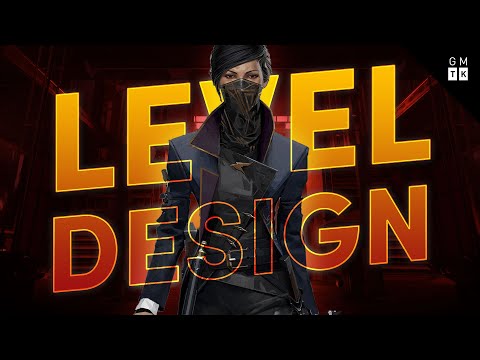 GArkane level designer and level artist on Dishonored 2, talking with the creator of Game Maker's Toolkit testDishonored 2 Devs Explain the Clockwork Mansion
 Gcreator of Game Maker's Toolkit testHow do Stealth Games Deal with Detection? - School of Stealth Part 3
 Gcreator of Game Maker's Toolkit test5 Amazing Levels from 2017
 Gcreator of Game Maker's Toolkit testWhy do God of War's Characters Keep Spoiling Puzzles?
 Gcreator of Game Maker's Toolkit testHow To Combine Video Game Genres
 Gcreator of Game Maker's Toolkit testThe Power of Invisible Choices
 Gcreator of Game Maker's Toolkit testThe Five Types of Stealth Game Gadget - School of Stealth Part 2
 Gcreator of Game Maker's Toolkit testThe Genius of Prey's Gloo Cannon
 Gcreator of Game Maker's Toolkit testHow Level Design Can Tell a Story
 Gcreator of Game Maker's Toolkit testImproving Games for Those with Cognitive Disabilities | Designing for Disability
 Gcreator of Game Maker's Toolkit testThe Year Stealth Games Got Serious
Arkane's Dishonored shows how stealth games shape behavior. The chaos meter gives each kill a hidden stake, yet playtests found some players thought the game was linear because they missed their choices. Players also quick loaded when spotted, so Dishonored 2 added a fuzzy detection state. Lesson: make consequences visible, plant hints in-world, and cut scope while keeping the core idea.
- Impossible maze to navigate
- Moved via destination panels
- Level acts as antagonist
- Mastery impossible
- Players trigger transformations deliberately
- Rooms move to reach goals
- Level becomes part of toolset
Hostile maze dropped; the mansion became a tool players master
From Dana Nightingale on the Clockwork Mansion
What was said about Dishonored
1How Arkane built the Clockwork Mansion
Prototype the core idea before any layout or challenge exists. Dana Nightingale started the Clockwork Mansion with only three fixed things: the inventor Jindosh, Sokolov's role and the clockwork soldiers. She prototyped different moving rooms and layouts first, and those prototypes then shaped the map.
She picked the clockwork inventor's mansion at first sight from a long list of level ideas after finishing The Knife of Dunwall. A redux of the masquerade ball was prototyped and dropped because the team did not want to "out-Boyle Lady Boyle." Nightingale designed the layout and beats with flowcharts and prototypes, while artist David Di Giacomo built the mansion and its mechanisms.
Pair the level's theme with a mechanic for entering the machinery. From day zero the mansion split the space for normal people from the guts of the building where a supernatural assassin can go. The level takes Dishonored's usual threshold between those spaces further by letting players move inside the mechanisms themselves.
Quote: "this divide between the space for normal people and the space where the player could go in the guts of the building."
Design the transition of a moving room, not just its end states. Every prototype was built around what can happen during a transformation, not only the before and after configurations. That is why rooms change slowly, and why players can slip through gaps in the walls while they move.
Quote: "it's not only about the two configurations - it's about all the possibilities that happen during the transition."
Make the level a tool players master, not an antagonist. An early version made the mansion an impossible maze navigated with destination panels. It was dropped because mastery is impossible when the level is hostile; in the shipped version players trigger transformations deliberately to reach their goals.
Quote: "In the final version the level is part of your toolset at one point."
Split a dense level into zones with strong thresholds. The mansion is cut into four clean sections, five with the assessment chamber, each separated by strong thresholds, and no room has more than three normal ways in or out. Arkane relies on the "door effect": passing through a door lets players forget what is behind them and focus on what is ahead.
The rule of three excludes special routes. The structure keeps an extremely interconnected map understandable.
Let what the player notices set their next goal. After waypoints and Jindosh's directions, the visitor's area blocks the path with an arc pylon and opens rooms on both sides. A player who sees only the elevator aims to pass the pylon; one who spots a grating with a hole or an openable window gets a different goal and route.
The only player fully blocked is one who takes in nothing. Skipping half the content is accepted as the player's own choice. Quote: "What you notice completely dictates what your goals are now."
Let curiosity decide the order of objectives, and react to it. For almost everyone, whether Sokolov or Jindosh comes first depends on curiosity. Taking Sokolov first changes the level: guards come out of the elevator and clockwork soldiers emerge from the walls because Jindosh is still watching and reacting.
Only speedrunners, the 0.1% case, reliably do Jindosh first, since Sokolov must be carried to the exit last. Nightingale calls the watching antagonist's reactions "SHODAN-ness."
Meet the antagonist early, where the player cannot fight him. In Dishonored 1 players often saw targets briefly or found them dead. In Dishonored 2 Arkane introduced antagonists early in contexts where they could not be engaged, and Jindosh taunts Emily over loudspeakers throughout, openly modelled on SHODAN from System Shock 2.
Meeting him early gave more room to build his character.
Grow complex rooms from one character whim. Jindosh's bedroom began as a bed where he pulls a lever and a bathtub appears behind him three seconds later. Nightingale asked what he would find comfortable and grew it into three rooms around a central rotating part, each with two configurations.
Two tricky hidden closets reward players who watch how the mechanisms move. Quote: "What are the whims of this person and what would he find comfortable or comforting?"
Build detail players may never notice; it still shapes the feeling. The lab mechanism works realistically even though many players never notice it. Nightingale argues unnoticed detail soaks into the overall feeling little by little.
The mansion was made by a near-indie team inside the studio, with another on Crack in the Slab. Quote: "Even if a player isn't consciously aware of everything that's happening it all soaks in."
2Tuning the Clockwork Mansion to how players actually played
Validate players' natural reaction instead of fighting it. The atrium's first clockwork soldier was planned as non-hostile so players could take in the drama, but about 80 percent hid anyway. Arkane kept that behavior and had Jindosh wonder aloud about a misfiring mechanism, so a perfect stealth run stays intact.
The first idea was an immediately hostile soldier, which felt overwhelming. Quote: "What do we give them to validate this reaction?"
Give a tough new enemy an easier first version. The clockwork soldier could see behind itself and attack in all directions, so the map had no difficulty ramp. Nightingale asked for a simpler type for early encounters, and the level shipped with two soldier types.
Non-human enemies were the point of the level: players could use every tool without touching the chaos system. Quote: "there was no difficulty gradient in the map."
Teach careful and reckless players the same thing through different channels. Observant players overhear a guard say "They're blind but they can still hear," while players who dive in learn the same rule from the soldiers' animations and audio cues.
Quote: "So both players wind up with the same information but they both got it in a way that was more in line with how they want to play."
Act on feedback once different sources point the same way. The clockwork soldier look from the early trailers stayed in the game a long time until feedback from many sources converged on it looking goofy and not intimidating. Arkane redesigned it.
The old heads now sit in the kitchen area as target practice, and Death of the Outsider gave the old look a second chance.
3What scope cuts did to the Clockwork Mansion
Cut to the most conservative version that still meets the goal. The assessment chamber began as half the map, an obstacle course where Jindosh tested whether clockwork soldiers could be ethical, with an easy route where someone dies and a hard one that spares them. It shrank to a small rat maze that still answers where Jindosh keeps Sokolov.
Nightingale found the ethics course "very on the nose" for the game. The wind corridor through factories on the way in and a pneumatic tube for carrying Sokolov out were cut for scope too.
Use a cheap fix when the bigger idea gets cut. With the pneumatic tube gone, Sokolov was made resistant to damage so carrying him out stays fun instead of a chore of keeping him alive.
Nightingale also designed several extraction routes and methods. Rotating walls did not work well with AI pathfinding, which forced other workarounds.
Budget every branching outcome for its downstream voice work. Nightingale wanted a third, non-violent option of simply leaving Jindosh and taking Sokolov. It was cut because each outcome needed new lines from The Outsider and recordings at the Duke's palace, so only killing or electroshock shipped.
The electroshock option came from creative direction. Her case for the third: "That's as much of a choice as doing the thing."
4The chaos system and how it shapes play
- 1Chaos judges every killKills change ending, rats, grades
- 2Quick load when spottedPlayers avoid going violent
- 3Buy style-specific upgradesUpgrades reward the chosen style
- 4Stick to one styleSame approach until the credits
From Dishonored chaos system analysis
Hidden stakes on every kill make players act deliberately. Each kill in Dishonored adds to a chaos meter that changes the ending, how characters see you and the number of rats in the world. Because any encounter can change the future, players act more carefully.
Lethal play also docks end-of-level grades. Robert Yang argues killing depopulates a level and makes it boring, as when you walk past your own corpses to leave a Dishonored level.
Invisible consequences need heavy-handed callbacks or players miss them. Arkane playtests found some players thought Dishonored was linear because they did not notice their choices mattered. The fix is dialogue that states plainly that an outcome came from earlier actions.
Quote: "be quite heavy handed with dialogue, and make it crystal clear to players that this is an outcome of their earlier actions."
Judging killing locks players into one style. Because the chaos system judges killing, many Dishonored players quick load when spotted instead of going violent, and stick with one style to the credits. Style-specific upgrades reinforce this in a positive feedback loop.
Suggested remedies: general skill points, respeccing, or incentives to try other styles.
5Detection and guard states in Dishonored 2
A filling meter between idle and combat lets players recover. Dishonored 2's lightning bolt fills white to make a guard suspicious, then red to alerted and combat. Breaking line of sight at any point avoids combat; while idle the guard never registers you, and while suspicious or alerted he searches then returns to patrol.
Halfway up the bolt the guard walks toward the player; when full he draws a weapon and moves faster. Guards track a last known position.
Alert only nearby guards so players can reset to stealth. In Dishonored 2 only guards close enough to hear the shout join the hunt, while distant ones stay unaware. Players can neutralise the local threat and return to sneaking without a level-wide rampage.
Make every guard state readable through icons and barks. Dishonored 2 pairs the lightning bolt icon with voice barks like "I saw you, no use hiding!" so players always know what each guard is thinking.
Quote: "it's vitally important that the player understands what is happening."
Quick saving undercuts the tension the detection system creates. Arkane brought quick save to the console versions of Dishonored 2. Reloading on every mistake breaks flow, removes the dynamic escape and kills the tension of being spotted.
Players abuse it for the perfect-spy fantasy, to skip dull search phases and to chase no-detection rewards. Checkpoints, limited rewinds and lasting costs for mistakes are suggested limits.
6The Bank Job in Death of the Outsider
Give every stage of a heist several distinct options. The Bank Job has three ways in (a whale-oil painter's lift, the custodian's key and dumpster, or a wrench and the sewers), two ways to move the vault (security codes or wrenching it off its tracks from the attic) and stealthy, disguised or violent exits.
Sleep compound for the vents can be won at an auction in disguise, stolen or bought on the black market. The design echoes Thief, Dishonored's ancestor, whose multi-route levels Arkane follows; Dishonored even reuses Garrett's voice actor.
Build interconnected, vertical spaces that let players change plans. The bank is an interconnected building that doesn't feel like a game level, with verticality to perch above guards and room for systems-driven mischief. Players can switch plans on the fly.
Inside the bank the path is more constrained, with arc-pylons and an electrified gate.
Reward exploration with optional vaults and contracts. Extra vaults and lockboxes sit behind codes, a Jindosh lock and a Prey nod. Contracts like Quiet as a Mouse (no detection, no kills) add objectives that change how players approach the main mission.
Death of the Outsider also reveals that someone bought some of Jindosh's clockwork soldiers, which appear in the bank.
7Smaller design lessons from Dishonored
Fix late level problems with in-world dialogue hints. In Lady Boyle's Last Party players would not go upstairs because guards said it was off limits, so Arkane added guest voice lines hinting at the upper floors. Re-recording lines was cheaper than reworking a finished level.
Quote: "we try not to lead the player by the nose, but at some point we found that if we don't give a little information, people just get lost and don't know what to do."
Expose difficulty as separate mechanics, not just presets. Dishonored lets players tune enemy damage, attack frequency, potion strength and guard bravery individually, which gives players with cognitive disabilities more time to think and more room to fail.
Limit gadgets and movement to keep stealth choices meaningful. Dishonored makes players find physical objects to throw rather than offering infinite stones, uses lean to look past cover in an observe-then-execute loop, and gives Blink to reach high places and dart between cover.
Arkane had to use high-reaching walls to keep players inside one small part of a larger world.
Use verticality to show who holds power. Dishonored 2's Dust District places the working class literally beneath the people in power.
8Similar examples from other apps
These are about other apps, not Dishonored: examples from the same sources that help explain it.
Deathloop resets its world daily, so players experiment freely. Where Dishonored's chaos system judges killing, Arkane's Deathloop resets the world every morning, leaving little reason to stick to one approach.
Deathloop also revisits the dropped masquerade idea with its party of wolf masks.
Prey's enclosed station allowed freer movement than Dishonored. Arkane's Prey is set on the Talos I station where everything has a ceiling, so the bounds were already set. Lead system designer Seth Shain says that let the team give players fluid movement, such as the Gloo cannon.
Why do God of War's Characters Keep Spoiling Puzzles?
Players refused to go upstairs in Lady Boyle's Last Party, so Arkane added guest voice lines that hinted at the upper floors. The hints felt subtle and organic because they came from characters belonging in the scene.
Fix late level problems with in-world dialogue hints. In Lady Boyle's Last Party players would not go upstairs because guards said it was off limits, so Arkane added guest voice lines hinting at the upper floors. Re-recording lines was cheaper than reworking a finished level.
Quote: "we try not to lead the player by the nose, but at some point we found that if we don't give a little information, people just get lost and don't know what to do."
How To Combine Video Game Genres
Players quick load when spotted instead of going violent, and its chaos system judges killing, which locks them into one style.
Judging killing locks players into one style. Because the chaos system judges killing, many Dishonored players quick load when spotted instead of going violent, and stick with one style to the credits. Style-specific upgrades reinforce this in a positive feedback loop.
Suggested remedies: general skill points, respeccing, or incentives to try other styles.
Deathloop resets its world daily, so players experiment freely. Where Dishonored's chaos system judges killing, Arkane's Deathloop resets the world every morning, leaving little reason to stick to one approach.
Deathloop also revisits the dropped masquerade idea with its party of wolf masks.
The Power of Invisible Choices
Each kill raises a chaos meter that changes the ending, how characters see you and the number of rats. Arkane playtests found some players thought the game was linear because they missed their choices.
Hidden stakes on every kill make players act deliberately. Each kill in Dishonored adds to a chaos meter that changes the ending, how characters see you and the number of rats in the world. Because any encounter can change the future, players act more carefully.
Lethal play also docks end-of-level grades. Robert Yang argues killing depopulates a level and makes it boring, as when you walk past your own corpses to leave a Dishonored level.
Invisible consequences need heavy-handed callbacks or players miss them. Arkane playtests found some players thought Dishonored was linear because they did not notice their choices mattered. The fix is dialogue that states plainly that an outcome came from earlier actions.
Quote: "be quite heavy handed with dialogue, and make it crystal clear to players that this is an outcome of their earlier actions."
Dishonored 2 Devs Explain the Clockwork Mansion
Its Clockwork Mansion level lets players move inside shifting rooms, with clear zones, no more than three normal ways in or out of a room, and freedom to skip content. Scope and budget cut the wind corridor, a pneumatic tube, and a third non-violent outcome for Jindosh, yet it still feels whole. It reveals that someone bought some of Jindosh's clockwork soldiers, which appear in the bank. It also gave the old trailer-style soldier look a second chance.
Prototype the core idea before any layout or challenge exists. Dana Nightingale started the Clockwork Mansion with only three fixed things: the inventor Jindosh, Sokolov's role and the clockwork soldiers. She prototyped different moving rooms and layouts first, and those prototypes then shaped the map.
She picked the clockwork inventor's mansion at first sight from a long list of level ideas after finishing The Knife of Dunwall. A redux of the masquerade ball was prototyped and dropped because the team did not want to "out-Boyle Lady Boyle." Nightingale designed the layout and beats with flowcharts and prototypes, while artist David Di Giacomo built the mansion and its mechanisms.
Pair the level's theme with a mechanic for entering the machinery. From day zero the mansion split the space for normal people from the guts of the building where a supernatural assassin can go. The level takes Dishonored's usual threshold between those spaces further by letting players move inside the mechanisms themselves.
Quote: "this divide between the space for normal people and the space where the player could go in the guts of the building."
Design the transition of a moving room, not just its end states. Every prototype was built around what can happen during a transformation, not only the before and after configurations. That is why rooms change slowly, and why players can slip through gaps in the walls while they move.
Quote: "it's not only about the two configurations - it's about all the possibilities that happen during the transition."
Make the level a tool players master, not an antagonist. An early version made the mansion an impossible maze navigated with destination panels. It was dropped because mastery is impossible when the level is hostile; in the shipped version players trigger transformations deliberately to reach their goals.
Quote: "In the final version the level is part of your toolset at one point."
Split a dense level into zones with strong thresholds. The mansion is cut into four clean sections, five with the assessment chamber, each separated by strong thresholds, and no room has more than three normal ways in or out. Arkane relies on the "door effect": passing through a door lets players forget what is behind them and focus on what is ahead.
The rule of three excludes special routes. The structure keeps an extremely interconnected map understandable.
Let what the player notices set their next goal. After waypoints and Jindosh's directions, the visitor's area blocks the path with an arc pylon and opens rooms on both sides. A player who sees only the elevator aims to pass the pylon; one who spots a grating with a hole or an openable window gets a different goal and route.
The only player fully blocked is one who takes in nothing. Skipping half the content is accepted as the player's own choice. Quote: "What you notice completely dictates what your goals are now."
Let curiosity decide the order of objectives, and react to it. For almost everyone, whether Sokolov or Jindosh comes first depends on curiosity. Taking Sokolov first changes the level: guards come out of the elevator and clockwork soldiers emerge from the walls because Jindosh is still watching and reacting.
Only speedrunners, the 0.1% case, reliably do Jindosh first, since Sokolov must be carried to the exit last. Nightingale calls the watching antagonist's reactions "SHODAN-ness."
Meet the antagonist early, where the player cannot fight him. In Dishonored 1 players often saw targets briefly or found them dead. In Dishonored 2 Arkane introduced antagonists early in contexts where they could not be engaged, and Jindosh taunts Emily over loudspeakers throughout, openly modelled on SHODAN from System Shock 2.
Meeting him early gave more room to build his character.
Grow complex rooms from one character whim. Jindosh's bedroom began as a bed where he pulls a lever and a bathtub appears behind him three seconds later. Nightingale asked what he would find comfortable and grew it into three rooms around a central rotating part, each with two configurations.
Two tricky hidden closets reward players who watch how the mechanisms move. Quote: "What are the whims of this person and what would he find comfortable or comforting?"
Build detail players may never notice; it still shapes the feeling. The lab mechanism works realistically even though many players never notice it. Nightingale argues unnoticed detail soaks into the overall feeling little by little.
The mansion was made by a near-indie team inside the studio, with another on Crack in the Slab. Quote: "Even if a player isn't consciously aware of everything that's happening it all soaks in."
Validate players' natural reaction instead of fighting it. The atrium's first clockwork soldier was planned as non-hostile so players could take in the drama, but about 80 percent hid anyway. Arkane kept that behavior and had Jindosh wonder aloud about a misfiring mechanism, so a perfect stealth run stays intact.
The first idea was an immediately hostile soldier, which felt overwhelming. Quote: "What do we give them to validate this reaction?"
Give a tough new enemy an easier first version. The clockwork soldier could see behind itself and attack in all directions, so the map had no difficulty ramp. Nightingale asked for a simpler type for early encounters, and the level shipped with two soldier types.
Non-human enemies were the point of the level: players could use every tool without touching the chaos system. Quote: "there was no difficulty gradient in the map."
Teach careful and reckless players the same thing through different channels. Observant players overhear a guard say "They're blind but they can still hear," while players who dive in learn the same rule from the soldiers' animations and audio cues.
Quote: "So both players wind up with the same information but they both got it in a way that was more in line with how they want to play."
Act on feedback once different sources point the same way. The clockwork soldier look from the early trailers stayed in the game a long time until feedback from many sources converged on it looking goofy and not intimidating. Arkane redesigned it.
The old heads now sit in the kitchen area as target practice, and Death of the Outsider gave the old look a second chance.
Cut to the most conservative version that still meets the goal. The assessment chamber began as half the map, an obstacle course where Jindosh tested whether clockwork soldiers could be ethical, with an easy route where someone dies and a hard one that spares them. It shrank to a small rat maze that still answers where Jindosh keeps Sokolov.
Nightingale found the ethics course "very on the nose" for the game. The wind corridor through factories on the way in and a pneumatic tube for carrying Sokolov out were cut for scope too.
Use a cheap fix when the bigger idea gets cut. With the pneumatic tube gone, Sokolov was made resistant to damage so carrying him out stays fun instead of a chore of keeping him alive.
Nightingale also designed several extraction routes and methods. Rotating walls did not work well with AI pathfinding, which forced other workarounds.
Budget every branching outcome for its downstream voice work. Nightingale wanted a third, non-violent option of simply leaving Jindosh and taking Sokolov. It was cut because each outcome needed new lines from The Outsider and recordings at the Duke's palace, so only killing or electroshock shipped.
The electroshock option came from creative direction. Her case for the third: "That's as much of a choice as doing the thing."
Reward exploration with optional vaults and contracts. Extra vaults and lockboxes sit behind codes, a Jindosh lock and a Prey nod. Contracts like Quiet as a Mouse (no detection, no kills) add objectives that change how players approach the main mission.
Death of the Outsider also reveals that someone bought some of Jindosh's clockwork soldiers, which appear in the bank.
Deathloop resets its world daily, so players experiment freely. Where Dishonored's chaos system judges killing, Arkane's Deathloop resets the world every morning, leaving little reason to stick to one approach.
Deathloop also revisits the dropped masquerade idea with its party of wolf masks.
How do Stealth Games Deal with Detection? - School of Stealth Part 3
Its lightning bolt icon fills white, then red, taking guards from idle to suspicious, alerted and combat, and the player can break line of sight at any point. Only nearby guards join the hunt, voice barks keep states readable, and Arkane added quick save to the console versions.
A filling meter between idle and combat lets players recover. Dishonored 2's lightning bolt fills white to make a guard suspicious, then red to alerted and combat. Breaking line of sight at any point avoids combat; while idle the guard never registers you, and while suspicious or alerted he searches then returns to patrol.
Halfway up the bolt the guard walks toward the player; when full he draws a weapon and moves faster. Guards track a last known position.
Alert only nearby guards so players can reset to stealth. In Dishonored 2 only guards close enough to hear the shout join the hunt, while distant ones stay unaware. Players can neutralise the local threat and return to sneaking without a level-wide rampage.
Make every guard state readable through icons and barks. Dishonored 2 pairs the lightning bolt icon with voice barks like "I saw you, no use hiding!" so players always know what each guard is thinking.
Quote: "it's vitally important that the player understands what is happening."
Quick saving undercuts the tension the detection system creates. Arkane brought quick save to the console versions of Dishonored 2. Reloading on every mistake breaks flow, removes the dynamic escape and kills the tension of being spotted.
Players abuse it for the perfect-spy fantasy, to skip dull search phases and to chase no-detection rewards. Checkpoints, limited rewinds and lasting costs for mistakes are suggested limits.
The Five Types of Stealth Game Gadget - School of Stealth Part 2
Blink reaches high places and darts between cover, and players must find physical objects to throw. Lethal takedowns cost end-of-level grades and can change the narrative, since walking past your own corpses flattens the game.
Hidden stakes on every kill make players act deliberately. Each kill in Dishonored adds to a chaos meter that changes the ending, how characters see you and the number of rats in the world. Because any encounter can change the future, players act more carefully.
Lethal play also docks end-of-level grades. Robert Yang argues killing depopulates a level and makes it boring, as when you walk past your own corpses to leave a Dishonored level.
Limit gadgets and movement to keep stealth choices meaningful. Dishonored makes players find physical objects to throw rather than offering infinite stones, uses lean to look past cover in an observe-then-execute loop, and gives Blink to reach high places and dart between cover.
Arkane had to use high-reaching walls to keep players inside one small part of a larger world.
The Genius of Prey's Gloo Cannon
It had to use high-reaching walls to limit player movement, while Prey's closed station lets Gloo expand movement freely.
Limit gadgets and movement to keep stealth choices meaningful. Dishonored makes players find physical objects to throw rather than offering infinite stones, uses lean to look past cover in an observe-then-execute loop, and gives Blink to reach high places and dart between cover.
Arkane had to use high-reaching walls to keep players inside one small part of a larger world.
Prey's enclosed station allowed freer movement than Dishonored. Arkane's Prey is set on the Talos I station where everything has a ceiling, so the bounds were already set. Lead system designer Seth Shain says that let the team give players fluid movement, such as the Gloo cannon.
How Level Design Can Tell a Story
Its Dust District uses height to put the working class literally beneath the powerful.
Use verticality to show who holds power. Dishonored 2's Dust District places the working class literally beneath the people in power.
Improving Games for Those with Cognitive Disabilities | Designing for Disability
It lets players tune enemy damage, attack frequency, potion strength and guard bravery as separate settings, rather than only easy, medium and hard.
Expose difficulty as separate mechanics, not just presets. Dishonored lets players tune enemy damage, attack frequency, potion strength and guard bravery individually, which gives players with cognitive disabilities more time to think and more room to fail.
The Year Stealth Games Got Serious
It is a near spiritual successor to Thief and even reuses Garrett's voice actor. It shares Thief's multi-route level design.
Give every stage of a heist several distinct options. The Bank Job has three ways in (a whale-oil painter's lift, the custodian's key and dumpster, or a wrench and the sewers), two ways to move the vault (security codes or wrenching it off its tracks from the attic) and stealthy, disguised or violent exits.
Sleep compound for the vents can be won at an auction in disguise, stolen or bought on the black market. The design echoes Thief, Dishonored's ancestor, whose multi-route levels Arkane follows; Dishonored even reuses Garrett's voice actor.
5 Amazing Levels from 2017
Its Bank Job has three ways in, two ways to open the vault and sneak, disguise or violent exits. The interconnected, vertical bank lets players switch plans on the fly, and extra vaults and contracts like Quiet as a Mouse reward exploration.
Give every stage of a heist several distinct options. The Bank Job has three ways in (a whale-oil painter's lift, the custodian's key and dumpster, or a wrench and the sewers), two ways to move the vault (security codes or wrenching it off its tracks from the attic) and stealthy, disguised or violent exits.
Sleep compound for the vents can be won at an auction in disguise, stolen or bought on the black market. The design echoes Thief, Dishonored's ancestor, whose multi-route levels Arkane follows; Dishonored even reuses Garrett's voice actor.
Build interconnected, vertical spaces that let players change plans. The bank is an interconnected building that doesn't feel like a game level, with verticality to perch above guards and room for systems-driven mischief. Players can switch plans on the fly.
Inside the bank the path is more constrained, with arc-pylons and an electrified gate.
Reward exploration with optional vaults and contracts. Extra vaults and lockboxes sit behind codes, a Jindosh lock and a Prey nod. Contracts like Quiet as a Mouse (no detection, no kills) add objectives that change how players approach the main mission.
Death of the Outsider also reveals that someone bought some of Jindosh's clockwork soldiers, which appear in the bank.
More in Games
 Games
Nintendo
A Zelda adventure where Princess Zelda copies objects and monsters as echoes to solve puzzles and fight.
 Games
The Legend of Zelda: Breath of the Wild
Nintendo's long-running action-adventure series about Link exploring Hyrule, solving puzzles and fighting Ganon.
 Games
Dead Space
A major video game publisher and the guest's employer.
 G
 29 sources · 94 tips
Mind Over Magnet
A puzzle platformer where you escape a factory using a magnet and a magnetic field.
 Games
Far Cry 2
An open world action game where you recruit and play any of London's citizens.
 Games
God of War
A combat-focused action adventure game from Santa Monica Studio with Norse mythology and light puzzles.
Mind Over Magnet
Mark Brown's first game, a puzzle game he made while learning Unity.
 Games
Hitman
An open stealth assassination game where players hunt targets in large, sandbox-style levels.