
Far Cry 2
An open world action game where you recruit and play any of London's citizens.
Where Far Cry 2 comes up34 episodes and tests
 Gcreator of Game Maker's Toolkit testHow Watch Dogs: Legion Generates Infinite Londoners
 Gcreator of Game Maker's Toolkit testBuilding Better Skill Trees
 Gcreator of Game Maker's Toolkit testHow Games Do Destruction
 Gcreator of Game Maker's Toolkit testCan I fix Zelda's UI using Unity?
 Gcreator of Game Maker's Toolkit test10 Game Design Lessons from 10 Years of GMTK
 Gcreator of Game Maker's Toolkit testThe 100 Games That Taught Me Game Design
 Gcreator of Game Maker's Toolkit testHow to Make a Good 2D Camera
 Gcreator of Game Maker's Toolkit testWhy do God of War's Characters Keep Spoiling Puzzles?
 Gcreator of Game Maker's Toolkit testHow Game Designers Solved These 11 Problems
 Gcreator of Game Maker's Toolkit testHow To Combine Video Game Genres
 Gcreator of Game Maker's Toolkit testHow Accessible Were 2021's Games?
 Glead designer on Ori and the Will of the Wisps, formerly a level designer on the Rayman games, talking with the creator of Game Maker's Toolkit testMaking Ori and The Will of the Wisps' Best Level
 Gcreator of Game Maker's Toolkit testHow Accessible Were 2020's Biggest Games?
 Gcreator of Game Maker's Toolkit testHow do Stealth Games Deal with Detection? - School of Stealth Part 3
 Gcreator of Game Maker's Toolkit testShould Designers Listen to Negative Feedback?
 Gcreator of Game Maker's Toolkit testThe 4 "P"s of DOOM's Amazing Combat
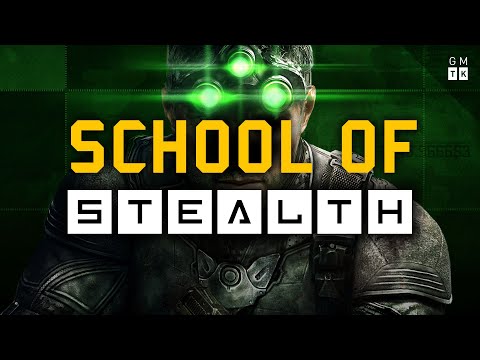 Gcreator of Game Maker's Toolkit testHow Stealth Game Guards See and Hear - School of Stealth Part 1
 Gcreator of Game Maker's Toolkit testHow Accessible Were 2019’s Biggest Games?
 Gcreator of Game Maker's Toolkit testWhy Metro Exodus is so Immersive
 Gcreator of Game Maker's Toolkit testHow Games Get Balanced
 Gcreator of Game Maker's Toolkit testImproving Games for Those with Cognitive Disabilities | Designing for Disability
 Gcreator of Game Maker's Toolkit testThe World Design of Castlevania: Symphony of the Night | Boss Keys
 Gcreator of Game Maker's Toolkit testPlaying Past Your Mistakes
 Gcreator of Game Maker's Toolkit testMaking Games Better for Gamers with Colourblindness & Low Vision | Designing for Disability
 Gcreator of Game Maker's Toolkit testMaking Games Better for the Deaf and Hard of Hearing | Designing for Disability
 Gcreator of Game Maker's Toolkit testWhat Makes a Good Combat System?
 Gcreator of Game Maker's Toolkit testThe Rise of the Systemic Game
 Gcreator of Game Maker's Toolkit testHow AM2R and Samus Returns remade Metroid 2
 Gcreator of Game Maker's Toolkit testWhat Makes a Good Detective Game?
 Gcreator of Game Maker's Toolkit testWhat Makes Good AI?
 Gcreator of Game Maker's Toolkit testLegend of Zelda: Breath of the Wild - An Open World Adventure
 Gcreator of Game Maker's Toolkit testThe Comeback of the Immersive Sim
 Gcreator of Game Maker's Toolkit testClimbing in Games
 Gcreator of Game Maker's Toolkit testFollowing the Little Dotted Line
The sources cover Ubisoft's Far Cry and Watch Dogs lines. Far Cry 2's deliberate friction (jamming guns, malaria) and fire systems built a distinct, harrowing feel, while Far Cry 4 and Origins slid into a generic template. Watch Dogs: Legion generated millions of Londoners, yet recruits were so capable that choice barely mattered. Lesson: make your signature system change play, and keep it distinct.
- 1Location via census dataReal London census data keeps boroughs distinct
- 2Ethnicity, clothing, jobShaped by where they live
- 3Name and voiceSet by ethnicity and gender
- 4Workplace, perks, salaryAll follow from the job
- 5HomeSet by salary
From Mark Brown on Watch Dogs: Legion
What was said about Far Cry 2
1How Watch Dogs: Legion generates infinite Londoners
Play as Anyone grew from the theme and from earlier flavour text. Legion's theme is that a revolution comes from the collective action of many, so any of London's 9 million people can be recruited and played. It also turned the short profile snippets from hacking phones in Watch Dogs and Watch Dogs 2 into full playable lives.
It replaced authored heroes Aiden Pierce and Marcus Holloway. The design question was "What if that wasn't just flavour text?" Director Clint Hocking previously worked on Far Cry 2 and coined "ludonarrative dissonance".
Each generated trait constrains the next, grounded in real census data. Location, via real London census data, shapes ethnicity, clothing and job; ethnicity and gender set name and voice; job sets workplace, perks and salary; salary sets the home. Heidi Khumalo, met in Lambeth, became a computer repairer whose job, salary and home all followed from those choices.
The census data keeps boroughs distinct: "The people in Brixton should seem very different to the people in Westminster, after all." Citizens keep schedules with jobs and family; Heidi sleeps, visits her grandmother in hospital, vandalises a little, then works in the electronics shop.
Full detail is generated only when the player pays attention. A passer-by starts with only gender, clothes and voice and vanishes from memory when you drive away. Salary, associates and schedule are filled in only when you profile, recruit or injure them, which keeps the game from running out of memory.
Characters are treated as "quantum in nature". A glazier recruited at an 8AM protest in Southwark keeps protesting an hour a day and also gets an antiques shop job.
Opinions and schedules react to what the player does. Each citizen's opinion of DedSec rises when you help them or beat up a competitor and drops when you assault them or kill an associate; at "hates DedSec" they never join. Events rewrite routines, so a recruit whose relative is killed may go mourn at a graveyard.
Many protagonists needed dozens of animation sets and about 20 voice recordings. Because anyone can be the lead, Ubisoft built dozens of animation sets so an old lady moves differently from a young man, and recorded the script about 20 times for accents including Irish, cockney, African-Caribbean and Eastern European.
Modulation tech creates further voice variants. A recruit becomes the main character and talks in cutscenes, unlike Pokemon or XCOM units.
Recruits are so alike that choosing one barely matters. Every citizen can hack, drive, shoot and do stealth takedowns, perks are mostly minor, and missions can be solved any of those ways. The game is so easy that permadeath rarely takes a character out of rotation, so there is no reason to follow schedules or manage opinions.
Only outliers matter: a few overpowered recruits and those with uniformed access to buildings. The official site still promised recruits who give an advantage in the mission ahead.
Legion never committed to the right-operative or the unique-crew pitch. The game is arguably at its best when you pick the worst character, like a living statue or a pensioner with a bad back, but each backstory stops mattering once they join DedSec. The protagonist becomes "one amorphous blob" with a different face and slightly different inflection.
The goofy crews clash with the serious plot. Brown suggests doubling down either on distinct characters for distinct jobs or on crazier characters with a matching story.
Friction pushed players away from the signature feature. Recruitment missions are repetitive and switching characters means long loading times, which "actively discourages the player from bothering with it at all".
Innovation only becomes great design when the game depends on it. The expensive system gets no support from structure, story or moment-to-moment play, leaving a typical open world game where you can change the main character "for some reason".
Quote: "innovation without implementation is basically... nothing."
2Far Cry 2's deliberate friction and Clint Hocking's ideas
- Weapons jam, jeeps break
- Malaria needs medication
- Respawns at save stations
- Loads of ammo
- Enemy tracking
- Permanent clears
Same setting: one oppressive, one action playground
From Mark Brown's analysis
Mechanics, not setting, made Far Cry 2 harrowing and Far Cry 4 fun. Both share a setting and villain archetype, but Far Cry 2 has jamming weapons, breaking jeeps, malaria and respawns at save stations, while Far Cry 4 gives loads of ammo, enemy tracking and permanent clears.
Brown likens remaking Metroid II in modern Metroid style to remaking the oppressive Far Cry 2 to play like the action playgrounds of Far Cry 3 and 4: same form, different experience.
Friction was added on purpose to sell the lone mercenary fantasy. Weapons rust and jam, you need malaria medication, and the map is a paper you hold while the game keeps running.
Quote: "You feel outgunned, underpowered, scared, and alone."
Small, unpredictable, recoverable setbacks keep players improvising. Hocking wanted jammed guns, malaria attacks and cars breaking down mid-getaway to bounce players from execution back to planning in one continuous playthrough. A big health bar, many syringes and the buddy system soften the losses, so players don't reload.
Quote: "It is exactly because the loss is small and unpredictable that players don't attempt to reload the game to escape it."
Fire spreads through a grid of hit-point cells, shaped by wind. An invisible grid of cells each has hit points; a flammable cell at zero ignites, burns for a limited time and damages neighbours. Dry grass burns easily, wet jungle resists, and wind weights the spread, so a molotov grows into an inferno.
Together with roving enemies, the fire is tuned to create peril rather than follow a generic template.
Hocking's intentionality: predictable AI lets players make plans. Hocking coined "intentionality" for players planning around consistent AI reactions. Actions should be predictable while consequences stay unpredictable, as with Halo's Grunts, which always flee but to unknown places.
Hocking drew on immersive sims for Far Cry 2, describing Deus Ex as creating "a chain of influence that cascaded between the narrative and the WASD keys".
3Systemic open worlds in Far Cry and Watch Dogs
Entities that listen and broadcast create unscripted encounters. In Far Cry the tiger listens for the player, bait, fire and enemies, so a tiger meeting a guard triggers a mauling with no script. Because guards know about more than the player, you can free a caged animal onto them.
A rule fires when an input matches an output and the entities can see or touch each other.
Open-ended camps beat linear scripted missions. Far Cry's main missions are less fun than its camps, which give a goal and don't care how it is achieved.
Assassin's Creed Origins camps feel remarkably like Far Cry 4's, a generic template rather than a tuned experience.
Shared faction rules let players build their own escapes. In Watch Dogs 2, Mark Brown led the cops into gang territory, hid on a rooftop while they fought, then slipped away and lost his wanted level.
Quote: "That felt great, and a lot more interesting than just shooting a bunch of cops."
Far Cry quietly limits how many enemies shoot at once. Only a few enemies can fire at the same time, a hidden tilt toward the player that makes fights feel fair without being noticed.
Far Cry 5 is also cited among shooters whose cover and regenerating health flatten decisions compared with DOOM.
4Skill trees in Assassin's Creed Origins and Far Cry 3
Origins made players unable to afford every skill, forcing specialisation. Mark Brown specialised in the hunter and seer branches, built around stealth and tricking camp AI. Neglecting warrior left Bayek weak one-on-one, so he ran from fights and found new approaches.
Quote: "I definitely wasn't able to afford all of the skills by the end of the game."
Unlocking then testing each skill created a self-feeding loop. Each new Origins ability was tested on a few camps and missions, and that play earned the experience for the next one.
Far Cry 3 made players hunt for a specific upgrade. A better holster needed pelts from a specific animal, so the player paused the main quest to find its breeding ground on the map, while the sprint slide simply arrived with skill points.
Quote: "I wanted an upgrade and had to figure out how to get it"
5Ubisoft's accessibility work
Subtitles on by default stuck for 97% of players. Ubisoft tested default subtitles in Far Cry New Dawn and 97% kept them on; Ubisoft also reports 60 percent of players played with subtitles on.
Assassin's Creed Origins uses large subtitles readable from across a room, toggles speaker names and background, and adds a black box behind text for contrast.
Sound and motor needs get visual cues and assists. Watch Dogs: Legion and Assassin's Creed borrowed a captioning system from Far Cry New Dawn that shows where noises come from. Watch Dogs offers auto-drive and an adjustable hacking cursor size.
Ubisoft offers dozens of options across Watch Dogs, Assassin's Creed and Immortals and is praised as a leader alongside Sony and Microsoft.
Ubisoft checks flashes with Harding and keeps objectives on screen. Ubisoft uploads recorded gameplay to the Harding flash and pattern analyser. Assassin's Creed Odyssey restates cutscene objectives in a few plain sentences with highlighted key words that stay up for the whole mission.
Options are reused across games and published online. Far Cry 6 lifts many accessibility features from earlier Far Cry games, and Ubisoft publishes its options online so players can decide what to buy.
Far Cry 5 offers a simple colourblind option that turns red elements yellow.
6Balancing Rainbow Six Siege
A shotgun nerf broke defenders, fixed by a shorter round timer. Nerfing the overpowered shotgun weakened defenders, who rely on it. Shortening the round, which defenders win when time runs out, to three minutes restored balance.
Quote: "Fixing a problem in one place can create another problem elsewhere."
Siege crosses win rate with pick rate to sort operators. Operators fall into four buckets in a win rate by pick rate matrix, each handled differently.
The team calls itself data informed, not data driven, treating data as one source among several.
Siege walls are cut live with mesh slicing. A plane is projected through the model at impact, which is split into two new models with new edges and collision in one frame, avoiding thousands of pre-broken variants.
It only works on simple shapes, and broken pieces are usually hidden after a while.
7Splinter Cell's readable stealth AI
Blacklist guards see with a cone, peripheral box and rear zone. Guards have a main view cone, a wider peripheral box and a small zone behind them, and raycast to eight bones on Sam Fisher, spotting him only if enough are visible.
Fairness as the player sees it beats realism. Guard hearing is halved offscreen, Sam's HUD has a sound visualiser, and the last known position appears as a ghostly white Sam Fisher so searches read clearly.
8Assassin's Creed design lessons
Icon-filled towers make the world a checklist. Assassin's Creed and Far Cry towers litter the map with activity icons, unlike Breath of the Wild's. A Far Cry New Dawn scavenger with an icon and tooltip reads as repeatable authored content and feels gamey.
Assassin's Creed's exploration mode with fewer waypoints helps, but options cannot turn it into Elden Ring because levels assume guidance.
Blending RPG levels into stealth weakened the assassin fantasy. RPG levels remove instant stealth kills on tougher enemies.
Early counters let players wait out every fight. Early games let you stand with your sword up countering one enemy after another. Bonus damage for attacking just as the previous hit lands rewards timing over memorised combos.
Assassin's Creed 2's mid-jump grasp gives experts control. Ezio can reach out mid-jump to snatch ledges and ropes, which beginners can ignore. Syndicate's grappling hook instead skips climbing.
Ubisoft Reflections' Grow Home maps each trigger to one hand with real-time animation, so climbing is rhythmic and tense on thin branches.
Black Flag's treasure maps reward studying the landscape. A crude drawing of a landmass, rock or tree must be matched in the world with no markers. Odyssey opens on a gory 300-style battle for a high-action start.
Its murder mystery side-quests fall flat: walk up and accuse, lose points if wrong, retry.
9Smaller lessons from Beyond Good & Evil and Rayman
Beyond Good & Evil's spiral keyboard holds more than a radial menu. The radial menu coils into a spiral; only the selected item and a few neighbours are enabled so the stick picks unambiguously, and spin speed sets scroll speed. It inspired a spiral echo menu for Zelda.
Rayman Legends tracks the camera up only in set areas. The camera moves up only where the level extends beyond the frame. Rayman can also collapse a section behind you, which a Metroidvania cannot allow.
How Games Do Destruction
Uses live mesh slicing so players can shoot through walls. Spreads fire across an invisible grid of hit-point cells where burning cells damage neighbours, with cells burning for a finite time. Wet jungle resists ignition, dry grass burns easily, and wind adds direction, so a molotov can grow into an inferno.
Fire spreads through a grid of hit-point cells, shaped by wind. An invisible grid of cells each has hit points; a flammable cell at zero ignites, burns for a limited time and damages neighbours. Dry grass burns easily, wet jungle resists, and wind weights the spread, so a molotov grows into an inferno.
Together with roving enemies, the fire is tuned to create peril rather than follow a generic template.
Siege walls are cut live with mesh slicing. A plane is projected through the model at impact, which is split into two new models with new edges and collision in one frame, avoiding thousands of pre-broken variants.
It only works on simple shapes, and broken pieces are usually hidden after a while.
Can I fix Zelda's UI using Unity?
Its spiral keyboard is fast with a stick and holds many items, and inspired the spiral echo menu. Only the selected echo and a few neighbours are enabled so stick picking works.
Beyond Good & Evil's spiral keyboard holds more than a radial menu. The radial menu coils into a spiral; only the selected item and a few neighbours are enabled so the stick picks unambiguously, and spin speed sets scroll speed. It inspired a spiral echo menu for Zelda.
10 Game Design Lessons from 10 Years of GMTK
Feels harrowing, like the worst package holiday ever, because weapons jam, jeeps break down, malaria strikes and death sends you back to a save station. It shows how mechanics, not setting, create the experience.
Mechanics, not setting, made Far Cry 2 harrowing and Far Cry 4 fun. Both share a setting and villain archetype, but Far Cry 2 has jamming weapons, breaking jeeps, malaria and respawns at save stations, while Far Cry 4 gives loads of ammo, enemy tracking and permanent clears.
Brown likens remaking Metroid II in modern Metroid style to remaking the oppressive Far Cry 2 to play like the action playgrounds of Far Cry 3 and 4: same form, different experience.
The 100 Games That Taught Me Game Design
Rusting, jamming guns, malaria medication and a paper map held in real time add friction on purpose. That makes you feel like a lone mercenary.
Friction was added on purpose to sell the lone mercenary fantasy. Weapons rust and jam, you need malaria medication, and the map is a paper you hold while the game keeps running.
Quote: "You feel outgunned, underpowered, scared, and alone."
How to Make a Good 2D Camera
Tracks the camera up only in predetermined areas where the level goes beyond the frame.
Rayman Legends tracks the camera up only in set areas. The camera moves up only where the level extends beyond the frame. Rayman can also collapse a section behind you, which a Metroidvania cannot allow.
Why do God of War's Characters Keep Spoiling Puzzles?
It offers an exploration mode with fewer waypoints, but options cannot turn it into Elden Ring because the design assumes guidance.
Icon-filled towers make the world a checklist. Assassin's Creed and Far Cry towers litter the map with activity icons, unlike Breath of the Wild's. A Far Cry New Dawn scavenger with an icon and tooltip reads as repeatable authored content and feels gamey.
Assassin's Creed's exploration mode with fewer waypoints helps, but options cannot turn it into Elden Ring because levels assume guidance.
How Game Designers Solved These 11 Problems
Nerfing the overpowered shotgun weakened defenders, who rely on it. Ubisoft shortened the round timer, which defenders win when time runs out, to restore balance.
A shotgun nerf broke defenders, fixed by a shorter round timer. Nerfing the overpowered shotgun weakened defenders, who rely on it. Shortening the round, which defenders win when time runs out, to three minutes restored balance.
Quote: "Fixing a problem in one place can create another problem elsewhere."
How To Combine Video Game Genres
Its RPG levels remove instant stealth kills on tougher enemies, which subtly weakens the assassin fantasy.
Blending RPG levels into stealth weakened the assassin fantasy. RPG levels remove instant stealth kills on tougher enemies.
How Accessible Were 2021's Games?
It lifted many Far Cry 6 accessibility features from earlier Far Cry entries and does strong work here.
Options are reused across games and published online. Far Cry 6 lifts many accessibility features from earlier Far Cry games, and Ubisoft publishes its options online so players can decide what to buy.
Far Cry 5 offers a simple colourblind option that turns red elements yellow.
Making Ori and The Will of the Wisps' Best Level
A trigger can collapse a whole section and you simply keep going, which a Metroidvania cannot allow because players must backtrack.
Rayman Legends tracks the camera up only in set areas. The camera moves up only where the level extends beyond the frame. Rayman can also collapse a section behind you, which a Metroidvania cannot allow.
How Watch Dogs: Legion Generates Infinite Londoners
Its system generates millions of Londoners on the fly with cascading data points, real census data, about 20 voice recordings and dozens of animation sets. Because every recruit can hack, shoot, drive and stealth, who you pick barely matters, so the clever system ends up largely meaningless. Ubisoft used real London census data so boroughs like Brixton and Westminster feel distinct. It also built dozens of animation sets and recorded the script about 20 times for different accents.
Play as Anyone grew from the theme and from earlier flavour text. Legion's theme is that a revolution comes from the collective action of many, so any of London's 9 million people can be recruited and played. It also turned the short profile snippets from hacking phones in Watch Dogs and Watch Dogs 2 into full playable lives.
It replaced authored heroes Aiden Pierce and Marcus Holloway. The design question was "What if that wasn't just flavour text?" Director Clint Hocking previously worked on Far Cry 2 and coined "ludonarrative dissonance".
Each generated trait constrains the next, grounded in real census data. Location, via real London census data, shapes ethnicity, clothing and job; ethnicity and gender set name and voice; job sets workplace, perks and salary; salary sets the home. Heidi Khumalo, met in Lambeth, became a computer repairer whose job, salary and home all followed from those choices.
The census data keeps boroughs distinct: "The people in Brixton should seem very different to the people in Westminster, after all." Citizens keep schedules with jobs and family; Heidi sleeps, visits her grandmother in hospital, vandalises a little, then works in the electronics shop.
Full detail is generated only when the player pays attention. A passer-by starts with only gender, clothes and voice and vanishes from memory when you drive away. Salary, associates and schedule are filled in only when you profile, recruit or injure them, which keeps the game from running out of memory.
Characters are treated as "quantum in nature". A glazier recruited at an 8AM protest in Southwark keeps protesting an hour a day and also gets an antiques shop job.
Opinions and schedules react to what the player does. Each citizen's opinion of DedSec rises when you help them or beat up a competitor and drops when you assault them or kill an associate; at "hates DedSec" they never join. Events rewrite routines, so a recruit whose relative is killed may go mourn at a graveyard.
Many protagonists needed dozens of animation sets and about 20 voice recordings. Because anyone can be the lead, Ubisoft built dozens of animation sets so an old lady moves differently from a young man, and recorded the script about 20 times for accents including Irish, cockney, African-Caribbean and Eastern European.
Modulation tech creates further voice variants. A recruit becomes the main character and talks in cutscenes, unlike Pokemon or XCOM units.
Recruits are so alike that choosing one barely matters. Every citizen can hack, drive, shoot and do stealth takedowns, perks are mostly minor, and missions can be solved any of those ways. The game is so easy that permadeath rarely takes a character out of rotation, so there is no reason to follow schedules or manage opinions.
Only outliers matter: a few overpowered recruits and those with uniformed access to buildings. The official site still promised recruits who give an advantage in the mission ahead.
Legion never committed to the right-operative or the unique-crew pitch. The game is arguably at its best when you pick the worst character, like a living statue or a pensioner with a bad back, but each backstory stops mattering once they join DedSec. The protagonist becomes "one amorphous blob" with a different face and slightly different inflection.
The goofy crews clash with the serious plot. Brown suggests doubling down either on distinct characters for distinct jobs or on crazier characters with a matching story.
Friction pushed players away from the signature feature. Recruitment missions are repetitive and switching characters means long loading times, which "actively discourages the player from bothering with it at all".
Innovation only becomes great design when the game depends on it. The expensive system gets no support from structure, story or moment-to-moment play, leaving a typical open world game where you can change the main character "for some reason".
Quote: "innovation without implementation is basically... nothing."
How Accessible Were 2020's Biggest Games?
Offers auto-drive, adjustable hacking cursor size and captions that show where noises come from, using tech from Far Cry New Dawn. Offers dozens of accessibility options across Watch Dogs, Assassin's Creed and Immortals, and is praised as a leader alongside Sony and Microsoft.
Sound and motor needs get visual cues and assists. Watch Dogs: Legion and Assassin's Creed borrowed a captioning system from Far Cry New Dawn that shows where noises come from. Watch Dogs offers auto-drive and an adjustable hacking cursor size.
Ubisoft offers dozens of options across Watch Dogs, Assassin's Creed and Immortals and is praised as a leader alongside Sony and Microsoft.
How do Stealth Games Deal with Detection? - School of Stealth Part 3
It shows the guards' last known position of the player as a ghostly white Sam Fisher. This makes the search readable and keeps it from feeling like cheating.
Fairness as the player sees it beats realism. Guard hearing is halved offscreen, Sam's HUD has a sound visualiser, and the last known position appears as a ghostly white Sam Fisher so searches read clearly.
Should Designers Listen to Negative Feedback?
Its team describes its approach as data informed, not data driven, treating data as one source among several.
Siege crosses win rate with pick rate to sort operators. Operators fall into four buckets in a win rate by pick rate matrix, each handled differently.
The team calls itself data informed, not data driven, treating data as one source among several.
The 4 "P"s of DOOM's Amazing Combat
It is contrasted with DOOM's four-question load as a shooter whose conventions flatten the decision space.
Far Cry quietly limits how many enemies shoot at once. Only a few enemies can fire at the same time, a hidden tilt toward the player that makes fights feel fair without being noticed.
Far Cry 5 is also cited among shooters whose cover and regenerating health flatten decisions compared with DOOM.
How Stealth Game Guards See and Hear - School of Stealth Part 1
Guards use a main viewcone, a wide peripheral box and a small zone behind them, and raycast to eight bones on Sam Fisher. Guard hearing is halved offscreen to feel fair, and the HUD has a sound visualiser.
Blacklist guards see with a cone, peripheral box and rear zone. Guards have a main view cone, a wider peripheral box and a small zone behind them, and raycast to eight bones on Sam Fisher, spotting him only if enough are visible.
Fairness as the player sees it beats realism. Guard hearing is halved offscreen, Sam's HUD has a sound visualiser, and the last known position appears as a ghostly white Sam Fisher so searches read clearly.
How Accessible Were 2019’s Biggest Games?
Leads the field on accessibility, publishes its options online, and tested subtitles on by default, which 97% of Far Cry New Dawn players kept.
Subtitles on by default stuck for 97% of players. Ubisoft tested default subtitles in Far Cry New Dawn and 97% kept them on; Ubisoft also reports 60 percent of players played with subtitles on.
Assassin's Creed Origins uses large subtitles readable from across a room, toggles speaker names and background, and adds a black box behind text for contrast.
Options are reused across games and published online. Far Cry 6 lifts many accessibility features from earlier Far Cry games, and Ubisoft publishes its options online so players can decide what to buy.
Far Cry 5 offers a simple colourblind option that turns red elements yellow.
Why Metro Exodus is so Immersive
A scavenger has an icon over their head and a tooltip, which shows it as repeatable authored content and makes the world feel gamey and inauthentic.
Icon-filled towers make the world a checklist. Assassin's Creed and Far Cry towers litter the map with activity icons, unlike Breath of the Wild's. A Far Cry New Dawn scavenger with an icon and tooltip reads as repeatable authored content and feels gamey.
Assassin's Creed's exploration mode with fewer waypoints helps, but options cannot turn it into Elden Ring because levels assume guidance.
How Games Get Balanced
Crosses win rate with pick rate to sort operators into four buckets, each handled differently. Set match time to three minutes to balance attack and defense.
A shotgun nerf broke defenders, fixed by a shorter round timer. Nerfing the overpowered shotgun weakened defenders, who rely on it. Shortening the round, which defenders win when time runs out, to three minutes restored balance.
Quote: "Fixing a problem in one place can create another problem elsewhere."
Siege crosses win rate with pick rate to sort operators. Operators fall into four buckets in a win rate by pick rate matrix, each handled differently.
The team calls itself data informed, not data driven, treating data as one source among several.
Improving Games for Those with Cognitive Disabilities | Designing for Disability
Ubisoft is among the big publishers that use the Harding analyser to check gameplay for flash and pattern problems. It explains objectives in a cutscene, then repeats them in a few plain sentences with highlighted key words that stay on screen for the whole mission.
Ubisoft checks flashes with Harding and keeps objectives on screen. Ubisoft uploads recorded gameplay to the Harding flash and pattern analyser. Assassin's Creed Odyssey restates cutscene objectives in a few plain sentences with highlighted key words that stay up for the whole mission.
Building Better Skill Trees
Players could not afford every skill, so they specialised in the hunter and seer branches, which centred on stealth and tricking camp AI. Neglecting the warrior branch left Bayek weak in one-on-one fights, and unlocking then testing abilities on camps and missions created a loop that earned points for the next one. A better holster required hunting a specific animal for pelts, so the player paused the main quest to find its breeding ground. The sprint slide just arrived with skill points.
Origins made players unable to afford every skill, forcing specialisation. Mark Brown specialised in the hunter and seer branches, built around stealth and tricking camp AI. Neglecting warrior left Bayek weak one-on-one, so he ran from fights and found new approaches.
Quote: "I definitely wasn't able to afford all of the skills by the end of the game."
Unlocking then testing each skill created a self-feeding loop. Each new Origins ability was tested on a few camps and missions, and that play earned the experience for the next one.
Far Cry 3 made players hunt for a specific upgrade. A better holster needed pelts from a specific animal, so the player paused the main quest to find its breeding ground on the map, while the sprint slide simply arrived with skill points.
Quote: "I wanted an upgrade and had to figure out how to get it"
The World Design of Castlevania: Symphony of the Night | Boss Keys
Opens with a gory 300-style battle, giving players a high-action start much as Symphony does with its playable Richter versus Dracula fight.
Black Flag's treasure maps reward studying the landscape. A crude drawing of a landmass, rock or tree must be matched in the world with no markers. Odyssey opens on a gory 300-style battle for a high-action start.
Its murder mystery side-quests fall flat: walk up and accuse, lose points if wrong, retry.
Playing Past Your Mistakes
Jammed guns, malaria attacks and broken-down cars bounce players from execution back to planning. A big health bar, many syringes and a buddy who gives a second chance soften the losses, so players don't reload to escape them.
Small, unpredictable, recoverable setbacks keep players improvising. Hocking wanted jammed guns, malaria attacks and cars breaking down mid-getaway to bounce players from execution back to planning in one continuous playthrough. A big health bar, many syringes and the buddy system soften the losses, so players don't reload.
Quote: "It is exactly because the loss is small and unpredictable that players don't attempt to reload the game to escape it."
Making Games Better for Gamers with Colourblindness & Low Vision | Designing for Disability
Turns red elements yellow as a simple colourblind option. Adds a black box behind subtitles so text contrasts with any background.
Subtitles on by default stuck for 97% of players. Ubisoft tested default subtitles in Far Cry New Dawn and 97% kept them on; Ubisoft also reports 60 percent of players played with subtitles on.
Assassin's Creed Origins uses large subtitles readable from across a room, toggles speaker names and background, and adds a black box behind text for contrast.
Options are reused across games and published online. Far Cry 6 lifts many accessibility features from earlier Far Cry games, and Ubisoft publishes its options online so players can decide what to buy.
Far Cry 5 offers a simple colourblind option that turns red elements yellow.
Making Games Better for the Deaf and Hard of Hearing | Designing for Disability
Ubisoft says 60 percent of players played with subtitles on. Its large text is readable from across a room, and it toggles speaker names and the background.
Subtitles on by default stuck for 97% of players. Ubisoft tested default subtitles in Far Cry New Dawn and 97% kept them on; Ubisoft also reports 60 percent of players played with subtitles on.
Assassin's Creed Origins uses large subtitles readable from across a room, toggles speaker names and background, and adds a black box behind text for contrast.
What Makes a Good Combat System?
Early games let you stand with your sword up and counter one enemy after another, which shows how an unchecked parry takes over. Extra damage for pressing attack just as the previous hit lands rewards timing over memory.
Early counters let players wait out every fight. Early games let you stand with your sword up countering one enemy after another. Bonus damage for attacking just as the previous hit lands rewards timing over memorised combos.
The Rise of the Systemic Game
A tiger mauls a guard because wildlife and enemy systems meet, with no scripted encounter, and you can free a caged animal onto guards. Its open-ended camps are more fun than its linear main missions, and Far Cry 2's fire and roving enemies are tuned to create peril. One player led the cops into gang territory and hid on a rooftop while the factions fought, then slipped away and lost the wanted level. Its enemy camps feel remarkably like those in Far Cry 4, an example of a generic template rather than a distinct tuned experience.
Fire spreads through a grid of hit-point cells, shaped by wind. An invisible grid of cells each has hit points; a flammable cell at zero ignites, burns for a limited time and damages neighbours. Dry grass burns easily, wet jungle resists, and wind weights the spread, so a molotov grows into an inferno.
Together with roving enemies, the fire is tuned to create peril rather than follow a generic template.
Entities that listen and broadcast create unscripted encounters. In Far Cry the tiger listens for the player, bait, fire and enemies, so a tiger meeting a guard triggers a mauling with no script. Because guards know about more than the player, you can free a caged animal onto them.
A rule fires when an input matches an output and the entities can see or touch each other.
Open-ended camps beat linear scripted missions. Far Cry's main missions are less fun than its camps, which give a goal and don't care how it is achieved.
Assassin's Creed Origins camps feel remarkably like Far Cry 4's, a generic template rather than a tuned experience.
Shared faction rules let players build their own escapes. In Watch Dogs 2, Mark Brown led the cops into gang territory, hid on a rooftop while they fought, then slipped away and lost his wanted level.
Quote: "That felt great, and a lot more interesting than just shooting a bunch of cops."
How AM2R and Samus Returns remade Metroid 2
Used as an analogy: remaking Metroid II like other Metroid games is like remaking the oppressive Far Cry 2 to play like the action playgrounds of Far Cry 3 and 4.
Mechanics, not setting, made Far Cry 2 harrowing and Far Cry 4 fun. Both share a setting and villain archetype, but Far Cry 2 has jamming weapons, breaking jeeps, malaria and respawns at save stations, while Far Cry 4 gives loads of ammo, enemy tracking and permanent clears.
Brown likens remaking Metroid II in modern Metroid style to remaking the oppressive Far Cry 2 to play like the action playgrounds of Far Cry 3 and 4: same form, different experience.
What Makes a Good Detective Game?
Its murder mystery side-quests have you walk up and accuse someone. A wrong accusation costs points and a right one just wins, so neither satisfies.
Black Flag's treasure maps reward studying the landscape. A crude drawing of a landmass, rock or tree must be matched in the world with no markers. Odyssey opens on a gory 300-style battle for a high-action start.
Its murder mystery side-quests fall flat: walk up and accuse, lose points if wrong, retry.
What Makes Good AI?
Limits how many enemies can shoot at once, a hidden tilt toward the player. Far Cry 2 designer Clint Hocking coined 'intentionality' for players making plans around predictable AI.
Hocking's intentionality: predictable AI lets players make plans. Hocking coined "intentionality" for players planning around consistent AI reactions. Actions should be predictable while consequences stay unpredictable, as with Halo's Grunts, which always flee but to unknown places.
Hocking drew on immersive sims for Far Cry 2, describing Deus Ex as creating "a chain of influence that cascaded between the narrative and the WASD keys".
Far Cry quietly limits how many enemies shoot at once. Only a few enemies can fire at the same time, a hidden tilt toward the player that makes fights feel fair without being noticed.
Far Cry 5 is also cited among shooters whose cover and regenerating health flatten decisions compared with DOOM.
Legend of Zelda: Breath of the Wild - An Open World Adventure
Its towers litter the map with activity icons, the opposite of Zelda's towers, which only fill in the blank map. Its towers fill the map with icons for nearby activities, unlike Breath of the Wild, which leaves discovery to curiosity.
Icon-filled towers make the world a checklist. Assassin's Creed and Far Cry towers litter the map with activity icons, unlike Breath of the Wild's. A Far Cry New Dawn scavenger with an icon and tooltip reads as repeatable authored content and feels gamey.
Assassin's Creed's exploration mode with fewer waypoints helps, but options cannot turn it into Elden Ring because levels assume guidance.
The Comeback of the Immersive Sim
Hocking drew on immersive sims for it, inspired by how Deus Ex linked narrative and the WASD keys.
Hocking's intentionality: predictable AI lets players make plans. Hocking coined "intentionality" for players planning around consistent AI reactions. Actions should be predictable while consequences stay unpredictable, as with Halo's Grunts, which always flee but to unknown places.
Hocking drew on immersive sims for Far Cry 2, describing Deus Ex as creating "a chain of influence that cascaded between the narrative and the WASD keys".
Climbing in Games
Each trigger controls one robot hand, so players climb rhythmically and the climb gets tense on thin branches. B.U.D. is animated in real time rather than with pre-canned animations. Syndicate automates climbing with a grappling hook that goes straight to the top. In Assassin's Creed 2, Ezio can reach out mid-jump to snatch ledges and ropes, giving experts more control without making climbing manual.
Assassin's Creed 2's mid-jump grasp gives experts control. Ezio can reach out mid-jump to snatch ledges and ropes, which beginners can ignore. Syndicate's grappling hook instead skips climbing.
Ubisoft Reflections' Grow Home maps each trigger to one hand with real-time animation, so climbing is rhythmic and tense on thin branches.
Following the Little Dotted Line
Its treasure maps show a crude drawing of a landmass, rock or tree that players must find in the real landscape without markers.
Black Flag's treasure maps reward studying the landscape. A crude drawing of a landmass, rock or tree must be matched in the world with no markers. Odyssey opens on a gory 300-style battle for a high-action start.
Its murder mystery side-quests fall flat: walk up and accuse, lose points if wrong, retry.
More in Games
 Games
Nintendo
A Zelda adventure where Princess Zelda copies objects and monsters as echoes to solve puzzles and fight.
 Games
The Legend of Zelda: Breath of the Wild
Nintendo's long-running action-adventure series about Link exploring Hyrule, solving puzzles and fighting Ganon.
 Games
Dead Space
A major video game publisher and the guest's employer.
 G
 29 sources · 94 tips
Mind Over Magnet
A puzzle platformer where you escape a factory using a magnet and a magnetic field.
 Games
God of War
A combat-focused action adventure game from Santa Monica Studio with Norse mythology and light puzzles.
Mind Over Magnet
Mark Brown's first game, a puzzle game he made while learning Unity.
 Games
Dishonored
A first-person stealth action game from Arkane with supernatural powers and the Clockwork Mansion level.
 Games
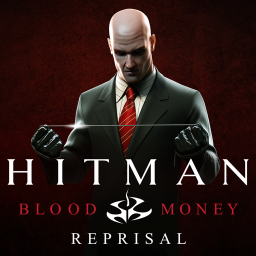
Hitman
An open stealth assassination game where players hunt targets in large, sandbox-style levels.