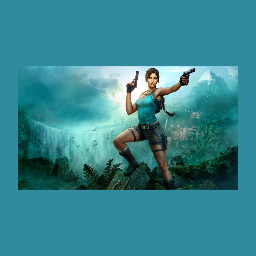
Tomb Raider
An action-adventure game series following Lara Croft through tombs, climbing, and combat.
Where Tomb Raider comes up10 episodes and tests
 Gcreator of Game Maker's Toolkit testClimbing in Games
 Gcreator of Game Maker's Toolkit testHow Jusant Makes Rock-Climbing More Immersive
 Gcreator of Game Maker's Toolkit testWhy do God of War's Characters Keep Spoiling Puzzles?
 Gcreator of Game Maker's Toolkit testHow Level Design Can Tell a Story
 Gcreator of Game Maker's Toolkit testMaking Games Better for Players with Motor Disabilities | Designing for Disability
 Gcreator of Game Maker's Toolkit testMaking Games Better for the Deaf and Hard of Hearing | Designing for Disability
 Gcreator of Game Maker's Toolkit testForging God of War's Leviathan Axe
 Gcreator of Game Maker's Toolkit testWhat Makes a Good Puzzle?
 Gcreator of Game Maker's Toolkit testControllers Control Everything
 Gcreator of Game Maker's Toolkit testWhy Nathan Drake Doesn't Need a Compass
Tomb Raider shows how design intent shapes a series. The 1996 original demanded run-ups, lined-up jumps and held grabs, making leaps feel earned, while modern entries automated climbing into holding a direction as combat grew richer. Its lesson: keep enough challenge in core actions to feel like achievement, and split difficulty into separate combat, exploration and puzzle settings.
- Line up the jump
- Take a run up
- Jump after exactly two steps
- Hold a button to grab
- Jump at the coloured ledge
- Hold a direction
- Press jump
- Barely register it happened
The old system demanded expertise, so leaps felt rewarding
From Mark Brown's analysis
What was said about Tomb Raider
1How Tomb Raider's climbing lost its depth
The 1996 original made traversal a skill players had to master. To cross a gap you lined up the jump, took a run up, held jump so Lara leapt after exactly two steps, then held a second button to grab the ledge. Mark Brown compares this learned mastery to flick tricks in Tony Hawk's and the deliberate intent of Dark Souls.
A chasm leap felt nearly as terrifying and rewarding as it would in real life. "The old system demanded expertise."
Remove the challenge and players stop noticing the action happened. The same chasm jump rebuilt in Tomb Raider Anniversary is so easy that it barely registers. An action needs enough challenge to feel like an achievement.
Quote: the remake's jump "is so bereft of challenge that you barely even register that it happened."
The old controls were clunky for real technical reasons. Tomb Raider 1 ran on an unrealistic grid system built for digital input as a first try at 3D. Its PS1 controls showed the d-pad no longer worked once games went 3D, until the N64 analogue stick made 3D movement effortless.
Crystal Dynamics brought in instant acceleration, air control and automatic grabs when it rebooted the series with Tomb Raider Legend in 2006. Brown grants this is more palatable and accessible but says the aim should be removing the clunk while keeping the demand on the player.
Traversal was automated step by step while combat kept gaining depth. The grab button went, then the run up, and monkey bars became automatic. Combat meanwhile grew from firing at bats to stealth kills, cover, crafted bombs, distractions, readied arrows and several ammo types.
By Rise of the Tomb Raider, traversal is "Jump at the coloured ledge. Hold a direction. Press jump." Combat stays a game of weighing options per enemy and improving through upgrades and practice. Brown argues movement can be as deep as combat if it asks players to consider momentum, inertia and grip.
Lara is terrified on the radio tower, but the player is not. In Tomb Raider 2013 the player scales a massive wobbling radio tower by holding up on the stick for about five minutes. With no consequence for failure, the fear stays on screen and never reaches the player.
Under the mechanics, dynamics, aesthetics framework, mechanics shape behaviour and behaviour shapes emotion. "If you want players to feel scared, then you probably need some sort of consequence for failure."
Prescribed routes take away the choice between safe and risky paths. Rise of the Tomb Raider often has one linear route through a room. Games with deeper movement let you take the slow easy path or the fast dangerous one, and nailing the hard route's timed moves feels earned.
Brown imagines a Tomb Raider with Mirror's Edge physics, I Am Alive's grip meter and Grow Home's hand-over-hand climbing, while noting the challenge tombs keep their appeal.
The modern climbing was designed as downtime, so judge it on that. In later analysis Brown notes that Tomb Raider and Uncharted climbing was meant as simple downtime between fights, so criticising it for lacking realism misses the developer's aim.
Take what works as a reference and treat the rest as room for a different game with different intentions. "I'll instead take the game on its own merits."
2Difficulty and accessibility options in the reboots
- One setting for everything
- Easing fights eases everything
- Gives up wanted challenge
- Combat, exploration, puzzles split
- Ease fights, keep puzzle logic
- Helps players with motor disabilities
Each player tunes how much help they get
From Shadow of the Tomb Raider analysis
Shadow of the Tomb Raider splits difficulty into combat, exploration and puzzles. Players can ease fiddly fights while still having their logic tested, with Lara not giving away puzzle answers. A single difficulty setting would force them to give up challenge they want to keep.
Relaxed settings give leeway in combat or more time to handle the controller, which helps players with motor disabilities. It also lets hint-lovers and puzzle-lovers each tune how much help they get.
Shadow of the Tomb Raider does not force stick rotation on cranks. Sudden stick wiggles and button mashing often demand more motor ability than regular play, so the game skips stick rotation for turning cranks.
"A big brick wall for gamers with disabilities are these tiny micro-games."
Rise of the Tomb Raider names a speaker once, then uses colour. A character's name appears on their first subtitle line, then their dialogue gets a unique colour. This shows who is speaking without enlarging every subtitle with a repeated name.
God of War, by contrast, puts the speaker's name on every line. "From now on, the name can be dropped because the colour tells you who is speaking."
3Colour and level design that guide and tell the story
The reboot uses colour to move Lara from despair to hope. As Lara climbs in the Tomb Raider reboot, the palette shifts from dark green low down to warm orange sunlight high above, marking a turn in her situation.
Portal does something similar, moving from a white sterile lab to a warm orange maintenance area.
Tomb Raider paints important elements white to guide the player. One consistent signal colour marks what matters, but it only works if the rest of the stage's colours are carefully controlled.
Mirror's Edge uses red and Uncharted and The Last of Us use yellow for the same purpose.
Make a wrong puzzle approach look clearly impossible. In Rise of the Tomb Raider, the dropping platform sits so far from the exit that Lara obviously cannot reach it in time, so players drop that assumption at once and try something else.
"You definitely don't want to make it look like Lara could make it in time if she was just a bit quicker."
4Similar examples from other apps
These are about other apps, not Tomb Raider: examples from the same sources that help explain it.
Mirror's Edge rewards a wall-bounce route over taking the stairs. In an early section, players can take the stairs or bounce off a wall, clamber up and vault a bar. Both reach the same place, but the trick route takes far less time.
Faith's speed build-up, mid-jump tucks and landing rolls are the game's main tools, not a way between fights.
Grow Home maps each robot hand to a trigger for tense climbing. Players grab rhythmically with two triggers, and wobbling along thin branches high up becomes genuinely tense. B.U.D. is animated in real time rather than with canned animations.
GIRP has players hold several keys like gripping a cliff, and I Am Alive and Shadow of the Colossus limit climbing with stamina and grip meters.
How Jusant Makes Rock-Climbing More Immersive
Lara climbs cliffs by holding up on the stick for about five minutes, and her wobbling radio tower climb carries no danger for the player. Its climbing was meant as downtime between fights, so judging it as realistic climbing misses the point.
Lara is terrified on the radio tower, but the player is not. In Tomb Raider 2013 the player scales a massive wobbling radio tower by holding up on the stick for about five minutes. With no consequence for failure, the fear stays on screen and never reaches the player.
Under the mechanics, dynamics, aesthetics framework, mechanics shape behaviour and behaviour shapes emotion. "If you want players to feel scared, then you probably need some sort of consequence for failure."
The modern climbing was designed as downtime, so judge it on that. In later analysis Brown notes that Tomb Raider and Uncharted climbing was meant as simple downtime between fights, so criticising it for lacking realism misses the developer's aim.
Take what works as a reference and treat the rest as room for a different game with different intentions. "I'll instead take the game on its own merits."
Why do God of War's Characters Keep Spoiling Puzzles?
It lets players tune combat, exploration and puzzle difficulty separately.
Shadow of the Tomb Raider splits difficulty into combat, exploration and puzzles. Players can ease fiddly fights while still having their logic tested, with Lara not giving away puzzle answers. A single difficulty setting would force them to give up challenge they want to keep.
Relaxed settings give leeway in combat or more time to handle the controller, which helps players with motor disabilities. It also lets hint-lovers and puzzle-lovers each tune how much help they get.
How Level Design Can Tell a Story
The reboot moves Lara from dark green and low down to warm orange sunlight high above as she climbs.
The reboot uses colour to move Lara from despair to hope. As Lara climbs in the Tomb Raider reboot, the palette shifts from dark green low down to warm orange sunlight high above, marking a turn in her situation.
Portal does something similar, moving from a white sterile lab to a warm orange maintenance area.
Making Games Better for Players with Motor Disabilities | Designing for Disability
It sets combat, exploration and puzzle difficulty separately and skips stick rotation on cranks if it would hurt.
Shadow of the Tomb Raider splits difficulty into combat, exploration and puzzles. Players can ease fiddly fights while still having their logic tested, with Lara not giving away puzzle answers. A single difficulty setting would force them to give up challenge they want to keep.
Relaxed settings give leeway in combat or more time to handle the controller, which helps players with motor disabilities. It also lets hint-lovers and puzzle-lovers each tune how much help they get.
Shadow of the Tomb Raider does not force stick rotation on cranks. Sudden stick wiggles and button mashing often demand more motor ability than regular play, so the game skips stick rotation for turning cranks.
"A big brick wall for gamers with disabilities are these tiny micro-games."
Making Games Better for the Deaf and Hard of Hearing | Designing for Disability
It names a character once, then gives them a colour, so after the first line the colour tells you who is speaking.
Rise of the Tomb Raider names a speaker once, then uses colour. A character's name appears on their first subtitle line, then their dialogue gets a unique colour. This shows who is speaking without enlarging every subtitle with a repeated name.
God of War, by contrast, puts the speaker's name on every line. "From now on, the name can be dropped because the colour tells you who is speaking."
Forging God of War's Leviathan Axe
Its arrows make footholds in walls, which the video suggests the axe could have done for platforming.
What Makes a Good Puzzle?
A dropping platform sits clearly too far from the exit to reach in time, so players drop the false assumption at once.
Make a wrong puzzle approach look clearly impossible. In Rise of the Tomb Raider, the dropping platform sits so far from the exit that Lara obviously cannot reach it in time, so players drop that assumption at once and try something else.
"You definitely don't want to make it look like Lara could make it in time if she was just a bit quicker."
Controllers Control Everything
Its clunky PS1 controls showed that the d-pad failed once games moved into 3D.
The old controls were clunky for real technical reasons. Tomb Raider 1 ran on an unrealistic grid system built for digital input as a first try at 3D. Its PS1 controls showed the d-pad no longer worked once games went 3D, until the N64 analogue stick made 3D movement effortless.
Crystal Dynamics brought in instant acceleration, air control and automatic grabs when it rebooted the series with Tomb Raider Legend in 2006. Brown grants this is more palatable and accessible but says the aim should be removing the clunk while keeping the demand on the player.
Climbing in Games
The 1996 original demanded a run up, a lined-up jump and a held grab button, making chasm leaps terrifying and rewarding. Modern entries automated traversal to 'jump at the coloured ledge' while combat gained stealth kills, cover, crafted bombs and ammo types.
The 1996 original made traversal a skill players had to master. To cross a gap you lined up the jump, took a run up, held jump so Lara leapt after exactly two steps, then held a second button to grab the ledge. Mark Brown compares this learned mastery to flick tricks in Tony Hawk's and the deliberate intent of Dark Souls.
A chasm leap felt nearly as terrifying and rewarding as it would in real life. "The old system demanded expertise."
Remove the challenge and players stop noticing the action happened. The same chasm jump rebuilt in Tomb Raider Anniversary is so easy that it barely registers. An action needs enough challenge to feel like an achievement.
Quote: the remake's jump "is so bereft of challenge that you barely even register that it happened."
The old controls were clunky for real technical reasons. Tomb Raider 1 ran on an unrealistic grid system built for digital input as a first try at 3D. Its PS1 controls showed the d-pad no longer worked once games went 3D, until the N64 analogue stick made 3D movement effortless.
Crystal Dynamics brought in instant acceleration, air control and automatic grabs when it rebooted the series with Tomb Raider Legend in 2006. Brown grants this is more palatable and accessible but says the aim should be removing the clunk while keeping the demand on the player.
Traversal was automated step by step while combat kept gaining depth. The grab button went, then the run up, and monkey bars became automatic. Combat meanwhile grew from firing at bats to stealth kills, cover, crafted bombs, distractions, readied arrows and several ammo types.
By Rise of the Tomb Raider, traversal is "Jump at the coloured ledge. Hold a direction. Press jump." Combat stays a game of weighing options per enemy and improving through upgrades and practice. Brown argues movement can be as deep as combat if it asks players to consider momentum, inertia and grip.
Lara is terrified on the radio tower, but the player is not. In Tomb Raider 2013 the player scales a massive wobbling radio tower by holding up on the stick for about five minutes. With no consequence for failure, the fear stays on screen and never reaches the player.
Under the mechanics, dynamics, aesthetics framework, mechanics shape behaviour and behaviour shapes emotion. "If you want players to feel scared, then you probably need some sort of consequence for failure."
Prescribed routes take away the choice between safe and risky paths. Rise of the Tomb Raider often has one linear route through a room. Games with deeper movement let you take the slow easy path or the fast dangerous one, and nailing the hard route's timed moves feels earned.
Brown imagines a Tomb Raider with Mirror's Edge physics, I Am Alive's grip meter and Grow Home's hand-over-hand climbing, while noting the challenge tombs keep their appeal.
Mirror's Edge rewards a wall-bounce route over taking the stairs. In an early section, players can take the stairs or bounce off a wall, clamber up and vault a bar. Both reach the same place, but the trick route takes far less time.
Faith's speed build-up, mid-jump tucks and landing rolls are the game's main tools, not a way between fights.
Grow Home maps each robot hand to a trigger for tense climbing. Players grab rhythmically with two triggers, and wobbling along thin branches high up becomes genuinely tense. B.U.D. is animated in real time rather than with canned animations.
GIRP has players hold several keys like gripping a cliff, and I Am Alive and Shadow of the Colossus limit climbing with stamina and grip meters.
Why Nathan Drake Doesn't Need a Compass
Paints important elements white to mark what matters to the player.
Tomb Raider paints important elements white to guide the player. One consistent signal colour marks what matters, but it only works if the rest of the stage's colours are carefully controlled.
Mirror's Edge uses red and Uncharted and The Last of Us use yellow for the same purpose.
More in Games
 Games
Nintendo
A Zelda adventure where Princess Zelda copies objects and monsters as echoes to solve puzzles and fight.
 Games
The Legend of Zelda: Breath of the Wild
Nintendo's long-running action-adventure series about Link exploring Hyrule, solving puzzles and fighting Ganon.
 Games
Dead Space
A major video game publisher and the guest's employer.
 G
 29 sources · 94 tips
Mind Over Magnet
A puzzle platformer where you escape a factory using a magnet and a magnetic field.
 Games
Far Cry 2
An open world action game where you recruit and play any of London's citizens.
 Games
God of War
A combat-focused action adventure game from Santa Monica Studio with Norse mythology and light puzzles.
Mind Over Magnet
Mark Brown's first game, a puzzle game he made while learning Unity.
 Games
Dishonored
A first-person stealth action game from Arkane with supernatural powers and the Clockwork Mansion level.