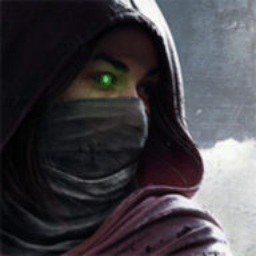
Thief
A stealth series pairing advanced AI with open-plan levels, starting with Thief: The Dark Project.
Where Thief comes up2 episodes and tests
 Gcreator of Game Maker's Toolkit testThe Comeback of the Immersive Sim
 Gcreator of Game Maker's Toolkit testFollowing the Little Dotted Line
Thief: The Dark Project gave players a goal, not a method, and set it in open levels. Its rope arrows stick to any wooden surface, while Thief 2014 limited them to marked beams. Its maps were incomplete sketches players had to interpret. The lesson: build from global rules, not one-off scripts or marked hotspots, so players can invent their own solutions.
- Rope arrows stick to any wooden surface
- Players experiment with the rules
- Global rules, so players can trust them
- Grapple only beams marked with white rope
- Game tells players where to act
- Dropped much of the sim approach
Systemic rules let players experiment; scripted ones told them where to act.
From Thief level design analysis
What was said about Thief
Thief tells players the goal, not the method. In Thief: The Dark Project's Lord Bafford's Manor mission, the game says to break in and swipe the sceptre but never says how.
The recipe is a clear objective, a large open space, a few routes for different playstyles and some hints, with the rest left to the player. As the source puts it: "The designers tell you what to do... but doesn't tell you how to do it."
Thief let rope arrows stick to any wooden surface, and the 2014 game dropped that. In The Dark Project you can attach rope arrows to any wooden surface. Thief (2014) dropped much of the sim approach and only lets you grapple beams marked with white rope.
The systemic version lets players experiment, while the scripted version tells them where to act. Looking Glass and Ion Storm games such as Thief and Deus Ex built worlds from globally defined traits (every alarm post works the same, every torch can be extinguished), with sight and sound detection and louder footsteps on tile applying everywhere, so players could learn the rules and trust them.
Thief gave incomplete, doodled sketch maps instead of a route. The original Thief's maps were incomplete sketches covered in doodles and notes, so players had to interpret them rather than follow a line.
Imperfect reference material pushes players to investigate the space and match the sketch to the world.
The Comeback of the Immersive Sim
The original lets rope arrows stick to any wooden surface and only says to steal the sceptre, not how. Thief 2014 dropped much of the sim approach and limits rope arrows to marked beams.
Thief tells players the goal, not the method. In Thief: The Dark Project's Lord Bafford's Manor mission, the game says to break in and swipe the sceptre but never says how.
The recipe is a clear objective, a large open space, a few routes for different playstyles and some hints, with the rest left to the player. As the source puts it: "The designers tell you what to do... but doesn't tell you how to do it."
Thief let rope arrows stick to any wooden surface, and the 2014 game dropped that. In The Dark Project you can attach rope arrows to any wooden surface. Thief (2014) dropped much of the sim approach and only lets you grapple beams marked with white rope.
The systemic version lets players experiment, while the scripted version tells them where to act. Looking Glass and Ion Storm games such as Thief and Deus Ex built worlds from globally defined traits (every alarm post works the same, every torch can be extinguished), with sight and sound detection and louder footsteps on tile applying everywhere, so players could learn the rules and trust them.
Following the Little Dotted Line
Its original maps were incomplete sketches covered in doodles and notes, so players had to interpret them rather than follow a route.
Thief gave incomplete, doodled sketch maps instead of a route. The original Thief's maps were incomplete sketches covered in doodles and notes, so players had to interpret them rather than follow a line.
Imperfect reference material pushes players to investigate the space and match the sketch to the world.
More in Games
 Games
Nintendo
A Zelda adventure where Princess Zelda copies objects and monsters as echoes to solve puzzles and fight.
 Games
The Legend of Zelda: Breath of the Wild
Nintendo's long-running action-adventure series about Link exploring Hyrule, solving puzzles and fighting Ganon.
 Games
Dead Space
A major video game publisher and the guest's employer.
 G
 29 sources · 94 tips
Mind Over Magnet
A puzzle platformer where you escape a factory using a magnet and a magnetic field.
 Games
Far Cry 2
An open world action game where you recruit and play any of London's citizens.
 Games
God of War
A combat-focused action adventure game from Santa Monica Studio with Norse mythology and light puzzles.
Mind Over Magnet
Mark Brown's first game, a puzzle game he made while learning Unity.
 Games
Dishonored
A first-person stealth action game from Arkane with supernatural powers and the Clockwork Mansion level.