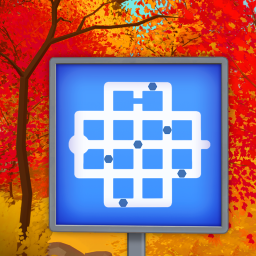
The Witness
A first-person puzzle game on an island full of line-drawing panels.
Where The Witness comes up7 episodes and tests
 Gcreator of Game Maker's Toolkit testWhat Makes a Game Feel Mysterious?
 Gcreator of Game Maker's Toolkit, on the design philosophy of Braid and The Witness designer Jonathan Blow testHow Jonathan Blow Designs a Puzzle
 Gcreator of Game Maker's Toolkit testThe World Design of Metroid Prime | Boss Keys
 Gcreator of Game Maker's Toolkit testImproving Games for Those with Cognitive Disabilities | Designing for Disability
 Gcreator of Game Maker's Toolkit testMaking Games Better for Players with Motor Disabilities | Designing for Disability
 Gcreator of Game Maker's Toolkit testMaking Games Better for the Deaf and Hard of Hearing | Designing for Disability
 Gcreator of Game Maker's Toolkit testHow to Keep Players Engaged (Without Being Evil)
The Witness teaches its line-drawing rules in quick intro puzzles, then tests only their consequences, so solving feels like understanding. A visible mountain with seven lasers makes the goal clear, a near-unsolvable early door hooks players, and missable environmental puzzles reward the observant. Lesson: teach rules fast, show the goal, keep secrets optional. Accessibility includes click-to-move and a crosshair option.
- 1Playtest a mechanicNoticed he kept partitioning grid cells
- 2Push rule everywhereGrid, cells, line, environment, panel
- 3Cut unsurprising rulesDrop overlapping, contrived or empty ones
- 4Teach early, then recombineHarder puzzles change layouts, not tools
From Jonathan Blow at IndieCade 2011
What was said about The Witness
1How Jonathan Blow found The Witness's puzzle rules
The line-drawing rules came from playtesting a mechanic, not a planned puzzle type. While playtesting line drawing on a grid, Blow noticed he was often partitioning the grid's cells, and that observation became a core rule of The Witness.
At IndieCade 2011 Blow said the puzzle type came from "asking these little known questions," not from a top-down demand for a certain kind of puzzle. It came out of a simple process of exploration early in development.
Each puzzle stages one surprising consequence of a rule. Two near-identical panels make the cell-partitioning rule visible: a simple loop solves the first, but in the second the exit has moved and the same loop cuts it off.
Blow uses misdirection so the obvious move fails, which stops players from brute-forcing past the idea, and pairs a simple puzzle with a bigger version nearby so players can compare what the rule changed.
Push every rule through every element of the game. Once he had a rule, Blow asked how each part of The Witness could be twisted by it: the grid, the cells, the line, the environment and the panel itself.
Cut rules that are unsurprising, overlapping or say nothing. Blow edits out mechanics, rules and puzzles that lack surprise, repeat each other or feel contrived. The Witness itself is a spin-off of a shelved game whose core mechanic did not offer enough to explore.
He also keeps things that are not fun if removing them would make the game feel incomplete.
Teach every mechanic early, then only recombine what players know. The Witness introduces its elements upfront with quick introductory puzzles. Harder puzzles change set-ups, combinations and layouts rather than adding new tools, and most explore a single idea.
There are few red herrings or arbitrary steps, so a solved puzzle means "I understand" and feels fair. Once the solution is seen, carrying it out is relatively effortless. Blow: "a puzzle is never just a puzzle. It's a communication of an idea from the designer to the player."
2The hidden environmental puzzles
- 1Solve grid panelsLooks like a panel puzzle game
- 2Notice a riverIt resembles a puzzle grid line
- 3Realise island is puzzlesOptional, easy to miss entirely
- 4Wonder what you missedTraveled path becomes littered with questions
From Jonathan Blow and Andrew Shouldice
Hide questions players don't know they can ask. The Witness looks like a grid-panel game until, hours in, a player notices a river that resembles a grid line and realises the whole island is full of puzzles they can draw on.
The reveal makes players wonder what else they missed. Tunic designer Andrew Shouldice describes the effect: "suddenly the entire path that you've traveled becomes littered with question marks."
Make the biggest secrets genuinely easy to miss. Blow designed the environmental puzzles to be optional and missable so finding them felt like a true personal discovery: "it had to be legitimately likely that you could finish the game and never see that stuff."
Like the panels, the hidden puzzles rest on seeing something real that was in front of you all along, which Blow argues makes the epiphany more meaningful than an arbitrary challenge.
3The mountain goal and the locked door hook
A visible end goal keeps players oriented all game. Finishing each puzzle set fires a laser to the top of the mountain, showing one of seven locks opening, so the goal stays clear and in view throughout.
Mark Brown: "The mountain and the lasers are consistently visible."
An unsolvable door near the start pulls players forward. Early on, players meet a puzzle door they essentially cannot solve yet. It sticks in their head and they keep playing to learn what is behind it.
Mark Brown says he finds the game impossible to put down: "you'll need to know what's behind that door."
4Accessibility choices
Click-to-move on PC makes the whole game playable one-handed. The PC version offers a click-to-move scheme alongside mouse and keyboard, so the entire game works with one hand.
Optional sound puzzles and a crosshair cover other disabilities. Audio diaries are subtitled and the sound-based puzzles are effectively optional, so deaf and hard of hearing players are mostly not blocked. A crosshair option helps reduce simulation sickness even though the game has no guns.
5Similar examples from other apps
These are about other apps, not The Witness: examples from the same sources that help explain it.
Braid, Blow's earlier game, found its rules the same way. Coding unlimited rewind showed some objects could be made immune to it, and that rule was then applied to enemies, keys, doors, clouds, platforms and the player character.
Blow dropped Braid's turn-based world because its consequences were not surprising. Braid was also a spin-off of a shelved game.
What Makes a Game Feel Mysterious?
A player may suddenly realise the environment itself is full of puzzles, such as a river that looks like a grid line. Jonathan Blow says these secrets had to be easy to miss, so it was likely you could finish without seeing them.
Hide questions players don't know they can ask. The Witness looks like a grid-panel game until, hours in, a player notices a river that resembles a grid line and realises the whole island is full of puzzles they can draw on.
The reveal makes players wonder what else they missed. Tunic designer Andrew Shouldice describes the effect: "suddenly the entire path that you've traveled becomes littered with question marks."
Make the biggest secrets genuinely easy to miss. Blow designed the environmental puzzles to be optional and missable so finding them felt like a true personal discovery: "it had to be legitimately likely that you could finish the game and never see that stuff."
Like the panels, the hidden puzzles rest on seeing something real that was in front of you all along, which Blow argues makes the epiphany more meaningful than an arbitrary challenge.
The World Design of Metroid Prime | Boss Keys
Finishing a puzzle set fires a laser at the mountain showing one of seven locks opening, so the goal is clear and visible throughout the game. It is held up as a contrast to Prime's hidden artifact temple.
A visible end goal keeps players oriented all game. Finishing each puzzle set fires a laser to the top of the mountain, showing one of seven locks opening, so the goal stays clear and in view throughout.
Mark Brown: "The mountain and the lasers are consistently visible."
Improving Games for Those with Cognitive Disabilities | Designing for Disability
A crosshair option helps reduce simulation sickness in first person games, even in games without guns like this one.
Optional sound puzzles and a crosshair cover other disabilities. Audio diaries are subtitled and the sound-based puzzles are effectively optional, so deaf and hard of hearing players are mostly not blocked. A crosshair option helps reduce simulation sickness even though the game has no guns.
Making Games Better for Players with Motor Disabilities | Designing for Disability
Its PC version offers a click-to-move scheme so the whole game works with one hand, and it supports mouse and keyboard controls.
Click-to-move on PC makes the whole game playable one-handed. The PC version offers a click-to-move scheme alongside mouse and keyboard, so the entire game works with one hand.
Making Games Better for the Deaf and Hard of Hearing | Designing for Disability
It subtitles its audio diaries, and its sound puzzles are effectively optional, so deaf players are mostly safe.
Optional sound puzzles and a crosshair cover other disabilities. Audio diaries are subtitled and the sound-based puzzles are effectively optional, so deaf and hard of hearing players are mostly not blocked. A crosshair option helps reduce simulation sickness even though the game has no guns.
How to Keep Players Engaged (Without Being Evil)
An essentially unsolvable puzzle door near the start sticks in the player's head and pulls them forward. Mark Brown finds it impossible to put down.
An unsolvable door near the start pulls players forward. Early on, players meet a puzzle door they essentially cannot solve yet. It sticks in their head and they keep playing to learn what is behind it.
Mark Brown says he finds the game impossible to put down: "you'll need to know what's behind that door."
How Jonathan Blow Designs a Puzzle
Playtesting line drawing showed Blow he was often partitioning grid cells, which became a rule. Near-identical puzzles show a loop that solves one panel but cuts off the moved exit in the next, and its hidden puzzles work the same way.
The line-drawing rules came from playtesting a mechanic, not a planned puzzle type. While playtesting line drawing on a grid, Blow noticed he was often partitioning the grid's cells, and that observation became a core rule of The Witness.
At IndieCade 2011 Blow said the puzzle type came from "asking these little known questions," not from a top-down demand for a certain kind of puzzle. It came out of a simple process of exploration early in development.
Each puzzle stages one surprising consequence of a rule. Two near-identical panels make the cell-partitioning rule visible: a simple loop solves the first, but in the second the exit has moved and the same loop cuts it off.
Blow uses misdirection so the obvious move fails, which stops players from brute-forcing past the idea, and pairs a simple puzzle with a bigger version nearby so players can compare what the rule changed.
Push every rule through every element of the game. Once he had a rule, Blow asked how each part of The Witness could be twisted by it: the grid, the cells, the line, the environment and the panel itself.
Cut rules that are unsurprising, overlapping or say nothing. Blow edits out mechanics, rules and puzzles that lack surprise, repeat each other or feel contrived. The Witness itself is a spin-off of a shelved game whose core mechanic did not offer enough to explore.
He also keeps things that are not fun if removing them would make the game feel incomplete.
Teach every mechanic early, then only recombine what players know. The Witness introduces its elements upfront with quick introductory puzzles. Harder puzzles change set-ups, combinations and layouts rather than adding new tools, and most explore a single idea.
There are few red herrings or arbitrary steps, so a solved puzzle means "I understand" and feels fair. Once the solution is seen, carrying it out is relatively effortless. Blow: "a puzzle is never just a puzzle. It's a communication of an idea from the designer to the player."
Make the biggest secrets genuinely easy to miss. Blow designed the environmental puzzles to be optional and missable so finding them felt like a true personal discovery: "it had to be legitimately likely that you could finish the game and never see that stuff."
Like the panels, the hidden puzzles rest on seeing something real that was in front of you all along, which Blow argues makes the epiphany more meaningful than an arbitrary challenge.
Braid, Blow's earlier game, found its rules the same way. Coding unlimited rewind showed some objects could be made immune to it, and that rule was then applied to enemies, keys, doors, clouds, platforms and the player character.
Blow dropped Braid's turn-based world because its consequences were not surprising. Braid was also a spin-off of a shelved game.
More in Games
 Games
Nintendo
A Zelda adventure where Princess Zelda copies objects and monsters as echoes to solve puzzles and fight.
 Games
The Legend of Zelda: Breath of the Wild
Nintendo's long-running action-adventure series about Link exploring Hyrule, solving puzzles and fighting Ganon.
 Games
Dead Space
A major video game publisher and the guest's employer.
 G
 29 sources · 94 tips
Mind Over Magnet
A puzzle platformer where you escape a factory using a magnet and a magnetic field.
 Games
Far Cry 2
An open world action game where you recruit and play any of London's citizens.
 Games
God of War
A combat-focused action adventure game from Santa Monica Studio with Norse mythology and light puzzles.
Mind Over Magnet
Mark Brown's first game, a puzzle game he made while learning Unity.
 Games
Dishonored
A first-person stealth action game from Arkane with supernatural powers and the Clockwork Mansion level.