Tenchu: Stealth Assassins
A 1998 stealth game where you play a ninja striking from shadows in dark villages.
Where Tenchu: Stealth Assassins comes up1 episode or test
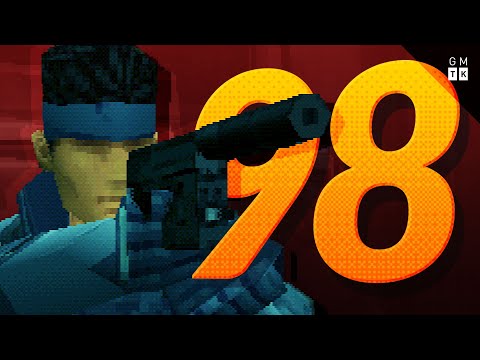
Tenchu (1998) gave stealth players a Ki Meter showing guard distance and awareness, poisoned food to manipulate guards, and a grappling hook that made rooftops the safe route. Its cinematic stealth kills spread to later games. The lesson: show players clearly whether they are hidden, add a suspicious middle state, and give them tools and vertical routes to create their own openings.
- TenchuNinja strikes from pitch black villages
- Metal Gear SolidSoliton radar shows guard awareness
- ThiefLight Gem shows how visible you are
From Tenchu page, 1998 stealth release dates
What was said about Tenchu: Stealth Assassins
1The stealth rules Tenchu helped set in 1998
Tenchu made staying unseen safer than fighting, alongside two other 1998 games. Tenchu arrived in August 1998, before Metal Gear Solid in October and Thief in November. It cast the player as a ninja in pitch black villages who strikes from the shadows.
Before 1998 stealth was a rare side idea. Sega's 005 had flashlight guards and Castle Wolfenstein had disguises. These three games set rules still used today.
Start missions with unaware guards so players have a state to protect. In Tenchu, Metal Gear Solid and Thief, guards patrol with no knowledge of the player's position or existence, and the core goal is to keep it that way.
Quote: "all of the games have you start missions in a neutral, non-hostile state"
Tenchu's Ki Meter removed guesswork about whether a guard could spot you. The Ki Meter changes colour with guard awareness and also shows a number for how close the nearest guard is, so players can plan a route instead of guessing.
Metal Gear Solid's Soliton radar and Thief's Light Gem solve the same problem. Quote: "it removes the ambiguity of whether or not you're about to be spotted"
A suspicious middle state forgives small mistakes without a full alert. Tenchu's guards investigate odd sights and sounds before attacking, and give up the hunt if the player hides.
Being able to recover means players avoid reloading a save or killing everyone. Quote: "guards have a middle state where they're merely suspicious and will investigate suspect sights and sounds"
Let players steer guard behaviour, like Tenchu's poisoned food trick. Because guards react to what they see and hear, Tenchu lets players trick them into eating poisoned food to create openings.
Metal Gear Solid uses wall knocking and Thief uses noisemaker arrows for the same purpose. Quote: "manipulating guard AI to your own needs"
2Rooftops, the grappling hook and cinematic stealth kills
Tenchu's grappling hook turned rooftops into the safe route above guards. A freely aimed grappling hook and a generous jump let players move above enemies unseen, then drop down to silently dispatch them.
The Arkham series later used the upper areas of levels the same way, to plan moves and hide. Quote: "using the verticality of levels to stay unseen"
Tenchu's cinematic stealth kills spread to later games, including Sekiro. Its stealth kills were taken up by later games, and publisher FromSoftware used the series as inspiration for Sekiro: Shadows Die Twice.
FromSoftware, makers of Dark Souls, had planned a new Tenchu game, and Miyazaki's Sekiro was set to feature stealth elements.
3Why the 1998 games, not the inventor, defined stealth
New 3D and CD technology made Tenchu's kind of game possible. The shift to 3D and CD hardware enabled games about hiding from enemies, the same tech wave that produced Grand Theft Auto and Parappa the Rapper.
Thief needed CD quality audio and advanced guard AI, and Kojima returned to Metal Gear only because polygons let him show a hiding player's view.
The game that popularises a genre is often not the one that invented it. Metal Gear 2 already had radar, noisy grates, suspicious guards, wall knocking and a reset to neutral, but it ran only on the MSX2 in Japan and barely influenced anyone.
The commercial and critical success of the 1998 games spread these rules across the genre, much as Doom's imitators were called Doom clones though Doom did not invent the shooter.
4Similar examples from other apps
These are about other apps, not Tenchu: Stealth Assassins: examples from the same sources that help explain it.
Thief let players reshape levels to suit their approach. Thief's open, interconnected levels had many routes, and water arrows put out candles to make darkness while moss arrows made silent tiles.
On higher difficulties Thief forbids killing guards. Hitman and Dishonored share its open level design.
Metal Gear Solid showed a countdown until guards reset to neutral. After being spotted, a timer showed how long to stay hidden before guards returned to normal, and its radar jammed while players were detected.
The Year Stealth Games Got Serious
Released in August 1998, it offered the Ki Meter with a guard distance number, poisoned food tricks, and a grappling hook that made rooftops the safe route. Its cinematic stealth kills spread to later games.
Tenchu made staying unseen safer than fighting, alongside two other 1998 games. Tenchu arrived in August 1998, before Metal Gear Solid in October and Thief in November. It cast the player as a ninja in pitch black villages who strikes from the shadows.
Before 1998 stealth was a rare side idea. Sega's 005 had flashlight guards and Castle Wolfenstein had disguises. These three games set rules still used today.
Start missions with unaware guards so players have a state to protect. In Tenchu, Metal Gear Solid and Thief, guards patrol with no knowledge of the player's position or existence, and the core goal is to keep it that way.
Quote: "all of the games have you start missions in a neutral, non-hostile state"
Tenchu's Ki Meter removed guesswork about whether a guard could spot you. The Ki Meter changes colour with guard awareness and also shows a number for how close the nearest guard is, so players can plan a route instead of guessing.
Metal Gear Solid's Soliton radar and Thief's Light Gem solve the same problem. Quote: "it removes the ambiguity of whether or not you're about to be spotted"
A suspicious middle state forgives small mistakes without a full alert. Tenchu's guards investigate odd sights and sounds before attacking, and give up the hunt if the player hides.
Being able to recover means players avoid reloading a save or killing everyone. Quote: "guards have a middle state where they're merely suspicious and will investigate suspect sights and sounds"
Let players steer guard behaviour, like Tenchu's poisoned food trick. Because guards react to what they see and hear, Tenchu lets players trick them into eating poisoned food to create openings.
Metal Gear Solid uses wall knocking and Thief uses noisemaker arrows for the same purpose. Quote: "manipulating guard AI to your own needs"
Tenchu's grappling hook turned rooftops into the safe route above guards. A freely aimed grappling hook and a generous jump let players move above enemies unseen, then drop down to silently dispatch them.
The Arkham series later used the upper areas of levels the same way, to plan moves and hide. Quote: "using the verticality of levels to stay unseen"
Tenchu's cinematic stealth kills spread to later games, including Sekiro. Its stealth kills were taken up by later games, and publisher FromSoftware used the series as inspiration for Sekiro: Shadows Die Twice.
FromSoftware, makers of Dark Souls, had planned a new Tenchu game, and Miyazaki's Sekiro was set to feature stealth elements.
New 3D and CD technology made Tenchu's kind of game possible. The shift to 3D and CD hardware enabled games about hiding from enemies, the same tech wave that produced Grand Theft Auto and Parappa the Rapper.
Thief needed CD quality audio and advanced guard AI, and Kojima returned to Metal Gear only because polygons let him show a hiding player's view.
The game that popularises a genre is often not the one that invented it. Metal Gear 2 already had radar, noisy grates, suspicious guards, wall knocking and a reset to neutral, but it ran only on the MSX2 in Japan and barely influenced anyone.
The commercial and critical success of the 1998 games spread these rules across the genre, much as Doom's imitators were called Doom clones though Doom did not invent the shooter.
Thief let players reshape levels to suit their approach. Thief's open, interconnected levels had many routes, and water arrows put out candles to make darkness while moss arrows made silent tiles.
On higher difficulties Thief forbids killing guards. Hitman and Dishonored share its open level design.
Metal Gear Solid showed a countdown until guards reset to neutral. After being spotted, a timer showed how long to stay hidden before guards returned to normal, and its radar jammed while players were detected.
More in Games
 Games
Nintendo
A Zelda adventure where Princess Zelda copies objects and monsters as echoes to solve puzzles and fight.
 Games
The Legend of Zelda: Breath of the Wild
Nintendo's long-running action-adventure series about Link exploring Hyrule, solving puzzles and fighting Ganon.
 Games
Dead Space
A major video game publisher and the guest's employer.
 G
 29 sources · 94 tips
Mind Over Magnet
A puzzle platformer where you escape a factory using a magnet and a magnetic field.
 Games
Far Cry 2
An open world action game where you recruit and play any of London's citizens.
 Games
God of War
A combat-focused action adventure game from Santa Monica Studio with Norse mythology and light puzzles.
Mind Over Magnet
Mark Brown's first game, a puzzle game he made while learning Unity.
 Games
Dishonored
A first-person stealth action game from Arkane with supernatural powers and the Clockwork Mansion level.