
Retro Studios
The game studio that developed the Metroid Prime series for Nintendo.
Where Retro Studios comes up4 episodes and tests
 Gcreator of Game Maker's Toolkit testThe World Design of Metroid Prime 3: Corruption | Boss Keys
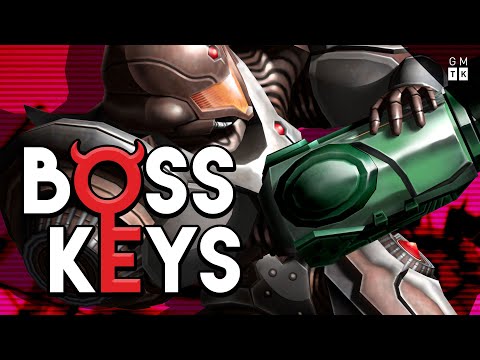 Gcreator of Game Maker's Toolkit testThe World Design of Metroid Prime 2: Echoes | Boss Keys
 Gcreator of Game Maker's Toolkit testThe World Design of Metroid Prime | Boss Keys
 Gcreator of Game Maker's Toolkit testDonkey Kong Country: Tropical Freeze - Mario's Level Design, Evolved
Retro Studios carried Metroid's atmosphere, isolation and lock-and-key design into 3D despite fan doubts, but Prime 2 repeated Prime 1's end-game scavenger hunt and skipped Zelda's instant dungeon exit after bosses, hurting pacing. Tropical Freeze showed the upside of evolving Nintendo's level pattern by adding themes to mechanics. Lesson: borrow proven structures, then fix their known pacing flaws instead of repeating them.
- Most artifacts need late items
- 5 Sky Temple Keys need Light Suit
- Hunt stalls just before final boss
- Hunt can start early on Bryyo
- Only 5 of 9 cells needed
Cell hunt fixed the end-game pacing
From Mark Brown, Game Maker's Toolkit
What was said about Retro Studios
1Bringing Metroid into 3D with Metroid Prime
Retro kept Metroid's isolation and lock-and-key structure intact in first person. Despite fan doubts about a Texas studio making a first-person Metroid, Prime carried over the atmosphere, isolation and interconnected world, with combat about outmanoeuvring foes and using visors more than aiming.
The frigate prologue works as prologue, tutorial and preview: it gives Samus the Morph Ball and Grapple Beam, then an electrical blast strips her to basic gear before she chases Ridley to Tallon IV. Mark Brown argues Prime's world design mistakes may teach more than its successes.
Make dead ends memorable so players know where a new upgrade goes. The core challenge is answering 'where can I use it?' the moment an item is picked up. Prime does this unevenly: the flooded frigate shaft (Gravity Suit) and hot Magmoor rooms (Varia Suit) stick, while a Phazon room needing X-Ray Visor platforms cannot.
Good tricks: a copy of the dead end near the power-up, like the Boost Ball half pipe in Phendrana Drifts echoing earlier ones, and showing a dead end just before the item, like the too-small hole next to an energy tank after the missiles. Colour-coded Missile, Wave, Ice and Plasma door icons on the map undo this by turning play into walking to the nearest matching door.
Heavy hints on by default and an ever-growing world push players to walkthroughs. Prime's hint system tells you almost exactly where to go and is switched on by default. About 25 rooms are open after the Morph Ball but hundreds after the Grapple Beam, and Prime never limits options the way Super Metroid traps you in Norfair.
What helps: constant optional rewards (charge combos, missile tanks, power bombs, energy tanks) and a map marking explored rooms orange and unexplored blue. The map still fails at times, such as not showing the Spider Ball spot even after the terminal is activated.
Distinct areas are easy to learn, but poor connections force needless backtracking. The five areas are told apart by colour alone (grassy Tallon, dusty Chozo Ruins, lava Magmoor, snowy Phendrana, toxic Phazon Mines). But Phendrana is reachable only through Magmoor, which holds just the Plasma Beam, so players cross it at least five times like a subway station.
Elevators and a 3D wireframe map make the layout hard to hold in your head; the elevators probably hide GameCube loading screens. The fix offered: map the ground covered between items, and if one path is taken five times, move items or add links between areas.
The Chozo Artifact hunt mixed linear and free play but botched the goal. The 17 upgrades come in a fixed order while the 12 artifacts can be found in any order via statue clues. But the final goal is never made clear, and most artifacts need late items, so players feel the game is ending and then must cross the whole map again.
Only three artifacts (truth, strength, wild) are available early; world, sun, elder and spirit need the penultimate Plasma Beam, and nine need the Gravity Suit. The lesson: make the final goal crystal clear early, as The Witness does, and let players work on it throughout the game.
2Metroid Prime 2's hub-and-temple world
Splitting Aether into self-contained temples means players needn't remember the whole map. Agon Wastes, Torvus Bog and Sanctuary Fortress hang off the Great Temple like Zelda dungeons. Each takes a few hours of exploring, power-ups, keys and a boss, and you mostly never return, so you can forget each area before the next.
Brown argues players can't fairly be asked to remember a huge Metroidvania map like late Super Metroid's. Three boss keys per area can be found out of order, adding a little non-linearity to otherwise linear areas.
The two items that send players back are where they got stuck. The Seeker Missiles and Power Bombs are the only mandatory items found outside the current area, and they were the only two times Brown got stuck, even with hints off.
The Power Bomb's path is a forgettable Spider Ball track in a room off the Torvus Bog boss fight, like getting the hammer in the Fire Temple and crossing Hyrule Field to use it in the Forest Temple. Remembering old areas can still pay off: Seeker Missiles open an Agon Wastes door to the optional Darkburst.
Dark Aether adds tension but wastes its two-world puzzle potential. The Dark World is claustrophobic, full of enemies and drains health with radiation, so each jump feels different. But puzzles where one world affects the other reduce to a single button press, and after Torvus Bog the idea is dropped.
In the Torvus Bog basement, a Dark Aether laser moves a mechanism in the Light copy of the room, where the expected puzzle was memorising the room and placing the laser blind. Sanctuary Fortress has no cross-world puzzles, leaving a maze of portals between two largely disconnected areas.
The Sky Temple Key hunt repeats Prime 1's end-game slump. Nine keys spread across Dark Aether stop all forward drive just when players feel ready for the final boss. About 13 power-ups are needed before the hunt starts, and five keys need the very last item, the Light Suit.
Scanning keybearer corpses gives place-name clues, which is fun, but the jellyfish holding keys are visible only with the Dark Visor, so rooms like the Defiled Shrine look empty. Fast travel between the zones and hub is unlocked to ease the hunt.
Let players teleport out after a boss instead of backtracking. After each boss, Prime 2 makes you power up the Dark World reactor, then the Light World one, then walk to the main temple. Zelda's instant exit after a boss was the feature Retro forgot to borrow.
"The one thing Retro forgot to borrow from Zelda is the fact that you can instantly teleport out of the dungeon after defeating the boss."
Optional pickups are earned, not just found behind doors. Energy tanks, ammo upgrades, power bomb slots and secret charge beams reward returning with new power-ups, and most sit behind small puzzles, platforming or feats of strength.
3Metroid Prime 3's planets and guided structure
A long, voiced, linear opening undercut the sense of isolated exploration. The Norion prologue runs about 90 minutes of cutscenes, allies giving orders and set pieces before the world opens up after a month's time jump.
Earlier openers were quick, like Super Metroid's Ceres Station and Prime's Frigate. Brown argues the spectre of that opening never goes away.
Planet hopping made areas distinct but rigid and harder to navigate. Bryyo, Elysia, the Pirate Homeworld and the GFS Valhalla each feel different, and the gunship is finally used in exploration, combat and puzzles. But the order is fixed: the Bryyo-or-Elysia choice is fake because Elysia stays locked until Bryyo's Hyper Ball.
Areas are stretched highways rather than a knot of tunnels, and Elysia looks similar everywhere. Backtracking between planets is announced with a message that the needed item 'may reside on a world you have previously visited', which Prime 2 never did.
Cutting the visible link between lock and key forces constant hand-holding. Unlocks like the screw attack opening Valhalla or fixed panels repairing the ship have no clear cause and effect, so Aurora keeps giving directions even with hints off, and players stop remembering locked doors.
Brown notes logical links like crossing a lava corridor with an ice missile let Metroid be explored 'without a single word of dialogue'. After constant directions, placing the Elysia plasma beam at a frozen Bryyo entrance yourself feels overwhelming.
The energy cell hunt fixed the pacing of earlier key hunts. Unlike Prime 1's artifacts and Prime 2's Sky Temple Keys, the cell hunt can start early on Bryyo, and only 5 of 9 cells are needed for the pirate battleship password.
The fourth cell is a macro puzzle: build a bridge so the gunship can carry a generator across the planet, the kind Zelda dungeons have and Metroid often lacks. The game never says which doors are optional, so spending cells on secret rooms can force a last-minute hunt.
Thin exploration rewards and shooter set pieces pulled it below Prime 1 and 2. Prime 3 is the only Prime game with no secret weapons or optional upgrades, energy tanks are plentiful, and moments like defending a flying bomb feel like any sci-fi shooter.
"If you want to play Halo, just play Halo. We play Metroid for exploration, solitude, and adventure." Its Wii pointer controls were strong enough that Retro re-released Prime 1 and 2 with them; Prime 4 was in development at Retro for Switch.
4How Tropical Freeze evolved Nintendo's level pattern
- 1Teach bending flowersBaobab Bonanza, taught on its own
- 2Teach rolling spiked nutsKept apart from the flowers
- 3Combine for surpriseGiant nut chases you across flowers
From Mark Brown, Game Maker's Toolkit
Nintendo's one-idea-per-level pattern runs short and turns predictable. Classic levels introduce one mechanic and escalate it, as in Lemmy's Swingback Castle in New Super Mario Bros. U. The pattern fills a game with ideas, but there are only so many ways to spin one, and the same hazards recur across all four New Super Mario Bros. games.
Donkey Kong levels followed it too: Rare's Stop & Go Station and Red Hot Ride, and Retro's own Damp Dungeon built around water wheels.
Teach mechanics separately, then combine them for surprise. Tropical Freeze mixes two or more mechanics per stage. Rickety Rafters teaches pulling, standing on and throwing berries at switches, then has you pull a switch to reveal a button you hit with fruit.
In Baobab Bonanza, bending flowers and rolling spiked nuts stay apart until a giant nut chases you across the flowers, so neither feels samey. Single-mechanic stages still twist ideas: Sawmill Thrill's saws carve platforms and throw up new track.
A shared theme holds many mechanics together and sparks new ideas. Scorch 'n' Torch ties about six mechanics to one forest fire, each taught before it is mixed. Fruity Factory's fruit-processing theme produced cleavers, drills and blenders, and its world follows fruit from picking to frozen ice lollies, paying off in the boss fight.
"By thinking about themes, as well as mechanics - Retro managed to forge an incredible set of levels."
Longer stages carry rest breaks, bonus challenges and small stories. Stages can run 10 minutes with two or three checkpoints, where Mario stages often have one. Windmill Hills breaks up the middle with a cable car ride unrelated to its main mechanics.
Puzzle pieces reward exploration and KONG letters reward risk, unlocking hard bonus levels like Precarious Pendulums. The cost is fewer levels, though Mario U has only about 10 more than Tropical Freeze.
The World Design of Metroid Prime 3: Corruption | Boss Keys
Made the Prime games, re-released Prime 1 and 2 with the Wii pointer controls, and is now building Prime 4 for Switch. The hope is that Prime 4 finds the magic again.
A long, voiced, linear opening undercut the sense of isolated exploration. The Norion prologue runs about 90 minutes of cutscenes, allies giving orders and set pieces before the world opens up after a month's time jump.
Earlier openers were quick, like Super Metroid's Ceres Station and Prime's Frigate. Brown argues the spectre of that opening never goes away.
Planet hopping made areas distinct but rigid and harder to navigate. Bryyo, Elysia, the Pirate Homeworld and the GFS Valhalla each feel different, and the gunship is finally used in exploration, combat and puzzles. But the order is fixed: the Bryyo-or-Elysia choice is fake because Elysia stays locked until Bryyo's Hyper Ball.
Areas are stretched highways rather than a knot of tunnels, and Elysia looks similar everywhere. Backtracking between planets is announced with a message that the needed item 'may reside on a world you have previously visited', which Prime 2 never did.
Cutting the visible link between lock and key forces constant hand-holding. Unlocks like the screw attack opening Valhalla or fixed panels repairing the ship have no clear cause and effect, so Aurora keeps giving directions even with hints off, and players stop remembering locked doors.
Brown notes logical links like crossing a lava corridor with an ice missile let Metroid be explored 'without a single word of dialogue'. After constant directions, placing the Elysia plasma beam at a frozen Bryyo entrance yourself feels overwhelming.
The energy cell hunt fixed the pacing of earlier key hunts. Unlike Prime 1's artifacts and Prime 2's Sky Temple Keys, the cell hunt can start early on Bryyo, and only 5 of 9 cells are needed for the pirate battleship password.
The fourth cell is a macro puzzle: build a bridge so the gunship can carry a generator across the planet, the kind Zelda dungeons have and Metroid often lacks. The game never says which doors are optional, so spending cells on secret rooms can force a last-minute hunt.
Thin exploration rewards and shooter set pieces pulled it below Prime 1 and 2. Prime 3 is the only Prime game with no secret weapons or optional upgrades, energy tanks are plentiful, and moments like defending a flying bomb feel like any sci-fi shooter.
"If you want to play Halo, just play Halo. We play Metroid for exploration, solitude, and adventure." Its Wii pointer controls were strong enough that Retro re-released Prime 1 and 2 with them; Prime 4 was in development at Retro for Switch.
The World Design of Metroid Prime 2: Echoes | Boss Keys
Rebuilt exploration in Prime 2 around a hub with Zelda-like temples, but forgot Zelda's instant teleport out of a dungeon after a boss. It repeated Prime 1's end-game scavenger hunt, which hurts the pacing again.
Splitting Aether into self-contained temples means players needn't remember the whole map. Agon Wastes, Torvus Bog and Sanctuary Fortress hang off the Great Temple like Zelda dungeons. Each takes a few hours of exploring, power-ups, keys and a boss, and you mostly never return, so you can forget each area before the next.
Brown argues players can't fairly be asked to remember a huge Metroidvania map like late Super Metroid's. Three boss keys per area can be found out of order, adding a little non-linearity to otherwise linear areas.
The two items that send players back are where they got stuck. The Seeker Missiles and Power Bombs are the only mandatory items found outside the current area, and they were the only two times Brown got stuck, even with hints off.
The Power Bomb's path is a forgettable Spider Ball track in a room off the Torvus Bog boss fight, like getting the hammer in the Fire Temple and crossing Hyrule Field to use it in the Forest Temple. Remembering old areas can still pay off: Seeker Missiles open an Agon Wastes door to the optional Darkburst.
Dark Aether adds tension but wastes its two-world puzzle potential. The Dark World is claustrophobic, full of enemies and drains health with radiation, so each jump feels different. But puzzles where one world affects the other reduce to a single button press, and after Torvus Bog the idea is dropped.
In the Torvus Bog basement, a Dark Aether laser moves a mechanism in the Light copy of the room, where the expected puzzle was memorising the room and placing the laser blind. Sanctuary Fortress has no cross-world puzzles, leaving a maze of portals between two largely disconnected areas.
The Sky Temple Key hunt repeats Prime 1's end-game slump. Nine keys spread across Dark Aether stop all forward drive just when players feel ready for the final boss. About 13 power-ups are needed before the hunt starts, and five keys need the very last item, the Light Suit.
Scanning keybearer corpses gives place-name clues, which is fun, but the jellyfish holding keys are visible only with the Dark Visor, so rooms like the Defiled Shrine look empty. Fast travel between the zones and hub is unlocked to ease the hunt.
Let players teleport out after a boss instead of backtracking. After each boss, Prime 2 makes you power up the Dark World reactor, then the Light World one, then walk to the main temple. Zelda's instant exit after a boss was the feature Retro forgot to borrow.
"The one thing Retro forgot to borrow from Zelda is the fact that you can instantly teleport out of the dungeon after defeating the boss."
Optional pickups are earned, not just found behind doors. Energy tanks, ammo upgrades, power bomb slots and secret charge beams reward returning with new power-ups, and most sit behind small puzzles, platforming or feats of strength.
The World Design of Metroid Prime | Boss Keys
It carried Metroid's atmosphere, isolation and lock-and-key structure into 3D, despite fan doubts about a Texas studio making a first-person Metroid. Its world design has flaws worth studying.
Retro kept Metroid's isolation and lock-and-key structure intact in first person. Despite fan doubts about a Texas studio making a first-person Metroid, Prime carried over the atmosphere, isolation and interconnected world, with combat about outmanoeuvring foes and using visors more than aiming.
The frigate prologue works as prologue, tutorial and preview: it gives Samus the Morph Ball and Grapple Beam, then an electrical blast strips her to basic gear before she chases Ridley to Tallon IV. Mark Brown argues Prime's world design mistakes may teach more than its successes.
Make dead ends memorable so players know where a new upgrade goes. The core challenge is answering 'where can I use it?' the moment an item is picked up. Prime does this unevenly: the flooded frigate shaft (Gravity Suit) and hot Magmoor rooms (Varia Suit) stick, while a Phazon room needing X-Ray Visor platforms cannot.
Good tricks: a copy of the dead end near the power-up, like the Boost Ball half pipe in Phendrana Drifts echoing earlier ones, and showing a dead end just before the item, like the too-small hole next to an energy tank after the missiles. Colour-coded Missile, Wave, Ice and Plasma door icons on the map undo this by turning play into walking to the nearest matching door.
Heavy hints on by default and an ever-growing world push players to walkthroughs. Prime's hint system tells you almost exactly where to go and is switched on by default. About 25 rooms are open after the Morph Ball but hundreds after the Grapple Beam, and Prime never limits options the way Super Metroid traps you in Norfair.
What helps: constant optional rewards (charge combos, missile tanks, power bombs, energy tanks) and a map marking explored rooms orange and unexplored blue. The map still fails at times, such as not showing the Spider Ball spot even after the terminal is activated.
Distinct areas are easy to learn, but poor connections force needless backtracking. The five areas are told apart by colour alone (grassy Tallon, dusty Chozo Ruins, lava Magmoor, snowy Phendrana, toxic Phazon Mines). But Phendrana is reachable only through Magmoor, which holds just the Plasma Beam, so players cross it at least five times like a subway station.
Elevators and a 3D wireframe map make the layout hard to hold in your head; the elevators probably hide GameCube loading screens. The fix offered: map the ground covered between items, and if one path is taken five times, move items or add links between areas.
The Chozo Artifact hunt mixed linear and free play but botched the goal. The 17 upgrades come in a fixed order while the 12 artifacts can be found in any order via statue clues. But the final goal is never made clear, and most artifacts need late items, so players feel the game is ending and then must cross the whole map again.
Only three artifacts (truth, strength, wild) are available early; world, sun, elder and spirit need the penultimate Plasma Beam, and nine need the Gravity Suit. The lesson: make the final goal crystal clear early, as The Witness does, and let players work on it throughout the game.
Donkey Kong Country: Tropical Freeze - Mario's Level Design, Evolved
Took Nintendo's single-mechanic level pattern and evolved it by thinking about themes as well as mechanics. The result is levels with more surprise, variety and length.
Nintendo's one-idea-per-level pattern runs short and turns predictable. Classic levels introduce one mechanic and escalate it, as in Lemmy's Swingback Castle in New Super Mario Bros. U. The pattern fills a game with ideas, but there are only so many ways to spin one, and the same hazards recur across all four New Super Mario Bros. games.
Donkey Kong levels followed it too: Rare's Stop & Go Station and Red Hot Ride, and Retro's own Damp Dungeon built around water wheels.
Teach mechanics separately, then combine them for surprise. Tropical Freeze mixes two or more mechanics per stage. Rickety Rafters teaches pulling, standing on and throwing berries at switches, then has you pull a switch to reveal a button you hit with fruit.
In Baobab Bonanza, bending flowers and rolling spiked nuts stay apart until a giant nut chases you across the flowers, so neither feels samey. Single-mechanic stages still twist ideas: Sawmill Thrill's saws carve platforms and throw up new track.
A shared theme holds many mechanics together and sparks new ideas. Scorch 'n' Torch ties about six mechanics to one forest fire, each taught before it is mixed. Fruity Factory's fruit-processing theme produced cleavers, drills and blenders, and its world follows fruit from picking to frozen ice lollies, paying off in the boss fight.
"By thinking about themes, as well as mechanics - Retro managed to forge an incredible set of levels."
Longer stages carry rest breaks, bonus challenges and small stories. Stages can run 10 minutes with two or three checkpoints, where Mario stages often have one. Windmill Hills breaks up the middle with a cable car ride unrelated to its main mechanics.
Puzzle pieces reward exploration and KONG letters reward risk, unlocking hard bonus levels like Precarious Pendulums. The cost is fewer levels, though Mario U has only about 10 more than Tropical Freeze.
More in Games
 Games
Nintendo
A Zelda adventure where Princess Zelda copies objects and monsters as echoes to solve puzzles and fight.
 Games
The Legend of Zelda: Breath of the Wild
Nintendo's long-running action-adventure series about Link exploring Hyrule, solving puzzles and fighting Ganon.
 Games
Dead Space
A major video game publisher and the guest's employer.
 G
 29 sources · 94 tips
Mind Over Magnet
A puzzle platformer where you escape a factory using a magnet and a magnetic field.
 Games
Far Cry 2
An open world action game where you recruit and play any of London's citizens.
 Games
God of War
A combat-focused action adventure game from Santa Monica Studio with Norse mythology and light puzzles.
Mind Over Magnet
Mark Brown's first game, a puzzle game he made while learning Unity.
 Games
Dishonored
A first-person stealth action game from Arkane with supernatural powers and the Clockwork Mansion level.