
Pac-Man
A 1980 arcade maze game where you eat dots and dodge four ghosts.
Where Pac-Man comes up5 episodes and tests
 Gcreator of Game Maker's Toolkit testWhat Pac-Man Brought to Game Design | Design Icons
 Gcreator of Game Maker's Toolkit testHow do Stealth Games Deal with Detection? - School of Stealth Part 3

 App MastersGames with Entrepreneurs #1 - David Reichelt, Creator of Color Switch
 App MastersColor Switch Creator on Game Design with David Reichelt
 Gcreator of Game Maker's Toolkit testWhat Makes Good AI?
Pac-Man launched to a lukewarm reception in Japan in 1980, then sold over 100,000 US cabinets in its first year and took a billion dollars in quarters, with a reported 60% female audience. Four ghosts with distinct targets, scatter waves and scarce power pellets drove it. The lesson: pair simple, readable rules with pacing and a friendly theme, and others will borrow your mechanics, as Color Switch did.
- 1Ghosts chase Pac-ManEach ghost targets its own tile
- 2Pac-Man eats power pelletOnly four per maze
- 3Ghosts turn frightenedThey flee; eaten ghosts score points
- 4Pellet runs outGhosts return to chase
From Mark Brown's analysis of Pac-Man's design
What was said about Pac-Man
1How the ghost AI works: four targets and a state machine
Each ghost chases its own target tile, so the group is learnable but unpredictable. At every intersection each ghost takes the shortest route to its own target. Blinky targets Pac-Man, Pinky aims four tiles ahead of him, Inky uses a point built from Blinky's position, and Clyde chases until he is within eight tiles, then retreats to the bottom left corner.
Inky's target comes from a line drawn from Blinky to a spot two tiles ahead of Pac-Man, extended by the same length again. Blinky is the most aggressive and predictable; the others are harder to read but can be learned, so every game plays out differently. Mark Brown calls them "hard to read and predict, but not impossibly random".
Independent simple rules created an illusion of ghost teamwork. Because Blinky comes from behind while Pinky aims ahead, the red and pink ghosts seem to spring a pincer, and Inky and Clyde seem to work the edges, with no shared information between them.
Many modern games still need a blackboard system or a squad controller to get the same effect. "Pac-Man achieved an effective illusion of cooperation decades earlier, with really simple rules."
Ghosts switch between three readable modes: chase, scatter and frightened. Scatter sends each ghost to a corner, frightened makes them flee while Pac-Man holds a power pellet, and they return to chase when the pellet runs out. Each mode gives the player a different situation to react to.
This is now called a finite state machine. Stealth games use the same template: Batman: Arkham Asylum guards move between idle, suspicious, engaging and hunting, and most stealth guards cycle idle, combat, search and back to patrol when a timer expires.
Giving each ghost a personality makes the AI seem smarter. Each coloured ghost has its own quirks, and developers have found that distinct personalities make AI characters read as more intelligent to players.
Civilization's single-player leaders use the same idea.
2Pacing: power pellets, scatter waves and a rising difficulty curve
- 1Scatter 7 secondsGhosts retreat to corners
- 2Scatter 7 secondsSecond relief wave
- 3Scatter 5 secondsBreaks get shorter
- 4Scatter 5 secondsLast relief wave
- 5Ghosts only chaseNo more breaks
From Pac-Man design analyses
The power pellet turns the hunted into the hunter. Eating a power pellet lets Pac-Man eat the ghosts that were chasing him; an eaten ghost returns to the central pen and scores points. It was one of the earliest power-ups, maybe the first.
Descendants include Donkey Kong's hammer, Super Mario Bros.' mushroom and fire flower, Sonic's monitors and Doom 2016's Berserk sphere. Brown compares the payoff to finally downing Mr. X in Resident Evil 2.
Only four pellets per maze make each one a real decision. With just four power pellets on each map, players must choose when to eat them to get the most points and safety.
The scarcity, together with scatter waves, creates a back-and-forth rhythm of power and powerlessness. "They must be munched judiciously."
Ghosts attack in waves and retreat, giving players moments of relief. Iwatani felt constant pursuit would be too stressful, so ghosts periodically scatter to the four corners, then regroup and chase again.
"I felt it would be too stressful for a human being like Pac Man to be continually surrounded and hunted down." Left 4 Dead's AI director later used the same alternation of zombie assaults and lulls.
Difficulty rises within each level and again across levels. Scatter periods run 7 seconds twice, then 5 seconds twice, then the ghosts only chase. Blinky speeds up as dots are eaten and stops scattering when 20 dots remain.
Across levels, frightened time gets shorter, Pac-Man moves faster and is harder to control, and ghosts leave the pen sooner. The mix of chase and scatter, power and powerlessness keeps the pace from feeling repetitive.
Forgiving cornering keeps controls feeling fair. Pac-Man can still turn a corner if the stick moves when he is a few pixels past the intersection.
It works like coyote time in platformers, where the hero can still jump just after running off a ledge.
Iwatani designed around how the player feels, not what pleased him. His softer ghost waves and forgiving turns come from his view that a fun game comes from understanding how the player's mind works.
"Creating a fun game is not about satisfying yourself as a developer. It's all about the people that actually play the game."
3Built for everyone: obvious rules, a cute theme and the first character
The goal was obvious to anyone watching over a shoulder. Iwatani's rule was that the player should immediately get the point: eat the dots, avoid the monsters. No words or cultural references were needed.
He compares it to golf, where the ball goes in the hole. Obvious rules gave new players confidence to start, then the AI and difficulty curve hooked them.
A cute, non-violent eating theme drew a new audience into arcades. Iwatani saw dingy arcades full of war and shooting games that mostly drew boys and men, so he built Pac-Man around eating, with bright colours and friendly ghosts. How to Win at Video Games puts its audience at 60% female.
The idea started with eating, not shooting: the name blends the Japanese word for mouth, a pizza with a slice missing, and Pakku Pakku, the sound of eating. Midway's Ms. Pac-Man followed, adding new gameplay and better AI, possibly without Namco's approval.
Pac-Man gave players a character with a name, face and personality. Earlier games offered spaceships, cars, paddles and nameless humans. Pac-Man became games' first mascot.
Iwatani drew on cartoons: Tom and Jerry for the chases, Popeye's spinach for the power pellet, and Casper and Little Ghost Q-Taro for the ghosts.
Between-level cutscenes rested players' hands and added story. Iwatani called them coffee breaks: a calm moment after a tense level that also added character. They were among the first non-interactive scenes placed inside gameplay.
Colleagues grumbled that they wasted time and resources, but Iwatani insisted on them.
4From a lukewarm launch in Japan to a US hit
Puck-Man flopped in Japan, then became a giant hit through Midway. It launched on May 22nd, 1980 in a Shibuya movie theatre, where players preferred Namco's shooter Galaxian. In America it sold over 100,000 cabinets in its first year and took a billion dollars in quarters.
Midway picked up both games after licensing Space Invaders and renamed it Pac-Man to stop people vandalising the machine. A Billboard chart song, merchandise and a TV show followed, though Atari's 2600 port was poor.
5Clones, lawsuits and Pac-Man's lasting influence
Copies took the surface; Pac-Man's deeper ideas spread through game design. Maze clones such as Ali Baba and 40 Thieves, Lady Bug, Lock 'N' Chase and Nibbler had a brief surge but formed no lasting genre. Its structure spread instead: The Tower of Druaga influenced Zelda, John Romero cites Pac-Man for Wolfenstein 3D and Doom's level design, and Kojima sees it in Metal Gear.
Midway and Atari won a suit over K.C. Munchkin! on the Magnavox Odyssey, one of the first copyright cases in games. Pac-Land predates Super Mario Bros., and Iwatani later oversaw Pac-Man Championship Edition.
6Similar examples from other apps
These are about other apps, not Pac-Man: examples from the same sources that help explain it.
Color Switch turned Pac-Man's minor color-change moment into its whole game. David Reichelt noticed that Pac-Man's ghosts change color after a power pellet only as a side element, and made color switching Color Switch's core mechanic. He blended it with Simon, Uno, the Gmail loading ball and one-tap play from Flight.
He sketched the concept in 20 minutes and had a demo 10 minutes later. "Inspiration from one idea is cloning."
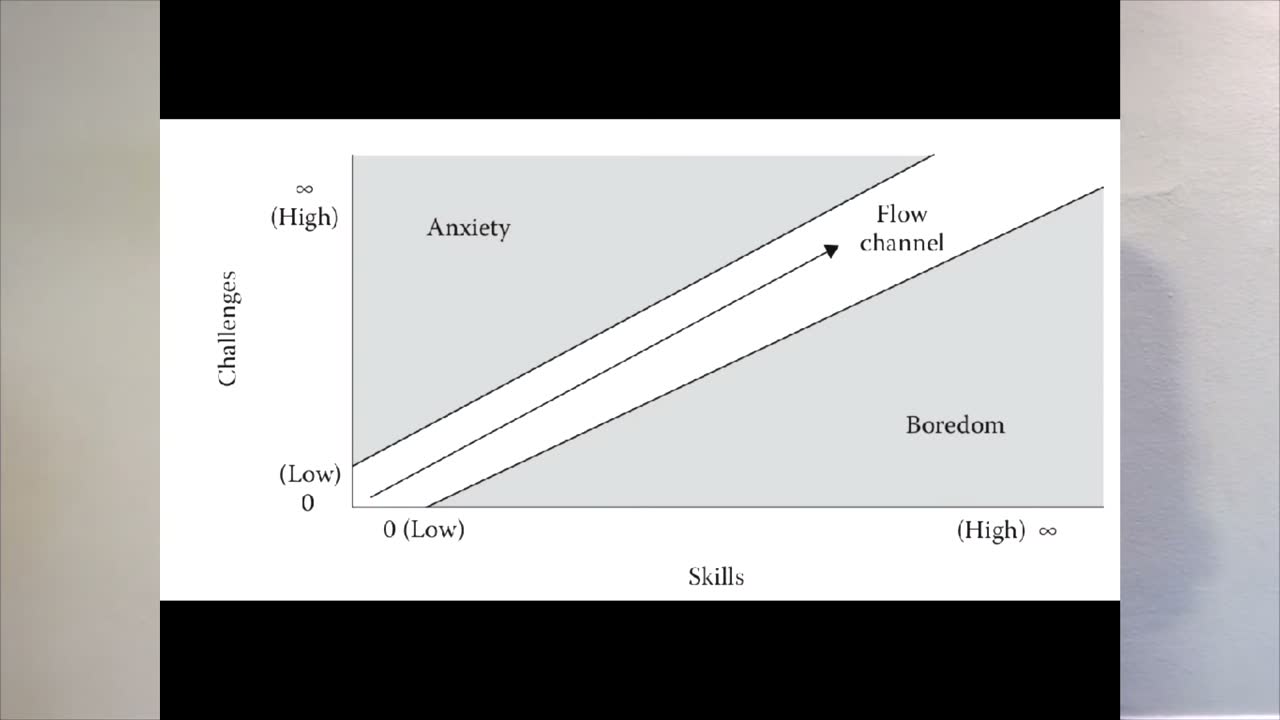
Flow channel diagram: challenge must rise with skill, between anxiety above and boredom below. Color Switch bet on Pac-Man-style fan loyalty when relaunching. After his game was pulled from the App Store, Reichelt relaunched it on his own account, citing Pac-Man reappearing after 20 years as proof fans return. It climbed the charts with no marketing.
He held off on user acquisition for the first weeks, and the game kept doing well on organic demand.
How do Stealth Games Deal with Detection? - School of Stealth Part 3
Its ghosts use the same state logic as stealth guards, switching between chase and escape when a condition is met. They return to chase once the power pellet runs out.
Ghosts switch between three readable modes: chase, scatter and frightened. Scatter sends each ghost to a corner, frightened makes them flee while Pac-Man holds a power pellet, and they return to chase when the pellet runs out. Each mode gives the player a different situation to react to.
This is now called a finite state machine. Stealth games use the same template: Batman: Arkham Asylum guards move between idle, suspicious, engaging and hunting, and most stealth guards cycle idle, combat, search and back to patrol when a timer expires.
Games with Entrepreneurs #1 - David Reichelt, Creator of Color Switch
It uses color switching only as a small power-up moment. Reichelt took that idea and made it the central mechanic of Color Switch, and he used Pac-Man vanishing for 20 years as a test for fan loyalty.
Color Switch turned Pac-Man's minor color-change moment into its whole game. David Reichelt noticed that Pac-Man's ghosts change color after a power pellet only as a side element, and made color switching Color Switch's core mechanic. He blended it with Simon, Uno, the Gmail loading ball and one-tap play from Flight.
He sketched the concept in 20 minutes and had a demo 10 minutes later. "Inspiration from one idea is cloning."
Flow channel diagram: challenge must rise with skill, between anxiety above and boredom below. Color Switch bet on Pac-Man-style fan loyalty when relaunching. After his game was pulled from the App Store, Reichelt relaunched it on his own account, citing Pac-Man reappearing after 20 years as proof fans return. It climbed the charts with no marketing.
He held off on user acquisition for the first weeks, and the game kept doing well on organic demand.
What Pac-Man Brought to Game Design | Design Icons
Launched May 22nd, 1980 in Japan to a lukewarm reception, then sold over 100,000 cabinets in its first US year and took a billion dollars in quarters. Four ghosts with different targets, power pellets, scatter waves and rising difficulty kept players hooked, and its cute theme drew a reported 60% female audience.
Each ghost chases its own target tile, so the group is learnable but unpredictable. At every intersection each ghost takes the shortest route to its own target. Blinky targets Pac-Man, Pinky aims four tiles ahead of him, Inky uses a point built from Blinky's position, and Clyde chases until he is within eight tiles, then retreats to the bottom left corner.
Inky's target comes from a line drawn from Blinky to a spot two tiles ahead of Pac-Man, extended by the same length again. Blinky is the most aggressive and predictable; the others are harder to read but can be learned, so every game plays out differently. Mark Brown calls them "hard to read and predict, but not impossibly random".
Independent simple rules created an illusion of ghost teamwork. Because Blinky comes from behind while Pinky aims ahead, the red and pink ghosts seem to spring a pincer, and Inky and Clyde seem to work the edges, with no shared information between them.
Many modern games still need a blackboard system or a squad controller to get the same effect. "Pac-Man achieved an effective illusion of cooperation decades earlier, with really simple rules."
Ghosts switch between three readable modes: chase, scatter and frightened. Scatter sends each ghost to a corner, frightened makes them flee while Pac-Man holds a power pellet, and they return to chase when the pellet runs out. Each mode gives the player a different situation to react to.
This is now called a finite state machine. Stealth games use the same template: Batman: Arkham Asylum guards move between idle, suspicious, engaging and hunting, and most stealth guards cycle idle, combat, search and back to patrol when a timer expires.
The power pellet turns the hunted into the hunter. Eating a power pellet lets Pac-Man eat the ghosts that were chasing him; an eaten ghost returns to the central pen and scores points. It was one of the earliest power-ups, maybe the first.
Descendants include Donkey Kong's hammer, Super Mario Bros.' mushroom and fire flower, Sonic's monitors and Doom 2016's Berserk sphere. Brown compares the payoff to finally downing Mr. X in Resident Evil 2.
Only four pellets per maze make each one a real decision. With just four power pellets on each map, players must choose when to eat them to get the most points and safety.
The scarcity, together with scatter waves, creates a back-and-forth rhythm of power and powerlessness. "They must be munched judiciously."
Ghosts attack in waves and retreat, giving players moments of relief. Iwatani felt constant pursuit would be too stressful, so ghosts periodically scatter to the four corners, then regroup and chase again.
"I felt it would be too stressful for a human being like Pac Man to be continually surrounded and hunted down." Left 4 Dead's AI director later used the same alternation of zombie assaults and lulls.
Difficulty rises within each level and again across levels. Scatter periods run 7 seconds twice, then 5 seconds twice, then the ghosts only chase. Blinky speeds up as dots are eaten and stops scattering when 20 dots remain.
Across levels, frightened time gets shorter, Pac-Man moves faster and is harder to control, and ghosts leave the pen sooner. The mix of chase and scatter, power and powerlessness keeps the pace from feeling repetitive.
Forgiving cornering keeps controls feeling fair. Pac-Man can still turn a corner if the stick moves when he is a few pixels past the intersection.
It works like coyote time in platformers, where the hero can still jump just after running off a ledge.
Iwatani designed around how the player feels, not what pleased him. His softer ghost waves and forgiving turns come from his view that a fun game comes from understanding how the player's mind works.
"Creating a fun game is not about satisfying yourself as a developer. It's all about the people that actually play the game."
The goal was obvious to anyone watching over a shoulder. Iwatani's rule was that the player should immediately get the point: eat the dots, avoid the monsters. No words or cultural references were needed.
He compares it to golf, where the ball goes in the hole. Obvious rules gave new players confidence to start, then the AI and difficulty curve hooked them.
A cute, non-violent eating theme drew a new audience into arcades. Iwatani saw dingy arcades full of war and shooting games that mostly drew boys and men, so he built Pac-Man around eating, with bright colours and friendly ghosts. How to Win at Video Games puts its audience at 60% female.
The idea started with eating, not shooting: the name blends the Japanese word for mouth, a pizza with a slice missing, and Pakku Pakku, the sound of eating. Midway's Ms. Pac-Man followed, adding new gameplay and better AI, possibly without Namco's approval.
Pac-Man gave players a character with a name, face and personality. Earlier games offered spaceships, cars, paddles and nameless humans. Pac-Man became games' first mascot.
Iwatani drew on cartoons: Tom and Jerry for the chases, Popeye's spinach for the power pellet, and Casper and Little Ghost Q-Taro for the ghosts.
Between-level cutscenes rested players' hands and added story. Iwatani called them coffee breaks: a calm moment after a tense level that also added character. They were among the first non-interactive scenes placed inside gameplay.
Colleagues grumbled that they wasted time and resources, but Iwatani insisted on them.
Puck-Man flopped in Japan, then became a giant hit through Midway. It launched on May 22nd, 1980 in a Shibuya movie theatre, where players preferred Namco's shooter Galaxian. In America it sold over 100,000 cabinets in its first year and took a billion dollars in quarters.
Midway picked up both games after licensing Space Invaders and renamed it Pac-Man to stop people vandalising the machine. A Billboard chart song, merchandise and a TV show followed, though Atari's 2600 port was poor.
Copies took the surface; Pac-Man's deeper ideas spread through game design. Maze clones such as Ali Baba and 40 Thieves, Lady Bug, Lock 'N' Chase and Nibbler had a brief surge but formed no lasting genre. Its structure spread instead: The Tower of Druaga influenced Zelda, John Romero cites Pac-Man for Wolfenstein 3D and Doom's level design, and Kojima sees it in Metal Gear.
Midway and Atari won a suit over K.C. Munchkin! on the Magnavox Odyssey, one of the first copyright cases in games. Pac-Land predates Super Mario Bros., and Iwatani later oversaw Pac-Man Championship Edition.
Color Switch Creator on Game Design with David Reichelt
The ghosts change color after the power pellet, but only as a side element. That color change was one of the four inspirations for Color Switch.
Color Switch turned Pac-Man's minor color-change moment into its whole game. David Reichelt noticed that Pac-Man's ghosts change color after a power pellet only as a side element, and made color switching Color Switch's core mechanic. He blended it with Simon, Uno, the Gmail loading ball and one-tap play from Flight.
He sketched the concept in 20 minutes and had a demo 10 minutes later. "Inspiration from one idea is cloning."
Flow channel diagram: challenge must rise with skill, between anxiety above and boredom below.
What Makes Good AI?
Each coloured ghost has its own personality, which makes them seem smarter. Designer Toru Iwatani had ghosts alternate between chasing and the four corners to avoid constant, stressful hunting.
Giving each ghost a personality makes the AI seem smarter. Each coloured ghost has its own quirks, and developers have found that distinct personalities make AI characters read as more intelligent to players.
Civilization's single-player leaders use the same idea.
Ghosts attack in waves and retreat, giving players moments of relief. Iwatani felt constant pursuit would be too stressful, so ghosts periodically scatter to the four corners, then regroup and chase again.
"I felt it would be too stressful for a human being like Pac Man to be continually surrounded and hunted down." Left 4 Dead's AI director later used the same alternation of zombie assaults and lulls.
More in Games
 Games
Nintendo
A Zelda adventure where Princess Zelda copies objects and monsters as echoes to solve puzzles and fight.
 Games
The Legend of Zelda: Breath of the Wild
Nintendo's long-running action-adventure series about Link exploring Hyrule, solving puzzles and fighting Ganon.
 Games
Dead Space
A major video game publisher and the guest's employer.
G 29 sources · 94 tips
Mind Over Magnet
A puzzle platformer where you escape a factory using a magnet and a magnetic field.
 Games
Far Cry 2
An open world action game where you recruit and play any of London's citizens.
 Games
God of War
A combat-focused action adventure game from Santa Monica Studio with Norse mythology and light puzzles.
Mind Over Magnet
Mark Brown's first game, a puzzle game he made while learning Unity.
 Games
Dishonored
A first-person stealth action game from Arkane with supernatural powers and the Clockwork Mansion level.