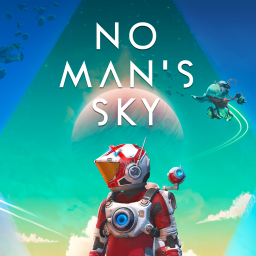
No Man's Sky
A space exploration game with procedurally generated planets.
Where No Man's Sky comes up2 episodes and tests
 Gcreator of Game Maker's Toolkit testThe Two Types of Random in Game Design
 Gcreator of Game Maker's Toolkit testDeus Ex: Mankind Divided's Amazing Open World
No Man's Sky generated 18 quintillion planets once, so every player sees the same ones. Sources split on the payoff: one cites it as randomness that creates variety, another notes the same structures repeat on every planet, miles apart, with empty caves. Lesson: scale alone does not make content rich, so judge a bigger world by what is in it.
- 1Algorithm builds planets once18 quintillion planets, same for every player
- 2Same structures repeatRepeated on every planet
- 3Structures sit miles apartSpread across sparse terrain
- 4Caves feel emptyInteresting structures with nothing inside
From No Man's Sky page notes
What was said about No Man's Sky
No Man's Sky generates 18 quintillion planets once, shared by every player. The game's algorithm creates its 18 quintillion planets a single time, so every player sees the same ones. It is cited as an example of algorithms producing near infinite setups.
It is listed next to Minecraft's endless worlds and Shadow of Mordor's unique Orc captains. In roguelikes, content is regenerated each run so players cannot memorise stages and must master the mechanics. Procedural levels are rarely as good as handmade ones.
No Man's Sky's huge scale left its planets repetitive and sparse. The same structures repeat on every planet and sit miles apart across sparse terrain. Caves have interesting structures with nothing inside.
It is used as evidence that a bigger open world is not a better one. One team can only make so much content, so the real questions are how far apart to space it and how often to repeat it. Quote: "The question then becomes how far apart do you space it, and how often do you repeat it."
The Two Types of Random in Game Design
Generates its 18 quintillion planets once, so every player sees the same ones.
No Man's Sky generates 18 quintillion planets once, shared by every player. The game's algorithm creates its 18 quintillion planets a single time, so every player sees the same ones. It is cited as an example of algorithms producing near infinite setups.
It is listed next to Minecraft's endless worlds and Shadow of Mordor's unique Orc captains. In roguelikes, content is regenerated each run so players cannot memorise stages and must master the mechanics. Procedural levels are rarely as good as handmade ones.
Deus Ex: Mankind Divided's Amazing Open World
It has 18 quintillion algorithm-made planets, but the same structures repeat on every planet and sit miles apart. Caves have interesting structures with nothing inside, which shows that bigger is not better.
No Man's Sky's huge scale left its planets repetitive and sparse. The same structures repeat on every planet and sit miles apart across sparse terrain. Caves have interesting structures with nothing inside.
It is used as evidence that a bigger open world is not a better one. One team can only make so much content, so the real questions are how far apart to space it and how often to repeat it. Quote: "The question then becomes how far apart do you space it, and how often do you repeat it."
More in Games
 Games
Nintendo
A Zelda adventure where Princess Zelda copies objects and monsters as echoes to solve puzzles and fight.
 Games
The Legend of Zelda: Breath of the Wild
Nintendo's long-running action-adventure series about Link exploring Hyrule, solving puzzles and fighting Ganon.
 Games
Dead Space
A major video game publisher and the guest's employer.
 G
 29 sources · 94 tips
Mind Over Magnet
A puzzle platformer where you escape a factory using a magnet and a magnetic field.
 Games
Far Cry 2
An open world action game where you recruit and play any of London's citizens.
 Games
God of War
A combat-focused action adventure game from Santa Monica Studio with Norse mythology and light puzzles.
Mind Over Magnet
Mark Brown's first game, a puzzle game he made while learning Unity.
 Games
Dishonored
A first-person stealth action game from Arkane with supernatural powers and the Clockwork Mansion level.