
Naughty Dog
A narrative action-adventure game from Naughty Dog for PlayStation.
Where Naughty Dog comes up6 episodes and tests
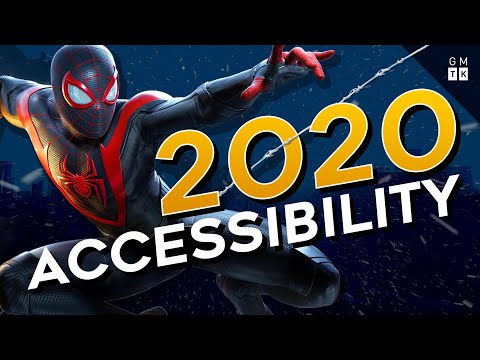 Gcreator of Game Maker's Toolkit testHow Accessible Were 2020's Biggest Games?
 GMark Brown is the creator of Game Maker's Toolkit; Evan Hill is a former level designer at Naughty Dog testMaking The Last of Us Part II's Best Level
 Gcreator of Game Maker's Toolkit testWhy Nathan Drake Doesn't Need a Compass
 Gcreator of Game Maker's Toolkit testHow Level Design Can Tell a Story
 Gcreator of Game Maker's Toolkit testMaking Games Better for the Deaf and Hard of Hearing | Designing for Disability
 Gcreator of Game Maker's Toolkit testWhat Makes Good AI?
Naughty Dog shows that craft pays off: The Last of Us Part II shipped 60+ accessibility options, and a blind player finished it unassisted. Levels were blocked out in 3D with the real camera and controller, and some were redone up to 25 times. Guide players with in-world cues, not maps. But its hand-crafted budget reportedly strained even the studio, so few teams should copy it.
- 1Two-cell briefSwimming lesson; confront over Fireflies
- 2Blockmesh with real cameraBlobs test how dense space feels
- 3Improvise as the characters"Can I climb it?" added dinosaur climbing
- 4Write dialogue to fitWriters reacted to what designers built
- 5Scrap and redoSome sequences redone around 25 times
From Mark Brown on Game Maker's Toolkit
What was said about Naughty Dog
1How Naughty Dog built The Birthday Gift level in The Last of Us Part II
Block out levels in 3D with the real camera and controller. Level designers go straight into blockmesh using the same camera, animations and character controller as the final game, because only a playable space shows whether it works.
The brief for the level was two spreadsheet cells: Joel taught Ellie to swim, and they confront each other about the Fireflies. Early museum blockmesh was mostly blobs, each marking a point of interest, to test how dense the space felt. "One of the kind of truisms is that you only know if it works if it's in 3D."
Improvise as the characters and write dialogue to fit the built level. Neil Druckmann saw a very rough dinosaur and asked "can I climb it?", so climbing was added. Writers Halley Gross and Neil came in late and wrote lines in reaction to what level designers had built.
The swimming scene was first planned as a real lesson but became a reveal that they had already done it, giving Joel a "dad-like tease". Ellie pushing Joel in was once a cutscene; Evan Hill had to push Neil to keep it as a button press so the player triggers the turnaround.
Hint at what to do and let players set the pace. Joel leads at first, then stops and stays quiet so the player wanders ahead. In the museum, the usual guidance tools (weenies, colour, lighting) were dialed back so there is no golden path.
The dinosaur's tail is a brighter hue to hint it can be climbed. Each interaction is kept "quippy and punchy", teaching players every little thing is worth touching. Forcing everyone through every interaction would drag for some and infuriate players who want to run through, so the team accepted players would miss content.
Use level geometry to control what players see and when. A wall slides out of the camera's way to reveal the dinosaurs gradually. The T-rex was visible too early in tests, so the doorway was sculpted with foliage until players saw it when Ellie did.
The opening beach feels boundless but is fenced by natural barriers, using "smoke and mirrors" to handle draw distance. Leaving the Lunar Rover, the camera swings round to frame the space capsule, so each placed object points at the next beat.
Shape the level as an emotional arc tied to the relationship. The level builds in three acts with the space capsule as its high point, then turns dark with no enemies, only ominous graffiti and fake pickups, to show the undercurrent in Ellie and Joel's bond.
The sequence was first meant to end at the capsule; more space was added to lead up to it. Each level is also tuned against its neighbours: the intense subway before makes the museum a contrast, and a boar jump scare after re-tunes players. "Just to even signal that it's a possibility is enough to get people to tense up."
Place loading gates at narrative down beats, not memory limits. No memory budget forced the breaks. The team assumed from the start players needed load pacing, then made the jump from the cafe into the water a traversal beat after the capsule high point.
Unloading earlier areas there gives the next narrative section full bandwidth.
The quality came from scrapping and redoing work, sometimes 25 times. The museum took about two solid years; the space area had three or four full revisions, and some sequences in the game were redone around 25 times.
A large team built it, with each person owning a few areas: Evan Hill made only four areas of the game, while others modeled, textured, lit, animated and scripted, and his role moved from layout to producer. "The big secret for all of Naughty Dog level design is just iteration and work."
Copy the lessons, not the hand-crafted budget. Only a few studios like Naughty Dog and Rockstar can hand-craft levels this way, and reports of crunch suggest it strained even them.
Mark Brown's transferable lessons: improvise as the characters, let players miss things, guide the eye with art and geometry, and mirror the emotional journey in the level's feel.
2Guiding players without a map or compass
Guide players with subconscious cues hidden in the level. Uncharted and The Last of Us run start to finish without a map, using light, motion, colour and framing instead of waypoints or arrows. Uncharted and The Last of Us mark what matters in yellow.
Light draws players like moths in dark surroundings, and birds fly off in the direction Drake must go. Designer Emilia Schatz calls it "very much a game in psychology". The Uncharted 3 rooftop chase in Colombia is fully playable where other games would use a cutscene.
Use guiding lines and stepping-stone shapes to suggest a path. Art director Erick Pangilinan separates the ground from level boundaries and puts shapes mid-path as stepping stones; a line runs down the centre of the roof in the Uncharted 3 chase.
In his 2010 GDC talk he warned that busy schedules make noisy, confusing levels easy, so a clear path has to be deliberate. Enemies you can't fight push players away, collectibles act as bread crumbs, ramps invite jumps, and the camera keeps the next goal centred.
Give players distant landmarks to move toward. Characters keep pointing at far-off towers, trucks and bridges that then loom on the skyline, the trick Disney used with the castle in Disneyland, called a "weenie".
Some guidance is literal: arrows on signs or painted on the ground, kept inside the fiction rather than on the HUD. Audio helps too, as with the TV speakers heard at the start of The Last of Us.
Hidden guidance keeps a linear game fast and feeling bigger. Side paths lead to dead ends, but players who find content assume every door leads somewhere, and Uncharted's pace would die if players hunted for the next door in every room.
Run the squint test to check the critical path dominates. Since its Crash Bandicoot days, Naughty Dog has had designers squint at each scene to see if the critical path is the most dominant thing in it.
Squinting blurs detail and leaves shape, brightness and colour contrast. It should be backed by watching random players move through the level.
3Accessibility in The Last of Us Part II
Audio cues, guidance and read-outs made the game playable without sight. The Last of Us Part II has more than 60 options, including unique audio cues, a way to point Ellie toward her goal, ledge assistance and a touchpad swipe that reads out health, ammo and crafting. Blind player SightlessKombat finished it unassisted.
Options run from lock-on aiming to motion sickness settings. The read-out says things like "You are crouched. Health: 59."
Shader modes cut visual noise by highlighting key characters. A shader mode washes out the background and highlights important characters with colour overlays the player picks.
Mark Brown: "Spider-Man and Last of Us deserve special props for amazing shader modes."
Let players turn on subtitles before any dialogue plays. Naughty Dog's recent games open with a pre-game accessibility menu, so early dialogue isn't lost while players look for a subtitle setting.
4Enemy AI and emotional space in Uncharted 4
Aim enemy AI at interesting gameplay, not at finding the player. Naughty Dog tried complex AI for Uncharted 4, then settled on enemies spread out in a layout, looking smart and moving in mildly predictable ways so players can sneak up on them.
Designer Matthew Gallant: the AI's goal "isn't to find the player. It's to present interesting gameplay".
Shape ceilings and walls to make players feel the character's emotion. Emilia Schatz designed Uncharted 4 caves that start with low ceilings and close walls, then open into a giant vista that releases the pressure.
"I might make the ceiling very low, might make the walls come in, so you feel tight and constrained."
How Accessible Were 2020's Biggest Games?
Has more than 60 accessibility options, including unique audio cues, a way to point Ellie at her goal, ledge assistance and a touchpad read-out of health and ammo. A blind player finished it unassisted.
Audio cues, guidance and read-outs made the game playable without sight. The Last of Us Part II has more than 60 options, including unique audio cues, a way to point Ellie toward her goal, ledge assistance and a touchpad swipe that reads out health, ammo and crafting. Blind player SightlessKombat finished it unassisted.
Options run from lock-on aiming to motion sickness settings. The read-out says things like "You are crouched. Health: 59."
Shader modes cut visual noise by highlighting key characters. A shader mode washes out the background and highlights important characters with colour overlays the player picks.
Mark Brown: "Spider-Man and Last of Us deserve special props for amazing shader modes."
Making The Last of Us Part II's Best Level
Its truism is that you only know if a level works in 3D, so designers block out with the real camera and controller. A large team with each person owning a few areas hand-crafts levels, a process few studios can afford and one reportedly strained even them.
Block out levels in 3D with the real camera and controller. Level designers go straight into blockmesh using the same camera, animations and character controller as the final game, because only a playable space shows whether it works.
The brief for the level was two spreadsheet cells: Joel taught Ellie to swim, and they confront each other about the Fireflies. Early museum blockmesh was mostly blobs, each marking a point of interest, to test how dense the space felt. "One of the kind of truisms is that you only know if it works if it's in 3D."
Improvise as the characters and write dialogue to fit the built level. Neil Druckmann saw a very rough dinosaur and asked "can I climb it?", so climbing was added. Writers Halley Gross and Neil came in late and wrote lines in reaction to what level designers had built.
The swimming scene was first planned as a real lesson but became a reveal that they had already done it, giving Joel a "dad-like tease". Ellie pushing Joel in was once a cutscene; Evan Hill had to push Neil to keep it as a button press so the player triggers the turnaround.
Hint at what to do and let players set the pace. Joel leads at first, then stops and stays quiet so the player wanders ahead. In the museum, the usual guidance tools (weenies, colour, lighting) were dialed back so there is no golden path.
The dinosaur's tail is a brighter hue to hint it can be climbed. Each interaction is kept "quippy and punchy", teaching players every little thing is worth touching. Forcing everyone through every interaction would drag for some and infuriate players who want to run through, so the team accepted players would miss content.
Use level geometry to control what players see and when. A wall slides out of the camera's way to reveal the dinosaurs gradually. The T-rex was visible too early in tests, so the doorway was sculpted with foliage until players saw it when Ellie did.
The opening beach feels boundless but is fenced by natural barriers, using "smoke and mirrors" to handle draw distance. Leaving the Lunar Rover, the camera swings round to frame the space capsule, so each placed object points at the next beat.
Shape the level as an emotional arc tied to the relationship. The level builds in three acts with the space capsule as its high point, then turns dark with no enemies, only ominous graffiti and fake pickups, to show the undercurrent in Ellie and Joel's bond.
The sequence was first meant to end at the capsule; more space was added to lead up to it. Each level is also tuned against its neighbours: the intense subway before makes the museum a contrast, and a boar jump scare after re-tunes players. "Just to even signal that it's a possibility is enough to get people to tense up."
Place loading gates at narrative down beats, not memory limits. No memory budget forced the breaks. The team assumed from the start players needed load pacing, then made the jump from the cafe into the water a traversal beat after the capsule high point.
Unloading earlier areas there gives the next narrative section full bandwidth.
The quality came from scrapping and redoing work, sometimes 25 times. The museum took about two solid years; the space area had three or four full revisions, and some sequences in the game were redone around 25 times.
A large team built it, with each person owning a few areas: Evan Hill made only four areas of the game, while others modeled, textured, lit, animated and scripted, and his role moved from layout to producer. "The big secret for all of Naughty Dog level design is just iteration and work."
Copy the lessons, not the hand-crafted budget. Only a few studios like Naughty Dog and Rockstar can hand-craft levels this way, and reports of crunch suggest it strained even them.
Mark Brown's transferable lessons: improvise as the characters, let players miss things, guide the eye with art and geometry, and mirror the emotional journey in the level's feel.
How Level Design Can Tell a Story
Designer Emilia Schatz shapes ceilings, walls and vistas so players feel tight and constrained, then released.
Shape ceilings and walls to make players feel the character's emotion. Emilia Schatz designed Uncharted 4 caves that start with low ceilings and close walls, then open into a giant vista that releases the pressure.
"I might make the ceiling very low, might make the walls come in, so you feel tight and constrained."
Making Games Better for the Deaf and Hard of Hearing | Designing for Disability
Its recent games offer a pre-game accessibility menu so subtitles can be switched on before any dialogue plays.
Let players turn on subtitles before any dialogue plays. Naughty Dog's recent games open with a pre-game accessibility menu, so early dialogue isn't lost while players look for a subtitle setting.
What Makes Good AI?
Tried complex AI for Uncharted 4, then settled on spread-out, mildly predictable enemies. Designer Matthew Gallant says the AI's goal is to present interesting gameplay, not to find the player.
Aim enemy AI at interesting gameplay, not at finding the player. Naughty Dog tried complex AI for Uncharted 4, then settled on enemies spread out in a layout, looking smart and moving in mildly predictable ways so players can sneak up on them.
Designer Matthew Gallant: the AI's goal "isn't to find the player. It's to present interesting gameplay".
Why Nathan Drake Doesn't Need a Compass
Guides players through Uncharted and The Last of Us with no map, using light, motion, colour, framing and landmarks. It also uses a squint test, dating from its Crash Bandicoot days, to check the critical path dominates each scene.
Guide players with subconscious cues hidden in the level. Uncharted and The Last of Us run start to finish without a map, using light, motion, colour and framing instead of waypoints or arrows. Uncharted and The Last of Us mark what matters in yellow.
Light draws players like moths in dark surroundings, and birds fly off in the direction Drake must go. Designer Emilia Schatz calls it "very much a game in psychology". The Uncharted 3 rooftop chase in Colombia is fully playable where other games would use a cutscene.
Use guiding lines and stepping-stone shapes to suggest a path. Art director Erick Pangilinan separates the ground from level boundaries and puts shapes mid-path as stepping stones; a line runs down the centre of the roof in the Uncharted 3 chase.
In his 2010 GDC talk he warned that busy schedules make noisy, confusing levels easy, so a clear path has to be deliberate. Enemies you can't fight push players away, collectibles act as bread crumbs, ramps invite jumps, and the camera keeps the next goal centred.
Give players distant landmarks to move toward. Characters keep pointing at far-off towers, trucks and bridges that then loom on the skyline, the trick Disney used with the castle in Disneyland, called a "weenie".
Some guidance is literal: arrows on signs or painted on the ground, kept inside the fiction rather than on the HUD. Audio helps too, as with the TV speakers heard at the start of The Last of Us.
Hidden guidance keeps a linear game fast and feeling bigger. Side paths lead to dead ends, but players who find content assume every door leads somewhere, and Uncharted's pace would die if players hunted for the next door in every room.
Run the squint test to check the critical path dominates. Since its Crash Bandicoot days, Naughty Dog has had designers squint at each scene to see if the critical path is the most dominant thing in it.
Squinting blurs detail and leaves shape, brightness and colour contrast. It should be backed by watching random players move through the level.
More in Games
 Games
Nintendo
A Zelda adventure where Princess Zelda copies objects and monsters as echoes to solve puzzles and fight.
 Games
The Legend of Zelda: Breath of the Wild
Nintendo's long-running action-adventure series about Link exploring Hyrule, solving puzzles and fighting Ganon.
 Games
Dead Space
A major video game publisher and the guest's employer.
 G
 29 sources · 94 tips
Mind Over Magnet
A puzzle platformer where you escape a factory using a magnet and a magnetic field.
 Games
Far Cry 2
An open world action game where you recruit and play any of London's citizens.
 Games
God of War
A combat-focused action adventure game from Santa Monica Studio with Norse mythology and light puzzles.
Mind Over Magnet
Mark Brown's first game, a puzzle game he made while learning Unity.
 Games
Dishonored
A first-person stealth action game from Arkane with supernatural powers and the Clockwork Mansion level.