Metal Gear 2: Solid Snake
A 1990 stealth game for the MSX2, released only in Japan.
Where Metal Gear 2: Solid Snake comes up1 episode or test
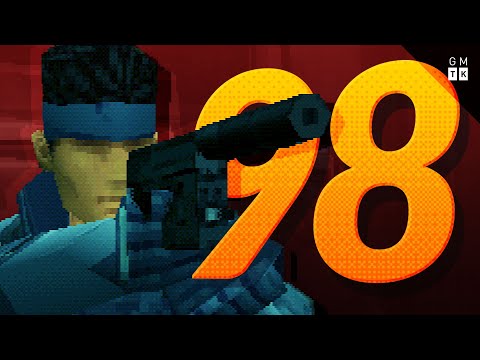
Metal Gear 2: Solid Snake (1990, MSX2, Japan only) already had a radar, loud metal grates, suspicious guards, wall knocking and a reset to neutral, yet barely influenced other designers. Its reach was limited by platform and region. The lesson: invention alone doesn't spread ideas, since Metal Gear Solid and Thief became the influential games. Distribution matters as much as design.
- Metal grates made noise
- Floor mattered, not just guards
- MSX2, Japan only
- Floor materials changed noise
- Soft leaves were quiet
- Running on hard tile alerted guards
Same idea; Thief got the credit
From Metal Gear 2 page notes
What was said about Metal Gear 2: Solid Snake
1Metal Gear 2 and the stealth ideas it had first
Metal Gear 2 had core stealth mechanics before the games that got credit. Metal Gear 2: Solid Snake (1990, MSX2, Japan only) already had a radar, noisy metal grates, suspicious guards, wall knocking and a reset to neutral. It barely influenced anyone, because it never left Japan or the MSX2.
Looking Glass likely never played it. Metal Gear Solid and Thief became the influential stealth games, much as Doom got credit for the first-person shooter. The lesson: the game that popularises a mechanic is rarely the one that invented it.
Metal Gear 2 tied sound to surfaces with loud metal grates. Walking on metal grates made noise, so players had to think about the floor as well as the guards. Thief later used the same idea with floor materials, where soft leaves are quiet and running on hard tile alerts guards.
The takeaway is to make both sight and sound matter. Enemies can spot you unless you use cover, rooftops or shadows, and they can hear you if you move loudly. The quote: "think carefully about the materials you’re walking on".
The Year Stealth Games Got Serious
It already had a radar, loud metal grates, suspicious guards, wall knocking and a reset to neutral, but barely influenced anyone. It ran only on the MSX2 in Japan, so Looking Glass likely never played it.
Metal Gear 2 had core stealth mechanics before the games that got credit. Metal Gear 2: Solid Snake (1990, MSX2, Japan only) already had a radar, noisy metal grates, suspicious guards, wall knocking and a reset to neutral. It barely influenced anyone, because it never left Japan or the MSX2.
Looking Glass likely never played it. Metal Gear Solid and Thief became the influential stealth games, much as Doom got credit for the first-person shooter. The lesson: the game that popularises a mechanic is rarely the one that invented it.
Metal Gear 2 tied sound to surfaces with loud metal grates. Walking on metal grates made noise, so players had to think about the floor as well as the guards. Thief later used the same idea with floor materials, where soft leaves are quiet and running on hard tile alerts guards.
The takeaway is to make both sight and sound matter. Enemies can spot you unless you use cover, rooftops or shadows, and they can hear you if you move loudly. The quote: "think carefully about the materials you’re walking on".
More in Games
 Games
Nintendo
A Zelda adventure where Princess Zelda copies objects and monsters as echoes to solve puzzles and fight.
 Games
The Legend of Zelda: Breath of the Wild
Nintendo's long-running action-adventure series about Link exploring Hyrule, solving puzzles and fighting Ganon.
 Games
Dead Space
A major video game publisher and the guest's employer.
 G
 29 sources · 94 tips
Mind Over Magnet
A puzzle platformer where you escape a factory using a magnet and a magnetic field.
 Games
Far Cry 2
An open world action game where you recruit and play any of London's citizens.
 Games
God of War
A combat-focused action adventure game from Santa Monica Studio with Norse mythology and light puzzles.
Mind Over Magnet
Mark Brown's first game, a puzzle game he made while learning Unity.
 Games
Dishonored
A first-person stealth action game from Arkane with supernatural powers and the Clockwork Mansion level.