Mass Effect
A BioWare sci-fi role-playing trilogy starring the voiced, partly player-defined Commander Shepard.
Where Mass Effect comes up2 episodes and tests
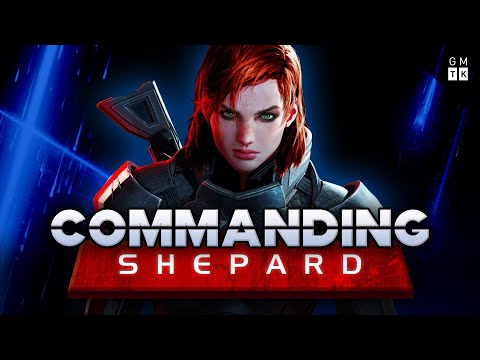 Gcreator of Game Maker's Toolkit testCommanding Shepard
 Gcreator of Game Maker's Toolkit testThe 100 Games That Taught Me Game Design
Mass Effect fixed Shepard's heroic role and let players choose tone, looks and choices. It had limits: about 92% of players went largely Paragon in the first game, 64.5% in the third, and choices failed when Shepard overrode the player, as with Cerberus. Lesson: author the hero's goals, make hard choices hinge on characters players love, and justify any lost control.
From Mass Effect player choice data, John Ebenger
What was said about Mass Effect
1Shepard as a hero the player co-owns
Author the hero's role and goals, let the player choose style. Shepard is a famous N7 commander whose heroism and mission are fixed, while the player picks first name, background, psychological profile, face, sex and the tone of each reply. Ownership of the personality is shared, a middle ground between an authored Nathan Drake and the empty avatars of The Elder Scrolls.
Western RPG heroes in 2007 were mostly nameless, voiceless blank slates. A defined Shepard can be explored and changed over time and have textured relationships, unlike many RPG heroes who are the least interesting member of their own party.
Starting the hero already in power skips the amnesia opening. Because Shepard is already a commander, Mass Effect opens mid-mission with a ship, authority and combat skill, with no prison break or long sleep to explain the world first.
Director Casey Hudson said the game needed "extra sensory aspects" a blank character can't give to compete with Halo 3 and Uncharted, and that "We wanted them to feel like they're somebody special even from the beginning."
The dialogue ring lets a fully voiced hero reply instantly. Players choose only the gist and tone of a reply, mapped to predictable slots on the ring, and Shepard speaks the full line. This removes the downtime of reading reams of dialogue options and makes the hero a full member of the cast.
Vague prompts can misfire, as when Shepard shouts "This store discriminates against the poor!" Mass Effect 3 can also run three minutes without showing the ring, which crowds the player out.
Give players identity choices wherever they don't affect the story. Shepard's sex, face, skin colour and sexuality are the player's because they have no bearing on the plot, letting many people see themselves in the power fantasy.
Male Shepard had no male romance option until Mass Effect 3 added Kaidan and Cortez.
2Paragon and Renegade: from tone to real dilemmas
Moral choice became a choice of methods toward the same heroic goal. Shepard never sides with Saren or turns on humanity as in Knights of the Old Republic's light and dark sides; Paragon and Renegade are law-abiding and sympathetic means versus reckless and callous ones. BioWare cited Captain Kirk and Jack Bauer as the two touchstones.
"Shepard always does the right thing in the end." A fixed moral standing is closer to D&D alignment chosen at the start.
Mass Effect 1 shrank morality to tone and rewarded picking one side. Renegade lines were often a snarkier Paragon line, sometimes identical, and the story forgave Renegade acts at once. Pure paths earned special dialogue, easier outcomes, better shop deals and bonus missions, and about 92% of players went largely Paragon.
Some Renegade options were out of character, like punching a reporter or slaughtering colonists despite having gas grenades, and the colonists thank you anyway. Mass Effect 3 summed both scores into one Reputation, but many replies then lost a neutral option. The 92% figure is John Ebenger's.
Renegade became tempting once it served Shepard's goal and had consequences. In Mass Effect 3, sabotaging the Genophage cure is the only way to get both Salarian and Krogan armies, both sides have credible arguments, and a living Wrex discovers the betrayal and fights Shepard to the death. Paragon share fell to 64.5% in Mass Effect 3.
Kelly Chambers works the same way: Paragon advice gets her killed. About 92% of players still cured the Genophage.
The hardest choices are about characters, not a morality meter. Choosing between Tali and Legion on Rannoch kills one of two characters the player has known for dozens of hours, and it split players almost evenly.
"It's not about whether Shepard is good or evil - it's about Tali and Legion." In that moment Paragon and Renegade are irrelevant.
3Joining Cerberus and choices Shepard makes alone
Taking a big decision from the player then blaming them feels unfair. Joining Cerberus in Mass Effect 2 is one of the trilogy's biggest choices, yet the player has no say, so Ashley's condemnation on Horizon does not land.
Cerberus does open richer drama and a wider moral range, with The Illusive Man encouraging Renegade choices. Guilt over the Genophage sabotage works because the player chose it.
When control must be taken, justify it and let the player rebel. Some forced choices are unavoidable: refusing Cerberus would need a second storyline beyond the budget. Mass Effect softened them with story justification (only Cerberus will fund a Collectors mission), Shepard protesting alongside the player in the Arrival DLC, and false choices like surrendering weapons on Noveria.
Snark and refusals toward the Illusive Man also help. BioWare could have let Shepard sabotage Cerberus from inside, as with the Genophage later.
BioWare's "Agreement" sets four rules for an authored hero. Armando Troisi's 2010 talk listed: a predictable choice interface, choices with expected results, the choices players want, and it's the player's story. BioWare mostly kept the first two and sometimes missed the last two.
4Squad-mates with a will of their own
- 1Romance Ashleyearns points across the trilogy
- 2Stay faithfulnot cheating adds points
- 3Visit her in hospitalanother hidden point
- 4Game totals points secretlyat the Udina showdown
- 5Ashley steps asidetoo few points: shot protecting Udina
From Mass Effect 3 Udina showdown
Unconditional loyalty makes players stop caring about companions. In Mass Effect 1 companions never hold lasting grudges and only leave the squad in a body bag. Losing loyalty is a softer middle ground than removing a party member.
Deaths do persist: if Wrex dies in the first game he is gone from the second and third too.
Overriding a companion's story with no cost turns them into a pawn. In Jack's loyalty mission Shepard can force her to kill or spare Aresh, and she agrees either way with no change to loyalty, romance or personality.
Boosting the commander's agency reduced the companion's.
Companions who punish ignored wishes feel like real people. At Tali's treason trial, presenting evidence that clears her but disgraces her father against her wishes loses her loyalty and any relationship, carrying into Mass Effect 3.
Hidden relationship math makes a companion's decision feel organic. At the Udina showdown in Mass Effect 3, the game secretly totals points from across the trilogy, such as romancing Ashley, not cheating and visiting her in hospital. Enough points and she steps aside; otherwise she is shot protecting Udina.
It reads as Ashley weighing friendship against duty rather than a calculation.
Let the player influence a companion without controlling him. Mass Effect 1 secretly tracks Garrus's morality through conversations and a Salarian side quest and carries it into Mass Effect 2, where he becomes the vigilante Archangel either way.
The system was so subtle many players missed it, and it was dropped in Mass Effect 2 and 3.
Assigning opinions by party position breaks characters. Before big choices in Mass Effect 1, the most Paragon squad-mate takes the lawful view and the most Renegade the pragmatic one, so Ashley flips on the Rachni queen and the kind Liara argues for sacrificing the Council.
5Similar examples from other apps
These are about other apps, not Mass Effect: examples from the same sources that help explain it.
Dragon Age and Fallout: New Vegas let companions disapprove or leave. Dragon Age shows a visible opinion meter per companion, and in Fallout: New Vegas Cass and Boone leave if you stray from their ideals.
Telltale's The Walking Dead dropped morality scores for consequences. Released the same year as Mass Effect 3 and partly inspired by the series, it presents plain choices; players who left Ben to die feel it when Clementine asks where he is.
Assassin's Creed Odyssey apologised after a DLC overrode player romance choices. Odyssey followed Mass Effect in letting players pick sexuality, but a DLC forcing a heterosexual romance reversed existing choices and Ubisoft had to apologise.
The 100 Games That Taught Me Game Design
Wrex can die in the first game, and he is then gone from the second and third too.
Unconditional loyalty makes players stop caring about companions. In Mass Effect 1 companions never hold lasting grudges and only leave the squad in a body bag. Losing loyalty is a softer middle ground than removing a party member.
Deaths do persist: if Wrex dies in the first game he is gone from the second and third too.
Commanding Shepard
Shepard shares ownership with the player: the role and heroism are authored, while the player picks tone, looks and choices. About 92% of players went largely Paragon in the first game and 64.5% in Mass Effect 3. Choices fail when Shepard overrides the player, as with joining Cerberus, and work when they hinge on characters, like Tali versus Legion.
Author the hero's role and goals, let the player choose style. Shepard is a famous N7 commander whose heroism and mission are fixed, while the player picks first name, background, psychological profile, face, sex and the tone of each reply. Ownership of the personality is shared, a middle ground between an authored Nathan Drake and the empty avatars of The Elder Scrolls.
Western RPG heroes in 2007 were mostly nameless, voiceless blank slates. A defined Shepard can be explored and changed over time and have textured relationships, unlike many RPG heroes who are the least interesting member of their own party.
Starting the hero already in power skips the amnesia opening. Because Shepard is already a commander, Mass Effect opens mid-mission with a ship, authority and combat skill, with no prison break or long sleep to explain the world first.
Director Casey Hudson said the game needed "extra sensory aspects" a blank character can't give to compete with Halo 3 and Uncharted, and that "We wanted them to feel like they're somebody special even from the beginning."
The dialogue ring lets a fully voiced hero reply instantly. Players choose only the gist and tone of a reply, mapped to predictable slots on the ring, and Shepard speaks the full line. This removes the downtime of reading reams of dialogue options and makes the hero a full member of the cast.
Vague prompts can misfire, as when Shepard shouts "This store discriminates against the poor!" Mass Effect 3 can also run three minutes without showing the ring, which crowds the player out.
Give players identity choices wherever they don't affect the story. Shepard's sex, face, skin colour and sexuality are the player's because they have no bearing on the plot, letting many people see themselves in the power fantasy.
Male Shepard had no male romance option until Mass Effect 3 added Kaidan and Cortez.
Moral choice became a choice of methods toward the same heroic goal. Shepard never sides with Saren or turns on humanity as in Knights of the Old Republic's light and dark sides; Paragon and Renegade are law-abiding and sympathetic means versus reckless and callous ones. BioWare cited Captain Kirk and Jack Bauer as the two touchstones.
"Shepard always does the right thing in the end." A fixed moral standing is closer to D&D alignment chosen at the start.
Mass Effect 1 shrank morality to tone and rewarded picking one side. Renegade lines were often a snarkier Paragon line, sometimes identical, and the story forgave Renegade acts at once. Pure paths earned special dialogue, easier outcomes, better shop deals and bonus missions, and about 92% of players went largely Paragon.
Some Renegade options were out of character, like punching a reporter or slaughtering colonists despite having gas grenades, and the colonists thank you anyway. Mass Effect 3 summed both scores into one Reputation, but many replies then lost a neutral option. The 92% figure is John Ebenger's.
Renegade became tempting once it served Shepard's goal and had consequences. In Mass Effect 3, sabotaging the Genophage cure is the only way to get both Salarian and Krogan armies, both sides have credible arguments, and a living Wrex discovers the betrayal and fights Shepard to the death. Paragon share fell to 64.5% in Mass Effect 3.
Kelly Chambers works the same way: Paragon advice gets her killed. About 92% of players still cured the Genophage.
The hardest choices are about characters, not a morality meter. Choosing between Tali and Legion on Rannoch kills one of two characters the player has known for dozens of hours, and it split players almost evenly.
"It's not about whether Shepard is good or evil - it's about Tali and Legion." In that moment Paragon and Renegade are irrelevant.
Taking a big decision from the player then blaming them feels unfair. Joining Cerberus in Mass Effect 2 is one of the trilogy's biggest choices, yet the player has no say, so Ashley's condemnation on Horizon does not land.
Cerberus does open richer drama and a wider moral range, with The Illusive Man encouraging Renegade choices. Guilt over the Genophage sabotage works because the player chose it.
When control must be taken, justify it and let the player rebel. Some forced choices are unavoidable: refusing Cerberus would need a second storyline beyond the budget. Mass Effect softened them with story justification (only Cerberus will fund a Collectors mission), Shepard protesting alongside the player in the Arrival DLC, and false choices like surrendering weapons on Noveria.
Snark and refusals toward the Illusive Man also help. BioWare could have let Shepard sabotage Cerberus from inside, as with the Genophage later.
BioWare's "Agreement" sets four rules for an authored hero. Armando Troisi's 2010 talk listed: a predictable choice interface, choices with expected results, the choices players want, and it's the player's story. BioWare mostly kept the first two and sometimes missed the last two.
Unconditional loyalty makes players stop caring about companions. In Mass Effect 1 companions never hold lasting grudges and only leave the squad in a body bag. Losing loyalty is a softer middle ground than removing a party member.
Deaths do persist: if Wrex dies in the first game he is gone from the second and third too.
Overriding a companion's story with no cost turns them into a pawn. In Jack's loyalty mission Shepard can force her to kill or spare Aresh, and she agrees either way with no change to loyalty, romance or personality.
Boosting the commander's agency reduced the companion's.
Companions who punish ignored wishes feel like real people. At Tali's treason trial, presenting evidence that clears her but disgraces her father against her wishes loses her loyalty and any relationship, carrying into Mass Effect 3.
Hidden relationship math makes a companion's decision feel organic. At the Udina showdown in Mass Effect 3, the game secretly totals points from across the trilogy, such as romancing Ashley, not cheating and visiting her in hospital. Enough points and she steps aside; otherwise she is shot protecting Udina.
It reads as Ashley weighing friendship against duty rather than a calculation.
Let the player influence a companion without controlling him. Mass Effect 1 secretly tracks Garrus's morality through conversations and a Salarian side quest and carries it into Mass Effect 2, where he becomes the vigilante Archangel either way.
The system was so subtle many players missed it, and it was dropped in Mass Effect 2 and 3.
Assigning opinions by party position breaks characters. Before big choices in Mass Effect 1, the most Paragon squad-mate takes the lawful view and the most Renegade the pragmatic one, so Ashley flips on the Rachni queen and the kind Liara argues for sacrificing the Council.
Dragon Age and Fallout: New Vegas let companions disapprove or leave. Dragon Age shows a visible opinion meter per companion, and in Fallout: New Vegas Cass and Boone leave if you stray from their ideals.
Telltale's The Walking Dead dropped morality scores for consequences. Released the same year as Mass Effect 3 and partly inspired by the series, it presents plain choices; players who left Ben to die feel it when Clementine asks where he is.
Assassin's Creed Odyssey apologised after a DLC overrode player romance choices. Odyssey followed Mass Effect in letting players pick sexuality, but a DLC forcing a heterosexual romance reversed existing choices and Ubisoft had to apologise.
More in Games
 Games
Nintendo
A Zelda adventure where Princess Zelda copies objects and monsters as echoes to solve puzzles and fight.
 Games
The Legend of Zelda: Breath of the Wild
Nintendo's long-running action-adventure series about Link exploring Hyrule, solving puzzles and fighting Ganon.
 Games
Dead Space
A major video game publisher and the guest's employer.
 G
 29 sources · 94 tips
Mind Over Magnet
A puzzle platformer where you escape a factory using a magnet and a magnetic field.
 Games
Far Cry 2
An open world action game where you recruit and play any of London's citizens.
 Games
God of War
A combat-focused action adventure game from Santa Monica Studio with Norse mythology and light puzzles.
Mind Over Magnet
Mark Brown's first game, a puzzle game he made while learning Unity.
 Games
Dishonored
A first-person stealth action game from Arkane with supernatural powers and the Clockwork Mansion level.