Looking Glass Studios
The studio that developed Thief: The Dark Project.
Where Looking Glass Studios comes up2 episodes and tests
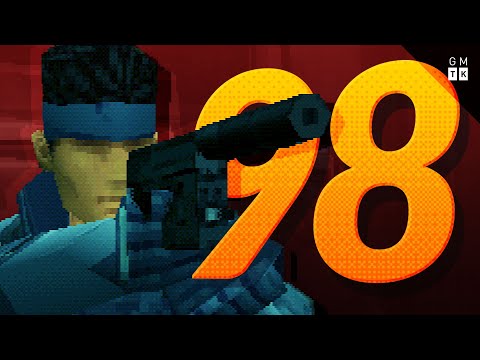 Gcreator of Game Maker's Toolkit testThe Year Stealth Games Got Serious
 Gcreator of Game Maker's Toolkit testThe Comeback of the Immersive Sim
Looking Glass Studios made Ultima Underworld, System Shock and Thief, pushing simulated spaces and player agency further each time, then closed in 2000. Its ideas outlived it in later games like Deus Ex. The lesson: build worlds from global systems rather than one-off scripts, and let those systems act as a dungeon master that gives players unique stories. Influence can outlast the company.
- 1Stay unseenYou are powerful while hidden
- 2Guard turns suspiciousCalls out when noticing something
- 3SpottedYou are weak; fighting is usually fatal
- 4Hide againGuard gives up the hunt
From Ken Levine on Thief's design
What was said about Looking Glass Studios
1How Thief helped set the rules of stealth in 1998
Thief borrowed its core feeling from a submarine simulator, not stealth games. Ken Levine took the power dynamic of Silent Service, where you are strong while hidden and weak once found, and built Thief around it. He summed it up as "How powerful you are when you are unseen, and how weak you are when you are spotted."
Metal Gear 2 already had most stealth rules, but it ran only on the MSX2 in Japan, so Looking Glass likely never played it. Levine described the design as the opposite of what shooters were doing at the time.
Thief made sound and light readable so detection felt fair. Players manage both sight and sound, such as soft leaves versus hard tiles, while the Light Gem shows how visible they are and guards call out when they notice something suspicious. Guards have a suspicious middle state and give up the hunt if you stay hidden.
The game needed CD-quality audio and advanced guard AI, and its sound propagation was revolutionary at the time. The guard AI was a broken, buggy mess until the last few months of development.
Open levels and space-changing tools let players choose their own route. Thief's mansions are open and interconnected with no single right path, and players decide how much to cross to reach the sword, sceptre or jewel. Water arrows put out candles to create darkness, moss arrows make tiles silent, and noisemaker arrows steer guards.
Fighting is possible but usually fatal, so players rely on the blackjack, and higher difficulties forbid killing guards. Hitman and Dishonored share this open-level design.
Thief's success spread its ideas, even though it didn't invent them. Splinter Cell took its light meter from Thief, Mark of the Ninja turned Thief into a side scroller, and Dishonored is a near spiritual successor that even reuses Garrett's voice actor. Like Doom with shooters, Thief got the credit because it was among the first to be really successful.
"The game that popularised a genre or mechanic wasn't the one to actually invent it."
2Building worlds from global systems
Ultima Underworld used systems as a dungeon master for unique stories. Looking Glass used AI, clever systems and rudimentary physics to simulate a believable space the developers did not fully predetermine, so players found personal solutions to quests. The aim was to "replace the human dungeon master with a complex nest of intertwining systems."
The studio pushed simulated spaces and player agency further with System Shock and Thief. It closed in 2000, but its ideas lived on in many later games, including Deus Ex.
Define rules globally so players can learn and trust them. In Thief every alarm post works the same way, every torch can be extinguished and doors come from one generic mould. Sight and sound detection and louder footsteps on tile apply everywhere instead of as one-off scripts.
Players learn the rules once rather than memorizing special cases.
The Year Stealth Games Got Serious
The team likely never played Metal Gear 2, which was exclusive to the MSX2 in Japan.
Thief borrowed its core feeling from a submarine simulator, not stealth games. Ken Levine took the power dynamic of Silent Service, where you are strong while hidden and weak once found, and built Thief around it. He summed it up as "How powerful you are when you are unseen, and how weak you are when you are spotted."
Metal Gear 2 already had most stealth rules, but it ran only on the MSX2 in Japan, so Looking Glass likely never played it. Levine described the design as the opposite of what shooters were doing at the time.
Thief made sound and light readable so detection felt fair. Players manage both sight and sound, such as soft leaves versus hard tiles, while the Light Gem shows how visible they are and guards call out when they notice something suspicious. Guards have a suspicious middle state and give up the hunt if you stay hidden.
The game needed CD-quality audio and advanced guard AI, and its sound propagation was revolutionary at the time. The guard AI was a broken, buggy mess until the last few months of development.
Open levels and space-changing tools let players choose their own route. Thief's mansions are open and interconnected with no single right path, and players decide how much to cross to reach the sword, sceptre or jewel. Water arrows put out candles to create darkness, moss arrows make tiles silent, and noisemaker arrows steer guards.
Fighting is possible but usually fatal, so players rely on the blackjack, and higher difficulties forbid killing guards. Hitman and Dishonored share this open-level design.
Thief's success spread its ideas, even though it didn't invent them. Splinter Cell took its light meter from Thief, Mark of the Ninja turned Thief into a side scroller, and Dishonored is a near spiritual successor that even reuses Garrett's voice actor. Like Doom with shooters, Thief got the credit because it was among the first to be really successful.
"The game that popularised a genre or mechanic wasn't the one to actually invent it."
The Comeback of the Immersive Sim
Made Ultima Underworld, System Shock and Thief, each pushing simulated spaces and player agency further. It closed in 2000, but its ideas lived on in many later games.
Ultima Underworld used systems as a dungeon master for unique stories. Looking Glass used AI, clever systems and rudimentary physics to simulate a believable space the developers did not fully predetermine, so players found personal solutions to quests. The aim was to "replace the human dungeon master with a complex nest of intertwining systems."
The studio pushed simulated spaces and player agency further with System Shock and Thief. It closed in 2000, but its ideas lived on in many later games, including Deus Ex.
Define rules globally so players can learn and trust them. In Thief every alarm post works the same way, every torch can be extinguished and doors come from one generic mould. Sight and sound detection and louder footsteps on tile apply everywhere instead of as one-off scripts.
Players learn the rules once rather than memorizing special cases.
More in Games
 Games
Nintendo
A Zelda adventure where Princess Zelda copies objects and monsters as echoes to solve puzzles and fight.
 Games
The Legend of Zelda: Breath of the Wild
Nintendo's long-running action-adventure series about Link exploring Hyrule, solving puzzles and fighting Ganon.
 Games
Dead Space
A major video game publisher and the guest's employer.
 G
 29 sources · 94 tips
Mind Over Magnet
A puzzle platformer where you escape a factory using a magnet and a magnetic field.
 Games
Far Cry 2
An open world action game where you recruit and play any of London's citizens.
 Games
God of War
A combat-focused action adventure game from Santa Monica Studio with Norse mythology and light puzzles.
Mind Over Magnet
Mark Brown's first game, a puzzle game he made while learning Unity.
 Games
Dishonored
A first-person stealth action game from Arkane with supernatural powers and the Clockwork Mansion level.