
Jusant
A calm mountain-climbing adventure game where controls mirror a climber's hands, with a rope and pitons.
Where Jusant comes up1 episode or test
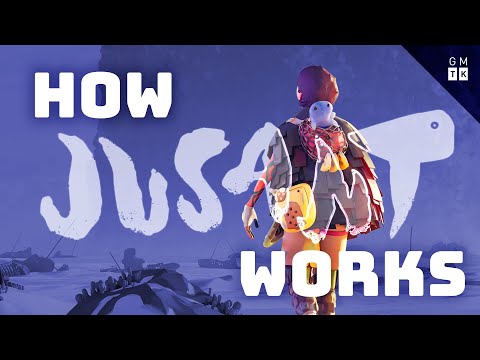
Jusant made climbing feel physical by mapping each trigger to a hand, with the stick as a reaching cursor, and by dropping realistic but hard-to-learn inputs like four-limb climbing. A 40 metre rope and three player-placed pitons turned routes into planning puzzles, while no death and click-to-recover stamina kept it calm. Lesson: mirror the action in the input, cut complexity, and give each tool real decisions.
- Four shoulder buttons move arms and legs
- Jump coiled by tilting stick away
- Overly complicated, hard to teach
- Left stick picks the next handhold
- Each trigger grips with one hand
- Release trigger, climber lets go
- Held button charges the jump
"You let go, they let go."
From Mark Brown's analysis of Jusant
What was said about Jusant
1Controls that copy the climber's hands
Map each trigger to one hand so letting go means letting go. The left stick moves a cursor to pick a handhold, and pushing it further from centre reaches a more distant hold. Each trigger grips with one hand, so releasing a trigger makes the climber release the wall.
Older climbing systems felt disconnected from what the player did on the controller. Mark Brown sums it up: "You let go, they let go."
DON'T NOD dropped realistic inputs that were too hard to learn. A prototype controlled arms and legs with four shoulder buttons, and a jump coiled momentum by tilting the stick away from the jump. Both were cut, and the jump became a held button that charges up.
The four-limb scheme was overly complicated, and the stick-coil jump "proved difficult to teach and execute."
Jusant stacked proven kinaesthetic tricks onto a realistic human climber. Shadow of the Colossus inspired the clenched grip and Grow Home inspired a trigger per hand. Jusant combines these with a human character rather than a goofy red robot.
Similar input-to-action links include Mario's longer jumps, Luigi's Mansion's ghost reeling, Tony Hawk's manual flick and Street Fighter's fireball motion. "What makes Jusant special, then, is doing all of this stuff simultaneously."
Sustained trigger grip needs accessibility options for easier input. Holding the triggers aggravated Mark Brown's repetitive strain injury, so he played in 20 minute sessions. Jusant ships accessibility settings that ease the input.
Complex controller wrangling can be a problem for players with certain motor impairments.
2The rope and pitons turn climbing into planning
Traversal needs decisions, not more buttons. Uncharted-era climbing asked for no thought, problem solving or decision making. Real climbers call a route a "problem" because it means planning each move, and Jusant adds that planning through the rope and pitons.
In big-budget games Lara Croft scales cliffs by holding up on the stick for about five minutes, a criticism Mark Brown first made in 2015.
Three placeable pitons make the player choose where to save. Pitons wedge into the wall as checkpoints, and a fall catches you at the most recent one. Carrying only three forces careful use on every climb.
"This puts you in charge of when and where to save." A piton pulling the rope the wrong way has to be removed.
A fixed 40 metre physics rope makes route length a constraint. The route must leave enough slack to reach the top, which can mean a shorter route or backtracking to pull a piton. The rope also snags and tangles as a physics object.
"At times, the rope is your saviour, but at other times it's your biggest obstacle."
Hidden concessions and relay points keep the rope limit fair. Near a ledge the rope secretly grows five extra metres. Relay points reset the whole rope, give a target to aim for and allow far longer climbs.
Without relays, climb length would be capped by the need for flat ground.
The rope expands where players can go, not just their safety. Placing a piton, abseiling and swinging along the wall reaches ledges far from any handhold. Later you dangle beneath a wall and swing to a surface further back.
Climbing and jumping alone only reach areas near a viable handhold.
Sunlight-wilting plant handholds add pressure without enemies. A button makes plants sprout buds that serve as handholds, but buds in direct sunlight wilt. This forces the player to move fast and use pitons for safety.
3Iterating the stamina system
- A gauge per arm
- Refill only on ground or rope
- Forced descent when empty
- Punitive or broke climbing flow
- Refills anytime by clicking left stick
- Grabbing a hold costs tiny amount
- Jumps shrink bar until flat ground
Stamina became a small nuisance, not stress
From Mark Brown's analysis of Jusant
Four stamina designs failed playtests before a simple one won. DON'T NOD tried a gauge per arm, chunks refilling only on the ground, refilling only on the rope, and a forced descent when empty. They chose stamina that refills anytime by clicking the left stick.
The rejected versions felt punitive, broke the climbing flow or were hard to explain. "Ultimately, playtesting showed that none of these were a good fit."
Jumps shrink the stamina bar so players learn to rest. Grabbing a hold costs a tiny amount of stamina and jumping costs a lot, permanently shrinking the bar until you reach flat ground. You only run out by ignoring obvious prompts to rest.
Stamina becomes a small nuisance to nurse rather than a source of stress, unlike Shadow of the Colossus.
4A calm climb with almost no danger
DON'T NOD removed friction because the goal was a peaceful game. Inspired mainly by Journey, the team cut anything causing frustration: you cannot die, invisible walls stop falls, and the rope catches you back at your last piton. Puzzles stay light so they never break the flow.
The trade-off is little fear, since fear needs a consequence for failure. "The intention for this game was to make a peaceful experience without pressure."
Judge a design against what its makers intended. Mark Brown argues Jusant's lack of challenge is a deliberate choice, as Tomb Raider's climbing was meant as downtime and Insomniac wanted every player to feel like Spider-Man at once.
He keeps the immersive controls, rope physics and checkpoints as ideas to reuse, leaving a harder climbing game to another developer such as the next Tomb Raider.
How Jusant Makes Rock-Climbing More Immersive
Left stick picks a handhold and each trigger grips with one hand. A 40 metre rope and three pitons turn climbing into planning, while no death and stamina refilling on a stick click keep it peaceful.
Map each trigger to one hand so letting go means letting go. The left stick moves a cursor to pick a handhold, and pushing it further from centre reaches a more distant hold. Each trigger grips with one hand, so releasing a trigger makes the climber release the wall.
Older climbing systems felt disconnected from what the player did on the controller. Mark Brown sums it up: "You let go, they let go."
DON'T NOD dropped realistic inputs that were too hard to learn. A prototype controlled arms and legs with four shoulder buttons, and a jump coiled momentum by tilting the stick away from the jump. Both were cut, and the jump became a held button that charges up.
The four-limb scheme was overly complicated, and the stick-coil jump "proved difficult to teach and execute."
Jusant stacked proven kinaesthetic tricks onto a realistic human climber. Shadow of the Colossus inspired the clenched grip and Grow Home inspired a trigger per hand. Jusant combines these with a human character rather than a goofy red robot.
Similar input-to-action links include Mario's longer jumps, Luigi's Mansion's ghost reeling, Tony Hawk's manual flick and Street Fighter's fireball motion. "What makes Jusant special, then, is doing all of this stuff simultaneously."
Sustained trigger grip needs accessibility options for easier input. Holding the triggers aggravated Mark Brown's repetitive strain injury, so he played in 20 minute sessions. Jusant ships accessibility settings that ease the input.
Complex controller wrangling can be a problem for players with certain motor impairments.
Traversal needs decisions, not more buttons. Uncharted-era climbing asked for no thought, problem solving or decision making. Real climbers call a route a "problem" because it means planning each move, and Jusant adds that planning through the rope and pitons.
In big-budget games Lara Croft scales cliffs by holding up on the stick for about five minutes, a criticism Mark Brown first made in 2015.
Three placeable pitons make the player choose where to save. Pitons wedge into the wall as checkpoints, and a fall catches you at the most recent one. Carrying only three forces careful use on every climb.
"This puts you in charge of when and where to save." A piton pulling the rope the wrong way has to be removed.
A fixed 40 metre physics rope makes route length a constraint. The route must leave enough slack to reach the top, which can mean a shorter route or backtracking to pull a piton. The rope also snags and tangles as a physics object.
"At times, the rope is your saviour, but at other times it's your biggest obstacle."
Hidden concessions and relay points keep the rope limit fair. Near a ledge the rope secretly grows five extra metres. Relay points reset the whole rope, give a target to aim for and allow far longer climbs.
Without relays, climb length would be capped by the need for flat ground.
The rope expands where players can go, not just their safety. Placing a piton, abseiling and swinging along the wall reaches ledges far from any handhold. Later you dangle beneath a wall and swing to a surface further back.
Climbing and jumping alone only reach areas near a viable handhold.
Sunlight-wilting plant handholds add pressure without enemies. A button makes plants sprout buds that serve as handholds, but buds in direct sunlight wilt. This forces the player to move fast and use pitons for safety.
Four stamina designs failed playtests before a simple one won. DON'T NOD tried a gauge per arm, chunks refilling only on the ground, refilling only on the rope, and a forced descent when empty. They chose stamina that refills anytime by clicking the left stick.
The rejected versions felt punitive, broke the climbing flow or were hard to explain. "Ultimately, playtesting showed that none of these were a good fit."
Jumps shrink the stamina bar so players learn to rest. Grabbing a hold costs a tiny amount of stamina and jumping costs a lot, permanently shrinking the bar until you reach flat ground. You only run out by ignoring obvious prompts to rest.
Stamina becomes a small nuisance to nurse rather than a source of stress, unlike Shadow of the Colossus.
DON'T NOD removed friction because the goal was a peaceful game. Inspired mainly by Journey, the team cut anything causing frustration: you cannot die, invisible walls stop falls, and the rope catches you back at your last piton. Puzzles stay light so they never break the flow.
The trade-off is little fear, since fear needs a consequence for failure. "The intention for this game was to make a peaceful experience without pressure."
Judge a design against what its makers intended. Mark Brown argues Jusant's lack of challenge is a deliberate choice, as Tomb Raider's climbing was meant as downtime and Insomniac wanted every player to feel like Spider-Man at once.
He keeps the immersive controls, rope physics and checkpoints as ideas to reuse, leaving a harder climbing game to another developer such as the next Tomb Raider.
More in Games
 Games
Nintendo
A Zelda adventure where Princess Zelda copies objects and monsters as echoes to solve puzzles and fight.
 Games
The Legend of Zelda: Breath of the Wild
Nintendo's long-running action-adventure series about Link exploring Hyrule, solving puzzles and fighting Ganon.
 Games
Dead Space
A major video game publisher and the guest's employer.
 G
 29 sources · 94 tips
Mind Over Magnet
A puzzle platformer where you escape a factory using a magnet and a magnetic field.
 Games
Far Cry 2
An open world action game where you recruit and play any of London's citizens.
 Games
God of War
A combat-focused action adventure game from Santa Monica Studio with Norse mythology and light puzzles.
Mind Over Magnet
Mark Brown's first game, a puzzle game he made while learning Unity.
 Games
Dishonored
A first-person stealth action game from Arkane with supernatural powers and the Clockwork Mansion level.