Grow Home
A climbing and exploration game starring a bendy red robot.
Where Grow Home comes up2 episodes and tests
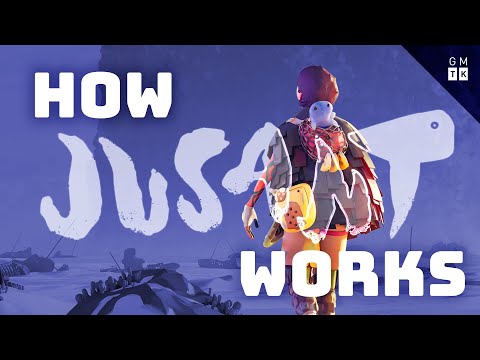 Gcreator of Game Maker's Toolkit testHow Jusant Makes Rock-Climbing More Immersive
 Gcreator of Game Maker's Toolkit testControllers Control Everything
Grow Home mapped the left and right triggers to the robot's two hands, so a standard pad felt inventive and mimicked the on-screen action. Sources show the idea carried on: Jusant combined it with Shadow of the Colossus's clenching grip and applied it to a human climber. Lesson: map inputs to the physical action, and break control conventions when a new input creates fresh fun.
- 1Triggers become handsLeft and right triggers grab with each hand
- 2Jusant borrows the ideaApplied to a realistic human climber
- 3Adds clenched gripTaken from Shadow of the Colossus
- 4Stacks other input linksMario's longer hold, Tony Hawk's flick
From Mark Brown's analysis
What was said about Grow Home
Grow Home maps each trigger to one of the robot's hands. The left and right triggers act as the character's left and right hand grabs. Because finger motion echoes what the character does on screen, a standard pad feels inventive.
Mark Brown groups it with Skate's right-stick flick tricks, Fight Night's stick punches and Katamari Damacy's two-stick pushing as games that reinvent a standard pad. His point is that designers should not just follow convention, because "amazing games can be made by ignoring expectations altogether."
Grow Home's trigger-per-hand idea fed into Jusant's climbing controls. Jusant took the trigger-per-hand idea from Grow Home and the clenched grip from Shadow of the Colossus. It applied them to a realistic human climber instead of a bendy robot.
Jusant combines these with other input-to-action links, such as Mario's longer hold for higher jumps and Tony Hawk's stick flick for a manual. Brown says: "What makes Jusant special, then, is doing all of this stuff simultaneously."
How Jusant Makes Rock-Climbing More Immersive
Inspired Jusant's trigger-per-hand idea, though Jusant applies it to a realistic human.
Grow Home's trigger-per-hand idea fed into Jusant's climbing controls. Jusant took the trigger-per-hand idea from Grow Home and the clenched grip from Shadow of the Colossus. It applied them to a realistic human climber instead of a bendy robot.
Jusant combines these with other input-to-action links, such as Mario's longer hold for higher jumps and Tony Hawk's stick flick for a manual. Brown says: "What makes Jusant special, then, is doing all of this stuff simultaneously."
Controllers Control Everything
Uses the left and right triggers as the character's left and right hands, which makes a standard pad feel inventive.
Grow Home maps each trigger to one of the robot's hands. The left and right triggers act as the character's left and right hand grabs. Because finger motion echoes what the character does on screen, a standard pad feels inventive.
Mark Brown groups it with Skate's right-stick flick tricks, Fight Night's stick punches and Katamari Damacy's two-stick pushing as games that reinvent a standard pad. His point is that designers should not just follow convention, because "amazing games can be made by ignoring expectations altogether."
More in Games
 Games
Nintendo
A Zelda adventure where Princess Zelda copies objects and monsters as echoes to solve puzzles and fight.
 Games
The Legend of Zelda: Breath of the Wild
Nintendo's long-running action-adventure series about Link exploring Hyrule, solving puzzles and fighting Ganon.
 Games
Dead Space
A major video game publisher and the guest's employer.
 G
 29 sources · 94 tips
Mind Over Magnet
A puzzle platformer where you escape a factory using a magnet and a magnetic field.
 Games
Far Cry 2
An open world action game where you recruit and play any of London's citizens.
 Games
God of War
A combat-focused action adventure game from Santa Monica Studio with Norse mythology and light puzzles.
Mind Over Magnet
Mark Brown's first game, a puzzle game he made while learning Unity.
 Games
Dishonored
A first-person stealth action game from Arkane with supernatural powers and the Clockwork Mansion level.