FromSoftware
A Japanese game studio behind Dark Souls, Bloodborne and Elden Ring.
Where FromSoftware comes up3 episodes and tests
 Gcreator of Game Maker's Toolkit testThe World Design of Elden Ring
 Gcreator of Game Maker's Toolkit testShould Dark Souls Have an Easy Mode? (See Pinned Comment)
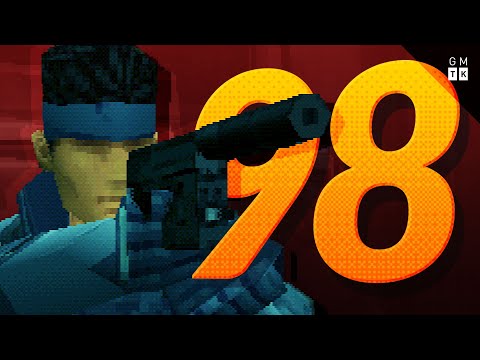 Gcreator of Game Maker's Toolkit testThe Year Stealth Games Got Serious
FromSoftware ties its difficulty to a goal: Miyazaki wants players to feel accomplishment from beating tremendous odds, so it avoids a plain easy mode and offers quiet valves instead, like summons, spell builds and optional bosses. In Elden Ring it added a horse and jump but kept enemy balance static after trying adaptive scaling in earlier games. Lesson: define the feeling first, then build difficulty and flexibility around it.
From Mark Brown's Elden Ring analysis
What was said about FromSoftware
1How Elden Ring took the Souls formula open world
Miyazaki sized the world to the fantasy of a sense of adventure. Miyazaki wanted players to hop on a horse and freely explore a continent of boss monsters, secret dungeons and towering mountains. He calls Elden Ring close to the dream game he has chased since Demon's Souls.
The Lands Between dwarfs the twisty, interconnected worlds of Dark Souls and Bloodborne, and keeps growing as you play, such as a forest elevator that drops to an underground city. Quote: "the open world enriches this ideal experience I'm trying to achieve."
Almost nothing is mandatory, so every playthrough differs. The game has over 150 bosses and only 12 must be beaten to see the credits; entering Leyndell needs just two of five Great Runes. On Steam, 50% of players reached Leyndell, 43% beat Rykard and 38% beat Mohg.
Hidden routes and quests skip bosses: a path around Godrick, a route to the Altus Plateau without the lift, Fia's quest past the Draconic Tree Sentinel, and Ranni's and Varré's quests opening Radahn and Mohg early.
Exploration runs on curiosity, with light guidance players can ignore. There are no map question marks, climbable towers or quest logs; players scan the horizon for landmarks and accept that much content gets missed. Regions chain one to the next, each with a legacy dungeon and a boss.
NPC hints, framed vistas like the first view of Raya Lucaria, and golden guidance lines at some sites of grace keep players from feeling lost. Miyazaki says the guidance is for players stressed by open design, and ignoring it should feel like a choice.
Static enemy levels clash with free exploration. Each area has a fixed difficulty: wander into Caelid early and basic enemies hit like a freight train, but explore too much and bosses become trivial. The game never shows enemy levels, so players guess.
FromSoftware had tried adaptive systems before, such as world tendency in Demon's Souls, Insight in Bloodborne and enemies that stop spawning in Dark Souls 2, but left Elden Ring's balancing static. The soft gating does add menace and gives players bosses to mark and return to.
When exploration changes, rethink the systems built for the old structure. From added a map, a horse, a jump button and infinite out-of-combat stamina for the open world, but kept the old linear-game enemy balancing.
Quote: "Elden Ring has doggedly stuck to the same-old Soulsborne formula - despite completely changing the way you explore its world."
Reused templates turn discoveries into predictable content. Catacombs, mining tunnels and ruins with secret basements repeat with small twists; every mage's tower has a memory stone and every church a sacred tear. The Godskin Apostle is fought four times, once as a mandatory boss.
Earlier Souls games also reused content, and Elden Ring has better loot and enemy variety than almost any game its size, but spotting the pattern breaks the sense of mystery.
The second half narrows into a linear queue of bosses. Mountaintops of the Giants has half as many sites of grace as Liurnia because it has fewer landmarks, and Leyndell is only about the halfway point. The end runs Fire Giant, Farum Azula, Maliketh, then Gideon, Godfrey, Radagon and the Elden Beast.
The one big late secret is the Consecrated Snowfields. Mark Brown reads the funnel as a sign the ambition outgrew development: half open world, half "just Dark Souls".
2Why Dark Souls is hard and has no easy mode
- 1Enemies punish carelessnessEven weak enemies can topple players
- 2Players learn combat deeplyParries, backstabs, stamina, i-frame dodges
- 3Overcome tremendous oddsScreen-sized boss health bars
- 4Feel big accomplishmentEvery kill, shortcut, boss win matters
From Miyazaki and Mark Brown
Difficulty is the delivery mechanism for a sense of accomplishment. Miyazaki pursues "a sense of accomplishment by overcoming tremendous odds". Weak-feeling players, deadly traps and screen-sized boss health bars make every kill, shortcut and boss win feel big.
Remove the challenge and each of those moments shrinks. Without the constant fear of death, Dark Souls isn't really Dark Souls.
Tough enemies force players to learn the combat system deeply. Because even the weakest enemies can topple a careless player, people learn parries, backstabs, stamina management and i-frame dodges. Traps reward players who learn the layout.
A plain difficulty switch would fundamentally alter the game. Lowering Dark Souls' difficulty is compared to letting Resident Evil 4 players move while aiming or save anywhere: restrictions chosen to produce the intended experience.
A menu at the start also asks players to choose with no context, so some pick easy when they could handle more.
Hide difficulty valves inside the game so players feel clever finding them. Players can switch to ranged spell builds by reassigning souls to attributes, read messages warning of traps, summon friends or strangers for bosses, skip optional bosses, grind, or cheese bosses using level geometry and odd AI.
Players are rewarded for truthful messages, and unspoken rules push discussion online and in person. Bloodborne's Insight lets players raise or lower challenge. "Dark Souls makes you suffer, but you never need to suffer alone."
If you add an easy mode, bury it so the first run stays intact. Mark Brown's conclusion: more Estus flasks or shorter boss health bars would not end the world, but make it a cheat code or bury it in settings.
Quote: "do whatever it takes to make sure players don't miss the point."
3Sekiro and the Tenchu series
FromSoftware drew on Tenchu for Sekiro's stealth. The studio used the Tenchu series as inspiration for Sekiro: Shadows Die Twice, which features stealth elements, and had planned a new Tenchu game.
4Similar examples from other apps
These are about other apps, not FromSoftware: examples from the same sources that help explain it.
Spelunky weaves difficulty choice into rewards instead of a menu. Shortcut tunnels give new players a head start, but full runs pay off in items and unlock the City of Gold and the final world.
Derek Yu says these guide players toward "my vision of how it's meant to be played". Fire Emblem Awakening and Darkest Dungeon offer softer modes while making clear they aren't the intended way to play.
Breath of the Wild and Hollow Knight adapt enemies to player progress. Breath of the Wild adds stronger enemies after a number of kills, and Hollow Knight turns the Forgotten Crossroads into the harder Infected Crossroads; Skyrim and Assassin's Creed scale enemies with player power.
The World Design of Elden Ring
It tried enemy adaptation in earlier games, such as world tendency in Demon's Souls, Insight in Bloodborne and enemies that stop spawning in Dark Souls 2, but left Elden Ring's balancing static. Miyazaki calls Elden Ring close to the dream game he has chased since Demon's Souls.
Miyazaki sized the world to the fantasy of a sense of adventure. Miyazaki wanted players to hop on a horse and freely explore a continent of boss monsters, secret dungeons and towering mountains. He calls Elden Ring close to the dream game he has chased since Demon's Souls.
The Lands Between dwarfs the twisty, interconnected worlds of Dark Souls and Bloodborne, and keeps growing as you play, such as a forest elevator that drops to an underground city. Quote: "the open world enriches this ideal experience I'm trying to achieve."
Almost nothing is mandatory, so every playthrough differs. The game has over 150 bosses and only 12 must be beaten to see the credits; entering Leyndell needs just two of five Great Runes. On Steam, 50% of players reached Leyndell, 43% beat Rykard and 38% beat Mohg.
Hidden routes and quests skip bosses: a path around Godrick, a route to the Altus Plateau without the lift, Fia's quest past the Draconic Tree Sentinel, and Ranni's and Varré's quests opening Radahn and Mohg early.
Exploration runs on curiosity, with light guidance players can ignore. There are no map question marks, climbable towers or quest logs; players scan the horizon for landmarks and accept that much content gets missed. Regions chain one to the next, each with a legacy dungeon and a boss.
NPC hints, framed vistas like the first view of Raya Lucaria, and golden guidance lines at some sites of grace keep players from feeling lost. Miyazaki says the guidance is for players stressed by open design, and ignoring it should feel like a choice.
Static enemy levels clash with free exploration. Each area has a fixed difficulty: wander into Caelid early and basic enemies hit like a freight train, but explore too much and bosses become trivial. The game never shows enemy levels, so players guess.
FromSoftware had tried adaptive systems before, such as world tendency in Demon's Souls, Insight in Bloodborne and enemies that stop spawning in Dark Souls 2, but left Elden Ring's balancing static. The soft gating does add menace and gives players bosses to mark and return to.
When exploration changes, rethink the systems built for the old structure. From added a map, a horse, a jump button and infinite out-of-combat stamina for the open world, but kept the old linear-game enemy balancing.
Quote: "Elden Ring has doggedly stuck to the same-old Soulsborne formula - despite completely changing the way you explore its world."
Reused templates turn discoveries into predictable content. Catacombs, mining tunnels and ruins with secret basements repeat with small twists; every mage's tower has a memory stone and every church a sacred tear. The Godskin Apostle is fought four times, once as a mandatory boss.
Earlier Souls games also reused content, and Elden Ring has better loot and enemy variety than almost any game its size, but spotting the pattern breaks the sense of mystery.
The second half narrows into a linear queue of bosses. Mountaintops of the Giants has half as many sites of grace as Liurnia because it has fewer landmarks, and Leyndell is only about the halfway point. The end runs Fire Giant, Farum Azula, Maliketh, then Gideon, Godfrey, Radagon and the Elden Beast.
The one big late secret is the Consecrated Snowfields. Mark Brown reads the funnel as a sign the ambition outgrew development: half open world, half "just Dark Souls".
Breath of the Wild and Hollow Knight adapt enemies to player progress. Breath of the Wild adds stronger enemies after a number of kills, and Hollow Knight turns the Forgotten Crossroads into the harder Infected Crossroads; Skyrim and Assassin's Creed scale enemies with player power.
The Year Stealth Games Got Serious
It used the Tenchu series as inspiration for Sekiro: Shadows Die Twice, which features stealth elements, and had planned a new Tenchu game.
FromSoftware drew on Tenchu for Sekiro's stealth. The studio used the Tenchu series as inspiration for Sekiro: Shadows Die Twice, which features stealth elements, and had planned a new Tenchu game.
Should Dark Souls Have an Easy Mode? (See Pinned Comment)
Its difficulty exists to deliver Miyazaki's sense of accomplishment from overcoming tremendous odds, so a plain easy mode would break it. It already hides ways to ease up: ranged spell builds, class changes via attributes, player messages, summoning help, optional bosses, grinding and cheese tactics.
Difficulty is the delivery mechanism for a sense of accomplishment. Miyazaki pursues "a sense of accomplishment by overcoming tremendous odds". Weak-feeling players, deadly traps and screen-sized boss health bars make every kill, shortcut and boss win feel big.
Remove the challenge and each of those moments shrinks. Without the constant fear of death, Dark Souls isn't really Dark Souls.
Tough enemies force players to learn the combat system deeply. Because even the weakest enemies can topple a careless player, people learn parries, backstabs, stamina management and i-frame dodges. Traps reward players who learn the layout.
A plain difficulty switch would fundamentally alter the game. Lowering Dark Souls' difficulty is compared to letting Resident Evil 4 players move while aiming or save anywhere: restrictions chosen to produce the intended experience.
A menu at the start also asks players to choose with no context, so some pick easy when they could handle more.
Hide difficulty valves inside the game so players feel clever finding them. Players can switch to ranged spell builds by reassigning souls to attributes, read messages warning of traps, summon friends or strangers for bosses, skip optional bosses, grind, or cheese bosses using level geometry and odd AI.
Players are rewarded for truthful messages, and unspoken rules push discussion online and in person. Bloodborne's Insight lets players raise or lower challenge. "Dark Souls makes you suffer, but you never need to suffer alone."
If you add an easy mode, bury it so the first run stays intact. Mark Brown's conclusion: more Estus flasks or shorter boss health bars would not end the world, but make it a cheat code or bury it in settings.
Quote: "do whatever it takes to make sure players don't miss the point."
Spelunky weaves difficulty choice into rewards instead of a menu. Shortcut tunnels give new players a head start, but full runs pay off in items and unlock the City of Gold and the final world.
Derek Yu says these guide players toward "my vision of how it's meant to be played". Fire Emblem Awakening and Darkest Dungeon offer softer modes while making clear they aren't the intended way to play.
More in Games
 Games
Nintendo
A Zelda adventure where Princess Zelda copies objects and monsters as echoes to solve puzzles and fight.
 Games
The Legend of Zelda: Breath of the Wild
Nintendo's long-running action-adventure series about Link exploring Hyrule, solving puzzles and fighting Ganon.
 Games
Dead Space
A major video game publisher and the guest's employer.
 G
 29 sources · 94 tips
Mind Over Magnet
A puzzle platformer where you escape a factory using a magnet and a magnetic field.
 Games
Far Cry 2
An open world action game where you recruit and play any of London's citizens.
 Games
God of War
A combat-focused action adventure game from Santa Monica Studio with Norse mythology and light puzzles.
Mind Over Magnet
Mark Brown's first game, a puzzle game he made while learning Unity.
 Games
Dishonored
A first-person stealth action game from Arkane with supernatural powers and the Clockwork Mansion level.