
Devil May Cry
A stylish action game series built around combo-heavy combat and air juggling.
Where Devil May Cry comes up3 episodes and tests
 Gcreator of Game Maker's Toolkit testThe Games That Designed Themselves
 Gcreator of Game Maker's Toolkit testThe Challenge of Cameras
 Gcreator of Game Maker's Toolkit testWhat Makes a Good Combat System?
Devil May Cry's air juggle began as a bug in Onimusha: Warlords that was fixed there, and Hideki Kamiya developed it into the core mechanic. One attack button yields many moves through holds and directions, and a wider camera suits its crowd fights. The lesson: keep promising bugs, get depth from few inputs, and tune camera and controls to the intended feel.
- 1Kamiya finds a bugRepeated slashes juggle enemies in Onimusha: Warlords
- 2Onimusha fixes itThe bug is removed from that game
- 3Kamiya develops itHe builds the bug into a mechanic
- 4Air juggle is bornCentral mechanic of Devil May Cry
From Game Maker's Toolkit
What was said about Devil May Cry
1How a bug in Onimusha became Devil May Cry's air juggle
Devil May Cry's central mechanic grew out of a bug. Hideki Kamiya found a bug in Onimusha: Warlords that let players juggle enemies in the air by repeatedly slashing them. It was fixed in Onimusha, but Kamiya developed it into the central mechanic of Devil May Cry.
Game Maker's Toolkit uses it as an example of bugs, glitches and accidents in development being turned into features. The lesson is that a bug can be a lead worth following.
2One attack button, many moves
Devil May Cry gets a deep move list from one attack button. Holding back with the attack button gives an uppercut and holding forward gives a stinger. Holding the button charges an attack.
Game Maker's Toolkit cites it as the example of a fast game feel and of getting loads of unique moves from one main attack button. Combos add a reward for memory and timing on top. Yakuza's environmental finishers and Dark Souls' backstab use context in a similar way.
Heavy and area attacks in Devil May Cry trade power for a cost. A strong attack is slow, and a wide crowd-control sweep does little damage. Other moves leave you vulnerable, cost a resource or sit on a cooldown.
Game Maker's Toolkit groups Devil May Cry with God of War and Monster Hunter here. These trade-offs make choosing an attack a real decision.
3Why Devil May Cry uses a wide camera
Devil May Cry pulls the camera wide because it is a crowd combat game. Close cameras suit deliberate combat against one enemy at a time, as in Hellblade and Dark Souls. Devil May Cry uses a much wider perspective so the player can see many enemies at once.
The rule of thumb is to pick camera distance by how many enemies the player fights at once.
Devil May Cry's camera and combat settings all support its fast pace. Its fast, free-flowing fighting is contrasted with the deliberate pace of Dark Souls and the scrappy street fights of Yakuza.
There is no universal combat recipe. Camera, stickiness, cancelling and parry generosity should all fit the game's intended feel and flow.
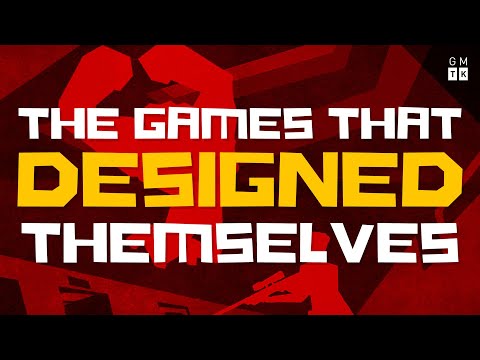
The Games That Designed Themselves
Its core mechanic grew from a juggle bug in Onimusha: Warlords that was fixed there, but Hideki Kamiya developed it further.
Devil May Cry's central mechanic grew out of a bug. Hideki Kamiya found a bug in Onimusha: Warlords that let players juggle enemies in the air by repeatedly slashing them. It was fixed in Onimusha, but Kamiya developed it into the central mechanic of Devil May Cry.
Game Maker's Toolkit uses it as an example of bugs, glitches and accidents in development being turned into features. The lesson is that a bug can be a lead worth following.
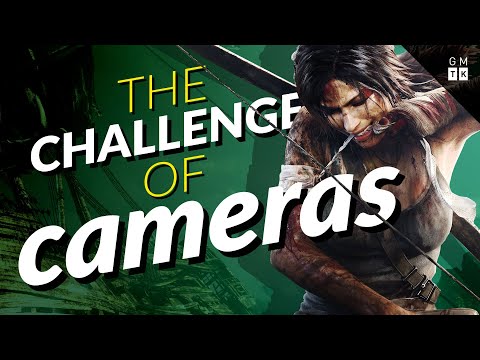
The Challenge of Cameras
It uses a much wider camera perspective than close-camera games because it is a crowd combat game.
Devil May Cry pulls the camera wide because it is a crowd combat game. Close cameras suit deliberate combat against one enemy at a time, as in Hellblade and Dark Souls. Devil May Cry uses a much wider perspective so the player can see many enemies at once.
The rule of thumb is to pick camera distance by how many enemies the player fights at once.
What Makes a Good Combat System?
One main attack button yields many moves: hold for a charge, hold back for an uppercut, hold forward for a stinger. It is the example of a fast game feel.
Devil May Cry gets a deep move list from one attack button. Holding back with the attack button gives an uppercut and holding forward gives a stinger. Holding the button charges an attack.
Game Maker's Toolkit cites it as the example of a fast game feel and of getting loads of unique moves from one main attack button. Combos add a reward for memory and timing on top. Yakuza's environmental finishers and Dark Souls' backstab use context in a similar way.
Heavy and area attacks in Devil May Cry trade power for a cost. A strong attack is slow, and a wide crowd-control sweep does little damage. Other moves leave you vulnerable, cost a resource or sit on a cooldown.
Game Maker's Toolkit groups Devil May Cry with God of War and Monster Hunter here. These trade-offs make choosing an attack a real decision.
Devil May Cry's camera and combat settings all support its fast pace. Its fast, free-flowing fighting is contrasted with the deliberate pace of Dark Souls and the scrappy street fights of Yakuza.
There is no universal combat recipe. Camera, stickiness, cancelling and parry generosity should all fit the game's intended feel and flow.
More in Games
 Games
Nintendo
A Zelda adventure where Princess Zelda copies objects and monsters as echoes to solve puzzles and fight.
 Games
The Legend of Zelda: Breath of the Wild
Nintendo's long-running action-adventure series about Link exploring Hyrule, solving puzzles and fighting Ganon.
 Games
Dead Space
A major video game publisher and the guest's employer.
 G
 29 sources · 94 tips
Mind Over Magnet
A puzzle platformer where you escape a factory using a magnet and a magnetic field.
 Games
Far Cry 2
An open world action game where you recruit and play any of London's citizens.
 Games
God of War
A combat-focused action adventure game from Santa Monica Studio with Norse mythology and light puzzles.
Mind Over Magnet
Mark Brown's first game, a puzzle game he made while learning Unity.
 Games
Dishonored
A first-person stealth action game from Arkane with supernatural powers and the Clockwork Mansion level.