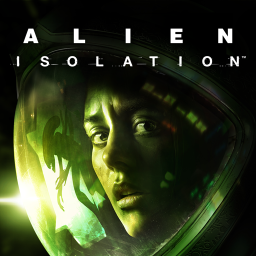
Alien: Isolation
A survival horror game where you evade a lone xenomorph.
Where Alien: Isolation comes up5 episodes and tests
 Gcreator of Game Maker's Toolkit testThe Power of Video Game HUDs
 Gcreator of Game Maker's Toolkit testThe Five Types of Stealth Game Gadget - School of Stealth Part 2
 Gcreator of Game Maker's Toolkit testHow Stealth Game Guards See and Hear - School of Stealth Part 1
 Gcreator of Game Maker's Toolkit testWhat Makes Good AI?
 Gcreator of Game Maker's Toolkit testThe Design of Dead Space - Part 1
Alien: Isolation made fear a design goal and built everything around it. The motion tracker is a held tool, so checking threats costs you a weapon. The Xenomorph's senses stay hidden, and its abilities unlock over time so it seems to learn. Lesson: shape information, AI and feedback to the feeling you want, and trade clarity for tension when fear is the point.
- Hides what the alien sees and hears
- Player judges light, shadow, distance, sound
- Never sure whether you're safe
- Shows vision cones and sound pulses
- Player knows exactly what enemies sense
- Player feels like an apex predator
How much perception you show sets the feel.
From Mark Brown on Alien: Isolation
What was said about Alien: Isolation
1The Xenomorph: hidden senses and an AI that seems to learn
Hiding what the alien can see and hear creates the fear. Alien: Isolation deliberately does not show the Xenomorph's perception, so players must judge light, shadow, distance and sound themselves and never know for sure whether they are safe.
Mark Brown contrasts it with Mark of the Ninja, which shows vision cones and sound pulses and makes the player feel like an apex predator. How much of the perception system you surface sets the feel. Quote: "A huge amount of fear and anxiety is derived from your shaky knowledge of the alien's senses."
An aggressive hunter AI fits because the game is about being hunted. The Xenomorph's relentless hunting suits a survival horror game, but the same AI would be wildly out of place in Batman: Arkham Asylum, where enemies must be sneakable.
The point is to judge AI by the experience it supports, not by how lethal it is. Quote: "AI must fit the game's intended experience."
Unlocking alien abilities over time makes it seem to learn. The Xenomorph gains abilities as the game goes on, so it appears to adapt to the player and stays interesting instead of becoming predictable.
2The motion tracker
A held motion tracker gives information a gameplay cost. The motion tracker is a physical tool in the character's hands, so using it means you can't hold a weapon at the same time.
It is an example of diegetic UI, alongside Dead Space's health on Isaac's suit and Metroid Prime's steaming visor. Quote: "Making this information diegetic can lead to interesting gameplay consequences."
The tracker shows what you can't see, feeding observe-then-move pacing. By revealing movement beyond the character's view, the tracker lets players study what's ahead and then act, the observation-then-execution loop at the heart of stealth.
Mark Brown groups it with Splinter Cell's optic fibre camera and Dishonored's lean. Gunpoint's Tom Francis calls information the raw material plans are made of.
3Similar examples from other apps
These are about other apps, not Alien: Isolation: examples from the same sources that help explain it.
Metal Gear Solid V switches on enemy counters at player thresholds. Enemies respond to repeated headshots, unseen base takeovers and night infiltrations with helmets, traps or night-vision goggles once the player passes a threshold.
Quote: "it's not actually "learning" - but it just won't do them until the player hits a certain threshold"
Dead Space's regenerating hunter was an early version of the stalker. The hunter regenerates and chases Isaac room to room through vents, breaking the rule that a cleared room is safe; it is described as an early prototype for Alien: Isolation.
The idea was borrowed from Resident Evil 4. Finally killing it gives "a real sense of catharsis".
The Power of Video Game HUDs
The motion tracker is a held tool, so you cannot use it and hold a weapon at the same time, which gives the information a gameplay cost.
A held motion tracker gives information a gameplay cost. The motion tracker is a physical tool in the character's hands, so using it means you can't hold a weapon at the same time.
It is an example of diegetic UI, alongside Dead Space's health on Isaac's suit and Metroid Prime's steaming visor. Quote: "Making this information diegetic can lead to interesting gameplay consequences."
The Five Types of Stealth Game Gadget - School of Stealth Part 2
Its motion tracker shows what the character can't see, feeding the observe-then-move loop.
The tracker shows what you can't see, feeding observe-then-move pacing. By revealing movement beyond the character's view, the tracker lets players study what's ahead and then act, the observation-then-execution loop at the heart of stealth.
Mark Brown groups it with Splinter Cell's optic fibre camera and Dishonored's lean. Gunpoint's Tom Francis calls information the raw material plans are made of.
How Stealth Game Guards See and Hear - School of Stealth Part 1
It hides the alien's senses on purpose, because fear comes from not knowing what it can see or hear. This is the example of keeping perception ambiguous for tension.
Hiding what the alien can see and hear creates the fear. Alien: Isolation deliberately does not show the Xenomorph's perception, so players must judge light, shadow, distance and sound themselves and never know for sure whether they are safe.
Mark Brown contrasts it with Mark of the Ninja, which shows vision cones and sound pulses and makes the player feel like an apex predator. How much of the perception system you surface sets the feel. Quote: "A huge amount of fear and anxiety is derived from your shaky knowledge of the alien's senses."
What Makes Good AI?
Aggressive hunting AI suits it. The Xenomorph unlocks abilities over time so it appears to learn and stays interesting.
An aggressive hunter AI fits because the game is about being hunted. The Xenomorph's relentless hunting suits a survival horror game, but the same AI would be wildly out of place in Batman: Arkham Asylum, where enemies must be sneakable.
The point is to judge AI by the experience it supports, not by how lethal it is. Quote: "AI must fit the game's intended experience."
Unlocking alien abilities over time makes it seem to learn. The Xenomorph gains abilities as the game goes on, so it appears to adapt to the player and stays interesting instead of becoming predictable.
Metal Gear Solid V switches on enemy counters at player thresholds. Enemies respond to repeated headshots, unseen base takeovers and night infiltrations with helmets, traps or night-vision goggles once the player passes a threshold.
Quote: "it's not actually "learning" - but it just won't do them until the player hits a certain threshold"
The Design of Dead Space - Part 1
Its relentless stalker is anticipated by Dead Space's hunter, which regenerates and chases you from room to room.
Dead Space's regenerating hunter was an early version of the stalker. The hunter regenerates and chases Isaac room to room through vents, breaking the rule that a cleared room is safe; it is described as an early prototype for Alien: Isolation.
The idea was borrowed from Resident Evil 4. Finally killing it gives "a real sense of catharsis".
More in Games
 Games
Nintendo
A Zelda adventure where Princess Zelda copies objects and monsters as echoes to solve puzzles and fight.
 Games
The Legend of Zelda: Breath of the Wild
Nintendo's long-running action-adventure series about Link exploring Hyrule, solving puzzles and fighting Ganon.
 Games
Dead Space
A major video game publisher and the guest's employer.
 G
 29 sources · 94 tips
Mind Over Magnet
A puzzle platformer where you escape a factory using a magnet and a magnetic field.
 Games
Far Cry 2
An open world action game where you recruit and play any of London's citizens.
 Games
God of War
A combat-focused action adventure game from Santa Monica Studio with Norse mythology and light puzzles.
Mind Over Magnet
Mark Brown's first game, a puzzle game he made while learning Unity.
 Games
Dishonored
A first-person stealth action game from Arkane with supernatural powers and the Clockwork Mansion level.