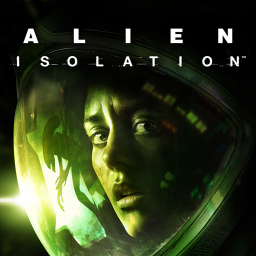
Alien: Isolation
A first-person survival horror game where you evade a Xenomorph on a space station.
Where Alien: Isolation comes up1 episode or test

Alien: Isolation first used invisible auto-checkpoints, borrowed from Call of Duty and Bioshock. Death cost only minutes, players lost their fear, and some learned to die near a checkpoint to respawn safely. The team switched to a few manual save points that take time to use and leave you exposed to the alien. Lesson: understand why a mechanic works before copying it, and watch for strategies that defeat the intended emotion.
- Invisible, easy to build, borrowed from other games
- Death cost only a couple of minutes
- Players beelined to checkpoint, died, respawned safely
- A few save points, slow to activate
- Players exposed while the alien sneaks up
- Dying before saving lost progress
Saving became a source of terror
From Gary Napper, Alien: Isolation design director
What was said about Alien: Isolation
Alien: Isolation's borrowed auto-checkpoints removed the fear its horror depended on. The team first used invisible auto-checkpoints because they were easy to build and standard in games like Call of Duty and Bioshock. Death cost only a couple of minutes, so players wandered the station without fear.
Players also found a degenerate strategy: when jumped by the Xenomorph, "a smart strategy was to just beeline it towards to the next checkpoint, get killed, and respawn in safety." Design director Gary Napper said "Often our decisions and choices are coloured by the games we play," and the lesson drawn is to understand why a mechanic works before copying it.
Slow manual save points turned saving itself into a source of terror. The team replaced checkpoints with a few manual save points that take time to activate, leaving players exposed while the alien could sneak up and kill them. Dying before a save meant losing progress, so finding and using a save became tense.
Napper: "The simple act of saving had become supportive to the game's driving factors of terror and isolation." The change altered both player behaviour and emotion, an example of keeping a mechanic only when the feelings it creates fit the game's vision.
How To Think Like A Game Designer
It first used invisible auto-checkpoints, so death cost only minutes and players wandered without fear, and some learned to die near a checkpoint to respawn safely. The team swapped to a few manual save points that take time to use, leaving you exposed to the alien, so saving itself became tense.
Alien: Isolation's borrowed auto-checkpoints removed the fear its horror depended on. The team first used invisible auto-checkpoints because they were easy to build and standard in games like Call of Duty and Bioshock. Death cost only a couple of minutes, so players wandered the station without fear.
Players also found a degenerate strategy: when jumped by the Xenomorph, "a smart strategy was to just beeline it towards to the next checkpoint, get killed, and respawn in safety." Design director Gary Napper said "Often our decisions and choices are coloured by the games we play," and the lesson drawn is to understand why a mechanic works before copying it.
Slow manual save points turned saving itself into a source of terror. The team replaced checkpoints with a few manual save points that take time to activate, leaving players exposed while the alien could sneak up and kill them. Dying before a save meant losing progress, so finding and using a save became tense.
Napper: "The simple act of saving had become supportive to the game's driving factors of terror and isolation." The change altered both player behaviour and emotion, an example of keeping a mechanic only when the feelings it creates fit the game's vision.
More in Games
 Games
Nintendo
A Zelda adventure where Princess Zelda copies objects and monsters as echoes to solve puzzles and fight.
 Games
The Legend of Zelda: Breath of the Wild
Nintendo's long-running action-adventure series about Link exploring Hyrule, solving puzzles and fighting Ganon.
 Games
Dead Space
A major video game publisher and the guest's employer.
 G
 29 sources · 94 tips
Mind Over Magnet
A puzzle platformer where you escape a factory using a magnet and a magnetic field.
 Games
Far Cry 2
An open world action game where you recruit and play any of London's citizens.
 Games
God of War
A combat-focused action adventure game from Santa Monica Studio with Norse mythology and light puzzles.
Mind Over Magnet
Mark Brown's first game, a puzzle game he made while learning Unity.
 Games
Dishonored
A first-person stealth action game from Arkane with supernatural powers and the Clockwork Mansion level.