
Wedgwood
A pottery maker founded by Josiah Wedgwood, known for creamware, jasper and fine tableware.
Where Wedgwood comes up1 book
Wedgwood won prestige commissions, like the Queen's Ware order, then used royal endorsement to sell cheaper to the middle class. The Frog Service cost over £2,500, just under Catherine's price, yet drew London crowds. He logged nearly five thousand numbered trials to master jasper and ran a steady core line apart from risky experiments. Lesson: use showpiece wins for reach, and record every test so learning compounds.
- 1Take royal commissionCostly gilded tea set for Queen Charlotte
- 2Rename creamwareBecomes Queen's Ware; Potter to Her Majesty
- 3King orders Royal PatternDemand still rising two years later
- 4Palaces fix statusDisplay set the goods' standing
- 5Sell cheaper to middle classMuch larger market buys at reduced prices
From Wedgwood page: Royal patronage and Queen's Ware
What was said about Wedgwood
1Royal patronage and Queen's Ware
Wedgwood took a costly royal commission no one else would touch. He took a costly gilded tea-set order for Queen Charlotte, which earned him the title Potter to Her Majesty and renamed his creamware Queen's Ware. He concluded that winning patrons deserved as much effort and money as design, but only once the product was already cheap and durable.
The King then ordered a 'Royal Pattern' service, and two years later demand was still rising. Wedgwood wrote: "It is really amazing how rapidly the use of it has spread allmost over the whole Globe".
Wedgwood sold to palaces first, then to the middle class at lower prices. When the vase craze peaked and stock piled up, he reasoned that display in palaces had fixed the goods' status. The much larger middling class would then buy them at reduced prices, and it did.
By 1772 the ormolu and vase vogues had peaked, and Boulton was holding cartloads of unsold stock.
Wedgwood judged the Frog Service by reach, not by its thin margin. The Frog Service for Catherine the Great took over a year and barely covered its costs. Displayed in London, it drew the nobility and the Queen and was the talk of the town for weeks.
The 952 piece base cost £51, but 1,244 hand-painted views pushed the total over £2,500, just under Catherine's price. Prestige alone is not enough: Boulton's scientific clocks drew praise but would not sell, because they did not strike the hours or play any tune.
2The experiment book and jasper
Wedgwood logged every trial in a numbered book so results compounded. He began recording trials in 1759, when the trade seemed stale and demand was falling, and kept it up for thirty-five years, nearly five thousand trials in all. The habit let him grind through problems like jasper, which kept cracking or blistering for years.
Jasper was mastered only in late 1777 after five thousand experiments. He wrote: "We must have our Hobby Horse, & mount him, & mount him again if he throws us ten times a day."
Wedgwood fired each moor-stone lump alone to explain erratic batches. One batch of moor-stone fired white and fine, the next cinnamon, and one melted to glass. He only understood why after firing every lump by itself instead of mixing them.
He experimented with moor-stone for about five years.
3Costing and structuring the factories
Wedgwood built a price book costing every stage to the shop counter. He found cash tied up in expenses and unsold stock, and ornamental prices unrelated to cost. The price book costed every stage, and longer runs spread overheads and allowed lower prices for a wider market.
In April 1773 the Potters' General Assembly agreed to cut prices by 20 per cent.
Wedgwood ran useful and ornamental ware as separate partnerships. Each had its own workshops, ovens, sales and accounts. He refused to merge them, to balance steady demand against the riskier artistic trade.
By 1769 he had two specialized factories and 150 employees, thirty of them on vases.
4Ceramic lab ware for chemists
Wedgwood made ceramic lab ware after seeing Priestley's results were unreliable. Gun barrels and glass tubes contaminated or melted, which left Priestley's results uncertain. Wedgwood made ceramic lab ware, tested it for six months and gave it free to expert friends. He sold it once published praise created demand.
He demonstrated a model at the Apothecaries' Hall in London in July 1779.
5Building the canal coalition
Wedgwood recruited every party that gained from the canal before rivals did. He recruited Birmingham manufacturers, salt makers and Liverpool merchants, gave allies concrete savings figures, and won a powerful patron who backed the canal publicly. He argued plain facts persuade suspicious readers better than flourish, and would not let wording delay printing.
Garbett calculated Baltic merchants could save up to fifteen shillings a ton. Freight to the Potteries later fell from 10d to 1½d a mile. Wedgwood wanted "to disappoint them with the manly Simplicity of Truth".
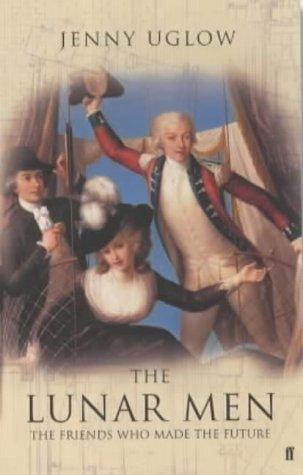
The Lunar Men: The Inventors of the Modern World, 1730–1810
Wedgwood kept a numbered experiment book of nearly five thousand trials and won a royal order that became Queen's Ware. He used palace display to sell to the middle class at lower prices. The Frog Service for Catherine the Great barely covered its costs but drew crowds in London.
Wedgwood took a costly royal commission no one else would touch. He took a costly gilded tea-set order for Queen Charlotte, which earned him the title Potter to Her Majesty and renamed his creamware Queen's Ware. He concluded that winning patrons deserved as much effort and money as design, but only once the product was already cheap and durable.
The King then ordered a 'Royal Pattern' service, and two years later demand was still rising. Wedgwood wrote: "It is really amazing how rapidly the use of it has spread allmost over the whole Globe".
Wedgwood sold to palaces first, then to the middle class at lower prices. When the vase craze peaked and stock piled up, he reasoned that display in palaces had fixed the goods' status. The much larger middling class would then buy them at reduced prices, and it did.
By 1772 the ormolu and vase vogues had peaked, and Boulton was holding cartloads of unsold stock.
Wedgwood judged the Frog Service by reach, not by its thin margin. The Frog Service for Catherine the Great took over a year and barely covered its costs. Displayed in London, it drew the nobility and the Queen and was the talk of the town for weeks.
The 952 piece base cost £51, but 1,244 hand-painted views pushed the total over £2,500, just under Catherine's price. Prestige alone is not enough: Boulton's scientific clocks drew praise but would not sell, because they did not strike the hours or play any tune.
Wedgwood logged every trial in a numbered book so results compounded. He began recording trials in 1759, when the trade seemed stale and demand was falling, and kept it up for thirty-five years, nearly five thousand trials in all. The habit let him grind through problems like jasper, which kept cracking or blistering for years.
Jasper was mastered only in late 1777 after five thousand experiments. He wrote: "We must have our Hobby Horse, & mount him, & mount him again if he throws us ten times a day."
Wedgwood fired each moor-stone lump alone to explain erratic batches. One batch of moor-stone fired white and fine, the next cinnamon, and one melted to glass. He only understood why after firing every lump by itself instead of mixing them.
He experimented with moor-stone for about five years.
Wedgwood built a price book costing every stage to the shop counter. He found cash tied up in expenses and unsold stock, and ornamental prices unrelated to cost. The price book costed every stage, and longer runs spread overheads and allowed lower prices for a wider market.
In April 1773 the Potters' General Assembly agreed to cut prices by 20 per cent.
Wedgwood ran useful and ornamental ware as separate partnerships. Each had its own workshops, ovens, sales and accounts. He refused to merge them, to balance steady demand against the riskier artistic trade.
By 1769 he had two specialized factories and 150 employees, thirty of them on vases.
Wedgwood made ceramic lab ware after seeing Priestley's results were unreliable. Gun barrels and glass tubes contaminated or melted, which left Priestley's results uncertain. Wedgwood made ceramic lab ware, tested it for six months and gave it free to expert friends. He sold it once published praise created demand.
He demonstrated a model at the Apothecaries' Hall in London in July 1779.
Wedgwood recruited every party that gained from the canal before rivals did. He recruited Birmingham manufacturers, salt makers and Liverpool merchants, gave allies concrete savings figures, and won a powerful patron who backed the canal publicly. He argued plain facts persuade suspicious readers better than flourish, and would not let wording delay printing.
Garbett calculated Baltic merchants could save up to fifteen shillings a ton. Freight to the Potteries later fell from 10d to 1½d a mile. Wedgwood wanted "to disappoint them with the manly Simplicity of Truth".
More in Lifestyle
 Lifestyle
Drunk Mode
A nightlife app that helps students find parties while staying safe with friends.
 2 sources · 26 tips
 Lifestyle
Gojek
An Indonesian super app for ride hailing, food delivery, payments and many other on-demand services.
 2 sources · 23 tips
 Lifestyle
Thumbtack
A marketplace connecting homeowners with local service professionals for home projects.
7 sources · 10 tips Lifestyle
Hermes
A French luxury house making handcrafted leather goods, silk scarves and clothing, run by the Dumas family.
 2 sources · 18 tips
 Lifestyle
Houzz
A home remodeling and design app and marketplace connecting homeowners with products and professionals.
 2 sources · 5 tips
 Lifestyle
Life360
A family safety app that locates and protects people, pets and things through shared circles.
 2 sources · 19 tips
 Lifestyle
Purpose
An AI mentor app for personal growth, co-founded by Mark Manson, that pushes back on users.

 2 sources · 17 tips
Caveman
A paid app giving men one romantic tip for every day of the year.
1 source · 9 tips