
The School of Life
A London-based cultural enterprise offering books, videos, classes and products on emotional intelligence and how to live well.
Where The School of Life comes up1 episode or test
- Faithful to the thinker, like an academic
- Like writing a Wikipedia page
- What stuck after shutting the book
- Where the thinker took him
Personal-response videos played extremely well
From Alain de Botton interview
What was said about The School of Life
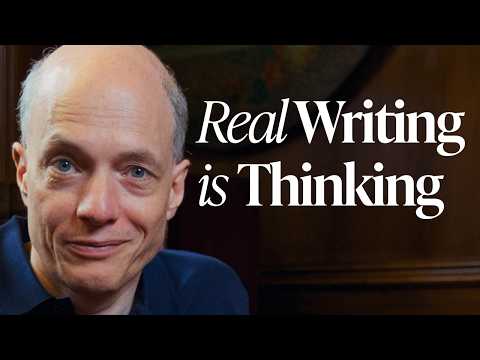
Videos on thinkers worked because they gave a personal response, not a summary. When Alain de Botton covers a thinker, he asks what has really stuck after he shuts the book and where that thinker took him. The School of Life videos made this way, like his books on Proust and other philosophers, played extremely well.
He never wanted to be faithful to a thinker the way an academic is. "That's different from trying to write a Wikipedia page on somebody."
De Botton sees The School of Life as his childhood comfort object, grown up. He describes it as the teddy bear he invented to comfort himself as a boarding-school child, continued into adulthood.
It fits his wider view that writing and culture exist to turn pain into something useful. He began writing as a teenager to master emotions that felt bigger than him.
Honest attention to your own feelings is what readers recognize as theirs. De Botton's research method is empirical observation of himself. Readers of his first book, On Love, asked how he knew that about them, though he had only observed himself.
He writes whatever he most wants to write each morning, in pieces of about 800 words, reasoning that if he is bored the reader will be too. He argues AI only sums up what has already been said, which raises the pressure on writers to explore their own experience more deeply.

How to Write Something Truly Beautiful (Alain de Botton Interview)
De Botton sees it as the teddy bear he invented and comforted as a boarding-school child, continued into adulthood. His School of Life videos on thinkers played extremely well because they record a personal response, not a summary.
Videos on thinkers worked because they gave a personal response, not a summary. When Alain de Botton covers a thinker, he asks what has really stuck after he shuts the book and where that thinker took him. The School of Life videos made this way, like his books on Proust and other philosophers, played extremely well.
He never wanted to be faithful to a thinker the way an academic is. "That's different from trying to write a Wikipedia page on somebody."
De Botton sees The School of Life as his childhood comfort object, grown up. He describes it as the teddy bear he invented to comfort himself as a boarding-school child, continued into adulthood.
It fits his wider view that writing and culture exist to turn pain into something useful. He began writing as a teenager to master emotions that felt bigger than him.
Honest attention to your own feelings is what readers recognize as theirs. De Botton's research method is empirical observation of himself. Readers of his first book, On Love, asked how he knew that about them, though he had only observed himself.
He writes whatever he most wants to write each morning, in pieces of about 800 words, reasoning that if he is bored the reader will be too. He argues AI only sums up what has already been said, which raises the pressure on writers to explore their own experience more deeply.
More in Education
 Education
Duolingo
A language learning app built around daily streaks and short lessons.

 47 sources · 132 tips
 Education
Headway
A book summary and self-growth app that sells subscriptions through a long web quiz funnel.
 10 sources · 36 tips
 Education
Blinkist
A nonfiction book summary app that turns books into short audio and text reads.
 16 sources · 17 tips
 Education
StudyFetch
An AI study platform that turns course materials into practice tests, flashcards and tutoring sessions.
4 sources · 31 tips Education
Coconote
An AI study app that records and transcribes lectures and creates notes, summaries and flashcards.
3 sources · 30 tips Education
Reforge
A company offering courses on product and growth, now also building AI products like Reforge Insights.
10 sources · 13 tips Education
Coursiv
An AI learning app that teaches beginners practical AI tools through short lessons and challenges.
2 sources · 17 tips Education
Unacademy
An Indian online learning platform offering courses for exam preparation and other subjects.
2 sources · 6 tips