
How I Write
David Perell asks great writers how they write: their process, habits and craft, from novelists and screenwriters to essayists and founders. 144 How I Write episodes on product and growth, each as notes you can zoom: the bottom line, key takeaways and every chapter, linked to the moment in the video.
Ask all of them a question · The course
October 20265
 How I Write · Oct 28
How to Write Thrilling Stories (Gillian Flynn Interview)
Gillian Flynn explains how she builds character-driven thrillers: she writes toward a mystery she hasn't solved, then goes back and earns every clue. Her most useful habit is writing three good pages a day purely for joy, often as exercises that never go in the book.
- Write three good pages a day purely for joy
- Write scenes that will never appear in the book
- When the draft gets hard, keep going; don't start another book
 How I Write · Oct 26
How to Make Your Writing More Funny (Taylor Tomlinson Interview)
Taylor Tomlinson explains how a comedian writes: start from strong feelings, test every line on a live audience, and cut hard. Her habit of recording every set and listening back for the kind of laugh, not just the laugh, makes the conversation worth hearing for any writer.
- List everything that angers you and mine it for material
- Write about subjects where you do not know how you feel
- Start with what is specific to you, then look for overlap
 How I Write · Oct 21
This Is What Mystical Writing Feels Like (Dean Koontz Interview)
Koontz explains how he writes without an outline, trusting his subconscious and letting characters act freely, while polishing every page and every sentence of language. The ten-hour days, the character-first thinking and the habit of staying open to mystery explain how he has kept the work fresh for decades.
- Stop outlining and write so your imagination can improve the book
- Stop managing your characters and let them be who they are
- If a scene doesn't move or amuse you, back up and find the wrong turn
 How I Write · Oct 14
The Writing Habits Behind 50 Million Books Sold (Jodi Picoult Interview)
Jodi Picoult explains how she builds a novel from a single "what if", does most of her research before writing a word, and then lets her characters lead. The habit worth hearing is her fixed school-day writing hours, built from years of writing in 15-minute gaps around her kids, plus her insistence on becoming her own harshest editor.
- Write to the end of the draft before judging it
- Do 80 to 85 percent of your research before line one
- Start each book with a what if drawn from a worry
 How I Write · Oct 7
The Hard Truths of Being a Writer (Robert Greene Interview)
Robert Greene explains how he wrote his book on the sublime by hand after a stroke, and why a book only comes alive if the writer feels it while writing. The memorable technique is defamiliarization: asking a chain of questions and shifting perspective until familiar things look strange, then pairing that openness with hard-won craft.
- Draft by hand, then rewrite the whole chapter into a fresh notebook
- Get yourself into the emotional state of the chapter before you write it
- Defamiliarize what you describe by asking a chain of questions about it
September 20266
 How I Write · Sep 30
Project Hail Mary Author Reveals His Writing Process (Andy Weir Interview)
Andy Weir explains how he turns a daydream about interesting science into a plot-driven novel, and how he keeps readers trusting him through accurate science, humor and clean cause and effect. The technique worth hearing is his habit of going back into earlier chapters to plant the clues that make later surprises feel earned.
- Make every plot event the direct result of the one before
- Plant clues in earlier chapters before the surprise arrives
- Let your characters outsmart the reader, with clues already on the page
 How I Write · Sep 28
How to Write Something Ridiculously Funny (Mark Normand Interview)
Mark Normand explains how a comic builds a tight joke: keep the setup simple, work hard on the twist, and test every word in front of a real audience. The habit worth hearing is his routine of pacing with a pen as a microphone, then rewriting the same joke across thousands of sets.
- Pace around the room while talking your ideas out, then write down what's funny
- Treat every word as load bearing and test it in front of people
- Keep the setup short and plain, and spend your effort on the twist
 How I Write · Sep 23
Oscar-Winning Writer Teaches Storytelling (Michael Arndt Interview)
Arndt, who read about a thousand scripts and then wrote Little Miss Sunshine and Toy Story 3, teaches story as a system: make the audience care first, sharpen the stakes, and set up everything in act one. The habit worth stealing is to name what is at stake externally, internally and philosophically, then test the worst case on all three.
- Write down the stakes three ways: external, internal, philosophical
- Imagine the worst outcome on all three stakes, then flip it fast
- Let the audience care about your hero before you start the plot
 How I Write · Sep 16
This Is What a Harvard Writing Masterclass Feels Like (Francine Prose Interview)
Francine Prose argues that good writing comes from slow, close reading of how other writers made their choices, and from a plain, clear voice you could say out loud. Her most useful habits are reading aloud, cutting anything you would not miss, and borrowing the moves of great books to solve your own problems.
- Read every draft aloud and cut what you can't say
- Delete any gesture or line of dialogue you wouldn't miss
- Translate jargon into plain English and see what survives
 How I Write · Sep 9
How to Write a Novel (For Beginners) — Harlan Coben Interview
Harlan Coben explains how he builds suspenseful, heartfelt novels: he starts from a 'what if', knows his ending, and treats plot, character and setting as one thing. His most useful habit is that he never shows or even describes a draft in progress, so the urge to tell the story gets spent on the page.
- Know your ending before you start, then wander freely
- Cut doubtful passages into a file called spare, never delete
- Never show anyone your first draft; write it for no one
 How I Write · Sep 2
Meet The Writer Who Sold Millions of Books Before 30 (R.F. Kuang Interview)
Kuang treats writing as a craft of thousands of deliberate choices, not inspiration: she builds emotion from the body, builds a new voice for each book, and distrusts words that come too easily. The habit worth hearing is her layered process, where she collects shiny research into a messy zero draft and adds faces, settings and polish in later passes.
- Describe an emotion by where it sits in the body
- Mix opposite feelings in one moment, like fear inside joy
- Distrust sentences that arrive easily; hard writing is the good writing
August 20264
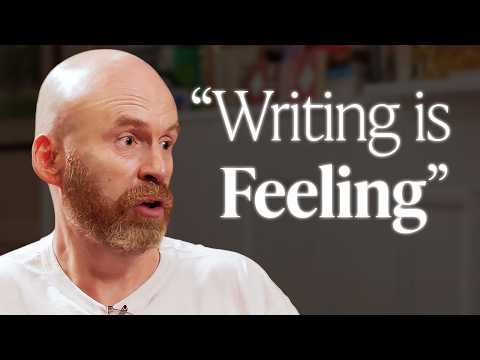 How I Write · Aug 26
How to Write a Book Millions of People Read (Matt Haig Interview)
Matt Haig explains how he finds ideas by letting them percolate, drafts fast, and cuts hard with an editor he has trusted for 15 years. His most useful habit is to ignore the market, write the book he would want to read, and trust his own feelings about it.
- Treat a small editor note as a clue to a bigger problem
- Stop revising around the fourth or fifth round
- Change the narrator's gender and age when the character is too close to you
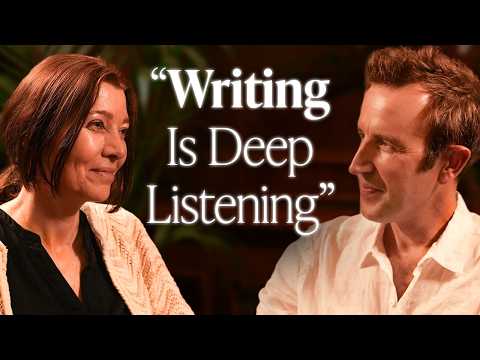 How I Write · Aug 19
The Deepest Conversation You’ll Ever Watch About Writing (Shafak & Macfarlane Interview)
Two writers talk about how to turn wonder and attention into sentences, with fiction and nonfiction drawing on the same rhythm, intuition and listening. The most useful habit is to give the work real attention, whether that means shaking ideas loose on a run, letting a subject set the sound of the prose, or testing a book against the future.
- Let the sound of your subject set the rhythm of your sentences
- Write the opening line as a song that tells readers what kind of language is ahead
- Beware the fetish of the desk and write wherever you are
 How I Write · Aug 12
Write Better Stories in 72 Minutes (Andrew Sean Greer Interview)
Greer drafts messily and out of order, then uses revision to find the echoes, setups and structure his subconscious left behind, and he feeds that process with old, odd books instead of current ones. He also explains why you should write what comes easily, make comedy from your hardest material, and treat an editor's notes as symptoms rather than prescriptions.
- Write scenes out of order, like filling in a crossword puzzle
- In the second draft, find the images that repeat and strengthen them
- Cut even a wonderful piece if it doesn't rhyme with the rest
 How I Write · Aug 5
13 Writing Tricks Every Writer Should Know (Mark Forsyth Interview)
Forsyth shows that the lines people remember, from Shakespeare to Taylor Swift, are built from a small set of old rhetorical figures that anyone can reuse. The technique worth hearing is to take a plain sentence and rephrase it with a figure such as repetition, a mirror flip, a group of three or a paradox, so it sticks in the reader's mind.
- Group ideas in threes and put the twist in the third
- Repeat a word in two forms to make a phrase stick
- Flip a phrase into its mirror image to make it memorable
July 20266
 How I Write · Jul 29
How to Become a Professional Writer (Jack Carr Interview)
Jack Carr explains how he plans each thriller from a one-page summary and a short theme, then drafts without stalling and polishes with a small circle of trusted readers. The most useful part is how he builds vivid, authentic scenes from remembered feelings, objects that reveal character, firsthand research and small noticed details.
- Write a one-page back-cover summary and test it before committing to a book
- Boil your book's theme down to a few words and keep it visible
- Never let an unsolved gap in the outline stall you
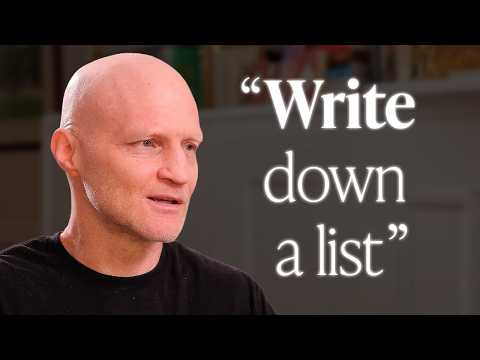 How I Write · Jul 22
The 11 Tricks Behind Funny Storytelling (Scott Dikkers Interview)
Scott Dikkers argues that funny writing is a learnable craft built on a point of view, a single narrow take and a set of reusable filters rather than natural talent. The habit that makes it worth hearing is writing a list of ten opinions, picking one, and escalating it in a straight-faced voice over a thousand simple pieces.
- Write down ten opinions and pick the funniest one
- Write a thousand simple pieces instead of polishing one
- Pick one narrow take and escalate it to absurdity
 How I Write · Jul 20
Is AI Killing Writing? 12 Different Answers
Twelve writers disagree about whether AI belongs anywhere near a draft, but most agree the thinking, the reading and the voice have to stay human. The most useful ideas are specific: use AI as a hostile critic, as secondary literature and as a source of a bad first draft, never as the author.
- Ask AI to write a savage takedown of your draft
- Use AI as secondary literature while you read, asking it questions
- Dictate a rough first draft by voice when you feel stuck
 How I Write · Jul 15
Everything They Don’t Tell You About Being a Writer (David Baldacci Interview)
Baldacci explains how a prolific thriller writer builds stories by planting false assumptions, giving characters real baggage, and cutting everything that does not earn its place. The technique worth hearing is his habit of writing in the trenches, a couple of chapters at a time with no outline, then cutting hard in the edit.
- Open with an ambiguous scene, then overturn the reader's first assumption
- Skip the long outline and write the scenes where the decisions count
- Give every series character baggage unrelated to the current plot
 How I Write · Jul 8
The Best Ways to Publish a Book (Macmillan CEO Interview)
A publishing CEO explains how books actually get bought, edited, marketed and sold, and what that means for a writer deciding how to work and how to reach readers. The most useful idea is his marketing method: name the community, find its connectors, and let the book itself show you the hooks.
- Identify your readers' community, then find and empower its connectors
- Read your own book to find the hooks that sell it
- Write the best book you can, and build your own channels too
 How I Write · Jul 1
The Secret Behind Decades of Daily Writing (David Sedaris Interview)
David Sedaris explains how decades of daily diary writing, close observation and reading drafts aloud to live audiences shape his funny, specific essays. The habit worth hearing is his diary guide, which turns small absurd moments into material, paired with treating a live crowd as his editor.
- Read your essays aloud to a live audience and treat them as your editor
- Keep a diary guide of moments that might come in handy later
- Do not hand your editor a draft until you have exhausted yourself on it
June 20264
 How I Write · Jun 24
Pixar's Secret Storytelling Formula (Andrew Stanton Interview)
Andrew Stanton explains how Pixar stories get found rather than planned: you test a one-sentence premise, keep the audience pulled forward, and rewrite until the real story shows itself. The habit worth hearing is his instruction to just write the bad sentence, because the good one only comes after it.
- Write one sentence naming character, conflict and conclusion, and keep rewriting it
- Just write the bad sentence, because the good one only comes after it
- Swing between analyzing what you have written and just playing
 How I Write · Jun 17
Harvard Professor Teaches Writing (Michael Pollan Interview)
Pollan shows how a nonfiction piece is built from a framing question, a narrative spine he calls the laundry line, and a persuasive metaphor, with the writer put inside the story. The habit worth hearing is his morning routine of re-editing the piece from page one before drafting forward, plus a daily research journal.
- Run a narrative line and hang your exposition on it like laundry
- Frame the piece around a question the reader will care about
- Find a metaphor that persuades without arguing, and keep it fair
 How I Write · Jun 10
Learn How to Write Novels in 1 Hour (Andrew Hunter Murray Interview)
Andrew Hunter Murray explains how he builds novels from a premise you can say in one sentence, then plots them on a spreadsheet before the fun of drafting begins. The memorable part is his handling of character: a few vividly drawn people, physical detail instead of backstory, and a neon sign reminding him that his draft is not the finished cake.
- State your premise in one sentence full of concrete nouns
- Keep your research off the page and stay on the path
- Plot your novel on a scene-by-scene spreadsheet
 How I Write · Jun 3
Emmy Award-Winner Teaches Writing (Noah Hawley Interview)
Noah Hawley explains how he starts stories from a question, writes fast first drafts, and shapes feeling through theme, tone and restraint. The habit worth hearing is writing the pitch, outline and script in the same voice as the story itself, while staying easy enough to work with that he gets to keep making things.
- Start a story from a question or an image that holds one
- Ask what you are taking for granted before you start
- Make your pitch and outline feel like the story itself
May 20264
 How I Write · May 27
The Most Freeing Writing Lesson You'll Ever Get (Suleika Jaouad Interview)
Suleika Jaouad explains how she gets out of her own way on the page by drafting privately by hand, writing toward questions she can't answer, and treating distance and prompts as part of the work. The habit worth hearing is her split between a loose longhand journal draft and a later, separate typed edit.
- Write first drafts longhand in a journal, then type them up to edit
- Keep the judge and the creator apart by drafting somewhere that discourages editing
- Write into a question you cannot answer instead of executing a plan
 How I Write · May 20
How to Make Your Writing Funny (Tom Segura Interview)
Tom Segura explains how a working comic finds funny material in complaints, small overheard moments and his own life, then builds it through volume, reps and editing. The most useful habit is writing down every thought, even the dumb ones, and testing it in front of people before judging it.
- Write down every thought, even the dumb ones, before you judge them
- Give a story a reason for being told before you tell it
- Dig into what annoys you and keep asking why it bothers you
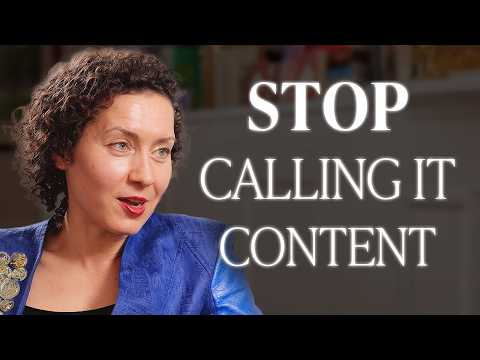 How I Write · May 13
How to Write Something Truly Honest (Maria Popova Interview)
Maria Popova explains how she writes to understand her own life, building each piece from primary sources, long walks and close attention to the world. The habits worth stealing are her observe-then-contemplate diary, writing on foot, and keeping an unplanned backlog of ideas to return to years later.
- Keep a diary that starts with observation and ends in contemplation
- Do your thinking on long walks and treat typing as transcription
- Keep a loose backlog of ideas instead of an editorial calendar
 How I Write · May 6
How to Become a Novelist Without Writing Lessons (Yann Martel Interview)
Yann Martel plans like an architect and then writes like a traveler: he sorts years of research into envelopes, always knows his ending, and leaves room to discover things along the way. The conversation is worth hearing for his physical filing system, his focus on rhythm and punctuation, and his view that readers should co-create the story.
- Cut your research notes into scenes and file them in envelopes.
- Know your ending and chapter count before writing the first sentence.
- Treat your plan as a starting point and leave room to discover.
April 20265
 How I Write · Apr 29
How to Become a Better Writer (Anne Lamott Interview)
Anne Lamott explains how to write by paying attention, drafting badly on purpose, and then cutting and sharpening in later passes, with her own inner critic technique to keep going. The most useful part is her three-draft method and her concrete tricks for getting unstuck.
- Write a terrible first draft, then fix it in later passes
- Edit in three drafts: child, adult, then dental
- Be firm but friendly when you cut your own first draft
 How I Write · Apr 22
How to Write For Kids (Tish Rabe Interview)
Tish Rabe explains how four decades of writing for Sesame Street, Disney and Dr. Seuss taught her to build a story backward from its final page and to treat every page turn as a beat. The habit worth hearing is writing the ending first, then testing the draft by having a fresh reader read it aloud to you.
- Write the ending first, then build the story backward to it
- Spend the most care on the last page, because it lingers
- Shape every story as beginning, middle and end
 How I Write · Apr 15
The Secret to Great Stories (David Gelb Interview)
David Gelb explains how character, not information, makes a story stick, and how scenes, openings, endings and midpoints are built around what a character wants versus what they need. His most useful habits are testing a cut with another person in the room and treating feedback as a diagnosis of symptoms, never a prescription.
- Make every scene change the character: what they enter wanting, they leave with differently
- Build the story around a person, and let information arrive through them
- Dig for the origin story that explains why the person does what they do
 How I Write · Apr 8
New Yorker Writer Teaches the Craft of Writing (Patrick Radden Keefe Interview)
Patrick Radden Keefe explains how he builds narrative nonfiction: he plans the structure while still reporting, opens with small mysteries, and writes around subjects who will not talk. His habit of sketching eight or nine story beats on the back of an envelope before the research is finished shows how structure can focus a year of reporting.
- Write around a subject who refuses to talk to you
- Sketch eight or nine story beats on an envelope mid-reporting
- Cut interesting characters who do not serve this story
 How I Write · Apr 1
How to Write Incredible Stories (Wright Thompson Interview)
Wright Thompson explains how he builds long nonfiction stories around a known ending, a hidden interior question and relentless reporting. The habit worth hearing is that he writes fast, cuts hard, and treats every stuck draft as a reporting problem rather than a writing problem.
- Decide your ending first, then make every choice serve it
- Treat overwritten prose as a sign you under-reported
- Hunt for the one detail that replaces fifty sentences
March 20264
 How I Write · Mar 25
Ocean Vuong Teaches the Art of Writing (NYU Professor)
Ocean Vuong argues that most good writing is looking and thinking, and that the sentence has been tamed by newspaper style, workshops and now software. The technique worth hearing is estrangement: take a familiar thing and displace it until readers see it again instead of just recognizing it.
- Rescue a cliche by displacing it instead of banning it
- Describe the thing so the reader sees it, not merely recognizes it
- Spend most of your effort looking and thinking, then do the syntax
 How I Write · Mar 18
Watch This Before Publishing Your Book (Hachette CEO Interview)
A publishing chief explains how books get picked up, packaged and sold, and what that means for how a writer should think about the work itself. The most useful idea is to decide before you write whether you are making lasting art or reaching the widest readership, then work in the way that goal demands.
- Decide whether you are writing for art or for a wide readership
- If you write for art, ignore the market while drafting
- If you want a wide audience, study the field like a researcher
 How I Write · Mar 11
The Best Writing Advice He Ever Read (Michael Connelly Interview)
Michael Connelly says every choice on the page, from a name to a nod to a single detail, should deliver character while keeping the story moving. His habit of rewriting yesterday's pages in pencil each morning, then cutting dialogue and details down to what carries information, is the part worth stealing.
- Pick the one telling detail instead of five
- Start each morning by rewriting yesterday's pages on paper
- Cut your dialogue in half right after writing it
 How I Write · Mar 4
How to Become a Master Storyteller (Steven Pressfield Interview)
Pressfield walks through the recurring beats that make stories work, from the inciting incident to the all-is-lost moment, using Rocky, The Godfather, Casablanca and Chinatown. The habit worth stealing is checking every draft against these principles and putting a fresh spin on each one so it never reads as formula.
- Decide your ending first, then work backwards to set it up
- Make your inciting incident let the reader glimpse the climax
- Write your worst possible all-is-lost moment, then find the way out
February 20264
 How I Write · Feb 26
Master Comedian Breaks Down 13 Jokes — Robert Mac
Robert Mac takes apart a dozen jokes by Mitch Hedberg, Steven Wright, Seinfeld and others to show how comic writing works: start from a true observation, set a pattern, then turn it. The technique worth hearing is choosing every word and detail so the audience walks one way and the punchline sends them another.
- Start from something true and look at it from a skewed angle
- Notice a small annoyance, exaggerate it, then give it a name
- Set up a pattern the audience expects, then break it
 How I Write · Feb 18
How to Write a Book People Can’t Put Down — Bill Browder
Bill Browder, a hedge fund manager with no writing training, explains how he builds page-turners by asking on every page why a reader should care about the next sentence. His method is to write a third-length mini book first, then fill it in chapter by chapter, with drama, stakes and a cliffhanger planned before the prose.
- Ask why anyone should care about the next sentence
- Write a mini book of short chapters before the real book
- Find the drama, tension and uncertainty in a boring scene
 How I Write · Feb 12
Oxford Professor Teaches the Craft of Writing (Diarmaid MacCulloch Interview)
MacCulloch explains how a historian turns long research into honest, entertaining prose: be skeptical then sympathetic, tell readers your biases, and say 'yes, but' to keep the story true rather than heroic. His most useful habits are reading the old standard accounts before the primary sources and going to the place itself so the writing carries what a plan or document cannot.
- Read the classic older accounts first, then go to primary sources
- Tell readers your biases in the introduction
- Use 'yes, but' as the motto that keeps a story honest
 How I Write · Feb 4
Learn to Write Page-Turners in 63 Minutes (Lee Child Interview)
Lee Child explains how he writes page-turners without an outline, by planting a question, driving sentence rhythm forward, and trusting a lifetime of reading. The most useful idea is to imply a question the reader needs answered and keep each sentence tipping forward.
- Imply a question early and the reader will keep reading
- Build propulsion into sentence rhythm so every line tips forward
- Skip the outline so you stay curious about your own story
January 20264
 How I Write · Jan 28
Why You Should Write Less Dialogue — Clint Bentley and Greg Kwedar
Two filmmakers who write together explain how they adapt a beloved book, build a story from real places, and cut dialogue until the film does the talking. The habit worth stealing is overwriting a scene in full, then letting the shoot and the edit show how much of it is needed.
- Use dialogue only as a last resort
- Overwrite the scene first, then cut what the film can show
- When a beautiful passage kills the scene, cut the passage
 How I Write · Jan 21
Learn to Write Persuasively in 70 Minutes (Fareed Zakaria Interview)
Fareed Zakaria explains how a weekly column for 25 years, deep rereading of a few great books and on-the-ground conversations produce arguments with a distinct point of view. The technique worth hearing is building each piece around one idea that adds value, then using deadlines and purposeful practice to get better at it.
- Build every short column around one idea, delivered like an exclamation point
- Add value in every piece: give context, a framework or history readers lack
- Spend your effort choosing which argument to make, then put your name on it
 How I Write · Jan 14
How to Improve Your Writing Skills (Daniel Pink Interview)
Daniel Pink explains how he treats writing as engineering: a rigid daily routine, a structure found before the drafting starts, and ideas stress tested before he commits years to them. The habit worth hearing is that he writes a 30 to 40 page proposal to find out whether a book idea survives, and asks one question before every project: what promise am I making to the reader?
- Set a daily word count and do nothing else until you hit it
- Name the promise you are making to the reader before you start
- Find the skeleton of a book before you write it
 How I Write · Jan 7
The Truth About Writing Nobody Wants to Say (Tom Junod Interview)
Tom Junod explains how he finds the sentence, the contradiction and the plain truth that lets a long magazine story stand up. The habit worth hearing is his bag of blunt tricks, like writing 'this is a story about' over and over, for finding what a draft is really about.
- Write a paragraph of 'This is a story about' sentences
- When a draft misses the point, write what first hooked you
- Use odd tricks to get past resistance, then edit them out
December 20254
 How I Write · Dec 31
Why Most Writing Advice Is Wrong (Adrian Tchaikovsky Interview)
Tchaikovsky shows how to build a story from the world outward, so that setting, characters and plot all grow from one starting what if, and he warns against treating any writing rule as law. The technique worth hearing is his left wall for research, together with his habit of leaving the ending unplanned so the book's momentum decides it.
- Start with one what if and follow its ripples outward
- Treat what science says is possible as your left wall
- Allow yourself one big lie and make everything else true
 How I Write · Dec 26
How to Unlock Your Imagination as a Writer (Elif Shafak Interview)
Elif Shafak argues that fiction works best when you stay inside the story with your intuition, prepare by reading and listening widely, and leave the answers to the reader instead of preaching. Her habits are daily reading and note-taking, looping a single song while drafting, and writing in a second language to gain distance.
- Stay inside your imagined world and ignore the reaction while drafting
- Read, take notes and research every day instead of keeping a fixed schedule
- Loop one song on repeat while you draft to slip into the zone
 How I Write · Dec 17
Philosopher Teaches His Writing Process — Henry Shukman
Henry Shukman argues that the best poems and prose come from a deeper part of the writer that speaks only when the controlling mind steps back, and that careful editing then protects what it said. The habits worth hearing are his daily writing practice, a tough rewrite that never cuts live flesh, and his test that a finished poem feels as easy to read as it was to write.
- Wait for the poem to arrive instead of choosing a subject
- Write about hard experiences after the first shock has passed
- Let the first draft flow without controlling it, then edit
 How I Write · Dec 3
I Interviewed 40 Writers in 2025 (Here's What I Learned)
A highlights reel of 2025 conversations with Henrik Karlsson, Paul Harding, Dana Gioia, Lulu Cheng Meservey, Mitch Albom, David Whyte and others shows that good writing starts with attention, ambition and honesty rather than polish. The most usable ideas are Karlsson's habit of checking every sentence against reality, Albom's rule to tell the slow parts fast, and the practice of memorizing what you love.
- Write a sentence, then check it against the real thing
- Spend more time looking at the subject than moving words
- Tell the slow parts fast and the fast parts slow
November 20254
 How I Write · Nov 26
Why Serious Writers Need to Be Funny (Jonathan Franzen Interview)
Franzen explains that rich characters come from a comic problem, a clear distance from them, and honest work on your own shame, with every sentence worked until the reader just has a good time. The technique worth hearing is his daily routine of rewriting yesterday's pages until they are nearly publishable, then adding one new page on top of that solid base.
- Open a main character with one sentence stating a funny problem
- Give characters wants that collide so every scene has drama
- Skip the backstory and find the story essence of each character
 How I Write · Nov 19
How to Use Writing to Improve Your Thinking — Atul Gawande
Gawande, a surgeon who taught himself to write, shows how to treat writing as a way of working through problems that confuse you, and how to turn that into a steady, measurable craft. The technique worth hearing is his habit of breaking a book into word counts and 30 minute blocks, drafting forward without stopping, then saving the real improvement for revision.
- Break a book into weekly word counts and 30 minute blocks
- Draft forward without stopping and fix problems in later revisions
- Keep an idea list and wait until a story has both meaning and vehicle
 How I Write · Nov 12
How to Write Powerful Stories — Brandon Stanton
Brandon Stanton explains how he turns hour-long street conversations with strangers into short, singular stories, and why he roots his writing in daily work instead of talent or reception. The technique worth hearing is following the heat in an interview to find someone's struggle, which gives a story its plot, its change and its wisdom.
- Follow the heat: chase the moments that make you lean in
- Find the person's struggle first and the plot follows
- Give your character a clear want before you add anything else
 How I Write · Nov 5
Meet The Writer Behind Killers of the Flower Moon
David Grann explains how deep archival research, a trip to the real place, and ruthless cutting turn a mass of facts into a story readers finish in one sitting. The technique worth hearing is his 200-page outline per chapter, followed by distilling it to the few astonishing details that carry the scene.
- Build a huge research outline, then write the chapter from it
- Cut the research you worked hardest to find
- Distill a pile of detail to the few most astonishing facts
October 20254
 How I Write · Oct 29
Award-Winning Author Reveals Her Writing Process (Susan Orlean Interview)
Susan Orlean walks through a deliberate nonfiction process: years of research with no writing, index cards to find structure, a daily word quota, and heavy self-editing. The most useful parts are reading drafts aloud, hunting your own grammatical crutches, and opening with a jarring detail about a person.
- Read every draft aloud as your first line of editing
- Put research on index cards and physically rearrange them to find structure
- Set a daily word quota and treat it as a task
 How I Write · Oct 22
How to Create Original Ideas — Stefan Sagmeister
Sagmeister shows that original, clear work comes from forcing your brain off its well-worn paths, writing honestly for yourself in a diary, and refining the piece until you cannot push it further. The technique worth hearing is his weekly diary with a short rating list, and the diary's list of things he had learned later turned into his books and exhibitions.
- Start from a random object instead of the thing you are making
- Cut artspeak and say it in a quarter of the sentences
- Type your diary so you can reread it years later
 How I Write · Oct 15
Why Selfish Writing Is Better Writing (Morgan Housel Interview)
Housel argues that you do not need new ideas, only a clearer, more story-driven way of saying them, and that the writer's job is to get to the point and cut anything that loses the reader. The habit worth hearing is his deliberately unstructured life of reading, wandering, and taking notes mid-conversation, because his best titles and stories arrive when he is not trying.
- Open with one vivid, specific story instead of a general claim
- Write with an ear for the exact point where you lose readers
- Treat a reader's need to reread a paragraph as the writer's fault
 How I Write · Oct 8
How to Write Exceptionally Well (Mitch Albom Interview)
Mitch Albom explains how he builds books around one theme, aims every page at a reader, and edits for rhythm and brevity. The habit worth hearing is his three hour morning session with no input, which he ends in the middle of a sentence so the next day starts easily.
- Pick the theme first, then invent a story to carry it
- Stop each writing session in the middle of a sentence
- Write three hours first thing with no music, news or email
September 20254
 How I Write · Sep 24
Why You Should Write Less Often (Dan Wang Interview)
Dan Wang explains how he built a name with one carefully shaped essay a year instead of constant posting, mixing street-level texture with big analytical questions. The habit worth hearing is his year-long dump of notes and stray sentences into a phone, then a deadline sprint, plus copying great articles out sentence by sentence to learn the writer's choices.
- Retype passages from writers you admire, sentence by sentence, to see their choices
- Publish one considered piece a year instead of posting constantly
- Dump observations and stray sentences into one phone note all year
 How I Write · Sep 17
Learn To Write Poetry (in 47 Minutes) — Ada Limón & Joy Harjo
Two poets argue that writing begins with receiving, listening to sound, rhythm and silence before you try to say anything. The most useful habits are writing without music, treating line breaks and sound as instructions to the reader, and defending sound against editors who want grammar.
- Treat line breaks and punctuation as instructions for how to read
- Start from a sound or phrase that rings true
- Write without music so you can hear your own
 How I Write · Sep 10
AJR Reveal Their Songwriting Secrets
AJR's songwriters explain how they find a song's emotional centre by chasing what embarrasses them and testing it on their own laughter and tears. The habit worth hearing is writing from the subconscious first, then letting a partner edit the raw draft into something an audience can enjoy.
- Chase the most embarrassing thing you could say about yourself
- Trust your own laughter and tears as the test of a draft
- Zoom in on one specific vignette instead of the big abstract theme
 How I Write · Sep 3
How to Write Absurdly Good Stories (Steven Pressfield Interview)
Pressfield teaches that good stories come from a professional mindset and borrowed screenwriting structure: hero, villain, a known climax, and a heavy dose of suffering. The habit worth hearing is his first-draft mantra, cover the canvas, paired with working out the story on 60 index cards.
- Cover the canvas: get rough paint on every part
- When a first draft hits an obstacle, go around it
- Lay out the story on 60 index cards
August 20254
 How I Write · Aug 27
How To (Really) Write With AI — Jimmy Soni
Jimmy Soni explains how a deeply researched biographer protects his writing hours, keeps research from becoming procrastination, and hunts for the overlooked sources and questions that make a story. His 4am routine of a reading on-ramp, a timed research window and a daily word count is the most usable part, along with his specific ways of using Claude as an editor and opponent.
- Research and write at the same time, never research first
- Pick a model book and study it obsessively before writing
- Warm up with reading, then a 30 minute research timer, then a word count
 How I Write · Aug 20
Oxford Professor: AI Is Humanity's Attempt to Make God (John Lennox Interview)
Lennox, a mathematician trained privately in classical literature, explains how to read and write so that ideas are clear, well structured and hard to misread. The habit worth hearing is asking how a draft could be misunderstood and then giving it to the harshest editor you can find.
- Ask how your draft could be misunderstood, not only how it will be understood
- Ask your publisher for their most ruthless editor and listen to them
- Let trusted readers criticize your work before you publish it
 How I Write · Aug 13
One of The World's Most Under-Rated Writers — Henrik Karlsson
Henrik Karlsson explains how he writes essays that feel alive: he lets an idea ripen for a year, tests it against reality, and writes only once a real personal question drives him. The technique worth hearing is his five-step process, which ends with writing the opening last and drafting fast once the order of ideas feels right in his body.
- Write your opening and ending after the rest of the draft
- Test every claim against three or four real case studies
- Interview yourself in the margins of your notes
 How I Write · Aug 6
Meet Pulitzer Prize-Winning English Professor — Jayne Anne Phillips
Phillips teaches that good fiction comes from getting inside the material and following the sentences rather than thinking about it from outside. Her most useful habit is rereading her own pages, from the last page back to page one, until the next line becomes clear.
- When stuck, reread your pages, going back further each time
- Read your draft aloud and listen for the flat note
- Read your favorite book three times, then map it chapter by chapter
July 20255
 How I Write · Jul 30
Learn Songwriting in 67 Minutes — Rosanne Cash
Rosanne Cash explains how a songwriter's habits carry over to prose: study the masters line by line, learn the rules before breaking them, and let images and hard emotions lead you to what you didn't know you knew. The technique worth hearing is copying out a great writer's lyrics by hand and asking how each line got from one place to the next.
- Write the furniture of a feeling, never the theme itself
- Copy out a master's work by hand and ask how each line works
- Learn the rules of form before you break them
 How I Write · Jul 23
Inside the Mind of a Master Writer (David Whyte Interview)
David Whyte treats writing as speaking from the edge between what you think is you and what is not, a place you reach through long attention and by dropping below your own discomfort. His practices make it concrete: composing aloud while walking, memorizing poems a line at a time, keeping a book of beautiful questions, and letting the body point to what you have not yet said.
- Put your hand on the part of your body that tightens
- Compose out loud while walking and capture it on your phone
- Aim to overhear yourself saying what you didn't know you knew
 How I Write · Jul 16
How to Write Something Truly Beautiful (Alain de Botton Interview)
Alain de Botton argues that good writing comes from honest attention to your own sensations and from dropping what you think you are supposed to write. His habit of writing one short piece each morning about whatever he most wants to say, then filing it later, shows how that works in practice.
- Each morning, write one 800-word piece on whatever you most want
- Start from a scrap of an image or thought, not a book
- Wait until a feeling is cooked before you write it
 How I Write · Jul 9
How to Write Freakishly Fast — Steven Levitan
Levitan explains that the hard part of writing TV is breaking the story and building character dynamics, not the draft itself, and that the best jokes come out of character rather than setup and punchline. His most reusable technique is the two points in a line method: define each character, then keep adding attributes until the line between every pair crackles.
- Draw a crackling line between every pair of characters before writing scenes
- Build the story before the script, because the draft is the easy part
- Get your jokes from character, not from setup and punchline
 How I Write · Jul 2
’Naked Gun’ Creator Teaches Comedy Writing — David Zucker
David Zucker explains how he writes spoof comedy with a fixed set of rules learned from stage and screen mistakes, built on surprise, a real story and relentless pace. The habit worth hearing is writing in a room with trusted friends, testing against live audiences and cutting anything that gets only a smile.
- Take a serious film's scenes and reverse the audience's expectations
- Give the funny lines to one character and let the others play it straight
- Never acknowledge the joke, and let the audience find it
June 20254
 How I Write · Jun 25
How to Read the Bible (Tim Mackie and Jon Collins, The Bible Project)
Two founders explain how they turn dense scholarship into short scripts anyone can follow, and what they learned about craft from the Bible's own authors. The habit worth hearing is writing the script as a dialogue between an expert and a curious beginner who never does the homework.
- Write the script as a dialogue between expert and curious beginner
- Learn the topic by explaining it to someone who arrives cold
- Talk the material through for hours before you write the script
 How I Write · Jun 18
Cambridge Professor: Why All Writing Sounds the Same Now (Robert Macfarlane)
Robert Macfarlane explains how he builds nature writing from sound, rhythm, precise words and small notebooks, and why he refuses to flatten his sentences into plain, average prose. The technique worth hearing is how he matches syntax to the thing described, so a reader feels a rapid in the breath and the body rather than just being told about it.
- Rewrite your first line hundreds of times and test its sound
- End each writing day knowing exactly what your next sentence is
- When stuck, skip ahead and write a later scene instead
 How I Write · Jun 11
Pulitzer Winner Breaks Down the Art of Writing (Paul Harding Interview)
Paul Harding argues that good sentences come from slowing down, observing exactly what is there, and refusing the off-the-rack language we use to get through the day. The technique worth hearing is his habit of describing things in the vocabulary of their opposites, then drafting about a thousand pages to distill a 150-page book.
- Slow down, observe what is actually there, and sustain your attention
- Replace off-the-rack phrases with what you actually see in the scene
- Push a literal image one step further until it becomes metaphor
 How I Write · Jun 4
Harvard Professor Explains The Rules of Writing (Steven Pinker Interview)
Pinker argues that most bad writing comes from the curse of knowledge, forgetting that readers do not know what you know, and that the fixes are concrete images, examples, brevity and testing drafts on real people. The most useful habit is to show every draft to a smart reader outside your field and to squeeze it into a hard word limit.
- Give your draft to a real reader outside your field
- Replace abstract nouns with things your reader can picture
- Pair every generalization with a concrete example
May 20254
 How I Write · May 28
Ezra Klein Gives His Best Writing Advice
Ezra Klein argues that good nonfiction depends on the reading, reporting and thinking behind the words, and that polish cannot cover for work not done. His most useful habits are keeping a sticker that says 'say what you're saying' above the screen, and spending hours with long texts instead of outsourcing that grappling to AI.
- Put a sticker above your screen: say what you're saying
- When a draft is not working, do more reading or reporting
- Give every section something to pass the baton to
 How I Write · May 21
How He Wrote Forrest Gump (And Many Other Movies)
Eric Roth, who won the Oscar for adapting Forrest Gump, explains how he builds scenes and characters around a theme, hides meaning in subtext, and rereads from page one so the work stays alive. The most useful habit is leaving each day on a scene he likes and outlining a few scenes ahead in single words, so he never faces a cold start.
- Test every inert scene against the theme of the whole piece
- Start every writing day from page one and shore up what has eroded
- Put the feeling in subtext by talking about something else
 How I Write · May 14
Learn Scriptwriting in 83 Minutes — Michael Jamin
Michael Jamin, a TV writer for 28 years, argues that comedy is layered on top of story and character, and that the emotional core of a piece is what readers remember. The most useful habit is to pair a list of your weaknesses with a list of memories, and to ask in every draft what the story is really about.
- Ask what the story is really about, not what happens
- Pair a list of your weaknesses with a list of memories
- Break the story on a whiteboard before you write a word
 How I Write · May 7
Storytelling Mastery in 107 Minutes (Dean Koontz Interview)
Koontz explains why he dropped outlining and builds each novel page by page, letting characters surprise him while he polishes the language until it flows. The technique worth hearing is his habit of rewriting a single page 10 to 20 times before moving on, plus hard rules like one viewpoint per scene and metaphors that belong to the narrator.
- Perfect each page before moving to the next, and rewrite it 10 to 20 times
- Trust the character when a line pushes the story off your plan
- Print each finished chapter and read it on paper
April 20254
 How I Write · Apr 30
This Research System Will Change How You Write — Johann Hari
Hari shows how to build a nonfiction book on hundreds of interviews, then keep only what serves a handful of questions and a story the reader can follow. The habit worth hearing is that he pins his questions to his front door, tells the story aloud to a 12-year-old, and confesses his doubts on the page.
- Pin your book's core questions where you will see them daily
- Cut anything that doesn't serve your questions, even your best material
- Tell your story aloud to a 12-year-old and record it
 How I Write · Apr 23
Learn Storytelling in 72 Minutes (Will Storr Interview)
Will Storr argues that great stories grow out of character, not plot: give a character one flawed belief about how to control the world, then test it until it breaks or changes. The technique worth taking away is writing that belief as a one-sentence theory of control and building every scene, obstacle and ending around it.
- Give your character a one-sentence theory of control before anything else
- Make the character's central belief wrong, not immoral, then let reality expose it
- Design the character before you plot, because plot grows out of who they are
 How I Write · Apr 9
A New Way to Teach Writing — Meet Michael Dean
Michael Dean applies an architect's pattern thinking to essays, scoring them on 27 patterns across idea, form and voice so writers can see exactly where a draft is weak. The technique worth hearing is to write the first draft intuitively and then edit through one pattern at a time, with a single color highlight per pass.
- Edit one pattern per pass, highlighting it in a single color
- Give every paragraph a hook and end it on a punchline
- Narrow your scope by picking one volcano, not all volcanoes
 How I Write · Apr 2
Meet Silicon Valley’s #1 PR Expert — Lulu Cheng Meservey
Lulu Cheng Meservey explains how to write with a human voice under pressure, framing a message so it fits what readers already care about, and why a story beats a statistic. Her most usable habits are reading drafts aloud, parking precious sentences in a scrap heap, and drafting in a tweet box to force brevity.
- Read your draft aloud to catch corporate speak and bad rhythm
- Draft sensitive statements in advance and fill in details on the day
- Write one dominant emotion into a piece, and three at most
March 20253
 How I Write · Mar 26
The Ultimate Guide to Writing with AI
David Perell explains how to write with AI instead of handing writing over to it, and where human writers keep an edge: lived experience, expertise and a spiky point of view. The technique worth hearing is his loop of speaking ideas aloud on a walk, then using an LLM to outline, interview and critique the draft while he supplies the stories.
- Write with AI as a partner, never let it write for you
- Speak your ideas aloud on a walk, then have AI outline them
- Ask AI for your draft's weakest points and boring parts
 How I Write · Mar 12
Johnny Harris Reveals How He Writes YouTube Videos
Johnny Harris walks through how he writes a 20 to 30 minute video, from a package-first pitch to a two-column script where every sentence is paired with a visual. The technique worth hearing is writing in active, who-did-what-to-whom language and coding the visuals beside the prose as he writes.
- Write a two-column script with prose left and visual direction right
- Write about people doing things, not concepts: who did what to whom
- Define the click promise first: write several titles and thumbnails before you commit
 How I Write · Mar 5
How to Write with AI (Tyler Cowen Breaks it Down)
Tyler Cowen explains how he uses AI as a reading companion and critic while refusing to let it write for him, so his work stays weird and recognisably his. The technique worth hearing is his habit of feeding AI long context and specific questions, then writing only what a human with real experience could write.
- Write every word yourself so your voice stays weird and personal
- Ask AI for background on unfamiliar topics, then write without pasting it in
- Run your draft through AI to find what readers will find obnoxious
February 20253
 How I Write · Feb 26
Writing Advice Every Writer Should Hear (Dana Gioia Interview)
Dana Gioia explains how he drafts, rewrites and judges his own work, from poems taken through 100 drafts to essays he refused to publish until they were ready. The habits worth hearing are his pairing of an emotion with its opposite, his recopying of yesterday's paragraph to restart, and his habit of studying one paragraph of a writer he admires.
- Push an emotion to its limit, then turn against it
- Recopy yesterday's paragraph to re-enter the work each night
- Study one paragraph of a writer you admire, then write yours
 How I Write · Feb 12
14 Ways to Improve Your English Writing Skills (Ward Farnsworth Interview)
Ward Farnsworth shows what makes famous lines from Lincoln, Churchill and the King James Bible last: plain words, deliberate contrast, and a few Greek rhetorical patterns such as repetition and reversal. The technique worth taking away is to choose each word on purpose, set fancier words against short plain ones, and finish on the plain word.
- Prefer short Saxon words to long Latinate ones
- End sentences and paragraphs on short, plain, hard words
- Open with fancier words so the plain ones land harder
 How I Write · Feb 5
Copywriting Masterclass, #1 Creator Mistake, 1M Books Sold — Alex Hormozi
Hormozi explains how he writes business books that sold over a million copies: an outline built through many messy versions, short plain words, and drafts that are cut hard after reader feedback. The technique worth hearing is his two-part test for every idea (is it valid, is it useful), plus a habit of testing titles and covers before he commits.
- Describe your reader's pain in specific moments, not general terms
- A/B test your title, subtitle and cover before you commit
- Cut any idea that does not change what the reader does
January 20251

October 20242
 How I Write · Oct 16
The Secret To A New York Times Best Seller – Tucker Max
Tucker Max argues that a memoir works when you tell the truth about what happened and how you felt, not when your sentences are fancy. His three-question algorithm, the vomit first draft and the rule to write from scars rather than open wounds give a practical way to get honest material onto the page.
- Write the story by answering: what happened, how did you feel, what happened next
- When you don't know what to write next, write what is true
- Write how you felt, not what you thought
 How I Write · Oct 9
How to Become a Master Storyteller (Richard Powers Interview)
Richard Powers explains how character, voice, sentence shape and tension work together to make fiction feel alive. The worth-hearing technique is matching sentence structure to the reader's mental state, and he pairs it with a daily practice of walking in the living world until sentences arrive.
- Push a character to the wall by making two of their values collide
- Delay the subject of a sentence to hide it from the reader
- Build every sentence around its subject and verb, and vary where they land
September 20243
 How I Write · Sep 25
OpenAI CEO: AI Isn't Killing Writing (Sam Altman Interview)
Altman, who says writing is not his gift, treats it as a tool for thinking: you write to find out what you actually believe, then shrink it until anyone can follow it. The habit worth hearing is forcing a plan or confusing idea onto one short page, and using ChatGPT to pressure-test ideas rather than to write the draft.
- When confused about a hard problem, sit down and write it out
- Fix the thinking first, because unclear writing is unfocused thinking
- Test an idea you think is clear by writing a one-page summary
 How I Write · Sep 18
How to Write a Killer Story — Robert Greene
Robert Greene explains how he builds timeless, story-driven books: hunt for dramatic stories, sort research onto note cards, then rewrite each chapter until it feels alive. The note card system and the habit of cutting everything that does not serve a chapter's single theme are worth hearing in detail.
- Put every fact on a theme into a note card
- Rewrite a story many times, cutting everything off the theme
- Show the action and cut the character's inner monologue
 How I Write · Sep 11
How to Improve Your Storytelling Skills (Nick Bilton Interview)
Nick Bilton explains how screenwriting and murder mysteries taught him to make narrative nonfiction read like a movie, with tension, human characters and a theme fixed before he writes. The habit worth hearing is his obsessive reporting, where he builds a timestamped database and visits the real places so every scene can be painted from concrete detail.
- Enter each scene as late as possible and leave early
- Know your theme before you write, and state it in a sentence
- Introduce characters one at a time, only when the reader is ready
August 20243
 How I Write · Aug 28
Meet the Stanford Surgeon Turned Podcaster — Peter Attia
Peter Attia explains how he turned dense medical science into a bestselling book by building it on frameworks, stories and ruthless cuts, with a co-author who pushed back. The most useful habit is reading every sentence aloud in the final edit and cutting what the reader does not need, even paragraphs you love.
- Read every sentence aloud before you call the book edited
- Cut hard in the final stretch, even paragraphs you love
- Build the book on objective, then strategy, then tactics
 How I Write · Aug 21
How He Started the Paid Newsletter Trend — Ben Thompson
Ben Thompson explains how a daily deadline, huge volume and stories with a beginning and an ending built a paid newsletter that earns millions. The technique worth hearing is his habit of feeding each day's news into a standing model of how the world works, so he can write every day without starting from scratch.
- Open an analysis piece with a story, not the thesis
- Spend your hours on the opening, because the rest follows
- Give yourself a daily deadline and publish no matter what
 How I Write · Aug 14
Cambridge PhD: How to Write a Memoir — Rob Henderson
Rob Henderson explains how he turned a chaotic childhood into a memoir by building it around themes, writing in the voice of his younger self, and cutting anything that did not serve the point. The most useful habit is dumping every memory into one master document first, then keeping only what scares him and what bores no one.
- Write far more than you need, then cut to your themes
- Keep the story you are most afraid to tell
- Build the memoir around one or two themes, not a heap of anecdotes
July 20245
 How I Write · Jul 31
The Internet Made Your Writing Boring — The Cultural Tutor
Writing today has drifted into a flat, standardized minimalism, and the best fix is to take the precision of minimalism and the texture and gravity of maximalism. The habit that makes it worth hearing is reading old and obscure books, learning exact words and treating language like clay rather than a Lego kit.
- Read old and obscure books, not what everyone else reads
- Use the opposite of your usual style as your tool for emphasis
- Learn precise, unusual words and let readers look them up
 How I Write · Jul 24
Writing Formulas Everybody Should Know (Mark Forsyth Interview)
Forsyth shows that the most quoted lines in speeches, poems, songs and ads are built from a small set of rhetorical formulas that fit the shape of human memory. The habit that makes it worth hearing is to prepare your thinking away from the desk, then write fast, and to add a figure like chiasmus or a verbal sandwich deliberately.
- Arrange ideas as a run of opposites to make them stick
- Reverse your own clause to make a line symmetrical and memorable
- Wrap a phrase in repetition, a verbal sandwich, to make it stick
 How I Write · Jul 17
Learn Copywriting in 76 Minutes – Harry Dry
Harry Dry teaches copywriting as a few repeatable tests, and shows how a single ad gets built through dozens of rewrites. The most useful habit is running every sentence through three questions: can I visualize it, can I falsify it, can nobody else say it.
- Zoom in on abstract words until you reach a concrete object
- Write sentences that could be proved true or false
- When describing something, imagine you can only point, never talk
 How I Write · Jul 10
NYU Professor: Writing Masterclass in 84 Minutes – Scott Galloway
Scott Galloway explains how he writes and speaks with fearless, opinionated intimacy: pick a provocative argument, back it with data, and rewrite with a team until it is tight. The technique worth hearing is his pipeline of testing ideas in a newsletter and a talk, having analysts draft, then editing the draft hard for voice, humor and emotion.
- Test a book idea as newsletter posts and a talk first
- Start the draft now and commit to a set amount of time
- Aim to catalyze a conversation, not to be right
 How I Write · Jul 3
How to Tell Captivating Stories in 103 Minutes – Nat Eliason
Nat Eliason spent two years teaching himself to tell gripping stories after years of writing how-to articles, and he explains the practical rules he learned about promise, conflict, dialogue and scene structure. The most useful habit is breaking a draft into stimulus and response beats and reading the style you want to write before each session.
- Spend your effort on a compelling promise before anything else
- Show something at risk of dying, in any form, early
- Put the highest stakes in your first two paragraphs
June 20242
 How I Write · Jun 26
The Simple Steps to Fuel Your Creativity – Ryan Holiday
Ryan Holiday explains how he keeps writing momentum across books, from index card research to self-contained chapter drafts to hard cutting passes. The most useful habit is starting the next project before the last one launches, so good or bad news cannot derail the work.
- Start your next project before the current book launches
- Draft each chapter as its own self-contained document
- Let a finished draft rest for months, then cut hard
 How I Write · Jun 12
Seinfeld’s Timeless Lessons on Creativity and Consistency
Jerry Seinfeld treats comedy as writing, and his lessons cover how to get the work done (time boxes, daily chains, no distractions) and how to make it good (test ideas on people, separate creating from editing, stop at the right dose). The habit worth hearing about is his unbroken daily writing practice, which has barely changed in five decades: a legal pad, full focus, a fixed end time.
- Set a fixed end time for every writing session
- Sit down every day with full focus and no distractions
- Mark a big red X on a wall calendar daily
May 20244
 How I Write · May 29
How to Write Well (in a Distracting World) — Ted Gioia
Ted Gioia argues that good writing comes from trust, honesty and a huge intake of difficult reading, not from chasing formulas or fast platforms. His worth-hearing habit is fifty years of demanding books every morning before he writes in the afternoon, with an honest private journal as the source of fresh ideas.
- Keep a private journal of brutally honest daily irritations for ideas
- Read demanding books in the morning and write in the afternoon
- Put the book down and write a few paragraphs, then read again
 How I Write · May 22
The New Rules of Business Communication — Jason Fried
Jason Fried explains how he writes the way he talks, quits and restarts when a piece fights him, and builds founder letters that move a reader from agreement to a new idea. The habit worth hearing is his 'would I say this out loud to someone in an Uber?' test, which cuts through jargon in headlines and marketing copy.
- When a draft is a struggle, stop and restart on a blank page
- Test every headline by asking if you would say it aloud
- Talk the piece out first, then write down what you said
 How I Write · May 8
What’s Wrong with Writing Education? — Ana Lorena Fabrega
Ana Fabrega went from a teacher who hated writing to a published author by unlearning school habits: chasing originality, big words and grammar before ideas. The habit worth stealing is her feedback system, where each reader gets one specific job, including a friend told to attack the argument.
- Give each reader one specific kind of feedback to give
- Ask a friend to play devil's advocate and attack your argument
- Treat writing as how you become an expert, not a result
 How I Write · May 1
How Writing Helped This CEO Build a $300m+ Company | Sam Corcos
Sam Corcos explains how a remote company runs on writing: memos for big decisions, hypotheses written before projects, and retros written after. The technique worth hearing is writing the prediction down first so your memory cannot rewrite it, and judging the result in plain terms like validated or invalidated.
- Write your hypothesis and expected return before starting any project
- Judge finished projects as validated or invalidated, never success or failure
- Save a hedge disclaimer as a text snippet for casual thoughts
April 20243
 How I Write · Apr 17
Leaving McKinsey to Write Full-Time | Paul Millerd | How I Write Podcast
Paul Millerd explains how he wrote a self-published book that sold close to 50,000 copies by writing the true personal version of his ideas for a specific kind of reader. The technique worth hearing is his loop of reading aloud, rewriting and removing every spot where he snags, until the sentences feel true in his body.
- Read every sentence aloud and rewrite until it feels true
- Interrogate a memory with the same question until the words come
- Drop rough notes under chapter headings as ideas arrive
 How I Write · Apr 10
How to Be Great? Just Be Good, Repeatably | Steph Smith | How I Write Podcast
Steph Smith argues that writers stand out through how they write and what fascinates them, then get read by treating distribution and audience research as real work. The habit worth hearing is spending nearly as much time seeding each piece and checking what people actually search for as writing it.
- Differentiate by how you write, not only what you write about
- Ask what most people in your field are unwilling to do
- Open your tweet with the striking statistic or graphic, not the link
 How I Write · Apr 3
The Art of “Taste” — Brie Wolfson
Brie Wolfson explains how writing forces clear thinking, and how to edit toward a voice that sounds human and notices things other people miss. The technique worth hearing is her editing stack: record yourself reading the draft aloud, keep a Darlings doc for cut lines, and write for one real person with a face.
- Record yourself reading the draft aloud, then play it back
- Picture one specific reader with a face while you edit
- Write about less: pick the small, vivid bits over full coverage
March 20244
 How I Write · Mar 29
The King of Internet Writing | Paul Graham | How I Write Podcast
David Perell walks through eleven lessons from Paul Graham's essays and interviews: write plain, edit hard, let writing generate ideas, and chase ideas that are general and surprising. The most useful habit is to print the draft, highlight every spot where you stumble, and fix only afterward, and to publish only what survives that process.
- Print your draft and highlight every bump before fixing anything
- Be quick to cut anything that isn't right, however much effort it cost
- Judge yourself on what you publish, not on what you draft
 How I Write · Mar 27
The FBI Called This Writer About Seduction Training — Neil Strauss
Neil Strauss explains how to be honest on the page without being boring: write a private vomit draft, then a reader draft, then a critic draft, and open every piece with a hook that makes strangers care. He walks through a podcast teaser line by line and shares how he edits, takes notes and gets edited.
- Write three separate drafts: one for you, one for readers, one for critics
- Start from the premise that nobody cares, then make them care
- Cut your draft far past comfortable, then put back only what is needed
 How I Write · Mar 20
How to Tell an Unforgettable Story (The Shaan Puri Interview)
Shaan Puri breaks storytelling into reusable parts: intention and obstacle, a five-second moment of change, and frames that make an idea relevant. The habit worth stealing is working backwards from the emotion you want the reader to feel, then drafting by voice and editing after you walk away.
- Make the character's intention and obstacle clear in every scene
- Tell low-stakes stories where the stakes are an emotion
- Build the story around one five-second moment of change
 How I Write · Mar 6
Write Like Wall Street’s Best — Michael Mauboussin
Mauboussin argues that good writing starts with real understanding and a reader treated as a peer, so smart writers must fight the curse of knowledge with concrete examples and plain words. The habit worth hearing is his input and output loop: learn something deeply, outline hard and cut in the outline, then hand it to an editor who is not an expert.
- Write to find the gaps in what you think you understand
- Write as a peer pointing at the world, not a teacher
- Show how every number was derived
February 20244
 How I Write · Feb 28
Packy McCormick: A Tactical Masterclass in Online Writing
Packy McCormick explains how he turned a pop culture, jokes and business voice into a weekly newsletter of 5,000 to 10,000 word essays read by hundreds of thousands. The technique worth hearing is his loop of writing while excited, researching the gaps and restarting fresh drafts, then rewriting in the last hours before a deadline.
- Spend most of your time on the introduction to find your line
- Write a rough draft while excited, research the gaps, then restart fresh
- Aim to change how readers think, not to hook them
 How I Write · Feb 21
How He Raised Billions with Simple Ideas | Howard Marks
Howard Marks explains how he turns decades of investing experience into clear, speech-like memos that make readers say "I never thought of it that way." The habit worth hearing is his pile of clippings and scraps that he only turns into a memo once it has enough substance, followed by about five rounds of polishing and a small circle of readers.
- Collect clippings and thoughts in a pile until it has enough content
- Write the way you speak, with contractions and common words
- Skip jargon, which only reinforces a barrier between you and your reader
 How I Write · Feb 14
The Mindset Behind An Unforgettable Novel (Amor Towles Interview)
Towles explains how he plans a novel in handwritten notebooks for years so the drafting itself can be free and poetic, and how he describes a scene through what a particular character would notice. The habit worth hearing is his two-pass method: write the first draft for himself, then cut it down for the reader.
- Outline everything first so drafting can be poetic instead of analytical
- Start a book with one premise sentence and sketch the scaffolding fast
- Visualize each scene in detail and draft it by hand in notebooks
 How I Write · Feb 7
The Expert Behind Google’s NotebookLM AI Writing Tool
Steven Johnson shows how structure, surprise and a lifelong habit of capturing half-formed hunches shape his nonfiction, and how he uses AI as a research and rewriting partner without handing over the thinking. The habit worth hearing is his spark file: one running document of hunches that he rereads every six months until old ideas finally click.
- Keep one running spark file of hunches and reread it every six months
- Do not reread your chapters while drafting; leave yourself a nugget instead
- Edit in a different place and format than you draft
January 20244
 How I Write · Jan 31
How Blogging Made This Investor a Deca-Millionaire — Chris Dixon
Chris Dixon explains how a year of short weekly blog posts, then a book rewritten over many months, taught him to make ideas simple, concrete and honest. The most useful parts are his specific rewrite passes (cut crutch words, fix passive voice, steelman objections) and his habit of using outside readers and fresh rereads to catch what he cannot see.
- Cut adjectives, adverbs and crutch words like genuine, strong and very
- Fix passive voice by asking who actually did the thing
- Steelman every counterargument instead of dismissing it
 How I Write · Jan 24
I Spent 50 Hours With 20 Master Writers
A recap of lessons from about 20 interviews with master writers: set a low bar for starting and a very high bar for what you publish, read what others are not reading, and write long enough to find ideas that are yours. The most useful moves are Tim Ferriss's 20% keep and cut feedback question and the habit of writing past the murky first ideas until the clean ones come.
- Write two crappy pages a day instead of aiming for good ones
- Ask editors which 20% to keep and which 20% to cut
- Hire a law student to find ambiguity in your argument
 How I Write · Jan 10
Write More Productively (How to Start) | Tiago Forte | How I Write Podcast
Tiago Forte explains how he writes books and essays by moving between making lots of rough material and distilling it, and by testing every idea in public before it earns a place in print. The most useful takeaways are his one-filter editing passes, his habit of switching to quick volume when stuck, and his rule that nothing goes in the book untested.
- Switch from polishing to producing volume the moment you sense a block
- Attack a stuck idea from every angle with short posts
- Edit in many passes, each with only one filter
 How I Write · Jan 3
Tim Urban Breaks Down His Viral TED Talk
Tim Urban explains that his distinct voice came from six years of low-pressure blogging, and that his best writing happens when he is having fun and sounds like himself. The technique worth hearing is how he treats research as a hunt for dopamine hits, keeps only the best, and uses his own delight as the filter at every stage.
- Rewrite any section you dread, because the reader will feel it
- Distill hours of research into only the moments that gave you a jolt
- Use your own reaction to a fact as the filter for including it
December 20234
 How I Write · Dec 27
Why Writing Is the Key to Your Thinking | Tim Ferriss
Tim Ferriss argues that writing is how you check your thinking, and that good subject matter and a low daily bar matter more than polished prose or a famous voice. The habit worth stealing is the small, repeatable minimum (two crappy pages, five bullets) that you stop before you are exhausted.
- Pick more interesting material before you worry about prose or voice
- Set a tiny daily minimum and stop before you are exhausted
- Do less than you think you can to build writing momentum
 How I Write · Dec 20
Sahil Bloom’s Content Empire Playbook | How I Write Podcast
Sahil Bloom explains how he writes to clarify his own thinking, then shares ideas aloud and in short form until they land. His most useful habits are the 24 hour rule for acting on notes, delaying engagement stats, and a non-negotiable two hour morning block that finished his book.
- Write a one-page memo to yourself before you build any deck
- Draft the idea as a tweet first, then expand it
- Block two hours every morning, no exceptions, to finish a long draft
 How I Write · Dec 13
How to Write a High-Value Newsletter for Silicon Valley’s Finest | Byrne Hobart | How I Write
Byrne Hobart explains how he turns deep research into a high-density newsletter that smart readers in tech and finance keep reading. His most useful habits are a single running notes file, sleeping on a draft before sending it, and writing the last important piece on a story instead of racing to be first.
- Keep one big notes file that grows ideas into drafts
- Write the last important piece on a story, not the first
- Sleep on the draft and send it the next morning
 How I Write · Dec 6
The Writing Secrets of a World Class YouTuber – Ali Abdaal
Ali Abdaal explains how he writes as a guide rather than a guru, drafting as if explaining something to a friend and getting the first version out fast. The most useful ideas are his one-secret test for finding a book's core idea, his three-part get going, get good, get smart order, and his habit of picking a lead magnet before filming each video.
- Explain it to a friend first, then publish that explanation
- Go deep and specific instead of writing for everyone
- Draft fast, bad and wrong to get a whole first draft done
November 20234
 How I Write · Nov 29
Write Like a Billionaire | Chamath Palihapitiya | How I Write Podcast
Chamath Palihapitiya explains how he writes long, factual pieces that readers finish and that attract people to his ideas, and how fear of public reaction has made his writing guarded. The technique worth hearing is his acquisition, activation, engagement, virality structure combined with a hard line between fact and interpretation.
- Open with a hook, then a TL;DR, then explanation, then a conclusion
- Separate what is fact from what is your interpretation
- End conclusively and objectively so the reader feels their time was repaid
 How I Write · Nov 15
Y Combinator CEO: The Key To Writing For Startups & Entrepreneurs | Garry Tan | How I Write Podcast
Garry Tan explains how writing has been his way to work out who he is, from a seventh grade underground newspaper to blogs and YouTube scripts. The most useful ideas are testing writing by watching a reader struggle in silence, explaining things simply, and pairing vulnerability with the obvious-but-useful.
- Watch a reader struggle with your draft without saying anything
- Send your essay to readers and ask what they understood and what you got wrong
- Explain exactly what 80 to 90 percent of readers need to understand
 How I Write · Nov 6
How to Write Insanely Well (Morgan Housel Interview)
Morgan Housel explains how he writes short, story-led pieces that get to the point fast, and why he treats the sentence as the unit of good writing. The habit worth hearing is that he spends most of his week walking and thinking, emailing himself notes, and then writes a piece in one day, editing each sentence as he goes.
- Make your point and get out of the way
- Ask of every sentence whether you need it, not whether it's good
- Find the story first, then draw the lesson from it
 How I Write · Nov 1
How to Become a Bestselling Author (Mark Manson Interview)
Mark Manson explains how he built a huge audience by writing in his own spoken voice, treating titles as copywriting, and testing ideas before committing to a structure. The most useful habit is imagining a friend at a bar asking you a question and writing the answer word for word as you would say it.
- Write the way you would answer a friend at a bar
- Pick the title first, then find the content that earns it
- Judge the idea first, because great prose cannot rescue a weak one
October 20234
 How I Write · Oct 25
How Lenny Rachitsky Got 531,000 Substack Subscribers | How I Write Podcast
Lenny Rachitsky explains how a newsletter on product management grew past 500,000 subscribers by answering one clear reader question per post, with high signal, short introductions and a very high quality bar. The most useful habit is his research loop: ask experts the same questions, pool the answers in one doc, find the pattern, then reread the draft dozens of times cutting everything that adds friction.
- Open with the answer, then explain how you got there
- Spend about ten hours on each post, more if needed
- Name the job your reader is hiring your writing to do
 How I Write · Oct 18
Why No One Should Watch Netflix – Riva Tez
Riva Tez argues that the best writing comes from open-ended research, quiet thinking time and real feeling, not from optimizing, consuming media or following consensus. Her most useful habit is following curiosity with no fixed goal until the odd, under-explored story shows up, then writing it in one pass while she cares.
- Research without a goal and follow whatever pulls you deeper
- Go to the primary sources instead of trusting the popular summary
- Write about something you care about so intensely it pours out
 How I Write · Oct 11
Inside the Mind of a Newsletter Mogul (Sam Parr Interview)
Sam Parr explains how he writes colloquial copy that sells, from handwritten copy work to headline discipline to testing phrases on live people. The habit worth hearing is copying great writing by hand for ten minutes before he writes anything of his own.
- Copy great writing out by hand with pen and paper
- Copy a writer's passages for ten minutes before you write
- Spend real time on the headline before anything else
 How I Write · Oct 4
Marc Andreessen: Blogposts, Tweetstorms, and Manifestos
Marc Andreessen explains how he writes essays that move people: he lets an idea build up through heavy reading and talking, then gets it down in his own speaking voice. The technique worth hearing is his two-pass method of a fast bullet outline of 15 to 20 points followed by a narrative pass, often fuelled by frustration.
- Outline fast in bullet points before writing any prose
- Write in the same voice you use when you talk
- Be the person who writes the plan down
September 20234
 How I Write · Sep 28
The Secret to Writing with Emotion, Without Oversharing — Ava Huang
Ava Huang explains how to write with emotional honesty by turning ordinary experience into prose, and why practice and public feedback matter more than talent or inspiration. Her most useful habit is a daily word count that lets the muse find her at her desk, paired with the willingness to throw out first ideas and dig deeper.
- Set a daily word count and write even when it's bad
- Replace any sentence you know is rote with a fresher one
- Write from the emotion you feel and translate it directly
 How I Write · Sep 20
Derek Sivers: No Wasted Words
Derek Sivers explains how he writes short, simplified pieces by dumping every thought, arguing with himself, then cutting to the gist, and why he publishes ideas one at a time before they become a book. The habits worth hearing are his arguing-with-yourself brain dump, his 22-sentence outline method, and his book-note routine.
- Publish one idea at a time before you write a book
- Brain dump on a subject, then argue with every point
- Outline the gist in a few words, then add only needed context
 How I Write · Sep 13
WIRED Founding Editor Answers My Writing Questions — Kevin Kelly
Kevin Kelly, a self-described reluctant writer and born editor, explains that he writes to find out what he thinks, and that structure and honest sentence-level questioning matter more than phrasing. The habit worth hearing is his two-question test on every sentence, plus his deadline-driven, edit-heavy process.
- Test every sentence: do I believe this, and has it been said?
- Write to find out what you think, not to report it
- Spend most of your editorial conversation on structure, not phrasing
 How I Write · Sep 6
Learn Marketing in 80 Minutes — Lulu Cheng Meservey
Lulu Cheng Meservey explains how to write messages that spread: write in a real voice, give people words for what they already feel, and match message to messenger. The habit worth hearing is her test of asking what you could say if your company did not exist, and writing that first.
- Name what everyone in your field is thinking but not saying
- Prefer honest, imperfect writing over textbook correct writing
- Wrap your message in something the audience already cares about
August 20234
 How I Write · Aug 30
All Aspiring Journalists Should Watch This Video — Derek Thompson
Derek Thompson explains how he turns hard subjects into clear, memorable, musical prose, drawing on a theater background and a strict daily routine. The habit worth hearing is writing every piece for his clueless 9 a.m. self and then breaking each idea into a binary tension.
- Write the article for your 9 a.m. self, not your 3 p.m. self
- Break a complicated idea into a binary or thesis, antithesis, synthesis triangle
- Explain a tricky claim with one vivid, simple metaphor
 How I Write · Aug 23
How to Write Like An Athlete | with Jimmy Soni | How I Write Podcast
Jimmy Soni explains how he writes research-heavy narrative nonfiction on mornings, nights and weekends, treating the work like athletic training with systems that beat the blank page and research paralysis. The habit worth hearing is his pipeline: dump raw material into a folder, paste it into a chapter doc, shape it through many versions, and use voice typing, a phone and outside readers when fear gets in the way.
- Cover your screen and dictate the scene when you are stuck
- Dump raw material first, then paste it into the chapter and sculpt
- Write or edit on your phone to tighten sentences and lose fear
 How I Write · Aug 23
The Cultural Tutor: From McDonald's to Twitter Stardom
The Cultural Tutor says there is no single right writing routine, but you must write every day, read what others don't, and treat the hook as a craft. The most useful lesson is to open with a specific claim that could be false, a copywriting trick he borrowed from self-help threads and applied to art and history.
- Open a thread with a specific claim that could be false
- Borrow hook craft from self-help writers and aim it at serious topics
- Write the idea the day it strikes you, never later
 How I Write · Aug 23
How to Teach Millions of People with Your Blog — Tyler Cowen & Alex Tabarrok
Two economists who have blogged together every day for over 20 years explain how they write short, clear pieces for busy readers, and how their different instincts (one starts complex, one starts simple) make both better. The habits worth hearing are a daily publishing rule, killing drafts freely, and getting ideas from conversation rather than solitary thinking.
- Start with the stark version, then add qualifiers back one by one
- Spend extra minutes making each piece shorter, because readers multiply your savings
- Coin one memorable line that compresses the idea