
Levels
A metabolic health app that pairs continuous glucose monitors with food logging and insights.
Where Levels comes up1 episode or test
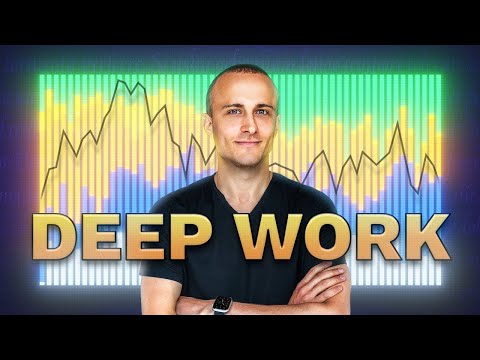
Levels, a glucose-monitoring app valued near $300 million with 40 people, runs on written hypotheses, retros and one meeting day a week. Comparing hypotheses exposed one project worth $200,000 a month against another at $90,000, and some with a tenfold gap that looked identical. Lesson: write expected return before building, and judge projects as validated or invalidated.
- 1Write hypothesis and value20% more logging, about $90,000/month
- 2Build the projectExample: eight engineering weeks
- 3Spend 10% on retroTwo-week project gets one day
- 4Validate or invalidateDid it move the predicted amount?
From Sam Corcos, Levels CEO
What was said about Levels
1Written hypotheses and retros
Write the hypothesis and its dollar value before starting any project. Before building, Levels teams write what they expect to happen and what it is worth. Sam Corcos's example: eight engineering weeks, a 20% rise in food logging, and retention value of about $90,000 a month.
Comparing written hypotheses showed one project worth $200,000 a month against another worth $90,000, and some with a 10x gap that looked identical on paper. Writing freezes the prediction so memory cannot rewrite it later: "our brains are rationalization machines."
Judge finished projects as validated or invalidated, never success or failure. Levels removed success and failure from retros because everyone rationalizes their own project as a win. The question is whether the result moved by the predicted amount.
Corcos says the clinical wording helped a lot because it makes spinning the outcome much harder. "Did you validate or invalidate the hypothesis?"
Spend about 10% of a project's time on its retro. A two-week project gets one day of reflection and a four-week project gets two. One hour on an eight-week project that cost tens or hundreds of thousands of dollars is never enough.
Corcos treats 10% as a rule of thumb, not a hard rule.
Write the press release and FAQ before building a feature. Corcos borrows Amazon's PR FAQ: if you cannot write a compelling press release for a feature, you probably cannot sell it and should not build it.
He admits it is harder in practice, but likes it as a way to bring marketing into product building.
A written memo lets you point back to the exact agreement. A memo on how to write a good hypothesis was read, discussed and still forgotten within a project. When someone said the format did not cover their case, Corcos pointed to the section that did, and the course corrected at once.
Verbal agreement drifts; written words stay fixed and give a remote team one source of truth.
2How Levels writes and reviews memos
Scale the writing to the stakes of the decision. A $50 million, decade-long commitment justifies a 200-page memo; moving one button needs a quick note. Newer staff scared by 30 to 50 page memos are told a one-page or two-paragraph memo saying what they will do and expect is enough.
Corcos himself spends under 5% of his calendar on long-form writing, though it feels like more because of the thinking effort.
Write the memo to convince yourself before anyone else. Asked to write a memo convincing Corcos to commit to an eight-figure project, an employee replied he first had to convince himself. The result ran about 200 pages and left him understanding the decision and its trade-offs.
Corcos's view is that writing, like teaching, is how you find out whether you really have a thought.
Collect memo feedback as long comments at the bottom, not the margin. Inline comments force one sentence at a time and get buried in Google Docs. Long comments at the bottom show how views evolved, and Corcos folds useful ideas back into the memo.
A three or four page memo sometimes collects five pages of comments.
Put a short Loom overview at the top of long memos. The author records what they think matters most; a 20-minute overview can be watched at 2x on a walk. The longest memo is 200 pages and takes days to read.
Corcos says the overview makes a huge difference in how well people take in the material. Line edits in writing plus an overview on video work well together.
Weak writers can talk ideas into video, then work from an outline. Corcos suggests a stream-of-consciousness Loom that an assistant or ChatGPT turns into an outline or draft, which is far easier to start from than a blank page.
Engineers also record "teach me something" videos on engineering principles. Leaders who cannot communicate have struggled at Levels.
3Async work, open silos and think weeks
Levels limits meetings to one day a week to protect deep work. Corcos cites that the median tech worker never gets more than 30 minutes uninterrupted and checks messages every six minutes. Levels uses Async Week to retrain new hires away from Slack habits.
About 97% of texts are read within three seconds, so chat pretends to be async but demands attention; an outage war room is the one fair use. The rule, borrowed from Matt Mullenweg: be as async as possible, but not more, and call immediately when two people drift out of alignment.
Make information silos open rather than closed. Email is a closed silo only the copied people see; an open Slack channel is searchable by anyone. Open channels and long memos let new hires see the full thinking behind the company.
Early Stripe copied a shared Google group on mail for the same reason. Levels is building its own internal tool to replace Slack and email with open, async defaults.
Block one offline think week each quarter to write. Corcos took the think week from Bill Gates: off email and chat, writing in Notion. The first two or three days are tactical, and bigger questions appear only after detaching.
His memos cluster in single months, such as June 2020, when he wrote four or five in one think week. He does it near other heads-down people for the shared energy.
4Radical transparency and the CEO's voice
Share meetings and metrics openly by default. Investor updates and all-hands are public, and internal meetings including one-on-ones and performance reviews are shared by default, with opt-outs. Brian Armstrong saying he would have been more open earlier at Coinbase gave Levels the courage to try.
Open numbers need context and a zoomed-out view. The Monday Metrics Meeting dwells on what is going badly, so for two months staff watching recordings saw only falling charts and concluded the company was dying. Revenue had actually tripled, which a zoomed-out chart showed.
Corcos says openness adds overhead, since not everyone reads metrics well, but is worth it.
Hedge a CEO's casual thoughts so they aren't read as strategy. Corcos keeps a TextExpander snippet called Hedge: "These are just my passing thoughts. This is not intended to be a change in priority."
He admits it does not always work, so critical feedback goes on Loom video or in person, where tone carries.
5Mantras instead of acronyms
Teach lessons with short stories, and ban acronyms. "Pork tacos" comes from the first app, shipped in days with every food log hard-coded as pork tacos; it was no disaster, and the phrase now means ship a scrappy version. "People don't like it when you move their cheese" means warn users, say two weeks ahead, before moving a button.
Corcos is against acronyms because new hires must memorize a glossary and insider language bonds people by shutting others out: "Just write it out."
6Hiring as matching and the keeper test
Hire for fit by showing candidates the culture openly. Most of the interview process tries to convince people they do not want to work there; Corcos estimates at least 95% would be unhappy in the culture. Public material like interviews has made each hire better aligned.
The Netflix keeper test asks how you would feel if someone said they were leaving for Google; only "we have to keep you" is acceptable. Corcos once told an employee he felt indifferent and that they might add more value elsewhere.
7Content that educates a new category
Write the definitive piece on a topic, or don't write. Editorial director Mike Haney's motto is "Add value to the internet": check whether a definitive piece exists, and if not, write the deeply researched ultimate guide. Millions visit the blog and readers spend three or four minutes on the site.
Corcos says the best SEO trick is making the best content, since lazy competition leaves an opening.
A small audience of the right people is worth reaching. Company podcasts heard by about 100 people help recruiting because applicants cite them, and a 30-minute Loom finished by 45 people saved them a meeting.
Corcos compares it to a meeting: 100 attendees would be your biggest ever.

How Writing Helped This CEO Build a $300m+ Company | Sam Corcos
Valued at about $300 million with 40 people, it runs on writing, radical transparency and one meeting day a week. It uses hypotheses, retros with 10% of project time, 200-page memos, think weeks, Async Week and a blog that educates a new category.
Write the hypothesis and its dollar value before starting any project. Before building, Levels teams write what they expect to happen and what it is worth. Sam Corcos's example: eight engineering weeks, a 20% rise in food logging, and retention value of about $90,000 a month.
Comparing written hypotheses showed one project worth $200,000 a month against another worth $90,000, and some with a 10x gap that looked identical on paper. Writing freezes the prediction so memory cannot rewrite it later: "our brains are rationalization machines."
Judge finished projects as validated or invalidated, never success or failure. Levels removed success and failure from retros because everyone rationalizes their own project as a win. The question is whether the result moved by the predicted amount.
Corcos says the clinical wording helped a lot because it makes spinning the outcome much harder. "Did you validate or invalidate the hypothesis?"
Spend about 10% of a project's time on its retro. A two-week project gets one day of reflection and a four-week project gets two. One hour on an eight-week project that cost tens or hundreds of thousands of dollars is never enough.
Corcos treats 10% as a rule of thumb, not a hard rule.
Write the press release and FAQ before building a feature. Corcos borrows Amazon's PR FAQ: if you cannot write a compelling press release for a feature, you probably cannot sell it and should not build it.
He admits it is harder in practice, but likes it as a way to bring marketing into product building.
A written memo lets you point back to the exact agreement. A memo on how to write a good hypothesis was read, discussed and still forgotten within a project. When someone said the format did not cover their case, Corcos pointed to the section that did, and the course corrected at once.
Verbal agreement drifts; written words stay fixed and give a remote team one source of truth.
Scale the writing to the stakes of the decision. A $50 million, decade-long commitment justifies a 200-page memo; moving one button needs a quick note. Newer staff scared by 30 to 50 page memos are told a one-page or two-paragraph memo saying what they will do and expect is enough.
Corcos himself spends under 5% of his calendar on long-form writing, though it feels like more because of the thinking effort.
Write the memo to convince yourself before anyone else. Asked to write a memo convincing Corcos to commit to an eight-figure project, an employee replied he first had to convince himself. The result ran about 200 pages and left him understanding the decision and its trade-offs.
Corcos's view is that writing, like teaching, is how you find out whether you really have a thought.
Collect memo feedback as long comments at the bottom, not the margin. Inline comments force one sentence at a time and get buried in Google Docs. Long comments at the bottom show how views evolved, and Corcos folds useful ideas back into the memo.
A three or four page memo sometimes collects five pages of comments.
Put a short Loom overview at the top of long memos. The author records what they think matters most; a 20-minute overview can be watched at 2x on a walk. The longest memo is 200 pages and takes days to read.
Corcos says the overview makes a huge difference in how well people take in the material. Line edits in writing plus an overview on video work well together.
Weak writers can talk ideas into video, then work from an outline. Corcos suggests a stream-of-consciousness Loom that an assistant or ChatGPT turns into an outline or draft, which is far easier to start from than a blank page.
Engineers also record "teach me something" videos on engineering principles. Leaders who cannot communicate have struggled at Levels.
Levels limits meetings to one day a week to protect deep work. Corcos cites that the median tech worker never gets more than 30 minutes uninterrupted and checks messages every six minutes. Levels uses Async Week to retrain new hires away from Slack habits.
About 97% of texts are read within three seconds, so chat pretends to be async but demands attention; an outage war room is the one fair use. The rule, borrowed from Matt Mullenweg: be as async as possible, but not more, and call immediately when two people drift out of alignment.
Make information silos open rather than closed. Email is a closed silo only the copied people see; an open Slack channel is searchable by anyone. Open channels and long memos let new hires see the full thinking behind the company.
Early Stripe copied a shared Google group on mail for the same reason. Levels is building its own internal tool to replace Slack and email with open, async defaults.
Block one offline think week each quarter to write. Corcos took the think week from Bill Gates: off email and chat, writing in Notion. The first two or three days are tactical, and bigger questions appear only after detaching.
His memos cluster in single months, such as June 2020, when he wrote four or five in one think week. He does it near other heads-down people for the shared energy.
Share meetings and metrics openly by default. Investor updates and all-hands are public, and internal meetings including one-on-ones and performance reviews are shared by default, with opt-outs. Brian Armstrong saying he would have been more open earlier at Coinbase gave Levels the courage to try.
Open numbers need context and a zoomed-out view. The Monday Metrics Meeting dwells on what is going badly, so for two months staff watching recordings saw only falling charts and concluded the company was dying. Revenue had actually tripled, which a zoomed-out chart showed.
Corcos says openness adds overhead, since not everyone reads metrics well, but is worth it.
Hedge a CEO's casual thoughts so they aren't read as strategy. Corcos keeps a TextExpander snippet called Hedge: "These are just my passing thoughts. This is not intended to be a change in priority."
He admits it does not always work, so critical feedback goes on Loom video or in person, where tone carries.
Teach lessons with short stories, and ban acronyms. "Pork tacos" comes from the first app, shipped in days with every food log hard-coded as pork tacos; it was no disaster, and the phrase now means ship a scrappy version. "People don't like it when you move their cheese" means warn users, say two weeks ahead, before moving a button.
Corcos is against acronyms because new hires must memorize a glossary and insider language bonds people by shutting others out: "Just write it out."
Hire for fit by showing candidates the culture openly. Most of the interview process tries to convince people they do not want to work there; Corcos estimates at least 95% would be unhappy in the culture. Public material like interviews has made each hire better aligned.
The Netflix keeper test asks how you would feel if someone said they were leaving for Google; only "we have to keep you" is acceptable. Corcos once told an employee he felt indifferent and that they might add more value elsewhere.
Write the definitive piece on a topic, or don't write. Editorial director Mike Haney's motto is "Add value to the internet": check whether a definitive piece exists, and if not, write the deeply researched ultimate guide. Millions visit the blog and readers spend three or four minutes on the site.
Corcos says the best SEO trick is making the best content, since lazy competition leaves an opening.
A small audience of the right people is worth reaching. Company podcasts heard by about 100 people help recruiting because applicants cite them, and a 30-minute Loom finished by 45 people saved them a meeting.
Corcos compares it to a meeting: 100 attendees would be your biggest ever.
More in Health & Fitness
 Health & Fitness
Calm
A meditation and sleep app with guided sessions and celebrity-narrated Sleep Stories.


 45 sources · 102 tips
 Health & Fitness
Cal AI
A calorie tracking app that logs meals from photos, grown largely through influencer and UGC videos.
28 sources · 104 tips Health & Fitness
Headspace
A meditation and mental wellness app with guided sessions and subscriptions.
 27 sources · 50 tips
 Health & Fitness
Ladder
A strength training app with human coaches, a workout journal and a nutrition feature.
12 sources · 39 tips Health & Fitness
Zero
An intermittent fasting tracker app that teaches fasting and builds habits toward metabolic health.
 6 sources · 21 tips
 Health & Fitness
Rise
A sleep and energy app that helps people track and pay down their sleep debt.
3 sources · 29 tips Health & Fitness
Runna
A personalized running coach app that builds adaptive training plans around a runner's race goals.
6 sources · 28 tips Health & Fitness
Strava
A fitness social platform for runners and cyclists.
13 sources · 13 tips