
Bell Labs
The research lab of the Bell System that invented the transistor and much of modern telecommunications.
Where Bell Labs comes up1 book
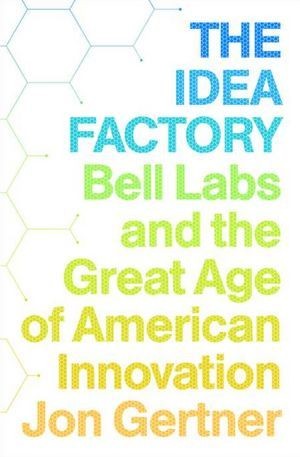
Bell Labs combined patient funding, mixed disciplines and a phone network full of hard problems to invent the transistor, then spent until 1951 making it manufacturable. It also missed the integrated circuit, bet on waveguides that glass fiber replaced, and shipped an unwanted Picturephone. Lesson: judge breakthroughs by mass production and fit with the existing network, and watch outsiders.
- Transcontinental line opensArnold's tube; 3-minute call ~$21
- Bell Labs founded~$12 million budget, 2,000 experts
- Transistor worksBardeen and Brattain's amplifier
- Peak size~15,000 people, ~1,200 PhDs
- Bell System broken upLab loses its mission
- Shrunk to a thirdHolmdel closes in 2006
From Jon Gertner, The Idea Factory
What was said about Bell Labs
1The transcontinental call: hiring science to break a wall
Some limits are gaps in science that more tinkering cannot close. Thick copper, loading coils and mechanical repeaters topped out around 1,700 miles, roughly New York to Denver, and stacking more than a few repeaters added distortion that undid the gain. A coast-to-coast call needed an amplifier science had not yet produced.
Around 1910 American industry advanced mostly by Edison-style cut and try. Edison tried lead, copper, graphite, platinum and many other materials before a carbon button improved the telephone mouthpiece, and he scorned theory.
Jewett turned the goal into four questions about what science must show. In 1909 Jewett and chief engineer John J. Carty decided the crux of a New York to San Francisco line was an amplifier. Jewett asked: can we build it now, if not what has science not shown, will science show the way, and will it be in time?
The last question set the work plan: "What must we do to make 'possibly' into 'probably' in two years?"
Recruit top research talent and give it one concrete, dated problem. In fall 1910 Jewett asked Robert Millikan for his best doctoral students, and Harold Arnold took the job with a single task: a repeater. His high-vacuum tube, improved from Lee De Forest's audion with better materials and a higher vacuum, carried the transcontinental line that opened in 1915.
The tube beat rival repeaters in a Philadelphia listening test. The line ran four copper wires on 130,000 poles, and a three-minute call cost about $21. The win justified hiring more young scientists, including Mervin Kelly in late 1917 at $2,100 a year.
2A protected monopoly tied to a phone system full of hard problems
Regulated monopoly bought the patience research needs. Vail accepted regulated prices and profits in exchange for a path to near monopoly, giving the company a decades-long horizon. Bell Telephone Laboratories began January 1, 1925, owned half by AT&T and half by Western Electric, with a budget of about $12 million.
About three hundred of two thousand technical experts worked under Arnold in research, looking five to ten years ahead on his view that invention cannot be scheduled. Jewett was clear the lab existed to raise phone revenue, and basic research was tolerated for what it did for applied work.
Good problems, not ideas, were the scarce input, and the network supplied them. Parts had to last forty years, so engineers built a dropping machine that slammed receivers into cradles tens of thousands of times, and Walter Shewhart invented statistical quality control to keep products to spec. In 1937 Kelly told Shockley he wanted relays out of telephone exchanges, a target that later pointed to the solid-state amplifier.
The mission was concrete: any two people anywhere should talk as clearly as face to face, at low cost, and regulation required service to get cheaper as well as better. Clinton Davisson was kept on as the engineers' last resort for why tubes failed, because those answers had financial value.
Scientists learned the phone system before doing research. Harvey Fletcher held a physics PhD yet spent his first year at Western Electric climbing poles, installing phones and running switchboards. Later recruits sat through weeks of seminars on how the Bell System worked.
AT&T publicity later suggested scientists came for the sake of science, but they were hired for the system.
Large organizations can drive major innovation, not only startups. The pattern ran in three steps: grasp a hard problem, gather ideas, then push to a product deployed at massive scale. At its late-1960s peak Bell Labs employed about fifteen thousand people, including some twelve hundred PhDs.
Gertner compares connecting everyone and their machines to Apollo and the Manhattan Project in size, expense and duration. The model also had flaws: it served a government-watched monopoly and had personality clashes, institutional arrogance and later strategic missteps.
3Murray Hill and how Kelly managed people
Murray Hill was built so disciplines could not avoid each other. Building 1 connected every wing, ran a 700-foot corridor, and kept labs and offices apart so people had to walk past each other. Six-foot modules with full utilities let teams resize quickly.
More than eighty industrial labs visited to copy it. Phone calls did not replace proximity.
Kelly paid what it took to add a missing theorist. Shockley and Fisk judged only about three people in the country could fill the solid-state theory gap, so Kelly offered John Bardeen a salary well above any university's. With no office free in October 1945, Bardeen set up in the lab Walter Brattain shared, starting the theorist and experimentalist partnership.
Kelly's view: "Men are a kind of material, too."
Innovation was managed as a system with long money and support. Kelly twice handed the AT&T president his resignation over underfunded work and both times got the money. Bell Labs employed thousands of technical assistants, some with only a high school diploma, and started Kelly College in 1948 to train staff beyond graduate school.
Most attempts at the new fail, so people needed years of runway and confidence their work would be used.
The colleague who asks good questions can outweigh raw output. A patent lawyer study found the only common thread among top Bell Labs patent holders was that they often ate lunch or breakfast with Harry Nyquist.
Slack time beyond the assignment kept promising plans alive. Joel Engel believed advancement required spending 20 or 30 percent of your time beyond your assignment, and he used it to plan cellular.
Gertner compares it to Google letting workers spend up to 20 percent of their time on projects of their choosing.
4The transistor: from a fragile prototype to mass production
A demanding test came before telling leadership about the amplifier. Research VP Ralph Bown asked Bardeen and Brattain to make their amplifier oscillate, and when it did he called it a basically new thing in the world. Mervin Kelly was told only about a month later.
News moved up one level at a time as each supervisor was convinced. Bown: "The acid test of an amplifier is whether it can be made to oscillate."
The working transistor of 1947 was only the start. The point-contact transistor changed behavior with humidity, a hand wave or a slammed door. Jack Morton's team made five thousand working units by summer 1949, and it was ready for large-scale production only by summer 1951.
Gordon Teal worked secretly from 5 p.m. to 3 a.m. on borrowed equipment to pull single germanium crystals, which Shockley called the essential missing ingredient. Gertner separates discovery, invention and innovation, the last being making the thing in quantity and selling it.
Shockley competed with his own team and broke it apart. Shockley secretly designed the junction transistor and sprang it on his team. Bardeen left for Illinois and Brattain asked to stop reporting to him.
Later Shockley's staff at his own company left after he asked them all to take polygraph tests. The lesson drawn: promote on management fit, not brilliance alone.
A replacement must be better, cheaper, or both before it ships. A switching office with 65,000 relays handled slightly under 1,000 operations a second, while transistors could potentially do a million. The transistor still could not be justified on cost, and electronic switching took nearly twenty years to fully deploy.
Silicon won because the 1955 version was easy to make. The first silicon transistor in January 1954 was too complex to mass produce and changed little. Morris Tanenbaum's 1955 diffused silicon transistor beat every germanium device and looked easy to make, so Jack Morton cut short a European trip to back it.
Morton: "This looks like the transistor we've been waiting for. It should be a cinch to make."
Kelly backed the transistor that made his own tube work obsolete. Kelly spent decades improving the vacuum tube, then backed the transistor that made that work irrelevant. Monopoly security likely let Bell Labs escape the innovator's dilemma for a time.
Platform bets need patient money, technically competent leaders and freedom to stop failed lines without career damage. "Incentives are fine, but they produce incremental improvements in what's there."
5The solar cell, Echo, Telstar and the transatlantic cable
From Jon Gertner, The Idea Factory
The solar cell worked but cost far too much for its intended use. The silicon solar battery was at least fifteen times more efficient than prior converters and ran a six-month test in Americus, Georgia, from October 4, 1955. Cells cost several hundred dollars per watt, and in 1956 Chapin put powering a house at nearly $1.5 million.
Shelved work became essential once the right problem arrived. The solar cell was too costly for rural phones, but in space nothing else could recharge batteries. Joe Chaffee's 1937 feedback receiver, long considered largely useless, was revived for Echo and Telstar.
Echo was a cheap, simple experiment that exposed real problems first. Echo, a passive balloon satellite, cost under $2 million with about three dozen men. The active Telstar that followed needed more than five hundred scientists and engineers and fifteen thousand tested parts.
"There's a difference, you see, in thinking idly about something, and in setting out to do something."
Kelly chose old, proven tubes for the first transatlantic cable. Kelly calculated TAT-1 had to run twenty years without problems, so he barred the transistor and used late-1930s vacuum tubes, some tested continuously for sixteen years. The technology never failed once in twenty-two years.
TASI doubled cable capacity by filling silent pauses. A talker sends signals only about 35 percent of the time, so TASI reassigned idle channels during pauses. It doubled the transatlantic cable from thirty-six to seventy-two channels without a new cable.
6Cellular: an idea that waited for its parts
The 1947 cellular idea waited decades for computing to catch up. The 1947 cellular memo sat unpublished. Cellular became practical only with integrated circuits, microprocessors like the Intel 4004 with 2,300 transistors, and programmable electronic switching.
"Cellular is a computer technology. It's not a radio technology."
The team ignored a study saying mobile phones had no market. In fall 1971 a marketing study for AT&T concluded "there was no market for mobile phones at any price." The team disagreed and kept going.
Joel Engel later concluded such studies only measure demand for products that already exist.
Cellular plugged into the existing phone network from day one. A mobile user could call anyone already on the phone network, so cellular did not need other users to adopt it first. The Picturephone did, and failed.
7Picturephone, the integrated circuit and waveguides: the big misses
Picturephone shows friendly surveys are not demand. A 1967 study of ninety-nine business employees found many willing to pay more than $50 a month, and Jim Fisk compared skeptics to those who doubted Alexander Graham Bell. By March 1972 Pittsburgh had eight paying customers at $160 a month and Chicago had 46 at $75.
A networked product with few users is worth little to each one.
Bell Labs owned every ingredient of the integrated circuit and missed it. Jack Morton believed multi-component chips could never be reliable and pursued functional devices instead. Kilby and Noyce bet reliability could be fixed later and built the integrated circuit on Bell Labs processes like diffusion and photolithography.
"We had all the elements to make an integrated circuit... But nobody had the foresight except Noyce and Kilby."
Sunk investment in waveguides blinded the lab to glass fiber. Bell Labs spent years and millions on hollow waveguides, and Baker still championed them in a 1968 speech. Charles Kao argued for pure glass fiber in 1966, and Corning announced very low loss fiber in September 1970.
Gertner sorts the failures into three kinds of mistake. A missed opportunity (the integrated circuit), a mistake of perception where an outside solution eclipsed the bet (waveguides), and a mistake of judgment where the product did not meet the need (Picturephone).
Each has different causes and fixes.
8How Bell Labs' own breakthroughs undid it
Digital information and cheap transistors removed the case for monopoly. An analog network needed one entity to control many amplifiers. Shannon's digital information and cheap, freely licensed transistors let any company code and decode messages.
"Shannon's theorem was the mathematical basis for breaking up the Bell System."
Without its mission after 1984, Bell Labs slowly shrank. After the 1984 breakup Bell Labs still won Nobel Prizes but was split repeatedly. By 2005 it was about a third of its former size, and Holmdel closed in 2006.
"The mission was absolutely essential to the research done at the old Laboratories, and that mission is gone and has not been replaced."
The Idea Factory: Bell Labs and the Great Age of American Innovation
Combined patient money, mixed disciplines and a large phone system that kept producing hard problems. It invented the transistor in 1947 and took years to make it manufacturable. It also launched a Picturephone nobody wanted, missed the integrated circuit and bet on waveguides that glass fiber made obsolete. By 2005 it was about a third of its former size, and Holmdel closed in 2006.
Some limits are gaps in science that more tinkering cannot close. Thick copper, loading coils and mechanical repeaters topped out around 1,700 miles, roughly New York to Denver, and stacking more than a few repeaters added distortion that undid the gain. A coast-to-coast call needed an amplifier science had not yet produced.
Around 1910 American industry advanced mostly by Edison-style cut and try. Edison tried lead, copper, graphite, platinum and many other materials before a carbon button improved the telephone mouthpiece, and he scorned theory.
Jewett turned the goal into four questions about what science must show. In 1909 Jewett and chief engineer John J. Carty decided the crux of a New York to San Francisco line was an amplifier. Jewett asked: can we build it now, if not what has science not shown, will science show the way, and will it be in time?
The last question set the work plan: "What must we do to make 'possibly' into 'probably' in two years?"
Recruit top research talent and give it one concrete, dated problem. In fall 1910 Jewett asked Robert Millikan for his best doctoral students, and Harold Arnold took the job with a single task: a repeater. His high-vacuum tube, improved from Lee De Forest's audion with better materials and a higher vacuum, carried the transcontinental line that opened in 1915.
The tube beat rival repeaters in a Philadelphia listening test. The line ran four copper wires on 130,000 poles, and a three-minute call cost about $21. The win justified hiring more young scientists, including Mervin Kelly in late 1917 at $2,100 a year.
Regulated monopoly bought the patience research needs. Vail accepted regulated prices and profits in exchange for a path to near monopoly, giving the company a decades-long horizon. Bell Telephone Laboratories began January 1, 1925, owned half by AT&T and half by Western Electric, with a budget of about $12 million.
About three hundred of two thousand technical experts worked under Arnold in research, looking five to ten years ahead on his view that invention cannot be scheduled. Jewett was clear the lab existed to raise phone revenue, and basic research was tolerated for what it did for applied work.
Good problems, not ideas, were the scarce input, and the network supplied them. Parts had to last forty years, so engineers built a dropping machine that slammed receivers into cradles tens of thousands of times, and Walter Shewhart invented statistical quality control to keep products to spec. In 1937 Kelly told Shockley he wanted relays out of telephone exchanges, a target that later pointed to the solid-state amplifier.
The mission was concrete: any two people anywhere should talk as clearly as face to face, at low cost, and regulation required service to get cheaper as well as better. Clinton Davisson was kept on as the engineers' last resort for why tubes failed, because those answers had financial value.
Scientists learned the phone system before doing research. Harvey Fletcher held a physics PhD yet spent his first year at Western Electric climbing poles, installing phones and running switchboards. Later recruits sat through weeks of seminars on how the Bell System worked.
AT&T publicity later suggested scientists came for the sake of science, but they were hired for the system.
Large organizations can drive major innovation, not only startups. The pattern ran in three steps: grasp a hard problem, gather ideas, then push to a product deployed at massive scale. At its late-1960s peak Bell Labs employed about fifteen thousand people, including some twelve hundred PhDs.
Gertner compares connecting everyone and their machines to Apollo and the Manhattan Project in size, expense and duration. The model also had flaws: it served a government-watched monopoly and had personality clashes, institutional arrogance and later strategic missteps.
Murray Hill was built so disciplines could not avoid each other. Building 1 connected every wing, ran a 700-foot corridor, and kept labs and offices apart so people had to walk past each other. Six-foot modules with full utilities let teams resize quickly.
More than eighty industrial labs visited to copy it. Phone calls did not replace proximity.
Kelly paid what it took to add a missing theorist. Shockley and Fisk judged only about three people in the country could fill the solid-state theory gap, so Kelly offered John Bardeen a salary well above any university's. With no office free in October 1945, Bardeen set up in the lab Walter Brattain shared, starting the theorist and experimentalist partnership.
Kelly's view: "Men are a kind of material, too."
Innovation was managed as a system with long money and support. Kelly twice handed the AT&T president his resignation over underfunded work and both times got the money. Bell Labs employed thousands of technical assistants, some with only a high school diploma, and started Kelly College in 1948 to train staff beyond graduate school.
Most attempts at the new fail, so people needed years of runway and confidence their work would be used.
The colleague who asks good questions can outweigh raw output. A patent lawyer study found the only common thread among top Bell Labs patent holders was that they often ate lunch or breakfast with Harry Nyquist.
Slack time beyond the assignment kept promising plans alive. Joel Engel believed advancement required spending 20 or 30 percent of your time beyond your assignment, and he used it to plan cellular.
Gertner compares it to Google letting workers spend up to 20 percent of their time on projects of their choosing.
A demanding test came before telling leadership about the amplifier. Research VP Ralph Bown asked Bardeen and Brattain to make their amplifier oscillate, and when it did he called it a basically new thing in the world. Mervin Kelly was told only about a month later.
News moved up one level at a time as each supervisor was convinced. Bown: "The acid test of an amplifier is whether it can be made to oscillate."
The working transistor of 1947 was only the start. The point-contact transistor changed behavior with humidity, a hand wave or a slammed door. Jack Morton's team made five thousand working units by summer 1949, and it was ready for large-scale production only by summer 1951.
Gordon Teal worked secretly from 5 p.m. to 3 a.m. on borrowed equipment to pull single germanium crystals, which Shockley called the essential missing ingredient. Gertner separates discovery, invention and innovation, the last being making the thing in quantity and selling it.
Shockley competed with his own team and broke it apart. Shockley secretly designed the junction transistor and sprang it on his team. Bardeen left for Illinois and Brattain asked to stop reporting to him.
Later Shockley's staff at his own company left after he asked them all to take polygraph tests. The lesson drawn: promote on management fit, not brilliance alone.
A replacement must be better, cheaper, or both before it ships. A switching office with 65,000 relays handled slightly under 1,000 operations a second, while transistors could potentially do a million. The transistor still could not be justified on cost, and electronic switching took nearly twenty years to fully deploy.
Silicon won because the 1955 version was easy to make. The first silicon transistor in January 1954 was too complex to mass produce and changed little. Morris Tanenbaum's 1955 diffused silicon transistor beat every germanium device and looked easy to make, so Jack Morton cut short a European trip to back it.
Morton: "This looks like the transistor we've been waiting for. It should be a cinch to make."
Kelly backed the transistor that made his own tube work obsolete. Kelly spent decades improving the vacuum tube, then backed the transistor that made that work irrelevant. Monopoly security likely let Bell Labs escape the innovator's dilemma for a time.
Platform bets need patient money, technically competent leaders and freedom to stop failed lines without career damage. "Incentives are fine, but they produce incremental improvements in what's there."
The solar cell worked but cost far too much for its intended use. The silicon solar battery was at least fifteen times more efficient than prior converters and ran a six-month test in Americus, Georgia, from October 4, 1955. Cells cost several hundred dollars per watt, and in 1956 Chapin put powering a house at nearly $1.5 million.
Shelved work became essential once the right problem arrived. The solar cell was too costly for rural phones, but in space nothing else could recharge batteries. Joe Chaffee's 1937 feedback receiver, long considered largely useless, was revived for Echo and Telstar.
Echo was a cheap, simple experiment that exposed real problems first. Echo, a passive balloon satellite, cost under $2 million with about three dozen men. The active Telstar that followed needed more than five hundred scientists and engineers and fifteen thousand tested parts.
"There's a difference, you see, in thinking idly about something, and in setting out to do something."
Kelly chose old, proven tubes for the first transatlantic cable. Kelly calculated TAT-1 had to run twenty years without problems, so he barred the transistor and used late-1930s vacuum tubes, some tested continuously for sixteen years. The technology never failed once in twenty-two years.
TASI doubled cable capacity by filling silent pauses. A talker sends signals only about 35 percent of the time, so TASI reassigned idle channels during pauses. It doubled the transatlantic cable from thirty-six to seventy-two channels without a new cable.
The 1947 cellular idea waited decades for computing to catch up. The 1947 cellular memo sat unpublished. Cellular became practical only with integrated circuits, microprocessors like the Intel 4004 with 2,300 transistors, and programmable electronic switching.
"Cellular is a computer technology. It's not a radio technology."
The team ignored a study saying mobile phones had no market. In fall 1971 a marketing study for AT&T concluded "there was no market for mobile phones at any price." The team disagreed and kept going.
Joel Engel later concluded such studies only measure demand for products that already exist.
Cellular plugged into the existing phone network from day one. A mobile user could call anyone already on the phone network, so cellular did not need other users to adopt it first. The Picturephone did, and failed.
Picturephone shows friendly surveys are not demand. A 1967 study of ninety-nine business employees found many willing to pay more than $50 a month, and Jim Fisk compared skeptics to those who doubted Alexander Graham Bell. By March 1972 Pittsburgh had eight paying customers at $160 a month and Chicago had 46 at $75.
A networked product with few users is worth little to each one.
Bell Labs owned every ingredient of the integrated circuit and missed it. Jack Morton believed multi-component chips could never be reliable and pursued functional devices instead. Kilby and Noyce bet reliability could be fixed later and built the integrated circuit on Bell Labs processes like diffusion and photolithography.
"We had all the elements to make an integrated circuit... But nobody had the foresight except Noyce and Kilby."
Sunk investment in waveguides blinded the lab to glass fiber. Bell Labs spent years and millions on hollow waveguides, and Baker still championed them in a 1968 speech. Charles Kao argued for pure glass fiber in 1966, and Corning announced very low loss fiber in September 1970.
Gertner sorts the failures into three kinds of mistake. A missed opportunity (the integrated circuit), a mistake of perception where an outside solution eclipsed the bet (waveguides), and a mistake of judgment where the product did not meet the need (Picturephone).
Each has different causes and fixes.
Digital information and cheap transistors removed the case for monopoly. An analog network needed one entity to control many amplifiers. Shannon's digital information and cheap, freely licensed transistors let any company code and decode messages.
"Shannon's theorem was the mathematical basis for breaking up the Bell System."
Without its mission after 1984, Bell Labs slowly shrank. After the 1984 breakup Bell Labs still won Nobel Prizes but was split repeatedly. By 2005 it was about a third of its former size, and Holmdel closed in 2006.
"The mission was absolutely essential to the research done at the old Laboratories, and that mission is gone and has not been replaced."
More in Other
 Other
Apple
A consumer technology company that makes the Mac, iPod, iPhone and software.



 89 sources · 215 tips
 Other
A technology company that builds frontier AI models, hardware and products used by billions of people.

 57 sources · 108 tips
 Other
Google Play
Google's app store for Android, with its own listing rules and search ranking.
 18 sources · 49 tips
Standard Oil
John D. Rockefeller's oil refining company that came to dominate American kerosene and oil distribution.
5 sources · 48 tips Other
Intel
A semiconductor company that made memory chips and the first microprocessor.
B12 sources · 23 tips Other
TSMC
The world's leading contract chip maker, a pure-play foundry that manufactures chips for fabless designers.
6 sources · 32 tips Other
Tesla
An electric car maker that builds its own key components and factories.
 14 sources · 23 tips
 Other
SpaceX
A private aerospace company building reusable rockets, the Dragon capsule, Starship and the Starlink satellite network.
5 sources · 29 tips