Apple
A consumer technology company that makes the Mac, iPod, iPhone and software.
Apple's 30% cut buys billing users trust, and Skylight lifted conversion over 100% by sending QR scans to Apple checkout. Simply won betas and design partnerships with biweekly account manager meetings, while Pok Pok lost many users after an Apple Design Award because it had no retention tools. Treat Apple as a partner and have retention ready before the spotlight.
- Make the productMac loyalists only, under 1% of market
- Fix the productStill Mac-only, fixed with customer feedback
- Fix the businessWindows support plus iTunes store: takeoff
- iPhone becomes possibleFadell credits the iPod's success
From Tony Fadell on the iPod launch
What was said about Apple
1What the iPod and iPhone teach about launching new products
Expect a new product to take three generations to work. The first two iPods sold only to Mac loyalists, under 1% of the market. The iPod took off in generation three, once it supported Windows and had the iTunes music store.
Tony Fadell's rule is that version one gets the product out, version two fixes it with customer feedback, and version three fixes margins and volume. Nest followed the same path across its smoke detector and thermostat generations. "You make the product, you fix the product and then you fix the business."
A cheap entry product earns trust before customers buy the expensive ones. Without Windows support, the $349 iPod effectively cost $3,000 because buyers also had to buy a Mac. Opening it to Windows let people try Apple cheaply, and the iPod saved a company Fadell says was near bankruptcy in 2001.
Fadell credits the iPod's success with making the iPhone possible. The lesson is to count the real cost of switching as part of the price.
Keep a quiet side project going when the leader says no. Steve Jobs said Windows support for the iPod would happen over his dead body, yet the Windows version drove its takeoff. He also resisted a stylus, which later became a major feature for professionals and artists.
Fadell's advice is to keep skunk works versions of features you can see coming and bring them out when the timing is right.
For a new category, a few tastemakers make the calls, not data. The iPhone keyboard debate had no clear data either way, and Jobs chose the virtual keyboard. Fadell micromanaged the tests and data behind that one decision across hardware, software, filtering and graphics, while delegating the rest.
Give one or two people ownership, back them with prototypes and expert input, explain each call and be ready to correct it later. "It means micromanage the decision, not necessarily operations of doing it."
Great products have one tiny core that is exceptionally good. Max Schoening points to iPhone multitouch as a tiny core that makes the product, alongside the GitHub pull request and Notion blocks. AirPods and the iPod were not first in their categories but won by being right.
His advice is to find that core and stop adding features in the hope that one more makes the product great.
Design the whole customer journey, not just the device. The iPod and iPhone only worked as systems with iTunes and the App Store. Fadell argues marketing, sales, distribution and messaging must be designed from the start, because back-calculating them later fails.
He applied the same thinking at Nest, changing how the thermostat was bought and installed.
Rewrite the marketing for each new region and adopter group. Around the fourth-generation iPod, Apple ran its US marketing in Europe. It resonated with no one and sales stalled until the messaging was changed.
A market without an installed base has no word of mouth, so work with trusted local early adopters and use their words and visuals. "You have to bring it home to them and meet them where they are."
Sharpen the product story by telling it thousands of times. Jobs told the iPhone story daily for 2.5 years, at least 10,000 times, before going on stage. Each telling to smart outsiders showed what resonated.
Lead with why the product matters rather than what it is, since the what only speaks to other technologists.
Set clear lines against designing for addiction. Fadell cites Jobs shutting down porn in the iTunes video store as a leader drawing a line, and Apple's stance on privacy as something users reward over time.
"If you make your customers unhealthy, you're not going to have customers."
2Apple billing: the cost of the 30% versus the cost of leaving
- QR code opens web checkout
- Extra clicks to subscribe
- Avoids Apple's 30% fee
- QR code opens Apple purchase
- Scan, subscribe and done
- Pays Apple's 30% fee
Conversion up over 100%
From Skylight
Apple's cut buys a billing system users already trust. The 30% fee covers payments, cancellations and refunds that users trust. Off Apple, Rise Science found it owns payments, plan changes, refunds, support and chargebacks, and poor handling hurts reviews and gets flagged by card networks.
Apple's IDFA tracking change crippled mobile ads and pushed Rise toward web funnels. If cancellation is missing while testing a web funnel, trial conversion looks falsely high while refunds and chargebacks climb.
Routing QR scans to Apple in-app purchase doubled Skylight's conversion. Unsubscribed Skylight device owners scanned a QR code that went to a web checkout. Switching it to Apple in-app purchase, so a parent could scan, subscribe and be done, lifted conversion over 100%.
The test ran on a smaller group of users. Extra clicks and checkout oddities on the web cost conversion the headline fee saving ignores.
Choose between Apple and web billing as growth versus profit. Skylight frames the payment path as an explicit tradeoff: easy subscribing grows faster, avoiding the fee boosts profit. With no need to sell or raise EBITDA, it stays on Apple in-app purchase.
Once lost conversion is counted, Skylight puts the real web saving closer to 20% than 30%.
Use free tastes to work around Apple's one-trial limit. Apple allows the intro offer once per product and blocks a second free trial for existing subscribers. Duolingo instead gives paying users a 3-day free taste of Max, then returns them to their original tier.
It is an effective lever for getting people to try Max, especially its video calls.
3Working with Apple as a platform partner
Treat Apple as a partner and meet its account managers often. Simply meets its Apple account manager biweekly for Simply Piano and shares plans, roadmaps and problems. It sent developers to WWDC with real sound recognition problems and got help from Apple sound engineers.
The relationship brought beta access and design partnerships. "Embrace this collaboration and keep ongoing communication with your account manager."
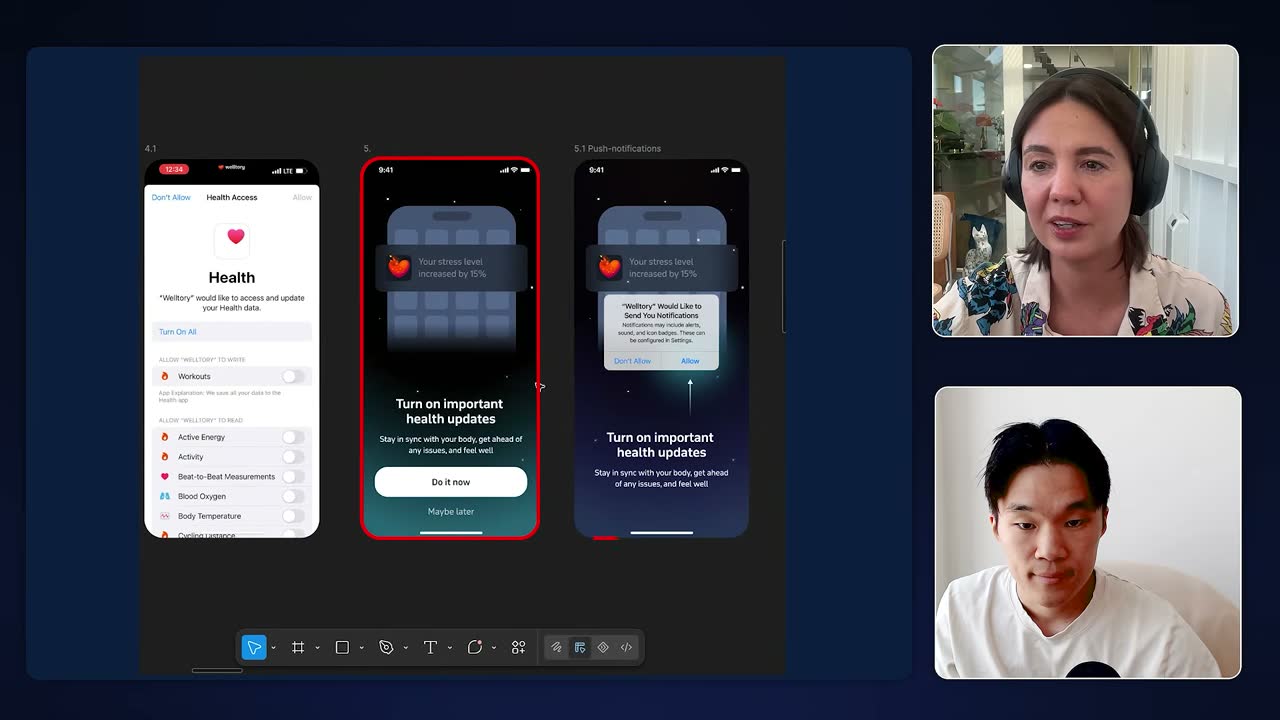
Welltory's onboarding screens: Apple Health access, then an early push-notification request ('Turn on important health updates'). Spin up a fast pod to ship on new Apple devices at launch. Simply built its first Vision Pro app early by picking the product that benefited most and assigning a pod to work closely with the platform.
The goal is being early on a future platform, not direct revenue. "It's not about an ROI right now with the direct revenues."
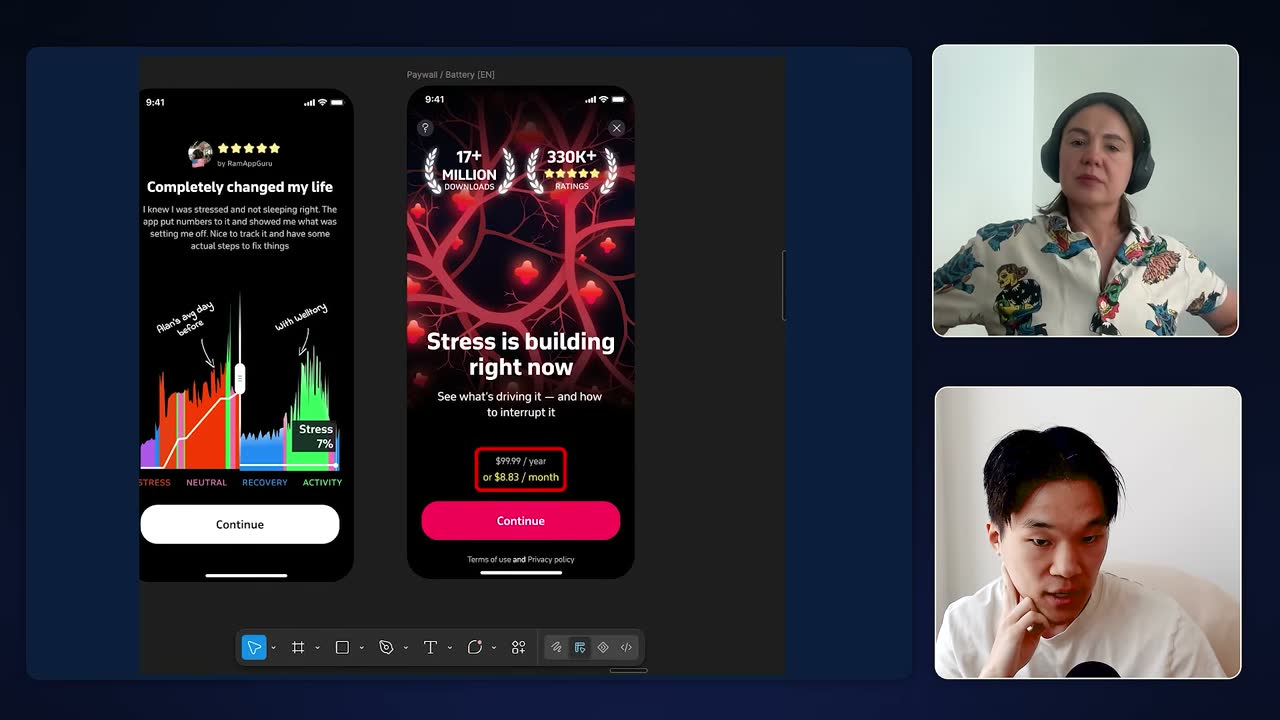
Welltory's paywall screen offers a single annual plan: $99.99/year, framed as $8.83/month. Have retention tools ready before an Apple award brings a spike. Pok Pok won an Apple Design Award two weeks after launch with no retention tools, no cancellation save flow and one global price, and lost many of the new users.
Many award-driven users still stayed as early adopters, and Pok Pok later won an App Store Award too. "When those things happen, your product is ready for it."
4The Health app's uninterpreted HRV number
Apple Health shows heart rate variability without interpreting it. The Health app displays an HRV number but does not explain it, and Welltory built value in that gap.
Higher variability is not always better, and overnight readings say more than single daytime ones.

The Biography of Steve Jobs (The Evolution of a Reckless Upstart into a Visionary Leader)
Jobs co-founded it, was pushed out at 30 after the Apple III, Lisa and Macintosh flops, and returned in 1997. The Apple II still brought 70 to 80% of revenue, and back at Apple he built an online store, obsessed over every customer touchpoint, and synthesized ideas without a formal R&D unit.
Apple Health shows heart rate variability without interpreting it. The Health app displays an HRV number but does not explain it, and Welltory built value in that gap.
Higher variability is not always better, and overnight readings say more than single daytime ones.

The Biggest App Store Optimization Changes in iOS 11
iOS 11 cuts the app name limit from 50 to 30 characters, adds an indexed 30-character subtitle, indexes in-app purchase names, and carries reviews across versions. It also adds an in-app review API capped at about three prompts, and a 170-character promotional text that is not indexed.
Have retention tools ready before an Apple award brings a spike. Pok Pok won an Apple Design Award two weeks after launch with no retention tools, no cancellation save flow and one global price, and lost many of the new users.
Many award-driven users still stayed as early adopters, and Pok Pok later won an App Store Award too. "When those things happen, your product is ready for it."

How to Build an $18M/Year Apple Watch App (FREE MASTERCLASS)
It shows a heart rate variability number but does not interpret it, and that gap is where Welltory adds value. Higher variability is not always better, and overnight readings say more than single daytime ones.
Treat Apple as a partner and meet its account managers often. Simply meets its Apple account manager biweekly for Simply Piano and shares plans, roadmaps and problems. It sent developers to WWDC with real sound recognition problems and got help from Apple sound engineers.
The relationship brought beta access and design partnerships. "Embrace this collaboration and keep ongoing communication with your account manager."
Welltory's onboarding screens: Apple Health access, then an early push-notification request ('Turn on important health updates'). Spin up a fast pod to ship on new Apple devices at launch. Simply built its first Vision Pro app early by picking the product that benefited most and assigning a pod to work closely with the platform.
The goal is being early on a future platform, not direct revenue. "It's not about an ROI right now with the direct revenues."
Welltory's paywall screen offers a single annual plan: $99.99/year, framed as $8.83/month.

How to Dominate for Decades | Doug Leone, Sequoia Capital
Its turnaround under Steve Jobs was a rarity in technology and shows the founder preserving the company's soul. Sequoia was the first investor.
Expect a new product to take three generations to work. The first two iPods sold only to Mac loyalists, under 1% of the market. The iPod took off in generation three, once it supported Windows and had the iTunes music store.
Tony Fadell's rule is that version one gets the product out, version two fixes it with customer feedback, and version three fixes margins and volume. Nest followed the same path across its smoke detector and thermostat generations. "You make the product, you fix the product and then you fix the business."
A cheap entry product earns trust before customers buy the expensive ones. Without Windows support, the $349 iPod effectively cost $3,000 because buyers also had to buy a Mac. Opening it to Windows let people try Apple cheaply, and the iPod saved a company Fadell says was near bankruptcy in 2001.
Fadell credits the iPod's success with making the iPhone possible. The lesson is to count the real cost of switching as part of the price.
Keep a quiet side project going when the leader says no. Steve Jobs said Windows support for the iPod would happen over his dead body, yet the Windows version drove its takeoff. He also resisted a stylus, which later became a major feature for professionals and artists.
Fadell's advice is to keep skunk works versions of features you can see coming and bring them out when the timing is right.
For a new category, a few tastemakers make the calls, not data. The iPhone keyboard debate had no clear data either way, and Jobs chose the virtual keyboard. Fadell micromanaged the tests and data behind that one decision across hardware, software, filtering and graphics, while delegating the rest.
Give one or two people ownership, back them with prototypes and expert input, explain each call and be ready to correct it later. "It means micromanage the decision, not necessarily operations of doing it."
Design the whole customer journey, not just the device. The iPod and iPhone only worked as systems with iTunes and the App Store. Fadell argues marketing, sales, distribution and messaging must be designed from the start, because back-calculating them later fails.
He applied the same thinking at Nest, changing how the thermostat was bought and installed.
Rewrite the marketing for each new region and adopter group. Around the fourth-generation iPod, Apple ran its US marketing in Europe. It resonated with no one and sales stalled until the messaging was changed.
A market without an installed base has no word of mouth, so work with trusted local early adopters and use their words and visuals. "You have to bring it home to them and meet them where they are."
Sharpen the product story by telling it thousands of times. Jobs told the iPhone story daily for 2.5 years, at least 10,000 times, before going on stage. Each telling to smart outsiders showed what resonated.
Lead with why the product matters rather than what it is, since the what only speaks to other technologists.
Set clear lines against designing for addiction. Fadell cites Jobs shutting down porn in the iTunes video store as a leader drawing a line, and Apple's stance on privacy as something users reward over time.
"If you make your customers unhealthy, you're not going to have customers."

The Anti-Addictive Playbook Behind Pok Pok's 9X Subscriber Growth | Melissa Cash
Pok Pok won an Apple Design Award two weeks after launch, with no retention tools in place, so many new users were lost. It later won an App Store Award too.
Great products have one tiny core that is exceptionally good. Max Schoening points to iPhone multitouch as a tiny core that makes the product, alongside the GitHub pull request and Notion blocks. AirPods and the iPod were not first in their categories but won by being right.
His advice is to find that core and stop adding features in the hope that one more makes the product great.
Profitable Apps Going Broke? Here's Why
Apple and Google pay out about 45 days or more after revenue is earned, so January money reaches the bank in March. April earnings of about $25,000 only landed in June, after they were already spent. Apple Search Ads and ASO still work for his app launched at the end of 2024.
Apple's cut buys a billing system users already trust. The 30% fee covers payments, cancellations and refunds that users trust. Off Apple, Rise Science found it owns payments, plan changes, refunds, support and chargebacks, and poor handling hurts reviews and gets flagged by card networks.
Apple's IDFA tracking change crippled mobile ads and pushed Rise toward web funnels. If cancellation is missing while testing a web funnel, trial conversion looks falsely high while refunds and chargebacks climb.

How Simply Finally Cracked Facebook Ads with Web Funnels – Yoav Sharon, Simply
Simply treats Apple as a partner, with biweekly account manager meetings, beta access and design partnerships. Developers sent to WWDC with real sound recognition problems got help from Apple engineers, and Simply built its first Vision Pro app early.
Use free tastes to work around Apple's one-trial limit. Apple allows the intro offer once per product and blocks a second free trial for existing subscribers. Duolingo instead gives paying users a 3-day free taste of Max, then returns them to their original tier.
It is an effective lever for getting people to try Max, especially its video calls.

Tony Fadell: How to build real taste (and why AI makes it matter more)
The first two iPods sold only to Mac loyalists (under 1% of the market) and took off in generation three with Windows support and iTunes. Jobs chose the virtual keyboard, the iPod saved Apple when it was near bankruptcy in 2001, and Jobs shut down porn in the iTunes video store.
Routing QR scans to Apple in-app purchase doubled Skylight's conversion. Unsubscribed Skylight device owners scanned a QR code that went to a web checkout. Switching it to Apple in-app purchase, so a parent could scan, subscribe and be done, lifted conversion over 100%.
The test ran on a smaller group of users. Extra clicks and checkout oddities on the web cost conversion the headline fee saving ignores.
Choose between Apple and web billing as growth versus profit. Skylight frames the payment path as an explicit tradeoff: easy subscribing grows faster, avoiding the fee boosts profit. With no need to sell or raise EBITDA, it stays on Apple in-app purchase.
Once lost conversion is counted, Skylight puts the real web saving closer to 20% than 30%.
The Company Apple Couldn't Kill | Spotify Co-CEO Gustav Söderström
Its functional org works because long-serving leaders trust each other, so a hugely complex product feels made by one person. Söderström models Spotify's org closest to Apple's and traces its trust to Steve Jobs.
Steve Jobs in Exile
Sued Jobs after he poached co-founders, and later bought NeXT's operating system after weighing BeOS. It agreed to $10 a share, down from Jobs's $12 opening, after a five-minute price talk in his kitchen.
AI era skills: Why cultivating agency matters more than job titles | Max Schoening (Notion)
Multitouch on the iPhone is a tiny great core. AirPods and the iPod were not first in their categories but won by being right.
The Productivity App That Actually Stops Procrastination (Wisey App Review)
Shows up among the top referrers of sales and downloads for App Masters clients. One larger client earns over five figures a month from Apple Health alone.
Why Web Onboarding Should Sell The Problem, Not The Solution – Leon Sasson, Rise Science
Its 30% cut buys a billing system users already trust, covering payments, cancellations and refunds. Its IDFA tracking change crippled mobile ads and pushed Rise toward web funnels, and leaving Apple billing makes trust and support the app maker's job.
The Counterintuitive Way To Nudge Users Into Free Trials – Anmol Tiwari, Duolingo
Allows the intro offer only once per product and blocks a second free trial for existing subscribers. That limit is why Duolingo uses 3-day free tastes of Max for paid-to-paid upgrades.
How Skylight Doubled Subscription Prices to $79 – Michael Segal & Mark Ungerer
Skylight keeps Apple in-app purchase because easier subscribing beats the roughly 20% real saving of web billing. Sending QR code scans to Apple checkout lifted conversion over 100%.
Jimmy Iovine: Building Interscope Records & Beats by Dre
Bought Beats in 2014, when it was number one in 50 countries. Iovine left Apple at 65 because he could not be obsessed without holding the wheel, and found it a structured giant that did not want the music tail wagging the dog.
How Opal Reached $10M ARR with 11 Employees
Its 2022 Screen Time API replaced Opal's VPN setup with an Apple-branded permission screen and precise usage data. Onboarding completion and trial starts rose overnight, and an editorial relationship with Apple followed.
Mental models for building products people love ft. Stewart Butterfield
Its 'turn sleep on' prompt is cited as a prime example of confusing users and making them think.
Black Hat App Growth Strategies You Don’t Know (But Your Competitors Might Be Using)
Removed over 143 million fake ratings and reviews and now sends fraud-style emails over free lifetime offers. It usually only warns (80 to 90% of the time), and bans come to developers who ignore the warning.
How Jensen Works
Steve Jobs set the model for short, blunt feedback and putting the work ahead of being liked, and he approved or rejected iPad demos in a few sentences.
A 4-step framework for building delightful products | Nesrine Changuel (Spotify, Google, Skype)
Apple Watch birthday balloons are a surface delight example. An OS update that triggered fireworks from hand gestures in video calls could only be disabled in Mac system settings, and went off during a therapy call, making it a non-inclusive example.

Google Part II: Alphabet
The iPhone reveal made Google scrap its BlackBerry-style phone for a touchscreen. Jobs vowed thermonuclear war over Android, and Apple's patents shaped early Android.
Why ChatGPT will be the next big growth channel (and how to capitalize on it) | Brian Balfour
iOS found its moat in apps and added restrictions over time, including a 30% tax that hurt many companies. It is the best-positioned fallback in AI thanks to its view across devices but shows no signals yet.
How Wispr Flow Uses AI to Save Professionals Hours Every Day
Its dictation reaches only 10 to 15% zero edit, and its growing privacy popups and restrictions are the toughest obstacle for voice-first apps. Its reliability and polish set the bar Wispr tries to match.
The Life Story of Akio Morita: Founder of Sony
Jobs admired Sony's marketing, premium prices and lack of me-too products. Apple's stores followed Sony's direct-to-customer reasoning, and Jobs nearly named the iMac "MacMan" after the Walkman.
TSMC founder Morris Chang
COO Jeff Williams arrived unannounced offering a 40% gross margin and asking for 20nm. TSMC took only half the volume Apple wanted, kept its dividend, and lost the first 16nm orders to Samsung, but won most of the 16nm business back about six months later.
TSMC
Its bet on TSMC drove a $9 billion dedicated plant with 6,000 employees, and the iPhone 6 was made only by TSMC. Its chip lineage traces to ARM, StrongARM and PA Semi.
Behind the founder: Marc Benioff
Steve Jobs mentored Benioff and gave him cryptic advice to build an application economy, which led to AppExchange. Benioff later gave Jobs the appstore.com URL and trademark for the App Store.
Meta’s head of product on working with Mark Zuckerberg, early growth tactics, and more | Naomi Gleit
Naomi argues Apple and Google already collect age and could share it with apps through a permission prompt, like camera or location. That would be simpler and more privacy preserving than every app verifying age.
5 essential questions to craft a winning strategy | Roger Martin (author, advisor, speaker)
App makers who resent Apple's cut chose to build on it, and Martin advises them to build their own distribution channel. Apple's apps are components inside the iPhone.
What most people miss about marketing | Rory Sutherland (Vice Chairman of Ogilvy UK, author)
Steve Jobs was a brilliant salesman more than a technologist, and sold like a magician so people dropped their skepticism. The iPhone was preceded by the iPod, so it was no complete shock.
Microsoft Volume II: The Complete History and Strategy of the Ballmer Years
In August 1997 Microsoft invested $150 million and committed Office for Mac for five years, making IE the Mac default until Safari. Its Mac versus PC ads hit a nerve as Vista shipped, and the iPhone and iPad exposed Microsoft's mobile model.
Business strategy with Hamilton Helmer (author of 7 Powers)
Moving into iPhones is given as an iconic second act that restarted the process of finding and using power.
Microsoft Volume I: The Complete History and Strategy of founding through Windows 95
It paid $31,000 for eight years of Microsoft BASIC for the Apple II, since its own BASIC lacked floating point. Its lawsuit over Windows failed because its license covered all future Windows versions, and Excel debuted on the Mac with Apple splitting the marketing bill.
Working with Jeff Bezos
In 2003 Steve Jobs demoed iTunes for Windows and predicted Amazon would be the last place to buy CDs. Bezos refused to copy it, saying Amazon could not out-Apple Apple.
Ed Catmull (Founder of Pixar)
Jobs applied the quality-is-the-best-business-plan idea at Apple, where every customer contact from using a Mac to calling support to the iTunes bill adds to or subtracts from its reputation.
Kunal Shah on winning in India, second-order thinking, the philosophy of startups, and more
Kunal argues its high price and not-for-everybody positioning signal status, helped by Meta pushing a utility pitch for its own headset.
Hermès
Apple picked Hermès because it had no ties to Swiss watchmaking and no weak products. The machine-stitched Hermès band costs about $540, which the hosts see as a possible break from the brand promise.
David Packard (Founder of HP)
Jobs rejected the netbook as just a cheap laptop, even though netbooks held 20% of the laptop market, and put effort into what became the iPad. Jobs wanted to build the kind of company Hewlett and Packard built.
Billion dollar failures, and billion dollar success | Tom Conrad (Quibi, Pandora, Pets.com, Zero)
Tom started on the Finder team in 1992 and shipped spring-loaded folders and the five-blink folder animation. The culture rewarded broad contribution, and before Steve Jobs returned a vote of a thousand to one was a tie.
Brian Chesky’s new playbook
Under Steve Jobs from about 1998 to 2011, Apple ran as a functional company where marketing communications even designed the app and store touchpoints. Its services unit is now drifting toward a divisional model.
The Biography of Thomas Edison
Jobs wanted insanely great products and an organization that outlives him, and he kept control of his work. He approved demos or asked for detailed changes, and scorned a turnaround CEO for eating lunch alone.
Inside Linear: Building with taste, craft, and focus | Karri Saarinen (co-founder, designer, CEO)
Spends great effort on packaging because it sets expectations before the product is used, which Karri compares to a SaaS landing page. It operates very differently from Amazon yet both succeed.
Becoming evidence-guided | Itamar Gilad (Gmail, YouTube, Microsoft)
The iPhone came from trial, error and failed multitouch projects, not a single founder insight. Jobs acted as architect and changed his mind when shown evidence.
Monetizing passions, scaling marketplaces, and stories from a creator economy vet | Camille Hearst
Hearst joined iTunes as an intern in 2005 and became its second product marketing manager. Apple was led by design and engineering craft, with launches planned around an anchor story and three key messages months ahead.
Nike
Listed the same week as Nike in December 1980 at about $1.8B market cap, versus Nike's $400M. Tim Cook's seat on Nike's board began its digital shift, starting with Nike+ iPod.
The science of product, big bets, and how AI is impacting the future of music | Gustav Söderström
Its central model makes products feel built by one developer for one user, but is slow; one product reportedly took 7 years, and Apple Pay won the power button double-click. Spotify's centralized model is closer to Apple's than Amazon's.
Launching and growing a podcast | Chris Hutchins (All the Hacks, Wealthfront, Google)
Its charts reward momentum in new subscribers per hour more than total downloads. Hutchins ranged from top 100 to top 5 in business, and a chart screenshot became a lasting credential for pitching guests.
The art and science of pricing | Madhavan Ramanujam (Monetizing Innovation, Simon-Kucher)
Sells iPhones from $299 to $1,499, each built for a different need and budget. It is the example of a skimming strategy: launch high, then lower the old model's price.
Qualcomm
Sued Qualcomm in 2017 over royalties of about $7.50 per phone, then settled in 2019 for about $4.5 billion over a six-year license. It bought Intel's modem division and is building its own modems.
The nature of product | Marty Cagan, Silicon Valley Product Group
Steve Jobs's Lost Interview, recorded between his firing and return to Apple, is Cagan's record of how great products get built. Jobs warned that success breeds fear and that process people and stakeholders damage product work.
App Store Optimization in 2022: Key Google Play Changes
When Apple cut titles to 30 characters, only the first 30 were indexed and the last 20 stopped counting. Preview videos show in iOS search results, so a poor video can hurt the first impression there.
App Store Optimization in 2022: Key iOS Changes
Its in-app events show a card instead of screenshots in search and can appear in Today and Games. It allows up to 35 custom product pages and native A/B tests, and estimates about four weeks to detect a 20% gain on low organic traffic.
Standard Oil Part II (Extended Cut)
Compared to Standard with its railroad partners: its 30% rake is heavy, yet it keeps developers alive. Its Antennagate silence is the parallel for Standard's silence on Tarbell.
App Store Optimization for Million Dollar Apps (Part 4/4)
Apps can have up to 20 promoted in-app purchases that often show right after the app for the same keywords, so a first-ranked app can also take second place. Story features respond to keyword changes, and one client's story began showing for a keyword it moved into and ranked first for.
App Store Optimization for Apps Ready to Scale (Part 3/4)
Custom product pages give each version a unique link for ad campaigns, and David expected them within a year. Promoted in-app purchases can help dominate search listings and rank on the app's metadata keywords.
Influencer Marketing for Mobile App Downloads as an Indie Dev
Payment for upgrades goes through Apple, so the team ties upgrades back to influencers using its own database tags rather than Apple data.
How to Launch a Successful App as An Indie Developer
It favors apps that push its priorities such as iOS 14 widgets, AR, device sales and subscription revenue. Features are a nice trophy that give a short spike but no lasting growth.
Crossy Road Creator Matthew Hall (Audio Masterclass)
Featuring drove Crossy Road's downloads, not paid ads. Apple curates games that show off its devices, and each territory has reps you should email before launch.
The Most Important App Store Optimization (ASO) Factors in 2020
On iOS, category ranking follows download velocity and keyword ranking follows conversion rate on that keyword. The panel calls the App Store side pretty straightforward compared with Google.
How to Slide Into an Influencer's Direct Message (DM)
Features go to beautiful, simple, unique and fun apps, and cannot be bought with favors like dinners. Reelshot's feature sent about a million impressions, and routes like cold emailing a manager or the promote form have also worked for the host's clients.
App Store Optimization (ASO) in Search Engine Optimization (SEO) Terms
It gives 30 characters for the subtitle, and the description shows no sign of being indexed, so the keyword field matters most with no repeated keywords. It has a built-in review prompt for asking users for ratings.
App Growth Hacking Strategies - Interview on The App Man Show
About 63% of downloads come through search, mostly branded terms. An Apple feature beat Product Hunt ($1,000), a Twitter influencer campaign ($2,000) and pay-to-free ($12,000) with over $50,000 for one meditation app, and the promote form asks for six to eight weeks of lead time.
How Does iOS 11 Affect Apple Features and ASO
The iOS 11 store adds a Today tab with game and app of the day, plus AR sections and more featured slots that favor indies. Top paid is more visible, and the old Spanish Mexico keyword trick still ranks.
App Marketing Strategies: The Most Effective Campaigns
An Apple feature can bring 100,000+ downloads for games and 20,000-60,000 for non-games, at almost no cost beyond a good app and outreach. One non-game client got about 50,000 downloads from a feature.
How to Check an App's Apple App Store Feature History
A feature sends impressions into the millions and lifts downloads, conversions and in-app purchases together, beating any other campaign App Masters has run. Value runs from low tens of thousands to about 100,000 for non-games and up to six figures for games.
Apple Feature Request Form
Apple took feature pitches through a single login-protected form announced at WWDC 2017, replacing the old promotion email. It wants six to eight weeks of notice, rarely replies, and favors pitches built on its newest technology like ARKit and iMessage apps.
Apple Feature Case Study That Led to 2 More Features
A feature brings a big spike of downloads but is hard to win, so only truly feature-worthy apps have a real shot. A direct email pitch led Apple to ask for new artwork and give Mindbliss a main-row feature and an iTunes banner.
7 Tools to Help You Get Featured by Apple
Apple favors apps that use its newest technology, such as iMessage apps the year it pushed iMessage. Meeting its App Store managers at WWDC for 15 to 20 minutes, or pitching them with tracked, personalized emails, can lead to a feature.
Apple Feature Timeline (and The Exact Email Pitch That Led to an Apple Feature)
Features are scarce: it mostly features new games, and only three non-games appear in the top row each day. It asks for pitches two weeks before launch via a generic promotion address, and replies with a roadmap form when interested.
Live Q&A Call: Subscription Apps, Pricing Models & Pre-Launch Strategies
Subscriptions can't be made free, so paid-to-free promotions need a non-consumable item. Pitch its promotion team two to four weeks before launch with a TestFlight build, tied to its push for subscriptions.
Can press releases help with Google Play ASO?
Its US App Store manager appeared to pass a pitch spreadsheet to other editors, and China's editors featured Paintball Rush. The hoped-for worldwide feature did not happen.
5 Growth Hacking Strategies to Increase Your App Downloads
Each Apple manager owns one category, and pitching two weeks before launch, ideally after approval, can win a feature. Apple lets developers target about 28 regions, and games are likely to be asked to launch on a Thursday.
My secret cold email strategy
An Apple contact reached with the Instagram pitch approach asked to hear about a game two weeks before its release.
More in Other
 Other
Google's web search product, now including AI Overviews, AI Mode and Lens.
47 sources · 97 tips Other
Google Play
Google's app store for Android, with its own listing rules and search ranking.
18 sources · 49 tipsStandard Oil
John D. Rockefeller's oil refining company that came to dominate American kerosene and oil distribution.
5 sources · 48 tips Other
TSMC
The world's leading contract chip maker, a pure-play foundry that manufactures chips for fabless designers.
6 sources · 32 tips Other
Tesla
An electric car maker that builds its own key components and factories.
13 sources · 23 tips Other
Intel
A semiconductor company that made memory chips and the first microprocessor.
10 sources · 20 tips Other
SpaceX
A private aerospace company building reusable rockets, the Dragon capsule, Starship and the Starlink satellite network.
4 sources · 27 tipsCarnegie Steel
Andrew Carnegie's steel maker, which grew into the largest and most automated producer in America.
2 sources · 16 tips