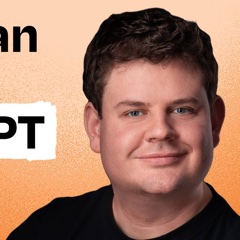
Nick Turley
Head of ChatGPT at OpenAI
Where to hear and read about Nick Turley1 episode or test

Nick Turley is Head of ChatGPT at OpenAI, which he joined when it was still mostly a research lab, and he has run the product through its growth to 700 million weekly users. The thing most worth learning from him is to ship early, treat the model as the product, and let real use show you what to polish.
you really have to ship to understand what is even possible and what people want, rather than being able to reason about that a priori
Inside ChatGPT: The fastest growing product in history | Nick Turley (OpenAI)
Nick Turley: the story and the lessons
1How Nick Turley helped ship ChatGPT in 10 days
Turley joined OpenAI when it was mostly a research lab. He arrived about three years before the interview, after product leadership roles at Dropbox and then Instacart. His first task was something like fixing the blinds.
His career rule: when someone offers you a rocket ship, don't ask which seat.
The developer product made it hard to iterate and hard to learn. Each model change broke developers' apps, and feedback reached OpenAI through the developer instead of from users. The team wanted a direct relationship with consumers to make faster progress toward AGI.
That platform now has about 4 million developers.
Narrow prototypes kept getting used for other things, so the team shipped an open product. Hackathon ideas like a meeting bot and a coding tool kept being used for other purposes, so a team of volunteers shipped something open-ended 10 days after deciding to. They expected to learn from it and then wind it down.
It launched right before the holidays as a short experiment. With AI you can't reason in advance about what is possible or wanted.
Retention surprised the team and pulled them into product development by accident. First the dashboard looked broken, then they assumed a viral spike would fade. People kept coming back and the team did not understand why.
Turley says free access and a good interface mattered more than the model. GPT-3.5 had been in the API for at least six months, and anyone could have built ChatGPT. Making it free and putting a nice UI on it was very consequential.
The name changed the night before launch from "Chat with GPT-3.5". It was a research demo and they expected it to fail.
2How Turley sets the pace for a fast-shipping team
Turley asks whether work is maximally accelerated. The question separates the critical path from what can wait and counters the habit of circling back next quarter. It became a team meme, a pink Comic Sans Slack emoji people drop on work.
He uses it sparingly because some areas need process. Ideas like a personal AI are everywhere, so execution is what sets teams apart.
He ran a daily release sync of everyone who had to decide. While the team was small, the sync decided what to do and what to change from the day before. It stopped scaling at some point.
He sees setting the pace as the product leader's job: "to just set the pace and the resting heartbeat for our teams".
Turley keeps heavy process only where stakes are high. Frontier model launches go through red teaming, a system card and external input before release. Acceleration is not applied to safety.
That separation lets product teams move quickly with confidence. If the exponential holds, teams must practice for when that rigor is essential.
He ships rough capabilities and polishes what real use reveals. Code Interpreter shipped before it was polished, and real use cases led to its reshaping into what is now data analysis in ChatGPT.
He calls it a tactical decision that became a playbook.
Turley stops and listens after every launch. AI products are empirical: unlike normal software, you often don't know what they can do before you ship. He watches what people try and what fails, for both utility and risks.
He also takes one fully unplugged day a week to think, and unplugs on Saturdays too, because three years of launches has been a sprint marathon.
3Turley on treating the model as the product
Turley says there is no distinction between the model and the product. The team studies what people try to do, such as writing, coding and getting advice, and systematically improves the model on those cases. A model behavior team owns personality and vibe.
Before ChatGPT, GPT-3 and GPT-4 were giant R&D projects with a fixed spec and a year's wait. He dreams of shipping daily or even hourly, limited by keeping personality intact and avoiding regressions.
He splits retention gains into thirds. Roughly one third comes from a better model and personality, one third from research-driven capabilities like search and memory, and one third from classic product work.
Search fixed the "as of my knowledge cut off" problem and was described as incredibly retentive.
Removing the login was a big, simple win. Letting people use ChatGPT without logging in removed a lot of friction. The team had the intuition from the start but GPU and other constraints blocked it.
Turley measures retention, not time spent. The team does not care how long people stay in the product, since the aim is to solve the problem and let people subscribe if they like it. They check whether people still use it over three-month periods and beyond.
Retention has improved over time even as users became more average.
He expects users to take time to learn to delegate to AI. Delegating to an AI is unnatural for most people, who have to work out their goals and what another intelligence could help with. That is part of why retention curves improve over time.
A general intelligence is still a poor intern on day one, so value comes from a relationship built over time.
Turley wants agents that keep users in the driver's seat. Agent mode lets you watch what the AI does and checks with you before key steps. Few people stare at it, but it works like the screen in a Waymo and gives a mental model.
The confirmations are a little annoying, but they keep users in control.
He doesn't see turn-by-turn chat as the endpoint. Chat was the simplest interface to ship at the time. Turley expects natural language to stay but hopes AIs will render their own UI, and finds it dystopian to run all software through a chatbot.
Tools like Figma and Google Docs work well as they are.
4How Turley priced ChatGPT and built the business side
The subscription was a way to turn away demand. The product kept going down under load, showing a "fail whale" with a generated poem. A paid plan filtered out less serious users, and it grew into a large business.
A press article praised the "four genius questions" behind it, though the process was far less deliberate.
Turley set the $20 price with a Google Form in Discord. With no time to bring in a pricing expert, he posted the standard Van Westendorp questions to the community. The responses led to the $20 per month price, which other AI companies later copied.
The method came from the top Google result and a blog post on it. In his words: "it was Discord plus Google Form plus a blog post on that methodology that got us there".
The $200 tier exists because Plus lost its original purpose. Plus was meant for uptime and capabilities that could not scale to everyone, but too many people joined. The $200 tier carries expensive models like o3 Pro and GPT-5 Pro for those who care most.
The 10X jump "kind of violates the standard way a SaaS page should look", but it fits the product.
He pushed for enterprise when companies began banning ChatGPT. Most early usage was work, and ChatGPT was organically in 90% of Fortune 500 companies, but firms felt the privacy and deployment story was missing. Business subscribers rose from 3 million to 5 million in a month or two.
He had seen a similar bottom-up spread at Dropbox. The team once had to choose between enterprise and an iOS app, and he argued for not missing a work product opportunity.
Turley runs consumer, developer and business products at once. The API platform, the consumer product and the B2B side are each a massive business, which forces constant trade-offs.
He calls taking on all three at once "objectively crazy".

Inside ChatGPT: The fastest growing product in history | Nick Turley (OpenAI)
Nick Turley explains how ChatGPT went from a 10-day hackathon-born ship to a product with 700 million weekly users, and the habits behind it: ship early, treat the model as the product, price pragmatically, and keep a very fast pace. The result worth hearing is retention that improves over time and billions in revenue, built from decisions made quickly and often by accident.
Turley joined OpenAI when it was mostly a research lab. He arrived about three years before the interview, after product leadership roles at Dropbox and then Instacart. His first task was something like fixing the blinds.
His career rule: when someone offers you a rocket ship, don't ask which seat.
The developer product made it hard to iterate and hard to learn. Each model change broke developers' apps, and feedback reached OpenAI through the developer instead of from users. The team wanted a direct relationship with consumers to make faster progress toward AGI.
That platform now has about 4 million developers.
Narrow prototypes kept getting used for other things, so the team shipped an open product. Hackathon ideas like a meeting bot and a coding tool kept being used for other purposes, so a team of volunteers shipped something open-ended 10 days after deciding to. They expected to learn from it and then wind it down.
It launched right before the holidays as a short experiment. With AI you can't reason in advance about what is possible or wanted.
Retention surprised the team and pulled them into product development by accident. First the dashboard looked broken, then they assumed a viral spike would fade. People kept coming back and the team did not understand why.
Turley says free access and a good interface mattered more than the model. GPT-3.5 had been in the API for at least six months, and anyone could have built ChatGPT. Making it free and putting a nice UI on it was very consequential.
The name changed the night before launch from "Chat with GPT-3.5". It was a research demo and they expected it to fail.
Turley asks whether work is maximally accelerated. The question separates the critical path from what can wait and counters the habit of circling back next quarter. It became a team meme, a pink Comic Sans Slack emoji people drop on work.
He uses it sparingly because some areas need process. Ideas like a personal AI are everywhere, so execution is what sets teams apart.
He ran a daily release sync of everyone who had to decide. While the team was small, the sync decided what to do and what to change from the day before. It stopped scaling at some point.
He sees setting the pace as the product leader's job: "to just set the pace and the resting heartbeat for our teams".
Turley keeps heavy process only where stakes are high. Frontier model launches go through red teaming, a system card and external input before release. Acceleration is not applied to safety.
That separation lets product teams move quickly with confidence. If the exponential holds, teams must practice for when that rigor is essential.
He ships rough capabilities and polishes what real use reveals. Code Interpreter shipped before it was polished, and real use cases led to its reshaping into what is now data analysis in ChatGPT.
He calls it a tactical decision that became a playbook.
Turley stops and listens after every launch. AI products are empirical: unlike normal software, you often don't know what they can do before you ship. He watches what people try and what fails, for both utility and risks.
He also takes one fully unplugged day a week to think, and unplugs on Saturdays too, because three years of launches has been a sprint marathon.
Turley says there is no distinction between the model and the product. The team studies what people try to do, such as writing, coding and getting advice, and systematically improves the model on those cases. A model behavior team owns personality and vibe.
Before ChatGPT, GPT-3 and GPT-4 were giant R&D projects with a fixed spec and a year's wait. He dreams of shipping daily or even hourly, limited by keeping personality intact and avoiding regressions.
He splits retention gains into thirds. Roughly one third comes from a better model and personality, one third from research-driven capabilities like search and memory, and one third from classic product work.
Search fixed the "as of my knowledge cut off" problem and was described as incredibly retentive.
Removing the login was a big, simple win. Letting people use ChatGPT without logging in removed a lot of friction. The team had the intuition from the start but GPU and other constraints blocked it.
Turley measures retention, not time spent. The team does not care how long people stay in the product, since the aim is to solve the problem and let people subscribe if they like it. They check whether people still use it over three-month periods and beyond.
Retention has improved over time even as users became more average.
He expects users to take time to learn to delegate to AI. Delegating to an AI is unnatural for most people, who have to work out their goals and what another intelligence could help with. That is part of why retention curves improve over time.
A general intelligence is still a poor intern on day one, so value comes from a relationship built over time.
Turley wants agents that keep users in the driver's seat. Agent mode lets you watch what the AI does and checks with you before key steps. Few people stare at it, but it works like the screen in a Waymo and gives a mental model.
The confirmations are a little annoying, but they keep users in control.
He doesn't see turn-by-turn chat as the endpoint. Chat was the simplest interface to ship at the time. Turley expects natural language to stay but hopes AIs will render their own UI, and finds it dystopian to run all software through a chatbot.
Tools like Figma and Google Docs work well as they are.
The subscription was a way to turn away demand. The product kept going down under load, showing a "fail whale" with a generated poem. A paid plan filtered out less serious users, and it grew into a large business.
A press article praised the "four genius questions" behind it, though the process was far less deliberate.
Turley set the $20 price with a Google Form in Discord. With no time to bring in a pricing expert, he posted the standard Van Westendorp questions to the community. The responses led to the $20 per month price, which other AI companies later copied.
The method came from the top Google result and a blog post on it. In his words: "it was Discord plus Google Form plus a blog post on that methodology that got us there".
The $200 tier exists because Plus lost its original purpose. Plus was meant for uptime and capabilities that could not scale to everyone, but too many people joined. The $200 tier carries expensive models like o3 Pro and GPT-5 Pro for those who care most.
The 10X jump "kind of violates the standard way a SaaS page should look", but it fits the product.
He pushed for enterprise when companies began banning ChatGPT. Most early usage was work, and ChatGPT was organically in 90% of Fortune 500 companies, but firms felt the privacy and deployment story was missing. Business subscribers rose from 3 million to 5 million in a month or two.
He had seen a similar bottom-up spread at Dropbox. The team once had to choose between enterprise and an iOS app, and he argued for not missing a work product opportunity.
Turley runs consumer, developer and business products at once. The API platform, the consumer product and the B2B side are each a massive business, which forces constant trade-offs.
He calls taking on all three at once "objectively crazy".
More from OpenAI
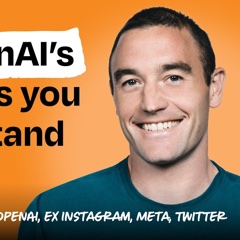 Guest
Kevin Weil
Chief Product Officer at OpenAI, former head of product at Instagram and Twitter
 OpenAI2 sources · 34 tips
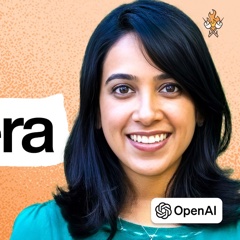 Guest
Tara Seshan
Product lead for ChatGPT Work and Codex at OpenAI; ex-Stripe, Watershed, Sutter Hill EIR
OpenAI2 sources · 33 tips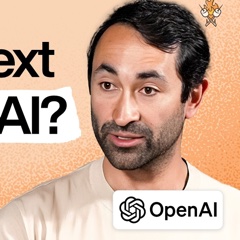 Guest
Alexander Embiricos
Product lead for Codex at OpenAI
OpenAI1 source · 18 tips Guest
Andrew Ambrosino
Product and engineering lead for the Codex desktop app at OpenAI
OpenAI1 source · 18 tips Guest
Ian Silber
Head of product design at OpenAI (ChatGPT, Codex); formerly Artifact and eight years at Instagram
OpenAI1 source · 16 tips Guest
Krithika Shankarraman
Executive in Residence at Thrive Capital; first marketing hire at OpenAI and Stripe, former marketing lead at Retool
OpenAI1 source · 19 tips