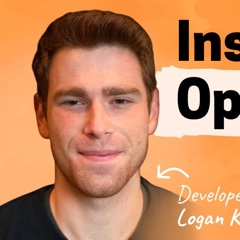
Logan Kilpatrick
Head of developer relations at OpenAI
Where to hear and read about Logan Kilpatrick1 episode or test

Logan Kilpatrick is head of developer relations at OpenAI, after time as a machine learning engineer at Apple and an adviser to NASA on open source. The one thing most worth learning from him is to give the model your full context and build narrow, vertical products on top of general models, with a team hired for high agency and urgency.
nobody cares if you have something great if they can't use it robust and reliably
Inside OpenAI | Logan Kilpatrick (head of developer relations)
Logan Kilpatrick: the story and the lessons
1Logan Kilpatrick's path to OpenAI and the board crisis
Kilpatrick came to OpenAI from Apple, NASA advising and open source work. He was a machine learning engineer at Apple, advised NASA on its open source policy, and sits on the board of NumFOCUS, the nonprofit behind Jupyter, Pandas and NumPy.
He now leads developer relations, helping developers build on OpenAI's APIs and ChatGPT. ChatGPT had launched just over a year before this conversation, and he has worked on the front line of that change.
He watched the Thanksgiving week board crisis hit a trusting company. The week was meant as a company-wide reset after pushing hard since ChatGPT launched. The news came on a Friday afternoon, and staff who deeply trust Sam, Greg and the leadership team were shocked.
OpenAI's culture is transparent, so people usually hear about problems, but this was the first time many heard of the board and leadership tensions. Kilpatrick lives outside San Francisco and found comfort that many colleagues were also home for the holiday.
The team was laser focused on the Monday after the crisis. Kilpatrick flew to San Francisco the next week expecting something strange and found people 'laser focused' on Monday morning. He says many companies could have been derailed for a long time by such an event.
He thinks it was better to go through this while stakes were lower, since someone else would still build the models if OpenAI failed. Shared events such as the ChatGPT launch, GPT-4, Dev Day and now this bond a fast-growing company.
2How Kilpatrick says OpenAI hires, plans and ships fast
Kilpatrick would hire for high agency and urgency first. If he hired five people today, these would be the first two traits he screened for. Such people hear a customer's problem and start on a solution without collecting consensus from 50 people.
He contrasts this with traditional companies that check with seven departments before acting. Young companies lack the layers of approval that older institutions like Apple and NASA built up over time. Quote: "you can take on the world if you have people who have high agency".
The Assistants API came from engineers who just built it. A group of engineers heard developers ask for higher-level abstractions and built the Assistants API with no top-down order. It now powers many assistant applications.
They first drew up a plan, then built fast. Kilpatrick defines urgency as acting on a problem quickly, not just shipping constantly, and says there are 1,001 other examples of teams doing this.
Principles, not OKRs, decide what OpenAI builds. Planning is standard, with half-year and quarter goals and no OKRs. Each decision is checked first against the mission, then against whether customers get a reliable experience.
Reliability has pushed new endpoints, modalities and abstractions down the list after times the team fell short on it. A tempting reward such as optimizing user engagement is tested against whether it gets OpenAI to AGI sooner.
He treats revenue and other metrics as proxies for something deeper. Adoption, revenue and developer counts are tracked. Revenue buys GPUs, GPUs train better models, and better models serve the mission.
Reading 'OpenAI just wants to make money' in a vacuum misses this chain. Quote: "Revenue is a proxy for getting more compute".
OpenAI runs on Slack for real-time coordination. People tag colleagues from other teams and offices, and everyone is always on Slack. Kilpatrick sees this as a real contributor to how fast the company ships.
Quote: "it's actually faster to send someone a Slack message sometimes than it would be to walk over to their desk".
OpenAI keeps research small and grows customer-facing and engineering roles. Headcount was about 750 to 780 at the end of the prior year, with hiring continuing in engineering and PM. Researchers share a fixed pool of GPUs, so a new one can slow everyone's experiments.
An extra engineer on the API or ChatGPT teams writes more code, which helps everybody. Quote: "each new researcher that you add is actually a net productivity loss for the research group".
Kilpatrick asks candidates what they believe that others disagree with. It is his favorite interview question. He wants to see why people feel that way, not to judge the belief.
He says it reveals a deeply held belief, and it is fun to ask.
3Kilpatrick on prompting and context
Generic answers mean the model has no context about you. Kilpatrick treats the model as a human-level mind that has never met you, so a basic question gets a basic answer. His phrase is 'crap in crap out'. The fix is to put your background, goals and sources in the prompt.
He calls the model the most eager person in the world to answer, so it never says it lacks information. His t-shirt slogan is 'Context is all you need'. Quote: "It has no idea what you're going to ask it. It's never met you before."
For lesser-known subjects, he pastes in links and sources. A prompt for 10 interview questions in the style of Tyler Cowen gave fine but unremarkable results. His advice is to link a blog and Twitter and let browsing read them first.
A famous subject like Tom Cruise would likely work with a bare prompt, because far more material is online.
He expects chat tools to expand lazy prompts for users. Typing 'Write me a blog post about AI' could trigger a richer draft brief that the user approves and edits. DALL-E already rewrites 'a picture of a turtle' into a detailed description, and text models will do the same.
People are lazy and don't want to type what they mean, so AI will close that gap. The user's job becomes editing the brief, not writing it from scratch.
Small prompt tricks help only a little. Adding a smiley face or telling the model to take a break can lift results by about 1 to 2%, because the training text is human conversation. The effect shows up in long outputs more than short answers.
Kilpatrick says much prompting advice is gut feeling and wants more empirical studies. OpenAI publishes a prompt engineering guide with examples.
He recommends embeddings to ground answers in your own content. Embed your documents, match each question to the closest passages, and feed those into the model's answer. The new third-generation embeddings are five times cheaper, at about 62,000 pages of text per dollar.
They also work far better beyond English. Quote: "trying to ground these models in reality".
4What Kilpatrick tells builders to build on OpenAI
Kilpatrick says build vertical products, not general assistants. OpenAI aims at general capability and will not launch an AI sales agent, though a general-purpose agent is coming through GPTs. Harvey builds custom models and tools for lawyers that he says OpenAI's general models will likely never match.
A ChatGPT rival would have to solve about 10 problems users have with ChatGPT before they switch. Domain specialists can add fine-tuning and custom UI on top of general models and skip the research.
He argues the winners go beyond the chat box. Asking 'What are people saying about GPT-4?' should return a data-grounded summary, not dashboards and filters to configure. Many basic chat features add little value.
The extra engineering effort separates 'kind of useful' from a product people keep using. Visual Electric, an infinite canvas for graphic designers, is his example. His wife, who had never used AI, got hooked and paid without telling him.
He sees narrow shared GPTs as the on-ramp for the next hundred million users. Newcomers face a blank slate in ChatGPT and can't see how it solves their problem. A shared GPT packages one specific problem AI does well, and after one win people look for five more.
Kilpatrick expects GPTs to bring in the next few hundred million people, and many people haven't even heard of ChatGPT. Quote: "I don't really know what I'm supposed to do with this blank slate."
Companies should build internal GPTs for recurring work. At Chime, Dennis Yang built one GPT to suggest Facebook and Google ads and another to report experiment results like a data scientist. Kilpatrick's private planning GPT turns a plan into a timeline, success metrics and cross-functional stakeholders.
He built it from an article's planning advice, and it pushes him to tie plans to individual metrics. Teams and Enterprise let companies share such GPTs and prompt templates internally, with controls like blocking certain store GPTs.
He points to engineering as the clearest early gain from AI. He guesses at least a 50% improvement on lower-hanging software tasks, though he has no metric of his own. He says he ships much faster with ChatGPT.
He suggests GitHub's Copilot studies as an analogy for what ChatGPT users get.
He tells builders to treat GPT-5 as a better tool, not a world change. After GPT-4 the world first said everything had changed, then settled into seeing it as a useful tool. He advises building toward a GPT-5 future, not around GPT-4's limits.
Planning for people to adapt fast is an edge, and expecting everything to change is the wrong mental frame. Quote: "You now just have a better tool to solve those problems."

Inside OpenAI | Logan Kilpatrick (head of developer relations)
Practical advice on prompting, building on GPTs and the API, and how OpenAI hires and plans to ship fast. The most useful ideas are to give the model context, build vertical products rather than general assistants, and hire for high agency and urgency.
Kilpatrick came to OpenAI from Apple, NASA advising and open source work. He was a machine learning engineer at Apple, advised NASA on its open source policy, and sits on the board of NumFOCUS, the nonprofit behind Jupyter, Pandas and NumPy.
He now leads developer relations, helping developers build on OpenAI's APIs and ChatGPT. ChatGPT had launched just over a year before this conversation, and he has worked on the front line of that change.
He watched the Thanksgiving week board crisis hit a trusting company. The week was meant as a company-wide reset after pushing hard since ChatGPT launched. The news came on a Friday afternoon, and staff who deeply trust Sam, Greg and the leadership team were shocked.
OpenAI's culture is transparent, so people usually hear about problems, but this was the first time many heard of the board and leadership tensions. Kilpatrick lives outside San Francisco and found comfort that many colleagues were also home for the holiday.
The team was laser focused on the Monday after the crisis. Kilpatrick flew to San Francisco the next week expecting something strange and found people 'laser focused' on Monday morning. He says many companies could have been derailed for a long time by such an event.
He thinks it was better to go through this while stakes were lower, since someone else would still build the models if OpenAI failed. Shared events such as the ChatGPT launch, GPT-4, Dev Day and now this bond a fast-growing company.
Kilpatrick would hire for high agency and urgency first. If he hired five people today, these would be the first two traits he screened for. Such people hear a customer's problem and start on a solution without collecting consensus from 50 people.
He contrasts this with traditional companies that check with seven departments before acting. Young companies lack the layers of approval that older institutions like Apple and NASA built up over time. Quote: "you can take on the world if you have people who have high agency".
The Assistants API came from engineers who just built it. A group of engineers heard developers ask for higher-level abstractions and built the Assistants API with no top-down order. It now powers many assistant applications.
They first drew up a plan, then built fast. Kilpatrick defines urgency as acting on a problem quickly, not just shipping constantly, and says there are 1,001 other examples of teams doing this.
Principles, not OKRs, decide what OpenAI builds. Planning is standard, with half-year and quarter goals and no OKRs. Each decision is checked first against the mission, then against whether customers get a reliable experience.
Reliability has pushed new endpoints, modalities and abstractions down the list after times the team fell short on it. A tempting reward such as optimizing user engagement is tested against whether it gets OpenAI to AGI sooner.
He treats revenue and other metrics as proxies for something deeper. Adoption, revenue and developer counts are tracked. Revenue buys GPUs, GPUs train better models, and better models serve the mission.
Reading 'OpenAI just wants to make money' in a vacuum misses this chain. Quote: "Revenue is a proxy for getting more compute".
OpenAI runs on Slack for real-time coordination. People tag colleagues from other teams and offices, and everyone is always on Slack. Kilpatrick sees this as a real contributor to how fast the company ships.
Quote: "it's actually faster to send someone a Slack message sometimes than it would be to walk over to their desk".
OpenAI keeps research small and grows customer-facing and engineering roles. Headcount was about 750 to 780 at the end of the prior year, with hiring continuing in engineering and PM. Researchers share a fixed pool of GPUs, so a new one can slow everyone's experiments.
An extra engineer on the API or ChatGPT teams writes more code, which helps everybody. Quote: "each new researcher that you add is actually a net productivity loss for the research group".
Kilpatrick asks candidates what they believe that others disagree with. It is his favorite interview question. He wants to see why people feel that way, not to judge the belief.
He says it reveals a deeply held belief, and it is fun to ask.
Generic answers mean the model has no context about you. Kilpatrick treats the model as a human-level mind that has never met you, so a basic question gets a basic answer. His phrase is 'crap in crap out'. The fix is to put your background, goals and sources in the prompt.
He calls the model the most eager person in the world to answer, so it never says it lacks information. His t-shirt slogan is 'Context is all you need'. Quote: "It has no idea what you're going to ask it. It's never met you before."
For lesser-known subjects, he pastes in links and sources. A prompt for 10 interview questions in the style of Tyler Cowen gave fine but unremarkable results. His advice is to link a blog and Twitter and let browsing read them first.
A famous subject like Tom Cruise would likely work with a bare prompt, because far more material is online.
He expects chat tools to expand lazy prompts for users. Typing 'Write me a blog post about AI' could trigger a richer draft brief that the user approves and edits. DALL-E already rewrites 'a picture of a turtle' into a detailed description, and text models will do the same.
People are lazy and don't want to type what they mean, so AI will close that gap. The user's job becomes editing the brief, not writing it from scratch.
Small prompt tricks help only a little. Adding a smiley face or telling the model to take a break can lift results by about 1 to 2%, because the training text is human conversation. The effect shows up in long outputs more than short answers.
Kilpatrick says much prompting advice is gut feeling and wants more empirical studies. OpenAI publishes a prompt engineering guide with examples.
He recommends embeddings to ground answers in your own content. Embed your documents, match each question to the closest passages, and feed those into the model's answer. The new third-generation embeddings are five times cheaper, at about 62,000 pages of text per dollar.
They also work far better beyond English. Quote: "trying to ground these models in reality".
Kilpatrick says build vertical products, not general assistants. OpenAI aims at general capability and will not launch an AI sales agent, though a general-purpose agent is coming through GPTs. Harvey builds custom models and tools for lawyers that he says OpenAI's general models will likely never match.
A ChatGPT rival would have to solve about 10 problems users have with ChatGPT before they switch. Domain specialists can add fine-tuning and custom UI on top of general models and skip the research.
He argues the winners go beyond the chat box. Asking 'What are people saying about GPT-4?' should return a data-grounded summary, not dashboards and filters to configure. Many basic chat features add little value.
The extra engineering effort separates 'kind of useful' from a product people keep using. Visual Electric, an infinite canvas for graphic designers, is his example. His wife, who had never used AI, got hooked and paid without telling him.
He sees narrow shared GPTs as the on-ramp for the next hundred million users. Newcomers face a blank slate in ChatGPT and can't see how it solves their problem. A shared GPT packages one specific problem AI does well, and after one win people look for five more.
Kilpatrick expects GPTs to bring in the next few hundred million people, and many people haven't even heard of ChatGPT. Quote: "I don't really know what I'm supposed to do with this blank slate."
Companies should build internal GPTs for recurring work. At Chime, Dennis Yang built one GPT to suggest Facebook and Google ads and another to report experiment results like a data scientist. Kilpatrick's private planning GPT turns a plan into a timeline, success metrics and cross-functional stakeholders.
He built it from an article's planning advice, and it pushes him to tie plans to individual metrics. Teams and Enterprise let companies share such GPTs and prompt templates internally, with controls like blocking certain store GPTs.
He points to engineering as the clearest early gain from AI. He guesses at least a 50% improvement on lower-hanging software tasks, though he has no metric of his own. He says he ships much faster with ChatGPT.
He suggests GitHub's Copilot studies as an analogy for what ChatGPT users get.
He tells builders to treat GPT-5 as a better tool, not a world change. After GPT-4 the world first said everything had changed, then settled into seeing it as a useful tool. He advises building toward a GPT-5 future, not around GPT-4's limits.
Planning for people to adapt fast is an edge, and expecting everything to change is the wrong mental frame. Quote: "You now just have a better tool to solve those problems."
More from OpenAI
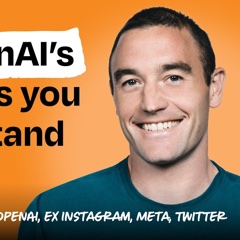 Guest
Kevin Weil
Chief Product Officer at OpenAI, former head of product at Instagram and Twitter
 OpenAI2 sources · 34 tips
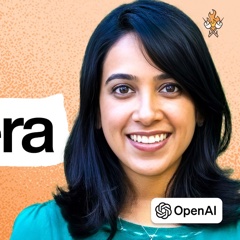 Guest
Tara Seshan
Product lead for ChatGPT Work and Codex at OpenAI; ex-Stripe, Watershed, Sutter Hill EIR
OpenAI2 sources · 33 tips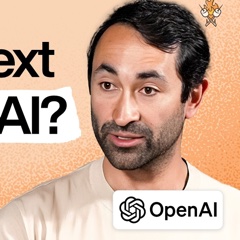 Guest
Alexander Embiricos
Product lead for Codex at OpenAI
OpenAI1 source · 18 tips Guest
Andrew Ambrosino
Product and engineering lead for the Codex desktop app at OpenAI
OpenAI1 source · 18 tips Guest
Ian Silber
Head of product design at OpenAI (ChatGPT, Codex); formerly Artifact and eight years at Instagram
OpenAI1 source · 16 tips Guest
Krithika Shankarraman
Executive in Residence at Thrive Capital; first marketing hire at OpenAI and Stripe, former marketing lead at Retool
OpenAI1 source · 19 tips