
Social Capital
A venture investment firm founded by Chamath Palihapitiya that publishes an annual investor letter.
Where Social Capital comes up1 episode or test
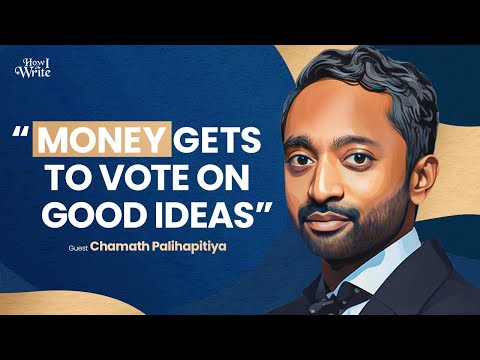
Social Capital's annual letter draws about a million page views, though most readers finish only 10 to 20%. One reader wrote in, and three years later the firm has a stage zero bladder cancer test and is developing one for prostate cancer. The lesson: write the long piece for your future self, make it scannable with a strong intro, results table and conclusion, and keep a public inbox open.
- 1Log bullets all yearEach mistake or win, one phone note
- 2Add structureAround February or March
- 3Team digs into researchTeam builds the data sections
- 4Chamath writes the restIntro, ending and connective tissue
From Chamath Palihapitiya on writing the Social Capital letter
What was said about Social Capital
1How Chamath writes the Social Capital annual letter
Keep one running note all year, then structure it in spring. Chamath logs bullets in a single phone note whenever a mistake or a win happens. Around February or March he gives it structure.
His team digs into the research parts, and he writes the intro, the ending and the connective tissue himself. He calls it "one giant note that's just a running list of the key few things that may have happened in the year."
Write the letter for your future self, not for the audience. The letter gets about a million page views, but Chamath says he is the only reader guaranteed to reread it. He writes it to record what he learned, tried and got wrong, and ignores what others want documented.
He treats the business as a contest against yesterday's version of himself. He puts returns at the top of the letter partly as a shield of facts, and admits his older, rawer Quora answers were better writing.
Most readers read 10 to 20%, so polish the intro, results and conclusion. Chamath assumes most readers see only the results table, maybe the intro, and the conclusion, then skim. He puts his own effort there and lets the team build the data sections.
A reader pays in time, so the piece has to end with a conclusion worth it, and he wants that ending to be overwhelmingly objective.
Structure each piece like a growth funnel: hook, summary, explanation, conclusion. The steps mirror Facebook's acquisition, activation, engagement and virality cycle, which Alex Schulz taught him. The hook cuts through noise and the summary says why it matters.
He keeps fact and opinion clearly separated so readers can discard the interpretation, citing Michael Mauboussin's two highlighters for objective and subjective text. He names Buffett's letters, which he keeps in an indexed binder and has reread 20 or 30 times, and Good to Great as models of this structure.
Write three to five long posts a week to stay sharp between letters. One letter a year leaves a writer rusty and short tweets don't build the muscle, so Chamath writes three to five long Twitter posts weekly.
Each time he checks that he stays objective, marks the subjective parts, is punchy, gives a TL;DR and concludes on fact. To loosen a stiff voice, he suggests speaking a first draft on a walk and writing from the transcript.
2What the writing brought to the firm
A letter reader's email led to a stage zero bladder cancer test. A reader of the annual letters wrote to Social Capital's public inbox. Three years later the firm has a stage zero bladder cancer test and is working on one for prostate cancer.
Chamath's view is that credible writing carries ideas to people with capital and talent, and that products like a cancer diagnostic die on the vine without communication that makes people want to join.
Writing earns a stranger's first look; the team closes the deal. A long Twitter post about a portfolio company led a senior chemist to ask for an introduction to its CEO.
Chamath credits the CEO with closing the hire and says about 1% of it was the writing, the part that made the chemist explore further.

Write Like a Billionaire | Chamath Palihapitiya | How I Write Podcast
Its annual letter draws about a million page views, though most readers get through only 10 to 20% of it. One reader wrote to the public inbox, and three years later the firm has a stage zero bladder cancer test and is working on one for prostate cancer.
Keep one running note all year, then structure it in spring. Chamath logs bullets in a single phone note whenever a mistake or a win happens. Around February or March he gives it structure.
His team digs into the research parts, and he writes the intro, the ending and the connective tissue himself. He calls it "one giant note that's just a running list of the key few things that may have happened in the year."
Write the letter for your future self, not for the audience. The letter gets about a million page views, but Chamath says he is the only reader guaranteed to reread it. He writes it to record what he learned, tried and got wrong, and ignores what others want documented.
He treats the business as a contest against yesterday's version of himself. He puts returns at the top of the letter partly as a shield of facts, and admits his older, rawer Quora answers were better writing.
Most readers read 10 to 20%, so polish the intro, results and conclusion. Chamath assumes most readers see only the results table, maybe the intro, and the conclusion, then skim. He puts his own effort there and lets the team build the data sections.
A reader pays in time, so the piece has to end with a conclusion worth it, and he wants that ending to be overwhelmingly objective.
Structure each piece like a growth funnel: hook, summary, explanation, conclusion. The steps mirror Facebook's acquisition, activation, engagement and virality cycle, which Alex Schulz taught him. The hook cuts through noise and the summary says why it matters.
He keeps fact and opinion clearly separated so readers can discard the interpretation, citing Michael Mauboussin's two highlighters for objective and subjective text. He names Buffett's letters, which he keeps in an indexed binder and has reread 20 or 30 times, and Good to Great as models of this structure.
Write three to five long posts a week to stay sharp between letters. One letter a year leaves a writer rusty and short tweets don't build the muscle, so Chamath writes three to five long Twitter posts weekly.
Each time he checks that he stays objective, marks the subjective parts, is punchy, gives a TL;DR and concludes on fact. To loosen a stiff voice, he suggests speaking a first draft on a walk and writing from the transcript.
A letter reader's email led to a stage zero bladder cancer test. A reader of the annual letters wrote to Social Capital's public inbox. Three years later the firm has a stage zero bladder cancer test and is working on one for prostate cancer.
Chamath's view is that credible writing carries ideas to people with capital and talent, and that products like a cancer diagnostic die on the vine without communication that makes people want to join.
Writing earns a stranger's first look; the team closes the deal. A long Twitter post about a portfolio company led a senior chemist to ask for an introduction to its CEO.
Chamath credits the CEO with closing the hire and says about 1% of it was the writing, the part that made the chemist explore further.
More in Investors & studios
 Investors & studios
Y Combinator
A startup accelerator that funds and advises early-stage companies.


 14 sources · 23 tips
 Investors & studios
Sequoia Capital
A venture capital firm that backs early-stage technology founders.
 9 sources · 19 tips
Blue Throne
An app acquirer that buys working consumer apps for seven and eight figures and scales them.

 4 sources · 6 tips
 Investors & studios
Andreessen Horowitz
A venture capital firm investing in technology startups.
6 sources · 4 tips Investors & studios
Bending Spoons
An Italian company that acquires digital businesses and runs them on one shared platform of proprietary tools.
 2 sources · 19 tips
Social
A bootstrapped app studio that buys apps after their viral peak and grows them with AI ads and testing.
1 source · 10 tips Investors & studios
Teledyne
A conglomerate founded in 1960 that bought niche businesses, ran an insurance investment arm, and repurchased its own stock.
 1 source · 17 tips
Volo Ventures
A venture firm investing in consumer apps and AI-powered consumer products.
1 source · 9 tips