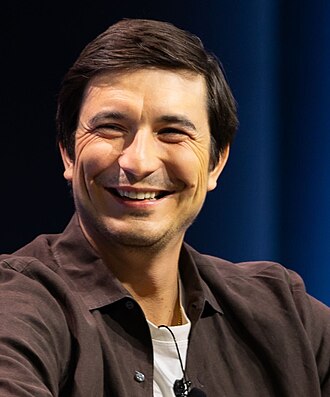
Vlad Tenev
Co-founder and CEO of Robinhood
Where to hear and read about Vlad Tenev1 episode or test

Vlad Tenev is the co-founder and CEO of Robinhood, a Bulgarian immigrant who left a math PhD under Terence Tao to start a trading software company and then Robinhood. The lesson most worth learning from him is how he survived the January 2021 cash crisis: years of earned trust with one investor and a rescue term sheet drafted ten months early let him raise capital in minutes.
Time kills all deals. So having Micky actually answer the phone and commit on the spot got things started for us.
Explosive Growth & Near-Death Survival | Vlad Tenev, Robinhood
Vlad Tenev: the story and the lessons
1Vlad Tenev's path from Bulgaria to a math PhD
Bulgarian hyperinflation taught Tenev early what fragile money does to a family. His family left Bulgaria in 1992. In 1997 Bulgarian inflation hit 1,700% in a year, the leva went from 2 to the dollar to 2,000, and his newly retired grandparents' savings vanished, so his parents had to support them.
His grandfather had stored wealth in copper cookware, and communism had taken land from both sides of the family. The family's big arguments were about money.
His parents treated him as an equal partner in the family's money worries. They told him their visa status was fragile and that he would need a scholarship for college. He was a latchkey child with no sports, because the family had one car and no spare money.
He feared ending up homeless. Entrepreneurship was not in his vocabulary: his parents spent 25 years at the World Bank seeking stability, and his mom hoped for JP Morgan, Goldman or McKinsey.
Long hours alone led Tenev to computers and then to stocks. His dad used the grad school computer lab as a babysitter, the family bought a computer when he was about seven, and once online he built a Yahoo Finance portfolio that did well in the dot-com boom.
He arrived in kindergarten with no English but was in advanced English and math by the end of first grade, which gave him confidence.
His father paid him his SAT score in dollars to invest. At 12 he beat his father's 1300 threshold with a 1370 and got $1,370, much of which went into 3Com, which then spun off Palm.
The shareholder packet in the mail made him feel he actually owned something, and tracking the spin-off taught him what a reorganization is. He also bought Nvidia early but sold at $25.
Tenev climbed the math ladder to Terence Tao, then asked where it led. He started a UCLA PhD under Tao, paid $18,000 a year, in the first month of the global financial crisis. Classmates did nothing but math, postdoc jobs were shrinking, and few people could follow a Tao paper.
He says the romantic idea of learning for its own sake collided with "one of the worst careers and jobs."
2How Tenev left math and arrived at Robinhood
Baiju Bhatt's call turned his drift into a plan to build faster trading. Bhatt, first quant at a prop trading firm in Marin County, saw trades hop through about 30 machines on Windows and Java. Their idea was one Linux machine running C, cutting about 30 milliseconds to 10.
Having passed his quals, Tenev spent a paid summer hacking with Bhatt and Andrew Jarmola in the South Mission. They made little progress but were having a lot of fun.
He made the leap low risk by securing a way back first. Tenev planned to stay in school if refused a leave. Vice chair Dima Shlyakhtenko asked "so you want to be a businessman, huh?" and promised him a spot if it failed.
He drove the servers from LA to New York in his 1998 Infiniti Q45. His mom cried at the Brooklyn sublet, and he told his parents he was not going back because it was too much fun.
The first company improvised its way into selling low latency software. Trading itself went nowhere, so they sold their software to other firms. About six months after he committed, it had revenue, and it reached about $2 million with a small profitable team and a path to $10 million.
He found entrepreneurship kept the best of math, "you, your mind and a chalkboard," without classes, administration or a boss, but it had to pay a living.
Tenev left a working business because it failed his 50-year test. Helping rich hedge funds trade slightly faster was not something he would be proud of looking back in 50 years, and both founders saw it as a means to an end.
Robinhood offered what drew him to math: something fundamentally new that could change the lives of hundreds of millions of people.
3How Robinhood survived the January 2021 cash crisis
Tenev read Robinhood's own numbers, not the pessimism of peers. In March 2020, as Airbnb and DoorDash planned layoffs, Robinhood's users, revenue and volumes were growing, with volume about three times the month before.
A day-long outage on March 2, 2020, which he took as failing at his core competency, came just before COVID turned into an accelerator.
He drafted a rescue term sheet ten months before he needed it. As a regulated broker's cash requirements rose with volume, Tenev warned Micky Malka he might need hundreds of millions fast and agreed a term sheet so money could be wired the same day.
It went unused in 2020 because Sequoia and D1 invested, but he says the exercise certainly helped when January 2021 hit.
Too much success, not failure, created the crisis. Revenue grew from about 200 million in 2019 to close to a billion in 2020 and 1.8 billion in 2021, and Robinhood became the number one app in the App Store, ahead of Instagram and TikTok.
Crypto, launched in January 2018 into a long winter, jumped about 10x in Q3 2020 and reached about 500 to 600 million in Q2 2021. He had to hold excitement and fear of collapse at once.
Tenev guarded against the last crisis and was blindsided by a new one. Focused on outages, "the devil I knew," he woke to a deposit requirement that jumped from under $100 million to about $3 billion, then 1.8 billion, then 700 million.
GameStop went position closing only because Robinhood lacked the cash. He was already in an anxious state from nonstop remote work and had concluded he is not a remote work person.
He split the fire into three work streams over Zoom. Customer communications, keeping systems up, and finding as much money as possible each got its own team. Systems held, which had been his biggest fear.
Tenev toured bank counterparties to stop a cascading failure. Securities lending banks could pull credit lines, so he did a road show assuring them the firm's financial condition remained strong.
He was later told the outcome was a miracle, since there were many ways to go insolvent.
4Tenev's lessons on investors, boards and raising in a crisis
The best investor relationships compound from a pass into deep trust. Micky Malka's Ribbit passed on the seed at a $10 million cap, then joined the Series A with Index as a board observer. In 2021 Malka put over half a billion dollars into Robinhood in about 30 to 45 minutes.
Tenev treats the original pass as an excuse, since Malka finds a way when he wants something.
He fought Malka over board rights, then brought him back. Malka predicted "you're going to want me on your board." After the IPO he was the only investor promoted to the public board, and Tenev asked him back six months after he rolled off.
Malka's blunt challenges meant Tenev never doubted whose interest he had at heart. A public company lets the CEO choose directors, unlike a private seat owned by a firm.
Call the investor who will commit on the spot first. Asked for 250 or 500 million, Malka said "I've got it" and called the SVB CEO, on a golf course in Hawaii, to draw down a credit line.
A hesitant first call would have led to a chain of maybes, ending with someone asking whether anyone else was in.
One anchor yes turned a rescue into an oversubscribed round. The next call went "Micky is in, so I'm in too," and demand reached about $10 billion at the first terms, so the warrants had to change.
Tenev bets the round would have closed either way but half-jokes the credit belongs to Malka.

Explosive Growth & Near-Death Survival | Vlad Tenev, Robinhood
Robinhood survived the GameStop surge of January 2021, when a deposit requirement jumped overnight, because Vlad Tenev had worked out a financing term sheet with Micky Malka ten months earlier and trusted him to answer the first call. The story also shows how an immigrant childhood, a math PhD abandoned for a startup, and a legacy test shaped what he chose to build.
Bulgarian hyperinflation taught Tenev early what fragile money does to a family. His family left Bulgaria in 1992. In 1997 Bulgarian inflation hit 1,700% in a year, the leva went from 2 to the dollar to 2,000, and his newly retired grandparents' savings vanished, so his parents had to support them.
His grandfather had stored wealth in copper cookware, and communism had taken land from both sides of the family. The family's big arguments were about money.
His parents treated him as an equal partner in the family's money worries. They told him their visa status was fragile and that he would need a scholarship for college. He was a latchkey child with no sports, because the family had one car and no spare money.
He feared ending up homeless. Entrepreneurship was not in his vocabulary: his parents spent 25 years at the World Bank seeking stability, and his mom hoped for JP Morgan, Goldman or McKinsey.
Long hours alone led Tenev to computers and then to stocks. His dad used the grad school computer lab as a babysitter, the family bought a computer when he was about seven, and once online he built a Yahoo Finance portfolio that did well in the dot-com boom.
He arrived in kindergarten with no English but was in advanced English and math by the end of first grade, which gave him confidence.
His father paid him his SAT score in dollars to invest. At 12 he beat his father's 1300 threshold with a 1370 and got $1,370, much of which went into 3Com, which then spun off Palm.
The shareholder packet in the mail made him feel he actually owned something, and tracking the spin-off taught him what a reorganization is. He also bought Nvidia early but sold at $25.
Tenev climbed the math ladder to Terence Tao, then asked where it led. He started a UCLA PhD under Tao, paid $18,000 a year, in the first month of the global financial crisis. Classmates did nothing but math, postdoc jobs were shrinking, and few people could follow a Tao paper.
He says the romantic idea of learning for its own sake collided with "one of the worst careers and jobs."
Baiju Bhatt's call turned his drift into a plan to build faster trading. Bhatt, first quant at a prop trading firm in Marin County, saw trades hop through about 30 machines on Windows and Java. Their idea was one Linux machine running C, cutting about 30 milliseconds to 10.
Having passed his quals, Tenev spent a paid summer hacking with Bhatt and Andrew Jarmola in the South Mission. They made little progress but were having a lot of fun.
He made the leap low risk by securing a way back first. Tenev planned to stay in school if refused a leave. Vice chair Dima Shlyakhtenko asked "so you want to be a businessman, huh?" and promised him a spot if it failed.
He drove the servers from LA to New York in his 1998 Infiniti Q45. His mom cried at the Brooklyn sublet, and he told his parents he was not going back because it was too much fun.
The first company improvised its way into selling low latency software. Trading itself went nowhere, so they sold their software to other firms. About six months after he committed, it had revenue, and it reached about $2 million with a small profitable team and a path to $10 million.
He found entrepreneurship kept the best of math, "you, your mind and a chalkboard," without classes, administration or a boss, but it had to pay a living.
Tenev left a working business because it failed his 50-year test. Helping rich hedge funds trade slightly faster was not something he would be proud of looking back in 50 years, and both founders saw it as a means to an end.
Robinhood offered what drew him to math: something fundamentally new that could change the lives of hundreds of millions of people.
Tenev read Robinhood's own numbers, not the pessimism of peers. In March 2020, as Airbnb and DoorDash planned layoffs, Robinhood's users, revenue and volumes were growing, with volume about three times the month before.
A day-long outage on March 2, 2020, which he took as failing at his core competency, came just before COVID turned into an accelerator.
He drafted a rescue term sheet ten months before he needed it. As a regulated broker's cash requirements rose with volume, Tenev warned Micky Malka he might need hundreds of millions fast and agreed a term sheet so money could be wired the same day.
It went unused in 2020 because Sequoia and D1 invested, but he says the exercise certainly helped when January 2021 hit.
Too much success, not failure, created the crisis. Revenue grew from about 200 million in 2019 to close to a billion in 2020 and 1.8 billion in 2021, and Robinhood became the number one app in the App Store, ahead of Instagram and TikTok.
Crypto, launched in January 2018 into a long winter, jumped about 10x in Q3 2020 and reached about 500 to 600 million in Q2 2021. He had to hold excitement and fear of collapse at once.
Tenev guarded against the last crisis and was blindsided by a new one. Focused on outages, "the devil I knew," he woke to a deposit requirement that jumped from under $100 million to about $3 billion, then 1.8 billion, then 700 million.
GameStop went position closing only because Robinhood lacked the cash. He was already in an anxious state from nonstop remote work and had concluded he is not a remote work person.
He split the fire into three work streams over Zoom. Customer communications, keeping systems up, and finding as much money as possible each got its own team. Systems held, which had been his biggest fear.
Tenev toured bank counterparties to stop a cascading failure. Securities lending banks could pull credit lines, so he did a road show assuring them the firm's financial condition remained strong.
He was later told the outcome was a miracle, since there were many ways to go insolvent.
The best investor relationships compound from a pass into deep trust. Micky Malka's Ribbit passed on the seed at a $10 million cap, then joined the Series A with Index as a board observer. In 2021 Malka put over half a billion dollars into Robinhood in about 30 to 45 minutes.
Tenev treats the original pass as an excuse, since Malka finds a way when he wants something.
He fought Malka over board rights, then brought him back. Malka predicted "you're going to want me on your board." After the IPO he was the only investor promoted to the public board, and Tenev asked him back six months after he rolled off.
Malka's blunt challenges meant Tenev never doubted whose interest he had at heart. A public company lets the CEO choose directors, unlike a private seat owned by a firm.
Call the investor who will commit on the spot first. Asked for 250 or 500 million, Malka said "I've got it" and called the SVB CEO, on a golf course in Hawaii, to draw down a credit line.
A hesitant first call would have led to a chain of maybes, ending with someone asking whether anyone else was in.
One anchor yes turned a rescue into an oversubscribed round. The next call went "Micky is in, so I'm in too," and demand reached about $10 billion at the first terms, so the warrants had to change.
Tenev bets the round would have closed either way but half-jokes the credit belongs to Malka.