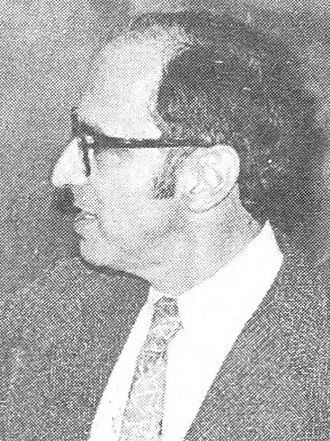
Thomas S. Kuhn
Author of The Structure of Scientific Revolutions
Where to hear and read about Thomas S. Kuhn1 book
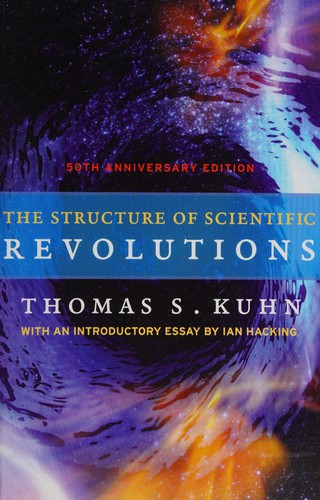
Thomas S. Kuhn wrote The Structure of Scientific Revolutions (1962), which shows how fields move from long stretches of shared, rule-bound work into crisis and then into replacement by an incompatible framework. The lesson most worth taking is to keep a working model through ordinary anomalies, retool only when settled problems keep failing and a rival is ready, and expect the rival to win by persuasion, not proof.
To reject one paradigm without simultaneously substituting another is to reject science itself.
The Structure of Scientific Revolutions: 50th Anniversary Edition
Thomas S. Kuhn: the story and the lessons
1Kuhn's picture of how science really moves
Kuhn saw science as long puzzle-solving broken by revolutions. In The Structure of Scientific Revolutions, fields spend long stretches working inside a shared paradigm. Occasionally a revolution swaps in an incompatible one.
Established ways of working fall not to a single decisive test but through accumulating anomalies, crisis, and a gradual shift of a community's allegiance to a rival approach.
He argued that discarded theories were as scientific as current ones. Close study of Aristotelian dynamics, phlogistic chemistry and caloric thermodynamics found them, taken as wholes, no less scientific and no more idiosyncratic than present views.
That forces historians to accept that science has held beliefs incompatible with ours, which breaks the picture of knowledge piling up brick by brick.
Kuhn described progress as solving more problems, not nearing a fixed truth. The unit of achievement is the solved problem, and the number and precision of solutions keep growing, though a field's breadth may shrink.
In some respects Einstein's general relativity is closer to Aristotle than either is to Newton. Darwin's hardest sell was removing the goal from evolution entirely.
He held that after a revolution scientists work in a different world. Scientists do not just reinterpret fixed observations. They come to see, measure and record different things.
In his words: 'though the world does not change with a change of paradigm, the scientist afterward works in a different world.'
2Why Kuhn says a field needs one shared model
Kuhn showed that fields without a shared model rebuild from scratch. Optics before the late seventeenth century had Epicurean, Aristotelian and Platonic schools, each with its own view of light. Early eighteenth-century electricity split three ways.
With no model every fact looks equally relevant, so people gather whatever is close at hand. Each writer addresses rival schools as much as nature.
A model wins by beating its rivals, not by explaining everything. Electricity had nearly as many theories as major experimenters until Franklin's account of the Leyden jar became the common paradigm. It still could not explain every case of repulsion.
The fluid camp's push to bottle electricity produced the Leyden jar in the early 1740's, a device random exploration would rarely find. Kuhn's line: 'Truth emerges more readily from error than from confusion.'
Once a model settles, the group professionalizes and speeds up. Foundations move into textbooks, and research shifts to short papers for colleagues, with journals, societies and a place in the curriculum.
Peers who share one set of standards judge the work, so members finish problems faster. The growing gap with outsiders comes from the mechanism of advance itself.
Kuhn read endless debate over being 'scientific' as missing consensus. Psychology and other social sciences argue at length about their status. Economists argue less, likely because they agree more about economics.
Agreement on achievements settles the worry. A definition does not.
3Kuhn on worked examples, rules and who owns a framework
Kuhn found a group's real common ground is solved problems, not rules. Standard examples recur in textbooks, lectures and lab exercises. Rules are hard to pin down, and any wording is a little too strong for some members.
New cases get handled by likeness to accepted ones, as with Wittgenstein's 'game' and its family resemblances. Scientists can agree Newton settled a set of problems and still disagree about what made the solutions work.
People learn a framework's terms by applying them to problems. Galileo saw a ball on an incline as like a pendulum. Huyghens treated a physical pendulum as freed point-pendula. Daniel Bernoulli treated water leaving an orifice like Huyghens' pendulum.
All three used one law, vis viva, which is nearly useless alone. Students often understand a chapter and still fail its problems until one looks like a problem already solved.
Kuhn read loud rule debates as a sign the model feels shaky. While solutions are accepted without question, work runs without rule talk. Deep method debates filled pre-paradigm optics, electricity and seventeenth-century chemistry.
They returned with Maxwell's theory and the shift to quantum mechanics. Quiet about first principles is not proof of agreement, since the question may just feel irrelevant.
He said a framework belongs to a group, so find the group first. Large groups show up in degrees and journals. Small ones show up in conferences, shared drafts, correspondence and citations. A revolution can happen inside fewer than 25 people without outsiders noticing.
Asked whether a helium atom is a molecule, a chemist said yes from kinetic gas theory and a physicist said no because it shows no molecular spectrum. Each answered from their own training problems.
Kuhn split a group's shared commitments into four parts. The disciplinary matrix holds symbolic generalizations, models, values and exemplars, and exemplars are the deepest part. They also mark the lines between subgroups.
He introduced the term after a reader indexed at least twenty-two uses of 'paradigm', of which two genuinely different senses remained.
4How Kuhn explains normal science as puzzle-solving
Kuhn showed most careers go to making a model's early promise good. Newton derived Kepler's Laws, some lunar deviations, and pendulum and tide data, with approximations. Euler, Lagrange, Laplace and Gauss did some of their best work closing the gaps.
A new paradigm is a ruling to extend, like a common-law decision sharpened under harder conditions. In his words, mopping-up operations engage most scientists throughout their careers.
He sorted normal work into key facts, contact points and articulation. Scientists measure revealing facts more precisely, build places where predictions meet nature, and articulate the model by measuring constants and finding laws.
Atwood's machine arrived almost a century after the Principia. Newton's gravitational constant went unmeasured for a century until Cavendish in the 1790's.
Kuhn said useful measurement needs a qualitative model first. Pan-balance measurements of electrical force produced no consistent pattern. Coulomb's purpose-built apparatus did, because it assumed every particle of electric fluid acts at a distance.
The field already expected his result, so it surprised no one. The pan-balance results stayed isolated facts.
A puzzle is defined by an assured solution, not by importance. Curing cancer or securing lasting peace may have no solution, so they are not puzzles. A jigsaw built from two random boxes probably cannot be solved either.
Kuhn: 'Though intrinsic value is no criterion for a puzzle, the assured existence of a solution is.'
He said to keep the rules and find a new route. Through the eighteenth century some proposed changing the inverse square law to explain the moon's motion. Scientists kept the rules, and in 1750 one found how to apply them.
Swapping the law would have set a new puzzle, not solved the old one.
Kuhn warned that restricting a model to known evidence ends discovery. Phlogiston theory, limited to the facts it already explained, could never have been challenged.
A model with no reach beyond its precedents yields no puzzles, surprises or crises. He asked whether it is any wonder that the price of significant advance is a commitment that runs the risk of being wrong.
5Kuhn on anomaly and how discovery really happens
Kuhn argued precise expectations are what make surprises visible. Roentgen saw a shielded screen glow during routine work and spent seven hectic weeks probing it. Another investigator had seen the glow and discovered nothing.
Anomaly appears only against the background provided by the paradigm, so the more precise the model, the better it detects anomaly.
He treated discovery as a process, not a moment. Oxygen had at least three claimants. Scheele prepared it first but published late, Priestley called it nitrous oxide in 1774 and air with less phlogiston in 1775, and Lavoisier by 1777 saw a distinct constituent of the atmosphere.
Knowing that something exists and knowing what it is are separate recognitions. A new fact is not fully a scientific fact until theory has been adjusted to hold it.
Kuhn showed standard instruments carry hidden expectations. Priestley and Lavoisier tested their gas with two volumes to one of nitric oxide and misidentified it. Priestley later used four times the nitric oxide and almost no residue remained.
X-rays shocked physicists because widely used cathode ray equipment must have been producing them unnoticed. Apparatus needed lead shielding and earlier work had to be redone.
A prior suspicion lets one person see what peers miss. In 1772, before any work on the gas, Lavoisier deposited a sealed note with the Secretary of the French Academy saying phlogiston theory was flawed.
That suspicion let him read in Priestley's experiments what Priestley could not. His 1777 papers announced the oxygen theory of combustion.
Kuhn explained resistance to novelty with the playing-card experiment. Bruner and Postman showed subjects cards like a red six of spades. Anomalous cards were first named as normal ones, then came hesitation and confusion, then often a sudden shift of categories.
Even at forty times the exposure needed for normal cards, more than 10 per cent of anomalous cards went unidentified for a minority of subjects. Resistance keeps people from chasing every blip.
6Kuhn's test for when to keep a model and when to retool
Kuhn said anomalies are normal, so log them and keep working. Newtonian predictions long disagreed with the measured speed of sound and with Mercury's motion, and nobody seriously questioned the theory.
The sound gap closed through heat experiments done for other reasons. Mercury's gap vanished with general relativity. He noted there is no such thing as research without counterinstances.
He listed when an anomaly deserves escalation. Escalate when it threatens core generalizations, blocks an important application, gains weight from new tools, or resists solution for a long time.
Usually several of these combine, and no general rule settles which anomalies matter.
Crisis shows as patches that add complexity faster than accuracy. Ptolemaic astronomers patched each mismatch with compounded circles, and each fix caused errors elsewhere. Copernicus called the inherited tradition a monster.
Failure on a new kind of problem only disappoints. Failure on a settled one shocks, and that shock is the signal.
Kuhn counted rival versions of the core model as a crisis symptom. By the early 1770s there were nearly as many versions of phlogiston theory as pneumatic chemists.
When no one can say exactly what the model is, the shared base has blurred.
He said never drop a model without a replacement ready. Rejecting a model with nothing in its place means leaving the field, because there is no work without one. Rejection is always a comparison of two models against nature and each other.
No historical case looks like falsification by direct comparison with nature alone.
Alternatives get ignored until a recognized failure makes them matter. Rey, Hooke and Mayow proposed combustion-by-air theories in the seventeenth century and were ignored. Aristarchus anticipated heliocentrism in the third century B.C. to the same result.
Copernicus' system was neither simpler nor more accurate than Ptolemy's. The recognized crisis, not its merits, drew astronomers to it.
New models usually come from the very young or from newcomers. Copernicus saw counterinstances where Ptolemy's successors saw puzzles. Lavoisier saw one where Priestley saw a solved puzzle.
In crisis, scientists isolate the anomaly, push old rules to their limit, run experiments just to see, and float cheap, disposable hypotheses.
7What Kuhn says a new framework changes
Kuhn said a successor model does not contain its predecessor. Newton is an approximation of relativity, not a special case of it. Newtonian mass is conserved, while Einsteinian mass converts with energy, so the same word names different things.
Deriving the old laws still has a use: it explains why Newton seemed to work and justifies a driver or surveyor acting as if the old laws hold.
The model decides what gets measured, so numbers shift with it. An Aristotelian watching a swinging stone would track weight, height raised, time to rest and medium resistance. Galileo saw a pendulum and measured weight, radius, angular displacement and time per swing.
Galileo's vision was not more accurate. He claimed the period holds for amplitudes as great as 90 degrees, more regularity than anyone finds today.
Familiar categories absorb new things without anyone noticing. On at least seventeen occasions between 1690 and 1781 astronomers recorded a star where Uranus must have been. After 1781, standard instruments identified twenty asteroids in the first fifty years of the nineteenth century.
Late sixteenth-century astronomers using tools as simple as a piece of thread kept finding comets moving through space once reserved for planets and stars.
Re-expressing old data in the new form exposes hidden patterns. Chemists stopped writing that two carbon oxides held 56 per cent and 72 per cent oxygen. They wrote that one weight of carbon combines with 1.3 or 2.6 weights of oxygen, and a 2:1 ratio stood out.
It took almost another generation to bring nature into line with Dalton. Afterward even the percentage composition of well-known compounds had changed.
Rival camps argue in circles because each sets its own standards. Proust said all reactions occur in fixed proportions and Berthollet said they do not. Where Berthollet saw a variable compound, Proust saw a mixture.
Dalton made fixed proportions true by definition. Standards can also reverse: quantum mechanics brought back explanations of color that Lavoisier's chemistry had set aside.
Hostility rises when a method redefines terms people treat as settled. The Joule-Lenz Law used settled meanings and was accepted. Ohm's Law required redefining current and resistance and met strong opposition.
Kuhn's advice is to name the redefinition openly instead of letting it surface as unexplained resistance.
8How Kuhn says new approaches win adoption
Kuhn held an approach is only ever tested against a real rival. Every theory has misfits, so if any misfit forced rejection every theory would always be rejected. 'Does it fit the facts?' has no precise answer, while 'which of these two fits better?' does.
Neither Priestley's nor Lavoisier's theory matched observations exactly, yet few contemporaries needed more than a decade to judge Lavoisier's the better fit.
Early adopters back future promise on faith, and slow conversion is normal. Copernicanism won few converts for almost a century after Copernicus died. Priestley never accepted the oxygen theory, and Lord Kelvin never accepted electromagnetic theory.
Seemingly decisive proofs such as the Foucault pendulum and the Fizeau experiment came long after acceptance. They serve later textbooks, not the original debate.
The strongest arguments come later, from better numbers on the old failure. Kepler's Rudolphine tables beat any tables computed from Ptolemy's theory and converted many astronomers. Planck's radiation law and the Bohr atom persuaded through quantitative success.
About sixty years after Copernicus died, the telescope showed mountains on the moon and the phases of Venus, and won converts, especially among non-astronomers.
Predictions nobody expected persuade best. Poisson, an opponent, showed Fresnel's wave theory implied a white spot at the center of a disk's shadow. When Fresnel demonstrated it, French resistance collapsed suddenly and fairly completely.
Even long-known anomalies explained unexpectedly carry this surprise value.
Kuhn saw individually weighed values as a way to spread risk. Accuracy, simplicity, consistency and plausibility are shared but weighed differently by each person. A few bet on the new idea while most keep doing productive work.
Einstein found an inconsistency in the old quantum theory intolerable, while Bohr and others saw a difficulty ordinary work would clear up.
In a deadlock, Kuhn advised translating between camps instead of proving. Treat the other side as a different language community, find the terms that cause trouble only between groups, and ask what the other person would see and say.
Never explain their view as error or madness. Many who met relativity or quantum mechanics in midcareer accepted them but used them like foreigners.
9Why Kuhn says revolutions stay invisible
Kuhn showed textbooks are rebuilt after each revolution and erase it. They teach the current result, not how it was won. Laying out experiments, laws and theories one at a time suggests science grew toward today's goals one fact at a time.
For teams, polished docs, onboarding decks and retrospectives work the same way. The original record is the only place where the changed questions still show.
Heroes keep their names while their actual work gets revised. Newton credited Galileo with finding that a constant force produces motion proportional to the square of the time. Galileo's framework could not even ask that question.
The credit hides the reformulation of questions that drove the move from Aristotelian to Galilean to Newtonian dynamics, which mattered more than new empirical findings.
Even scientists rewrite their own stories, as Dalton did. Dalton gave three incompatible accounts of how his atomism began, all implying an early interest in combining proportions. Those problems seem to have occurred to him only near the end of his creative work.
All three leave out his real move, importing questions and concepts from physics and meteorology into chemistry. Kuhn's advice is to keep honest notes of the questions as they were.
Concepts keep their wording while their meaning shifts. Chemistry texts credit Boyle's Sceptical Chymist with the concept of element, but Boyle said his definition only paraphrased a traditional one. He used it to argue that no chemical element exists.
Einstein likewise gave 'space' and 'time' new meaning by changing their context, without redefining them.
Winners describe each shift as pure progress, so losses go unseen. Lavoisier's chemistry stopped asking why metals are so alike, a question phlogistic chemistry had answered. Questions about the qualities of substances returned in the twentieth century.
Science has no equivalent of an art museum, so discarded work simply disappears. Kuhn suggests listing what each major change abandoned, not only what it gained.
The Structure of Scientific Revolutions: 50th Anniversary Edition
Established ways of working are replaced not by single decisive tests but through long stretches of focused normal work, accumulating anomalies, crisis, and a gradual shift of a community's allegiance to a rival approach. The account gives practical signals for when to keep trusting a model, when to retool, and how new ideas actually win adoption.
Kuhn saw science as long puzzle-solving broken by revolutions. In The Structure of Scientific Revolutions, fields spend long stretches working inside a shared paradigm. Occasionally a revolution swaps in an incompatible one.
Established ways of working fall not to a single decisive test but through accumulating anomalies, crisis, and a gradual shift of a community's allegiance to a rival approach.
He argued that discarded theories were as scientific as current ones. Close study of Aristotelian dynamics, phlogistic chemistry and caloric thermodynamics found them, taken as wholes, no less scientific and no more idiosyncratic than present views.
That forces historians to accept that science has held beliefs incompatible with ours, which breaks the picture of knowledge piling up brick by brick.
Kuhn described progress as solving more problems, not nearing a fixed truth. The unit of achievement is the solved problem, and the number and precision of solutions keep growing, though a field's breadth may shrink.
In some respects Einstein's general relativity is closer to Aristotle than either is to Newton. Darwin's hardest sell was removing the goal from evolution entirely.
He held that after a revolution scientists work in a different world. Scientists do not just reinterpret fixed observations. They come to see, measure and record different things.
In his words: 'though the world does not change with a change of paradigm, the scientist afterward works in a different world.'
Kuhn showed that fields without a shared model rebuild from scratch. Optics before the late seventeenth century had Epicurean, Aristotelian and Platonic schools, each with its own view of light. Early eighteenth-century electricity split three ways.
With no model every fact looks equally relevant, so people gather whatever is close at hand. Each writer addresses rival schools as much as nature.
A model wins by beating its rivals, not by explaining everything. Electricity had nearly as many theories as major experimenters until Franklin's account of the Leyden jar became the common paradigm. It still could not explain every case of repulsion.
The fluid camp's push to bottle electricity produced the Leyden jar in the early 1740's, a device random exploration would rarely find. Kuhn's line: 'Truth emerges more readily from error than from confusion.'
Once a model settles, the group professionalizes and speeds up. Foundations move into textbooks, and research shifts to short papers for colleagues, with journals, societies and a place in the curriculum.
Peers who share one set of standards judge the work, so members finish problems faster. The growing gap with outsiders comes from the mechanism of advance itself.
Kuhn read endless debate over being 'scientific' as missing consensus. Psychology and other social sciences argue at length about their status. Economists argue less, likely because they agree more about economics.
Agreement on achievements settles the worry. A definition does not.
Kuhn found a group's real common ground is solved problems, not rules. Standard examples recur in textbooks, lectures and lab exercises. Rules are hard to pin down, and any wording is a little too strong for some members.
New cases get handled by likeness to accepted ones, as with Wittgenstein's 'game' and its family resemblances. Scientists can agree Newton settled a set of problems and still disagree about what made the solutions work.
People learn a framework's terms by applying them to problems. Galileo saw a ball on an incline as like a pendulum. Huyghens treated a physical pendulum as freed point-pendula. Daniel Bernoulli treated water leaving an orifice like Huyghens' pendulum.
All three used one law, vis viva, which is nearly useless alone. Students often understand a chapter and still fail its problems until one looks like a problem already solved.
Kuhn read loud rule debates as a sign the model feels shaky. While solutions are accepted without question, work runs without rule talk. Deep method debates filled pre-paradigm optics, electricity and seventeenth-century chemistry.
They returned with Maxwell's theory and the shift to quantum mechanics. Quiet about first principles is not proof of agreement, since the question may just feel irrelevant.
He said a framework belongs to a group, so find the group first. Large groups show up in degrees and journals. Small ones show up in conferences, shared drafts, correspondence and citations. A revolution can happen inside fewer than 25 people without outsiders noticing.
Asked whether a helium atom is a molecule, a chemist said yes from kinetic gas theory and a physicist said no because it shows no molecular spectrum. Each answered from their own training problems.
Kuhn split a group's shared commitments into four parts. The disciplinary matrix holds symbolic generalizations, models, values and exemplars, and exemplars are the deepest part. They also mark the lines between subgroups.
He introduced the term after a reader indexed at least twenty-two uses of 'paradigm', of which two genuinely different senses remained.
Kuhn showed most careers go to making a model's early promise good. Newton derived Kepler's Laws, some lunar deviations, and pendulum and tide data, with approximations. Euler, Lagrange, Laplace and Gauss did some of their best work closing the gaps.
A new paradigm is a ruling to extend, like a common-law decision sharpened under harder conditions. In his words, mopping-up operations engage most scientists throughout their careers.
He sorted normal work into key facts, contact points and articulation. Scientists measure revealing facts more precisely, build places where predictions meet nature, and articulate the model by measuring constants and finding laws.
Atwood's machine arrived almost a century after the Principia. Newton's gravitational constant went unmeasured for a century until Cavendish in the 1790's.
Kuhn said useful measurement needs a qualitative model first. Pan-balance measurements of electrical force produced no consistent pattern. Coulomb's purpose-built apparatus did, because it assumed every particle of electric fluid acts at a distance.
The field already expected his result, so it surprised no one. The pan-balance results stayed isolated facts.
A puzzle is defined by an assured solution, not by importance. Curing cancer or securing lasting peace may have no solution, so they are not puzzles. A jigsaw built from two random boxes probably cannot be solved either.
Kuhn: 'Though intrinsic value is no criterion for a puzzle, the assured existence of a solution is.'
He said to keep the rules and find a new route. Through the eighteenth century some proposed changing the inverse square law to explain the moon's motion. Scientists kept the rules, and in 1750 one found how to apply them.
Swapping the law would have set a new puzzle, not solved the old one.
Kuhn warned that restricting a model to known evidence ends discovery. Phlogiston theory, limited to the facts it already explained, could never have been challenged.
A model with no reach beyond its precedents yields no puzzles, surprises or crises. He asked whether it is any wonder that the price of significant advance is a commitment that runs the risk of being wrong.
Kuhn argued precise expectations are what make surprises visible. Roentgen saw a shielded screen glow during routine work and spent seven hectic weeks probing it. Another investigator had seen the glow and discovered nothing.
Anomaly appears only against the background provided by the paradigm, so the more precise the model, the better it detects anomaly.
He treated discovery as a process, not a moment. Oxygen had at least three claimants. Scheele prepared it first but published late, Priestley called it nitrous oxide in 1774 and air with less phlogiston in 1775, and Lavoisier by 1777 saw a distinct constituent of the atmosphere.
Knowing that something exists and knowing what it is are separate recognitions. A new fact is not fully a scientific fact until theory has been adjusted to hold it.
Kuhn showed standard instruments carry hidden expectations. Priestley and Lavoisier tested their gas with two volumes to one of nitric oxide and misidentified it. Priestley later used four times the nitric oxide and almost no residue remained.
X-rays shocked physicists because widely used cathode ray equipment must have been producing them unnoticed. Apparatus needed lead shielding and earlier work had to be redone.
A prior suspicion lets one person see what peers miss. In 1772, before any work on the gas, Lavoisier deposited a sealed note with the Secretary of the French Academy saying phlogiston theory was flawed.
That suspicion let him read in Priestley's experiments what Priestley could not. His 1777 papers announced the oxygen theory of combustion.
Kuhn explained resistance to novelty with the playing-card experiment. Bruner and Postman showed subjects cards like a red six of spades. Anomalous cards were first named as normal ones, then came hesitation and confusion, then often a sudden shift of categories.
Even at forty times the exposure needed for normal cards, more than 10 per cent of anomalous cards went unidentified for a minority of subjects. Resistance keeps people from chasing every blip.
Kuhn said anomalies are normal, so log them and keep working. Newtonian predictions long disagreed with the measured speed of sound and with Mercury's motion, and nobody seriously questioned the theory.
The sound gap closed through heat experiments done for other reasons. Mercury's gap vanished with general relativity. He noted there is no such thing as research without counterinstances.
He listed when an anomaly deserves escalation. Escalate when it threatens core generalizations, blocks an important application, gains weight from new tools, or resists solution for a long time.
Usually several of these combine, and no general rule settles which anomalies matter.
Crisis shows as patches that add complexity faster than accuracy. Ptolemaic astronomers patched each mismatch with compounded circles, and each fix caused errors elsewhere. Copernicus called the inherited tradition a monster.
Failure on a new kind of problem only disappoints. Failure on a settled one shocks, and that shock is the signal.
Kuhn counted rival versions of the core model as a crisis symptom. By the early 1770s there were nearly as many versions of phlogiston theory as pneumatic chemists.
When no one can say exactly what the model is, the shared base has blurred.
He said never drop a model without a replacement ready. Rejecting a model with nothing in its place means leaving the field, because there is no work without one. Rejection is always a comparison of two models against nature and each other.
No historical case looks like falsification by direct comparison with nature alone.
Alternatives get ignored until a recognized failure makes them matter. Rey, Hooke and Mayow proposed combustion-by-air theories in the seventeenth century and were ignored. Aristarchus anticipated heliocentrism in the third century B.C. to the same result.
Copernicus' system was neither simpler nor more accurate than Ptolemy's. The recognized crisis, not its merits, drew astronomers to it.
New models usually come from the very young or from newcomers. Copernicus saw counterinstances where Ptolemy's successors saw puzzles. Lavoisier saw one where Priestley saw a solved puzzle.
In crisis, scientists isolate the anomaly, push old rules to their limit, run experiments just to see, and float cheap, disposable hypotheses.
Kuhn said a successor model does not contain its predecessor. Newton is an approximation of relativity, not a special case of it. Newtonian mass is conserved, while Einsteinian mass converts with energy, so the same word names different things.
Deriving the old laws still has a use: it explains why Newton seemed to work and justifies a driver or surveyor acting as if the old laws hold.
The model decides what gets measured, so numbers shift with it. An Aristotelian watching a swinging stone would track weight, height raised, time to rest and medium resistance. Galileo saw a pendulum and measured weight, radius, angular displacement and time per swing.
Galileo's vision was not more accurate. He claimed the period holds for amplitudes as great as 90 degrees, more regularity than anyone finds today.
Familiar categories absorb new things without anyone noticing. On at least seventeen occasions between 1690 and 1781 astronomers recorded a star where Uranus must have been. After 1781, standard instruments identified twenty asteroids in the first fifty years of the nineteenth century.
Late sixteenth-century astronomers using tools as simple as a piece of thread kept finding comets moving through space once reserved for planets and stars.
Re-expressing old data in the new form exposes hidden patterns. Chemists stopped writing that two carbon oxides held 56 per cent and 72 per cent oxygen. They wrote that one weight of carbon combines with 1.3 or 2.6 weights of oxygen, and a 2:1 ratio stood out.
It took almost another generation to bring nature into line with Dalton. Afterward even the percentage composition of well-known compounds had changed.
Rival camps argue in circles because each sets its own standards. Proust said all reactions occur in fixed proportions and Berthollet said they do not. Where Berthollet saw a variable compound, Proust saw a mixture.
Dalton made fixed proportions true by definition. Standards can also reverse: quantum mechanics brought back explanations of color that Lavoisier's chemistry had set aside.
Hostility rises when a method redefines terms people treat as settled. The Joule-Lenz Law used settled meanings and was accepted. Ohm's Law required redefining current and resistance and met strong opposition.
Kuhn's advice is to name the redefinition openly instead of letting it surface as unexplained resistance.
Kuhn held an approach is only ever tested against a real rival. Every theory has misfits, so if any misfit forced rejection every theory would always be rejected. 'Does it fit the facts?' has no precise answer, while 'which of these two fits better?' does.
Neither Priestley's nor Lavoisier's theory matched observations exactly, yet few contemporaries needed more than a decade to judge Lavoisier's the better fit.
Early adopters back future promise on faith, and slow conversion is normal. Copernicanism won few converts for almost a century after Copernicus died. Priestley never accepted the oxygen theory, and Lord Kelvin never accepted electromagnetic theory.
Seemingly decisive proofs such as the Foucault pendulum and the Fizeau experiment came long after acceptance. They serve later textbooks, not the original debate.
The strongest arguments come later, from better numbers on the old failure. Kepler's Rudolphine tables beat any tables computed from Ptolemy's theory and converted many astronomers. Planck's radiation law and the Bohr atom persuaded through quantitative success.
About sixty years after Copernicus died, the telescope showed mountains on the moon and the phases of Venus, and won converts, especially among non-astronomers.
Predictions nobody expected persuade best. Poisson, an opponent, showed Fresnel's wave theory implied a white spot at the center of a disk's shadow. When Fresnel demonstrated it, French resistance collapsed suddenly and fairly completely.
Even long-known anomalies explained unexpectedly carry this surprise value.
Kuhn saw individually weighed values as a way to spread risk. Accuracy, simplicity, consistency and plausibility are shared but weighed differently by each person. A few bet on the new idea while most keep doing productive work.
Einstein found an inconsistency in the old quantum theory intolerable, while Bohr and others saw a difficulty ordinary work would clear up.
In a deadlock, Kuhn advised translating between camps instead of proving. Treat the other side as a different language community, find the terms that cause trouble only between groups, and ask what the other person would see and say.
Never explain their view as error or madness. Many who met relativity or quantum mechanics in midcareer accepted them but used them like foreigners.
Kuhn showed textbooks are rebuilt after each revolution and erase it. They teach the current result, not how it was won. Laying out experiments, laws and theories one at a time suggests science grew toward today's goals one fact at a time.
For teams, polished docs, onboarding decks and retrospectives work the same way. The original record is the only place where the changed questions still show.
Heroes keep their names while their actual work gets revised. Newton credited Galileo with finding that a constant force produces motion proportional to the square of the time. Galileo's framework could not even ask that question.
The credit hides the reformulation of questions that drove the move from Aristotelian to Galilean to Newtonian dynamics, which mattered more than new empirical findings.
Even scientists rewrite their own stories, as Dalton did. Dalton gave three incompatible accounts of how his atomism began, all implying an early interest in combining proportions. Those problems seem to have occurred to him only near the end of his creative work.
All three leave out his real move, importing questions and concepts from physics and meteorology into chemistry. Kuhn's advice is to keep honest notes of the questions as they were.
Concepts keep their wording while their meaning shifts. Chemistry texts credit Boyle's Sceptical Chymist with the concept of element, but Boyle said his definition only paraphrased a traditional one. He used it to argue that no chemical element exists.
Einstein likewise gave 'space' and 'time' new meaning by changing their context, without redefining them.
Winners describe each shift as pure progress, so losses go unseen. Lavoisier's chemistry stopped asking why metals are so alike, a question phlogistic chemistry had answered. Questions about the qualities of substances returned in the twentieth century.
Science has no equivalent of an art museum, so discarded work simply disappears. Kuhn suggests listing what each major change abandoned, not only what it gained.