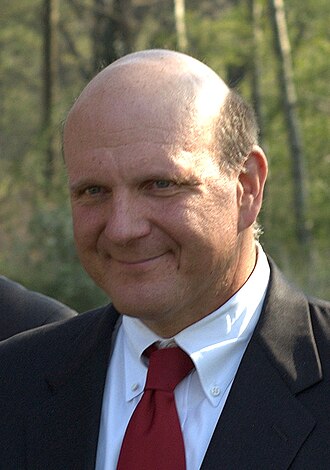
Steve Ballmer
CEO and leaders of Microsoft from the browser wars through the Ballmer years (1995 to 2014)
Where to hear and read about Steve Ballmer1 episode or test

Steve Ballmer ran Microsoft from 2000 to 2014, taking over in the middle of the antitrust case and leaving with revenue and operating income roughly tripled while the stock went nowhere and the company lost consumer markets. The thing most worth learning from him is that he protected and funded the cloud business that attacked his own server division, and that a strong business still needs a story told over and over before investors will believe in it.
money is not the scarce resource the scarce resource is time and talent and focus
Microsoft Volume II: The Complete History and Strategy of the Ballmer Years
Steve Ballmer: the story and the lessons
1How Steve Ballmer took over Microsoft in the middle of an antitrust case
Ballmer became CEO just as a breakup order looked likely. He became president in July 1998, and Bill Gates announced the CEO handover on January 13, 2000. Judge Jackson ordered Microsoft split into an operating system company and an applications company on June 7, 2000.
Under the order, Gates and Ballmer would each have had to pick one company and sell all their shares in the other. Gates stayed chairman and became chief software architect, so he remained a strong voice.
Ballmer inherited what was later called a garbage sandwich. He started amid the dot-com bubble, the antitrust verdict and a possible breakup, with Microsoft at a 75x P/E near its all-time high of 80x. Market cap fell from $600 billion to $270 billion in about a year.
Employees went from being seen as the best and brightest in America to being called evil, and people inside described the period as a mental breakdown for the whole company.
Ballmer was the company's emotional rock and kept talent from leaving. His agenda, in order, was to hold the company together, clean up antitrust and keep growing. His stage dancing and "developers" chant came in September 2000, when a breakup still looked likely.
Everyone interviewed about the era said he kept people coming to work.
Ballmer let Brad Smith settle cases instead of fighting them. Smith's board pitch for general counsel was a single slide reading "it's time to make peace." He settled cases whether or not they felt fair, and Microsoft became the one big tech company not under federal antitrust investigation.
The case had shown what fighting every point cost: Microsoft even denied Netscape was a threat when a Gates memo said it was, and it spent 21 years, 1990 to 2011, under antitrust scrutiny or litigation.
2The enterprise machine Ballmer ran
Enterprise agreements turned software into a sticky annual annuity. Customers paid per employee or device for a three-year bundle of Windows, Office and server products. By 2007, 55% of Microsoft's $51 billion in revenue came from these agreements.
The three-year term matched the release cycle, so every customer got one upgrade. Customers using 30% of the bundle still grew stickier as they adopted the free extras.
Microsoft sold through OEMs and enterprises, not the retail box. Boxed Windows earned a 29% gross margin against 75% through PC makers. By 2007 OEM and enterprise channels were 85% of revenue.
Each OEM scaled on its own, like a network of networks, while retail needed discs, shipping and a retailer's cut.
An interlocking stack meant customers never had to pick best of breed. SQL Server, Exchange, Active Directory, Windows and Office worked best together. SQL Server in 1998 ran on cheap x86 boxes and undercut IBM mainframes and Oracle.
Whoever holds the directory of people and devices anchors everything else, so once a customer adopted Active Directory the rest tended to follow.
Serving IT buyers made the products stagnate. IT wanted lockdown, security and no retraining, while users wanted new features. An Office executive said they could stop adding features for 10 years and nobody would notice.
Sales teams pushed back on big interface changes like the ribbon, and backward compatibility became the brand, which later turned into a weakness.
3How Steve Ballmer backed Azure against his own server business
Ballmer split Gates's technical role because he knew he was no technologist. Craig Mundie and Ray Ozzie divided the job, and Ozzie was named chief software architect in June 2006. Ballmer and Gates told him to figure out the vision and how Microsoft fits.
Ozzie's October 2005 memo argued broadband and wireless meant businesses would rent capacity and buy software as a service on subscription.
Azure began as a secret project outside every existing division. Ozzie started Red Dog in 2006 with Ballmer's air cover, because a cloud service attacked Server and Tools' partners, incentives and business model. He recruited Dave Cutler and Amitabh Srivastava, who wrote a hypervisor from scratch.
Windows staff were paid on licenses sold, and resellers like Accenture and server makers like Dell earned money from the on-premises model, so a rival cloud upset everyone in the existing machine.
In 2010 Ballmer declared Microsoft all in on the cloud. He gave a University of Washington speech aimed at his own staff and replaced Bob Muglia with Satya Nadella over Server and Tools, a $12 billion business growing 30 to 40% a year.
Ballmer wanted a leader without the baggage of the old model's success. Ozzie left the same year.
Seven years of Azure happened under Ballmer, and it became the core of Microsoft. Intelligent Cloud earned $88 billion in fiscal 2023 and is the largest, most profitable and fastest growing segment.
Nadella gets credit for execution, while Ballmer and Ozzie get the vision and the first seven years. Bing, Xbox Live, MSN and Hotmail had already taught Microsoft to run services at scale.
4Where Ballmer's Microsoft lost the consumer
Ballmer called Vista his worst moment because it ate the best engineers. Longhorn's three pillars, Avalon, Indigo and WinFS, never compiled into one build, and the team reset from a Windows Server base. Three quarters of corporate PCs still ran XP in 2009.
Windows ignored the ship-date discipline Office used. Brian Valentine left Exchange to fix Vista, then left Microsoft for Amazon.
Windows 7 fixed Windows by aiming for a Camry, not a Viper. Steven Sinofsky moved from Office to Windows and brought its culture, where 6,000 people ship on a date set three years earlier.
Customers got Vista without the regressions: stable, a normal start button and fast search.
Ballmer misjudged the iPhone on price. His line was that it was "never going to work at $500," but carrier subsidies brought flagship phones to about $100.
The old phone industry optimized pennies on cheap hardware while Apple optimized the user experience. Ballmer was also acting as the company's salesperson.
A royalty-based phone could not beat a free one. Google gave Android away and earned from search, while Windows Phone needed a royalty from each handset maker. Even five dollars a handset was an enormous gap against zero.
Matching it meant becoming an advertising company, which Microsoft would not do. Google also told handset makers not to let Microsoft do to them what it did to PC makers.
Ballmer pushed into hardware because mobile profits would sit elsewhere. PC profits went to software vendors, but Android meant mobile hardware might keep them, which led to Surface and the Nokia attempt.
Windows 8 tried to answer the iPad, but the order that "Windows is Windows" forced one interface across all devices and produced a confusing hybrid with no app ecosystem.
Office for iPad was shelved to protect Surface and Windows 8. A finished app was held in 2013 so Microsoft's tablets could claim to be the only ones running real Office. Nadella shipped it right after becoming CEO.
The delay probably cost little and was a defensible incumbent call, but it showed the company stayed Windows-centric too long.
5Ballmer's big cash bets: Yahoo, Facebook, Xbox and Nokia
Ballmer treated failed deals as only money, unlike lost talent. He judged capital plentiful and time, talent and focus scarce, so he was willing to write large checks.
Xbox lost $1.4 billion on $4 billion of revenue in 2006 and earned $700 million on $8 billion in 2010, but Xbox Live's 40 million subscribers taught the team skills that fed Azure.
The $47 billion Yahoo bid was cheaper than it looked. Yahoo Japan and a 40% Alibaba stake were worth over $30 billion, leaving about $15 billion for 15% of search. Search ads monetized three to five times better than software.
At a Boeing Field meeting, Ballmer and Gates judged Yahoo's leaders did not want to join and expected organ rejection. A later deal still let Bing power Yahoo search while Yahoo took 88% of revenue for five years.
A small Facebook stake bought ad rights more than returns. In October 2007 Microsoft paid $240 million for 1.6%, with exclusive international banner ad rights until 2011, after an offer reported at $24 billion went nowhere.
The stake would have been a 7x by the 2012 IPO and 14x by 2014.
Ballmer pushed the Nokia deal over his own executives' objections. Microsoft paid about $7 billion, roughly 2.3% of a $300 billion market cap, when Nokia threatened to go Android. Most division heads and Nadella opposed it in a straw poll, and the board sided with them.
Ballmer announced his retirement on August 23, 2013, and the deal followed on September 3, so it is unclear who really bought Nokia. His view: "it was only money."
6Why the stock stood still while Ballmer tripled the business
Revenue and profit roughly tripled while the multiple collapsed. Revenue rose from $23 billion to $84 billion and operating income from $12 billion to $30 billion. The P/E fell from 75x to 14x and the stock sat near $30 for ten years.
Nadella became CEO on February 4, 2014 with the stock at $30.50. Peers like Yahoo, AOL, HP and Nortel fell apart in the same years.
Microsoft never told investors the story of what it was building. Investors took the product failures as proof of decline and gave no credit to Windows, Office or the enterprise engine. Nadella fixed it by repeating "mobile first, cloud first" constantly.
Amazon shows a consistent story can turn failures into a virtue: its phone and Kindle Fire read as bold bets, while Microsoft's misses read as "they can't get anything right." Quote: "the right amount of repeating yourself to do is about 10 times more than you think it is."
A flat stock and stack ranking turned colleagues into rivals. With no value growing, people won only by beating peers, and forced one-to-five rankings against immediate colleagues amplified it.
The result was the famous cartoon of Microsoft divisions pointing guns at each other.
7Lessons from the Ballmer years
Gates and Ballmer worked better together than either alone. Gates adapted to new data and Ballmer aligned the carrier fleet of enterprise customers and partners. Alone, Gates chased ideas like WinFS.
Gates was the best engineer, lawyer and deal maker, but not an enterprise relationship builder like Ballmer.
The more partners depend on you, the harder a reset becomes. Much of Microsoft's profit flowed through resellers and software vendors, so it could not reset the way Apple did under Jobs.
Microsoft also had the right ideas, like touch and mobile, but 5 to 20 years early and on the wrong standards.
Ballmer's era bought Microsoft a free option on cloud and AI. Even without the antitrust case, Microsoft would likely have missed mobile against Google's free model, but it avoided becoming a large, irrelevant IBM.
Microsoft later became the most valuable company, at a $3.5 trillion market cap on the day the history was recorded.

Microsoft Volume II: The Complete History and Strategy of the Ballmer Years
Microsoft's supposed lost years were really the years it built an Enterprise and cloud engine that later made it the most valuable company in the world again, even as it failed in consumer markets. The decision to back Azure outside the existing server business, despite heavy internal pressure, is what makes the story worth hearing.
Ballmer became CEO just as a breakup order looked likely. He became president in July 1998, and Bill Gates announced the CEO handover on January 13, 2000. Judge Jackson ordered Microsoft split into an operating system company and an applications company on June 7, 2000.
Under the order, Gates and Ballmer would each have had to pick one company and sell all their shares in the other. Gates stayed chairman and became chief software architect, so he remained a strong voice.
Ballmer inherited what was later called a garbage sandwich. He started amid the dot-com bubble, the antitrust verdict and a possible breakup, with Microsoft at a 75x P/E near its all-time high of 80x. Market cap fell from $600 billion to $270 billion in about a year.
Employees went from being seen as the best and brightest in America to being called evil, and people inside described the period as a mental breakdown for the whole company.
Ballmer was the company's emotional rock and kept talent from leaving. His agenda, in order, was to hold the company together, clean up antitrust and keep growing. His stage dancing and "developers" chant came in September 2000, when a breakup still looked likely.
Everyone interviewed about the era said he kept people coming to work.
Ballmer let Brad Smith settle cases instead of fighting them. Smith's board pitch for general counsel was a single slide reading "it's time to make peace." He settled cases whether or not they felt fair, and Microsoft became the one big tech company not under federal antitrust investigation.
The case had shown what fighting every point cost: Microsoft even denied Netscape was a threat when a Gates memo said it was, and it spent 21 years, 1990 to 2011, under antitrust scrutiny or litigation.
Enterprise agreements turned software into a sticky annual annuity. Customers paid per employee or device for a three-year bundle of Windows, Office and server products. By 2007, 55% of Microsoft's $51 billion in revenue came from these agreements.
The three-year term matched the release cycle, so every customer got one upgrade. Customers using 30% of the bundle still grew stickier as they adopted the free extras.
Microsoft sold through OEMs and enterprises, not the retail box. Boxed Windows earned a 29% gross margin against 75% through PC makers. By 2007 OEM and enterprise channels were 85% of revenue.
Each OEM scaled on its own, like a network of networks, while retail needed discs, shipping and a retailer's cut.
An interlocking stack meant customers never had to pick best of breed. SQL Server, Exchange, Active Directory, Windows and Office worked best together. SQL Server in 1998 ran on cheap x86 boxes and undercut IBM mainframes and Oracle.
Whoever holds the directory of people and devices anchors everything else, so once a customer adopted Active Directory the rest tended to follow.
Serving IT buyers made the products stagnate. IT wanted lockdown, security and no retraining, while users wanted new features. An Office executive said they could stop adding features for 10 years and nobody would notice.
Sales teams pushed back on big interface changes like the ribbon, and backward compatibility became the brand, which later turned into a weakness.
Ballmer split Gates's technical role because he knew he was no technologist. Craig Mundie and Ray Ozzie divided the job, and Ozzie was named chief software architect in June 2006. Ballmer and Gates told him to figure out the vision and how Microsoft fits.
Ozzie's October 2005 memo argued broadband and wireless meant businesses would rent capacity and buy software as a service on subscription.
Azure began as a secret project outside every existing division. Ozzie started Red Dog in 2006 with Ballmer's air cover, because a cloud service attacked Server and Tools' partners, incentives and business model. He recruited Dave Cutler and Amitabh Srivastava, who wrote a hypervisor from scratch.
Windows staff were paid on licenses sold, and resellers like Accenture and server makers like Dell earned money from the on-premises model, so a rival cloud upset everyone in the existing machine.
In 2010 Ballmer declared Microsoft all in on the cloud. He gave a University of Washington speech aimed at his own staff and replaced Bob Muglia with Satya Nadella over Server and Tools, a $12 billion business growing 30 to 40% a year.
Ballmer wanted a leader without the baggage of the old model's success. Ozzie left the same year.
Seven years of Azure happened under Ballmer, and it became the core of Microsoft. Intelligent Cloud earned $88 billion in fiscal 2023 and is the largest, most profitable and fastest growing segment.
Nadella gets credit for execution, while Ballmer and Ozzie get the vision and the first seven years. Bing, Xbox Live, MSN and Hotmail had already taught Microsoft to run services at scale.
Ballmer called Vista his worst moment because it ate the best engineers. Longhorn's three pillars, Avalon, Indigo and WinFS, never compiled into one build, and the team reset from a Windows Server base. Three quarters of corporate PCs still ran XP in 2009.
Windows ignored the ship-date discipline Office used. Brian Valentine left Exchange to fix Vista, then left Microsoft for Amazon.
Windows 7 fixed Windows by aiming for a Camry, not a Viper. Steven Sinofsky moved from Office to Windows and brought its culture, where 6,000 people ship on a date set three years earlier.
Customers got Vista without the regressions: stable, a normal start button and fast search.
Ballmer misjudged the iPhone on price. His line was that it was "never going to work at $500," but carrier subsidies brought flagship phones to about $100.
The old phone industry optimized pennies on cheap hardware while Apple optimized the user experience. Ballmer was also acting as the company's salesperson.
A royalty-based phone could not beat a free one. Google gave Android away and earned from search, while Windows Phone needed a royalty from each handset maker. Even five dollars a handset was an enormous gap against zero.
Matching it meant becoming an advertising company, which Microsoft would not do. Google also told handset makers not to let Microsoft do to them what it did to PC makers.
Ballmer pushed into hardware because mobile profits would sit elsewhere. PC profits went to software vendors, but Android meant mobile hardware might keep them, which led to Surface and the Nokia attempt.
Windows 8 tried to answer the iPad, but the order that "Windows is Windows" forced one interface across all devices and produced a confusing hybrid with no app ecosystem.
Office for iPad was shelved to protect Surface and Windows 8. A finished app was held in 2013 so Microsoft's tablets could claim to be the only ones running real Office. Nadella shipped it right after becoming CEO.
The delay probably cost little and was a defensible incumbent call, but it showed the company stayed Windows-centric too long.
Ballmer treated failed deals as only money, unlike lost talent. He judged capital plentiful and time, talent and focus scarce, so he was willing to write large checks.
Xbox lost $1.4 billion on $4 billion of revenue in 2006 and earned $700 million on $8 billion in 2010, but Xbox Live's 40 million subscribers taught the team skills that fed Azure.
The $47 billion Yahoo bid was cheaper than it looked. Yahoo Japan and a 40% Alibaba stake were worth over $30 billion, leaving about $15 billion for 15% of search. Search ads monetized three to five times better than software.
At a Boeing Field meeting, Ballmer and Gates judged Yahoo's leaders did not want to join and expected organ rejection. A later deal still let Bing power Yahoo search while Yahoo took 88% of revenue for five years.
A small Facebook stake bought ad rights more than returns. In October 2007 Microsoft paid $240 million for 1.6%, with exclusive international banner ad rights until 2011, after an offer reported at $24 billion went nowhere.
The stake would have been a 7x by the 2012 IPO and 14x by 2014.
Ballmer pushed the Nokia deal over his own executives' objections. Microsoft paid about $7 billion, roughly 2.3% of a $300 billion market cap, when Nokia threatened to go Android. Most division heads and Nadella opposed it in a straw poll, and the board sided with them.
Ballmer announced his retirement on August 23, 2013, and the deal followed on September 3, so it is unclear who really bought Nokia. His view: "it was only money."
Revenue and profit roughly tripled while the multiple collapsed. Revenue rose from $23 billion to $84 billion and operating income from $12 billion to $30 billion. The P/E fell from 75x to 14x and the stock sat near $30 for ten years.
Nadella became CEO on February 4, 2014 with the stock at $30.50. Peers like Yahoo, AOL, HP and Nortel fell apart in the same years.
Microsoft never told investors the story of what it was building. Investors took the product failures as proof of decline and gave no credit to Windows, Office or the enterprise engine. Nadella fixed it by repeating "mobile first, cloud first" constantly.
Amazon shows a consistent story can turn failures into a virtue: its phone and Kindle Fire read as bold bets, while Microsoft's misses read as "they can't get anything right." Quote: "the right amount of repeating yourself to do is about 10 times more than you think it is."
A flat stock and stack ranking turned colleagues into rivals. With no value growing, people won only by beating peers, and forced one-to-five rankings against immediate colleagues amplified it.
The result was the famous cartoon of Microsoft divisions pointing guns at each other.
Gates and Ballmer worked better together than either alone. Gates adapted to new data and Ballmer aligned the carrier fleet of enterprise customers and partners. Alone, Gates chased ideas like WinFS.
Gates was the best engineer, lawyer and deal maker, but not an enterprise relationship builder like Ballmer.
The more partners depend on you, the harder a reset becomes. Much of Microsoft's profit flowed through resellers and software vendors, so it could not reset the way Apple did under Jobs.
Microsoft also had the right ideas, like touch and mobile, but 5 to 20 years early and on the wrong standards.
Ballmer's era bought Microsoft a free option on cloud and AI. Even without the antitrust case, Microsoft would likely have missed mobile against Google's free model, but it avoided becoming a large, irrelevant IBM.
Microsoft later became the most valuable company, at a $3.5 trillion market cap on the day the history was recorded.
More from Microsoft
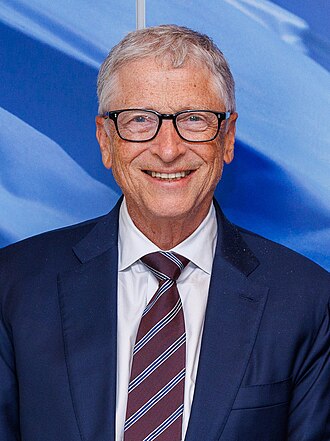 Founder story
Bill Gates
Co-founder of Microsoft
 Microsoft
 2 sources · 37 tips
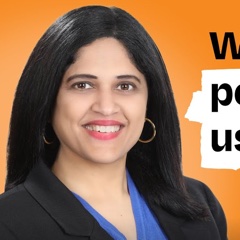 Guest
Aparna Chennapragada
Chief Product Officer of Experiences and Devices at Microsoft; formerly CPO at Robinhood and VP at Google
Microsoft 1 source · 17 tips
 Guest
Asha Sharma
Chief Vice President of Product, Microsoft AI platform; former COO at Instacart and VP Product at Meta
Microsoft1 source · 16 tips