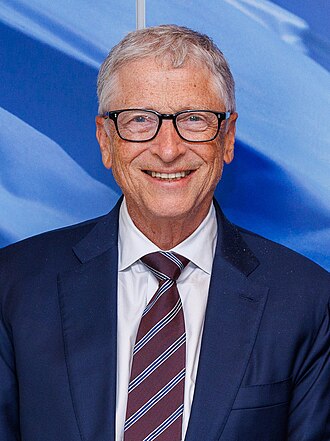
Bill Gates
Co-founder of Microsoft
Where to hear and read about Bill Gates2 episodes and tests

 FoundersHow Bill Gates Works

 AcquiredMicrosoft Volume I: The Complete History and Strategy of founding through Windows 95
Bill Gates co-founded Microsoft with Paul Allen in 1975 and built it into the first software company to sell over $1 billion in a year by owning the software standard every PC maker had to license. The thing most worth learning is how he fitted the company to his own strengths, a fanatical focus on pure software, and then fought for the contract terms that kept control of it: best efforts, owning DOS outright, and a non-exclusive IBM deal.
Software was different. No wires, no factories. Writing software was just brain power and time.
How Bill Gates Works
Bill Gates: the story and the lessons
1How Bill Gates grew up fanatical
Gates grew up inside Seattle's business elite. His father, Bill Gates Sr., was a leading attorney who co-founded the firm now called K&L Gates. His mother, Mary Maxwell Gates, sat on the boards of First Interstate Bank, Pacific Northwest Bell and United Way.
CEOs, senators and governors came to dinner when he was 9 or 10, and at 13 he wondered which company he would run one day.
He turned everything into a contest from childhood. He and his sisters bought two copies of a puzzle to race each other, and he became the top math student in Washington State.
He was hyperkinetic, contrarian and either totally apathetic or completely obsessed. A family therapist told his parents to give up, because "He's going to win."
Reading was his first obsession, including the lives of great men. He read the World Book Encyclopedia from A to Z and biographies of Roosevelt, MacArthur, Napoleon and Henry Ford, then spent hours on the phone with a friend dissecting how each succeeded.
He felt the gap between adults and himself had collapsed by age nine.
At 13 he found computing and worked at it without limits. In 1968 the Lakeside mothers' club paid for a teletype that reached a DEC PDP-10 over a phone line. About four months of focused work turned interest into real skill.
He sneaked out his bedroom window to work all night, once went nearly 100 hours without leaving the computer, and dove into the CCubed dumpster with Paul Allen for discarded code printouts.
He took a harsh critique of his code and got better. When an older programmer tore apart the whole structure of his work, Gates thought "This guy is so right" instead of defending himself.
With Lakeside critics he usually snapped back, "No way. You're wrong."
As a teenager he learned the royalty model with his father. The Lakeside Programmers Group found bugs for the Computer Center Corporation in exchange for computer time. On a payroll program, Gates and his father negotiated royalties instead of an hourly fee, which paid at least $10,000.
Spacewar author Steve Russell mentored them there while they learned Fortran, Lisp and PDP machine language.
Harvard showed him his limits and introduced Steve Ballmer. He got a B in Math 55, switched to applied math, and watched Ballmer outscore him on the Putnam exam, so he committed to computers.
He said he went to Harvard to learn from people smarter than himself and left disappointed.
2How Gates and Paul Allen started Microsoft
Gates chose software because it fit his strengths. Hardware meant buying parts, hiring assemblers and finding space. Software needed only brain power and time, which he and Allen had.
He wanted a field where he could be the best, and stayed where he had the advantage.
He concluded computing would soon be nearly free. When Allen pointed out that chips improved exponentially, Gates first doubted it, then decided "we can think of computing as free" and pictured a computer on every desk and in every home.
People laughed at the idea at the time; one recalled thinking maybe one in ten in a finance group would ever have one.
He bet on paid software when everyone copied it for free. In the mid 1970s software was shared or stolen, yet Gates and Allen believed demand for quality software would be nearly unlimited. They set up Microsoft on April 4, 1975 to sell only software.
The goal was a software factory with many products, to get "our software on every personal computer in the world," starting with one customer in Albuquerque.
Allen pushed him to start before the wave passed. Allen read him Shakespeare on taking the tide at the flood, and Gates agreed the PC would happen with or without them. He left Harvard after the January 1975 Popular Electronics cover on the Altair.
The author of Hard Drive doubts Gates would have left Harvard without Allen. Gates later said they may have started a year or two too early.
They won the Altair deal by having working BASIC first. MITS's Ed Roberts said the first working version would get the deal. Allen's emulator let Gates write BASIC for a chip they did not own, and Allen hand-coded the bootloader on the flight.
The first load failed, the second printed 4 for "print 2+2". Gates admits "We were all faking our way along."
Gates held 64% and kept the company on software. The split began at 60/40 on the argument that Gates was all in while Allen kept a job, then moved to 64/36.
Allen was often tempted by hardware, and Gates said no.
He learned that new markets outgrow every forecast. MITS forecast about 800 Altair customers a year and sold thousands in the first few months, with hobbyists camping in RVs outside.
3How Gates broke free of MITS and made BASIC the standard
Microsoft's first contract gave MITS most of the control. Microsoft got $30 a copy capped at $180,000 lifetime, plus half of any sublicensing, while MITS held the exclusive license. Revenue was $16,000 in 1975 and $22,000 in 1976 even as MITS sold about a thousand Altairs a month.
His 1975 plan said it was vital to be independent of any one customer.
Piracy taught him to charge hardware makers, not users. Customers copied BASIC, so Gates decided the maker should pay a royalty as part of each machine, which became the OEM model.
His open letter to hobbyists called copying piracy, though it was not clearly illegal until Congress acted in 1980.
He held out for best efforts, and that clause saved Microsoft. MITS's lawyers offered "reasonable efforts" and Gates refused to sign without "best efforts". When Pertec bought MITS and blocked licensing, the arbitrator ended the exclusive license in November 1977.
Five or six clients paid within weeks. During the arbitration cash ran short, the only time that happened in Microsoft's history.
He priced BASIC low so no maker had reason to choose a rival. Apple paid $31,000 for eight years of BASIC, and Microsoft licensed Commodore, Radio Shack and others for cash up front. With about five employees, low prices were affordable.
Revenue was zero for 11 months of 1977, yet the year closed at $381,000.
MITS showed him what a feared boss costs a company. Staff were scared to tell Roberts the truth, and MITS ran on half-baked strategies. Gates was the exception who yelled in his face.
His role model was DEC founder Ken Olsen, who learned the business as he went.
A Japanese partner made Microsoft international in year three. In 1978 Kazuhiko Nishi became exclusive distributor in Japan, and by 1979 about half of revenue came from Japan.
Being global early forced products to be built for localization, which later let Windows 95 launch in eight languages at once.
He moved to Seattle to hire and to keep people. Recruiting was impossible in Albuquerque. He chose Seattle over Silicon Valley, which he said leaks secrets and where people hop jobs.
Every employee except his secretary made the move, and the University of Washington kept feeding talent.
4How Bill Gates won the IBM deal
He bought DOS outright for $75,000 instead of licensing it. After IBM's talks with Gary Kildall fell through, Microsoft paid Seattle Computer Products $25,000 and then $50,000 for full rights to Tim Patterson's QDOS, and hired Patterson.
Gates believed you had to own a product to control its evolution. Allen said that contract laid the foundation for what Microsoft became.
He took a flat fee from IBM and kept the right to license DOS. IBM paid about $430,000 in fixed fees with no per-copy royalty, and Microsoft could license DOS to anyone on any terms.
It repeated the Altair BASIC strategy. IBM readily accepted and was later criticized for giving away the store.
IBM treated software as a commodity and lost the point of integration. IBM assumed it would dominate PCs and liked separate software to look less like a monopoly. Gates bet PCs would multiply like the Altair clones, all built to one spec.
The hosts call it the greatest deal in computer industry history: IBM named its project Chess and played checkers.
The clones turned DOS into a money machine. Compaq copied IBM's BIOS, and Microsoft charged every clone maker per machine. Revenue went from $25 million in 1982 to $98 million over the next 18 months.
"Microsoft used IBM to generate demand for their software and then they used every other PC manufacturer to capture the value."
Per-processor licensing made rival operating systems costly to ship. From 1988 to 1994 makers paid a lower rate on every machine shipped, whatever was installed, so loading a rival meant paying twice.
Regulators ended the practice in 1994, after DOS and Windows had already won.
5How Microsoft hedged its way to Windows and past IBM
Gates was sure of the direction but hedged on the path. Microsoft publicly rode IBM's OS/2 while quietly building Windows and Mac applications. Ballmer called it "riding the bear": stay on its back or end up under it.
OS/2 flopped in 1987, and Windows 3.0 in 1990 doubled Windows's share of DOS machines in six months, becoming Plan A.
He backed 386 clones while IBM stuck with a brain dead chip. IBM chose the 286 partly to keep PCs out of mainframe work. Microsoft urged Compaq to build 386 machines that could run a graphical interface.
Losing to Lotus taught Microsoft to build for the next platform. Multiplan targeted old 8-bit machines and lost to Lotus 1-2-3, built only for the IBM PC. Excel then debuted on the Mac as the first graphical spreadsheet.
In Microsoft's IPO year Lotus had more revenue. The rule became "never leave yourself open to the next generation of technology."
Microsoft copied proven ideas, then iterated to quality. Charles Simonyi came from Xerox PARC to build Word and Multiplan, and Excel kept Lotus shortcuts so users kept their habits. Windows 1.0 and 2.0 were weak; the third version was usually good.
Gates's 1991 memo made Windows the whole company's strategy. It called for one evolving architecture, a couple of implementations and an immense number of applications, so developers wrote one app for NT and the successor to 3.1.
Office was the wedge into the enterprise. After the IBM divorce, Ballmer built enterprise sales from nothing and opened with the thousands of employees already using Excel. Dave Cutler, hired from DEC in 1988, built Windows NT for credibility.
Revenue went from $1.2 billion in fiscal 1990 to $2.8 billion in fiscal 1992. Microsoft passed IBM in market cap in January 1993.
Windows 95 was built by 360 people who owned it personally. Brad Silverberg credits product principles, responsibility pushed down to developers who were often their own PMs, and everyone feeling personally responsible. It sold 7 million copies in its first month.
Gates co-hosted the August 24, 1995 launch with Jay Leno, set to the Rolling Stones' Start Me Up.
6Bill Gates's rules for cash and control
His first business plan opened with cost control. His seven page plan began: "not getting ahead of ourselves and drowning in costs." He scolded partners over $14,000 spent and ignored cash flow.
He had watched CCubed go from promising startup to creditors dragging away furniture in 18 months.
Tiny computers taught him that lean is good. Limited memory forced programs to use as little code as possible, and he carried that hatred of waste into the business, hounding everyone about costs.
He always kept a year of cash with zero revenue. "I always wanted to have enough money in the bank so that if nobody paid us for a year, we would be okay."
In 1997 the IPO money was still untouched, beside about $5 billion more.
He turned down Ross Perot to stay independent. In 1979 Perot offered a mid seven figure sum when Microsoft's revenue was $2.4 million. Gates said, "No, I want to remain independent."
He took venture money for expertise, not cash. Technology Venture Investors bought 5% for $1 million at about a $20 million valuation, when Microsoft made $5 million in revenue and $2 to 3 million in profit.
Dave Marquardt helped recruit Charles Simonyi and push the fixed-fee, keep-the-code strategy. A year before the IPO Gates said he was thinking about "selling software, not stock."
Gates still owned 49% at the 1986 IPO. Allen held 28% and Ballmer 7.5%. The IPO raised $45 million, and free cash flow that year exceeded it.
That founder ownership let Gates and Ballmer move the whole company onto Windows.
7How Bill Gates competed
He counted a lost deal as a double loss. A lost $50,000 contract was a $100,000 swing, since a rival gained it, and fewer competitors meant better odds.
He priced against the customer's in-house budget, not rivals. Microsoft charged under half of what building it in-house would cost. This echoes Herb Kelleher treating ground transportation as Southwest's competitor.
Development was not capital intensive, so Microsoft generated cash from year one even as customers went bankrupt.
He knew every rival's numbers and flaws. He knew each rival's CEO, last year's revenue, projects and product weaknesses. Philippe Kahn once found him alone at a conference staring at a photograph of Kahn.
He ran Borland "war councils" and handed out "Delete Philippe" t-shirts.
He mocked rivals in public and enjoyed the fight. He called WordPerfect "truly a one product company" and said Kahn was good at saxophone and sailing but bad at making money.
He ended with "maybe our competitors will decide to become more competent."
He credited focus on software, not superior skill. Wang, DEC and IBM had software expertise but never treated it as a key business.
He rejected the label entrepreneur and said, "What's aggressive? Shipping a good product, that's aggressive."
8How Gates hired and drove his people
He hired young, brilliant programmers before others spoiled them. He favored fresh graduates, the "Microkids". Allen said a great programmer outproduces an average one 10 to 1, a genius 50 to 1.
Gates stayed the company's best salesman as it grew. At 30 employees it was "me, a secretary, and 28 programmers", and for years he alone made the cold calls. Microsoft had $7 million in sales and under 40 people when it partnered with IBM.
One customer took him for the office boy and within 15 minutes found the most brilliant mind he had dealt with.
He expected everyone to match his own pace. He said, "I didn't believe in weekends. I didn't believe in vacations." He memorized employees' license plates and prowled the parking lot on weekends.
When an employee planned a day off after 81 hours in four days, he asked "Why would you do that?" He admits Microsoft was frantic and not an ideal place to work.
He used argument as a test and respected those who won. He drilled into every position, often with sarcasm, but would not pull rank to end a debate.
Allen said "Bill liked it when someone pushed back and drilled down with him to get to the best solution."
He gave Ballmer founder-level equity to get a 24-hour partner. Gates realized Allen would not be his long-term partner. Ballmer joined in 1980 as employee 30 with 8.5% on a handshake, and Gates took the extra 3.5% from his own share.
"I needed a 24-hour a day business partner." Ballmer later built enterprise sales and drove Windows 1.0's final push.
9Why Bill Gates never felt he had won
He kept a yearly list of Microsoft's ten great mistakes. Many were markets entered too late. He said the real limits were hiring, management and meeting delivery commitments.
He also kept a personal top-10 list of mistakes and reread it so he would not repeat them.
No Microsoft meeting ever ended with "we won". In 1997, with 20,000 employees and about $20 billion of net worth, he saw the glass as seven-eighths empty and said "There is no finish line."
He saw about $55 billion of opportunity ahead, and said people fade when they lose interest in what the next stage requires.
He cut anything that stole thinking time. He refused to own a TV and pulled the radio out of his car, counting about 5 hours a month of thinking time from his drives.
He compared his focus to a submarine hatch: no girlfriend, no hobbies.
How Bill Gates Works
Bill Gates built Microsoft around his own strengths: fanatical focus, a bet on pure software, tight cash control and a hunger for conflict. The contracts he fought for early, like best efforts, owning DOS and non-exclusive licensing, made Microsoft the first software company to sell over a billion dollars in a year.
He turned everything into a contest from childhood. He and his sisters bought two copies of a puzzle to race each other, and he became the top math student in Washington State.
He was hyperkinetic, contrarian and either totally apathetic or completely obsessed. A family therapist told his parents to give up, because "He's going to win."
Reading was his first obsession, including the lives of great men. He read the World Book Encyclopedia from A to Z and biographies of Roosevelt, MacArthur, Napoleon and Henry Ford, then spent hours on the phone with a friend dissecting how each succeeded.
He felt the gap between adults and himself had collapsed by age nine.
At 13 he found computing and worked at it without limits. In 1968 the Lakeside mothers' club paid for a teletype that reached a DEC PDP-10 over a phone line. About four months of focused work turned interest into real skill.
He sneaked out his bedroom window to work all night, once went nearly 100 hours without leaving the computer, and dove into the CCubed dumpster with Paul Allen for discarded code printouts.
He took a harsh critique of his code and got better. When an older programmer tore apart the whole structure of his work, Gates thought "This guy is so right" instead of defending himself.
With Lakeside critics he usually snapped back, "No way. You're wrong."
Harvard showed him his limits and introduced Steve Ballmer. He got a B in Math 55, switched to applied math, and watched Ballmer outscore him on the Putnam exam, so he committed to computers.
He said he went to Harvard to learn from people smarter than himself and left disappointed.
Gates chose software because it fit his strengths. Hardware meant buying parts, hiring assemblers and finding space. Software needed only brain power and time, which he and Allen had.
He wanted a field where he could be the best, and stayed where he had the advantage.
He bet on paid software when everyone copied it for free. In the mid 1970s software was shared or stolen, yet Gates and Allen believed demand for quality software would be nearly unlimited. They set up Microsoft on April 4, 1975 to sell only software.
The goal was a software factory with many products, to get "our software on every personal computer in the world," starting with one customer in Albuquerque.
Allen pushed him to start before the wave passed. Allen read him Shakespeare on taking the tide at the flood, and Gates agreed the PC would happen with or without them. He left Harvard after the January 1975 Popular Electronics cover on the Altair.
The author of Hard Drive doubts Gates would have left Harvard without Allen. Gates later said they may have started a year or two too early.
They won the Altair deal by having working BASIC first. MITS's Ed Roberts said the first working version would get the deal. Allen's emulator let Gates write BASIC for a chip they did not own, and Allen hand-coded the bootloader on the flight.
The first load failed, the second printed 4 for "print 2+2". Gates admits "We were all faking our way along."
He learned that new markets outgrow every forecast. MITS forecast about 800 Altair customers a year and sold thousands in the first few months, with hobbyists camping in RVs outside.
Microsoft's first contract gave MITS most of the control. Microsoft got $30 a copy capped at $180,000 lifetime, plus half of any sublicensing, while MITS held the exclusive license. Revenue was $16,000 in 1975 and $22,000 in 1976 even as MITS sold about a thousand Altairs a month.
His 1975 plan said it was vital to be independent of any one customer.
He held out for best efforts, and that clause saved Microsoft. MITS's lawyers offered "reasonable efforts" and Gates refused to sign without "best efforts". When Pertec bought MITS and blocked licensing, the arbitrator ended the exclusive license in November 1977.
Five or six clients paid within weeks. During the arbitration cash ran short, the only time that happened in Microsoft's history.
MITS showed him what a feared boss costs a company. Staff were scared to tell Roberts the truth, and MITS ran on half-baked strategies. Gates was the exception who yelled in his face.
His role model was DEC founder Ken Olsen, who learned the business as he went.
He bought DOS outright for $75,000 instead of licensing it. After IBM's talks with Gary Kildall fell through, Microsoft paid Seattle Computer Products $25,000 and then $50,000 for full rights to Tim Patterson's QDOS, and hired Patterson.
Gates believed you had to own a product to control its evolution. Allen said that contract laid the foundation for what Microsoft became.
He took a flat fee from IBM and kept the right to license DOS. IBM paid about $430,000 in fixed fees with no per-copy royalty, and Microsoft could license DOS to anyone on any terms.
It repeated the Altair BASIC strategy. IBM readily accepted and was later criticized for giving away the store.
His first business plan opened with cost control. His seven page plan began: "not getting ahead of ourselves and drowning in costs." He scolded partners over $14,000 spent and ignored cash flow.
He had watched CCubed go from promising startup to creditors dragging away furniture in 18 months.
Tiny computers taught him that lean is good. Limited memory forced programs to use as little code as possible, and he carried that hatred of waste into the business, hounding everyone about costs.
He always kept a year of cash with zero revenue. "I always wanted to have enough money in the bank so that if nobody paid us for a year, we would be okay."
In 1997 the IPO money was still untouched, beside about $5 billion more.
He turned down Ross Perot to stay independent. In 1979 Perot offered a mid seven figure sum when Microsoft's revenue was $2.4 million. Gates said, "No, I want to remain independent."
He took venture money for expertise, not cash. Technology Venture Investors bought 5% for $1 million at about a $20 million valuation, when Microsoft made $5 million in revenue and $2 to 3 million in profit.
Dave Marquardt helped recruit Charles Simonyi and push the fixed-fee, keep-the-code strategy. A year before the IPO Gates said he was thinking about "selling software, not stock."
He counted a lost deal as a double loss. A lost $50,000 contract was a $100,000 swing, since a rival gained it, and fewer competitors meant better odds.
He priced against the customer's in-house budget, not rivals. Microsoft charged under half of what building it in-house would cost. This echoes Herb Kelleher treating ground transportation as Southwest's competitor.
Development was not capital intensive, so Microsoft generated cash from year one even as customers went bankrupt.
He knew every rival's numbers and flaws. He knew each rival's CEO, last year's revenue, projects and product weaknesses. Philippe Kahn once found him alone at a conference staring at a photograph of Kahn.
He ran Borland "war councils" and handed out "Delete Philippe" t-shirts.
He mocked rivals in public and enjoyed the fight. He called WordPerfect "truly a one product company" and said Kahn was good at saxophone and sailing but bad at making money.
He ended with "maybe our competitors will decide to become more competent."
He credited focus on software, not superior skill. Wang, DEC and IBM had software expertise but never treated it as a key business.
He rejected the label entrepreneur and said, "What's aggressive? Shipping a good product, that's aggressive."
He hired young, brilliant programmers before others spoiled them. He favored fresh graduates, the "Microkids". Allen said a great programmer outproduces an average one 10 to 1, a genius 50 to 1.
Gates stayed the company's best salesman as it grew. At 30 employees it was "me, a secretary, and 28 programmers", and for years he alone made the cold calls. Microsoft had $7 million in sales and under 40 people when it partnered with IBM.
One customer took him for the office boy and within 15 minutes found the most brilliant mind he had dealt with.
He expected everyone to match his own pace. He said, "I didn't believe in weekends. I didn't believe in vacations." He memorized employees' license plates and prowled the parking lot on weekends.
When an employee planned a day off after 81 hours in four days, he asked "Why would you do that?" He admits Microsoft was frantic and not an ideal place to work.
He used argument as a test and respected those who won. He drilled into every position, often with sarcasm, but would not pull rank to end a debate.
Allen said "Bill liked it when someone pushed back and drilled down with him to get to the best solution."
He gave Ballmer founder-level equity to get a 24-hour partner. Gates realized Allen would not be his long-term partner. Ballmer joined in 1980 as employee 30 with 8.5% on a handshake, and Gates took the extra 3.5% from his own share.
"I needed a 24-hour a day business partner." Ballmer later built enterprise sales and drove Windows 1.0's final push.
He kept a yearly list of Microsoft's ten great mistakes. Many were markets entered too late. He said the real limits were hiring, management and meeting delivery commitments.
He also kept a personal top-10 list of mistakes and reread it so he would not repeat them.
No Microsoft meeting ever ended with "we won". In 1997, with 20,000 employees and about $20 billion of net worth, he saw the glass as seven-eighths empty and said "There is no finish line."
He saw about $55 billion of opportunity ahead, and said people fade when they lose interest in what the next stage requires.
He cut anything that stole thinking time. He refused to own a TV and pulled the radio out of his car, counting about 5 hours a month of thinking time from his drives.
He compared his focus to a submarine hatch: no girlfriend, no hobbies.
Microsoft Volume I: The Complete History and Strategy of founding through Windows 95
Microsoft's first 20 years show how a tiny, capital-light software company became the point of integration for the whole PC industry by licensing instead of selling, hedging its bets and betting on the next platform. The decision that makes it worth hearing is Bill Gates taking a fixed fee from IBM while keeping the right to license DOS to every other maker.
Gates grew up inside Seattle's business elite. His father, Bill Gates Sr., was a leading attorney who co-founded the firm now called K&L Gates. His mother, Mary Maxwell Gates, sat on the boards of First Interstate Bank, Pacific Northwest Bell and United Way.
CEOs, senators and governors came to dinner when he was 9 or 10, and at 13 he wondered which company he would run one day.
He turned everything into a contest from childhood. He and his sisters bought two copies of a puzzle to race each other, and he became the top math student in Washington State.
He was hyperkinetic, contrarian and either totally apathetic or completely obsessed. A family therapist told his parents to give up, because "He's going to win."
At 13 he found computing and worked at it without limits. In 1968 the Lakeside mothers' club paid for a teletype that reached a DEC PDP-10 over a phone line. About four months of focused work turned interest into real skill.
He sneaked out his bedroom window to work all night, once went nearly 100 hours without leaving the computer, and dove into the CCubed dumpster with Paul Allen for discarded code printouts.
As a teenager he learned the royalty model with his father. The Lakeside Programmers Group found bugs for the Computer Center Corporation in exchange for computer time. On a payroll program, Gates and his father negotiated royalties instead of an hourly fee, which paid at least $10,000.
Spacewar author Steve Russell mentored them there while they learned Fortran, Lisp and PDP machine language.
Harvard showed him his limits and introduced Steve Ballmer. He got a B in Math 55, switched to applied math, and watched Ballmer outscore him on the Putnam exam, so he committed to computers.
He said he went to Harvard to learn from people smarter than himself and left disappointed.
He concluded computing would soon be nearly free. When Allen pointed out that chips improved exponentially, Gates first doubted it, then decided "we can think of computing as free" and pictured a computer on every desk and in every home.
People laughed at the idea at the time; one recalled thinking maybe one in ten in a finance group would ever have one.
He bet on paid software when everyone copied it for free. In the mid 1970s software was shared or stolen, yet Gates and Allen believed demand for quality software would be nearly unlimited. They set up Microsoft on April 4, 1975 to sell only software.
The goal was a software factory with many products, to get "our software on every personal computer in the world," starting with one customer in Albuquerque.
Allen pushed him to start before the wave passed. Allen read him Shakespeare on taking the tide at the flood, and Gates agreed the PC would happen with or without them. He left Harvard after the January 1975 Popular Electronics cover on the Altair.
The author of Hard Drive doubts Gates would have left Harvard without Allen. Gates later said they may have started a year or two too early.
They won the Altair deal by having working BASIC first. MITS's Ed Roberts said the first working version would get the deal. Allen's emulator let Gates write BASIC for a chip they did not own, and Allen hand-coded the bootloader on the flight.
The first load failed, the second printed 4 for "print 2+2". Gates admits "We were all faking our way along."
Gates held 64% and kept the company on software. The split began at 60/40 on the argument that Gates was all in while Allen kept a job, then moved to 64/36.
Allen was often tempted by hardware, and Gates said no.
Microsoft's first contract gave MITS most of the control. Microsoft got $30 a copy capped at $180,000 lifetime, plus half of any sublicensing, while MITS held the exclusive license. Revenue was $16,000 in 1975 and $22,000 in 1976 even as MITS sold about a thousand Altairs a month.
His 1975 plan said it was vital to be independent of any one customer.
Piracy taught him to charge hardware makers, not users. Customers copied BASIC, so Gates decided the maker should pay a royalty as part of each machine, which became the OEM model.
His open letter to hobbyists called copying piracy, though it was not clearly illegal until Congress acted in 1980.
He held out for best efforts, and that clause saved Microsoft. MITS's lawyers offered "reasonable efforts" and Gates refused to sign without "best efforts". When Pertec bought MITS and blocked licensing, the arbitrator ended the exclusive license in November 1977.
Five or six clients paid within weeks. During the arbitration cash ran short, the only time that happened in Microsoft's history.
He priced BASIC low so no maker had reason to choose a rival. Apple paid $31,000 for eight years of BASIC, and Microsoft licensed Commodore, Radio Shack and others for cash up front. With about five employees, low prices were affordable.
Revenue was zero for 11 months of 1977, yet the year closed at $381,000.
A Japanese partner made Microsoft international in year three. In 1978 Kazuhiko Nishi became exclusive distributor in Japan, and by 1979 about half of revenue came from Japan.
Being global early forced products to be built for localization, which later let Windows 95 launch in eight languages at once.
He moved to Seattle to hire and to keep people. Recruiting was impossible in Albuquerque. He chose Seattle over Silicon Valley, which he said leaks secrets and where people hop jobs.
Every employee except his secretary made the move, and the University of Washington kept feeding talent.
He bought DOS outright for $75,000 instead of licensing it. After IBM's talks with Gary Kildall fell through, Microsoft paid Seattle Computer Products $25,000 and then $50,000 for full rights to Tim Patterson's QDOS, and hired Patterson.
Gates believed you had to own a product to control its evolution. Allen said that contract laid the foundation for what Microsoft became.
He took a flat fee from IBM and kept the right to license DOS. IBM paid about $430,000 in fixed fees with no per-copy royalty, and Microsoft could license DOS to anyone on any terms.
It repeated the Altair BASIC strategy. IBM readily accepted and was later criticized for giving away the store.
IBM treated software as a commodity and lost the point of integration. IBM assumed it would dominate PCs and liked separate software to look less like a monopoly. Gates bet PCs would multiply like the Altair clones, all built to one spec.
The hosts call it the greatest deal in computer industry history: IBM named its project Chess and played checkers.
The clones turned DOS into a money machine. Compaq copied IBM's BIOS, and Microsoft charged every clone maker per machine. Revenue went from $25 million in 1982 to $98 million over the next 18 months.
"Microsoft used IBM to generate demand for their software and then they used every other PC manufacturer to capture the value."
Per-processor licensing made rival operating systems costly to ship. From 1988 to 1994 makers paid a lower rate on every machine shipped, whatever was installed, so loading a rival meant paying twice.
Regulators ended the practice in 1994, after DOS and Windows had already won.
Gates was sure of the direction but hedged on the path. Microsoft publicly rode IBM's OS/2 while quietly building Windows and Mac applications. Ballmer called it "riding the bear": stay on its back or end up under it.
OS/2 flopped in 1987, and Windows 3.0 in 1990 doubled Windows's share of DOS machines in six months, becoming Plan A.
He backed 386 clones while IBM stuck with a brain dead chip. IBM chose the 286 partly to keep PCs out of mainframe work. Microsoft urged Compaq to build 386 machines that could run a graphical interface.
Losing to Lotus taught Microsoft to build for the next platform. Multiplan targeted old 8-bit machines and lost to Lotus 1-2-3, built only for the IBM PC. Excel then debuted on the Mac as the first graphical spreadsheet.
In Microsoft's IPO year Lotus had more revenue. The rule became "never leave yourself open to the next generation of technology."
Microsoft copied proven ideas, then iterated to quality. Charles Simonyi came from Xerox PARC to build Word and Multiplan, and Excel kept Lotus shortcuts so users kept their habits. Windows 1.0 and 2.0 were weak; the third version was usually good.
Gates's 1991 memo made Windows the whole company's strategy. It called for one evolving architecture, a couple of implementations and an immense number of applications, so developers wrote one app for NT and the successor to 3.1.
Office was the wedge into the enterprise. After the IBM divorce, Ballmer built enterprise sales from nothing and opened with the thousands of employees already using Excel. Dave Cutler, hired from DEC in 1988, built Windows NT for credibility.
Revenue went from $1.2 billion in fiscal 1990 to $2.8 billion in fiscal 1992. Microsoft passed IBM in market cap in January 1993.
Windows 95 was built by 360 people who owned it personally. Brad Silverberg credits product principles, responsibility pushed down to developers who were often their own PMs, and everyone feeling personally responsible. It sold 7 million copies in its first month.
Gates co-hosted the August 24, 1995 launch with Jay Leno, set to the Rolling Stones' Start Me Up.
He took venture money for expertise, not cash. Technology Venture Investors bought 5% for $1 million at about a $20 million valuation, when Microsoft made $5 million in revenue and $2 to 3 million in profit.
Dave Marquardt helped recruit Charles Simonyi and push the fixed-fee, keep-the-code strategy. A year before the IPO Gates said he was thinking about "selling software, not stock."
Gates still owned 49% at the 1986 IPO. Allen held 28% and Ballmer 7.5%. The IPO raised $45 million, and free cash flow that year exceeded it.
That founder ownership let Gates and Ballmer move the whole company onto Windows.
He gave Ballmer founder-level equity to get a 24-hour partner. Gates realized Allen would not be his long-term partner. Ballmer joined in 1980 as employee 30 with 8.5% on a handshake, and Gates took the extra 3.5% from his own share.
"I needed a 24-hour a day business partner." Ballmer later built enterprise sales and drove Windows 1.0's final push.
More from Microsoft
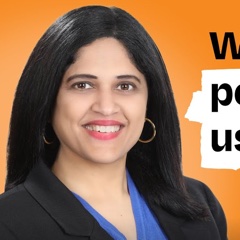 Guest
Aparna Chennapragada
Chief Product Officer of Experiences and Devices at Microsoft; formerly CPO at Robinhood and VP at Google
 Microsoft
 1 source · 17 tips
 Guest
Asha Sharma
Chief Vice President of Product, Microsoft AI platform; former COO at Instacart and VP Product at Meta
Microsoft1 source · 16 tips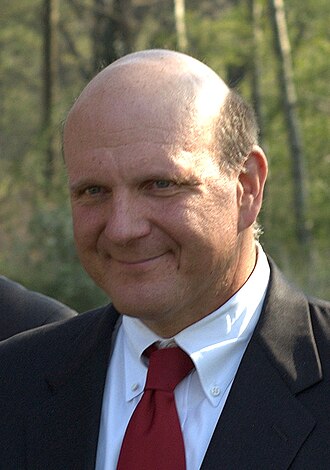 Founder story
Steve Ballmer
CEO and leaders of Microsoft from the browser wars through the Ballmer years (1995 to 2014)
Microsoft1 source · 20 tips