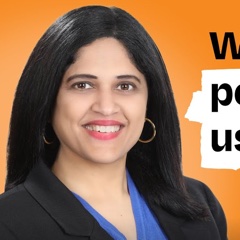
Aparna Chennapragada
Chief Product Officer of Experiences and Devices at Microsoft; formerly CPO at Robinhood and VP at Google
Where to hear and read about Aparna Chennapragada1 episode or test

Aparna Chennapragada is Chief Product Officer of Experiences and Devices at Microsoft, and was previously CPO at Robinhood and a VP at Google. The thing most worth learning from her is to prototype with AI instead of writing specs, and to judge new products by whether at least two of three inflection points are present.
If you're not prototyping and building to see what you want to build, I think you're doing it wrong.
Microsoft CPO: If you aren’t prototyping with AI you’re doing it wrong | Aparna Chennapragada
Aparna Chennapragada: the story and the lessons
1Aparna Chennapragada's path from Google to Microsoft
Chennapragada has built products in both the consumer and enterprise worlds. She is chief product officer at Microsoft, covering AI strategy for productivity tools and agents. Before that she was CPO at Robinhood and a vice president at Google, where she worked on Lens, search, shopping, augmented reality and the AI assistant.
She was also an engineering leader at Akamai and sits on the boards of eBay and Capital One.
A failed personalization project in search became Google Now. She spent about a year on personalization for search, but it barely mattered for a typed query, so the team was disbanded. Google Now pushed content to phones instead, such as a "leave now" alert for a flight.
It became one foundation of Google Assistant and works better now with Gemini. The experience taught her she prefers building new products over scaling them, and showed her what a small, dense team can do.
She concluded that being early is the same as being wrong. Google Now had a great interface but the intelligence was missing. Today she sees the reverse: strong models behind what she calls "the AOL Dial-Up Modem Chatbot" interface.
Some products need 5 to 10 years for the intelligence to arrive, so she keeps the invariants that work for the next version.
She was Sundar Pichai's technical advisor and set up Google's CEO office. She describes Pichai as calm and measured, a master of complex ecosystems like the phone world and the search, publisher and advertiser web. Satya Nadella, in her view, is a fast learner who moves across zoom levels and spots early signals ahead of nearly everyone.
She calls Nadella's habit learning from the firehose: he goes from "what's the game?" to a single insight he saw on Twitter.
She treats stand-up comedy as a live product lab. She does open mics and a few shows. Every joke gets clear, immediate and sometimes harsh feedback, which trains the iteration and resilience builders need.
She started by accident when her son, who sings, went to an open mic and told her to try it. She jokes that both fields have a fit to find: product market fit and punchline market fit.
2Chennapragada's rules for zero-to-one products
She wants at least two of three inflection points before starting. The three are a step change in technology, a shift in consumer behavior and a shift in business model. A nicer interface alone will not make people switch.
Lens had deep learning plus people photographing everything. Robinhood had phones as the main device plus zero fees. Search had the second price auction and CPCs.
She says to solve the problem before scaling it. In zero-to-one, teams should accept wide lurches in direction and what looks like chaos from outside. Google Lens went from a plant detection tool on day one to foreign language translation by day 15, once the tech proved best at that.
Fixing on one local hill too early traps big companies, who then spend three years trying to get off it. She wants teams to have an appetite for chaos, not just tolerate it.
She avoids grown-up metrics on early products. Click-through rate or retention with only a thousand users gives false precision. She leans on qualitative signals, such as the "sound of click".
Voice assistants offered broad interfaces, yet people mainly used them for timers, music and trivia. She argues they should have nailed those few things before promising everything.
She sees AI business models as barely explored. Options include per seat, usage on tap and outcome-based pricing, where a fee is paid once the agent has solved the problem.
She says LLMs and reasoning models are today's tech step function, but that alone is not enough for a successful product.
3How Chennapragada builds with AI and leads through the shift
She asks for a prototype and a prompt set instead of a spec. A prototype shows what is in your mind, which is higher bandwidth and speeds up the build loop. Her rule at Microsoft is "demos before memos".
She skips it for deep changes inside mature products, such as the internals of Excel. Adoption of the habit at Microsoft is real but uneven.
She keeps resetting her beliefs about what AI can do. Models improve in months, so an impression from a few months ago is likely wrong. She built a Chrome extension in about 10 minutes with GitHub Copilot that asks on every new tab how to use AI for what she is about to do.
She says the baby "just grew up to be a 15-year-old in a month". Skipping the scar tissue from past failures is an arbitrage for builders.
She expects faster demos but slower full deployment. The supply of ideas and prototypes grows by an order of magnitude, so standing out gets harder. She wants a few taste makers at the center of a team.
Without them you get a "Frankenstein product".
She says product managers must earn the editing role. AI can take over process work like notes, task tracking and emails, so value moves to editing a flood of ideas. Engineers, designers and researchers with AI help can now bring good ideas forward.
She also asks AI "What would Satya think?" of a pitch, which she calls WWXD, because deep reasoning works well when paired with context about the person.
She says coding is moving up a level, not dying. Programming moved from assembly to C and beyond, and natural language becomes the next layer. She expects far more software operators than software engineers.
Computer science stays valuable as a mental model for telling computers what to do.
Microsoft runs a Frontier program so early adopters are not held back. It gives them experimental features, such as a deep research agent post-trained for work, while the broader rollout keeps careful change management. Customers include pharma and legal companies, so normal rollouts stay slow.
The program was a few weeks old at recording, with a fake company where people try cutting-edge agents. She asks: "What does a team with three people and tons of compute and AI tools look like?"
She designs every enterprise feature for use and governance together. Each feature has a second use case: it must be governable. Sharing a document link should be frictionless and also secure and auditable.
The common trap for teams moving from consumer to enterprise is to ignore governance or to cripple the experience to serve it.
4How Chennapragada designs agents and natural language interfaces
She says natural language must be designed as deliberately as any screen. Conversations have grammars, structures and invisible UI elements. New constructs include the prompt, an editable plan and visible progress, and she sums it up as "NLX is the new UX."
Too verbose a progress display feels like a cron job, while too terse loses user confidence. The mistake she hears from builders is that the model leads to the product, so you just chat with it.
She designs follow-up suggestions deliberately. After an answer, the obvious next steps should appear proactively so users stay on a happy path. Too many suggestions annoy people, and too few waste a chance to guide them.
If an image tool returns a black and white clip-art version, it should offer the natural next edits.
She defines an agent by autonomy, complexity and asynchrony. Autonomy is a spectrum, complexity means multi-step work rather than one-shot summaries, and asynchrony means it works while you are away. Natural interaction goes beyond chat, for example joining a meeting and pointing to what should change.
She asked her researcher agent to study each attendee of a leadership meeting and suggest a persuasion pitch. She called the result superpowers because it gave insight she lacked, not just saved time.
She wants products where people and agents work in one shared space. Today's experiences are mostly single-player. Her aim is a co-working space where combined output beats what any person or small group could make.
Open questions include which tasks to delegate, what to inspect, and how information flows between people with agents mediating.
She backs GitHub's bet on a system around the repo and context. GitHub combines autocomplete, chat and an agent board, and must serve both expert coders and vibe coders. The agent board is one of the fastest loops the team sees, with strong positive feedback.
She argues companies need a whole Swiss Army toolkit, and that fast-growing code tools are not direct rivals to a full system.
She argues a steep learning curve is worth it for deep power. Excel lasts because it gives non-coders real programming power. Its one-time learning curve pays off in depth, and decades of signal from daily power users compound for the team.
She points to the World Excel championships, where people do magic with it.

Microsoft CPO: If you aren’t prototyping with AI you’re doing it wrong | Aparna Chennapragada
Aparna Chennapragada explains how to build products in the AI era: prototype instead of writing specs, design natural language interfaces on purpose, and judge zero-to-one ideas by whether at least two of three inflection points are present. She draws on Google Lens, Google Now, Robinhood, GitHub Copilot and Microsoft's Frontier program.
Chennapragada has built products in both the consumer and enterprise worlds. She is chief product officer at Microsoft, covering AI strategy for productivity tools and agents. Before that she was CPO at Robinhood and a vice president at Google, where she worked on Lens, search, shopping, augmented reality and the AI assistant.
She was also an engineering leader at Akamai and sits on the boards of eBay and Capital One.
A failed personalization project in search became Google Now. She spent about a year on personalization for search, but it barely mattered for a typed query, so the team was disbanded. Google Now pushed content to phones instead, such as a "leave now" alert for a flight.
It became one foundation of Google Assistant and works better now with Gemini. The experience taught her she prefers building new products over scaling them, and showed her what a small, dense team can do.
She concluded that being early is the same as being wrong. Google Now had a great interface but the intelligence was missing. Today she sees the reverse: strong models behind what she calls "the AOL Dial-Up Modem Chatbot" interface.
Some products need 5 to 10 years for the intelligence to arrive, so she keeps the invariants that work for the next version.
She was Sundar Pichai's technical advisor and set up Google's CEO office. She describes Pichai as calm and measured, a master of complex ecosystems like the phone world and the search, publisher and advertiser web. Satya Nadella, in her view, is a fast learner who moves across zoom levels and spots early signals ahead of nearly everyone.
She calls Nadella's habit learning from the firehose: he goes from "what's the game?" to a single insight he saw on Twitter.
She treats stand-up comedy as a live product lab. She does open mics and a few shows. Every joke gets clear, immediate and sometimes harsh feedback, which trains the iteration and resilience builders need.
She started by accident when her son, who sings, went to an open mic and told her to try it. She jokes that both fields have a fit to find: product market fit and punchline market fit.
She wants at least two of three inflection points before starting. The three are a step change in technology, a shift in consumer behavior and a shift in business model. A nicer interface alone will not make people switch.
Lens had deep learning plus people photographing everything. Robinhood had phones as the main device plus zero fees. Search had the second price auction and CPCs.
She says to solve the problem before scaling it. In zero-to-one, teams should accept wide lurches in direction and what looks like chaos from outside. Google Lens went from a plant detection tool on day one to foreign language translation by day 15, once the tech proved best at that.
Fixing on one local hill too early traps big companies, who then spend three years trying to get off it. She wants teams to have an appetite for chaos, not just tolerate it.
She avoids grown-up metrics on early products. Click-through rate or retention with only a thousand users gives false precision. She leans on qualitative signals, such as the "sound of click".
Voice assistants offered broad interfaces, yet people mainly used them for timers, music and trivia. She argues they should have nailed those few things before promising everything.
She sees AI business models as barely explored. Options include per seat, usage on tap and outcome-based pricing, where a fee is paid once the agent has solved the problem.
She says LLMs and reasoning models are today's tech step function, but that alone is not enough for a successful product.
She asks for a prototype and a prompt set instead of a spec. A prototype shows what is in your mind, which is higher bandwidth and speeds up the build loop. Her rule at Microsoft is "demos before memos".
She skips it for deep changes inside mature products, such as the internals of Excel. Adoption of the habit at Microsoft is real but uneven.
She keeps resetting her beliefs about what AI can do. Models improve in months, so an impression from a few months ago is likely wrong. She built a Chrome extension in about 10 minutes with GitHub Copilot that asks on every new tab how to use AI for what she is about to do.
She says the baby "just grew up to be a 15-year-old in a month". Skipping the scar tissue from past failures is an arbitrage for builders.
She expects faster demos but slower full deployment. The supply of ideas and prototypes grows by an order of magnitude, so standing out gets harder. She wants a few taste makers at the center of a team.
Without them you get a "Frankenstein product".
She says product managers must earn the editing role. AI can take over process work like notes, task tracking and emails, so value moves to editing a flood of ideas. Engineers, designers and researchers with AI help can now bring good ideas forward.
She also asks AI "What would Satya think?" of a pitch, which she calls WWXD, because deep reasoning works well when paired with context about the person.
She says coding is moving up a level, not dying. Programming moved from assembly to C and beyond, and natural language becomes the next layer. She expects far more software operators than software engineers.
Computer science stays valuable as a mental model for telling computers what to do.
Microsoft runs a Frontier program so early adopters are not held back. It gives them experimental features, such as a deep research agent post-trained for work, while the broader rollout keeps careful change management. Customers include pharma and legal companies, so normal rollouts stay slow.
The program was a few weeks old at recording, with a fake company where people try cutting-edge agents. She asks: "What does a team with three people and tons of compute and AI tools look like?"
She designs every enterprise feature for use and governance together. Each feature has a second use case: it must be governable. Sharing a document link should be frictionless and also secure and auditable.
The common trap for teams moving from consumer to enterprise is to ignore governance or to cripple the experience to serve it.
She says natural language must be designed as deliberately as any screen. Conversations have grammars, structures and invisible UI elements. New constructs include the prompt, an editable plan and visible progress, and she sums it up as "NLX is the new UX."
Too verbose a progress display feels like a cron job, while too terse loses user confidence. The mistake she hears from builders is that the model leads to the product, so you just chat with it.
She designs follow-up suggestions deliberately. After an answer, the obvious next steps should appear proactively so users stay on a happy path. Too many suggestions annoy people, and too few waste a chance to guide them.
If an image tool returns a black and white clip-art version, it should offer the natural next edits.
She defines an agent by autonomy, complexity and asynchrony. Autonomy is a spectrum, complexity means multi-step work rather than one-shot summaries, and asynchrony means it works while you are away. Natural interaction goes beyond chat, for example joining a meeting and pointing to what should change.
She asked her researcher agent to study each attendee of a leadership meeting and suggest a persuasion pitch. She called the result superpowers because it gave insight she lacked, not just saved time.
She wants products where people and agents work in one shared space. Today's experiences are mostly single-player. Her aim is a co-working space where combined output beats what any person or small group could make.
Open questions include which tasks to delegate, what to inspect, and how information flows between people with agents mediating.
She backs GitHub's bet on a system around the repo and context. GitHub combines autocomplete, chat and an agent board, and must serve both expert coders and vibe coders. The agent board is one of the fastest loops the team sees, with strong positive feedback.
She argues companies need a whole Swiss Army toolkit, and that fast-growing code tools are not direct rivals to a full system.
She argues a steep learning curve is worth it for deep power. Excel lasts because it gives non-coders real programming power. Its one-time learning curve pays off in depth, and decades of signal from daily power users compound for the team.
She points to the World Excel championships, where people do magic with it.
More from Microsoft
 Founder story
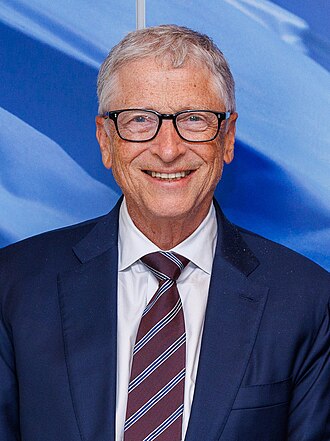
Bill Gates
Co-founder of Microsoft
 Microsoft

 2 sources · 37 tips
 Guest
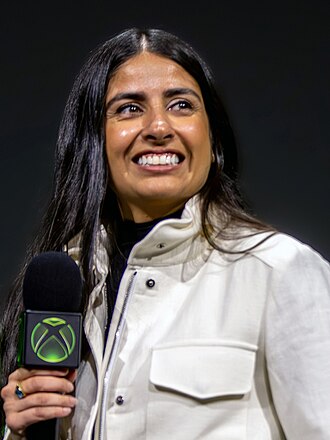
Asha Sharma
Chief Vice President of Product, Microsoft AI platform; former COO at Instacart and VP Product at Meta
Microsoft1 source · 16 tips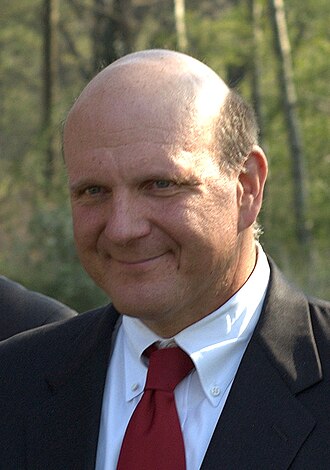 Founder story
Steve Ballmer
CEO and leaders of Microsoft from the browser wars through the Ballmer years (1995 to 2014)
Microsoft1 source · 20 tips