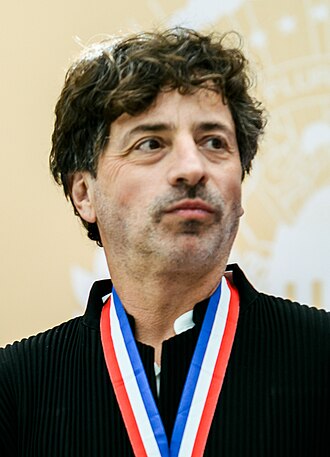
Sergey Brin
Founders of Google
Where to hear and read about Sergey Brin1 episode or test

Sergey Brin is the Moscow-born mathematician who co-founded Google with Larry Page at Stanford in 1998 as an equal partner and later ran technology alongside CEO Eric Schmidt. The lesson from Brin and Page is that a better product won search only once they paired it with cheap infrastructure, a borrowed and improved ad auction, and a willingness to bet the company on distribution.
We could have gone bankrupt.
Google Part I: Origins of Search. How the Best Business in Human History Happened
Sergey Brin: the story and the lessons
1Who Sergey Brin is and how he met Larry Page
Brin was born in Moscow to a family of scientists. His family left the Soviet Union when he was about six. His father was a mathematician and his mother worked at NASA.
He finished a math and computer science degree at 19.
Brin and Page met at Stanford and bickered from the start. They met on a new-students weekend, and Charles Schwab paid their bar tab. Brin was an equal partner from the first night.
The two shared an office for years, which is rare among founding pairs. Their drive is compared to that of Zuckerberg or Gates, not to bumbling academics.
Brin carries Google's zanier side, Page the honed products. Brin is linked to bold projects such as Google Glass, while Page is associated with polished products.
2How Brin and Page turned BackRub into Google at Stanford
Ranking pages by their backlinks beat counting keywords. Page's thesis began as a web annotation system, and ranking the annotations led to PageRank, which treats a link like an academic citation and uses its anchor text as a description.
Rivals ranked by how often a word appeared, so spamming "dog food" could win the top spot. Page: "It wasn't that we intended to build a search engine. We built a ranking system to deal with annotations."
They started in the narrow window when copying the whole web was feasible. Tracing backlinks meant crawling everything, which in 1996 was only a little insane. A year or two later it would have cost tens or hundreds of millions of dollars.
The web grew from 130 sites in 1993 to more than 600,000 in 1996. Earlier, Yahoo-style directories were good enough.
Brin drew the first Google logo and kept the homepage bare. They dropped the names "What Box" and BackRub for a misspelling of googol, and Brin drew the logo in GIMP. The design was just a logo and a search box.
Usage reached 10,000 queries a day, ate about half of Stanford's bandwidth and once brought the network down. They borrowed computers meant for other researchers off the loading dock.
Every portal turned BackRub down because good search sent users away. In spring 1997 they tried to sell it and return to their PhDs. Excite's CEO killed a roughly $1 million deal after a side-by-side test, and Yahoo, Infoseek and Lycos passed too.
Excite's CEO said: "I want people to stay on my site. I make money when people stay on my site." Google built itself on the opposite goal of getting users out fast.
A $100,000 check to a company that did not exist forced incorporation. Andy Bechtolsheim wrote a check to "Google Inc." after a quick demo. With Dave Cheriton, Ram Shriram and Jeff Bezos, the angels put in $1 million at a $10 million post-money valuation.
Stanford took about 1% for the technology. The first office was Susan Wojcicki's Menlo Park garage.
3How Brin and Page built Google on cheap hardware and elite engineers
They hired legendary engineers in the middle of the dot-com boom. Urs Hölzle joined as employee eight with the title "search engine mechanic" because everything was broken, and Jeff Dean came from DEC.
Hölzle ran Google's infrastructure from 1999 to 2023. Dean built the first AdWords and AdSense and co-created Bigtable and MapReduce. Hard distributed-systems problems drew them in.
Google put reliability in software and let cheap hardware fail. The index was split into 64 megabyte chunks across commodity machines, each replicated. Failure ran over 10% a year versus 3 to 4% for the industry, and it did not matter.
Because colocation space was leased by square footage, Google mounted bare motherboards on cork in racks. This cost structure later supported an 87% gross margin on search.
Scarcity became a design style that produced GFS and MapReduce. Consumer RAM lacked error checking, so Google verified memory in software, then built GFS, MapReduce and its own data centers.
Yahoo later copied MapReduce as Hadoop. The same infrastructure made it possible to run an auction on every query in 2001.
4How Brin and Page found Google's ad model
Brin and Page refused banner ads despite having no other model. Banners were the one known way to make money from search, and the founders were dead set against them while every part of the stack needed more machines and revenue was zero.
The 1999 Series A, split by Kleiner and Sequoia at a $100 million valuation, rested on a deliberately vague plan. Someone at the firms later said they had "never paid so much for so little".
They demanded text-only ads to protect page speed. Early ads were sold by hand on a cost-per-thousand basis, with insertion orders faxed in, which capped the advertiser pool.
A test by Jeff Dean and Marissa Mayer linking book queries to Amazon affiliate links showed high click-through and conversion, proving search captures intent.
Portal deals kept Google alive through the dot-com crash. Netscape brought 3 million searches a day, and Google shut off google.com for a day to serve Netscape users. A June 2000 Yahoo deal doubled searches to 14 million a day and Yahoo paid $7.2 million in 2001.
"Powered by Google" became an ingredient brand. With no venture money left, revenue was the only way to pay for people and machines.
Brin and Page offered to sell Google to Overture for $200 million. Before the Series A they pitched Bill Gross, but Overture's board would not give up 10% of a $2 billion company for one with zero revenue.
Yahoo later bought Overture for $1.6 billion, and Google paid it $360 million over patents.
They copied Overture's pay-per-click auction rather than insist on inventing. After seeing Overture make $100 million in its first year, they regretted not starting with paid search and rebuilt AdWords from October 2000.
Overture had 8,000 advertisers by mid 1999 against AdWords' 350 in beta. The founders' trait is described as: "it doesn't always need to be their idea."
Google ranked ads by bid times click-through rate. Ad Rank lets relevant advertisers win at lower bids and maximizes Google's expected revenue. A second-price auction charges a penny above the runner-up so advertisers trust it.
Overture dropped click-through ranking because it broke its transparent price list. Revenue went from $86 million in 2001 to $440 million in 2002.
5How Brin and Page bet Google on AOL and bought distribution
Google offered AOL a guarantee it could not cover. The 2002 deal gave AOL 85% of ad revenue, warrants on 7.4 million shares at $3, and a $100 million guarantee.
Brin said, "We could have gone bankrupt." Page told Omid Kordestani: "We should be able to monetize the pages. If not, we deserve to go out of business."
The bet paid because more advertisers made every ad better. AOL earned $35 million in the first half of 2002 and $200 million in 2003.
A deeper advertiser pool raises the odds of a good match for each query. Sheryl Sandberg built the AdWords sales organization to absorb the flood.
Scale raised revenue per search, so Google could outbid anyone. More bidders push prices up and cover more keywords, so the same revenue share is worth more from Google than from a rival. Some partners got close to or above 100% of revenue.
The cycle runs from distribution to volume to higher bids to more revenue to more distribution. Being private let Google overpay without worrying about a weak quarter.
The Toolbar bought Google a place on users' screens. Launched in December 2000 as a defense against Internet Explorer, it was bundled by Adobe, RealNetworks, WinZip and Dell. Toolbar users searched seven times as much, lifting yearly revenue per user from about $2 to $10 or more.
Brin and Page also saw a Gmail prototype matching ads to mail and asked if it would work on websites, which led to AdSense, built by Jeff Dean in six weeks and passing $1 million a day by the end of 2003.
6How Brin and Page shared power and kept control
They resisted hiring a CEO for 16 months. John Doerr had extracted a promise, and they rejected every valley CEO except Steve Jobs. Eric Schmidt became CEO in March 2001.
The three ran Google together, with Page on products and Brin on technology.
Google's mission tied idealism to a giant business. Organizing the world's information and making it universally accessible and useful attracted talent and pointed straight at monetizing search.
"Googliness" meant high-IQ people, a campus feel and "a healthy disregard for the impossible".
They brought media-family dual-class shares into tech. At the 2004 IPO, Brin and Page kept voting control through super voting shares. Meta, Alibaba, Airbnb and others followed.
Their Dutch auction priced too low, filling at $85 against an expected $108 to $135, and nobody has repeated it. It raised $1.7 billion at a $23 billion market cap.

Google Part I: Origins of Search. How the Best Business in Human History Happened
Google won search because it paired a better ranking algorithm with cheap infrastructure and a pay-per-click ad auction that rewarded relevance, then spent aggressively on distribution. The decisions that made it worth hearing are betting the company on the AOL deal and seeing that scale raised revenue per search, not just cut cost.
Brin was born in Moscow to a family of scientists. His family left the Soviet Union when he was about six. His father was a mathematician and his mother worked at NASA.
He finished a math and computer science degree at 19.
Brin and Page met at Stanford and bickered from the start. They met on a new-students weekend, and Charles Schwab paid their bar tab. Brin was an equal partner from the first night.
The two shared an office for years, which is rare among founding pairs. Their drive is compared to that of Zuckerberg or Gates, not to bumbling academics.
Brin carries Google's zanier side, Page the honed products. Brin is linked to bold projects such as Google Glass, while Page is associated with polished products.
Ranking pages by their backlinks beat counting keywords. Page's thesis began as a web annotation system, and ranking the annotations led to PageRank, which treats a link like an academic citation and uses its anchor text as a description.
Rivals ranked by how often a word appeared, so spamming "dog food" could win the top spot. Page: "It wasn't that we intended to build a search engine. We built a ranking system to deal with annotations."
They started in the narrow window when copying the whole web was feasible. Tracing backlinks meant crawling everything, which in 1996 was only a little insane. A year or two later it would have cost tens or hundreds of millions of dollars.
The web grew from 130 sites in 1993 to more than 600,000 in 1996. Earlier, Yahoo-style directories were good enough.
Brin drew the first Google logo and kept the homepage bare. They dropped the names "What Box" and BackRub for a misspelling of googol, and Brin drew the logo in GIMP. The design was just a logo and a search box.
Usage reached 10,000 queries a day, ate about half of Stanford's bandwidth and once brought the network down. They borrowed computers meant for other researchers off the loading dock.
Every portal turned BackRub down because good search sent users away. In spring 1997 they tried to sell it and return to their PhDs. Excite's CEO killed a roughly $1 million deal after a side-by-side test, and Yahoo, Infoseek and Lycos passed too.
Excite's CEO said: "I want people to stay on my site. I make money when people stay on my site." Google built itself on the opposite goal of getting users out fast.
A $100,000 check to a company that did not exist forced incorporation. Andy Bechtolsheim wrote a check to "Google Inc." after a quick demo. With Dave Cheriton, Ram Shriram and Jeff Bezos, the angels put in $1 million at a $10 million post-money valuation.
Stanford took about 1% for the technology. The first office was Susan Wojcicki's Menlo Park garage.
They hired legendary engineers in the middle of the dot-com boom. Urs Hölzle joined as employee eight with the title "search engine mechanic" because everything was broken, and Jeff Dean came from DEC.
Hölzle ran Google's infrastructure from 1999 to 2023. Dean built the first AdWords and AdSense and co-created Bigtable and MapReduce. Hard distributed-systems problems drew them in.
Google put reliability in software and let cheap hardware fail. The index was split into 64 megabyte chunks across commodity machines, each replicated. Failure ran over 10% a year versus 3 to 4% for the industry, and it did not matter.
Because colocation space was leased by square footage, Google mounted bare motherboards on cork in racks. This cost structure later supported an 87% gross margin on search.
Scarcity became a design style that produced GFS and MapReduce. Consumer RAM lacked error checking, so Google verified memory in software, then built GFS, MapReduce and its own data centers.
Yahoo later copied MapReduce as Hadoop. The same infrastructure made it possible to run an auction on every query in 2001.
Brin and Page refused banner ads despite having no other model. Banners were the one known way to make money from search, and the founders were dead set against them while every part of the stack needed more machines and revenue was zero.
The 1999 Series A, split by Kleiner and Sequoia at a $100 million valuation, rested on a deliberately vague plan. Someone at the firms later said they had "never paid so much for so little".
They demanded text-only ads to protect page speed. Early ads were sold by hand on a cost-per-thousand basis, with insertion orders faxed in, which capped the advertiser pool.
A test by Jeff Dean and Marissa Mayer linking book queries to Amazon affiliate links showed high click-through and conversion, proving search captures intent.
Portal deals kept Google alive through the dot-com crash. Netscape brought 3 million searches a day, and Google shut off google.com for a day to serve Netscape users. A June 2000 Yahoo deal doubled searches to 14 million a day and Yahoo paid $7.2 million in 2001.
"Powered by Google" became an ingredient brand. With no venture money left, revenue was the only way to pay for people and machines.
Brin and Page offered to sell Google to Overture for $200 million. Before the Series A they pitched Bill Gross, but Overture's board would not give up 10% of a $2 billion company for one with zero revenue.
Yahoo later bought Overture for $1.6 billion, and Google paid it $360 million over patents.
They copied Overture's pay-per-click auction rather than insist on inventing. After seeing Overture make $100 million in its first year, they regretted not starting with paid search and rebuilt AdWords from October 2000.
Overture had 8,000 advertisers by mid 1999 against AdWords' 350 in beta. The founders' trait is described as: "it doesn't always need to be their idea."
Google ranked ads by bid times click-through rate. Ad Rank lets relevant advertisers win at lower bids and maximizes Google's expected revenue. A second-price auction charges a penny above the runner-up so advertisers trust it.
Overture dropped click-through ranking because it broke its transparent price list. Revenue went from $86 million in 2001 to $440 million in 2002.
Google offered AOL a guarantee it could not cover. The 2002 deal gave AOL 85% of ad revenue, warrants on 7.4 million shares at $3, and a $100 million guarantee.
Brin said, "We could have gone bankrupt." Page told Omid Kordestani: "We should be able to monetize the pages. If not, we deserve to go out of business."
The bet paid because more advertisers made every ad better. AOL earned $35 million in the first half of 2002 and $200 million in 2003.
A deeper advertiser pool raises the odds of a good match for each query. Sheryl Sandberg built the AdWords sales organization to absorb the flood.
Scale raised revenue per search, so Google could outbid anyone. More bidders push prices up and cover more keywords, so the same revenue share is worth more from Google than from a rival. Some partners got close to or above 100% of revenue.
The cycle runs from distribution to volume to higher bids to more revenue to more distribution. Being private let Google overpay without worrying about a weak quarter.
The Toolbar bought Google a place on users' screens. Launched in December 2000 as a defense against Internet Explorer, it was bundled by Adobe, RealNetworks, WinZip and Dell. Toolbar users searched seven times as much, lifting yearly revenue per user from about $2 to $10 or more.
Brin and Page also saw a Gmail prototype matching ads to mail and asked if it would work on websites, which led to AdSense, built by Jeff Dean in six weeks and passing $1 million a day by the end of 2003.
They resisted hiring a CEO for 16 months. John Doerr had extracted a promise, and they rejected every valley CEO except Steve Jobs. Eric Schmidt became CEO in March 2001.
The three ran Google together, with Page on products and Brin on technology.
Google's mission tied idealism to a giant business. Organizing the world's information and making it universally accessible and useful attracted talent and pointed straight at monetizing search.
"Googliness" meant high-IQ people, a campus feel and "a healthy disregard for the impossible".
They brought media-family dual-class shares into tech. At the 2004 IPO, Brin and Page kept voting control through super voting shares. Meta, Alibaba, Airbnb and others followed.
Their Dutch auction priced too low, filling at $85 against an expected $108 to $135, and nobody has repeated it. It raised $1.7 billion at a $23 billion market cap.
More from Google
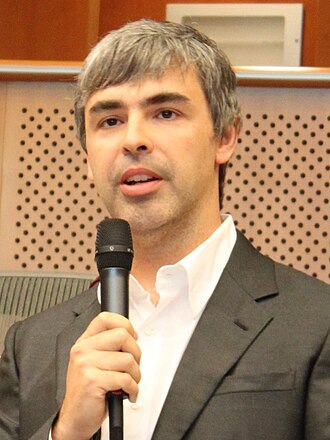 Founder story
Larry Page
Founders of Google
 Google3 sources · 58 tips
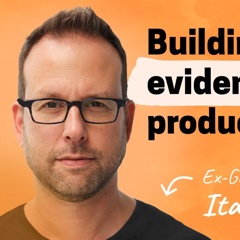 Guest
Itamar Gilad
Product coach and author of Evidence-Guided, former product manager at Google (Gmail, YouTube) and Microsoft
Google 1 source · 19 tips
 Guest
Robby Stein
VP of Product, Google Search (formerly head of product at Instagram)
Google1 source · 16 tips