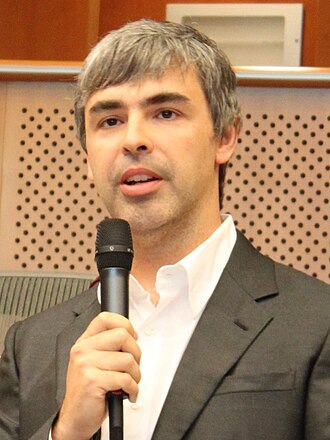
Larry Page
Founders of Google
Where to hear and read about Larry Page3 episodes and tests

 AcquiredGoogle Part III: The AI Company. Google is amazingly well-positioned... will they win in AI?
 AcquiredGoogle Part II: Alphabet
 AcquiredGoogle Part I: Origins of Search. How the Best Business in Human History Happened
Larry Page co-founded Google with Sergey Brin, turning a Stanford project for ranking web annotations into the search and ads business behind the most profitable company in the US, then ran it through the mobile and AI eras. The lesson most worth taking from him is how he paired a clear long-range conviction (search as AI, distribution as destiny) with willingness to bet the company, overpay for distribution and personally approve spending others wanted to kill.
We should be able to monetize the pages. If not, we deserve to go out of business.
Google Part I: Origins of Search. How the Best Business in Human History Happened
Larry Page: the story and the lessons
1Larry Page's path from a computing household to PageRank
Page grew up among computer scientists and planned a company from age 12. Both his parents taught computer science at Michigan State, and his father earned a PhD in machine learning when many saw the field as a dead end.
Page said, "probably when I was 12, I knew I was going to start a company eventually." His father's contrarian choice of AI rubbed off on him.
Brin was an equal partner from the first night. Page and Sergey Brin met on a Stanford new-students weekend, bickered from the start, and then shared an office for years.
Brin carries the zanier side of the partnership and Page the honed products. Neither was a bumbling academic; their drive matched Zuckerberg's or Gates's.
PageRank came out of a plan to annotate the web. Page's thesis began as a web annotation system; to rank which comments mattered he treated links like academic citations and used their anchor text as descriptions.
His adviser Terry Winograd told him to focus on the ranking. "It wasn't that we intended to build a search engine. We built a ranking system to deal with annotations." PageRank is named for Larry Page, not web pages.
Page started in the one window when copying the web was feasible. Ranking by backlinks meant crawling the whole web, which in 1996 was possible; a year or two later it would have cost tens or hundreds of millions of dollars.
The web grew from 130 sites in 1993 to over 600,000 in 1996. Earlier, Yahoo-style directories were enough. The project, BackRub, soon used half of Stanford's bandwidth.
Nobody would buy BackRub, because good search sent users away. In 1997 Excite was ready to license it for about $1 million until its CEO saw the results and said, "I want people to stay on my site." Yahoo, Infoseek and Lycos also passed.
Portals earned from page views, so better search broke their model. Google built itself on the opposite goal: get users to their answer fast.
Four angels funded a company that did not exist yet. Andy Bechtolsheim wrote a $100,000 check to "Google Inc." after a quick demo; with Dave Cheriton, Ram Shriram and Jeff Bezos the round reached $1 million at a $10 million post-money valuation.
The first office was Susan Wojcicki's Menlo Park garage. The name came from googol, misspelled by Page.
2How Page and Brin turned search into a business
Page and Brin hired elite engineers in the middle of the boom. In 1999 they brought in Urs Hölzle, titled "search engine mechanic" because everything was broken, and Jeff Dean from DEC.
Hölzle ran Google's infrastructure until 2023, and Dean built early AdWords and AdSense and co-invented Bigtable and MapReduce. Hard distributed systems problems drew them.
Google ran on cheap parts and put reliability in software. The index was split into 64 megabyte chunks across commodity machines, with every chunk replicated; hardware failed over 10% a year against an industry 3 to 4%, and it did not matter.
Bare motherboards sat on cork sheets because colocation was leased by square footage. This cost structure later supported about an 87% gross margin on search.
The founders insisted on text ads to protect page speed. They refused banner ads, the only known model, and demanded text only; an Amazon affiliate test by Jeff Dean and Marissa Mayer showed search intent converts.
Early ads were sold per thousand impressions with insertion orders faxed in, which capped the advertiser pool.
Page and Brin copied Overture's auction rather than insist on inventing. After GoTo, later Overture, made $100 million in its first year with pay-per-click auctions, they regretted not starting there and rebuilt AdWords on it.
Earlier they had offered to sell Google to Overture's Bill Gross for $200 million; his board refused. "It doesn't always need to be their idea."
Google improved the model with Ad Rank and a second-price auction. Ranking ads by bid times click-through rate rewarded relevant advertisers and maximized expected revenue; winners paid a penny above second place. Revenue went from $86 million in 2001 to $440 million in 2002.
Overture dropped click-through ranking because it broke its transparent price list. The second-price auction gave up pennies per click to win advertiser trust.
Portal deals kept Google alive through the dot-com crash. Google shut off google.com for a day to keep Netscape's 3 million daily searches running, and the June 2000 Yahoo deal doubled searches to 14 million a day plus a $10 million investment.
"Powered by Google" became an ingredient brand that trained millions of users.
3Larry Page's bet on AOL and distribution
Page saw that scale raised revenue per search, not only cut cost. More bidders push keyword prices up and cover more keywords, so each search earns more as Google grows and it can outpay rivals for distribution.
The cycle runs distribution, volume, higher bids, more revenue, more distribution. Even an equal revenue share was worth more coming from Google than from a rival.
Page bet Google's survival on the 2002 AOL deal. Google offered AOL 85% of ad revenue, warrants on 7.4 million shares at $3 and a $100 million guarantee it could not cover. AOL earned $35 million in the first half of 2002 and $200 million in 2003.
Omid Kordestani warned they were betting the company, and Brin said "We could have gone bankrupt." AOL's advertisers deepened the pool so every ad matched better.
Google bought its way onto screens with the Toolbar. Launched in December 2000, it put a Google box inside Internet Explorer; Google paid Adobe, RealNetworks, WinZip and Dell to bundle it.
Toolbar users searched seven times as much, lifting yearly revenue per user from about $2 to $10 or more. Being private let Google overpay without fearing a weak quarter.
Page and Brin pushed the ad system onto other people's pages. When they saw Paul Buchheit's mail prototype matching ads to email, they asked if it would work on websites; Jeff Dean built AdSense in six weeks and it passed $1 million a day by end of 2003.
Publishers kept most of each click, which foreshadowed the YouTube creator model.
4How Larry Page kept control of Google
Page and Brin resisted a professional CEO for 16 months. John Doerr had extracted a promise to hire one; the founders rejected every valley CEO except Steve Jobs before Eric Schmidt took over in March 2001.
The three ran Google together, with Page on products and Brin on technology. Schmidt later held back Page and Brin's 2001 wish for a browser: "I don't want to moon the giant."
Page brought dual-class shares from media families into tech. At the 2004 IPO the founders borrowed super-voting shares from newspaper families such as the New York Times company, keeping voting control.
Meta, Alibaba, Shopify, Airbnb and Zoom later copied it.
The Dutch auction IPO left money on the table. Disliking bank-driven pops, they ran an auction that cleared at $85 against an expected $108 to $135, raising $1.7 billion at a $23 billion market cap.
Shares closed day one up 18% and were nearly 5x within 16 months. Nobody has repeated it.
Page fired all the engineering managers around 2001. With no managers, engineers chose their own projects, which is how Noam Shazeer and George Harik built the language models behind "did you mean" and AdSense.
Page floated the Gmail idea to Paul Buchheit in a one-on-one during the same period.
5How Page's Google escaped dependence on Microsoft
Page built web apps so users would defend the web. Over 90% of Google queries ran on Windows PCs in Internet Explorer, so Gmail, Maps and Docs aimed to make users love web apps that Microsoft could not cut off.
Gmail offered 1 GB free against 2 MB at Hotmail. Page's toothbrush test asked for a product used once or twice a day. "Microsoft can keep all the dollars. All we care about is people use the web."
Google kept investing beyond search after Wall Street punished it. In January 2006 the stock fell 27% on flat earnings despite revenue nearly doubling to $6.1 billion, yet Google kept building Gmail, Maps, Docs and YouTube.
Page bought Android early because Google knew it was late to mobile. In July 2005 he offered to buy Android for $50 million before it could raise again, 18 months before the iPhone; it reached 80% share by end of 2013.
Google gave it away and paid carriers and makers a search revenue share, a less than free model Microsoft, Palm and BlackBerry could not match. Page and Brin rollerbladed onto the stage at the first phone's launch.
Owning Chrome and Android shielded search through a platform shift. Chrome cut Internet Explorer from almost 70% share in 2008 to 15% in 2014, and Android's main payoff is keeping search traffic on a platform Google owns.
"I can't think of another example of a dominant technology business and business model that has successfully survived and transitioned a major platform shift."
Google bought YouTube and DoubleClick rather than lose to rivals. YouTube cost $1.65 billion in stock after Google Video failed and now earns over $50 billion a year; DoubleClick cost $3.1 billion in cash, won with a hell or high water clause over Microsoft.
The CFO vowed never to do another stock deal, since Google's market cap later grew about 20x.
6Larry Page's mistake with Google+
Page returned as CEO and forced Google+ from the top. Back as CEO in April 2011, he moved his office into the Plus building, tied company-wide bonuses to it, and teams were made to integrate it everywhere.
It was also his way to re-centralize a company split into fiefdoms. Vic Gundotra ran it by command and control, and the integrations soured the culture.
Plus copied a social world that had already moved on. It launched desktop-first with Circles as Facebook bought Instagram and WhatsApp; Google missed messaging and fell behind in cloud.
Plus shut down in 2019, leaving unified Google accounts, Meet and Photos. "You don't need a Facebook when there's already Facebook."
Page made Google into Alphabet in 2015 to heal. Page became CEO of Alphabet and Sundar Pichai CEO of Google, with long shots like Nest, Calico and Verily fenced off.
Google then had $75 billion of revenue and $23 billion of operating income, while other bets lost about $3.5 billion.
7How Larry Page bet Google on AI
Page saw Google as an AI company from the start. In 2000 he said the ultimate search engine would understand everything on the web and give you exactly what you wanted.
That conviction is why Google gave Alan Eustace a blank check for deep learning talent and bought DNN Research for $44 million and DeepMind.
Page hired Sebastian Thrun and let academics in part-time. He hired Thrun from Stanford's AI lab in April 2007; Thrun's part-time professor model brought in Geoff Hinton and grew into Google X and Google Brain.
Astro Teller said Brain's gains to search, ads and YouTube more than paid for all of Google X.
Page personally approved a $130 million GPU order. In 2014 finance wanted to kill the plan for 40,000 Nvidia GPUs; Page approved it, saying "the future of Google is deep learning."
Nvidia then had about $4 billion in revenue. Ad click predictions paid the spend back quickly.
Page won DeepMind by sharing its mission, not on price. He first saw DeepMind's AI crack Atari Breakout on a jet with Elon Musk; Google paid $550 million and let it stay independent in London, while Facebook offered up to $800 million but wanted control.
"Larry was completely on board with the mission of everything that DeepMind was doing." Its cooling work cut data center energy use 40% by 2016.
Google still let others commercialize its AI first. It published the transformer in 2017 and shelved a chatbot that threatened search ads, so ChatGPT forced a code red and a merger of Brain and DeepMind under Pichai.
Page and Brin say they would sooner go bankrupt than lose at AI, which sets the mission against search profit. Brin is back working on Gemini.
8Larry Page's push for self-driving cars
Page talked a reluctant Thrun into building a self-driving car. When Page asked for the technical reason it could not be done, Thrun came back the next morning and admitted, "I'm just afraid."
Eric Schmidt wanted to buy Tesla for about $3 billion and Thrun wanted highway assist; Page wanted robotaxis.
Page set the Larry 1000 as the first milestone. About 1,000 miles of hard California roads, which the dozen-person team passed within 18 months of starting in 2009.
Driverless service in Phoenix came only in October 2020, 11 years later. Waymo now reports 91% fewer serious-injury crashes than human drivers after burning about $10 to 15 billion.
Google Part III: The AI Company. Google is amazingly well-positioned... will they win in AI?
Google invented or funded almost every key piece of modern AI (neural nets, TPUs, the transformer, DeepMind) and still got caught flat-footed by ChatGPT because its search profits made AI a threat to itself. The story is worth hearing for how Sundar Pichai's code red, the Brain and DeepMind merger and the single Gemini model turned a rocky start into a credible comeback.
Page grew up among computer scientists and planned a company from age 12. Both his parents taught computer science at Michigan State, and his father earned a PhD in machine learning when many saw the field as a dead end.
Page said, "probably when I was 12, I knew I was going to start a company eventually." His father's contrarian choice of AI rubbed off on him.
Page fired all the engineering managers around 2001. With no managers, engineers chose their own projects, which is how Noam Shazeer and George Harik built the language models behind "did you mean" and AdSense.
Page floated the Gmail idea to Paul Buchheit in a one-on-one during the same period.
Page saw Google as an AI company from the start. In 2000 he said the ultimate search engine would understand everything on the web and give you exactly what you wanted.
That conviction is why Google gave Alan Eustace a blank check for deep learning talent and bought DNN Research for $44 million and DeepMind.
Page hired Sebastian Thrun and let academics in part-time. He hired Thrun from Stanford's AI lab in April 2007; Thrun's part-time professor model brought in Geoff Hinton and grew into Google X and Google Brain.
Astro Teller said Brain's gains to search, ads and YouTube more than paid for all of Google X.
Page personally approved a $130 million GPU order. In 2014 finance wanted to kill the plan for 40,000 Nvidia GPUs; Page approved it, saying "the future of Google is deep learning."
Nvidia then had about $4 billion in revenue. Ad click predictions paid the spend back quickly.
Page won DeepMind by sharing its mission, not on price. He first saw DeepMind's AI crack Atari Breakout on a jet with Elon Musk; Google paid $550 million and let it stay independent in London, while Facebook offered up to $800 million but wanted control.
"Larry was completely on board with the mission of everything that DeepMind was doing." Its cooling work cut data center energy use 40% by 2016.
Google still let others commercialize its AI first. It published the transformer in 2017 and shelved a chatbot that threatened search ads, so ChatGPT forced a code red and a merger of Brain and DeepMind under Pichai.
Page and Brin say they would sooner go bankrupt than lose at AI, which sets the mission against search profit. Brin is back working on Gemini.
Page talked a reluctant Thrun into building a self-driving car. When Page asked for the technical reason it could not be done, Thrun came back the next morning and admitted, "I'm just afraid."
Eric Schmidt wanted to buy Tesla for about $3 billion and Thrun wanted highway assist; Page wanted robotaxis.
Page set the Larry 1000 as the first milestone. About 1,000 miles of hard California roads, which the dozen-person team passed within 18 months of starting in 2009.
Driverless service in Phoenix came only in October 2020, 11 years later. Waymo now reports 91% fewer serious-injury crashes than human drivers after burning about $10 to 15 billion.
Google Part II: Alphabet
From 2004 to 2015 Google turned a pure search company into a maker of seven more billion-user products, each one chosen to grow the web, protect search ads from Microsoft, Apple and Facebook, or both. The decision that stands out is giving away or buying platforms like Chrome, Android and YouTube, so that Google never again had to depend on someone else's platform.
Page and Brin resisted a professional CEO for 16 months. John Doerr had extracted a promise to hire one; the founders rejected every valley CEO except Steve Jobs before Eric Schmidt took over in March 2001.
The three ran Google together, with Page on products and Brin on technology. Schmidt later held back Page and Brin's 2001 wish for a browser: "I don't want to moon the giant."
Page fired all the engineering managers around 2001. With no managers, engineers chose their own projects, which is how Noam Shazeer and George Harik built the language models behind "did you mean" and AdSense.
Page floated the Gmail idea to Paul Buchheit in a one-on-one during the same period.
Page built web apps so users would defend the web. Over 90% of Google queries ran on Windows PCs in Internet Explorer, so Gmail, Maps and Docs aimed to make users love web apps that Microsoft could not cut off.
Gmail offered 1 GB free against 2 MB at Hotmail. Page's toothbrush test asked for a product used once or twice a day. "Microsoft can keep all the dollars. All we care about is people use the web."
Google kept investing beyond search after Wall Street punished it. In January 2006 the stock fell 27% on flat earnings despite revenue nearly doubling to $6.1 billion, yet Google kept building Gmail, Maps, Docs and YouTube.
Page bought Android early because Google knew it was late to mobile. In July 2005 he offered to buy Android for $50 million before it could raise again, 18 months before the iPhone; it reached 80% share by end of 2013.
Google gave it away and paid carriers and makers a search revenue share, a less than free model Microsoft, Palm and BlackBerry could not match. Page and Brin rollerbladed onto the stage at the first phone's launch.
Owning Chrome and Android shielded search through a platform shift. Chrome cut Internet Explorer from almost 70% share in 2008 to 15% in 2014, and Android's main payoff is keeping search traffic on a platform Google owns.
"I can't think of another example of a dominant technology business and business model that has successfully survived and transitioned a major platform shift."
Google bought YouTube and DoubleClick rather than lose to rivals. YouTube cost $1.65 billion in stock after Google Video failed and now earns over $50 billion a year; DoubleClick cost $3.1 billion in cash, won with a hell or high water clause over Microsoft.
The CFO vowed never to do another stock deal, since Google's market cap later grew about 20x.
Page returned as CEO and forced Google+ from the top. Back as CEO in April 2011, he moved his office into the Plus building, tied company-wide bonuses to it, and teams were made to integrate it everywhere.
It was also his way to re-centralize a company split into fiefdoms. Vic Gundotra ran it by command and control, and the integrations soured the culture.
Plus copied a social world that had already moved on. It launched desktop-first with Circles as Facebook bought Instagram and WhatsApp; Google missed messaging and fell behind in cloud.
Plus shut down in 2019, leaving unified Google accounts, Meet and Photos. "You don't need a Facebook when there's already Facebook."
Page made Google into Alphabet in 2015 to heal. Page became CEO of Alphabet and Sundar Pichai CEO of Google, with long shots like Nest, Calico and Verily fenced off.
Google then had $75 billion of revenue and $23 billion of operating income, while other bets lost about $3.5 billion.
Google Part I: Origins of Search. How the Best Business in Human History Happened
Google won search because it paired a better ranking algorithm with cheap infrastructure and a pay-per-click ad auction that rewarded relevance, then spent aggressively on distribution. The decisions that made it worth hearing are betting the company on the AOL deal and seeing that scale raised revenue per search, not just cut cost.
Page grew up among computer scientists and planned a company from age 12. Both his parents taught computer science at Michigan State, and his father earned a PhD in machine learning when many saw the field as a dead end.
Page said, "probably when I was 12, I knew I was going to start a company eventually." His father's contrarian choice of AI rubbed off on him.
Brin was an equal partner from the first night. Page and Sergey Brin met on a Stanford new-students weekend, bickered from the start, and then shared an office for years.
Brin carries the zanier side of the partnership and Page the honed products. Neither was a bumbling academic; their drive matched Zuckerberg's or Gates's.
PageRank came out of a plan to annotate the web. Page's thesis began as a web annotation system; to rank which comments mattered he treated links like academic citations and used their anchor text as descriptions.
His adviser Terry Winograd told him to focus on the ranking. "It wasn't that we intended to build a search engine. We built a ranking system to deal with annotations." PageRank is named for Larry Page, not web pages.
Page started in the one window when copying the web was feasible. Ranking by backlinks meant crawling the whole web, which in 1996 was possible; a year or two later it would have cost tens or hundreds of millions of dollars.
The web grew from 130 sites in 1993 to over 600,000 in 1996. Earlier, Yahoo-style directories were enough. The project, BackRub, soon used half of Stanford's bandwidth.
Nobody would buy BackRub, because good search sent users away. In 1997 Excite was ready to license it for about $1 million until its CEO saw the results and said, "I want people to stay on my site." Yahoo, Infoseek and Lycos also passed.
Portals earned from page views, so better search broke their model. Google built itself on the opposite goal: get users to their answer fast.
Four angels funded a company that did not exist yet. Andy Bechtolsheim wrote a $100,000 check to "Google Inc." after a quick demo; with Dave Cheriton, Ram Shriram and Jeff Bezos the round reached $1 million at a $10 million post-money valuation.
The first office was Susan Wojcicki's Menlo Park garage. The name came from googol, misspelled by Page.
Page and Brin hired elite engineers in the middle of the boom. In 1999 they brought in Urs Hölzle, titled "search engine mechanic" because everything was broken, and Jeff Dean from DEC.
Hölzle ran Google's infrastructure until 2023, and Dean built early AdWords and AdSense and co-invented Bigtable and MapReduce. Hard distributed systems problems drew them.
Google ran on cheap parts and put reliability in software. The index was split into 64 megabyte chunks across commodity machines, with every chunk replicated; hardware failed over 10% a year against an industry 3 to 4%, and it did not matter.
Bare motherboards sat on cork sheets because colocation was leased by square footage. This cost structure later supported about an 87% gross margin on search.
The founders insisted on text ads to protect page speed. They refused banner ads, the only known model, and demanded text only; an Amazon affiliate test by Jeff Dean and Marissa Mayer showed search intent converts.
Early ads were sold per thousand impressions with insertion orders faxed in, which capped the advertiser pool.
Page and Brin copied Overture's auction rather than insist on inventing. After GoTo, later Overture, made $100 million in its first year with pay-per-click auctions, they regretted not starting there and rebuilt AdWords on it.
Earlier they had offered to sell Google to Overture's Bill Gross for $200 million; his board refused. "It doesn't always need to be their idea."
Google improved the model with Ad Rank and a second-price auction. Ranking ads by bid times click-through rate rewarded relevant advertisers and maximized expected revenue; winners paid a penny above second place. Revenue went from $86 million in 2001 to $440 million in 2002.
Overture dropped click-through ranking because it broke its transparent price list. The second-price auction gave up pennies per click to win advertiser trust.
Portal deals kept Google alive through the dot-com crash. Google shut off google.com for a day to keep Netscape's 3 million daily searches running, and the June 2000 Yahoo deal doubled searches to 14 million a day plus a $10 million investment.
"Powered by Google" became an ingredient brand that trained millions of users.
Page saw that scale raised revenue per search, not only cut cost. More bidders push keyword prices up and cover more keywords, so each search earns more as Google grows and it can outpay rivals for distribution.
The cycle runs distribution, volume, higher bids, more revenue, more distribution. Even an equal revenue share was worth more coming from Google than from a rival.
Page bet Google's survival on the 2002 AOL deal. Google offered AOL 85% of ad revenue, warrants on 7.4 million shares at $3 and a $100 million guarantee it could not cover. AOL earned $35 million in the first half of 2002 and $200 million in 2003.
Omid Kordestani warned they were betting the company, and Brin said "We could have gone bankrupt." AOL's advertisers deepened the pool so every ad matched better.
Google bought its way onto screens with the Toolbar. Launched in December 2000, it put a Google box inside Internet Explorer; Google paid Adobe, RealNetworks, WinZip and Dell to bundle it.
Toolbar users searched seven times as much, lifting yearly revenue per user from about $2 to $10 or more. Being private let Google overpay without fearing a weak quarter.
Page and Brin pushed the ad system onto other people's pages. When they saw Paul Buchheit's mail prototype matching ads to email, they asked if it would work on websites; Jeff Dean built AdSense in six weeks and it passed $1 million a day by end of 2003.
Publishers kept most of each click, which foreshadowed the YouTube creator model.
Page and Brin resisted a professional CEO for 16 months. John Doerr had extracted a promise to hire one; the founders rejected every valley CEO except Steve Jobs before Eric Schmidt took over in March 2001.
The three ran Google together, with Page on products and Brin on technology. Schmidt later held back Page and Brin's 2001 wish for a browser: "I don't want to moon the giant."
Page brought dual-class shares from media families into tech. At the 2004 IPO the founders borrowed super-voting shares from newspaper families such as the New York Times company, keeping voting control.
Meta, Alibaba, Shopify, Airbnb and Zoom later copied it.
The Dutch auction IPO left money on the table. Disliking bank-driven pops, they ran an auction that cleared at $85 against an expected $108 to $135, raising $1.7 billion at a $23 billion market cap.
Shares closed day one up 18% and were nearly 5x within 16 months. Nobody has repeated it.
More from Google
 Guest
Itamar Gilad
Product coach and author of Evidence-Guided, former product manager at Google (Gmail, YouTube) and Microsoft
 Google
 1 source · 19 tips
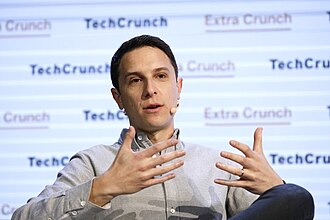 Guest
Robby Stein
VP of Product, Google Search (formerly head of product at Instagram)
Google1 source · 16 tips Founder story
Sergey Brin
Founders of Google
Google1 source · 20 tips