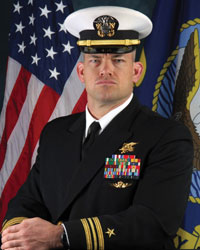
Jocko Willink
Author of the Way of the Warrior Kid books and Discipline Equals Freedom
Where to hear and read about Jocko Willink1 episode or test

Jocko Willink is a former Navy SEAL and the author of Extreme Ownership, Discipline Equals Freedom and the Way of the Warrior Kid books, one of which became an $80 million Apple film with Chris Pratt. The most useful thing to learn from him is his daily 1,000 words, built on an outline and on accepting that some of it is trash.
In writing, you have to make the clay.
The Toughest Writing Lesson You'll Ever Get (Jocko Willink & Will Staples Interview)
Jocko Willink: the story and the lessons
1How Jocko Willink came to writing
Henry Rollins pulled Jocko toward the SEALs as a teenager. Jocko followed Rollins from show to show around New England, New York and New Jersey. At 13 he heard Rollins yell "I am the discipline".
Rollins had a "search and destroy" tattoo and didn't drink or do drugs, which led Jocko to ask how to become a commando. The SEALs looked like the least military unit and the hardest to get through, so he signed up.
He wrote stories and lyrics as a kid and chose an English degree. He played in bands as a kid. When the Navy sent him to college, he picked English because SEAL officers constantly write and read orders.
Leaders asking for his ideas on paper made him an author. After retiring, leaders kept asking for his ideas in writing, so he and his partner wrote them down. His framing sayings are Extreme Ownership, Discipline Equals Freedom and "Get After It".
He has written on planes, including Extreme Ownership. Echo Charles watched him write Warrior Kid book three on a plane and was struck that Jocko just made all this stuff up.
Jocko thinks SEAL teams attract creative people. Among a thousand recruits, open creative minds drift to the SEALs and special operations. Rigid, disciplined minds tend to pick the Marine Corps or the Rangers.
He says he would have gone Marine Corps himself. He names Jack Carr, who wanted to be an author before he wanted to be a SEAL, and Chris Kyle as examples.
2How Jocko Willink's book became an $80 million film
Jocko wrote Warrior Kid because kids' books lacked his values. He wanted to pass on compassion, grit and determination, and found kids' books didn't reflect them. The book became an $80 million Apple film starring Chris Pratt, with Will Staples writing the screenplay.
Chris Pratt came in as a customer of Jocko's products. Jared Shaw, a friend of Jack Carr's, trains Pratt and feeds him Jocko Fuel. Pratt wears Jocko's Origin clothing and called to partner up.
Producer Ben Everard was already pushing the film. His kids were doing push-ups as "warrior kids", and he drove to Jocko's gym to pitch the movie.
Jocko refused to pitch Pratt himself. Four or five unserious people had already approached him about the rights. His business team sent the script to Pratt's team instead.
Pratt read the whole script in one sitting and called Jocko to say he wanted in.
He steered the drafts and supplied the truth of Jake's struggles. Jocko guided Will's drafts and explained Uncle Jake's struggles to Chris Pratt. Will says he could not have written that truth from his outside view.
Looking at the result, Jocko says: "I don't think we could have done it any better."
Jocko wrote a perfect Uncle Jake and accepted a flawed one. For the book he wanted a paragon: "Uncle Jake is a superhero. Uncle Jake is perfect. I'm not." Will added resistance for the film, a wounded SEAL who wants to get back to his team.
Jocko calls it realistic, since a 35-year-old SEAL thinks about his deployment, not his nephew. Without the change, he says, the film would have been a two-dimensional cartoon aimed at 10 and 11 year olds.
3Jocko Willink's daily writing routine
Jocko writes 1,000 words a day, about an hour. He accepts that some of it is trash. Missing a day costs him about 15 minutes to get re-engaged, and two days means almost reviewing the whole thing.
"Thousand words a day."
He outlines first so each day only fills in blanks. He outlines what happens, then the elements of each chapter. He writes in order because he thinks in order.
He likes Tarantino's jumbled order, as in the Reservoir Dogs opening, but still calls himself a chronological thinker. Writing daily means he remembers everything and skips the rereading.
He stops mid-section so tomorrow's start is already set. He does the Hemingway thing: he quits with the next piece mapped, a line like "next is this and maybe a little bit of that".
The next day he has a prompt "already sitting that's going to take me in the right direction".
Jocko treats the rough draft as making the clay. A sculptor can buy clay, but a writer has to mine it. He calls the vomit draft manual labor and the shaving and swapping of words afterward the fun part.
His rule is to do the hard mining first and not wait to feel like it.
He edits in passes, like mowing grass from tall to short. A first draft is wheat. He trims it to six inches, still finds rocks and weeds, then cuts closer until it is a quarter-inch green where every terrain feature shows.
If you only look at two-foot grass you see nothing, so keep cutting lower.
Jocko calls editing a game with no rules. He agrees editing is hard but calls it a linguistic game. Navy evaluations gave 17 lines per person, and empty space read as a leader who didn't care, so he maxed them out.
A crossword has rules. Editing your own work doesn't: "You can literally do whatever you want." He says it may be a personality thing.
When the spark is missing, he squeezes his brain. Jocko says the human spark can't be manufactured, only coaxed out. Sometimes he writes more, and sometimes he walks away.
A speech from ChatGPT can fall completely flat. Halftime clips show a coach's guts, not his playbook.
4Jocko Willink on discipline and wanting to write
Jocko says nothing happens without discipline. Discipline is what brings creative ideas out, which is why he wrote Discipline Equals Freedom.
Many people say they're thinking about writing. His answer is to write it or don't. The barrier to entry is zero, yet it is so massive that people rarely follow through.
He tells would-be writers to find 30 minutes for 500 words. If you can't find 30 minutes for 500 words a day, he says you don't really want to write. He tells such a writer to focus on a normal career instead, such as selling insurance.
Real desire should feel like needing to throw up, an idea you can't stop thinking about. His book opens the same way: the shortcut is a lie and the only way is discipline. His closing line to the aspirant: "Otherwise, don't talk to me."
He would have students dissect a moment they transformed. The heroic arc shows a loser or failure becoming someone new, as Rocky does. We admire the change because the hero acts for others.
In his book Final Spin, one kid works at a big box store and another in a laundromat, and drilling into their worlds sets up their change. He asks students to explain why we admire the move instead of admonishing it.
5Jocko Willink's use of real experience in Warrior Kid
Jocko wrote eulogies for friends killed in combat. After friends died, he wrote and gave their eulogies, and found it therapeutic. It took him a few years to see how helpful writing was.
His belief that talking through pain heals came from his own life.
He had his son write to a fallen friend's mother. Seth Stone was close to Jocko's family and took his son surfing and to UFC fights. After writing the letter, his son never asked for any more help.
That became the scene where Mark asks Uncle Jake to tell him what happened. Jocko says it translated completely into the movie, and the audience can feel Pratt's release.
Jocko wrote the truthful scenes himself. Will asked, "What's the truthful thing here?" Jocko mined his own experience and wrote those scenes, and worked with Chris Pratt so he understood what was being channeled.
The scenes weren't in the kid-aimed book. Now adults feel them too.
He agreed to cut a scene built on real conversations. Uncle Jake's scene with the mother of a man killed in combat drew on Jocko's own talks with grieving families. He told Pratt to make her laugh, make her remember her son, and tell her what she didn't know.
Director McG pulled the camera back instead of ending the scene. It was cut because it added one more giant emotional thing that distracted from the main story, and Jocko agreed.
6How Jocko Willink thinks about character, dialogue and story
Shakespeare taught Jocko how deep writing can go. A normal vocabulary is about 5,000 to 7,000 words, and Shakespeare used about 40,000. Reading him takes a dictionary and work.
It taught him to read carefully, since a word should mean this, but in that context right there. His favorites are Henry V, Hamlet and, surprisingly, Richard III.
He writes characters from their nature. Jocko compares characters to wood: pine differs from oak, and every piece of pine has its own knot and grain. Knowing Uncle Jake's nature, he already knows what Jake will say.
Humans are "infinitely the same" and "infinitely different". The writer asks what this nature drives one person to do that others wouldn't.
He favors elevated dialogue that sits just below notice. The Billions crew gave him the term. Characters say awesome things without it feeling staged, and you notice only on rewatching.
The Good Will Hunting park bench scene works this way. It's cool at first, then after repeated viewings you agree with every line. He says the staged feeling "sits just below your consciousness."
Jocko names Quint and Colonel Kilgore as great scenes. His picks are Quint on the USS Indianapolis in Jaws and Colonel Kilgore on napalm in Apocalypse Now. He wouldn't change a word of either.
He compares story payoffs to a punchline. Wait too long and people guess it. Deliver it too fast and they had no time to hang on the moment.
"You've got to set it up and then spike it." He applies the same rule to jokes, stories and songs.
Jocko left a setup unpaid so the film felt less engineered. A storyteller gets credit for calling back to something early on, but Warrior Kid had nine setups, all checked off at the end. It felt "genetically engineered", so one was dropped.
The dropped one was the leverage lesson Jocko gives Mark, originally used to escape a bad situation later. He compares it to a real diamond, which has flaws, versus a flawless cubic zirconia.
He and Will changed the ending so Mark wins alone. In the book, Uncle Jake is there until the final scene, which isn't a fight. In the film Jake is extracted before the big match, so Mark must win without his coach.
The message stays the same: you've got this on your own. Will and Jocko batted the idea back and forth.

The Toughest Writing Lesson You'll Ever Get (Jocko Willink & Will Staples Interview)
Jocko Willink and Will Staples explain how a children's book became an $80 million film, from a daily word count to building a story around theme and memorable moments. The most useful ideas are Jocko's 1,000 words a day and Will's habit of boiling a story down to a two minute pitch before building it.
Henry Rollins pulled Jocko toward the SEALs as a teenager. Jocko followed Rollins from show to show around New England, New York and New Jersey. At 13 he heard Rollins yell "I am the discipline".
Rollins had a "search and destroy" tattoo and didn't drink or do drugs, which led Jocko to ask how to become a commando. The SEALs looked like the least military unit and the hardest to get through, so he signed up.
He wrote stories and lyrics as a kid and chose an English degree. He played in bands as a kid. When the Navy sent him to college, he picked English because SEAL officers constantly write and read orders.
Leaders asking for his ideas on paper made him an author. After retiring, leaders kept asking for his ideas in writing, so he and his partner wrote them down. His framing sayings are Extreme Ownership, Discipline Equals Freedom and "Get After It".
He has written on planes, including Extreme Ownership. Echo Charles watched him write Warrior Kid book three on a plane and was struck that Jocko just made all this stuff up.
Jocko thinks SEAL teams attract creative people. Among a thousand recruits, open creative minds drift to the SEALs and special operations. Rigid, disciplined minds tend to pick the Marine Corps or the Rangers.
He says he would have gone Marine Corps himself. He names Jack Carr, who wanted to be an author before he wanted to be a SEAL, and Chris Kyle as examples.
Jocko wrote Warrior Kid because kids' books lacked his values. He wanted to pass on compassion, grit and determination, and found kids' books didn't reflect them. The book became an $80 million Apple film starring Chris Pratt, with Will Staples writing the screenplay.
Chris Pratt came in as a customer of Jocko's products. Jared Shaw, a friend of Jack Carr's, trains Pratt and feeds him Jocko Fuel. Pratt wears Jocko's Origin clothing and called to partner up.
Producer Ben Everard was already pushing the film. His kids were doing push-ups as "warrior kids", and he drove to Jocko's gym to pitch the movie.
Jocko refused to pitch Pratt himself. Four or five unserious people had already approached him about the rights. His business team sent the script to Pratt's team instead.
Pratt read the whole script in one sitting and called Jocko to say he wanted in.
He steered the drafts and supplied the truth of Jake's struggles. Jocko guided Will's drafts and explained Uncle Jake's struggles to Chris Pratt. Will says he could not have written that truth from his outside view.
Looking at the result, Jocko says: "I don't think we could have done it any better."
Jocko wrote a perfect Uncle Jake and accepted a flawed one. For the book he wanted a paragon: "Uncle Jake is a superhero. Uncle Jake is perfect. I'm not." Will added resistance for the film, a wounded SEAL who wants to get back to his team.
Jocko calls it realistic, since a 35-year-old SEAL thinks about his deployment, not his nephew. Without the change, he says, the film would have been a two-dimensional cartoon aimed at 10 and 11 year olds.
Jocko writes 1,000 words a day, about an hour. He accepts that some of it is trash. Missing a day costs him about 15 minutes to get re-engaged, and two days means almost reviewing the whole thing.
"Thousand words a day."
He outlines first so each day only fills in blanks. He outlines what happens, then the elements of each chapter. He writes in order because he thinks in order.
He likes Tarantino's jumbled order, as in the Reservoir Dogs opening, but still calls himself a chronological thinker. Writing daily means he remembers everything and skips the rereading.
He stops mid-section so tomorrow's start is already set. He does the Hemingway thing: he quits with the next piece mapped, a line like "next is this and maybe a little bit of that".
The next day he has a prompt "already sitting that's going to take me in the right direction".
Jocko treats the rough draft as making the clay. A sculptor can buy clay, but a writer has to mine it. He calls the vomit draft manual labor and the shaving and swapping of words afterward the fun part.
His rule is to do the hard mining first and not wait to feel like it.
He edits in passes, like mowing grass from tall to short. A first draft is wheat. He trims it to six inches, still finds rocks and weeds, then cuts closer until it is a quarter-inch green where every terrain feature shows.
If you only look at two-foot grass you see nothing, so keep cutting lower.
Jocko calls editing a game with no rules. He agrees editing is hard but calls it a linguistic game. Navy evaluations gave 17 lines per person, and empty space read as a leader who didn't care, so he maxed them out.
A crossword has rules. Editing your own work doesn't: "You can literally do whatever you want." He says it may be a personality thing.
When the spark is missing, he squeezes his brain. Jocko says the human spark can't be manufactured, only coaxed out. Sometimes he writes more, and sometimes he walks away.
A speech from ChatGPT can fall completely flat. Halftime clips show a coach's guts, not his playbook.
Jocko says nothing happens without discipline. Discipline is what brings creative ideas out, which is why he wrote Discipline Equals Freedom.
Many people say they're thinking about writing. His answer is to write it or don't. The barrier to entry is zero, yet it is so massive that people rarely follow through.
He tells would-be writers to find 30 minutes for 500 words. If you can't find 30 minutes for 500 words a day, he says you don't really want to write. He tells such a writer to focus on a normal career instead, such as selling insurance.
Real desire should feel like needing to throw up, an idea you can't stop thinking about. His book opens the same way: the shortcut is a lie and the only way is discipline. His closing line to the aspirant: "Otherwise, don't talk to me."
He would have students dissect a moment they transformed. The heroic arc shows a loser or failure becoming someone new, as Rocky does. We admire the change because the hero acts for others.
In his book Final Spin, one kid works at a big box store and another in a laundromat, and drilling into their worlds sets up their change. He asks students to explain why we admire the move instead of admonishing it.
Jocko wrote eulogies for friends killed in combat. After friends died, he wrote and gave their eulogies, and found it therapeutic. It took him a few years to see how helpful writing was.
His belief that talking through pain heals came from his own life.
He had his son write to a fallen friend's mother. Seth Stone was close to Jocko's family and took his son surfing and to UFC fights. After writing the letter, his son never asked for any more help.
That became the scene where Mark asks Uncle Jake to tell him what happened. Jocko says it translated completely into the movie, and the audience can feel Pratt's release.
Jocko wrote the truthful scenes himself. Will asked, "What's the truthful thing here?" Jocko mined his own experience and wrote those scenes, and worked with Chris Pratt so he understood what was being channeled.
The scenes weren't in the kid-aimed book. Now adults feel them too.
He agreed to cut a scene built on real conversations. Uncle Jake's scene with the mother of a man killed in combat drew on Jocko's own talks with grieving families. He told Pratt to make her laugh, make her remember her son, and tell her what she didn't know.
Director McG pulled the camera back instead of ending the scene. It was cut because it added one more giant emotional thing that distracted from the main story, and Jocko agreed.
Shakespeare taught Jocko how deep writing can go. A normal vocabulary is about 5,000 to 7,000 words, and Shakespeare used about 40,000. Reading him takes a dictionary and work.
It taught him to read carefully, since a word should mean this, but in that context right there. His favorites are Henry V, Hamlet and, surprisingly, Richard III.
He writes characters from their nature. Jocko compares characters to wood: pine differs from oak, and every piece of pine has its own knot and grain. Knowing Uncle Jake's nature, he already knows what Jake will say.
Humans are "infinitely the same" and "infinitely different". The writer asks what this nature drives one person to do that others wouldn't.
He favors elevated dialogue that sits just below notice. The Billions crew gave him the term. Characters say awesome things without it feeling staged, and you notice only on rewatching.
The Good Will Hunting park bench scene works this way. It's cool at first, then after repeated viewings you agree with every line. He says the staged feeling "sits just below your consciousness."
Jocko names Quint and Colonel Kilgore as great scenes. His picks are Quint on the USS Indianapolis in Jaws and Colonel Kilgore on napalm in Apocalypse Now. He wouldn't change a word of either.
He compares story payoffs to a punchline. Wait too long and people guess it. Deliver it too fast and they had no time to hang on the moment.
"You've got to set it up and then spike it." He applies the same rule to jokes, stories and songs.
Jocko left a setup unpaid so the film felt less engineered. A storyteller gets credit for calling back to something early on, but Warrior Kid had nine setups, all checked off at the end. It felt "genetically engineered", so one was dropped.
The dropped one was the leverage lesson Jocko gives Mark, originally used to escape a bad situation later. He compares it to a real diamond, which has flaws, versus a flawless cubic zirconia.
He and Will changed the ending so Mark wins alone. In the book, Uncle Jake is there until the final scene, which isn't a fight. In the film Jake is extracted before the big match, so Mark must win without his coach.
The message stays the same: you've got this on your own. Will and Jocko batted the idea back and forth.