Jenny Uglow
Author of The Lunar Men
Where to hear and read about Jenny Uglow1 book
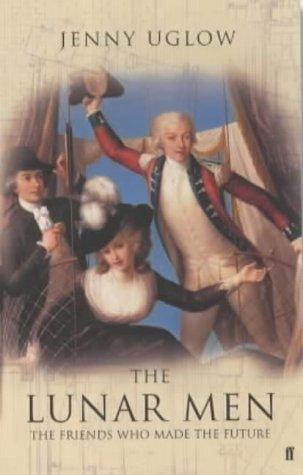
Jenny Uglow is the author of The Lunar Men (2002), a history of the Birmingham circle of manufacturers, doctors and amateurs who turned new science into products between 1730 and 1810. The lesson most worth taking from her account is that breakthroughs need both open exchange among makers and thinkers and a backer with the muscle to build, price and ship.
Jenny Uglow: the story and the lessons
1Jenny Uglow and The Lunar Men
Uglow wrote The Lunar Men, a history of an inventing circle. The book came out in 2002, subtitled The Inventors of the Modern World, 1730 to 1810. Its subjects were provincial manufacturers, doctors and amateurs who met monthly near the full moon.
The moon gave them light to ride home by, so the schedule was practical, not symbolic.
She argues a small mixed club helped push Britain into the industrial age. The Prologue says the circle pushed British society over the threshold by mixing science, industry, art and ideals with no walls between them.
They turned new science into the steam engine, Queen's Ware and soda water by pairing inventors with backers, measuring carefully and sharing ideas freely.
Uglow builds the story around four lives: Darwin, Boulton, Watt and Wedgwood. Early chapters follow each man's formation: Darwin's medicine, Boulton's Birmingham, Watt's Glasgow circle and Wedgwood's Staffordshire pottery.
Watt grows from a sickly Greenock craftsman's son into an instrument-maker. Wedgwood comes from a craft where every good potter was also an experimental chemist.
She follows the circle to its fading rather than stopping at the triumphs. By 1813 the members called the Society a hollow shell. Its books went by lottery, and Samuel Galton won the lot.
The Epilogue gives the legacy as the confident belief that knowledge brings power and that this power should belong to everyone.
2How Uglow shows an idea becoming a product
Uglow shows Watt solving the engine by measuring its waste first. The Newcomen cylinder had to stay hot to save fuel yet be cooled to make a vacuum. Watt moved condensing into a separate vessel. His kettle test raised the water level by a sixth, and Joseph Black's latent heat explained it.
A model built within days predicted lifting water to 44 feet on the steam Newcomen engines used for 32. Watt said: "I had not walked further than the Golf-house when the whole thing was arranged in my mind."
She shows a working model stalling until a world-scale backer arrived. Boulton refused rights for three counties and promised engines 20 per cent cheaper and far more accurate, as an instrument maker is to a blacksmith. A dedicated works only paid if it served everyone.
He wrote: "I find it very well worth my while to make for all the world." Wilkinson's boring bar then solved precision, and the Bloomfield engine of March 1776 drained nearly sixty feet of water in under an hour.
Boulton and Watt priced Cornish engines on the coal they saved. The premium was a third of the yearly coal saved against a Newcomen engine, read from a counter on the engine. Boulton later swapped the variable formula for fixed sums, such as £1,500 for two engines at Poldice.
He also deferred full payment until engines ran at full load. His view was that "a hard bargain, he said, was a bad bargain."
Uglow shows Cornwall won by starting with the receptive buyers. Copper prices fell, so fuel was the only place left to save. The first orders came from the eastern mines, and Wheal Busy was running by September 1777.
Watt left the engine noisy because the noise conveyed power to spectators. William Murdoch went to Cornwall in autumn 1779, stayed twenty-one years and became the only man Watt fully trusted.
She shows Watt inventing horsepower when coal savings stopped working as a price. Brewery engines replaced horses, not older engines, so there was no coal saving to charge for. Watt rated a horse at 33,000 lbs raised one foot per minute.
Whitbread's engine, rated at ten horses, did the work of 14. London breweries and a corn mill served as showcases to sell power everywhere.
Uglow shows Wedgwood using royal prestige only after the ware was good. He took a gilded tea-set order for Queen Charlotte that no one else would touch, became Potter to Her Majesty and saw creamware renamed Queen's Ware. The King then ordered a Royal Pattern service.
He concluded patrons deserved as much effort and money as design, but only for a product already cheap and durable. When the vase craze peaked, he sold to the middling class at reduced prices.
She shows showpieces judged by reach rather than margin. Catherine the Great's Frog Service, a 952 piece base costing £51 plus 1,244 hand-painted views, cost over £2,500 against a price just above that. Displayed in London, it drew the nobility and the Queen.
Boulton's scientific clocks drew praise but no buyers. One returned from Russia with the verdict that it did not strike the hours or play any tune.
3How Uglow shows the Lunar men running the work
Wedgwood's numbered experiment book anchors her account of his method. He began it in early 1759, when the trade seemed stale and demand was falling. It grew to nearly five thousand trials over thirty-five years.
The habit let him grind through jasper, mastered only in late 1777. He said: "We must have our Hobby Horse, & mount him, & mount him again if he throws us ten times a day."
She shows Wedgwood costing every stage when sales outran his cash. In 1771 money sat in expenses and unsold stock, and ornamental prices ignored true cost. He built a price book from raw material to shop counter, lengthened runs and cut unit prices.
In April 1773 the Potters' General Assembly agreed to cut prices by 20 per cent.
Wedgwood kept the steady useful line apart from the risky ornamental one. Useful ware sat with his cousin Thomas and ornamental ware with Bentley, each with its own workshops, ovens, sales and accounts. He refused Bentley's proposal to merge them.
By 1769 he had two specialized factories and 150 employees, thirty of them on vases.
Uglow shows canals won by coalition and plain numbers. Garbett calculated Baltic merchants could save up to fifteen shillings a ton. Wedgwood recruited manufacturers, salt makers and Liverpool merchants, and Lord Gower chaired the 30 December 1765 meeting. The Act got Royal Assent in May 1766.
Wedgwood wanted the pamphlet to disappoint readers with "the manly Simplicity of Truth" and would not let wording delay printing.
She credits William Small as a connector with no turf to defend. Keir and Watt were secretly racing to turn salt into soda. Small knew both secrets and put them in touch, so they worked together after Roebuck invited Keir to Kinneil in 1770.
After Small died and the American War split the friends, they set a monthly meeting on the Sunday nearest the full moon, dined at two and stayed until at least eight, with politics set aside.
4Why Uglow says good ideas stalled
She shows Watt losing priority on water by holding back his letter. Lavoisier's paper was read on 12 November 1783 and Cavendish's on 15 January 1784. Watt's was not heard until May 1784.
Scheele also lost credit for oxygen through delay. Priestley published his soda-water method openly, and others commercialized it.
Uglow shows a loved theory making the group rename a discovery. Priestley read his mercury calx result through phlogiston and called the gas dephlogisticated air. Lavoisier weighed materials before and after burning and built the theory that replaced it.
Keir said he believed in neither phlogiston nor oxygene. Darwin told Watt to check whether the facts hold, then whether the theory binds them together, and Watt gave in. The holdouts were not simply wrong, since Lavoisier's caloric was itself mistaken.
She shows broad patents and lawsuits costing Boulton and Watt their market. Watt's 1784 patent claimed any steam use on a wheeled carriage and blocked Murdoch's own carriage work. They won in court in January 1799, yet Cornish royalties owing stood at £162,052 3s 7d.
Mine owners paid only part, the firm lost Cornwall, and Trevithick's high-pressure engines spread anyway.
Uglow shows unsettled credit ending the Darwin and Withering partnership. In 1780 Darwin printed five digitalis cures inside his dead son's thesis without naming Withering. The two hardly spoke again.
Withering had been gathering notes and was enraged. The row spilled into later fights over botany translations.
She shows confident experimenters harming the people they used as material. Thomas Day raised two orphan girls to find an ideal wife and judged one poor material when it failed. Edgeworth raised his son by Rousseau's rules and the boy refused all control.
Darwin also treated the infant Mary Anne Wedgwood with electric shocks and rising laudanum doses, and she died in 1786, aged eight.
Uglow traces the circle closing after the 1791 riots into secrecy. A mob burned Priestley's house and laboratory in July 1791. Soho stopped showing visitors round the works in 1802, and Keir took his alkali formula to the grave.
Boulton and Watt discouraged Murdoch's gas lighting and talked him out of a patent. They backed it only after Gregory Watt saw a demonstration in Paris, and all of Soho then blazed with gaslight for the Peace of Amiens.
She shows Edgeworth pushing a telegraph that a working rival had already beaten. Chappe had sixteen stations from Paris to Lille in 1791. Edgeworth lobbied the Irish Government and the Admiralty until 1804 and never won adoption.
The Lunar Men: The Inventors of the Modern World, 1730–1810
A small Birmingham circle of manufacturers, doctors and amateurs turned new science into products such as the steam engine, Queen's Ware and soda water by pairing inventors with backers, measuring carefully and sharing ideas freely. Its history shows in concrete detail how new ideas displace established ones through value pricing, showcases, coalitions and persistence, and how they stall through delay, secrecy, broken credit and weak execution.
Uglow wrote The Lunar Men, a history of an inventing circle. The book came out in 2002, subtitled The Inventors of the Modern World, 1730 to 1810. Its subjects were provincial manufacturers, doctors and amateurs who met monthly near the full moon.
The moon gave them light to ride home by, so the schedule was practical, not symbolic.
She argues a small mixed club helped push Britain into the industrial age. The Prologue says the circle pushed British society over the threshold by mixing science, industry, art and ideals with no walls between them.
They turned new science into the steam engine, Queen's Ware and soda water by pairing inventors with backers, measuring carefully and sharing ideas freely.
Uglow builds the story around four lives: Darwin, Boulton, Watt and Wedgwood. Early chapters follow each man's formation: Darwin's medicine, Boulton's Birmingham, Watt's Glasgow circle and Wedgwood's Staffordshire pottery.
Watt grows from a sickly Greenock craftsman's son into an instrument-maker. Wedgwood comes from a craft where every good potter was also an experimental chemist.
She follows the circle to its fading rather than stopping at the triumphs. By 1813 the members called the Society a hollow shell. Its books went by lottery, and Samuel Galton won the lot.
The Epilogue gives the legacy as the confident belief that knowledge brings power and that this power should belong to everyone.
Uglow shows Watt solving the engine by measuring its waste first. The Newcomen cylinder had to stay hot to save fuel yet be cooled to make a vacuum. Watt moved condensing into a separate vessel. His kettle test raised the water level by a sixth, and Joseph Black's latent heat explained it.
A model built within days predicted lifting water to 44 feet on the steam Newcomen engines used for 32. Watt said: "I had not walked further than the Golf-house when the whole thing was arranged in my mind."
She shows a working model stalling until a world-scale backer arrived. Boulton refused rights for three counties and promised engines 20 per cent cheaper and far more accurate, as an instrument maker is to a blacksmith. A dedicated works only paid if it served everyone.
He wrote: "I find it very well worth my while to make for all the world." Wilkinson's boring bar then solved precision, and the Bloomfield engine of March 1776 drained nearly sixty feet of water in under an hour.
Boulton and Watt priced Cornish engines on the coal they saved. The premium was a third of the yearly coal saved against a Newcomen engine, read from a counter on the engine. Boulton later swapped the variable formula for fixed sums, such as £1,500 for two engines at Poldice.
He also deferred full payment until engines ran at full load. His view was that "a hard bargain, he said, was a bad bargain."
Uglow shows Cornwall won by starting with the receptive buyers. Copper prices fell, so fuel was the only place left to save. The first orders came from the eastern mines, and Wheal Busy was running by September 1777.
Watt left the engine noisy because the noise conveyed power to spectators. William Murdoch went to Cornwall in autumn 1779, stayed twenty-one years and became the only man Watt fully trusted.
She shows Watt inventing horsepower when coal savings stopped working as a price. Brewery engines replaced horses, not older engines, so there was no coal saving to charge for. Watt rated a horse at 33,000 lbs raised one foot per minute.
Whitbread's engine, rated at ten horses, did the work of 14. London breweries and a corn mill served as showcases to sell power everywhere.
Uglow shows Wedgwood using royal prestige only after the ware was good. He took a gilded tea-set order for Queen Charlotte that no one else would touch, became Potter to Her Majesty and saw creamware renamed Queen's Ware. The King then ordered a Royal Pattern service.
He concluded patrons deserved as much effort and money as design, but only for a product already cheap and durable. When the vase craze peaked, he sold to the middling class at reduced prices.
She shows showpieces judged by reach rather than margin. Catherine the Great's Frog Service, a 952 piece base costing £51 plus 1,244 hand-painted views, cost over £2,500 against a price just above that. Displayed in London, it drew the nobility and the Queen.
Boulton's scientific clocks drew praise but no buyers. One returned from Russia with the verdict that it did not strike the hours or play any tune.
Wedgwood's numbered experiment book anchors her account of his method. He began it in early 1759, when the trade seemed stale and demand was falling. It grew to nearly five thousand trials over thirty-five years.
The habit let him grind through jasper, mastered only in late 1777. He said: "We must have our Hobby Horse, & mount him, & mount him again if he throws us ten times a day."
She shows Wedgwood costing every stage when sales outran his cash. In 1771 money sat in expenses and unsold stock, and ornamental prices ignored true cost. He built a price book from raw material to shop counter, lengthened runs and cut unit prices.
In April 1773 the Potters' General Assembly agreed to cut prices by 20 per cent.
Wedgwood kept the steady useful line apart from the risky ornamental one. Useful ware sat with his cousin Thomas and ornamental ware with Bentley, each with its own workshops, ovens, sales and accounts. He refused Bentley's proposal to merge them.
By 1769 he had two specialized factories and 150 employees, thirty of them on vases.
Uglow shows canals won by coalition and plain numbers. Garbett calculated Baltic merchants could save up to fifteen shillings a ton. Wedgwood recruited manufacturers, salt makers and Liverpool merchants, and Lord Gower chaired the 30 December 1765 meeting. The Act got Royal Assent in May 1766.
Wedgwood wanted the pamphlet to disappoint readers with "the manly Simplicity of Truth" and would not let wording delay printing.
She credits William Small as a connector with no turf to defend. Keir and Watt were secretly racing to turn salt into soda. Small knew both secrets and put them in touch, so they worked together after Roebuck invited Keir to Kinneil in 1770.
After Small died and the American War split the friends, they set a monthly meeting on the Sunday nearest the full moon, dined at two and stayed until at least eight, with politics set aside.
She shows Watt losing priority on water by holding back his letter. Lavoisier's paper was read on 12 November 1783 and Cavendish's on 15 January 1784. Watt's was not heard until May 1784.
Scheele also lost credit for oxygen through delay. Priestley published his soda-water method openly, and others commercialized it.
Uglow shows a loved theory making the group rename a discovery. Priestley read his mercury calx result through phlogiston and called the gas dephlogisticated air. Lavoisier weighed materials before and after burning and built the theory that replaced it.
Keir said he believed in neither phlogiston nor oxygene. Darwin told Watt to check whether the facts hold, then whether the theory binds them together, and Watt gave in. The holdouts were not simply wrong, since Lavoisier's caloric was itself mistaken.
She shows broad patents and lawsuits costing Boulton and Watt their market. Watt's 1784 patent claimed any steam use on a wheeled carriage and blocked Murdoch's own carriage work. They won in court in January 1799, yet Cornish royalties owing stood at £162,052 3s 7d.
Mine owners paid only part, the firm lost Cornwall, and Trevithick's high-pressure engines spread anyway.
Uglow shows unsettled credit ending the Darwin and Withering partnership. In 1780 Darwin printed five digitalis cures inside his dead son's thesis without naming Withering. The two hardly spoke again.
Withering had been gathering notes and was enraged. The row spilled into later fights over botany translations.
She shows confident experimenters harming the people they used as material. Thomas Day raised two orphan girls to find an ideal wife and judged one poor material when it failed. Edgeworth raised his son by Rousseau's rules and the boy refused all control.
Darwin also treated the infant Mary Anne Wedgwood with electric shocks and rising laudanum doses, and she died in 1786, aged eight.
Uglow traces the circle closing after the 1791 riots into secrecy. A mob burned Priestley's house and laboratory in July 1791. Soho stopped showing visitors round the works in 1802, and Keir took his alkali formula to the grave.
Boulton and Watt discouraged Murdoch's gas lighting and talked him out of a patent. They backed it only after Gregory Watt saw a demonstration in Paris, and all of Soho then blazed with gaslight for the Peace of Amiens.
She shows Edgeworth pushing a telegraph that a working rival had already beaten. Chappe had sixteen stations from Paris to Lille in 1791. Edgeworth lobbied the Irish Government and the Admiralty until 1804 and never won adoption.