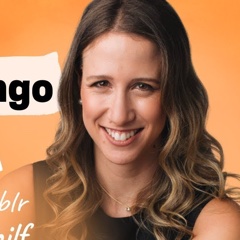
Gina Gotthilf
Co-founder and COO of Latitud, former head of growth and marketing at Duolingo
Where to hear and read about Gina Gotthilf1 episode or test

Gina Gotthilf is co-founder and COO of Latitud and led growth and marketing at Duolingo as it went from 3 million to over 200 million users, mostly through organic channels. The lesson most worth taking is to build growth on a real mission, retention and constant testing, and to keep a brand voice so distinct that no other company could have written it.
Either it's actually providing real value or it's not. If it's providing real value, people stick around. It's as simple as that.
Scaling Duolingo, embracing failure, and insight into Latin America’s tech scene | Gina Gotthilf
Gina Gotthilf: the story and the lessons
1Gina Gotthilf's path from rejections to Duolingo
Gotthilf's early career was a run of rejections and setbacks. She dropped out of Reed College after a deep depression, and a counselor said she had nothing to show for it. Most of her hundred job applications went unanswered, she lost her visa twice, and she was fired or laid off repeatedly.
She once wanted to be an actress or a dolphin trainer, and her parents talked her out of it. Her takeaway is to tell your story and understand what others see as valuable.
She went unpaid at Tumblr for six months, then was laid off. Tumblr could not wire money to Brazil, so she worked six months without pay. She was laid off when Tumblr sold to Yahoo.
She ran growth for Tumblr in Latin America.
A consulting gig at 26 turned into a full Duolingo career. She was recommended as a consultant to grow Duolingo in Brazil, then Chile, Argentina and Mexico. She then went full-time to cover Japan, China, Korea, Turkey, Spain and France.
She left five years later with no plan, and the Bloomberg campaign she joined next did not win. She cites Marcus Aurelius: our life is actually very long, we just use it really badly.
She tells careers as A sides and B sides. Like a mixtape, every story has an A side that impresses and a B side pushed under the rug. Public stories show only the A side, so ordinary B moments feel like personal failure.
Her own A side includes meeting Obama and Andreessen Horowitz investing in her company. The same framing applies to Latin America, whose B side is danger and messy governments and whose A side is tech.
2How Gotthilf grew Duolingo with almost no ad spend
Duolingo's mission was a real problem, not a vitamin. Learning English can double or triple a person's income in a developing market like Latin America. That made the mission something people needed.
Few believed in it at first: critics said language learning was niche, education has no money, and Rosetta Stone already existed. She calls herself a survivorship-bias case, since she rode the plane that came back.
The mission let a Pittsburgh team hire top people. The belief that education should be free let Duolingo hire top people without Google pay. It shaped how the company hired, marketed and designed.
She distrusts ed tech founders who build mainly to make money, because that drive leads to short-term choices.
She delayed paid acquisition until an LTV existed. Subscriptions and ads only started around year three, so Duolingo had no LTV and a CAC made no sense. Her mandate was to make it grow with no budget, and she says she is weak at paid ads.
Paid users become an addiction you cannot switch off once you need their growth: "it's almost like an addiction". Early bets on translations and the Duolingo English Test were long-term plays that bought time.
She used small paid budgets only to test. Paid traffic can supply the users needed for statistically significant tests, and it can try messaging, images and value propositions on a landing page.
Once you find your ideal user and where they are, she says to work out how to reach them organically.
She put the mission into the paywall copy. Adding the line "By paying for Duolingo, you're making language learning accessible to millions of people" improved paid conversion.
The mission can live in product copy and not just in marketing.
She counts A/B testing and product-led growth as organic. At any stage she hires people who can evaluate data and learn from it. An early startup should look for 20 to 30% gains, not 5%.
3Gotthilf on retention and data rigor
Retention means the product gives real value to someone. She names retention the most important driver of growth for any tech product and a key reason Duolingo lasted as a consumer subscription business.
She advises finding your most valuable users early. Skip that and acquisition metrics can convince you while retention is built on the wrong users.
Copying Duolingo's design without the data habit fails. Founders show her near-exact Duolingo clones with no engineers or PMs reading Mixpanel daily. She compares it to copying the best student's answer: the next question still defeats you.
She sees the same gap in Latin America, where teams outsource code or growth. Data and hypothesis rigor was Duolingo's culture from day one.
Most Duolingo experiments failed, and the team kept running them. More than 50% of A/B tests did not work out. Experiments were ranked by ROI, measured in expected users, DAUs and time invested.
4Gotthilf's failed bets and what she changed
A stripped-down badges test killed a good idea for months. The team held badges back for six months, then tested a version where users just got a badge at signup. It failed, and they dropped the idea for another eight months.
Badges later lifted almost every metric and let the app ask users to find friends or buy things. Her lesson: "no one is proud of signing up." She tells the story like the "my weakness is perfectionism" answer, since it ended in a win.
Nobody had used the experiments, so dogfooding became standard. The team prioritized hypotheses and wrote careful reports, but never tried the badge itself. Had they, they would have seen it was weak.
Testing experiments internally became practice. She had the same conversation with her new Latitud engineers, from Nubank and Twilio, the day before the interview.
Several bets failed because the team never saw real users. DuoDuels, a social dueling feature, went unused and nobody learned why. Duolingo for Schools never picked up.
China and India taught her to check local reality first. China hit a million downloads in a day, then was blocked, and one-star ratings made recovery hard. In India the app offered English speakers French, Spanish and German, but they wanted to learn English.
Most Indians keep their phone UI in English because typing Hindi is hard. Visiting the market revealed the problem.
She trusts her own confusion as a user. When something feels wrong while using a product, she treats it as signal that others are confused too, without waiting for research.
At Latitud her own errors with wire transfer forms showed the banking team where users stumble. When instinct is hard to trust, she imagines what someone who knew the answers would think.
5Gotthilf's rules for a brand voice people remember
She asks of every line whether any other company could have written it. Duolingo wrote down what the voice sounds like, which words it uses, and what is too much or too little. The check applies to every line, from notifications to emails.
New hires from other backgrounds sometimes found the style unprofessional, so the answer had to be "Nope, this is the Duolingo way." The aim is a giggle or a "wait, what?"
Duolingo leaned into memes its own voice created. After five days of inactivity users got "This doesn't seem to be working. We'll stop sending them for now." A New Year's email with the crying Sad Duo was A/B tested on puddle size and tear count, and users then wrote their own versions.
Many people inside worried about brand image and wanted to revert. The voice gave permission to play along, and the safe option was a friendly, fluffy brand everyone likes.
She says the TikTok works because the brand allows it. A great social person needs a brand that allows irreverence. Without the unique voice and a willingness to take unorthodox risks in education, the TikTok could not exist.
Executives debated who Duo is and whether a line is a Duo thing to say. The company committed to being remembered, even if it sometimes rubs people the wrong way.
She ran one effectiveness post and one mission post a week. Proof that Duolingo works, backed by data, moved the needle on social. Behind-the-scenes team photos on Facebook got no interest.
The same themes went into PR pitches.
She pitches reporters transformed lives, not growth stats. Reporters ignore "my app grew 20% last month" but cover stories of people whose lives changed. She credits this approach with press results at Tumblr, Duolingo and Latitud.
A big idea like everyone deserving great education is stronger than "download a language app", whatever a person's politics.
Latitud's newsletter uses irreverent, self-deprecating humor. It jokes about Latinos and tech founders, with expressions that could sound offensive to outsiders but are not to Latinos. It helped Latitud grow fast in Latin America because readers see themselves in it.
She admits the line is tough to walk and that safe copy is easier to write but much less fun to read.
6Why Gotthilf treats every country as one market
She chases the common 95% before local differences. Every new market said "here it's different," yet a test that worked in one place usually worked everywhere. Her rule: if a test worked in one market, try it everywhere.
Local objections included green being a negative color, owls being poorly seen, and free things being seen as low value. Her reply: "Everyone likes free things." People like to think their country is different because it makes them feel special.
Separate country versions multiply code, tests and staff. Every added version is something to maintain forever, and time matters more than money for a startup. Over-focusing on marginal differences means too many changes too soon and very little learning.
The exceptions were India and China, and regulated industries or B2B need country detail. Duolingo was a consumer app with few regulatory issues.
7How Gotthilf tripled a landing page's conversion on the Bloomberg campaign
She fixed the step after the click, which nobody owned. The campaign spent roughly $1 million a day, and designers and copywriters were all assigned to the ads. She wrote copy and designed landing pages herself.
The second or third screen matters as much as the first, because that is where buckets leak. Doubling a page's effectiveness compounds the value of every ad feeding it.
Big spend gave test results several times a day. Landing page tests reached significance three or four times a day, against about two weeks at Duolingo. One page went from 3% to 12% conversion in a single day.
The drawback is that teams with lots of money go wild and lose sight of effectiveness.
Basic mobile-first best practices drove the gain. She kept core copy and the button above the fold, cut copy hard, and matched the title and button so a reader seeing only those two still understood. The page also had to match the ad that sent people there.
"If people only read the title and the button, they got it."
She designed for the emotion that drives action, and fear worked best. The message was that Covid would hit the US and cause deaths unless the president changed. Dark colors and a menacing image of Trump beat a ridiculous one.
The image must stay in the background and aid the message. Her rule is to understand how people will feel on seeing the page and whether that leads them to act.
8Why Gotthilf co-founded Latitud for Latin American startups
She sees it as a duty to use her privilege in Latin America. She says 99.9% of people in Latin America will not get the opportunities she had. Not using that privilege for lasting impact would mean "I kind of wasted my life."
She saw the gap while mentoring entrepreneurs in Japan and Brazil through Endeavor, where one-to-one calls could not scale. She met co-founder Brian Requarth at On Deck, and the CTO, Yuri, is the third co-founder.
Latitud is an operating system for early-stage founders. It addresses loneliness, the Silicon Valley gap and paperwork. The fellowship has 1,500 entrepreneurs, with four cohorts a year and about 600 applicants each.
The fund has backed 100 startups, and the second is about $25 million with a $30 million cap. A dashboard and a bank handle incorporation, FX and compliance. Joining is free, equity is taken only on investment, and products are paid.
Her Vamos Latam Summit gave founders access most lack. More than 5,000 people came, with over 70 speakers across two days. Ben Horowitz gave a fireside and the Rappi founder flew in from Miami.
The summit shared failures as well as wins. She believes access to information and resources can change the economy more than politics can.
She bets that solutions built for emerging markets travel. Latitud invested in Leadsales, which turns WhatsApp into a CRM, because much business there runs on WhatsApp. Latin American problems are similar enough that one country's solution can fit another.
She says upbringing makes founders there resourceful and resilient, and every vertical is open. She is curious how leapfrogging, as India and parts of Africa did with mobile, plays out with AI.

Scaling Duolingo, embracing failure, and insight into Latin America’s tech scene | Gina Gotthilf
Gina Gotthilf explains how Duolingo grew from 3 million to over 200 million users mostly through organic channels: lean spending, a retention focus, rigorous A/B testing and a distinctive brand voice. She also shares landing page lessons from the Bloomberg campaign, her failed experiments and why treating markets as one saves startups time.
Gotthilf's early career was a run of rejections and setbacks. She dropped out of Reed College after a deep depression, and a counselor said she had nothing to show for it. Most of her hundred job applications went unanswered, she lost her visa twice, and she was fired or laid off repeatedly.
She once wanted to be an actress or a dolphin trainer, and her parents talked her out of it. Her takeaway is to tell your story and understand what others see as valuable.
She went unpaid at Tumblr for six months, then was laid off. Tumblr could not wire money to Brazil, so she worked six months without pay. She was laid off when Tumblr sold to Yahoo.
She ran growth for Tumblr in Latin America.
A consulting gig at 26 turned into a full Duolingo career. She was recommended as a consultant to grow Duolingo in Brazil, then Chile, Argentina and Mexico. She then went full-time to cover Japan, China, Korea, Turkey, Spain and France.
She left five years later with no plan, and the Bloomberg campaign she joined next did not win. She cites Marcus Aurelius: our life is actually very long, we just use it really badly.
She tells careers as A sides and B sides. Like a mixtape, every story has an A side that impresses and a B side pushed under the rug. Public stories show only the A side, so ordinary B moments feel like personal failure.
Her own A side includes meeting Obama and Andreessen Horowitz investing in her company. The same framing applies to Latin America, whose B side is danger and messy governments and whose A side is tech.
Duolingo's mission was a real problem, not a vitamin. Learning English can double or triple a person's income in a developing market like Latin America. That made the mission something people needed.
Few believed in it at first: critics said language learning was niche, education has no money, and Rosetta Stone already existed. She calls herself a survivorship-bias case, since she rode the plane that came back.
The mission let a Pittsburgh team hire top people. The belief that education should be free let Duolingo hire top people without Google pay. It shaped how the company hired, marketed and designed.
She distrusts ed tech founders who build mainly to make money, because that drive leads to short-term choices.
She delayed paid acquisition until an LTV existed. Subscriptions and ads only started around year three, so Duolingo had no LTV and a CAC made no sense. Her mandate was to make it grow with no budget, and she says she is weak at paid ads.
Paid users become an addiction you cannot switch off once you need their growth: "it's almost like an addiction". Early bets on translations and the Duolingo English Test were long-term plays that bought time.
She used small paid budgets only to test. Paid traffic can supply the users needed for statistically significant tests, and it can try messaging, images and value propositions on a landing page.
Once you find your ideal user and where they are, she says to work out how to reach them organically.
She put the mission into the paywall copy. Adding the line "By paying for Duolingo, you're making language learning accessible to millions of people" improved paid conversion.
The mission can live in product copy and not just in marketing.
She counts A/B testing and product-led growth as organic. At any stage she hires people who can evaluate data and learn from it. An early startup should look for 20 to 30% gains, not 5%.
Retention means the product gives real value to someone. She names retention the most important driver of growth for any tech product and a key reason Duolingo lasted as a consumer subscription business.
She advises finding your most valuable users early. Skip that and acquisition metrics can convince you while retention is built on the wrong users.
Copying Duolingo's design without the data habit fails. Founders show her near-exact Duolingo clones with no engineers or PMs reading Mixpanel daily. She compares it to copying the best student's answer: the next question still defeats you.
She sees the same gap in Latin America, where teams outsource code or growth. Data and hypothesis rigor was Duolingo's culture from day one.
Most Duolingo experiments failed, and the team kept running them. More than 50% of A/B tests did not work out. Experiments were ranked by ROI, measured in expected users, DAUs and time invested.
A stripped-down badges test killed a good idea for months. The team held badges back for six months, then tested a version where users just got a badge at signup. It failed, and they dropped the idea for another eight months.
Badges later lifted almost every metric and let the app ask users to find friends or buy things. Her lesson: "no one is proud of signing up." She tells the story like the "my weakness is perfectionism" answer, since it ended in a win.
Nobody had used the experiments, so dogfooding became standard. The team prioritized hypotheses and wrote careful reports, but never tried the badge itself. Had they, they would have seen it was weak.
Testing experiments internally became practice. She had the same conversation with her new Latitud engineers, from Nubank and Twilio, the day before the interview.
Several bets failed because the team never saw real users. DuoDuels, a social dueling feature, went unused and nobody learned why. Duolingo for Schools never picked up.
China and India taught her to check local reality first. China hit a million downloads in a day, then was blocked, and one-star ratings made recovery hard. In India the app offered English speakers French, Spanish and German, but they wanted to learn English.
Most Indians keep their phone UI in English because typing Hindi is hard. Visiting the market revealed the problem.
She trusts her own confusion as a user. When something feels wrong while using a product, she treats it as signal that others are confused too, without waiting for research.
At Latitud her own errors with wire transfer forms showed the banking team where users stumble. When instinct is hard to trust, she imagines what someone who knew the answers would think.
She asks of every line whether any other company could have written it. Duolingo wrote down what the voice sounds like, which words it uses, and what is too much or too little. The check applies to every line, from notifications to emails.
New hires from other backgrounds sometimes found the style unprofessional, so the answer had to be "Nope, this is the Duolingo way." The aim is a giggle or a "wait, what?"
Duolingo leaned into memes its own voice created. After five days of inactivity users got "This doesn't seem to be working. We'll stop sending them for now." A New Year's email with the crying Sad Duo was A/B tested on puddle size and tear count, and users then wrote their own versions.
Many people inside worried about brand image and wanted to revert. The voice gave permission to play along, and the safe option was a friendly, fluffy brand everyone likes.
She says the TikTok works because the brand allows it. A great social person needs a brand that allows irreverence. Without the unique voice and a willingness to take unorthodox risks in education, the TikTok could not exist.
Executives debated who Duo is and whether a line is a Duo thing to say. The company committed to being remembered, even if it sometimes rubs people the wrong way.
She ran one effectiveness post and one mission post a week. Proof that Duolingo works, backed by data, moved the needle on social. Behind-the-scenes team photos on Facebook got no interest.
The same themes went into PR pitches.
She pitches reporters transformed lives, not growth stats. Reporters ignore "my app grew 20% last month" but cover stories of people whose lives changed. She credits this approach with press results at Tumblr, Duolingo and Latitud.
A big idea like everyone deserving great education is stronger than "download a language app", whatever a person's politics.
Latitud's newsletter uses irreverent, self-deprecating humor. It jokes about Latinos and tech founders, with expressions that could sound offensive to outsiders but are not to Latinos. It helped Latitud grow fast in Latin America because readers see themselves in it.
She admits the line is tough to walk and that safe copy is easier to write but much less fun to read.
She chases the common 95% before local differences. Every new market said "here it's different," yet a test that worked in one place usually worked everywhere. Her rule: if a test worked in one market, try it everywhere.
Local objections included green being a negative color, owls being poorly seen, and free things being seen as low value. Her reply: "Everyone likes free things." People like to think their country is different because it makes them feel special.
Separate country versions multiply code, tests and staff. Every added version is something to maintain forever, and time matters more than money for a startup. Over-focusing on marginal differences means too many changes too soon and very little learning.
The exceptions were India and China, and regulated industries or B2B need country detail. Duolingo was a consumer app with few regulatory issues.
She fixed the step after the click, which nobody owned. The campaign spent roughly $1 million a day, and designers and copywriters were all assigned to the ads. She wrote copy and designed landing pages herself.
The second or third screen matters as much as the first, because that is where buckets leak. Doubling a page's effectiveness compounds the value of every ad feeding it.
Big spend gave test results several times a day. Landing page tests reached significance three or four times a day, against about two weeks at Duolingo. One page went from 3% to 12% conversion in a single day.
The drawback is that teams with lots of money go wild and lose sight of effectiveness.
Basic mobile-first best practices drove the gain. She kept core copy and the button above the fold, cut copy hard, and matched the title and button so a reader seeing only those two still understood. The page also had to match the ad that sent people there.
"If people only read the title and the button, they got it."
She designed for the emotion that drives action, and fear worked best. The message was that Covid would hit the US and cause deaths unless the president changed. Dark colors and a menacing image of Trump beat a ridiculous one.
The image must stay in the background and aid the message. Her rule is to understand how people will feel on seeing the page and whether that leads them to act.
She sees it as a duty to use her privilege in Latin America. She says 99.9% of people in Latin America will not get the opportunities she had. Not using that privilege for lasting impact would mean "I kind of wasted my life."
She saw the gap while mentoring entrepreneurs in Japan and Brazil through Endeavor, where one-to-one calls could not scale. She met co-founder Brian Requarth at On Deck, and the CTO, Yuri, is the third co-founder.
Latitud is an operating system for early-stage founders. It addresses loneliness, the Silicon Valley gap and paperwork. The fellowship has 1,500 entrepreneurs, with four cohorts a year and about 600 applicants each.
The fund has backed 100 startups, and the second is about $25 million with a $30 million cap. A dashboard and a bank handle incorporation, FX and compliance. Joining is free, equity is taken only on investment, and products are paid.
Her Vamos Latam Summit gave founders access most lack. More than 5,000 people came, with over 70 speakers across two days. Ben Horowitz gave a fireside and the Rappi founder flew in from Miami.
The summit shared failures as well as wins. She believes access to information and resources can change the economy more than politics can.
She bets that solutions built for emerging markets travel. Latitud invested in Leadsales, which turns WhatsApp into a CRM, because much business there runs on WhatsApp. Latin American problems are similar enough that one country's solution can fit another.
She says upbringing makes founders there resourceful and resilient, and every vertical is open. She is curious how leapfrogging, as India and parts of Africa did with mobile, plays out with AI.
More from Duolingo
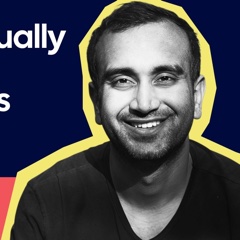 Guest
Anmol Tiwari
Director of Product at Duolingo
 Duolingo
 1 source · 15 tips
 Guest
Cem Kansu
Chief Product Officer at Duolingo
Duolingo1 source · 19 tips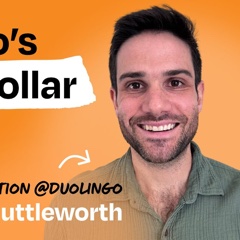 Guest
Jackson Shuttleworth
Group Product Manager leading the retention team at Duolingo
Duolingo1 source · 21 tips Guest
Natalia Castillejo
Director of Product, leads monetization at Duolingo
Duolingo 1 source · 16 tips