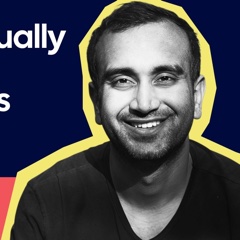
Anmol Tiwari
Director of Product at Duolingo
Where to hear and read about Anmol Tiwari1 episode or test

Anmol Tiwari is Director of Product at Duolingo, where he works on how free users move onto paid features. The lesson most worth taking from him is to sell by giving users clarity and confidence to try, not by pushing harder.
Our goal is not to like persuade users to try this. Our goal is to give them clarity and confidence to purchase.
The Counterintuitive Way To Nudge Users Into Free Trials – Anmol Tiwari, Duolingo
Anmol Tiwari: the story and the lessons
1Tiwari's approach to Duolingo free trials: clarity over persuasion
Tiwari gives users clarity and confidence instead of trying to persuade them. Duolingo shows a timeline of what happens on each day of the trial and states the refund amount when users switch plans. Trials are its main lever for getting users onto paid features.
Benefits like unlimited energy and no ads are hard to convey with copy, UX or an ad, so Duolingo lets users feel them by using them.
He added a step on purpose by letting users pick their reminder day. Duolingo's default reminder arrived about 2 days before the trial ended. Letting users choose the day added friction, yet it raised confidence and conversions.
Users knew they would not be surprised by a charge, so many picked a later day. In Tiwari's words, "That buys us enough time so that you wait till that fifth day or sixth day to decide."
Tiwari frames the trial paywall around not losing progress. When users run out of hearts or energy, presenting the choice as losing their progress if they do not continue made them much more likely to start a trial.
The screen still shows a sense of progress. It also says that paying gems or starting the trial lets them finish the lesson.
He tracks day-zero cancellations as a read on user intent. The share of users who cancel right after starting a trial shows whether they arrived with high intent. Once users cancel, it is very hard to get them to un-cancel.
Without earned trust, the result is poor conversion and complaints like "I didn't expect this charge." Duolingo is explicit about charges, timing and reminders for that reason.
2Why Tiwari shortened Duolingo's trial and added more of them
Tiwari cut the trial from 14 days to 7 to learn faster. Two-week trials ran until the end of 2024. At 7 days, experiment results arrive in a week instead of two, which doubled experimentation velocity.
Losing tests are shut down sooner, and the gain compounds over a quarter, six months or a year. Conversions also grew over time.
He offers repeat trials because users sit at different life stages. Someone who was too busy or unsure the first time gets another chance. Spread over time, a user decides three or four times whether to buy.
Apple allows the intro offer once per product, and workarounds are not typical. The shorter trial and the extra trials were tested together, and no numbers are given for each one's share.
He gives hesitant users a 3-day taste with no strings attached. The taste covers Super or Max and does not auto-convert. Users can convert during the period or at its end, and paid users go back to their original tier afterward.
It works for free-to-paid and for paid-to-paid upgrades to Max, where Apple blocks a second free trial.
A single video call can serve as a taste of the whole Max tier. Duolingo offers just enough free video calls in isolation, even one call, to let users decide whether to convert to Max.
Tiwari calls it "not a bad way to try and get people to try a feature."
Tiwari presents tastes as earned rewards and ends them plainly. Copy says the user just earned the free period, states that it lasts three days, and uses timers. The reward chest moved from the learning path to after a lesson because earning it felt better there.
When the taste ends, a drawer says the benefits have ended and offers two options: continue, or explore and resubscribe. Duolingo stresses that rejoining is easy.
3How Tiwari fits Duolingo's offers to each user and region
He ties upsells to onboarding questions for new users. The standard Super upsell in onboarding lost to one framed as part of the choices, such as learning with or without ads, or faster versus at your own pace.
Opt-in rose significantly, and it was one of Duolingo's biggest wins last year. New users are far more likely to convert, so their offers should fit where they are.
Tiwari replaced fixed ad ratios with machine learning predictions. Duolingo moved from fixed ratios of ads per tier to predicting which plan a user will buy, using signals like past taps on a plan and interest in video call. A bandit picks which Super creative to show at the end of a lesson.
He called fixed ratios "quite an inefficient way to operate" and says Duolingo has barely scratched the surface of personalization. Effect sizes are not given.
He adapts trial design to regional norms, such as paid trials in China. Almost no subscription service in China offers a zero-dollar trial. Users expect a nominal fee of around $1 or 99 cents, partly because auto-renewal is unfamiliar.
A paid trial makes clear the product costs money, the same clarity goal as Duolingo's own design. Similar models appear in parts of Europe, and Duolingo is still working out how to serve these markets.

The Counterintuitive Way To Nudge Users Into Free Trials – Anmol Tiwari, Duolingo
Duolingo's approach to free trials favors clarity and trust over persuasion: spell out the trial timeline, offer multiple trials and no-strings free tastes, and personalize upsells. Shortening the trial from 14 to 7 days doubled experimentation velocity, and letting users pick their reminder day lifted conversions despite the added friction.
Tiwari gives users clarity and confidence instead of trying to persuade them. Duolingo shows a timeline of what happens on each day of the trial and states the refund amount when users switch plans. Trials are its main lever for getting users onto paid features.
Benefits like unlimited energy and no ads are hard to convey with copy, UX or an ad, so Duolingo lets users feel them by using them.
He added a step on purpose by letting users pick their reminder day. Duolingo's default reminder arrived about 2 days before the trial ended. Letting users choose the day added friction, yet it raised confidence and conversions.
Users knew they would not be surprised by a charge, so many picked a later day. In Tiwari's words, "That buys us enough time so that you wait till that fifth day or sixth day to decide."
Tiwari frames the trial paywall around not losing progress. When users run out of hearts or energy, presenting the choice as losing their progress if they do not continue made them much more likely to start a trial.
The screen still shows a sense of progress. It also says that paying gems or starting the trial lets them finish the lesson.
He tracks day-zero cancellations as a read on user intent. The share of users who cancel right after starting a trial shows whether they arrived with high intent. Once users cancel, it is very hard to get them to un-cancel.
Without earned trust, the result is poor conversion and complaints like "I didn't expect this charge." Duolingo is explicit about charges, timing and reminders for that reason.
Tiwari cut the trial from 14 days to 7 to learn faster. Two-week trials ran until the end of 2024. At 7 days, experiment results arrive in a week instead of two, which doubled experimentation velocity.
Losing tests are shut down sooner, and the gain compounds over a quarter, six months or a year. Conversions also grew over time.
He offers repeat trials because users sit at different life stages. Someone who was too busy or unsure the first time gets another chance. Spread over time, a user decides three or four times whether to buy.
Apple allows the intro offer once per product, and workarounds are not typical. The shorter trial and the extra trials were tested together, and no numbers are given for each one's share.
He gives hesitant users a 3-day taste with no strings attached. The taste covers Super or Max and does not auto-convert. Users can convert during the period or at its end, and paid users go back to their original tier afterward.
It works for free-to-paid and for paid-to-paid upgrades to Max, where Apple blocks a second free trial.
A single video call can serve as a taste of the whole Max tier. Duolingo offers just enough free video calls in isolation, even one call, to let users decide whether to convert to Max.
Tiwari calls it "not a bad way to try and get people to try a feature."
Tiwari presents tastes as earned rewards and ends them plainly. Copy says the user just earned the free period, states that it lasts three days, and uses timers. The reward chest moved from the learning path to after a lesson because earning it felt better there.
When the taste ends, a drawer says the benefits have ended and offers two options: continue, or explore and resubscribe. Duolingo stresses that rejoining is easy.
He ties upsells to onboarding questions for new users. The standard Super upsell in onboarding lost to one framed as part of the choices, such as learning with or without ads, or faster versus at your own pace.
Opt-in rose significantly, and it was one of Duolingo's biggest wins last year. New users are far more likely to convert, so their offers should fit where they are.
Tiwari replaced fixed ad ratios with machine learning predictions. Duolingo moved from fixed ratios of ads per tier to predicting which plan a user will buy, using signals like past taps on a plan and interest in video call. A bandit picks which Super creative to show at the end of a lesson.
He called fixed ratios "quite an inefficient way to operate" and says Duolingo has barely scratched the surface of personalization. Effect sizes are not given.
He adapts trial design to regional norms, such as paid trials in China. Almost no subscription service in China offers a zero-dollar trial. Users expect a nominal fee of around $1 or 99 cents, partly because auto-renewal is unfamiliar.
A paid trial makes clear the product costs money, the same clarity goal as Duolingo's own design. Similar models appear in parts of Europe, and Duolingo is still working out how to serve these markets.
More from Duolingo
 Guest
Cem Kansu
Chief Product Officer at Duolingo
 Duolingo1 source · 19 tips
 Guest
Gina Gotthilf
Co-founder and COO of Latitud, former head of growth and marketing at Duolingo
Duolingo 1 source · 18 tips
 Guest
Jackson Shuttleworth
Group Product Manager leading the retention team at Duolingo
Duolingo1 source · 21 tips Guest
Natalia Castillejo
Director of Product, leads monetization at Duolingo
Duolingo 1 source · 16 tips